Tests
TEWL Test | Quantifying the Degree of Skin Barrier Damage
목차
1. What Is the TEWL Test?
The TEWL test measures the amount of water evaporating from the skin surface (TEWL, Trans-Epidermal Water Loss) to quantify the degree of skin barrier damage.
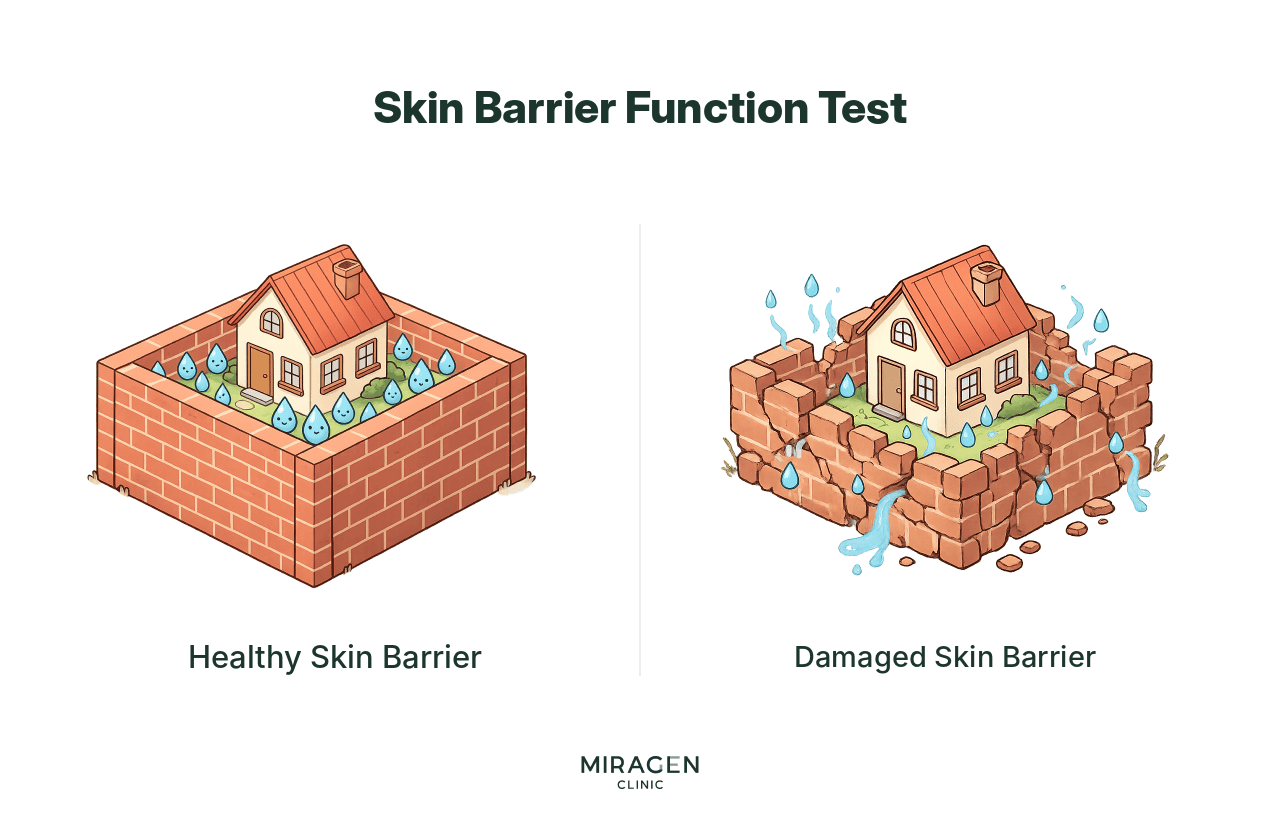
Analogy: The skin barrier is like a fence around a house. When the fence is strong, moisture inside the house (= moisture within the skin) does not leak out. However, when the fence develops cracks, moisture escapes. The TEWL test measures “how much moisture is leaking through the fence.”
2. Why Perform the TEWL Test?
Atopic dermatitis, rosacea, and seborrheic dermatitis are all closely associated with skin barrier damage.1 However, the extent of skin barrier damage cannot be determined by visual inspection alone.
Through the TEWL test:
- The degree of barrier damage can be objectively assessed
- Pre- and post-treatment comparisons can confirm whether the skin barrier is actually recovering.2
- Even when visible symptoms appear similar, treatment approaches may differ depending on barrier status
Tip: “Cases where symptoms appear improved but the barrier remains weak” and “cases where symptoms persist but the barrier has recovered” require different treatment plans. Numerical confirmation enables more accurate clinical judgment.
3. Testing Process
- Prepare the test area: The skin at the test site (typically the face, inner arm, etc.) is gently prepared
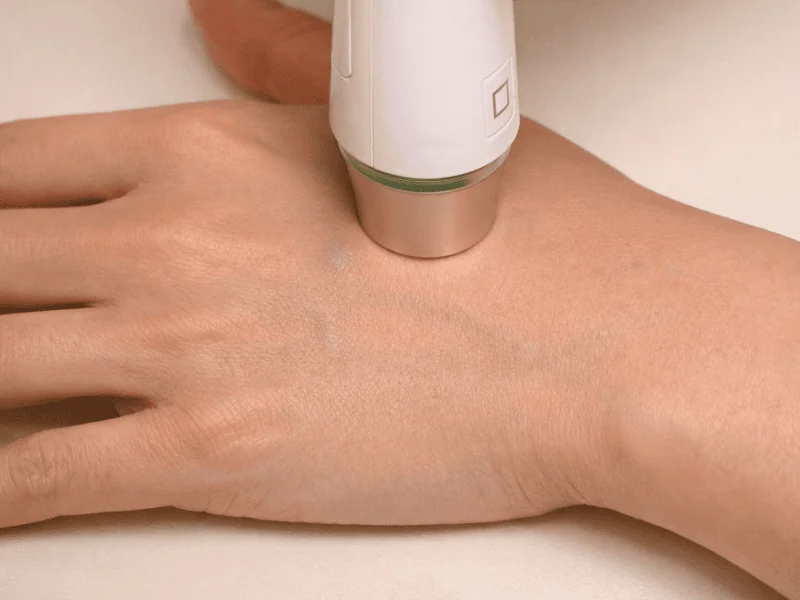
- Measurement: A small measuring device is lightly placed on the skin surface, and water evaporation is measured within seconds
- Review results: Measurements are available immediately, and the medical staff will explain them right away
The test is completely non-invasive, with no pain or irritation whatsoever. The procedure takes approximately 1–2 minutes.
3.1 Pre-Test Precautions
- Ideally, no moisturizer or cream should be applied to the test area
- If you have applied moisturizer before your visit, measurement after cleansing will be more accurate
4. How to Read Results
TEWL values are expressed in g/m²/h (grams of water lost per unit area per hour).
The normal range for TEWL varies significantly depending on the measuring device, measurement site (face, arm, back of hand, etc.), indoor temperature and humidity, and individual skin characteristics.3 As a result, the literature does not provide universally applicable reference values. However, based on my clinical experience, the following values correspond to each skin condition.
| TEWL (g/m²/h) | Barrier Status | Classification |
|---|---|---|
| 0–8 | Normal | — |
| 9–15 | Mild damage | Mild rosacea |
| 16–25 | Moderate damage | Severe rosacea · Mild seborrheic dermatitis / atopic dermatitis |
| 26 or higher | Severe damage | Severe seborrheic dermatitis · Severe atopic dermatitis |
Tip: Higher values indicate a weaker skin barrier. The same patient may have different values at different sites.
5. How Our Clinic Uses TEWL
We utilize the TEWL test both at the start of treatment and for monitoring progress.
- Initial visit: We objectively assess the degree of barrier damage and determine the treatment approach accordingly
- Progress monitoring: We remeasure at each visit to track the recovery trend of the barrier. If the values are decreasing, this provides objective evidence that treatment is proceeding in the right direction.
- Treatment completion decision: At our clinic, when symptoms improve and TEWL values approach the normal range, we conclude treatment.
Analogy: Just as hypertensive patients regularly monitor their blood pressure, patients with skin barrier disorders regularly measure TEWL to check the “health index” of their barrier.
References
- Alexander H, Brown S, Danby S, Flohr C. Research Techniques Made Simple: Transepidermal Water Loss Measurement as a Research Tool. J Invest Dermatol. 2018;138(11):2295-2300.e1.
- Medgyesi B, Dajnoki Z, Béke G, et al. Rosacea Is Characterized by a Profoundly Diminished Skin Barrier. J Invest Dermatol. 2020;140(10):1938-1950.e5.
- Sander N, Stölzl D, Fonfara M, et al. Blockade of interleukin-13 signalling improves skin barrier function and biology in patients with moderate-to-severe atopic dermatitis. Br J Dermatol. 2024;191(3):344-350.
Frequently Asked Questions
How much does the test cost?
It is free of charge. At our clinic, the TEWL test is included as a standard part of the examination, so there is no separate testing fee.
Is the test painful?
Not at all. A small device is simply placed gently on the skin surface. No needles or medications are used. The procedure is completed in 1–2 minutes.
Does a high value always mean something is wrong?
A high value is an objective indicator that the skin barrier is weakened. However, a high value does not necessarily mean severe symptoms. TEWL reflects the “physical state” of the barrier, while symptoms result from multiple factors including immune responses.
How often is the test performed?
Typically once at the initial visit, then at 2–4 week intervals to monitor progress. Once treatment stabilizes, the interval may be extended or measurements performed only as needed.
Will the results differ if I apply moisturizer before coming in?
Yes, applying moisturizer can temporarily lower TEWL values. To accurately assess the true barrier status, it is best to visit without applying moisturizer to the test area.


