
When I prescribe Protopic, many people feel anxious about the burning in the first few days, so I have put together what I would like you to know.
Unlike steroids, Protopic is an ointment used to reduce inflammation without weakening the skin barrier.
1. What is Protopic Ointment?
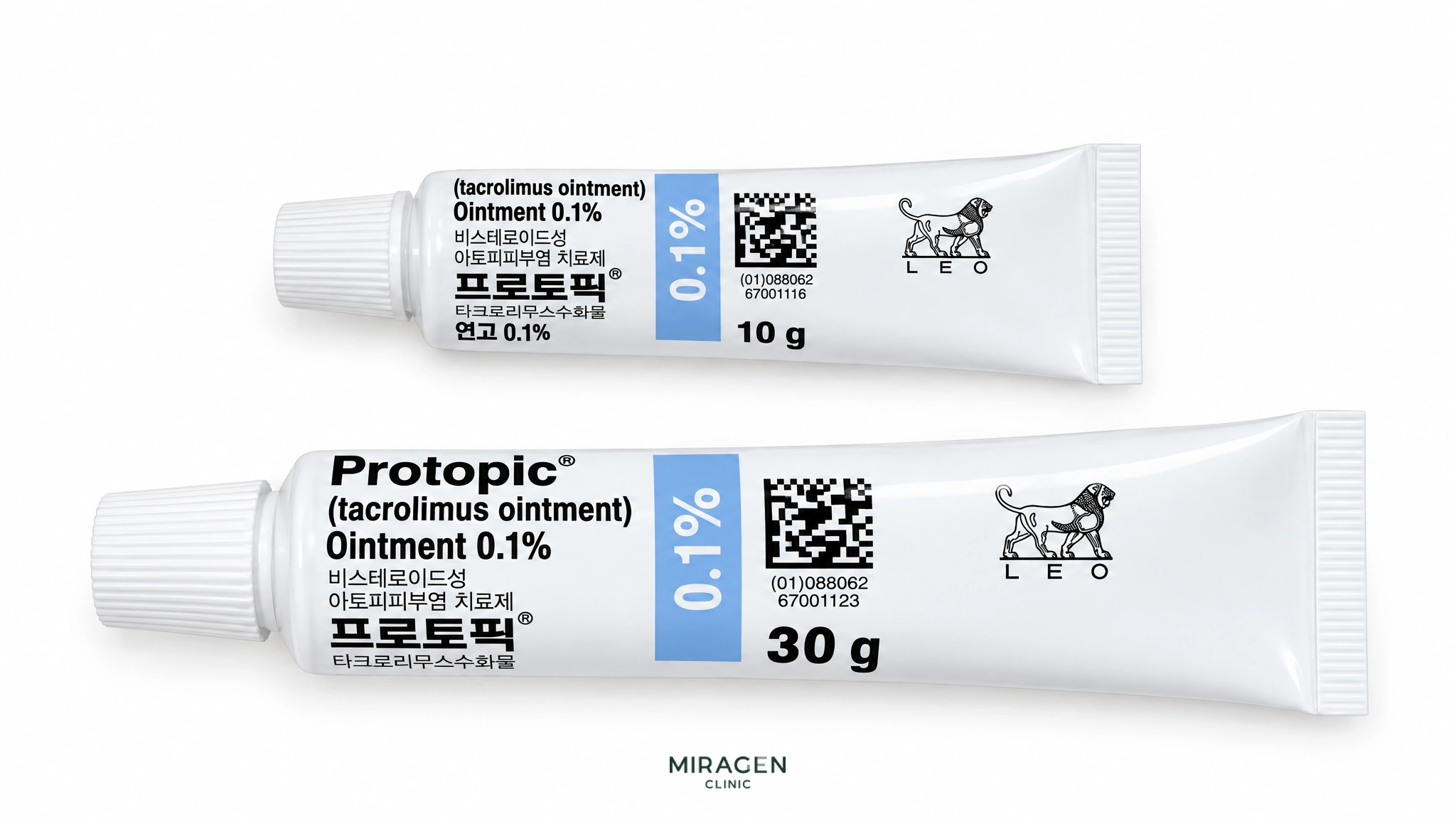
Protopic Ointment belongs to a class of anti-inflammatory drugs called calcineurin inhibitors, and its main ingredient is tacrolimus. Others in the same class are Elidel and the oral drug Cipol-N.
2. How is it different from Elidel?
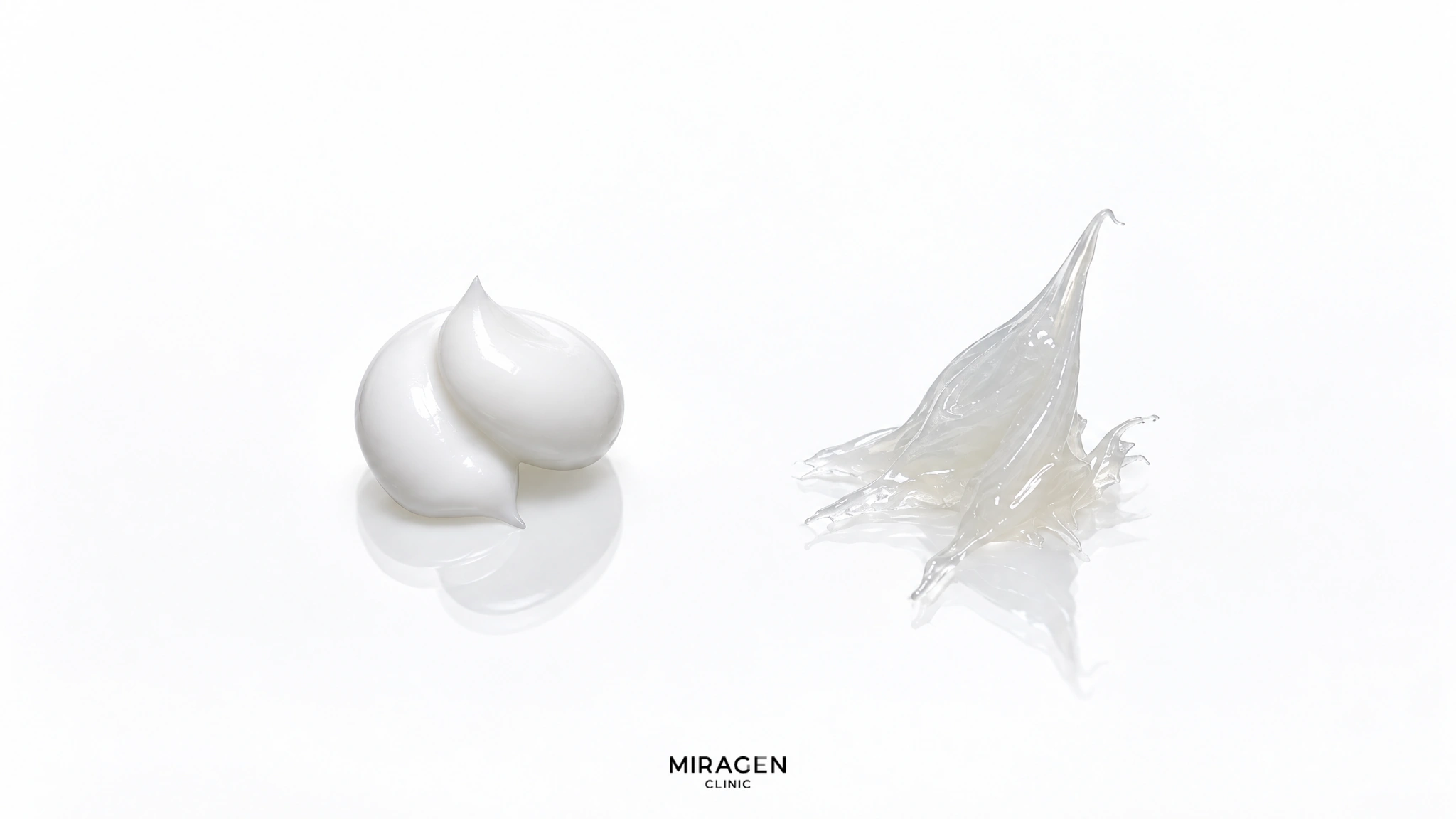
Protopic is an ointment, so it feels sticky, while Elidel is a cream and feels much nicer to use.
Even so, I prefer Protopic. In my experience, Elidel is more likely to cause contact dermatitis. You can find more details on the Elidel page.
3. How does it reduce inflammation?
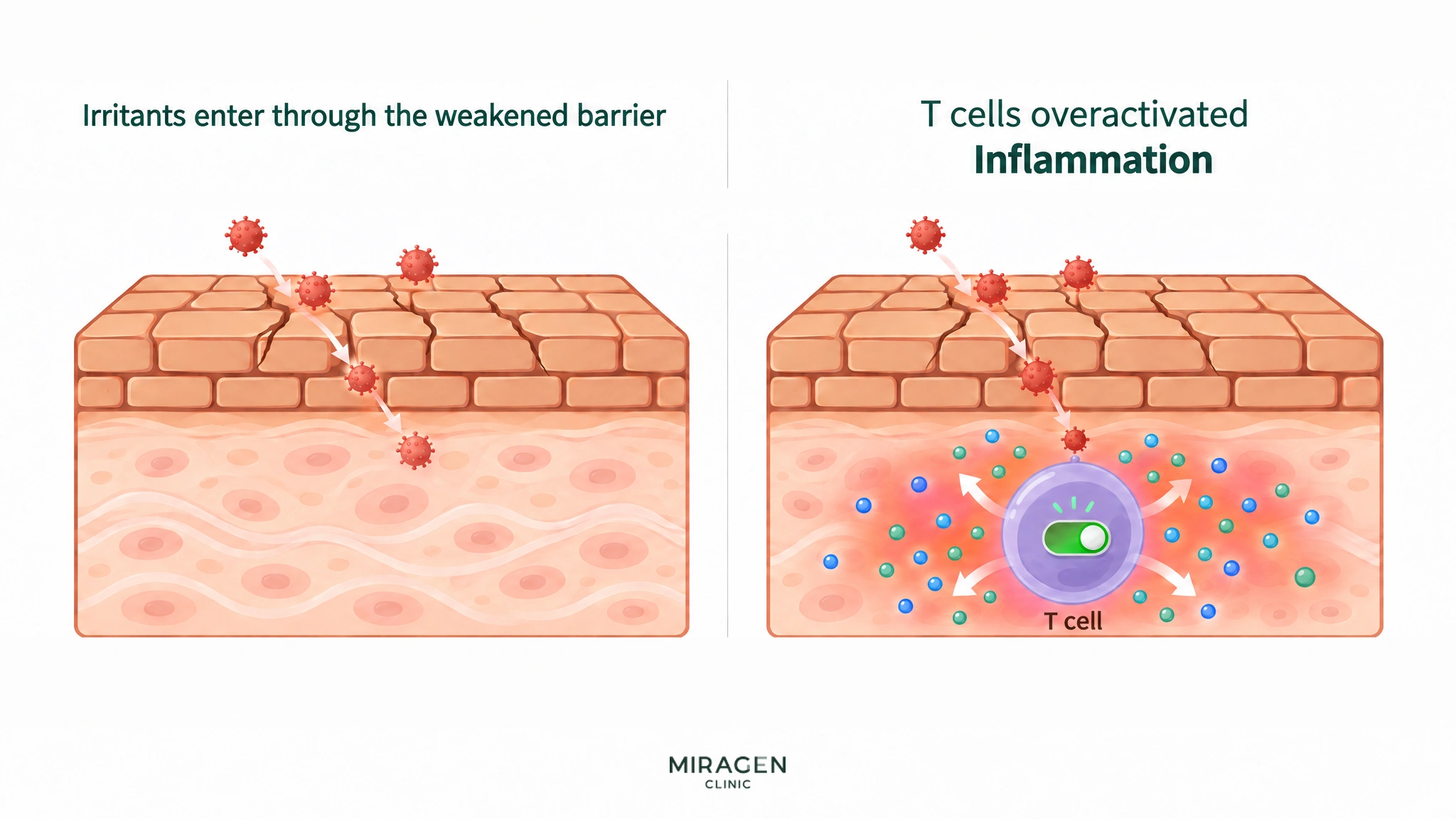
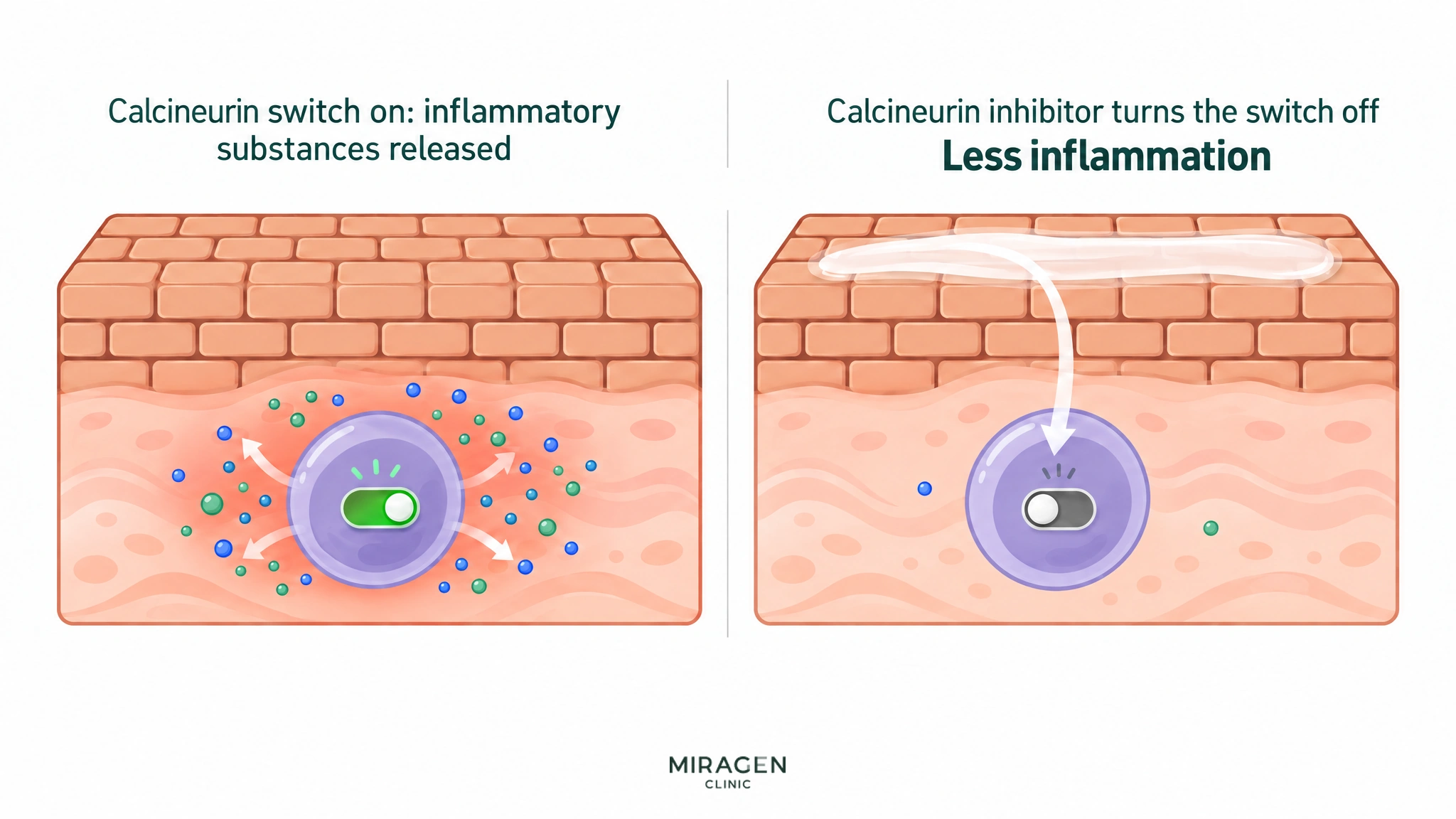
One reason dermatitis becomes chronic is overactivation of T cells, which are immune cells. Protopic suppresses this process by turning off the inflammation switch in T cells, called calcineurin.
It is not as strong as steroids, which suppress immunity broadly, but unlike steroid ointments it does not weaken the skin barrier.3
The most fundamental cause of chronic dermatitis is a weak skin barrier, and steroid ointments can make the problem worse by weakening this barrier even more.1,2
4. When is it used?
I consider it first for areas where using steroids is a concern, such as the face, and for dermatitis where the skin has not yet become thick or hard.
You can also try it for the burning and flushing of neurogenic rosacea. This is because Protopic depletes the nerve substances that cause burning and flushing (Substance P and CGRP).
5. 0.1% and 0.03%
Protopic comes in two concentrations, 0.1% and 0.03%.
- 0.1%: ages 16 and older
- 0.03%: ages 2 to 15
Of course 0.1% works better, but it is not approved for children under 16.
Still, children often improve even with 0.03%. This seems to be because prepubertal skin has less sebum and moisture than adult skin, so the medicine soaks in more easily.14
6. Why it feels "spicy"
When you use Protopic, itching, stinging, burning, redness, and eye discomfort may appear during the first few days. It feels like something spicy touching your skin, and I sometimes describe it as the feeling of having applied a medicated cooling-patch liniment.
After the first application, symptoms can start within a few hours, and occasionally the burning keeps people awake that night.
This feeling happens because Protopic touches the skin sensors that respond to "spicy" substances such as capsaicin.9,15 Of these sensors, it directly stimulates TRPA1 and makes TRPV1 more sensitive, so Substance P (which causes burning) and CGRP (which causes flushing), stored up in the nerves, are released all at once.4,6,7
With continued use these substances are depleted, and the spicy feeling goes away within 3 to 4 days in most people.4,8
I explain much more about why this feels the way it does and how to make it less uncomfortable in the article How to Use Protopic Ointment.
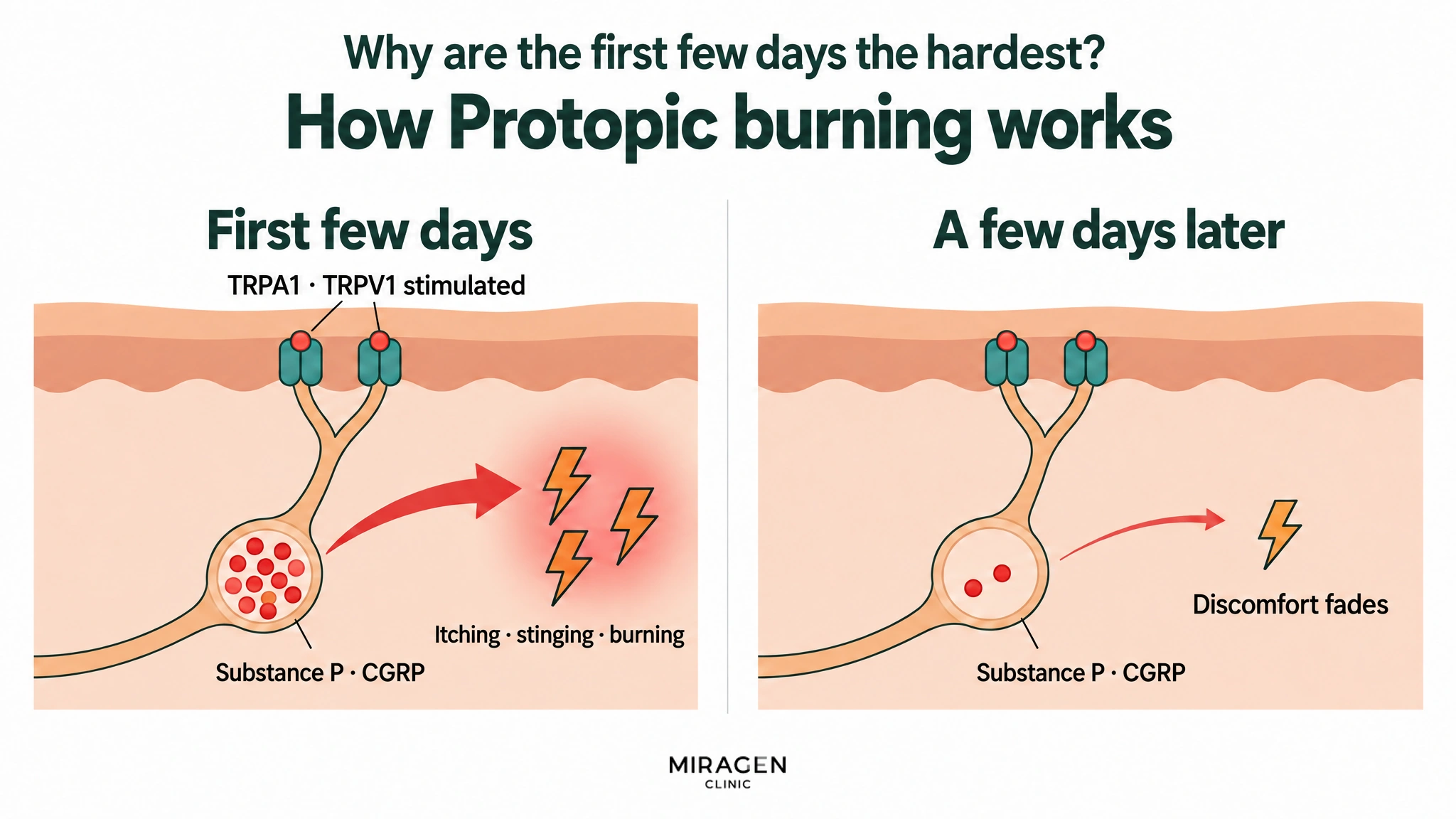
Some people feel no discomfort at all from the start. Having no discomfort does not mean the anti-inflammatory effect is missing, so please rest assured.
Stay cool for the first few days
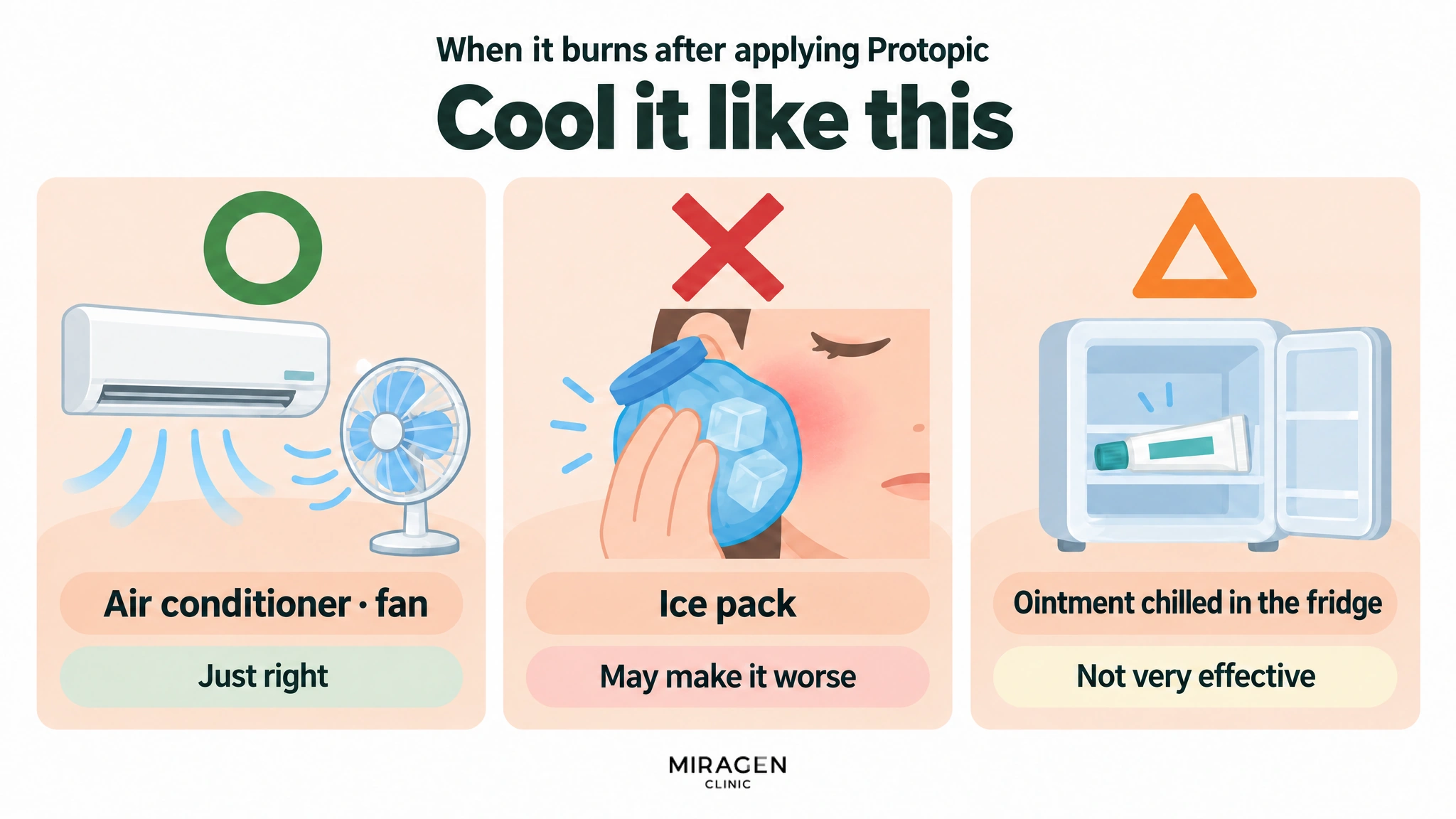
For the first few days, it is best to keep cool with an air conditioner or fan on.
On the first night, keep the room cool while you sleep as well. TRPV1 and TRPA1 also respond to heat, so they are stimulated more when you are warm.15,16
However, TRPA1 also responds to cold temperatures, so cooling too much, like an ice pack, can actually make it worse.9
7. How to use
Apply a thin layer twice a day, morning and evening, to the affected areas and the places where it tends to flare, in place of a moisturizer. There are two reasons I recommend twice a day.
First, people whose discomfort did not go away with once-daily use often find it eases with twice-daily use.
Second, it is a way to pause moisturizers for a while. When the skin barrier is weakened, the most common cause of worsening symptoms is a moisturizer. Protopic seals the skin well, so if you apply it morning and evening you do not need a separate moisturizer.
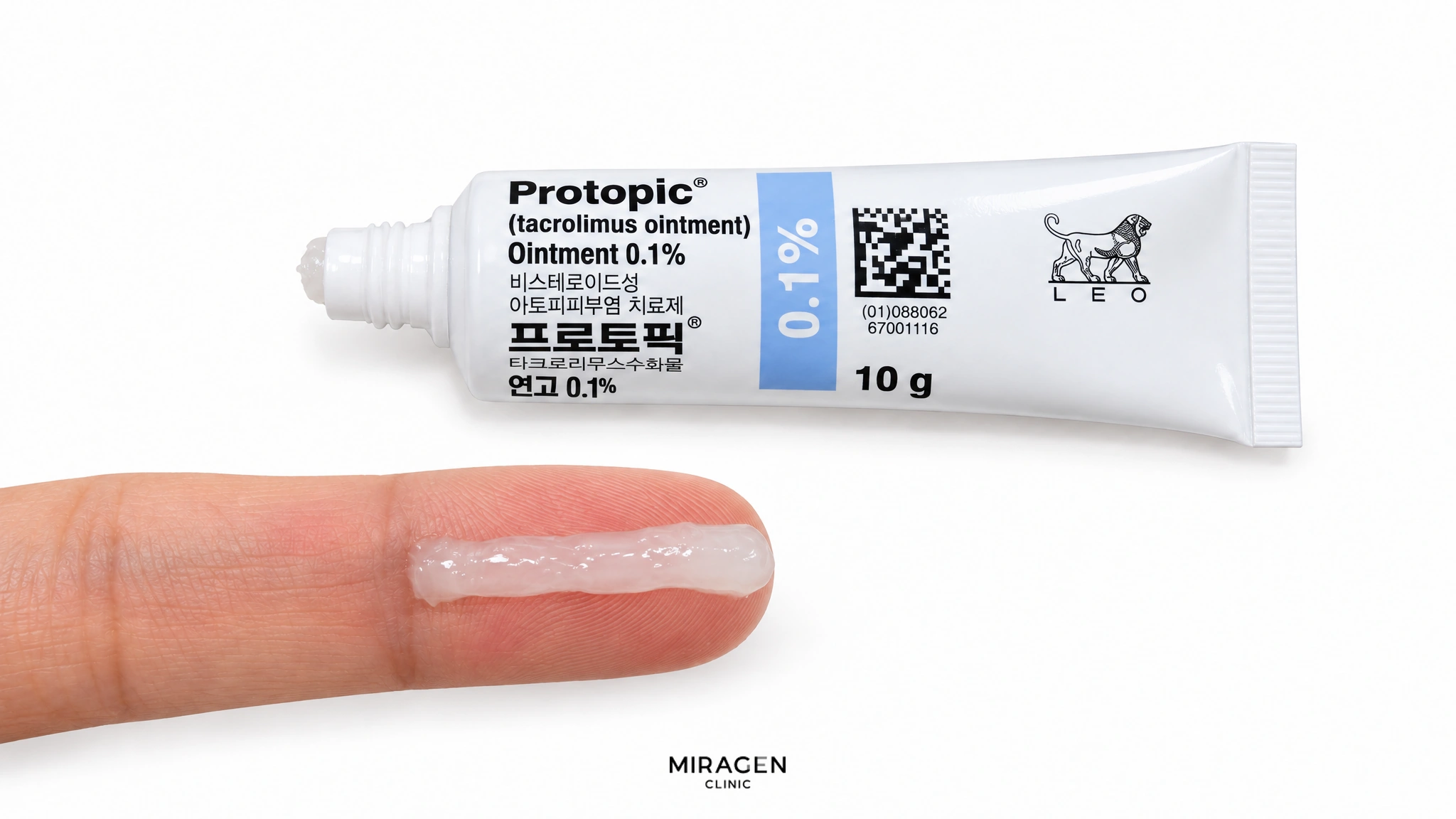
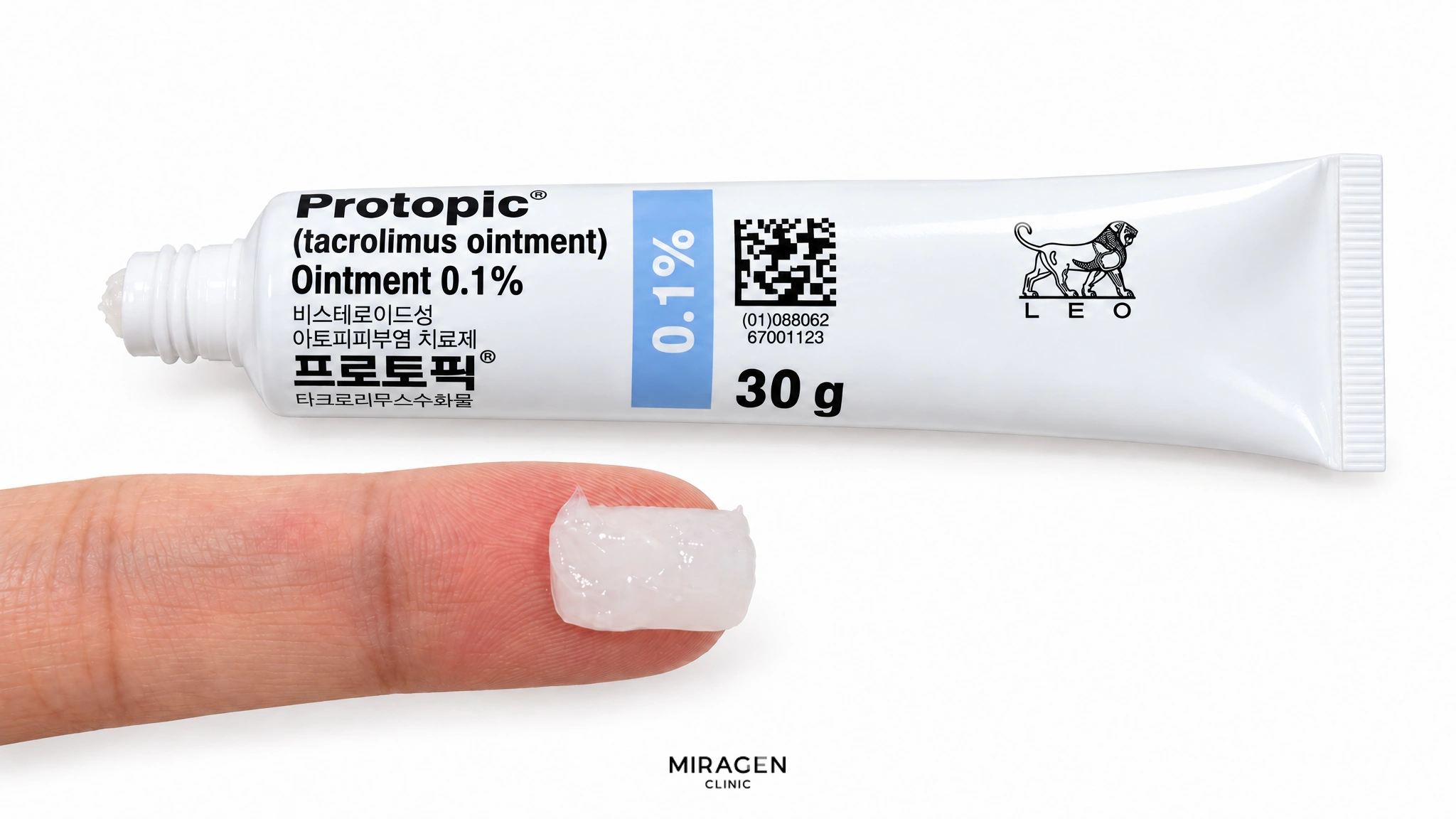
When I only say "apply a thin layer," people are unsure how much to squeeze out, so I explain it by the length of squeezed ointment measured against the last segment of the index finger, for an area about the size of the whole face.
How much to squeeze out depends on the tube size. The 10g tube is opened by piercing the foil with the spike inside the cap, so the opening is small. The 30g tube is opened by pulling the foil tab, and tearing it off opens the whole mouth of the tube to a diameter of about 10 mm.
For an area about the size of the whole face, squeeze out the length of the last segment of your index finger from the 10g tube, and a little less than half of that segment from the 30g tube.
After washing, wait until the skin is completely dry, then apply it without a moisturizer. Do not cover the area with plastic wrap or similar, and do not apply it to mucous membranes such as the inside of the eyes or mouth. Around the eyes, apply it a little away from the lid margin.10
It is fine to apply it during the day. The sun and UV warning in the package insert comes from experiments in mice, and in people, skin cancer did not increase with Protopic.5
Many people also wonder whether they should wear sunscreen when applying it in the daytime, but it is better not to wear sunscreen. This is because, when the skin is weakened, sunscreen is also a common cause of contact dermatitis. On days when you will be in the sun for a long time, cover up with a sun cap or a parasol.
When to stop right away and see a doctor
- When small blisters appear in clusters or spread quickly10
- When lymph nodes in places such as the neck or armpits swell and do not go down10
- When you have applied it for more than 3 days and the itching, burning, or redness keeps getting worse
- When it oozes
8. It can cause contact dermatitis
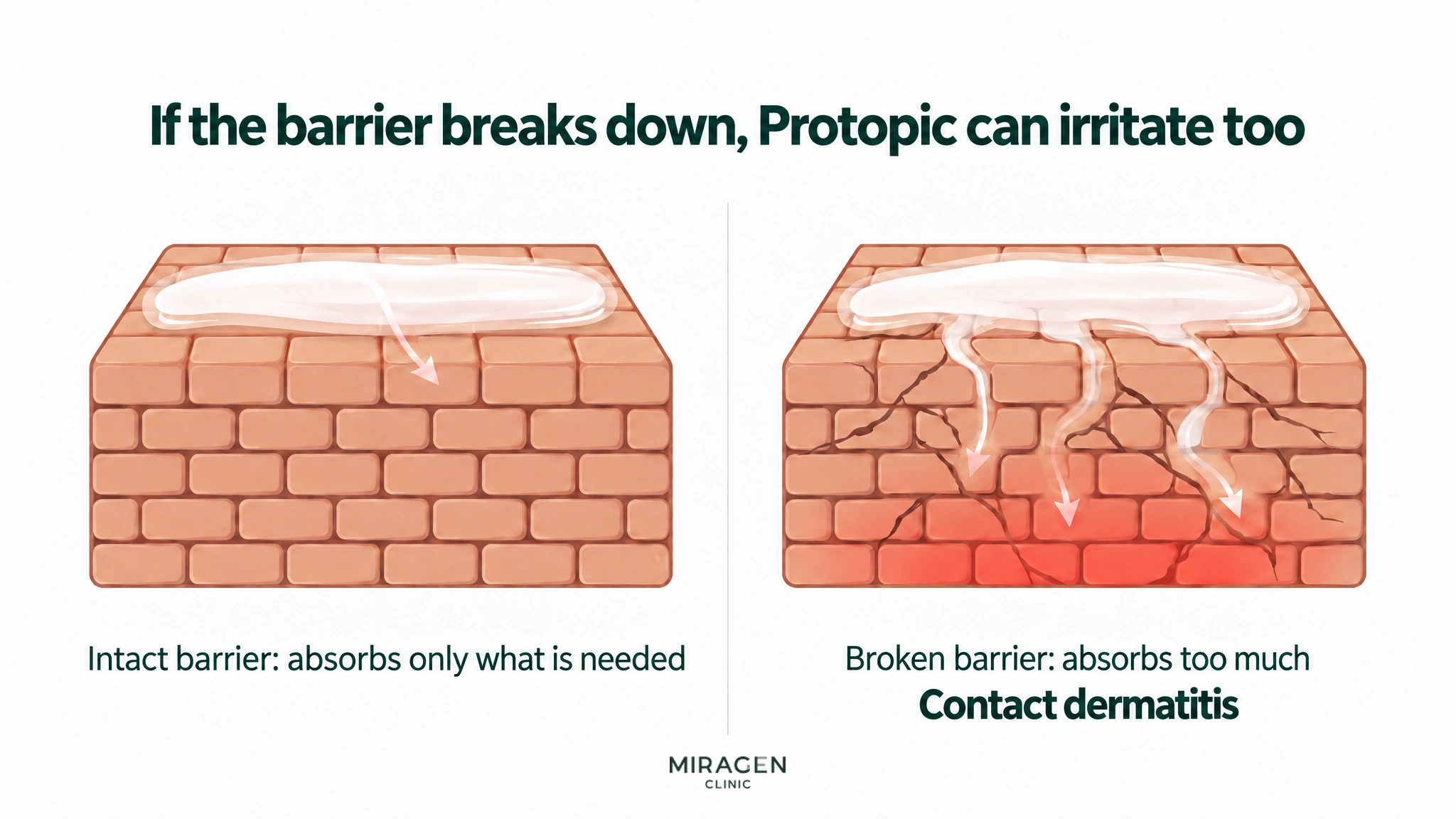
When the skin barrier is severely broken down, Protopic can also be absorbed excessively and cause contact dermatitis.
Patch test before applying
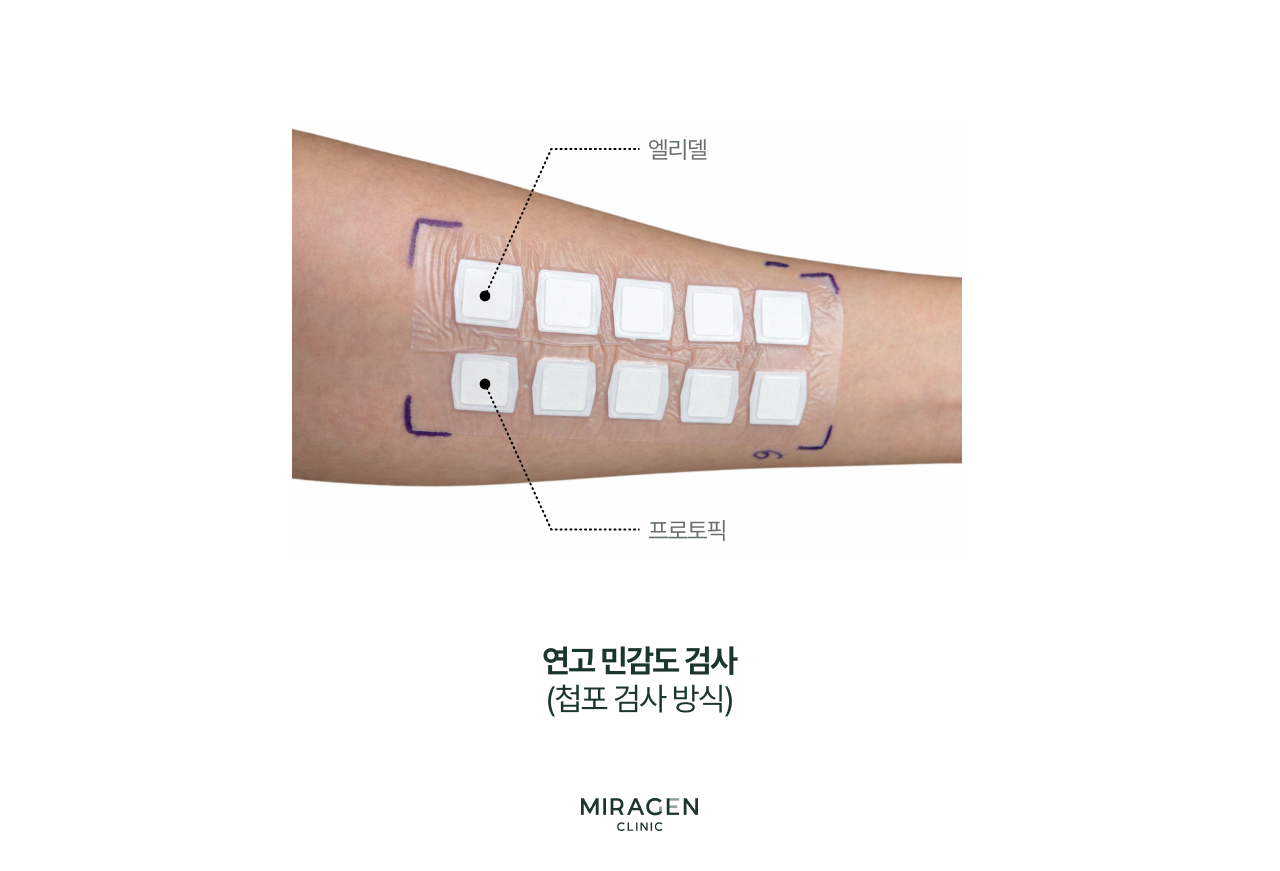
If you are worried about contact dermatitis, you can check in advance with a patch test before applying it.
Telling a normal reaction from contact dermatitis
From a single application alone, it is hard to tell whether the itching, stinging, burning, and redness of the first few days are a normal reaction or contact dermatitis.
If it keeps getting worse after more than 3 days of application, it may be contact dermatitis, so it is best to stop applying it and see a doctor.
9. Symptoms often return when you stop
When children applied Protopic for up to 22 days, then stopped and were watched for 2 weeks, about 80% got worse again.11 The same is true for adults. Among adults who had improved with Protopic, 108 were switched to an ointment with no active ingredient, and half of them got worse again within 15 days.12
The fundamental cause of atopic dermatitis is a weakened skin barrier. This is because Protopic does not keep protecting the barrier after you stop. To reduce relapse, the skin barrier needs to be restored as well.
While Protopic calms the inflammation, it is a good idea to actively support the recovery of the damaged barrier with Liragen Sono. It is a treatment in which a wound dressing containing EGF and bFGF is applied and combined with ultrasound, protecting the damaged skin while the barrier recovers.
10. Long-term use and safety
Some people who are prescribed Protopic become anxious when they see the phrase "risk of lymphoma" in the package insert. This is a warning the FDA added in 2006 based on animal experiments and some case reports.
Since then, an analysis of more than 400,000 people who used Protopic or Elidel found no increase in skin cancer. Lymphoma increased slightly, but because it is originally a rare disease, the actual risk of developing it is very small.5
And since it does not weaken the skin barrier like steroids, it can be used for a long time.
That said, it is not good to use it for a long time without consulting your doctor. It can cause acne or rosacea.13 Please talk with me at your visit about how long to keep applying it and how to taper it.
Frequently Asked Questions
How is it different from steroid ointments?
Steroid ointments quickly suppress inflammation, but long-term use can weaken the skin barrier. Protopic is a calcineurin inhibitor, not a steroid, and it does not weaken the skin barrier.
How is it different from Elidel?
Elidel is a cream and feels much nicer to use, but in my experience it is more likely to cause contact dermatitis, so I prefer Protopic.
Which should I use, 0.1% or 0.03%?
For adults, 0.1% is more effective. Ages 2 to 15 can use only 0.03%, and children often improve even with 0.03%.
How can I tell if the burning is normal?
If the symptoms gradually lessen over 3 days of use, it is normal. Conversely, if it keeps getting worse after more than 3 days, it may be contact dermatitis, so it is best to stop applying it and see a doctor. If it oozes, stop right away without waiting 3 days.
What if I am worried about contact dermatitis?
You can check in advance with a patch test before applying it.
Can Protopic be used for a long time?
Unlike steroids, it does not weaken the skin barrier, so it can be used for as long as needed. There was an FDA warning in 2006, but a later analysis of more than 400,000 people found no increase in skin cancer, and although lymphoma increased slightly, the actual risk of developing it is very small. However, acne or rosacea can develop, so it is best to talk with your doctor about how long to keep applying it.
References
- Lim SH, Kim EJ, Lee CH, et al. A Lipid Mixture Enriched by Ceramide NP with Fatty Acids of Diverse Chain Lengths Contributes to Restore the Skin Barrier Function Impaired by Topical Corticosteroid. Skin Pharmacol Physiol. 2022;35(2):112-123.
- Kolbe L, Kligman AM, Schreiner V, et al. Corticosteroid-induced atrophy and barrier impairment measured by non-invasive methods in human skin. Skin Res Technol. 2001;7(2):73-7.
- Cury Martins J, Martins C, Aoki V, et al. Topical tacrolimus for atopic dermatitis. Cochrane Database Syst Rev. 2015;(7):CD009864.
- Ständer S, Ständer H, Seeliger S, Luger TA, Steinhoff M. Topical pimecrolimus and tacrolimus transiently induce neuropeptide release and mast cell degranulation in murine skin. Br J Dermatol. 2007;156(5):1020-6.
- Lam M, Zhu JW, Tadrous M, Drucker AM. Association Between Topical Calcineurin Inhibitor Use and Risk of Cancer, Including Lymphoma, Keratinocyte Carcinoma, and Melanoma: A Systematic Review and Meta-analysis. JAMA Dermatol. 2021;157(5):549-558.
- Pereira U, Boulais N, Lebonvallet N, Pennec JP, Dorange G, Misery L. Mechanisms of the sensory effects of tacrolimus on the skin. Br J Dermatol. 2010;163(1):70-7.
- Kita T, Uchida K, Kato K, Suzuki Y, Tominaga M, Yamazaki J. FK506 (tacrolimus) causes pain sensation through the activation of transient receptor potential ankyrin 1 (TRPA1) channels. J Physiol Sci. 2019;69(2):305-316.
- Reitamo S, Harper J, Bos JD, et al. 0.03% Tacrolimus ointment applied once or twice daily is more efficacious than 1% hydrocortisone acetate in children with moderate to severe atopic dermatitis: results of a randomized double-blind controlled trial. Br J Dermatol. 2004;150(3):554-62.
- Bandell M, Story GM, Hwang SW, et al. Noxious cold ion channel TRPA1 is activated by pungent compounds and bradykinin. Neuron. 2004;41(6):849-57.
- Ministry of Food and Drug Safety (Korea). Protopic Ointment 0.1% (tacrolimus hydrate) product approval information. Item code 200511279.
- Fleischer AB Jr. Treatment of atopic dermatitis: role of tacrolimus ointment as a topical noncorticosteroidal therapy. J Allergy Clin Immunol. 1999;104(3 Pt 2):S126-30.
- Wollenberg A, Reitamo S, Atzori F, et al. Proactive treatment of atopic dermatitis in adults with 0.1% tacrolimus ointment. Allergy. 2008;63(6):742-50.
- US Food and Drug Administration. PROTOPIC (tacrolimus) ointment prescribing information, section 6 Adverse Reactions (clinical trials and postmarketing reports).
- Akutsu N, Ooguri M, Onodera T, et al. Functional characteristics of the skin surface of children approaching puberty: age and seasonal influences. Acta Derm Venereol. 2009;89(1):21-7.
- Caterina MJ, Schumacher MA, Tominaga M, Rosen TA, Levine JD, Julius D. The capsaicin receptor: a heat-activated ion channel in the pain pathway. Nature. 1997;389(6653):816-24.
- Moparthi L, Kichko TI, Eberhardt M, et al. Human TRPA1 is a heat sensor displaying intrinsic U-shaped thermosensitivity. Sci Rep. 2016;6:28763.