
1. What is Isotinone?
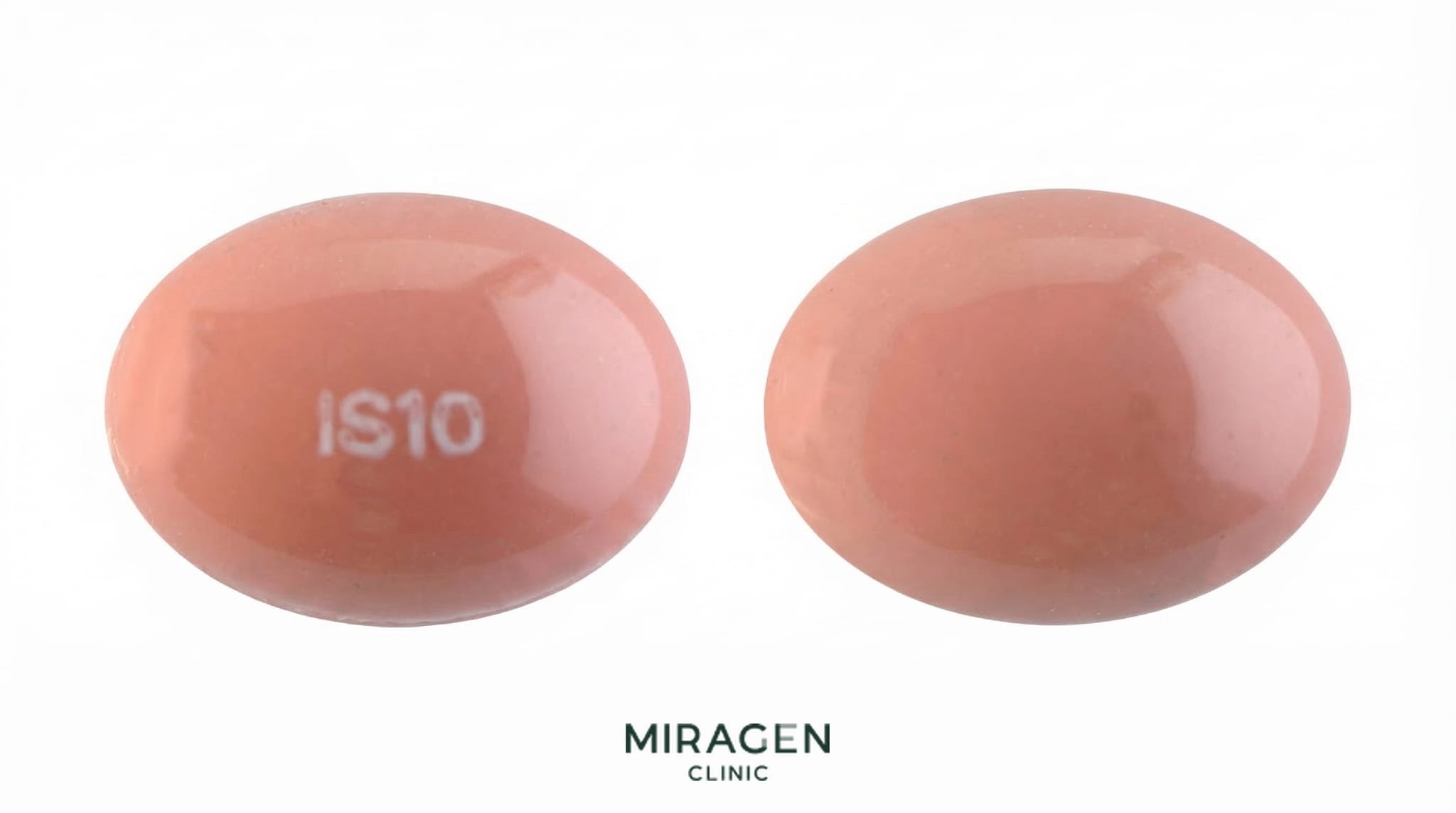
Isotinone is a medication containing 10 mg of isotretinoin that reduces acne by preventing pores from becoming clogged with sebum and keratin.1
2. Dryness of the skin, lips, and eyes
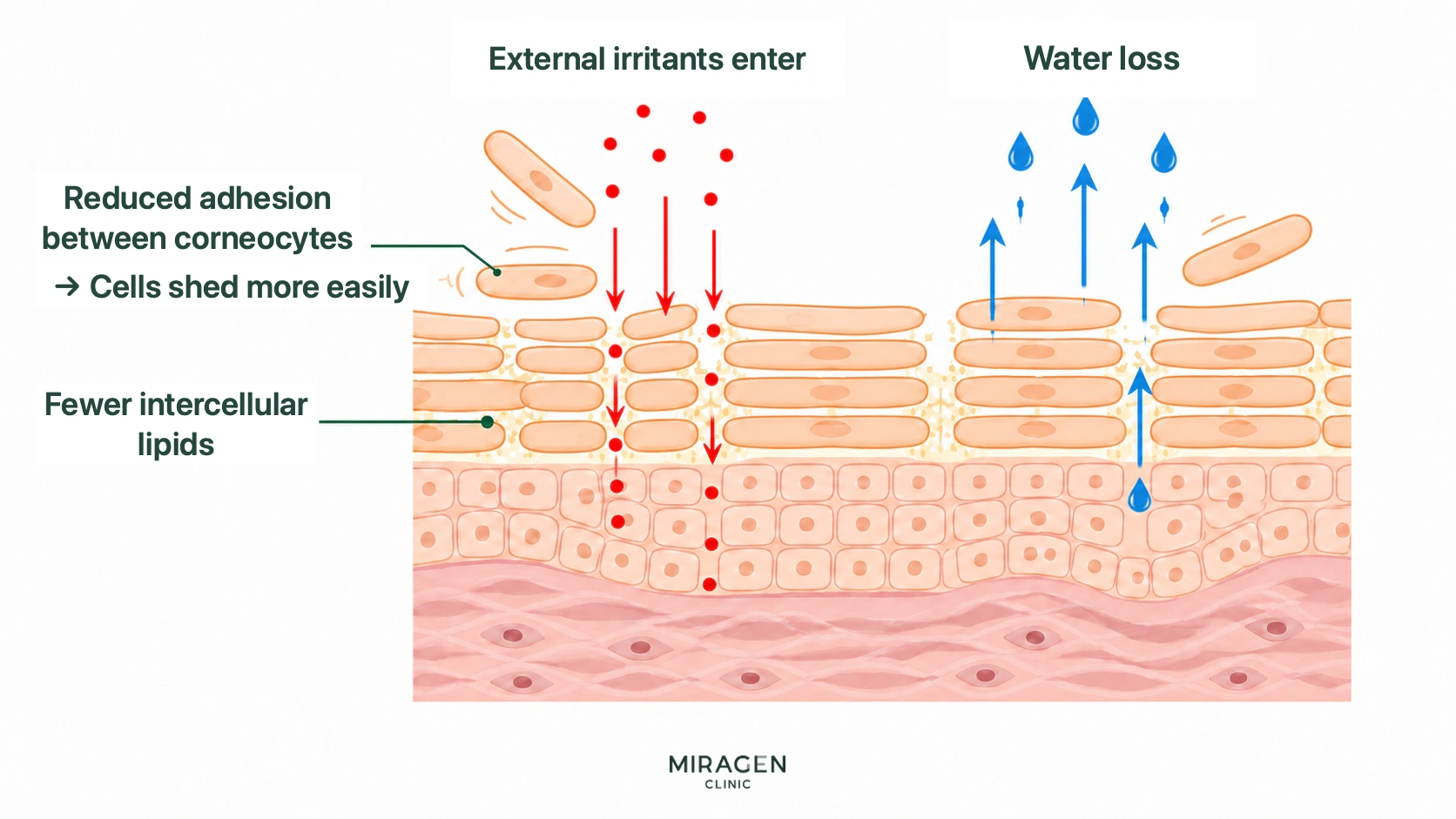
Isotretinoin reduces sebum secretion, weakens the bonds between keratinocytes, and alters the lipids that fill the spaces between cells, thereby weakening the skin barrier.2,3,4,5
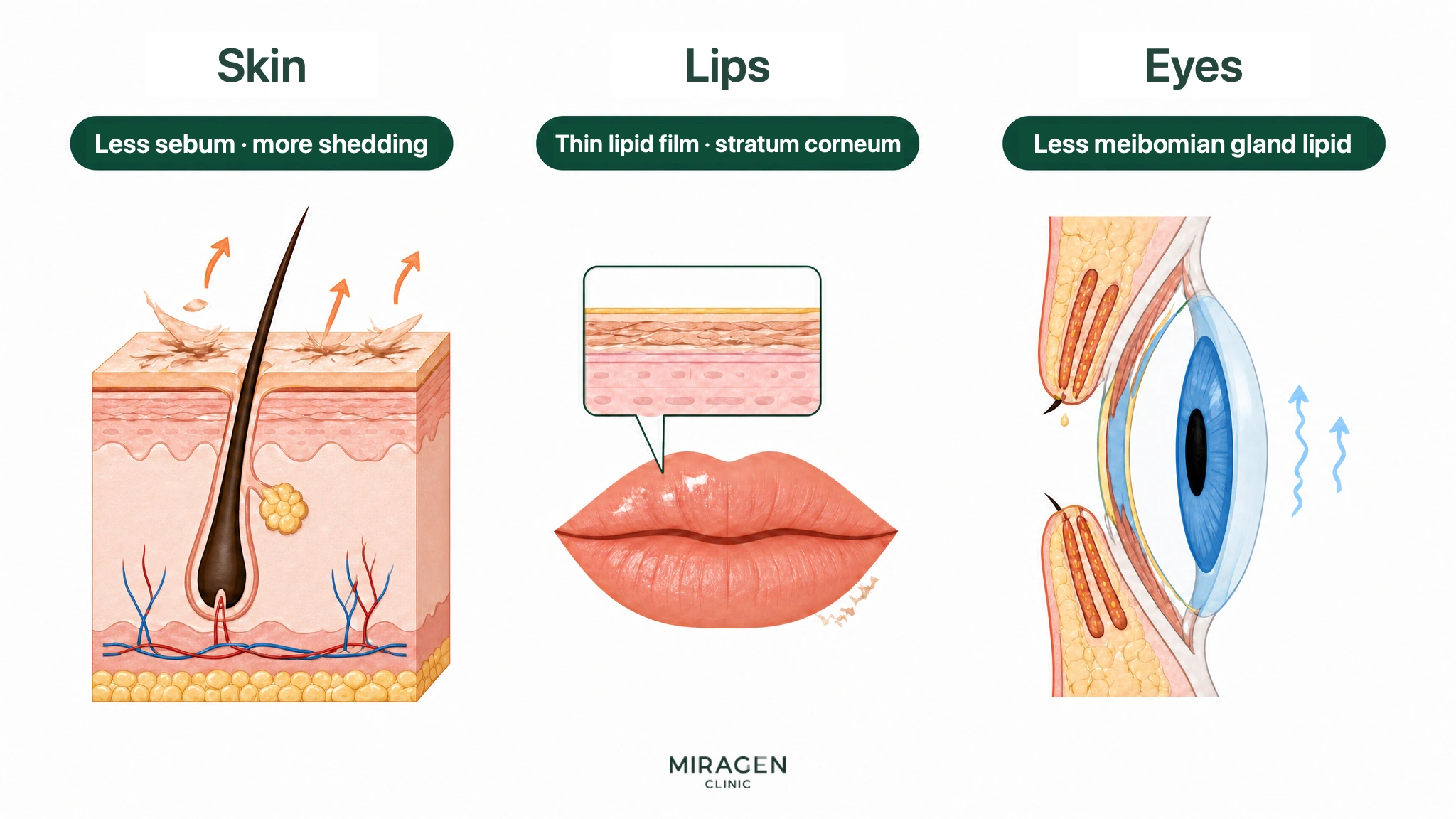
When the skin barrier weakens, moisture loss increases, leading to dryness, and the skin becomes more vulnerable to external irritation, making dermatitis more likely to develop. The lips are even more susceptible to these changes because they naturally have a thin sebum film and stratum corneum.2,4
It also reduces the secretion of oils that coat your tears, causing them to evaporate faster and making your eyes feel dry.6
3. Dosage and Duration of Use
The approved dosage guidelines recommend starting with 2 to 5 pills per day for adults (0.5 mg per 1 kg of body weight per day).7
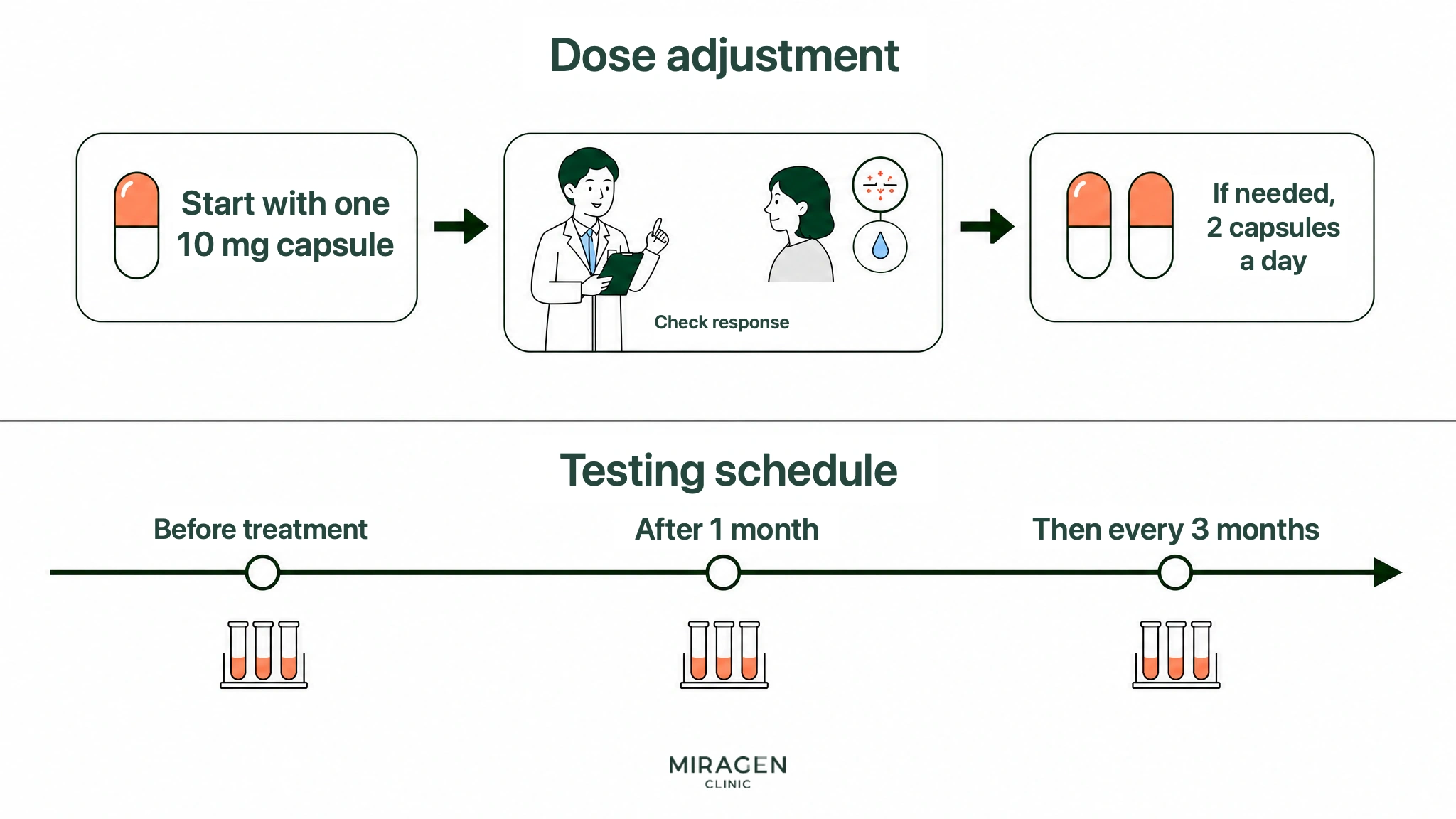
However, many people find even 1 pill difficult, so typically, we start with 1 pill and increase to 2 pills a day if necessary.
The longer the treatment period, the lower the likelihood of recurrence. This is because the likelihood of recurrence is inversely proportional to the cumulative dose.
According to a large-scale observational study published in 2025, relapse rates decrease as the cumulative dose increases, up to 120 mg per kg of body weight.8 At 0.25 mg per kg, this would require taking it for about 480 days.
4. Side Effects and Precautions When Taking
The most common discomfort while taking Isotretinoin is dryness of the skin, lips, and eyes.
Nosebleeds, muscle pain, joint pain, headaches, and fatigue may also occur.
Acne may temporarily worsen in the early stage of use.7
It is not recommended for children under 12 as it may affect growth, and it should be used with caution in those aged 12 to 17.1,7
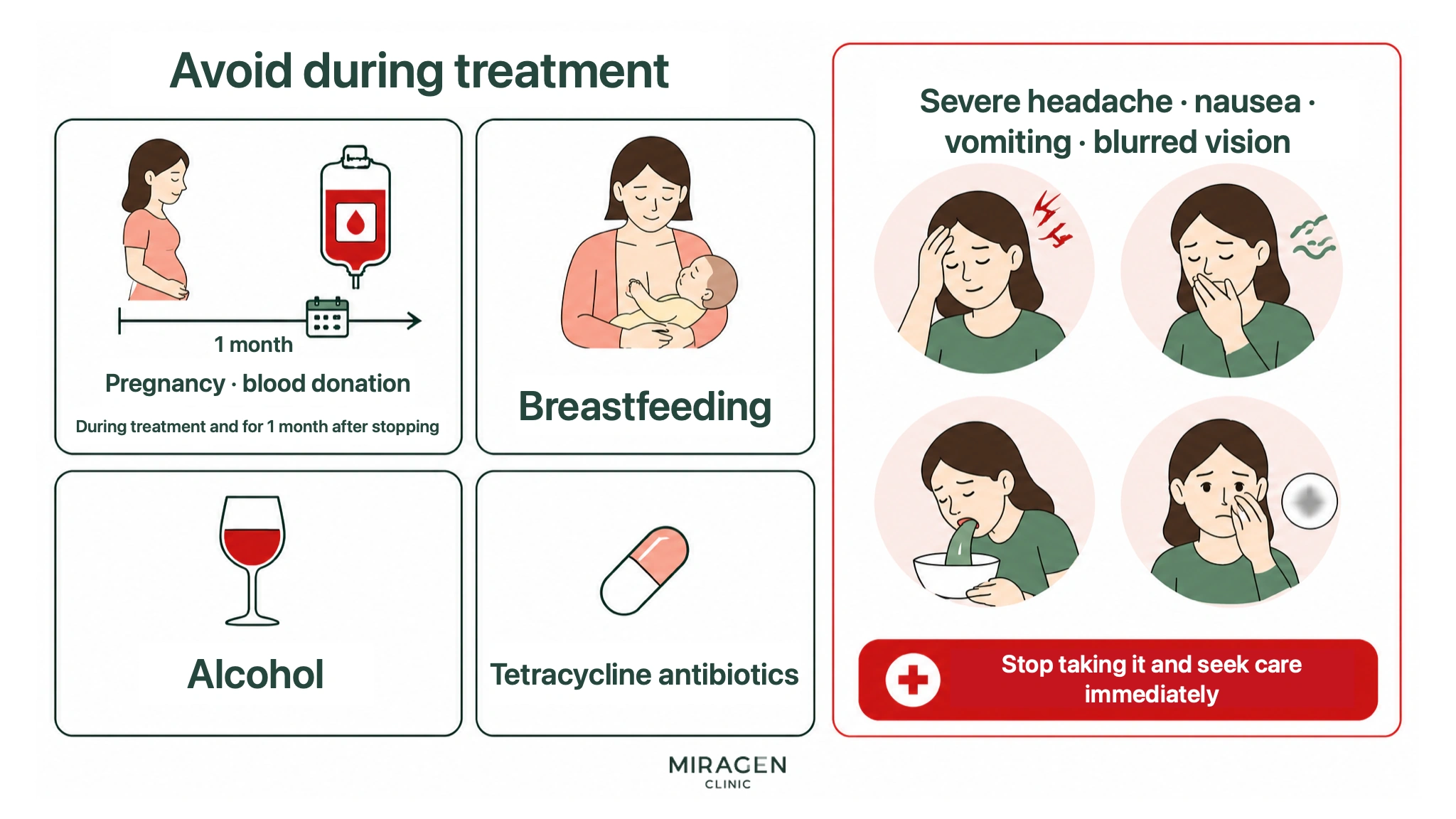
If you develop severe headaches unlike usual, nausea, vomiting, or blurred vision, you must stop taking it and seek medical care immediately.1,7
Because it may cause fetal malformations, pregnancy and blood donation must be strictly avoided during use and for 1 month after completing use.9
Because the risk of systemic side effects cannot be excluded if it is transferred to the baby through breast milk, breastfeeding women should also avoid use.1,7
It can raise triglyceride levels, and excessively elevated triglycerides carry a risk of acute pancreatitis, so abstaining from alcohol is recommended during treatment. This is because alcohol can also raise triglyceride levels.1,7,10
Tetracycline antibiotics, such as Doxycycline and Minocycline, must not be taken concurrently due to the risk of increased intracranial pressure.
Isotretinoin is started at least 7 days after discontinuing antibiotics. Conversely, when switching from Isotretinoin to antibiotics, a conservative interval of approximately 2 weeks is observed, taking into account the half-life of the major metabolites.1,11
5. Required Tests
Before prescription, AST, ALT, fasting triglycerides, and total cholesterol levels are checked, and pregnancy tests are also performed for women of childbearing age.1,7
When used in combination with Spironolactone, kidney-related levels such as Cr, K, and eGFR must also be monitored.
After starting the medication, tests are conducted again after 1 month, and then every 3 months.7
6. Maintenance therapy
If your acne has been controlled with Isotinone, long-term use—ideally until the cumulative dose reaches 120 mg per kg of body weight—is necessary to minimize the recurrence rate.
However, if you are anxious or uncomfortable about long-term use, you can continue maintenance treatment with topical medications such as Differin Gel or Winlevi Cream.
For more details, please refer to the Differin Gel and Winlevi Cream information pages.
Frequently Asked Questions
What should I do if dermatitis occurs during use?
Dermatitis that causes redness, itching, and flaking as the skin dries is a known side effect of Isotinone. If symptoms are severe, you should stop taking it and see a doctor.
My lips are extremely dry and cracking; is it okay to continue taking the medication?
Dry, cracked lips are very common and can worsen depending on the dose. You can continue taking it while applying lip balm frequently, but if it’s hard to tolerate even with lip balm, see your doctor to check whether a dose adjustment is needed.1,10
My acne has worsened since starting the medication; is it okay to keep taking it?
Early on, acne may temporarily worsen, but it usually starts to gradually improve after 7–10 days even without changing the dose. So if it’s only slightly worse, it’s okay to keep taking it.7 However, if lesions suddenly become severely painful, ulcerate, bleed, or are accompanied by fever or joint pain, acne fulminans is possible—seek medical care right away.12
My scalp and whole body are dry and itchy—can my hair fall out too?
Because Isotinone reduces sebum production, your entire body—including the scalp—may become dry and itchy.1,4 If the itching is mild, take short showers with lukewarm water, use less soap, and apply plenty of moisturizer immediately after showering. If the itching persists or is accompanied by redness or scaling, it may be dermatitis, so see a clinician to determine whether dermatitis treatment or a dosage adjustment is needed.10,13 Some people develop telogen effluvium, where more hair than usual sheds. There is limited data on how much hair loss recovers after stopping the medication, and there are both studies reporting it was temporary and reports that it persisted even after treatment.1,4,14 If hair loss is noticeable, please seek medical advice.
I’m planning a pregnancy; when should I stop taking the medication?
Isotinone carries a risk of causing fetal malformations. You must stop taking it at least 1 month before planning pregnancy.
References
- U.S. Food and Drug Administration. Absorica and Absorica LD Prescribing Information. Revised June 2026.
- Del Rosso JQ. Clinical relevance of skin barrier changes associated with the use of oral isotretinoin. J Drugs Dermatol. 2013;12(6):626-631.
- Nelson AM, Zhao W, Gilliland KL, et al. Temporal changes in gene expression in the skin of patients treated with isotretinoin provide insight into its mechanism of action. Dermatoendocrinol. 2009;1(3):177-187. PMID: 20436886.
- Kmieć ML, Pajor A, Broniarczyk-Dyła G. Evaluation of biophysical skin parameters and assessment of hair growth in patients with acne treated with isotretinoin. Postepy Dermatol Alergol. 2013;30(6):343-349. PMID: 24493996.
- Elias PM, Fritsch PO, Lampe M, et al. Retinoid effects on epidermal structure, differentiation, and permeability. Lab Invest. 1981;44(6):531-540. PMID: 6939940.
- Zakrzewska A, Wiącek MP, Słuczanowska-Głąbowska S, Safranow K, Machalińska A. The effect of oral isotretinoin therapy on meibomian gland characteristics in patients with acne vulgaris. Ophthalmol Ther. 2023;12(4):2187-2197.
- Pharmaceutical Information Service. Isotretinoin Soft Capsule 10mg Product Approval Information.
- Lai J, Barbieri JS. Acne relapse and isotretinoin retrial in patients with acne. JAMA Dermatol. 2025;161(4):367-374.
- Health Canada. Absorica LD® (isotretinoin) Product Monograph.
- NHS. Isotretinoin: a medicine for severe acne. Reviewed 26 June 2026.
- Caruana DM, Wylie G. ‘Washout’ period for oral tetracycline antibiotics prior to systemic isotretinoin. Br J Dermatol. 2016;174(4):929-930.
- Quan NG, Chrabieh R, Sadeghpour M. A Practice Approach to Acne Fulminans in Adolescents. Am J Clin Dermatol. 2024;25(6):967-974. PMID: 39271603.
- King’s College Hospital NHS Foundation Trust. Skin care routine while taking isotretinoin. March 2022.
- Lytvyn Y, McDonald K, Mufti A, et al. Comparing the frequency of isotretinoin-induced hair loss at <0.5-mg/kg/d versus ≥0.5-mg/kg/d dosing in acne patients: A systematic review. JAAD Int. 2022;6:125-142. PMID: 35199047.