
Moisturizers have as significant an impact on dermatitis treatment outcomes as medications.
MD cream is a moisturizer prescribed for dermatitis treatment, but it is not suitable for all patients.
We explain the criteria for selecting moisturizers when you have dermatitis.
1. What is MD Cream?
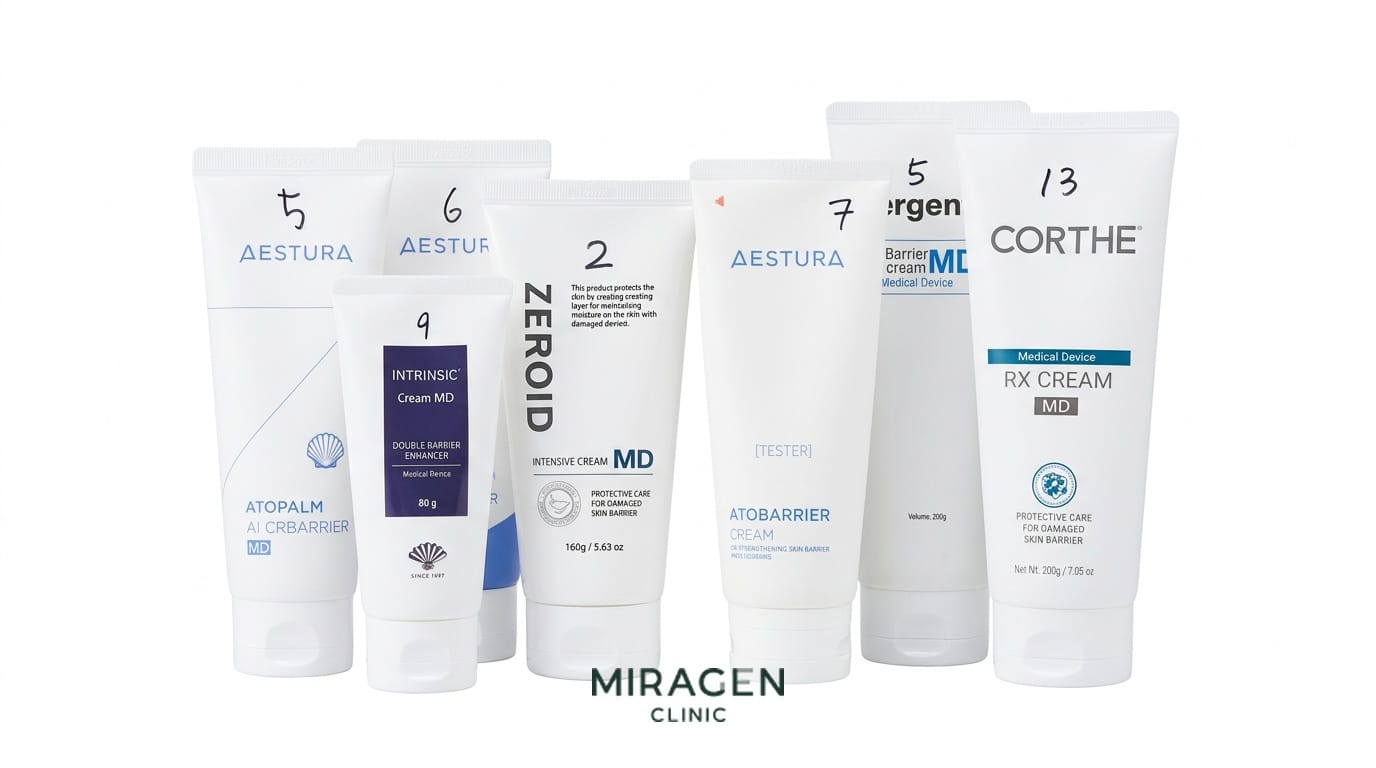
The key to MD cream lies in regulatory classification differences rather than special ingredients. It is classified as a Class 2 medical device by the Ministry of Food and Drug Safety and undergoes stricter manufacturing processes than general cosmetics, but this does not guarantee safety for all patients.
The practical advantage is that, as a medical device, it is eligible for South Korean private health insurance claims. Unlike general cosmetic moisturizers, MD cream can be claimed through private health insurance when purchased at a clinic after receiving a prescription from a physician.
2. Why Moisturizers Must Be Chosen Carefully
The protective effect of moisturizers on the skin is an indisputable fact. A Cochrane systematic review demonstrated that atopic dermatitis patients who consistently used moisturizers showed significant benefits in relapse rates and steroid usage.1
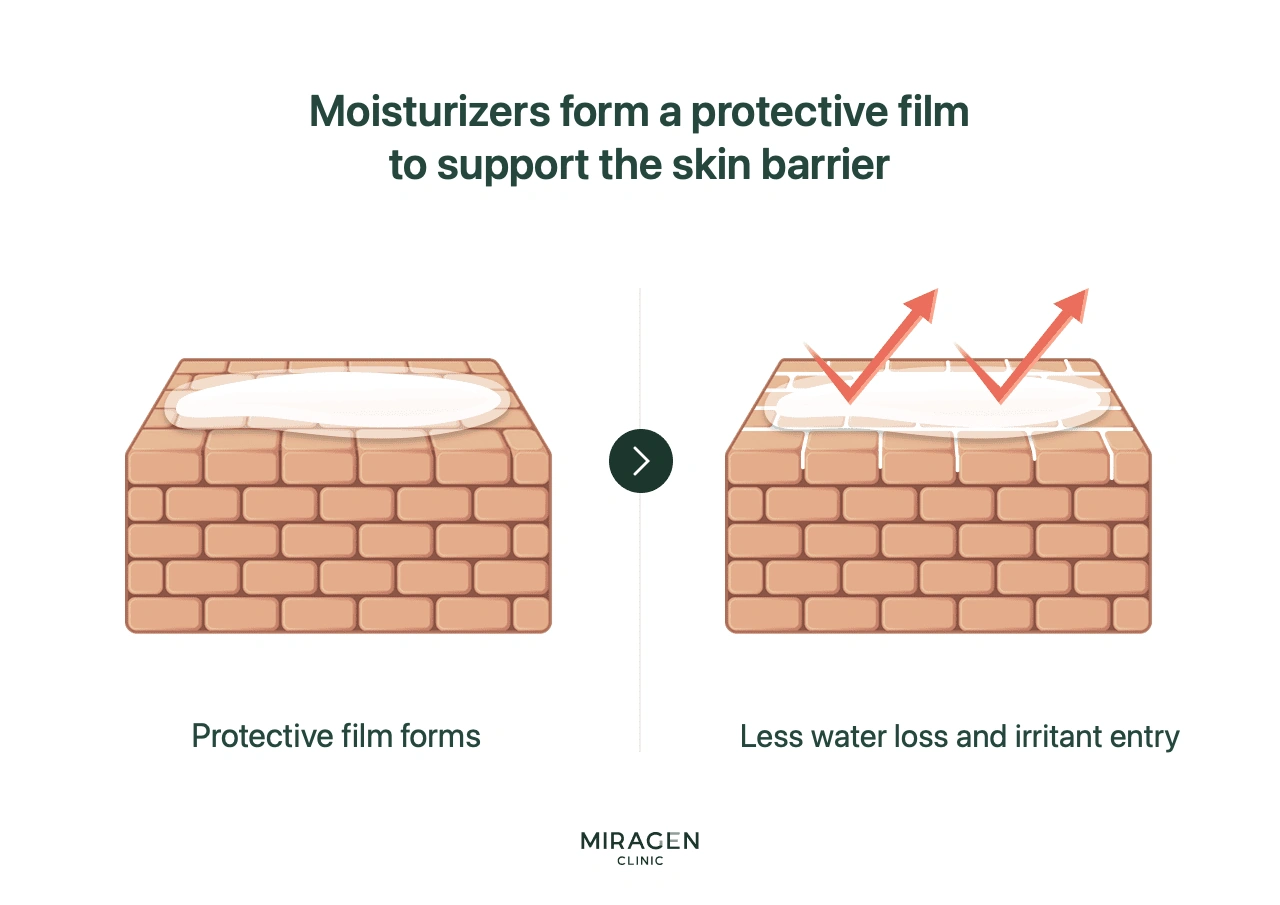
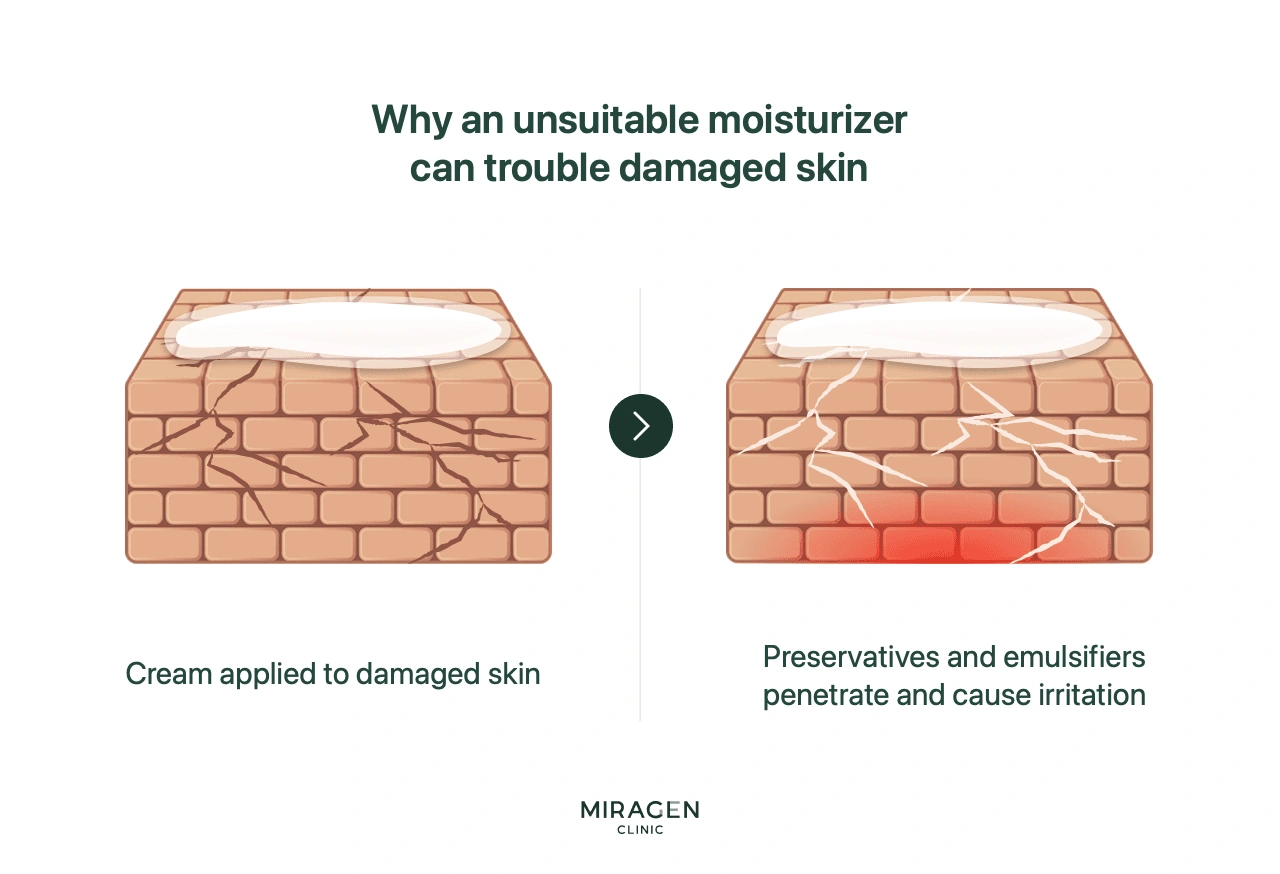
However, for patients with weakened skin barriers, even previously well-tolerated moisturizers can become irritating.
When the barrier is intact, moisturizers remain on the skin surface and serve as a protective layer, but when the barrier is compromised, they can penetrate the skin and trigger inflammation.2
Therefore, what dermatitis patients need is a moisturizer that causes no problems even when small amounts penetrate.
3. Why Ingredient Lists Cannot Guide Moisturizer Selection
Many dermatitis patients analyze ingredient lists to find the “right moisturizer” mentioned above, but ingredient analysis has limitations for the following reasons.
First, ingredients do not act in isolation. The same ingredient can produce different skin reactions depending on concentration, formulation, pH, and adjuvant combinations. For ceramides, the ratio between lipids matters more than simple inclusion.2
Second, purification levels vary by raw material supplier. The same ingredient can produce different reactions if the type and amount of impurities differ. Therefore, identical ingredient lists do not guarantee identical skin reactions.
Third, individual responses to the same ingredient vary. For example, atopic dermatitis patients exhibit significantly higher delayed allergic reactions to preservatives than the general population.3 No amount of ingredient analysis can account for these individual sensitivity differences.
4. Moisturizer Matching Protocol
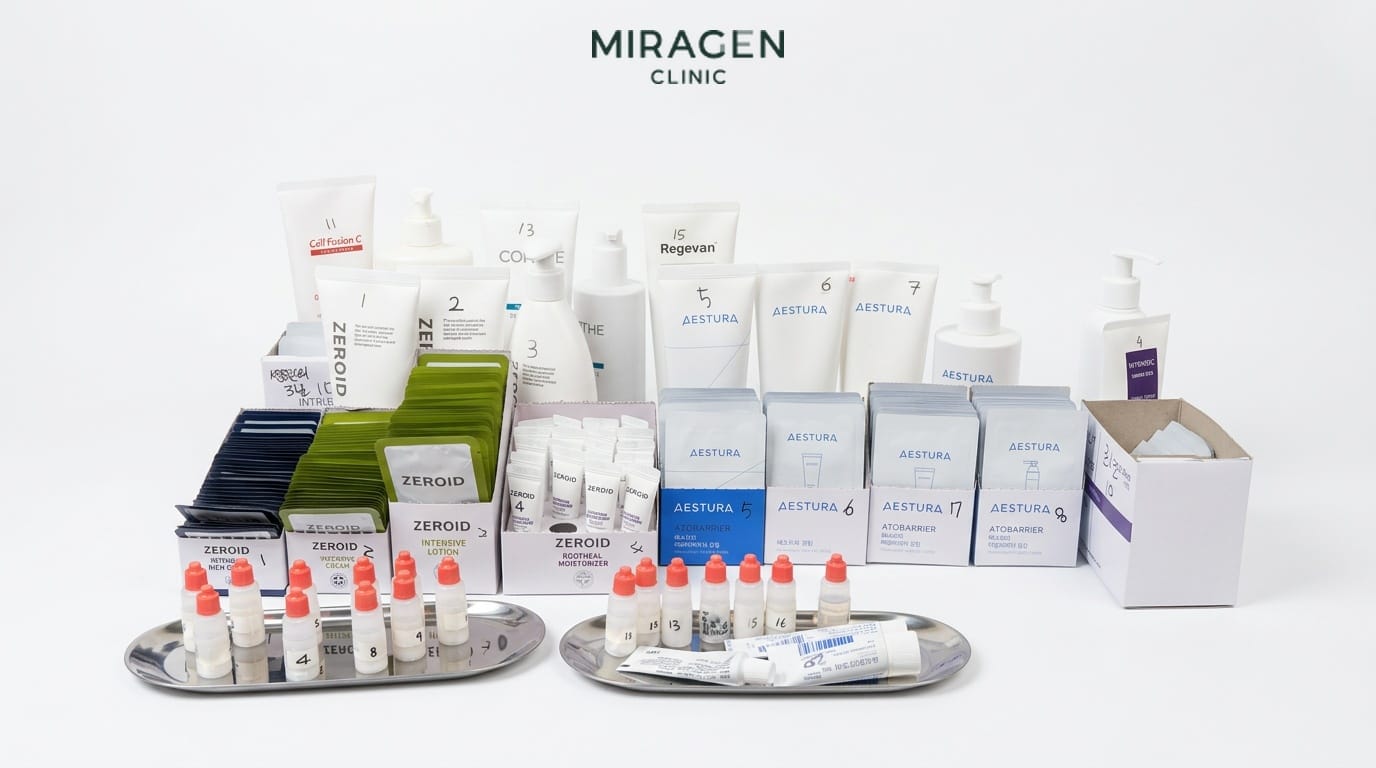
The most efficient method for finding a suitable moisturizer is screening with patch testing → pore assessment with Wood’s lamp followed by sample provision → sample application to lesional skin.
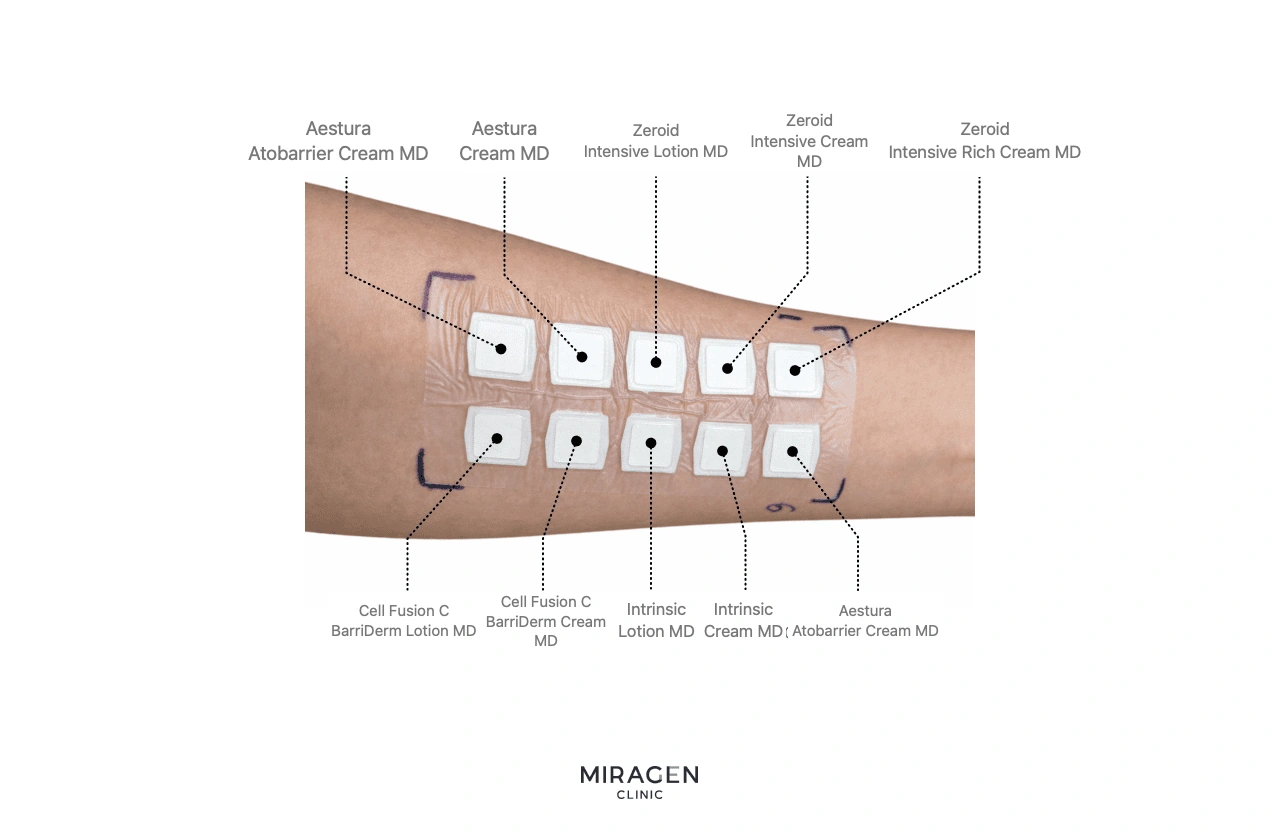
Step 1: Primary Screening with Patch Testing
Small amounts of various moisturizers are applied to the skin, covered for 48 hours to allow penetration, and then checked for irritation reactions. Detailed information is available on the Patch Testing page.
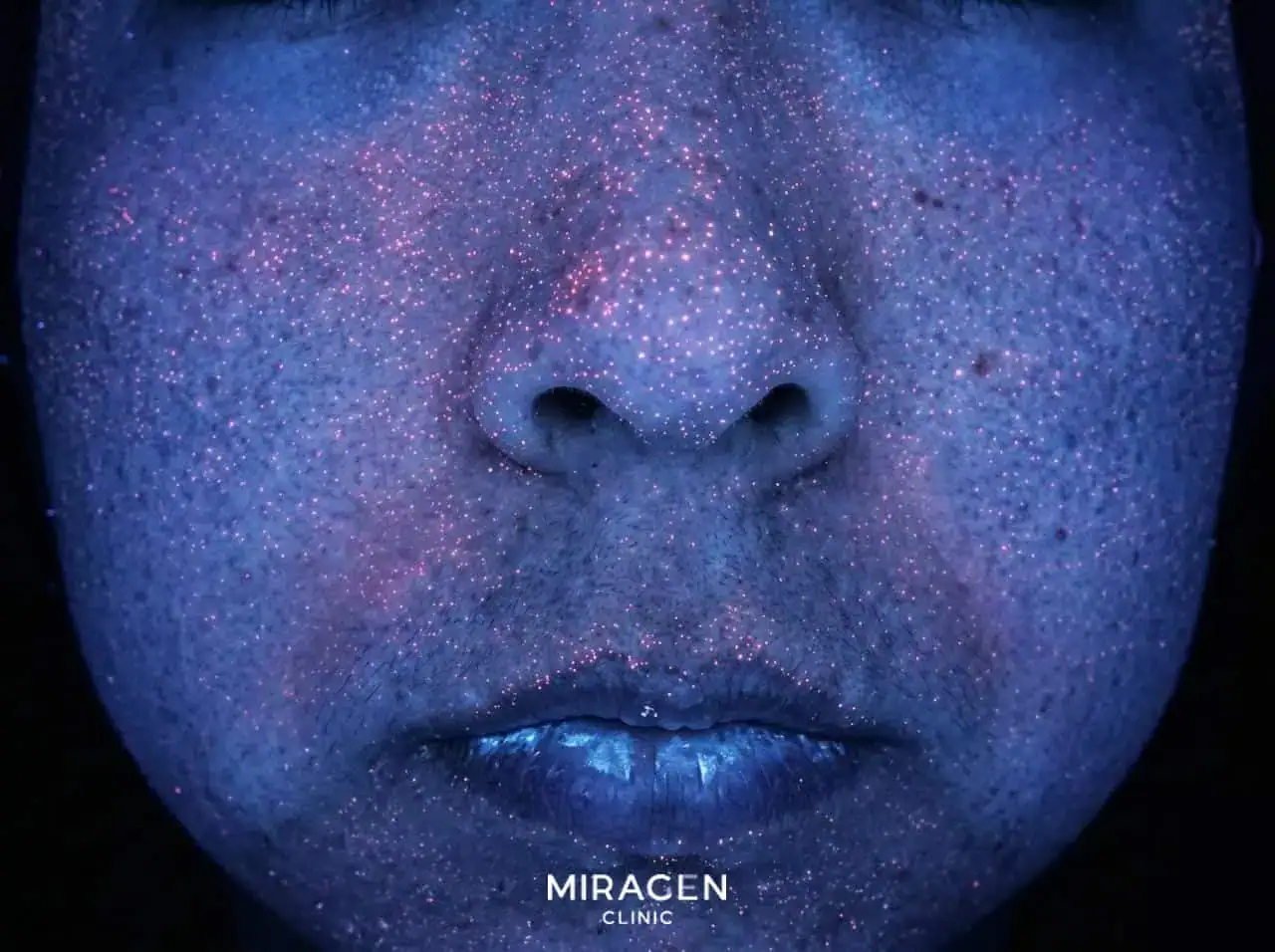
Step 2: Pore Assessment with Wood’s Lamp Followed by Sample Provision
For patients with dermatitis, thick cream formulations are generally preferable. Thin creams, lotions, and gels provide weaker barrier protection and may contain more preservatives that can cause irritation.
However, thick creams can occlude pores and trigger acne. After assessing pore condition with Wood’s lamp examination:
- If occlusion is minimal → thick cream samples,
- If significantly occluded → consider concurrent Acrif or lighter samples.
Note that for seborrheic dermatitis, excessive oil may promote Malassezia proliferation, requiring careful formulation selection.
Detailed information is available on the Wood’s Lamp Examination, Acrif, and Seborrheic Dermatitis pages.
Step 3: Sample Application to Lesional Skin
Even products that showed no issues on patch testing must be applied to actual lesions for 48–72 hours or longer to confirm that redness or itching does not worsen.
If no problems occur with lesional use, the product is prescribed.
Frequently Asked Questions
How is MD cream different from general moisturizers?
MD cream is a moisturizer classified by the Ministry of Food and Drug Safety as a Class 2 medical device. While manufacturing standards are stricter than for general moisturizers (cosmetics), this does not necessarily mean it will suit your skin. The practical advantage is eligibility for private health insurance claims.
Why don’t popular moisturizers or MD creams work for my skin?
When the skin barrier is damaged, ingredients such as preservatives and emulsifiers penetrate more than they would in normal skin. Since individual sensitivity to the same ingredients varies, even well-reviewed and popular products can irritate your skin.
Must I use thick formulations if my dermatitis is severe?
Thick creams are generally advantageous. However, if pores are significantly occluded, they may trigger acne, so concurrent use of Acrif after barrier recovery is recommended. Pore condition can be assessed with Wood’s lamp examination.
Is MD cream covered by private health insurance?
Yes. MD cream is generally eligible for private health insurance claims when purchased after receiving a prescription. However, specific criteria may vary by insurance company.
References
- van Zuuren EJ, Fedorowicz Z, Arents BWM. Emollients and moisturizers for eczema: abridged Cochrane systematic review including GRADE assessments. Br J Dermatol. 2017;177(5):1256-1271.
- Elias PM. Optimizing emollient therapy for skin barrier repair in atopic dermatitis. Ann Allergy Asthma Immunol. 2022;128(5):483-491.
- Shaughnessy CN, Malajian D, Belsito DV. Cutaneous delayed-type hypersensitivity in patients with atopic dermatitis: reactivity to topical preservatives. J Am Acad Dermatol. 2014;70(1):102-107.