
1. What is Emotional Flushing?
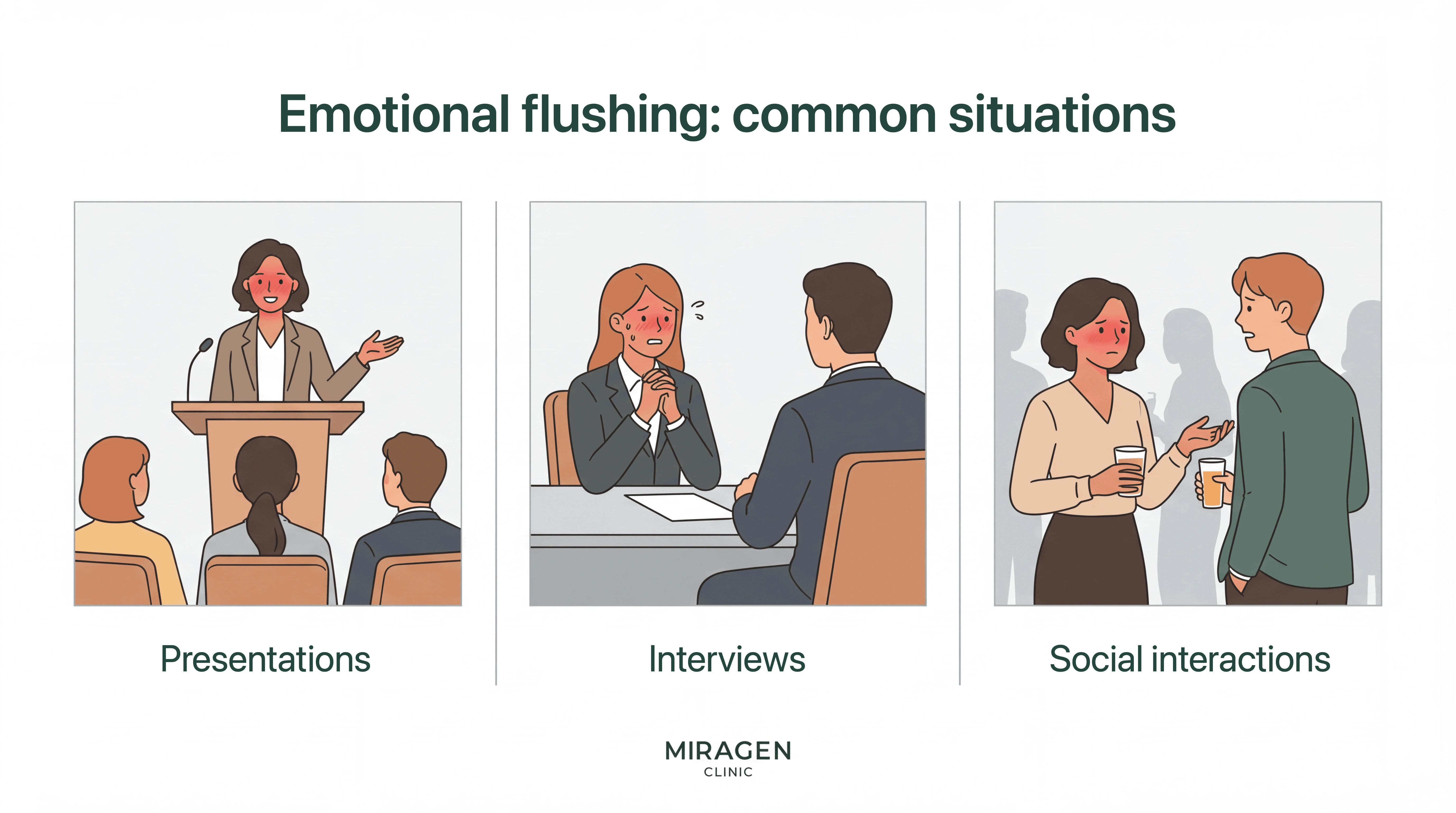
Emotional flushing is a phenomenon where the face turns red due to tension, stress, or emotional stimuli. It commonly appears in situations such as presentations, interviews, or interpersonal interactions, and is characterized by the fact that sweating may accompany the redness.
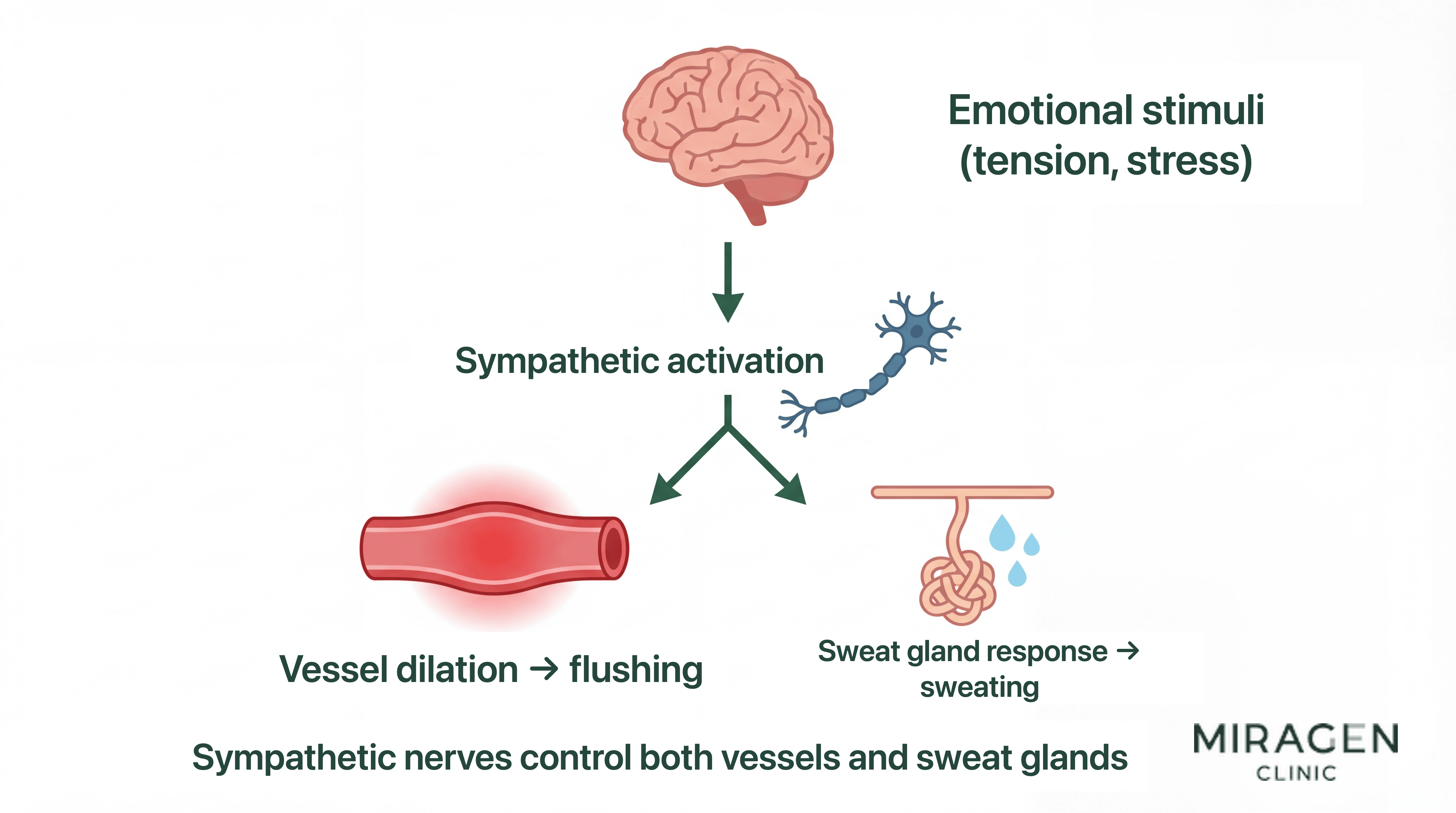
This reaction occurs due to the overactivation of the sympathetic nervous system, part of the autonomic nervous system. When the sympathetic nerves are stimulated, blood vessels in the face dilate, causing flushing, and simultaneously, sweat glands react, leading to accompanying perspiration. This is because the sympathetic nervous system controls both blood vessels and sweat glands.
2. Differences from Neurogenic Rosacea
Severe facial redness in specific situations is also a common symptom in neurogenic rosacea. Although outwardly similar, emotional flushing and neurogenic rosacea differ slightly in their causes and treatment directions.
| Item | Emotional Flushing | Neurogenic Rosacea |
|---|---|---|
| Sweat | May accompany | Not present |
| Sensation | Heat sensation | Stinging · Burning · Soreness |
| Main Triggers | Tension, emotion, stress | Heat, spicy food, alcohol |
| Pathway | Sympathetic nerves → Blood vessels + Sweat glands | TRPV1 → CGRP · Substance P |
The key distinguishing point is the presence or absence of sweat. If sweating accompanies the redness, it is highly likely to be flushing caused by the sympathetic nervous system pathway.
3. Differential Diagnostic Tests
If you visit the clinic due to flushing that suddenly worsens in specific situations, an autonomic nervous system test may help identify the cause.
Frequently Asked Questions
Can it be distinguished without tests?
A rough distinction is possible by checking if sweating accompanies the redness and under what situations it primarily occurs. However, for accurate differentiation, it is recommended to confirm with both HRV and TEWL tests.