1. What is an Allergy Test (MAST)?
The Multiple Allergen Simultaneous Test (MAST) is the most popular allergy test. It is a blood test used to identify substances that trigger acute allergic reactions. A single blood draw can simultaneously measure IgE antibodies for up to 108 or 54 different allergens.1
IgE (Immunoglobulin E) is an antibody that mediates allergic reactions. High levels of IgE for a specific substance indicate that an allergic reaction may occur upon contact with that substance.2
2. Why perform a MAST test?
When the skin barrier weakens, external substances penetrate the skin and cause inflammation.3
Repeated exposure to allergens through damaged skin causes the body to produce IgE antibodies. Subsequently, every time the body comes into contact with the same substance, allergic reactions such as itching, redness, and swelling occur.4
However, the specific substances that cause problems vary from person to person.
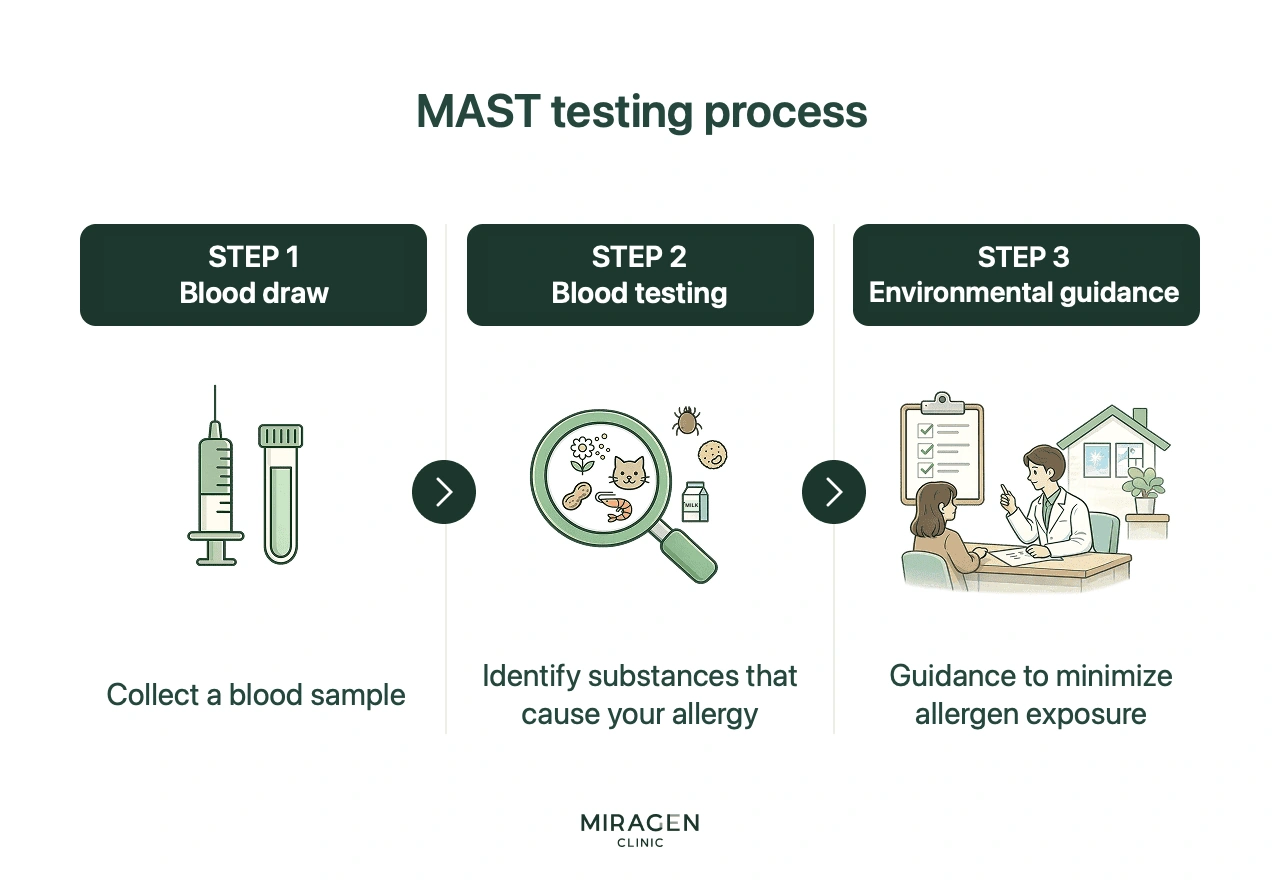
The MAST test is performed to identify substances that cause allergies in an individual and to provide guidance on improving the living environment to avoid those substances as much as possible.
For atopic dermatitis accompanied by allergies, it is crucial to avoid allergens. You can find more details on the Atopic Dermatitis Information Page.
3. Testing Process
The MAST allergy test proceeds in the following order:
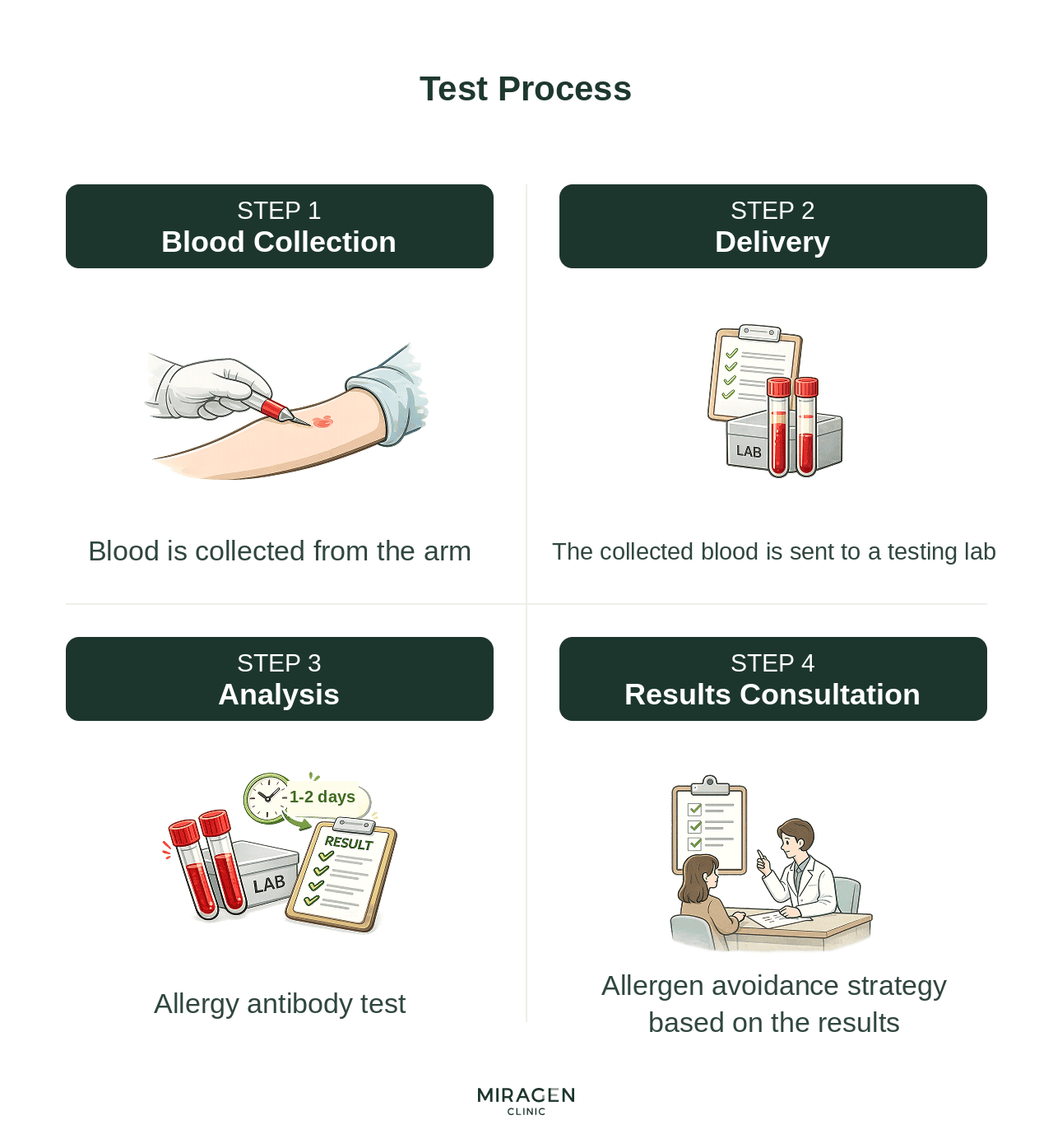
- Blood Draw: A small amount of blood is collected from the arm.
- Analysis: The collected blood is sent to a specialized laboratory to measure IgE antibodies for 108 (or 54) allergens.
- Result Consultation: Medical staff provide customized guidance on improving the living environment based on the results.
No special preparation is required before the test, and fasting is not necessary. Taking antihistamines or oral steroids does not affect the results.5
4. Do results change over time?
Allergy test results are not permanently valid. This is because the body’s immune response can change depending on age, environmental changes, and lifestyle habits.
Food allergies often disappear naturally as a child grows, even if they were positive during infancy. Egg and milk allergies are typical examples. Conversely, allergies to environmental allergens (house dust mites, pollen, etc.) tend to persist into adulthood. Furthermore, exposure to new environments (moving house, adopting a pet, etc.) may lead to new sensitizations to allergens that were not previously present.
Patients with chronic dermatitis should be particularly cautious. A weak skin barrier makes it easier for external antigens to enter the body through the skin, and this percutaneous sensitization can lead to new allergies that did not exist before. Therefore, if you suffer from chronic dermatitis and a long time has passed since your last test, it is highly recommended to consider retesting.
You may consider retesting in the following cases:
- If more than 2–3 years have passed since the last test
- If your living environment has changed significantly, such as moving or adopting a pet
- If symptoms persist despite avoiding causative antigens based on previous results
- If chronic dermatitis has persisted for a long time and you wish to check for the possibility of new allergies caused by percutaneous sensitization
- If you want to check whether antigens that were positive during childhood are still problematic in adulthood
5. Testing Cost
South Korea's National Health Insurance applies when the test is performed for atopy or other allergic diseases. The out-of-pocket cost for both the 108-type and 54-type tests is the same, at approximately ₩37,000. If you have South Korean private health insurance, you can claim the test cost.
6. How to Read the Results
6.1 Total IgE
Total IgE is a value that indicates an overall allergic tendency.
- 100 IU/mL or less: Negative (Normal range)
- Over 100 IU/mL: Positive (High allergic tendency)
A high total IgE level suggests the possibility of an overall allergic constitution and indicates a high likelihood that skin symptoms are due to atopy.
6.2 Specific Antigens (Specific IgE)
The degree of reaction to each antigen is indicated as Class 0–6.2
- Class 0: No reaction
- Class 1: Weak
- Class 2: Borderline
- Class 3: Moderately strong
- Class 4: Strong
- Class 5: Very strong
- Class 6: Extremely strong
6.3 Antigen Categories
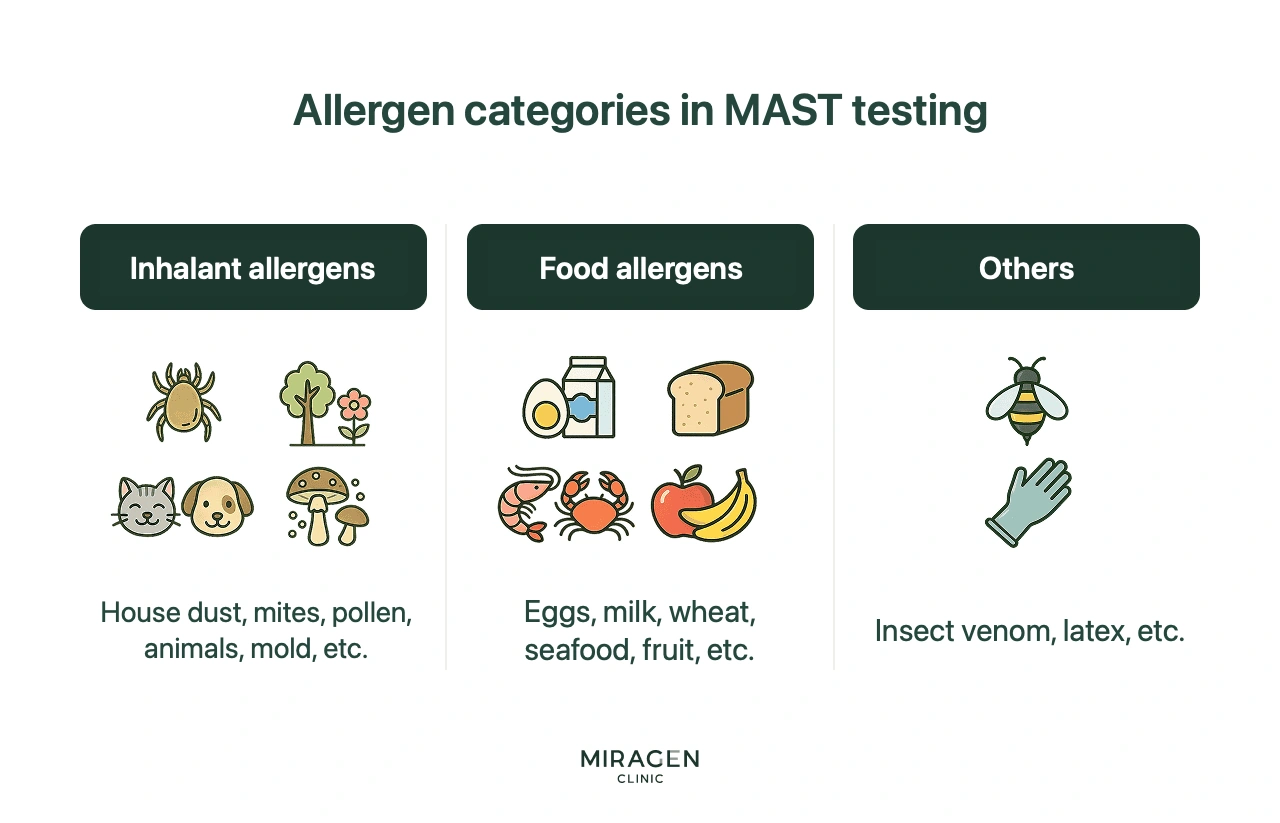
Test antigens are broadly divided into the following categories:
- Inhalant antigens: House dust, mites, pollen, animals, mold, etc.
- Food antigens: Eggs, milk, wheat, seafood, fruit, etc.
- Others: Insect venom, latex, etc.
7. How does it differ from a Skin Prick Test?
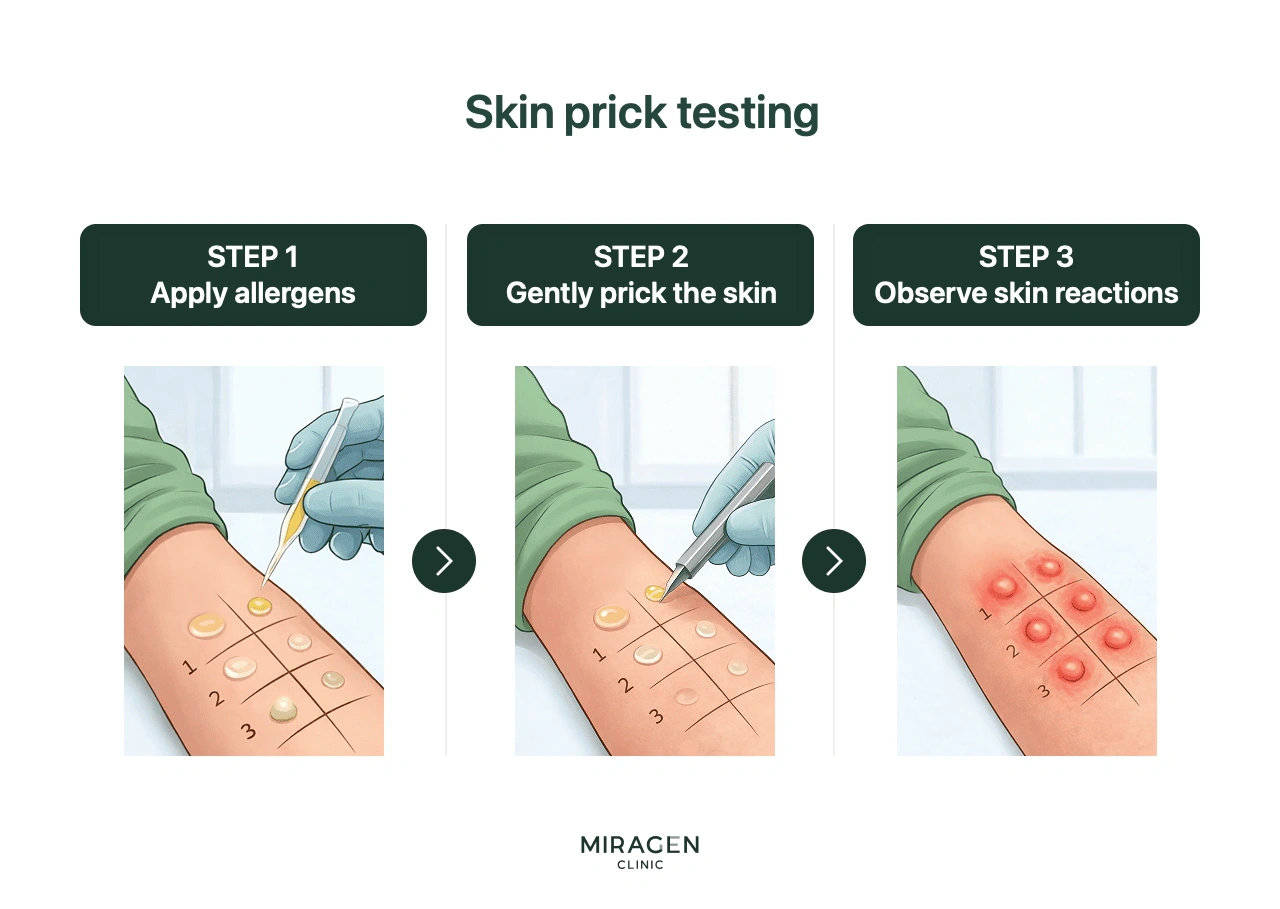
In the past, Skin Prick Tests, which involve injecting antigens into the skin to observe the reaction, were commonly used for allergy testing.6 At our clinic, we primarily utilize the MAST test for the following reasons:
- Convenience: While the skin prick test requires pricking dozens of allergens one by one on the arm or back, MAST is completed with a single blood draw.
- No Interference from Antihistamines: The results of a skin prick test are suppressed if antihistamines are being taken, requiring the patient to stop medication for at least 3–7 days before the test.7,6 MAST measures IgE in the blood and is unaffected by antihistamines.
- No Risk of Anaphylaxis: Although extremely rare, the skin prick test carries a risk of anaphylaxis (a severe allergic reaction) because allergens are introduced directly into the skin.8 MAST involves only a blood draw, so there is no such risk.
- Large-Scale Testing at Once: MAST is efficient as it can simultaneously test for 108–162 allergens with a single blood draw.1
8. Difference Between 108 and 54 Panels
- 108 Panel: Tests for the 108 substances that most commonly cause allergies in Koreans.
- 54 Panel: Tests for an additional 54 substances that are the next most common but not included in the 108 panel.
If the total IgE is high in the 108-panel test, the cause can be sought across a broader range through an additional 54-panel allergy test. However, the two tests cannot be performed simultaneously on the same day, so a separate visit is required. Nevertheless, if you visit within 10 days of the initial blood draw, the 54-panel test can be conducted using the stored blood without an additional draw. Therefore, if an additional test is needed, it is best to visit as soon as possible.
8.1 108-Panel Test Allergens
- House Dust · Mites: House dust, D. pteronyssinus (Dp), D. farinae (Df), Storage mite (A), Storage mite (T)
- Mold · Yeast: Penicillium, Cladosporium, Aspergillus, Mucor, Candida, Alternaria, Rhizopus, Yeast
- Animals: Cat, Dog, Horse, Guinea pig, Rabbit, Hamster, Mouse, Rat, Sheep
- Eggs · Dairy: Egg white, Egg yolk, Chicken, Milk, Cheese
- Grains · Nuts: Wheat flour, Barley, Rice, Buckwheat, Corn, Sesame, Peanut, Soybean, Walnut, Hazelnut, Cacao, Almond, Pine nut, Sunflower seed, White kidney bean, Brazil nut, Cashew nut, Pistachio, Chestnut, Macadamia nut
- Fish & Shellfish: Cod, Crab, Shrimp, Mackerel, Mussel, Oyster, Clam, Scallop, Tuna, Salmon, Lobster, Squid, Flounder, Anchovy
- Fruits · Vegetables: Tomato, Carrot, Potato, Strawberry, Peach, Apple, Celery, Cucumber, Citrus, Garlic, Onion, Kiwi, Mango, Banana, Mushroom, Eggplant, Pumpkin, Coconut
- Meat: Pork, Beef, Lamb
- Tree Pollen: Alder, Birch, Oak, Hazel, Olive, Sycamore, Willow, Poplar, Ash, White pine, Cedar, Acacia, Cypress, Elm
- Weed Pollen: Ragweed, Mugwort (Artemisia princeps), Mugwort (Artemisia vulgaris), Ox-eye daisy, Dandelion, Plantain, Chenopodium, Goldenrod, Amaranth
- Grass Pollen: Bermuda grass, Timothy grass, Rye grass pollen
- Bee Venom · Insects · Others: Honeybee venom, Wasp venom, Cockroach, Latex, CCD allergen
8.2 54-Panel Test Allergens
- Mites: Storage mite (L, Lepidoglyphus)
- Mold: Trichophyton rubrum, Malassezia
- Insects: Fire ant, Mosquito, Cockroach (American)
- Animals: Mouse epithelium, Chicken feathers
- Tree Pollen: Box elder, Beech, Olive, Walnut, Mesquite, Mulberry
- Weed Pollen: Ragweed (Western), Mugwort, Marsh elder, Sheep sorrel, Nettle
- Grass Pollen: Kentucky bluegrass, Velvet grass, Oat
- Grains · Nuts: Sunflower seed, Rye (food), Gluten (wheat), Pea
- Fruits · Vegetables: Lemon, Grapefruit, Cherry, Grape, Persimmon, Watermelon, Mustard, Cabbage, Broccoli
- Fish & Shellfish: Common squid, Octopus, Lobster, Trout, Oyster
- Eggs (Detailed): Egg (whole), Albumin (egg), Ovomucoid (egg)
- Milk (Detailed): Sterilized milk, Lactalbumin (milk), Casein (milk)
9. How Our Clinic Utilizes the Test
We do not simply deliver the test results.
- Result Analysis: We organize the allergens that showed a reaction by category.
- Customized Guidance: We provide specific methods for improving the living environment for each allergen.
- Determining Additional Testing: If necessary, we recommend an additional 54-panel test. For additional tests, we synthesize the results of both the 108 and 54 panels to provide further guidance on improving the living environment.
9.1 Example of an Actual Report
Below is an example of a report actually delivered to a patient who received the 108-panel test.
Hello [Name]~ Here are the results of the allergy test for the 108 substances that most commonly cause allergies in Koreans. 😊
First, the ‘Total IgE’ level, which indicates the overall degree of allergic reaction, was measured at over 200 IU/mL, which is higher than the reference value (100 IU/mL or less), showing a ‘positive’ reaction. This result means that your overall allergic tendency is high and suggests a high probability that your skin symptoms are due to atopic dermatitis.
The substances for which allergic reactions were confirmed in this test are as follows:
[Inhalant Allergens]
Class 4 (Strong): Birch
Class 3 (Moderately strong): House dust mite (Dp), House dust mite (Df), Sycamore, Poplar
Class 2 (Borderline): House dust, Alder, Hazel, Oak, Ash, Amaranth, Bermuda grass
Class 1 (Weak): Dog, Chenopodium
[Food Allergens]
Class 3 (Moderately strong): Peach
Class 2 (Borderline): Cashew nut
Class 1 (Weak): Crab, Shrimp
Based on these results, we recommend the following living environment improvements and precautions to alleviate allergy symptoms.
[Inhalant Allergens]
House dust mites: You show a strong reaction to house dust and house dust mites. It is important to wash bedding regularly in hot water and to keep the house clean with frequent ventilation. Using mite-proof covers and reducing carpets or fabric furniture can also help.
Pollen: You show the strongest reaction to birch and generally react to various tree pollens such as sycamore, poplar, alder, hazel, oak, and ash, as well as weed/grass pollens like amaranth, Bermuda grass, and chenopodium. During seasons with high pollen counts (especially spring), it is advisable to wear a mask when going out and to shower immediately upon returning to remove pollen from the skin and clothes. Using an air purifier during ventilation can also be helpful.
Animal Allergens: There is a weak reaction to dogs. It is best to minimize contact if possible, and if you have a pet dog, it is recommended to keep it out of the bedroom.
[Food Allergens]
There are reactions to peach, cashew nut, crab, shrimp, etc. In particular, peach is a food that can cause cross-reactivity (Oral Allergy Syndrome) with birch pollen.9 It is advisable to limit the intake of these foods if they cause severe symptoms, but unconditional restriction is not recommended if they do not cause severe symptoms. Especially for crustaceans (crab, shrimp), allergic reactions can be severe, so please observe symptom changes carefully after consumption.
If symptoms do not improve after the lifestyle changes mentioned above, we recommend an additional allergy test for the 54 substances that are the next most common after the 108 substances tested this time.
9.2 Result Delivery Schedule
- Blood draw Friday afternoon – Monday morning → Thursday around 5:00 PM
- Blood draw Monday afternoon – Thursday morning → Friday around 5:00 PM
- Blood draw Thursday afternoon – Friday morning → Saturday around 5:00 PM
※ The AM/PM cutoff is 1:30 PM. Results will be delivered via KakaoTalk.
Frequently Asked Questions
How much does the test cost?
South Korea's National Health Insurance applies, and the out-of-pocket cost for both the 108 and 54 panels is approximately ₩37,000.
Should I choose the 108 or 54 panel?
Usually, the 108-panel test is performed first. If the total IgE is high but no clear causative allergen is found, an additional 54-panel test may be recommended. The two tests cannot be done on the same day, requiring a separate visit, but if you visit within 10 days of the initial blood draw, the test can be performed without an additional draw.
If a food allergy is detected, must I stop eating that food?
No. The MAST test shows the “possibility” of an immune response to a food; it does not necessarily mean it will cause symptoms. It is important to observe whether symptoms actually worsen when eating that food. Unconditional restriction is not recommended if it does not cause severe symptoms.
Can children be tested?
Yes, the test can be performed at any age as long as a blood draw is possible.
Can I be tested while taking antihistamines?
Yes, because the MAST test measures IgE antibodies in the blood, taking antihistamines does not affect the results. This differs from the skin prick test.
Do test results change over time?
Yes, they can change. Food allergies (especially eggs and milk) often disappear naturally as a child grows, even if they were positive during infancy. Conversely, environmental allergens (house dust mites, pollen, etc.) tend to persist into adulthood, and new sensitizations can occur due to changes in the living environment. Consider retesting if it has been more than 2–3 years since your last result or if your environment has changed significantly.
References
- Han M, Shin S, Park H, et al. Comparison of three multiple allergen simultaneous tests: RIDA allergy screen, MAST optigen, and polycheck allergy. Biomed Res Int. 2013;2013:340513.
- Hamilton RG, Adkinson NF Jr. In vitro assays for the diagnosis of IgE-mediated disorders. J Allergy Clin Immunol. 2004;114(2):213-25. J Allergy Clin Immunol. 2004;113(5):832-6.
- Spergel JM, Paller AS. Atopic dermatitis and the atopic march. J Allergy Clin Immunol. 2003;112(6 Suppl):S118-27.
- Lack G. Epidemiologic risks for food allergy. J Allergy Clin Immunol. 2008;121(6):1331-6.
- Des Roches A, Paradis L, Bougeard YH, Godard P, Bousquet J, Chanez P. Long-term oral corticosteroid therapy does not alter the results of immediate-type allergy skin prick tests. J Allergy Clin Immunol. 1996;98(3):522-7.
- Heinzerling L, Mari A, Bergmann KC, et al. The skin prick test – European standards. Clin Transl Allergy. 2013;3(1):3.
- Bernstein IL, Li JT, Bernstein DI, et al. Allergy diagnostic testing: an updated practice parameter. Ann Allergy Asthma Immunol. 2008;100(3 Suppl 3):S1-148.
- Reid MJ, Lockey RF, Turkeltaub PC, et al. Survey of fatalities from skin testing and immunotherapy 1985-1989. J Allergy Clin Immunol. 1993;92(1 Pt 1):6-15.
- Muluk NB, Cingi C. Oral allergy syndrome. Am J Rhinol Allergy. 2018;32(1):27-30.