1. What is Rosacea?
Rosacea is a chronic skin condition characterized by redness in the central part of the face, particularly the cheeks, nose, forehead, and chin.
The name in Korean (Jusa) uses the Chinese character for alcohol (酒), originating from how the face becomes flushed as if one has been drinking.
2. Types and Classification
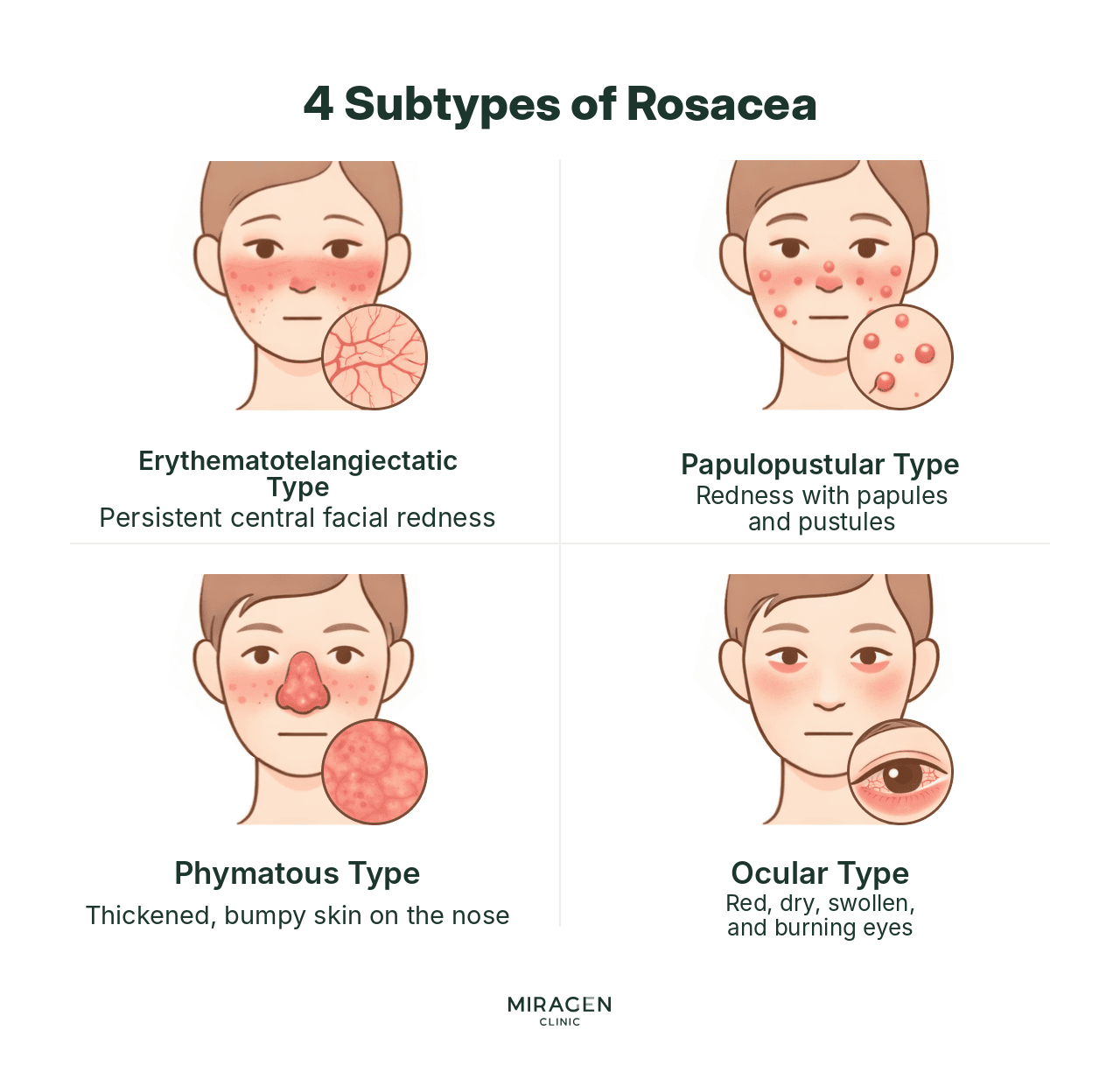
Rosacea is largely divided into four subtypes based on symptoms.
2.1 Erythematotelangiectatic Rosacea (ETR)
The most common type, characterized by persistent flushing in the center of the face.
The face feels hot and flushed when body temperature rises or emotions intensify, and the redness does not easily subside over time.
Small blood vessels (capillaries) may also appear like spider webs on the cheeks and nose.
Among ETR cases, some exhibit particularly severe flushing accompanied by burning or stinging sensations and do not respond well to conventional treatments. This is referred to as neurogenic rosacea, accounting for approximately 10–15% of all rosacea cases.1 Detailed information on its causes and treatment can be found on the Neurogenic Rosacea page.
2.2 Papulopustular Rosacea
Red bumps (papules) and pus-filled spots (pustules) that look like breakouts appear along with flushing.
While it may look similar to acne, it lacks the “blackheads (comedones)” common in acne.
2.3 Phymatous Rosacea
The skin becomes thick and bumpy.
It most commonly affects the nose and is often referred to as “rhinophyma.” It is more prevalent in men.
2.4 Ocular Rosacea
Symptoms include bloodshot, dry eyes, and swollen, stinging eyelids.
In severe cases, it can affect vision, requiring consultation with an ophthalmologist.
3. Causes of Rosacea
Traditionally, rosacea has been explained as a disease caused by sensitive blood vessels.
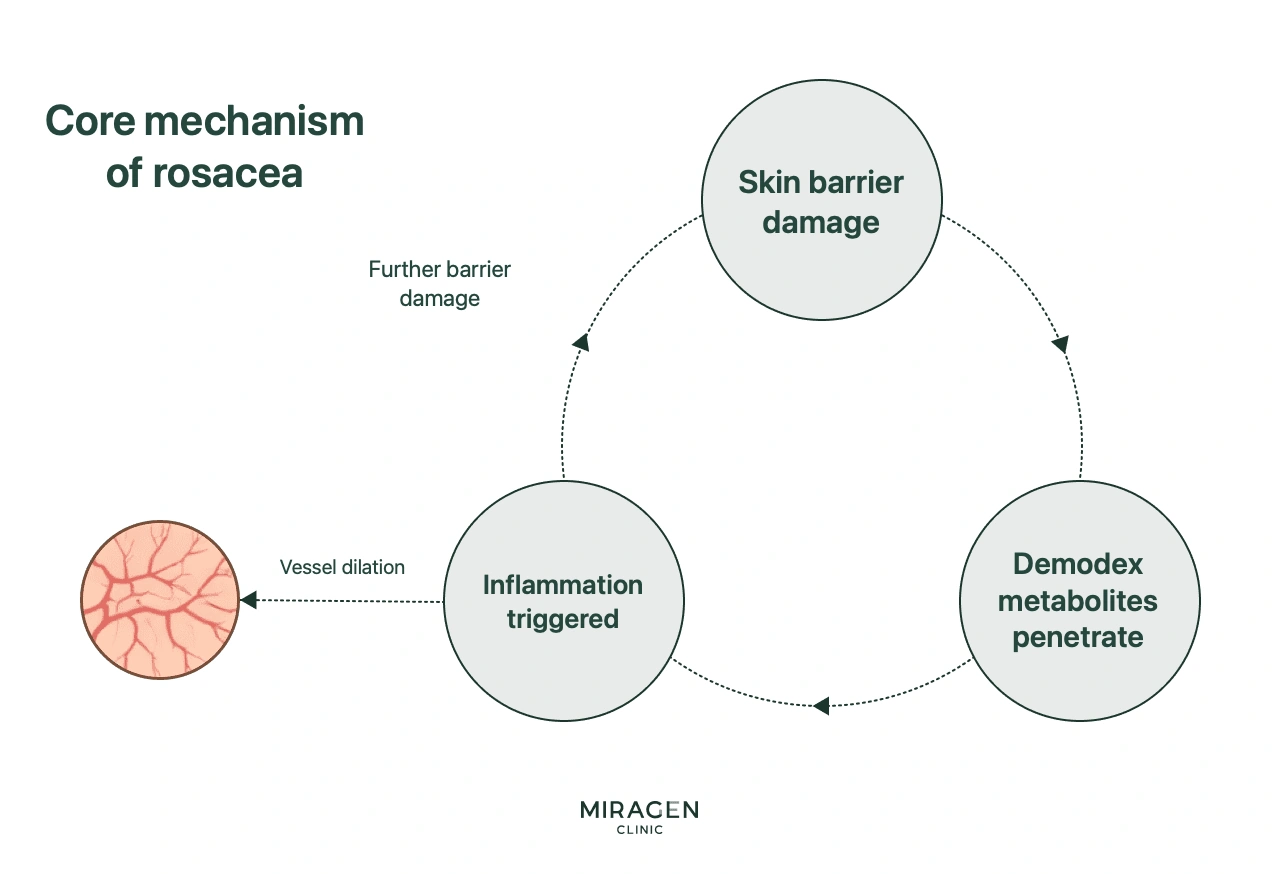
However, recent studies show that skin barrier damage occurs first, and vascular dilation is the result.
3.1 Core Mechanism: Barrier Damage
The skin of rosacea patients is accompanied by severe barrier damage.2
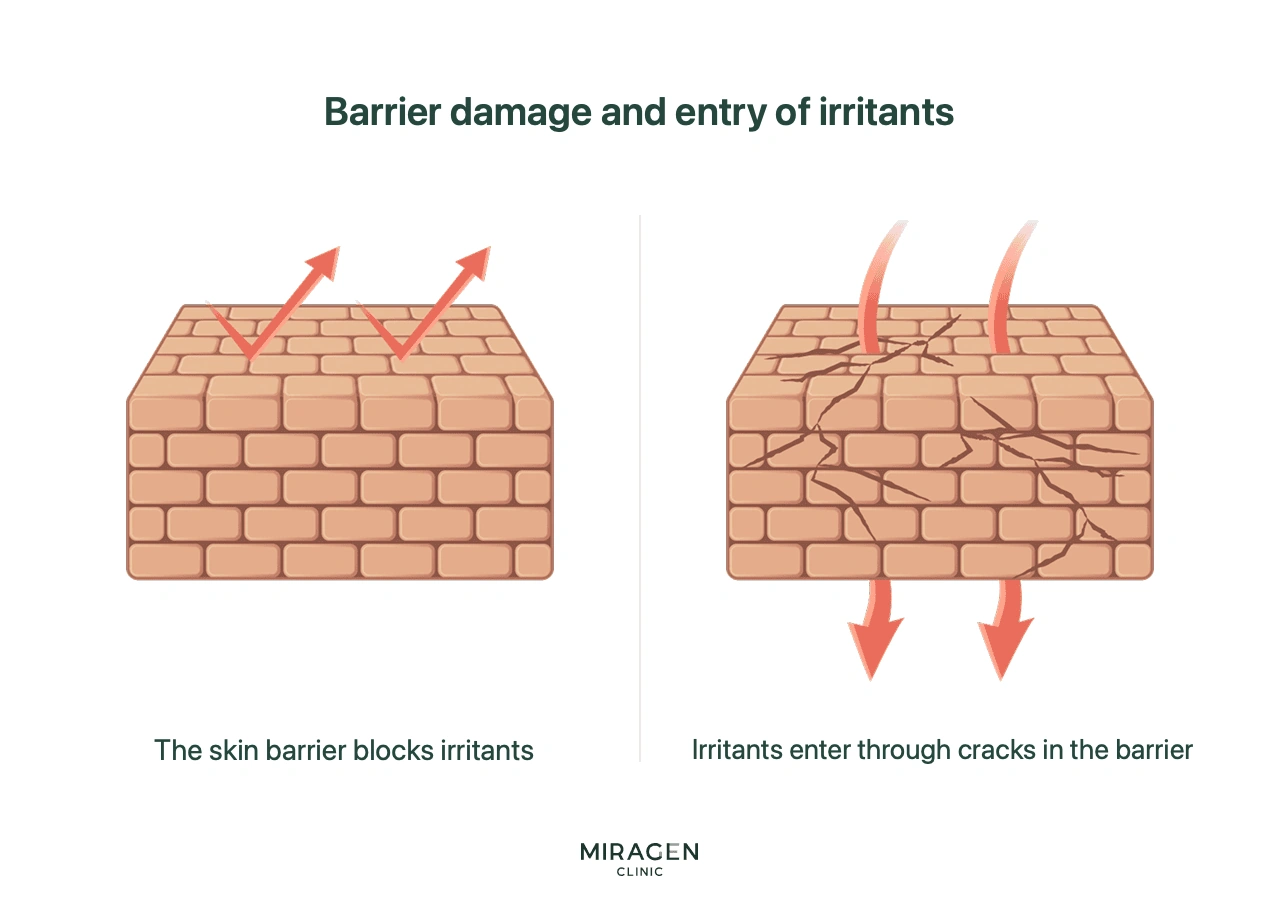
The damaged skin barrier triggers the following chain reaction: 3,4,5
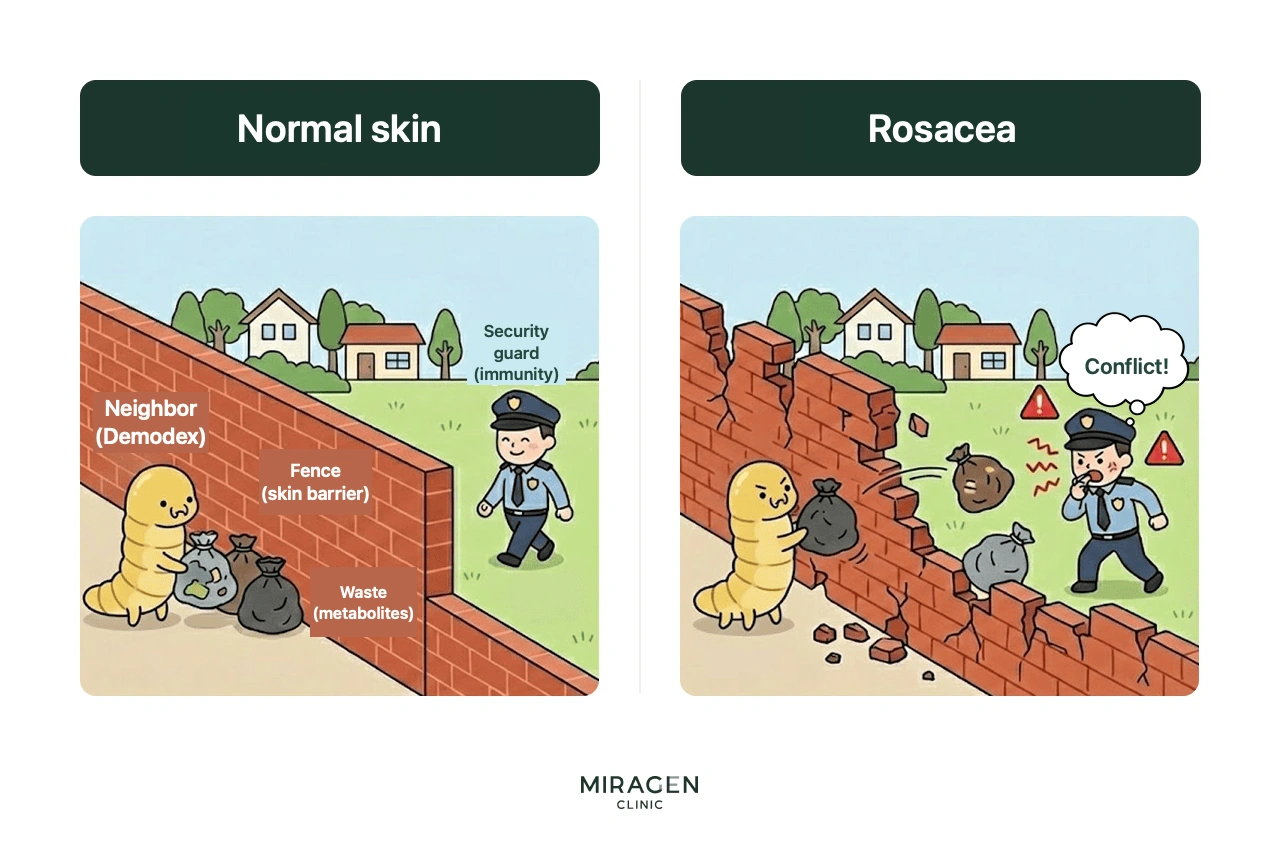
- Penetration of Demodex byproducts: Bacteria and shells released when Demodex mites die pass through the weakened barrier.
- Triggering inflammation → Further barrier damage + Vascular dilation (flushing)
3.2 Rosacea, Atopic Dermatitis, and Seborrheic Dermatitis: What is the difference?
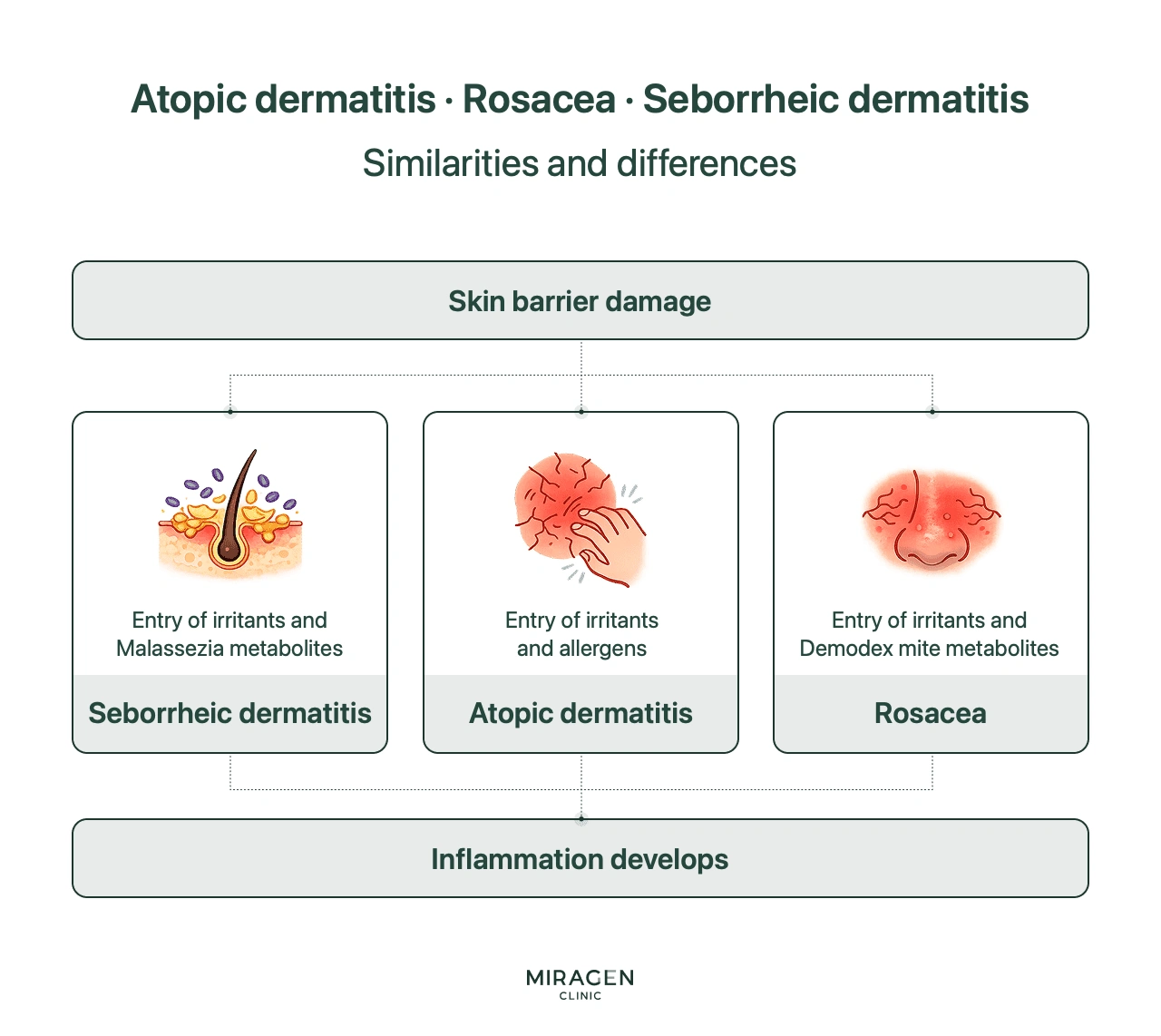
All three conditions share the commonality that the skin barrier is weak, making contact dermatitis prone to occur even from everyday irritants. In addition, each condition has its own unique aggravating factors.
- Rosacea — Vasodilation and inflammation caused by the penetration of Demodex mite metabolites
- Atopic Dermatitis — Immune hypersensitivity reaction triggered by the penetration of allergens (dust mites, pollen, etc.).
- Seborrheic Dermatitis — Inflammation caused by the penetration of Malassezia fungal metabolites
Since the fundamental cause is the same, the treatment principle of requiring barrier recovery is also shared. However, because the additional treatments tailored to each condition differ, an accurate diagnosis is crucial.
Detailed information on each condition can be found in the Atopic Dermatitis Guide and Seborrheic Dermatitis Guide.
3.3 Demodex Mites
Demodex mites are tiny mites that naturally live in human facial hair follicles. While they exist on healthy skin, some reports suggest they are found in higher numbers in rosacea patients.6,7
However, the key is not the ‘quantity’ of Demodex, but the ‘vulnerability’ of the follicles.
If the skin barrier is strong, Demodex byproducts (bacteria, exoskeleton fragments, etc.) cannot enter the skin.6 But when the barrier weakens, these byproducts penetrate the skin and cause inflammation. This is why Soolantra (ivermectin) is often effective even when Demodex tests show normal levels.8
4. Soolantra and Rozex Gel
Soolantra (ivermectin 1%) is a first-line treatment for rosacea. It reduces the cause of inflammation by directly killing Demodex mites. Symptoms may temporarily worsen during early use due to the die-off reaction of the mites, and caution is needed as contact dermatitis can occur if the skin barrier is weak.8,9
Detailed information on the mechanism and precautions for Soolantra can be found in the Soolantra Guide, and a comparison with Rozex Gel (metronidazole) is available in the Soolantra vs. Rozex Gel Comparison article.
5. Steroids
It is recommended to avoid using steroid ointments for rosacea. Steroids prescribed for other conditions should not be used arbitrarily for rosacea symptoms.
The German Society of Dermatology (2022) and the National Rosacea Society (NRS) state that steroids are not indicated for rosacea and may actually worsen it.9,10 The reasons are as follows:
- They thin the skin barrier, worsening the fundamental cause of rosacea.
- Immune suppression leads to an increase in Demodex, and byproducts penetrate more easily through the weakened barrier.
- Discontinuation causes a rebound effect where blood vessels dilate further, worsening symptoms.11
- Even individuals without prior rosacea can develop rosacea-like symptoms after long-term use on the face.
6. Protopic and Elidel
Since it is best to avoid steroids for rosacea, Protopic and Elidel can serve as alternatives when necessary. They can also mitigate the die-off reaction during the initial stages of Soolantra use.12
However, when the skin barrier is weak, excessive absorption can lead to contact dermatitis; therefore, it is advisable to check sensitivity with a patch test before use.
In addition to anti-inflammatory effects, Protopic and Elidel stimulate TRPV1 receptors on cutaneous sensory nerves, releasing Substance P and CGRP. While this is why they may cause a burning sensation initially, this action can help with the flushing and burning of neurogenic rosacea.
The context and characteristics of each medication can be found in the Elidel Guide and Protopic Guide.
7. Moisturizers
Moisturizers support skin barrier function to reduce the penetration of external irritants and Demodex byproducts. However, when the skin barrier is weak, even moisturizers can be absorbed excessively and cause irritation, so finding a suitable product is crucial.3
For more details on the role of moisturizers and selection criteria, please refer to the MD Cream Guide.
8. Managing Irritants in Daily Life
Since rosacea involves a weakened skin barrier, even minor daily irritants can worsen symptoms. The key is reducing external stimuli that further break down the barrier.
8.1 Perfumes and Fragrances
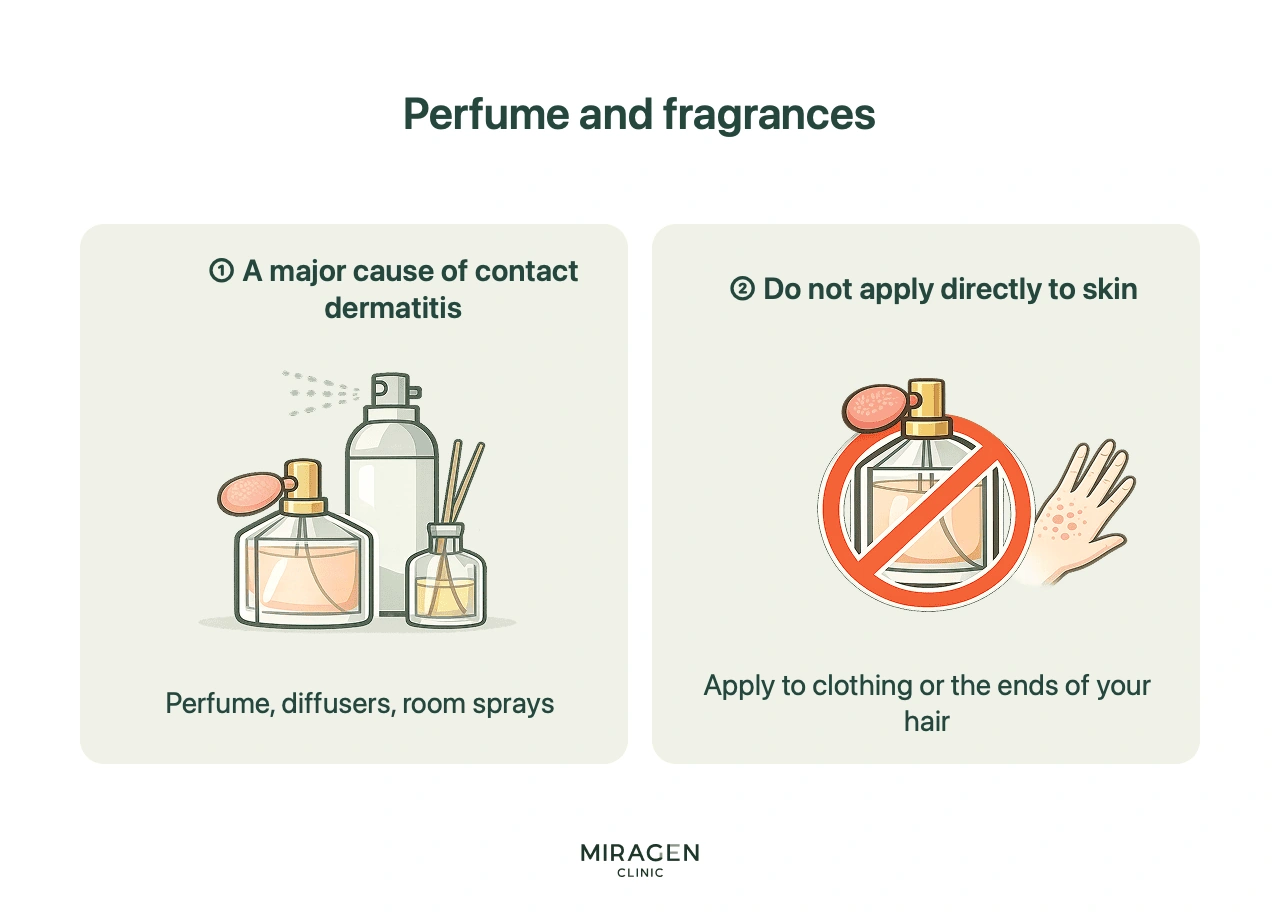
- A major culprit in worsening dermatitis: Perfume is one of the most common causes of allergic contact dermatitis.13 Beyond perfumes, airborne fragrance components from diffusers and room sprays can settle on the skin and cause irritation.
- No direct application: When the skin barrier is unstable, you must absolutely avoid spraying perfume directly onto the skin. If you desire a scent, consider alternatives such as applying a small amount to clothing or the ends of your hair instead of the skin.
8.2 Other Lifestyle Habits
- Minimize cosmetics: It is advisable to refrain from using sunscreen or cosmetics until the skin barrier recovers. They can seep into the skin and exacerbate inflammation.
- UV protection: While it is true that UV rays are bad for rosacea, problems are more often caused by sunscreen seeping in. Use parasols or sun caps to avoid UV rays rather than relying on sunscreen.
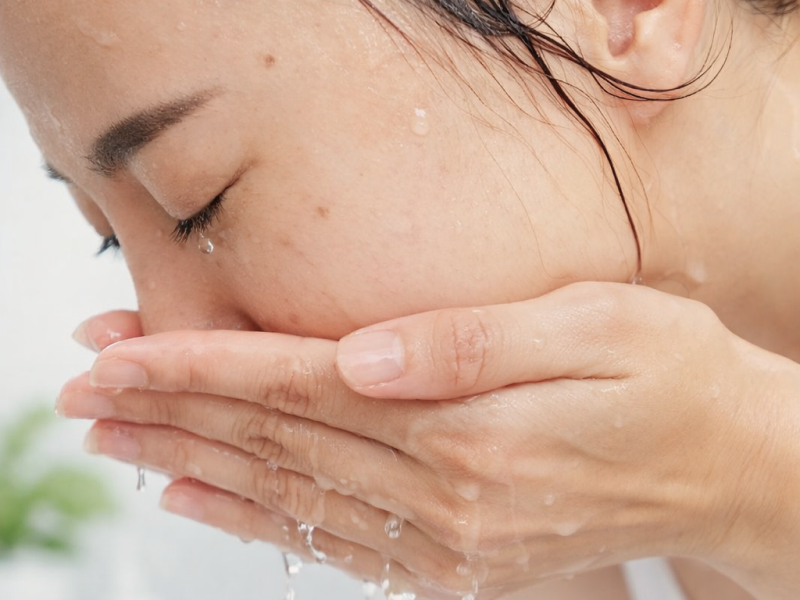
- Proper cleansing and showering: It is very important to wash away irritants on the skin. Ensure you wash your face and shower every morning and evening, and wash immediately if exposed to external irritants. However, harsh cleansers or hot water will further break down the barrier. If the barrier is significantly weakened, focus on water-only cleansing and use lukewarm water.
- Watch your body temperature: High body temperatures from saunas or baths increase blood flow to the skin, which can worsen inflammation.
9. Our treatment approach
We prioritize the recovery of the skin barrier over simply suppressing inflammation.
To achieve this, we provide guidance on lifestyle habits to reduce external irritation after performing patch tests and skin barrier function tests, and we perform treatments to protect the skin barrier.
First visit
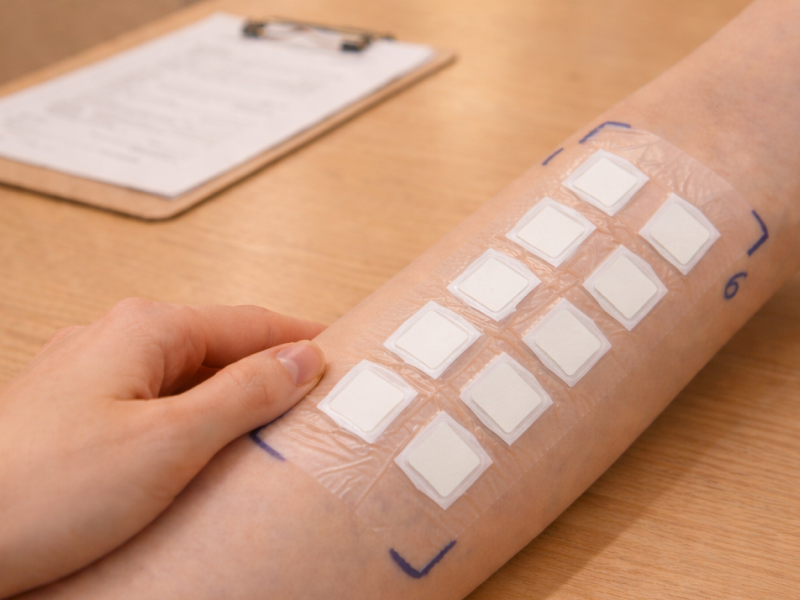
1. Patch test for delayed contact allergy
Check sensitivity to Protopic, Elidel, and MD creams.
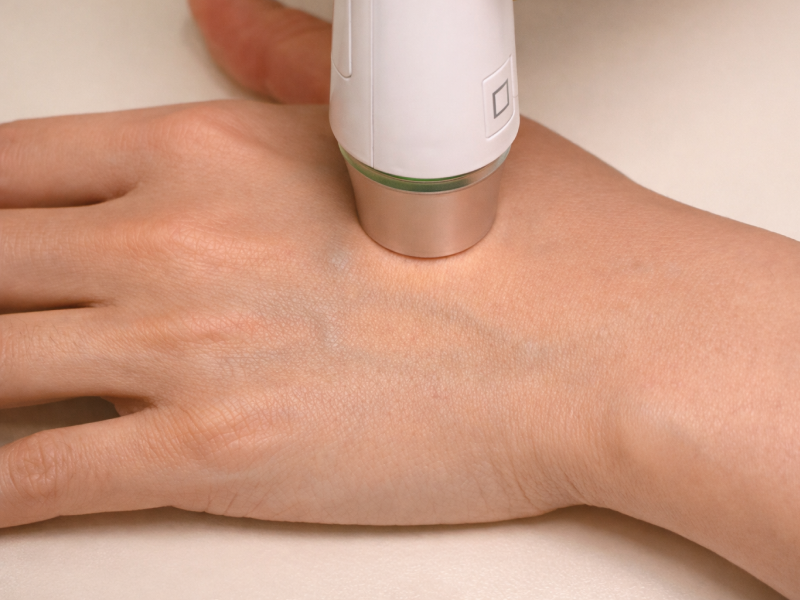
2. Skin barrier function (TEWL) test
Assess how much the skin barrier's protection against external irritants and water loss has been impaired.
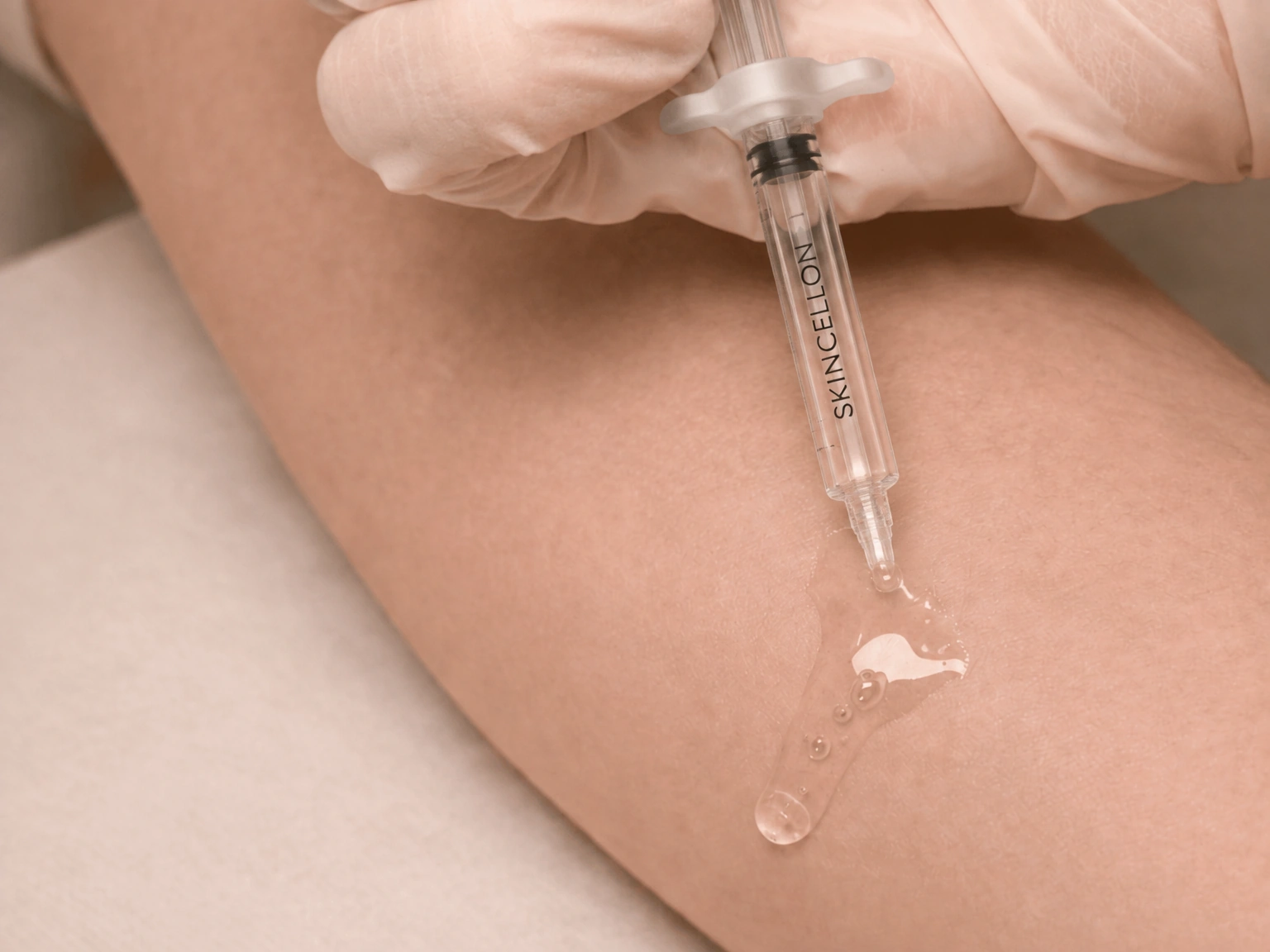
3. Skin barrier improvement
Protect the skin barrier with Skincellon, a wound dressing material.
Second visit
1. Lifestyle guidance
Recommend changes to the living environment based on test results.
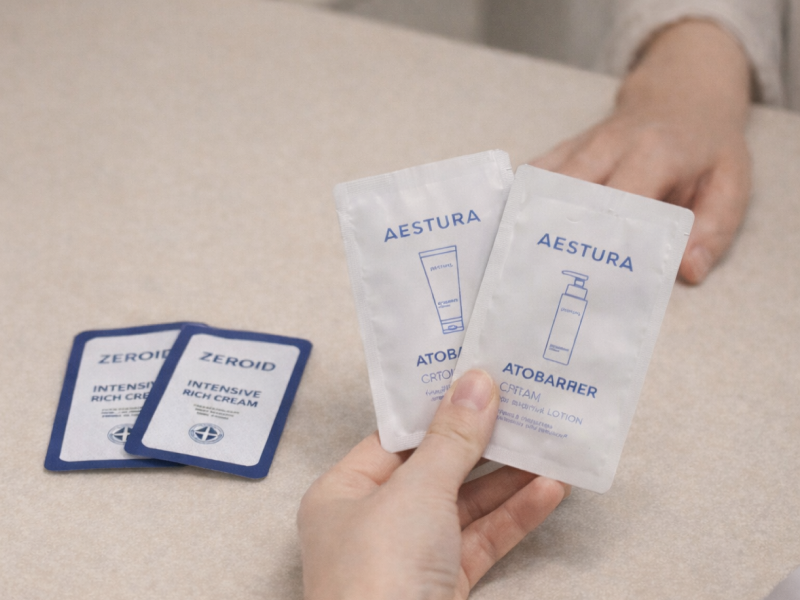
2. MD cream samples
Provide samples of MD creams that showed no sensitivity.
3. Ointment prescription
As needed, prescribe ointments that showed no sensitivity to control inflammation, Demodex mites, and fungi.

Translation of visible Korean original Itemized medical bill. Serial number: 202601291614-20221760. Date of care: 29 January 2026. Patient category: health insurance. Code AA154: initial consultation fee at a clinic, 18,840. Code BM5001LZ: Atobarrier Cream MD 100 g, 35,000. The currency unit and other fields are not readable in this crop.
4. Skin barrier improvement
Protect the skin barrier with Skincellon, a wound dressing material.
Conclusion
Rosacea is a chronic inflammatory disease that begins with skin barrier damage. Vascular dilation and flushing are the results of barrier damage and immune overactivity, not the cause.
The key to treatment is blocking the starting point of the immune response by restoring the skin barrier.
Frequently Asked Questions
Can rosacea be cured?
As it is a chronic condition, it is difficult to eliminate completely. However, by restoring the skin barrier and managing aggravating factors, it can be controlled to a level that does not interfere with daily life. Usually, noticeable improvement is experienced after 3 to 6 months of consistent treatment.
Is rosacea a form of acne?
No. While papulopustular rosacea, which involves bumps (papules and pustules), may look like acne, it lacks the blackheads (comedones) common in acne and has different causes. Accurate diagnosis is important because the treatments differ.
Is a red face always rosacea?
There are many causes for facial flushing. Rosacea is characterized by persistent redness in the central face (cheeks, nose, forehead, chin), often accompanied by visible capillaries or bumps. Unlike temporary flushing, it does not subside over time.
Steroid ointments seem to help; can I keep using them?
Steroid ointments should not be used for rosacea. While they may provide immediate relief, they weaken the skin barrier further and eventually worsen symptoms. Both the German Society of Dermatology guidelines and the National Rosacea Society exclude steroids from rosacea treatment options.
Do I really have to quit spicy food and alcohol?
Spicy food and alcohol (especially red wine) can stimulate heat receptors in skin nerves, dilate blood vessels, and worsen flushing. If it is difficult to quit entirely, a realistic approach is to avoid them during periods of severe symptoms and try small amounts once the barrier has stabilized.
My Demodex test was normal. Do I still need treatment?
Yes, treatment may still be necessary even if Demodex counts are normal. The key is not the amount of mites, but the fact that the skin barrier is too weak to handle even normal levels of Demodex byproducts. Once the barrier is restored, symptoms will not occur even with the same amount of mites.
How long does the treatment take?
While it varies by individual, initial improvement is typically felt within 1 to 2 months, and the barrier stabilizes over 3 to 6 months. Continued lifestyle management and regular follow-ups are important thereafter.
References
- Wu C, Tang S, Sun Q, et al. Clinical Characteristics and Serum CGRP Level Differences Between Neurogenic Rosacea and Non-Neurogenic Rosacea. Int J Dermatol. 2025;64(Suppl 2):42-51.
- Medgyesi B, Dajnoki Z, Béke G, et al. Rosacea Is Characterized by a Profoundly Diminished Skin Barrier. J Invest Dermatol. 2020;140(10):1938-1950.
- Addor FAS. Skin barrier in rosacea. An Bras Dermatol. 2016;91(1):59-63.
- Yamasaki K, Gallo RL. Rosacea as a disease of cathelicidins and skin innate immunity. J Investig Dermatol Symp Proc. 2011;15(1):12-5.
- Chen LX, Hao PS. The role of skin barrier and immune abnormalities in the pathogenesis of Rosacea. Clin Exp Med. 2025;25(1):324.
- Jarmuda S, O’Reilly N, Zaba R, et al. Potential role of Demodex mites and bacteria in the induction of rosacea. J Med Microbiol. 2012;61(Pt 11):1504-1510.
- Jarmuda S, McMahon F, Żaba R, et al. Correlation between serum reactivity to Demodex-associated Bacillus oleronius proteins, and altered sebum levels and Demodex populations in erythematotelangiectatic rosacea patients. J Med Microbiol. 2014;63(Pt 2):258-262.
- Deeks ED. Ivermectin: A Review in Rosacea. Am J Clin Dermatol. 2015;16(5):447-452.
- Clanner-Engelshofen BM, Bernhard D, Dargatz S, et al. S2k guideline: Rosacea. J Dtsch Dermatol Ges. 2022;20(8):1147-1165.
- Thiboutot D, Anderson R, Cook-Bolden F, et al. Standard management options for rosacea: The 2019 update by the National Rosacea Society Expert Committee. J Am Acad Dermatol. 2020;82(6):1501-1510.
- Bhat YJ, Manzoor S, Qayoom S. Steroid-induced rosacea: a clinical study of 200 patients. Indian J Dermatol. 2011;56(1):30-32.
- Czarnecka-Operacz M, Jenerowicz D. Topical calcineurin inhibitors in the treatment of atopic dermatitis – an update on safety issues. J Dtsch Dermatol Ges. 2012;10(3):167-172.
- Cheng J, Bhatt S, Engasser H, et al. Fragrance allergic contact dermatitis. Dermatitis. 2014;25(5):232-245.