1. What is Wood’s Lamp Examination?
A Wood’s lamp is an examination that shines a special light in the UV spectrum onto the skin to observe the distribution of fluorescence not visible to the naked eye.
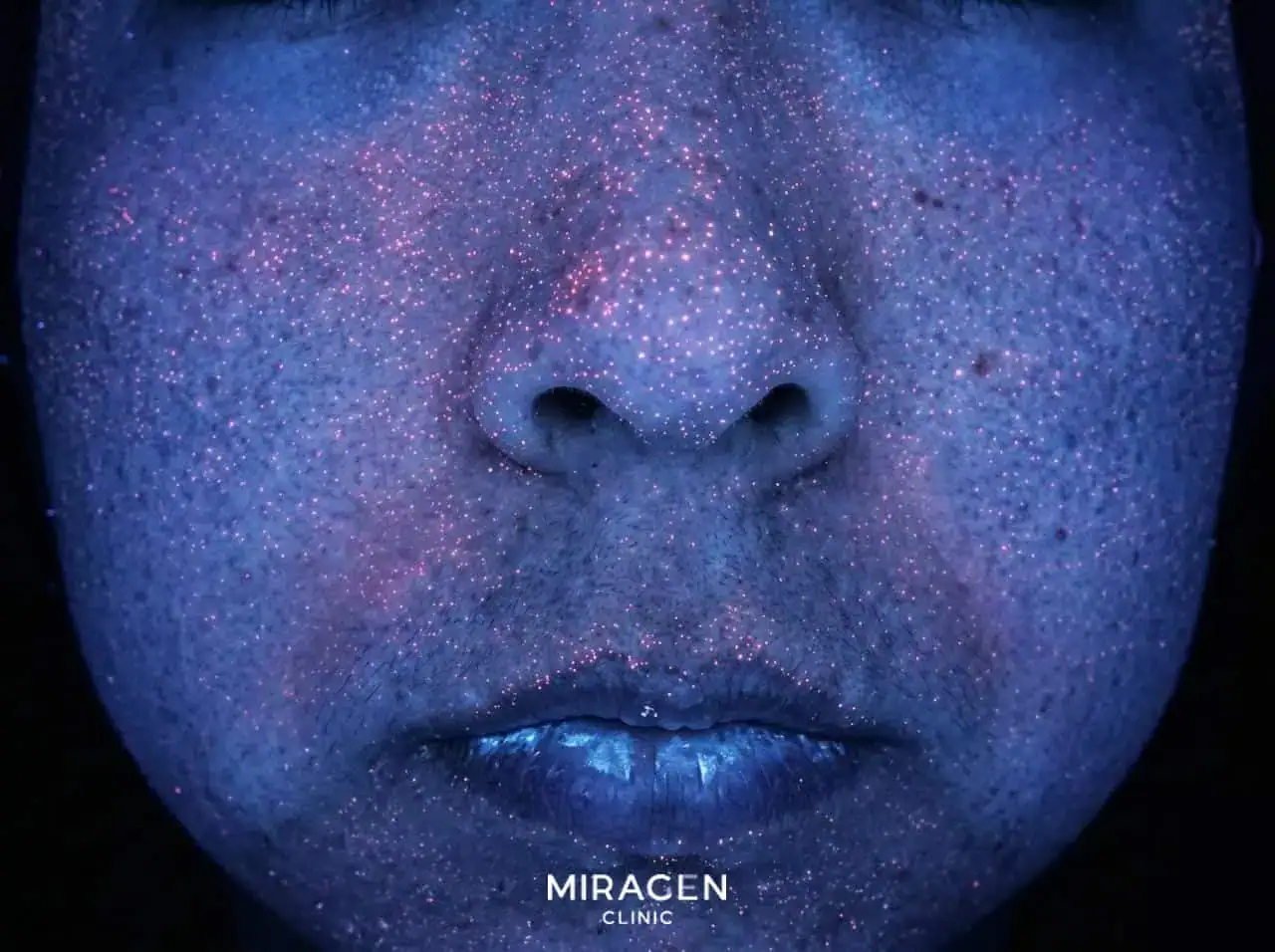
Porphyrins produced by acne bacteria and Malassezia-related lesions can appear fluorescent under a Wood’s lamp.1 While a Wood’s lamp views a wide area at a glance, UV Dermoscopy magnifies and observes individual pores.
2. Why is Wood’s Lamp Examination Performed?
2.1 Checking the distribution of porphyrin fluorescence
Acne bacteria produce porphyrin during their metabolic processes. When illuminated by Wood’s lamp, this porphyrin can appear as orange to red fluorescence.2 By observing the distribution of porphyrin fluorescence, the degree of pore occlusion can be indirectly assessed.
2.2 Supportive findings for Malassezia-related lesions
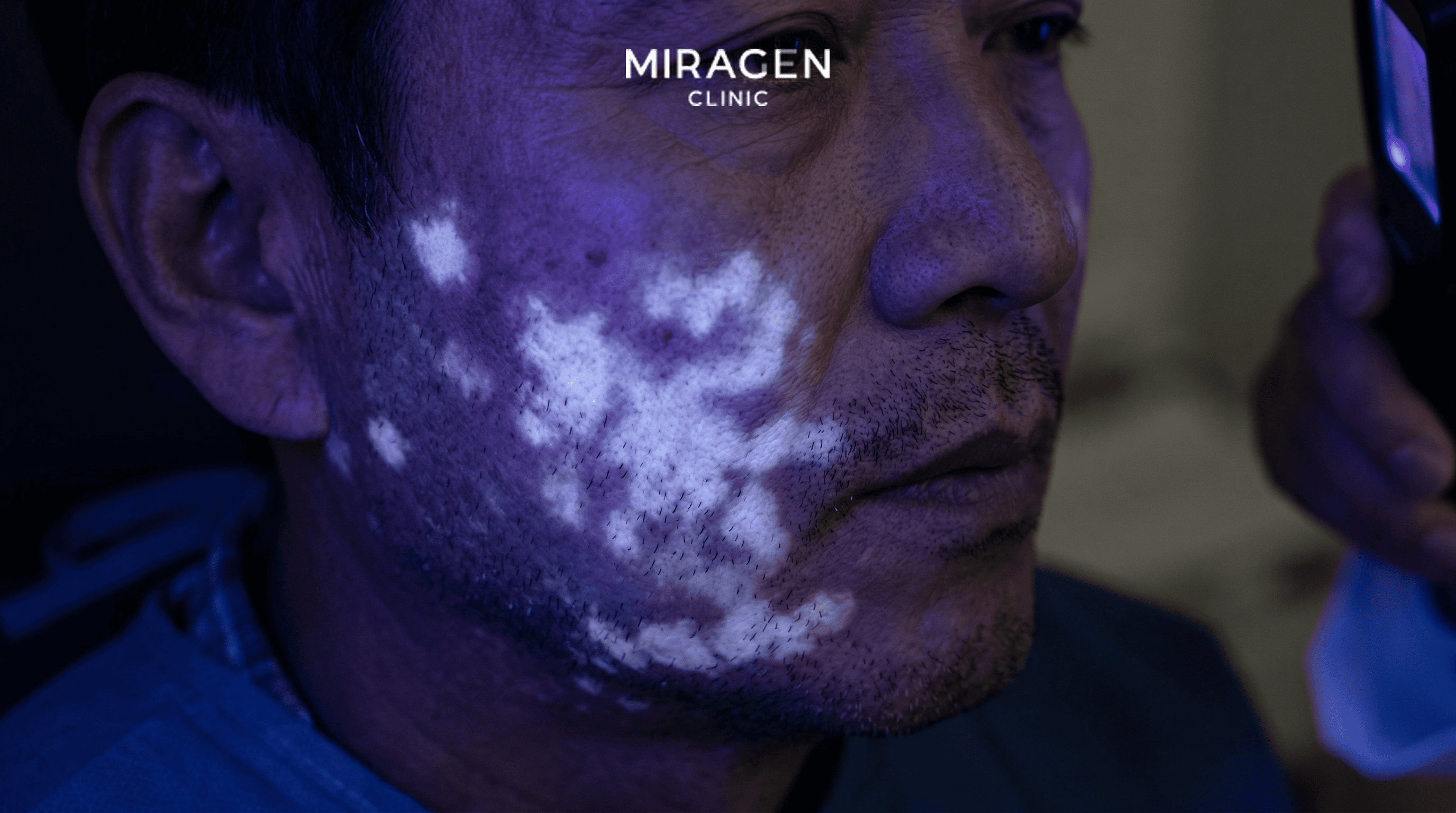
Bright fluorescence may be visible under a Wood’s lamp in some tinea versicolor lesions.3 However, since the color and intensity can vary depending on the device and imaging conditions, the cause cannot be confirmed by fluorescence alone.1
3. Our Clinical Application
We utilize Wood’s lamp examination at various stages of clinical assessment.
- Moisturizer Matching: We recommend moisturizers based on the distribution of porphyrin fluorescence. Detailed information can be found on the MD Cream page.
- Acne diagnosis: In cases of severe folliculitis, the distribution of porphyrin fluorescence is used as a reference to identify the cause. For more details, see the Acne, Isotinone, and Aklief pages.
- Selection Between Elidel and Protopic: When prescribing non-steroidal anti-inflammatory ointments, we prioritize Elidel when acne is present or pores are occluded, and Protopic when these conditions are absent.
- Supportive Findings for Skin Infections: We check for the presence of fluorescence in certain tinea versicolor lesions.
Frequently Asked Questions
How much does the test cost?
The patient co-payment is approximately 1,400 KRW.
Is the test painful?
It is completely painless. Only ultraviolet light is directed at the skin, with nothing physically touching it. The examination is completed in 1–2 minutes.
Is ultraviolet light harmful to the skin?
Wood’s lamp uses very weak ultraviolet light (UVA, 365nm wavelength). Since it is used only briefly, the exposure is minimal. It is extremely negligible compared to everyday ultraviolet exposure.
Can I wear makeup to the appointment?
Cosmetics or moisturizers on the examination area may obscure fluorescence response. It is preferable to present with bare skin in the examination area. If products have been applied, cleansing will be performed before measurement.
References
- Dyer JM, Foy VM. Revealing The Unseen: A Review of Wood’s Lamp in Dermatology. J Clin Aesthet Dermatol. 2022;15(6):25-30.
- Shu M, Kuo S, Wang Y, et al. Porphyrin metabolisms in human skin commensal Propionibacterium acnes bacteria: potential application to monitor human radiation risk. Curr Med Chem. 2013;20(4):562-568.
- Labedz N, Navarrete-Dechent C, Kubisiak-Rzepczyk H, et al. Pityriasis Versicolor-A Narrative Review on the Diagnosis and Management. Life (Basel). 2023;13(10):2097.