Topical corticosteroids are potent ointments that reduce skin inflammation.
However, since they have the side effect of thinning the skin, our clinic primarily prescribes them to help recover areas where the skin has become hard or thickened.
1. Causes and Issues of Lichenification
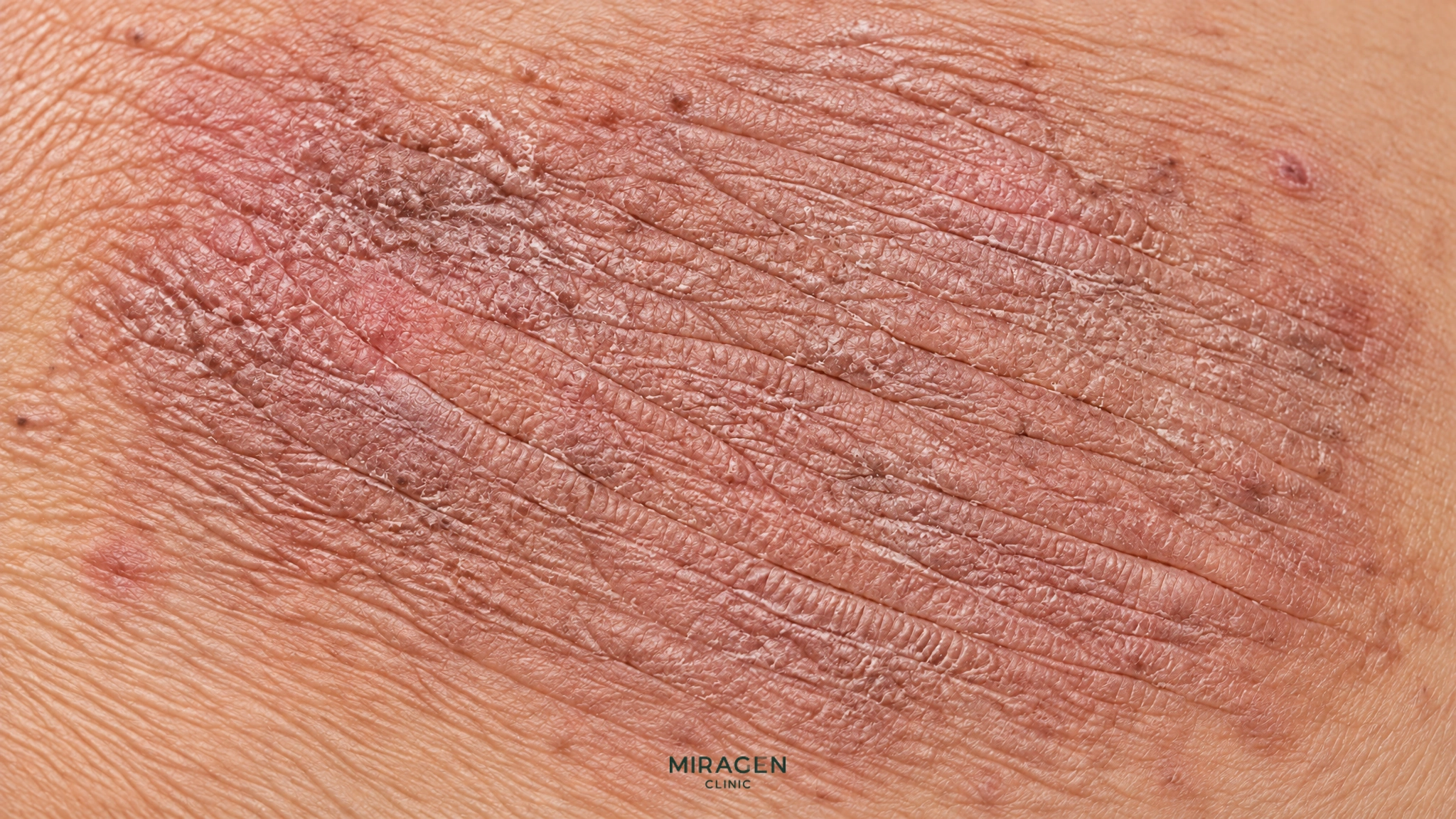
Repeatedly scratching and rubbing the same area due to chronic dermatitis can cause the skin to become hard and thick, a condition known as lichenification.
In these cases, the skin-thinning side effect of topical steroids can actually be beneficial.
This is because once the skin’s thickness is normalized with topical steroids, non-steroidal topical agents like calcineurin inhibitors can penetrate better than before.
2. Apply only to areas designated during your consultation.
Please apply topical steroids only to the areas and for the duration specified during your consultation.
Please do not arbitrarily apply to areas that feel newly hard or thick.
3. How to use
- Apply a thin layer to the designated area once every evening. Do not spread widely onto surrounding normal skin.
- Wash your hands after application. If your hands are the treatment area, do not wash them.
4. Regularly Reconfirm Application Areas
While using topical steroids, it is recommended that you visit the clinic periodically to determine which areas to continue applying to and which areas to stop applying to.
Even before your next visit, please stop using the medication if the hardness and thickness have noticeably decreased and the texture has become similar to the surrounding skin.
5. When you should stop using it
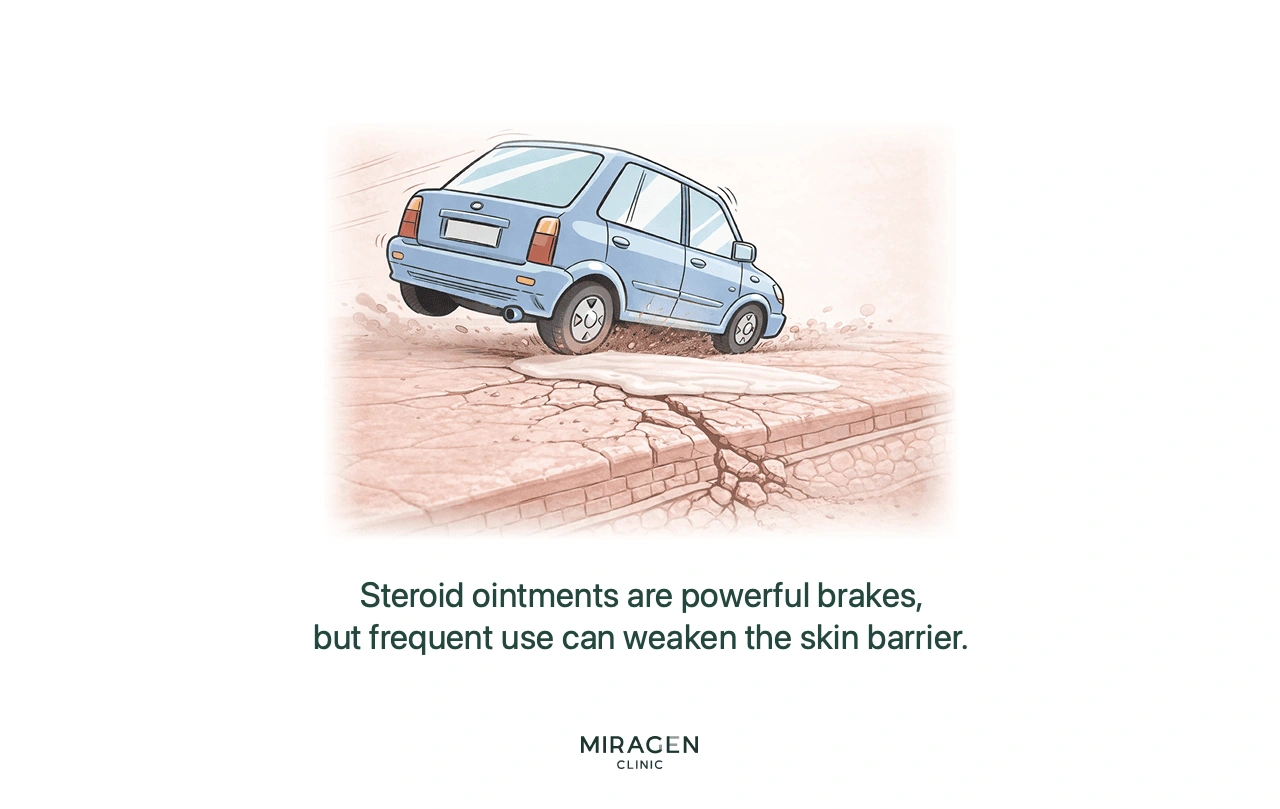
Topical steroids are safe and useful when used appropriately on the prescribed areas. However, if strong products are used for a long time on large areas or applied repeatedly beyond the necessary scope, the skin can weaken, and telangiectasias, stretch marks, or bruising may appear.1
If you notice any of the following changes, be sure to stop using it and contact the clinic.
- Broken capillaries or stretch marks
- Weeping · yellow crusts · pus · pain
Frequently Asked Questions
Can I apply it to all red areas?
No. Apply only to the areas designated during your consultation. Confirm based on hardness, thickness, and rough texture that differs from the surrounding skin, rather than skin color.
How many times a day should I apply it?
Apply once every evening. Do not arbitrarily increase the frequency.
If skin discoloration remains, should I continue applying?
No. If the texture resembles the surrounding skin, stop daily application. Red or brown marks may disappear later than the texture.
Can I apply the same medication to newly hardened areas?
Do not apply arbitrarily without a consultation. Even if it looks like lichenification, it could be another skin condition or infection, so the application area must be confirmed first.
Can I apply it to my face?
Apply only if prescribed separately for facial use. The face has a high absorption rate, so do not transfer products prescribed for the body to the face.