Medications
Soolantra | A Cream to Reduce Demodex Mites in Rosacea
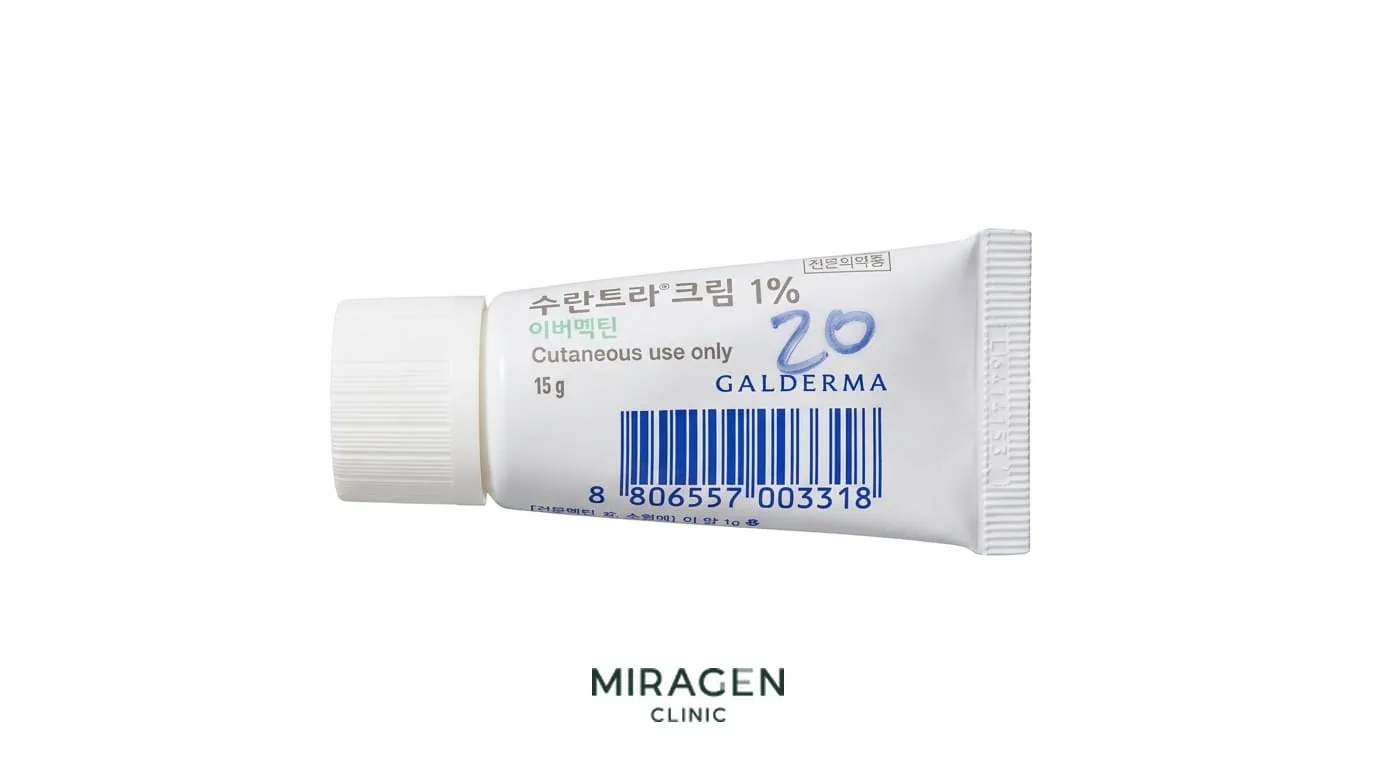
Soolantra is a cream used in the treatment of rosacea to reduce Demodex mites and soothe inflammation.
This section explains the mechanism of action, instructions for use, and initial symptom flare-ups.
Table of Contents
1. What is Soolantra?
The active ingredient is ivermectin, a substance originally developed as an antiparasitic agent.
It is an ointment applied thinly to the face once a day to lower Demodex mite density and reduce inflammatory responses over several weeks. Since it is not a medication that shows immediate effects right after application, progress is evaluated after consistent use over a certain period.
2. Why are Demodex mites a problem?
Demodex mites exist even on normal skin and do not cause significant problems when the skin barrier is strong.
However, patients with rosacea have a weakened skin barrier,1 allowing demodex mite byproducts, which would normally be unable to penetrate, to enter the skin and stimulate an immune response.2 Furthermore, because patients with rosacea tend to have a higher-than-normal number of demodex mites,3,4 the increased amount of these byproducts exacerbates papules, pustules, and erythema.
General information about rosacea is covered on the Rosacea page.
3. How does it work?
Ivermectin works through two pathways.5
The first is the elimination of Demodex mites. Ivermectin blocks the neuromuscular junctions of Demodex mites, causing paralysis and death. As the number of Demodex mites decreases, the immune stimulation caused by their by-products also declines.6,7
The second is the anti-inflammatory effect. Ivermectin directly inhibits the secretion of inflammatory cytokines, allowing it to soothe inflammation independently of the reduction in Demodex mites.
4. How to use
- Apply a thin layer once in the evening, not just to visible lesions, but to the entire facial area where lesions recur, including the nose, cheeks, forehead, and chin. Please avoid the eyes and the mucous membranes of the lips.
- Do not hastily judge the treatment as a failure before 4 weeks; evaluate the response based on a 12-week period.
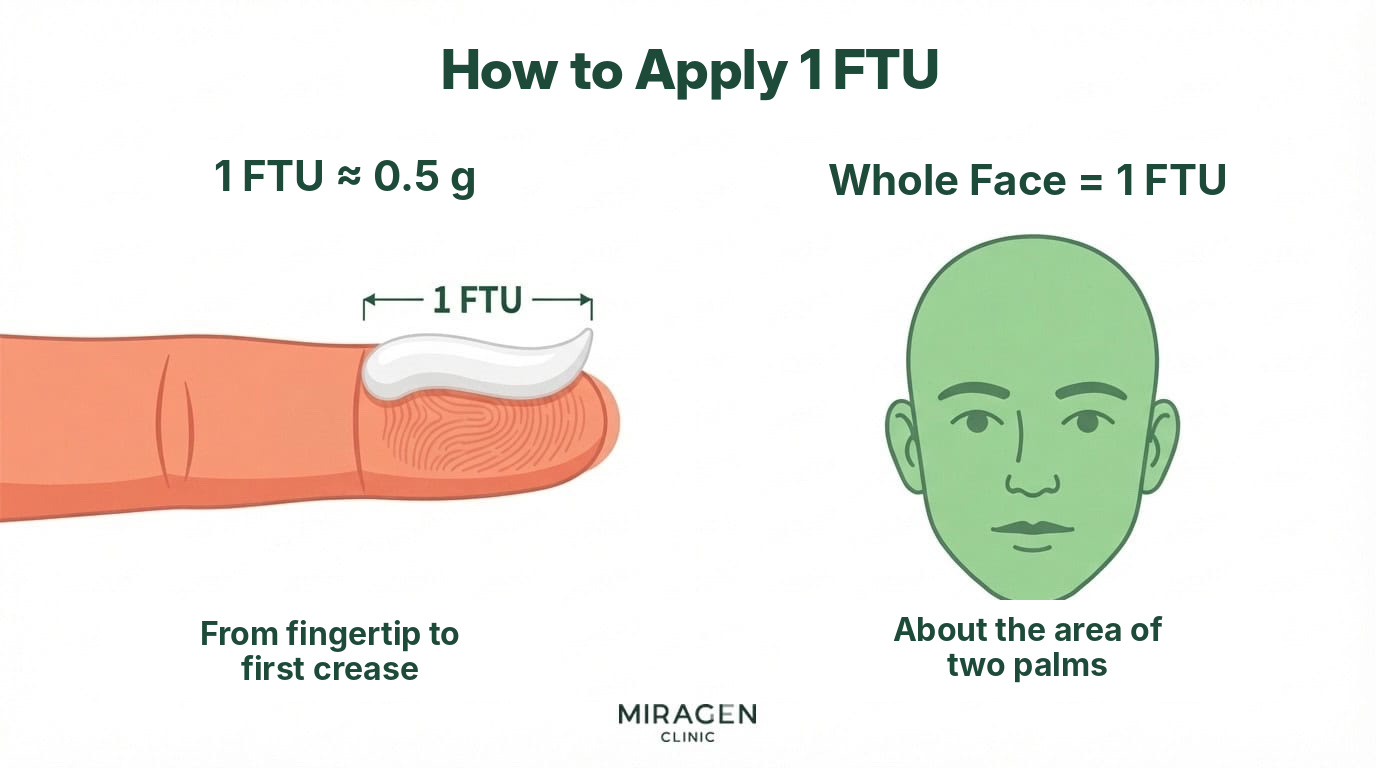
The standard for the amount to apply is the FTU (Finger-Tip Unit). The amount squeezed out to the length of an adult’s index finger tip to the first joint is 1 FTU, which corresponds to approximately 0.5g. 1 FTU for the entire face area is sufficient.
5. Initial symptom flare-ups
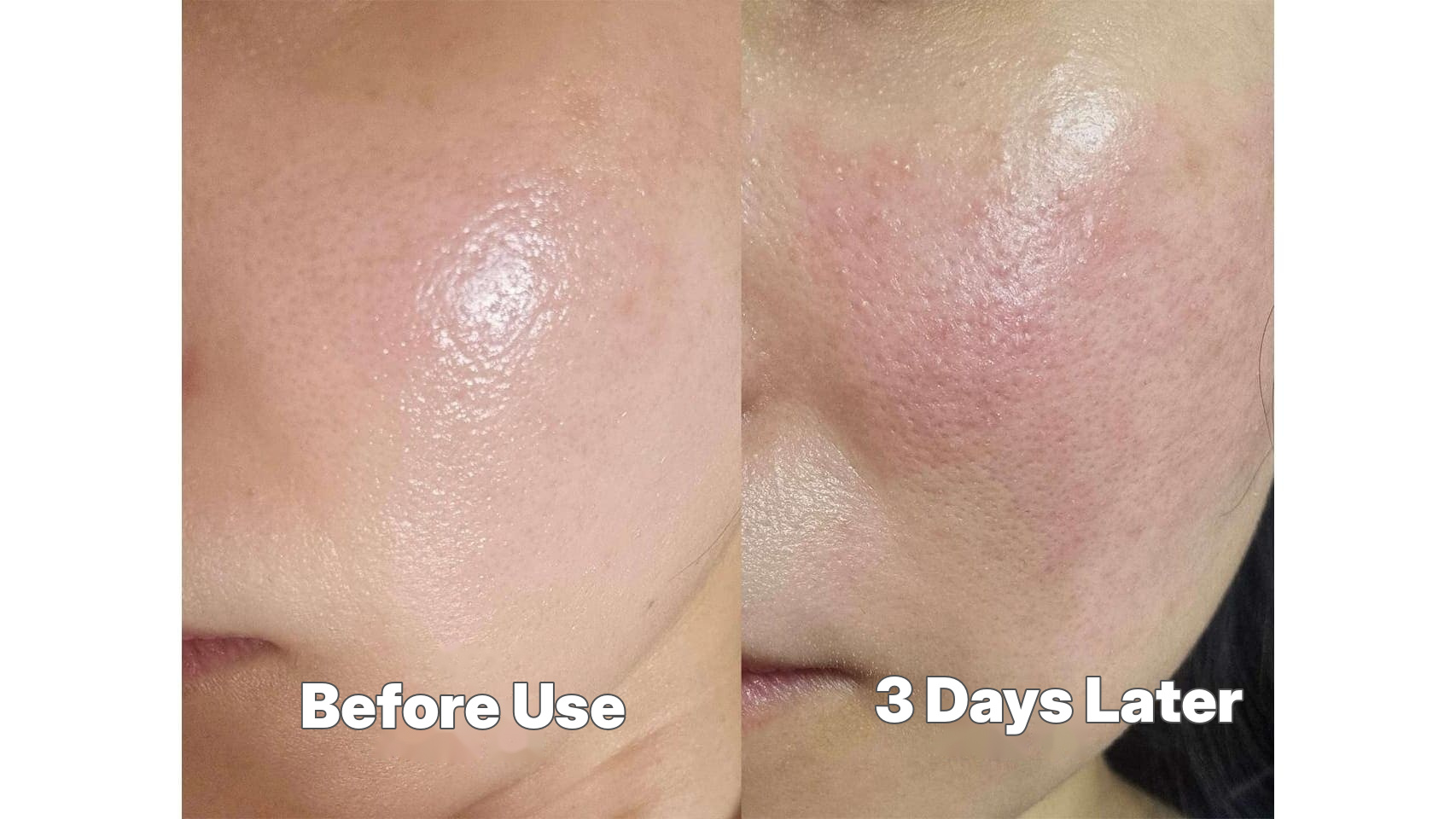
When using Soolantra, Demodex mites may die off all at once, releasing a large amount of by-products, which can temporarily worsen erythema, heat sensation, and folliculitis.6,7
This is usually most pronounced in the first 1–2 weeks and can last for up to 2–4 weeks.
Demodex Die-off Reaction vs. Contact Dermatitis
The important thing is to distinguish whether this initial flare-up is a Demodex die-off reaction or contact dermatitis. This is because Soolantra can also cause contact dermatitis.
- Demodex die-off reaction — Cases where erythema and heat sensation worsen, and bumpy lesions appear. It is advisable to observe the progress for up to 4 weeks before making a judgment.
- Contact dermatitis — Cases where severe itching, oozing, swelling, or blisters appear that were not present before. Use must be discontinued immediately.
Among the vehicle ingredients of Soolantra, fatty alcohols including oleyl alcohol are known to be major contact allergens.8 Since rosacea patients often have a damaged skin barrier, contact dermatitis caused by these ingredients may occur.
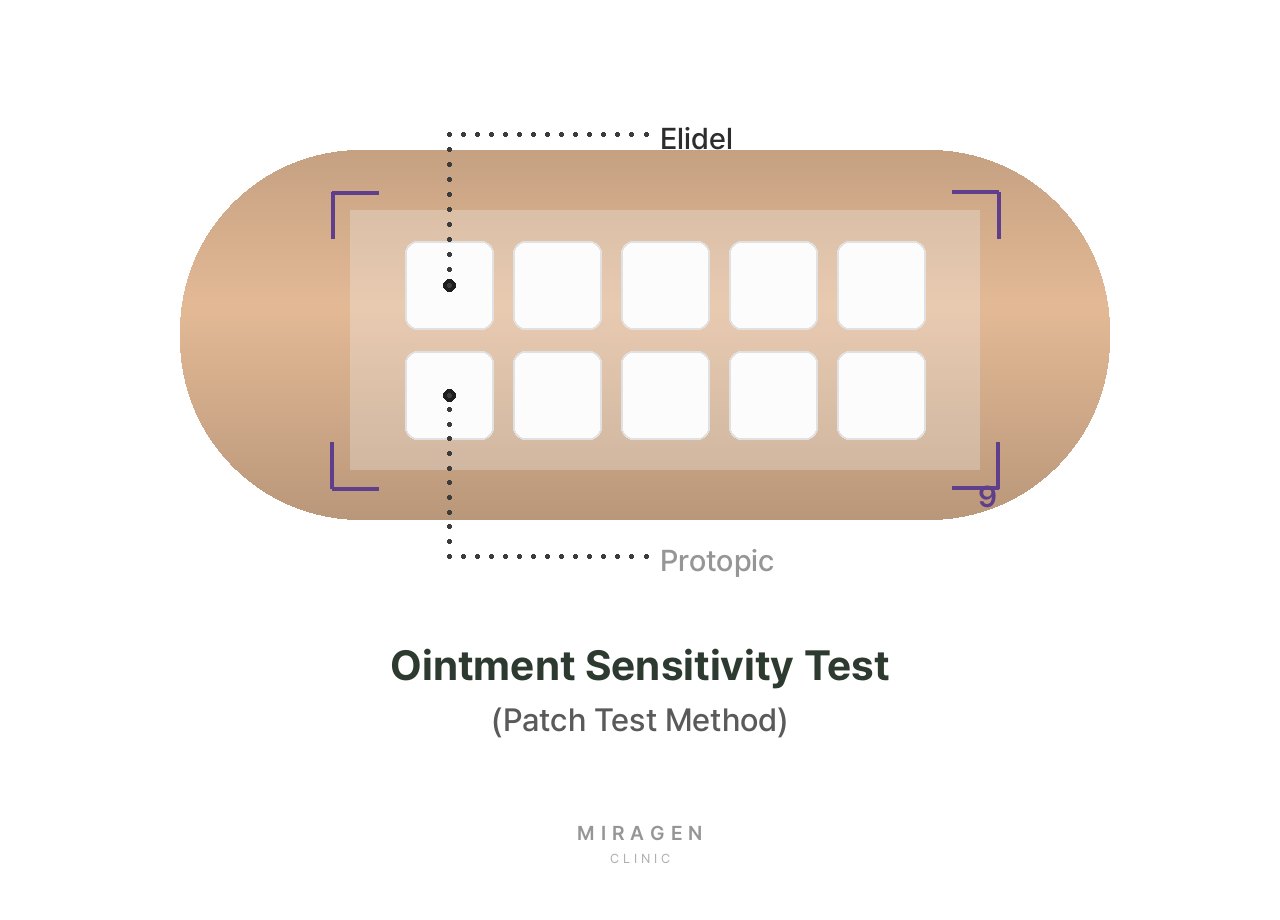
The risk can be reduced by checking sensitivity with a patch test before use. Detailed information can be found on the Patch Test page.
7. Conclusion
Soolantra is a treatment that reduces both the Demodex burden and inflammation in rosacea. Since it is not a medication that shows immediate effects, do not make a hasty judgment before 4 weeks; the primary evaluation should be based on a 12-week period.
Symptoms may worsen during the initial stage of use, and the key is to distinguish whether this is a Demodex die-off reaction or contact dermatitis.
References
- Medgyesi B, Dajnoki Z, Béke G, et al. Rosacea Is Characterized by a Profoundly Diminished Skin Barrier. J Invest Dermatol. 2020;140(10):1938-1950.e5.
- Jarmuda S, McMahon F, Żaba R, et al. Correlation between serum reactivity to Demodex-associated Bacillus oleronius proteins, and altered sebum levels and Demodex populations in erythematotelangiectatic rosacea patients. J Med Microbiol. 2014;63(Pt 2):258-262.
- Forton FM. Papulopustular rosacea, skin immunity and Demodex: pityriasis folliculorum as a missing link. J Eur Acad Dermatol Venereol. 2012;26(1):19-28.
- Jarmuda S, O’Reilly N, Żaba R, et al. Potential role of Demodex mites and bacteria in the induction of rosacea. J Med Microbiol. 2012;61(Pt 11):1504-1510.
- Deeks ED. Ivermectin: A Review in Rosacea. Am J Clin Dermatol. 2015;16(5):447-452.
- Ebbelaar CCF, Venema AW, Van Dijk MR. Topical Ivermectin in the Treatment of Papulopustular Rosacea: A Systematic Review of Evidence and Clinical Guideline Recommendations. Dermatol Ther (Heidelb). 2018;8(3):379-387.
- Stein Gold L, Kircik L, Fowler J, et al. Long-term safety of ivermectin 1% cream vs. azelaic acid 15% gel in treating inflammatory lesions of rosacea: results of two 40-week controlled, investigator-blinded trials. J Drugs Dermatol. 2014;13(11):1380-1386.
- Tosti A, Vincenzi C, Guerra L, et al. Contact dermatitis from fatty alcohols. Contact Dermatitis. 1996;35(5):287-289.
Frequently Asked Questions
Why should Soolantra be applied to the entire face instead of just the lesions?
This is because Demodex mites and inflammatory responses often appear together following the distribution of sebaceous glands in the center of the face. If applied only to visible areas, inflammation may recur at the boundaries; therefore, spreading a thin layer over the forehead, nose, both cheeks, and chin is more appropriate.
Can I continue using it if it becomes redder at first?
If the erythema worsens, the heat sensation intensifies, and bumpy lesions like folliculitis appear, it may be a Demodex die-off reaction, so it is best to observe the progress for up to 4 weeks before deciding. Conversely, if severe itching, oozing, swelling, or blisters that were not present before appear, there is a possibility of contact dermatitis, and use must be discontinued immediately. If you are concerned about the initial die-off reaction, there is also a method to alleviate it by briefly using Protopic in combination.
How long should I use Soolantra, and when should I judge its effectiveness?
It is better not to hastily judge it as a failure before 4 weeks, and the primary evaluation is based on a 12-week period. Rather than stopping immediately once it improves, the end point is determined by observing whether the inflammatory response and recurrence patterns have stabilized.
Is it helpful for rosacea with only severe flushing?
Soolantra is not necessarily excluded just because there is only flushing. However, if the main symptoms are a burning sensation or persistent redness, other treatments that reduce vascular responses may be considered concurrently or prioritized. The actual use is determined by looking at Demodex involvement, the nature of the inflammation, and the skin condition together.


