

Many people reach for Sroban ointment first when folliculitis appears. If you search “folliculitis ointment” online, Sroban and Bearoban are often the first results. However, quite a few patients come in because it doesn’t actually clear up even after applying it.
Sroban ointment is an antibiotic that kills bacteria, so it works well when the cause is bacterial—but it won’t work if it isn’t. The problem is that not all folliculitis is caused by bacteria.
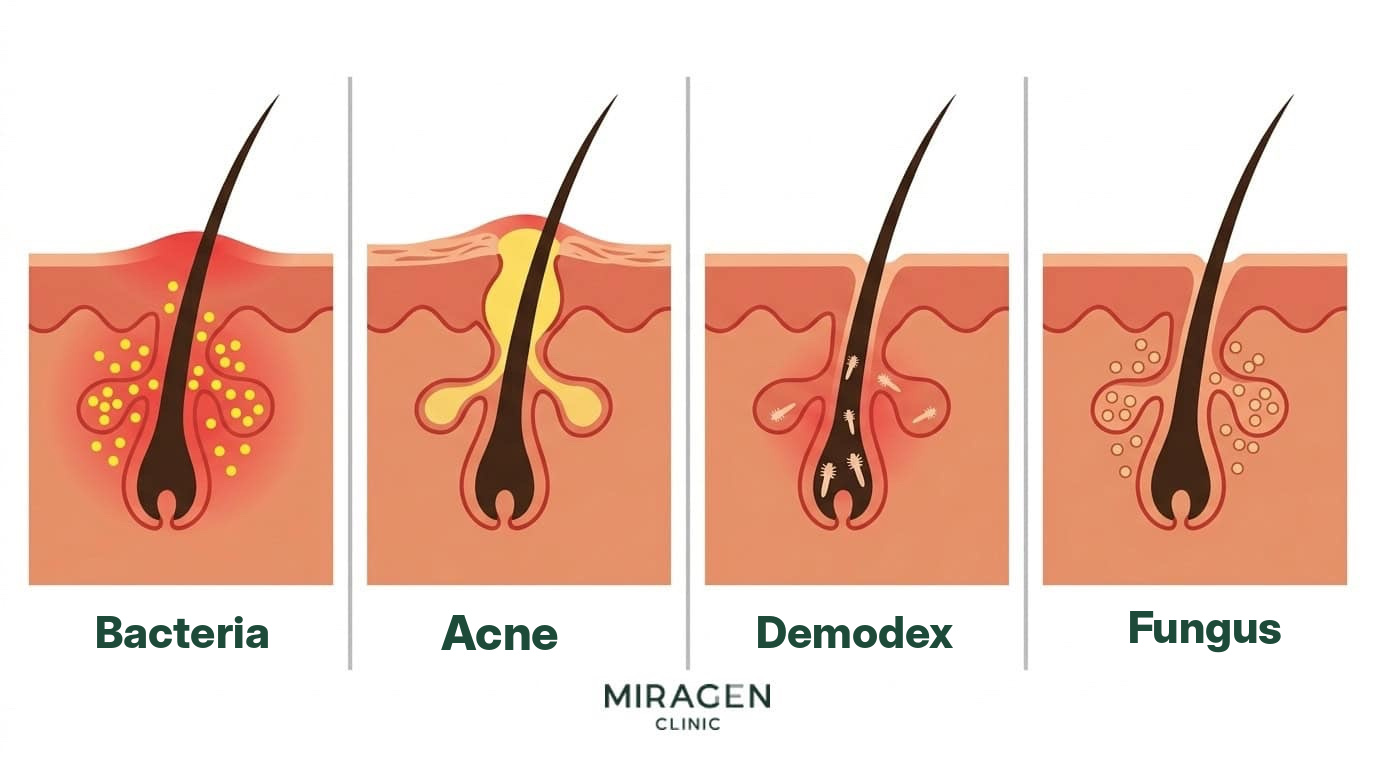
| Causes of folliculitis | Sroban · Bearoban effectiveness | Treatment needed instead |
|---|---|---|
| Bacteria (Staphylococcus aureus) | O | – |
| Acne (sebum · keratin buildup) | X | Retinoids, benzoyl peroxide, etc. |
| Demodex mites | X | Ivermectin cream, etc. |
| Fungus (Malassezia) | X | Antifungal medication |
목차
Sroban ointment: what kind of medication is it?
The active ingredient in Sroban ointment is mupirocin. It blocks an enzyme that bacteria need to make proteins, stopping them from multiplying.1
Because this mechanism is completely different from other antibiotics, it may also be effective against bacteria that have developed resistance to penicillin or erythromycin. This is also why it works against resistant strains such as methicillin-resistant Staphylococcus aureus (commonly called MRSA).1
Approved indications include impetigo, folliculitis, boils, infected eczema, and secondary infections of wounds or burns. This medication is used to treat bacterial skin infections.
In clinical trials, mupirocin showed effectiveness rates of 97% for impetigo, 94% for folliculitis, and 88% for boils.2 These rates are comparable to oral antibiotics, but because systemic side effects are rare, it is often chosen as a first-line ointment for mild to moderate bacterial skin infections.
Not all folliculitis is bacterial
“Folliculitis” simply means inflammation of the hair follicle—it does not specify the cause. Bacterial folliculitis, which responds well to Sroban ointment, is only one of several possible causes.
In a study that closely examined 100 patients with folliculitis, 36% had fungal folliculitis caused by Malassezia (yeast).3 It was a single-center study, and a limitation is that it did not break down how much of the remaining 64% was due to bacteria, acne, or Demodex. Still, it clearly shows that a substantial portion of folliculitis has causes other than bacteria.
In my experience as well, among patients who come in for folliculitis, cases that truly require Sroban are not that common.
The most common cause is acne. Because inflammation occurs when excess sebum and keratin clog the pores, antibiotics won’t solve it. Moreover, applying a sticky ointment base like Sroban to acne can clog pores even more and worsen acne.
Demodex is also a common cause. This type of folliculitis occurs when Demodex mites that live in hair follicles overgrow; in such cases, antiparasitic treatment such as ivermectin cream is needed, and antibiotics are not effective.
In some cases, the cause is Malassezia, a fungus (yeast). Even then, antibiotics like Sroban can disrupt the normal bacterial flora and create an environment where fungus grows more easily. An antifungal is needed.
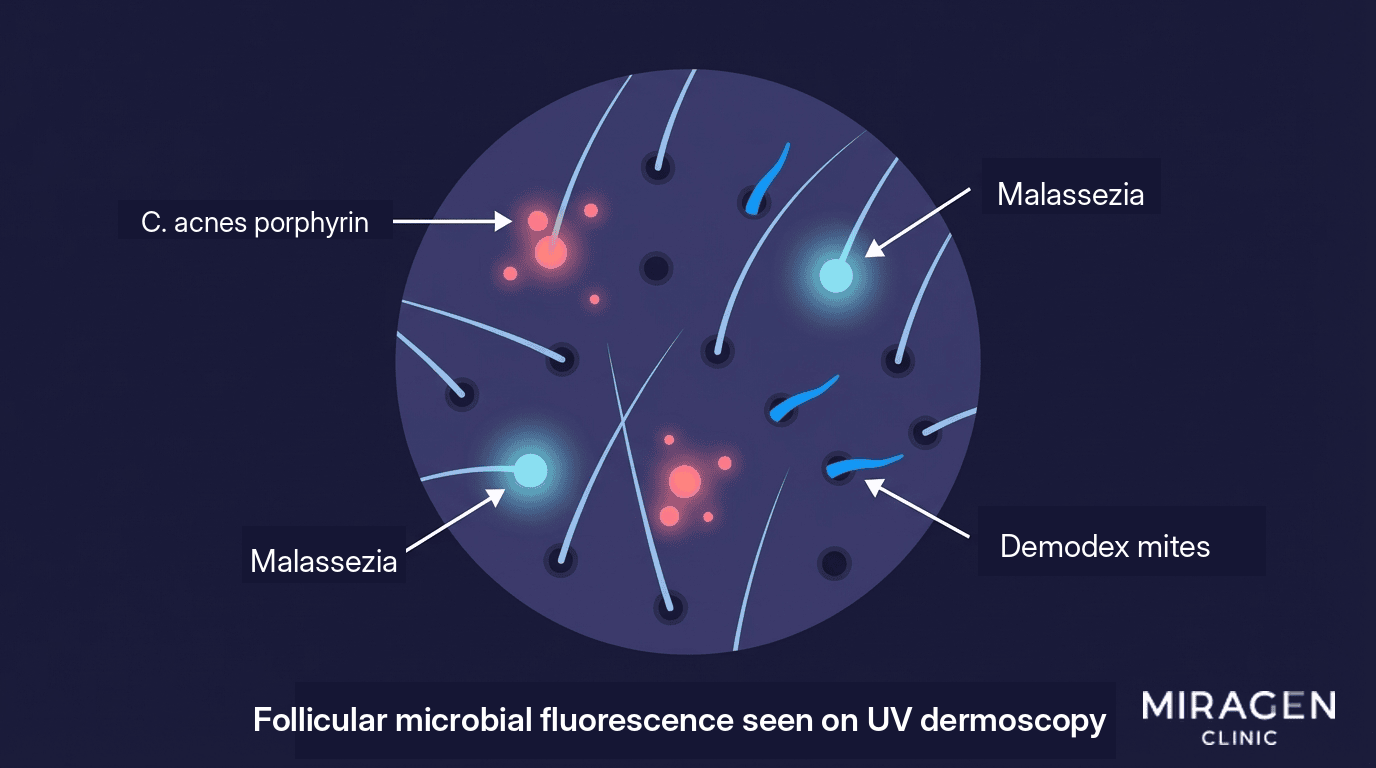
If there is no improvement after applying Esroban ointment for more than a week, you should first suspect that bacteria may not be the cause. Since a UV dermoscopy test can at least distinguish acne easily, I recommend visiting a clinic that can perform the test to confirm the cause.
How to use Sroban ointment
If the cause is truly bacterial, the instructions are simple: apply a small amount to the affected area 2–3 times a day. However, keep the following precautions in mind:
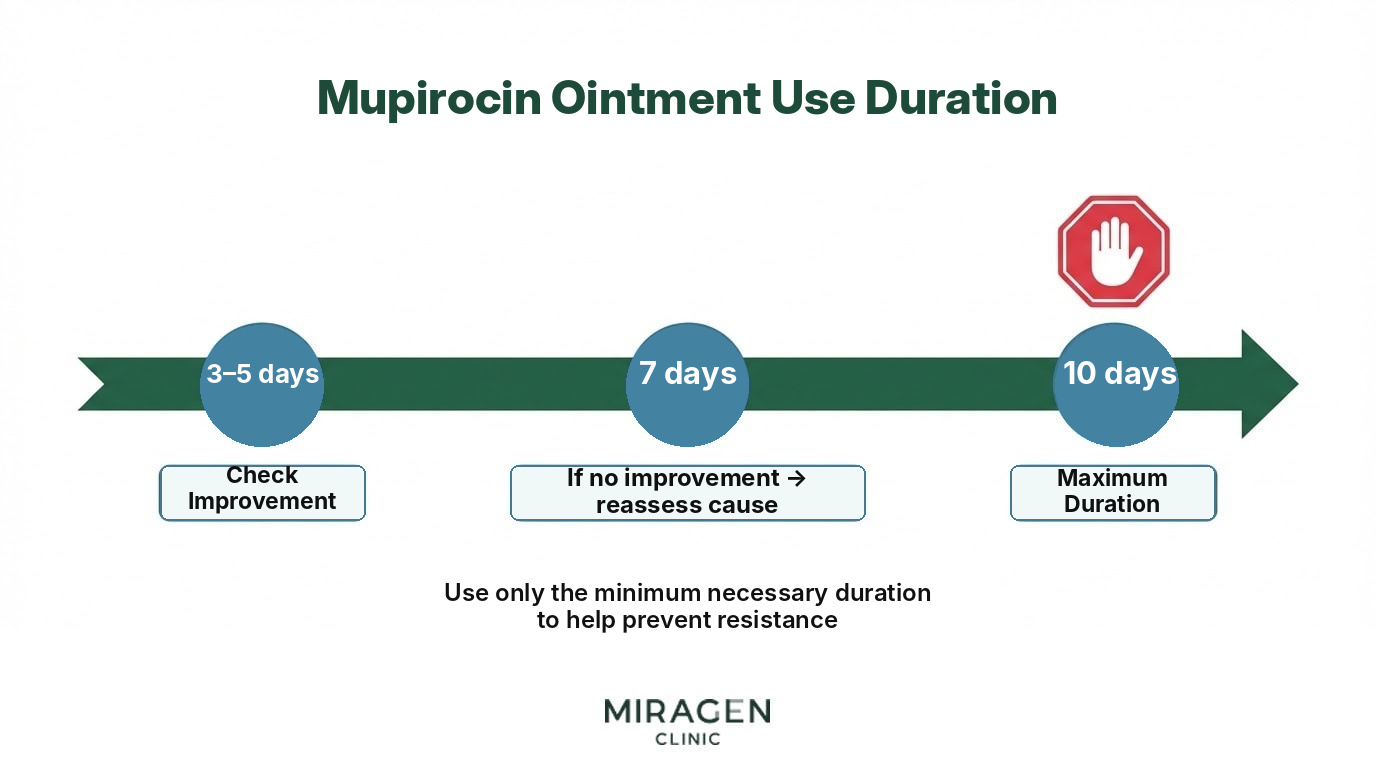
- Duration: Up to 10 days. Use only the minimum necessary duration to prevent the emergence of resistant bacteria.
- When to reassess: If there is no improvement after 3–5 days of use, consider the possibility that the cause is not bacterial.
Differences between Sroban, Bearoban, and Fucidin
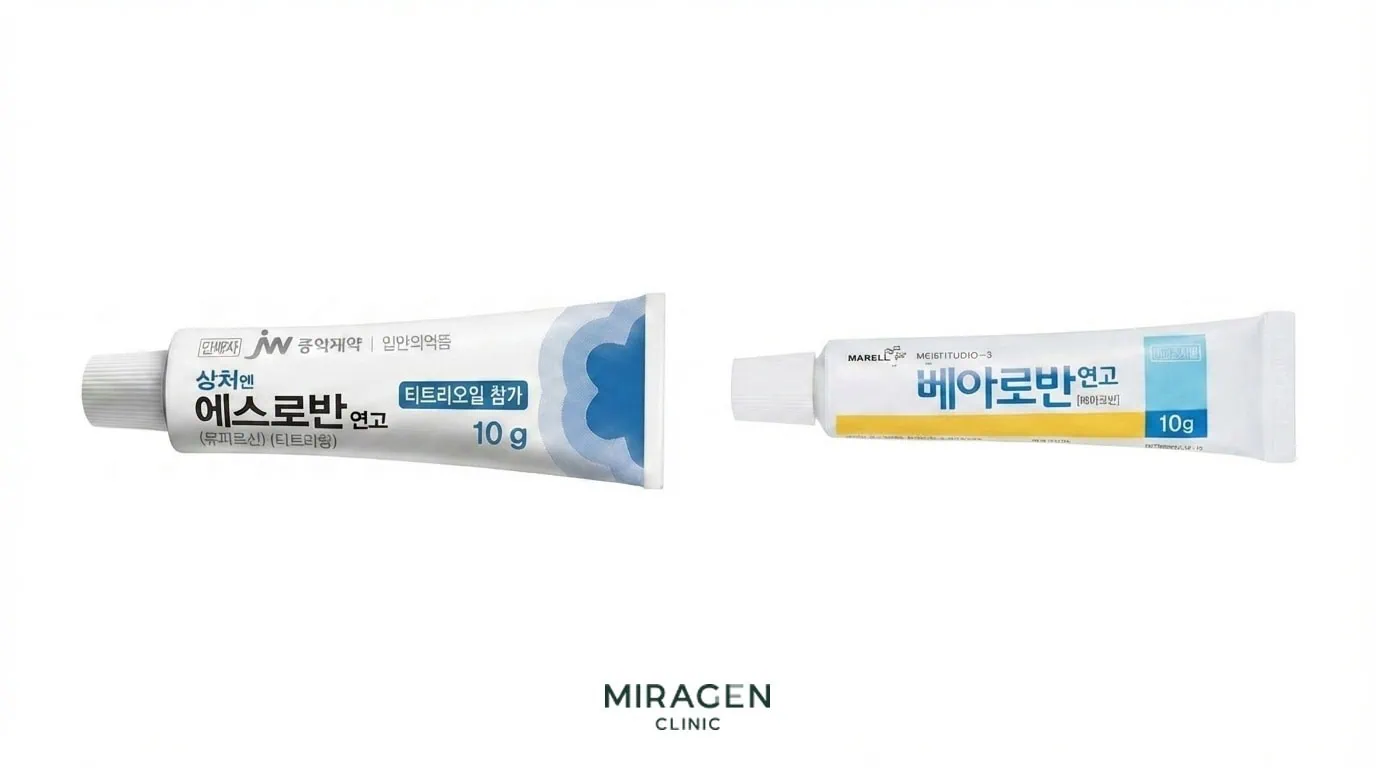
Sroban and Bearoban have the same active ingredient, mupirocin. Both are over-the-counter medications and can be purchased at pharmacies. However, there are slight differences in the base and additives.
After Sroban was reformulated, tea tree oil was added. Since many people apply Sroban without distinguishing the cause of folliculitis, it appears they included tea tree—an ingredient commonly used in acne-care cosmetics. However, as explained earlier, if the cause of folliculitis is not bacterial, the presence of tea tree oil will not resolve it.
Fucidin is different in its active ingredient. Fucidin contains fusidic acid, and one report found bacterial eradication rates of 97% for mupirocin and 87% for fusidic acid.4 In Korea, Fucidin has been used for decades, so many bacteria are resistant to fusidic acid. Mupirocin’s advantage is its unique mechanism and lack of cross-resistance.5
However, mupirocin is not completely free from resistance either. Since there are reports that mupirocin resistance rates in Staphylococcus aureus isolated from Korean hospitals are gradually increasing,5 do not use it for more than 10 days, and discontinue as soon as it improves.
| Sroban | Bearoban | Fucidin | |
|---|---|---|---|
| Active ingredient | Mupirocin 20 mg/g | Mupirocin 20 mg/g | Fusidic acid 20 mg/g |
| Base | PEG 400 + PEG 4000 | PEG 400 + PEG 3350 | Petrolatum + lanolin |
| Additives | Tea tree oil 0.3% | – | – |
| Resistance | No cross-resistance | No cross-resistance | High resistance rate |
| Classification | Over-the-counter | Over-the-counter | Over-the-counter |
References
- Parenti MA, Hatfield SM, Leyden JJ. Mupirocin: a topical antibiotic with a unique structure and mechanism of action. Clin Pharm. 1987;6(10):761-70.
- Sun J, Lu T, Dang Y, et al. Mupirocin for Skin Infection: Clinical Experience from China. Infect Drug Resist. 2024;17:3955-3966.
- Song HS, Kim SK, Kim YC. Comparison between Malassezia Folliculitis and Non-Malassezia Folliculitis. Ann Dermatol. 2014;26(5):598-602.
- White DG, Collins PO, Rowsell RB. Topical antibiotics in the treatment of superficial skin infections in general practice–a comparison of mupirocin with sodium fusidate. J Infect. 1989;18(3):221-9.
- Yun HJ, Lee SW, Yoon GM, et al. Prevalence and mechanisms of low- and high-level mupirocin resistance in staphylococci isolated from a Korean hospital. J Antimicrob Chemother. 2003;51(3):619-23.
Frequently Asked Questions
Can I buy Sroban ointment at a pharmacy?
Both Sroban and Bearoban are over-the-counter medications. You can purchase them at a pharmacy without a prescription.
Sroban ointment vs. Fucidin—what should I apply?
Both are used for bacterial skin infections, but their ingredients and mechanisms differ. Fucidin (fusidic acid) has been used in Korea for a long time, so resistance rates tend to be higher, while Sroban (mupirocin) has no cross-resistance with other antibiotics and can be effective even against resistant bacteria. However, more important than choosing between them is first confirming whether the cause of the folliculitis is truly bacterial.
Can I apply Sroban ointment to my face?
It can be used if it is an area where a bacterial infection has been confirmed. However, a large proportion of facial folliculitis is caused by acne or Demodex. In such cases, an ointment base can clog pores and worsen symptoms, so identifying the cause comes first.

We treat atopic dermatitis, rosacea, and seborrheic dermatitis.
Thanks to the valuable reviews you have shared in the community, many of you visit us even from far away.
We will repay you with sincere, attentive care.
DK Han
Chief Director, MIRAGEN Clinic
Graduate of University of Michigan, Ross School of Business
Graduate of Chungnam National University School of Medicine
(Former) Representative Director of Ewha Phoenix Rehabilitation Hospital
(Current) Representative Director of MIRAGEN Clinic


