Medications
Skincellon | A Wound Dressing That Protects Damaged Skin Barriers
Table of Contents
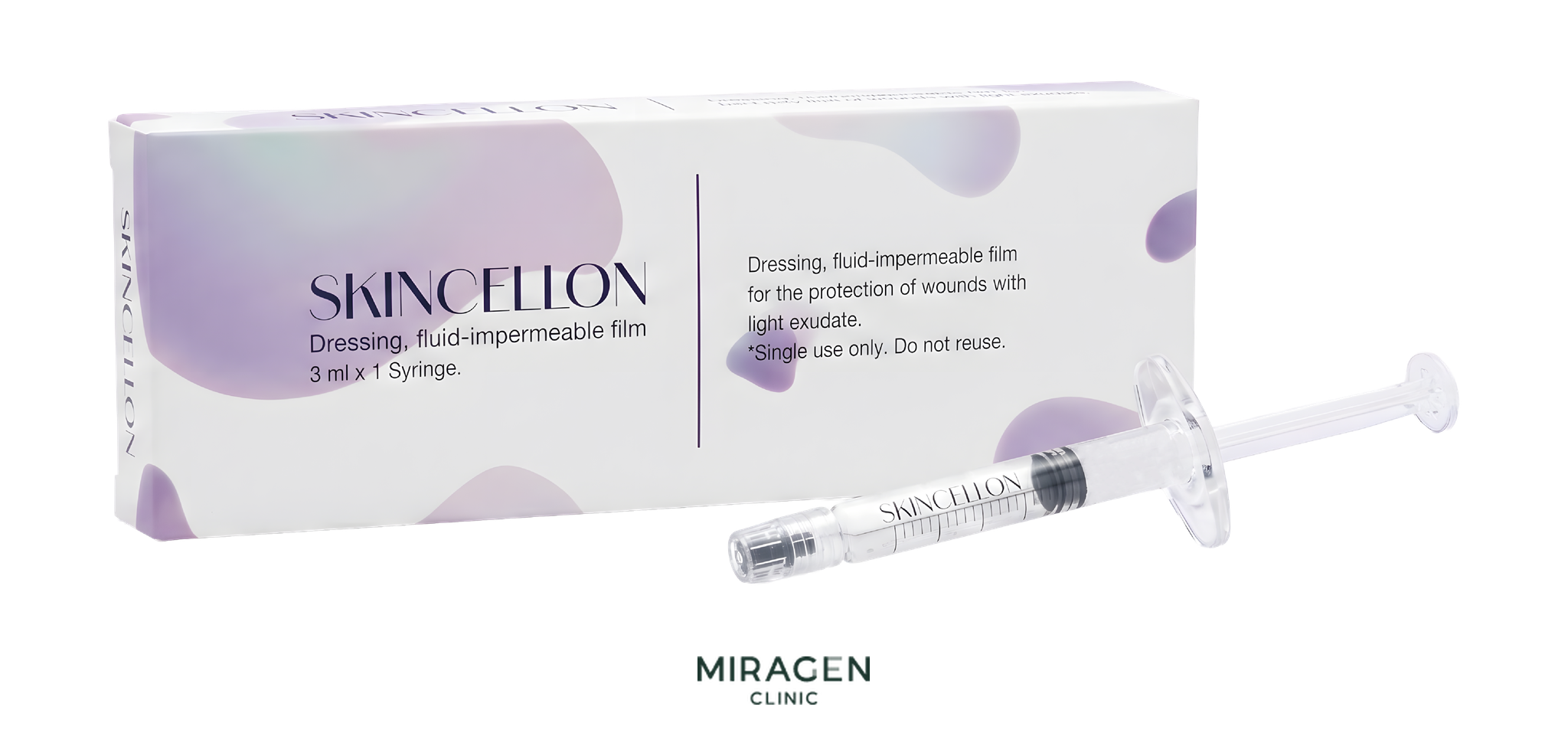
Skincellon is a wound dressing that forms a protective film over areas with damaged skin barriers and aids in barrier recovery through EGF, bFGF, and PN.
The key is not simply protecting the skin barrier, but actively supporting the recovery of a damaged skin barrier.
1. What is Skincellon?
Skincellon is a gel-type wound dressing that protects damaged skin barriers, similar to NDA Plus, Kiomer, and Hyracell.
Its composition is quite simple, consisting of purified water, sodium hyaluronate, PN, 1,2-hexanediol, EGF, and bFGF.
Hyaluronic acid forms a physical moisture barrier to protect damaged skin barriers, while EGF, bFGF, and PN help support barrier recovery.
2. Why should damaged skin barriers be protected?
The skin barrier is a structure that reduces moisture loss from the skin and prevents external irritants from easily entering.
However, repeated dermatitis weakens the barrier, allowing irritants to enter more easily and cause inflammation, and inflammation continues a vicious cycle that inhibits barrier recovery.1
Wound dressings help break this vicious cycle by protecting the skin barrier with a physical film.
3. EGF, bFGF, and PN: Helping Barrier Recovery
There are many types of wound dressings, but the reason we use SkinCellon is because it contains EGF, bFGF, and PN, which promote skin barrier regeneration.
EGF and bFGF are growth factors widely studied in wound healing research, and PN is a DNA-derived ingredient widely studied in skin regeneration and wound healing research.2,3,4
Containing the aforementioned ingredients, Skincellon is a wound dressing that aims for both protection and barrier recovery.
While it falls into the category of wound dressings that cover and protect damaged areas like Kiomer, Hyracell, and NDA Plus, the difference is that it contains EGF, bFGF, and PN to more actively assist the barrier recovery process.
4. Why is a simple ingredient list an advantage?
When you have dermatitis, your skin barrier is usually weakened, so ingredients like fragrances, preservatives, and emulsifiers can penetrate more easily and trigger contact dermatitis.
That’s why, when you have dermatitis, it’s best to prioritize products with a simple ingredient list.
Because Skincellon has a simple ingredient list, it is less likely to trigger contact dermatitis.
Of course, this does not mean it is non-irritating for everyone; if itching, swelling, or weeping becomes apparent after application, use should be discontinued and the condition checked.
References
- Elias PM. 2022. Ann Allergy Asthma Immunol. Optimizing emollient therapy for skin barrier repair in atopic dermatitis. 128(5):505-511.
- Ahmed AB, Thatcher S, Khorsandi J. 2025. J Clin Med. Platelet-Rich Plasma (PRP) and Recombinant Growth Factor Therapies in Cutaneous Wound Healing: Mechanisms, Clinical Applications, and Future Directions. 14(23).
- Colangelo MT, Galli C, Guizzardi S. 2020. Regen Med. The effects of polydeoxyribonucleotide on wound healing and tissue regeneration: a systematic review of the literature.
- Marques C, Porcello A, Cerrano M. 2025. Biomolecules. From Polydeoxyribonucleotides (PDRNs) to Polynucleotides (PNs): Bridging the Gap Between Scientific Definitions, Molecular Insights, and Clinical Applications of Multifunctional Biomolecules. 15(1).
Frequently Asked Questions
Is Skincellon a moisturizer?
Rather than a general cosmetic moisturizer, it is a wound dressing intended to protect areas where the skin barrier is damaged. However, the core is its ingredient composition of EGF, bFGF, and PN, which helps the barrier recovery process rather than just covering the skin.
How is it different from Kiomer, Hyracell, and NDA Plus?
All of these are wound dressings that can be used to protect damaged skin. Skincellon differs in that it contains EGF, bFGF, and PN, and is used to more actively assist the barrier recovery process in addition to providing barrier protection.
Is a prescription required?
A prescription is not required. Skincellon is not a prescription drug, but a medical device used for the purpose of protecting damaged skin barriers. However, it is recommended to use it after a consultation to check the extent of barrier damage and the area of application.
Can I claim private health insurance?
Even if purchased for therapeutic purposes after a consultation, the payout of private health insurance depends on your policy terms and the insurance company’s review. You may be requested to provide medical records, purchase history, and photos of the lesions if necessary.
Can it cause contact dermatitis?
The possibility is considered low. With a relatively short ingredient list, it is less likely to cause contact dermatitis than products containing many fragrances or auxiliary ingredients. However, if itching, swelling, or weeping becomes apparent after application, use should be discontinued and the condition checked.


