Tests
Autonomic Nervous System Test | A Compass for Treating Flushing and Heat Sensation
Table of Contents
1. What Is the Autonomic Nervous System Test?
The Heart Rate Variability during Deep Breathing Test, an autonomic nervous system test performed at our clinic, records changes in heart rate while breathing slowly at a steady pace to assess cardiac vagal nerve response.1
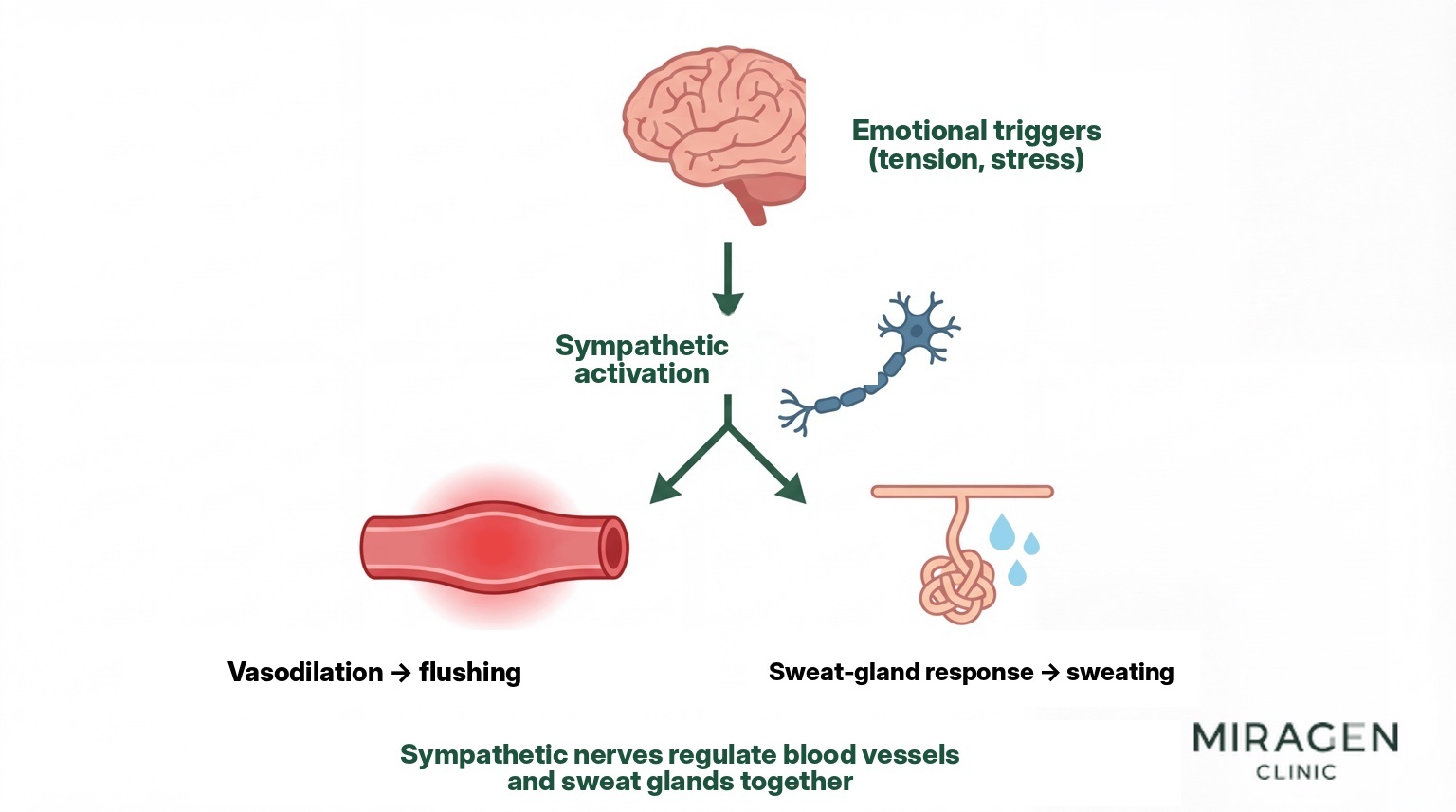
The autonomic nervous system consists of the sympathetic and parasympathetic nervous systems. The sympathetic nervous system responds to tension and excitement by altering heart rate, sweating, and vascular reactions, while the parasympathetic nervous system helps the body rest and recover. The body can only stabilize after excitement if these two systems switch appropriately according to the situation.
The vagus nerve is the core pathway of the parasympathetic nervous system. The Heart Rate Variability during Deep Breathing Test measures the range of heart rate changes with respiration to determine how well the heart responds to vagal nerve regulation.2
At our clinic, we assess parasympathetic nervous system response through this test and determine if the sympathetic nervous system is involved in symptoms by observing whether flushing, heat sensation, palpitations, and sweating occur together during tension or emotional changes. Combining these two pieces of information allows for a more accurate assessment of whether autonomic nervous system regulation therapy is needed.
2. When to get tested for these symptoms
You may consider an autonomic nervous system test if you experience the following symptoms:
- Your face suddenly becomes red and hot when you are tense, stressed, or experience emotional changes.
- Heat sensation and palpitations appear together after being in a hot place, eating, or exercising.
- Sweating, dizziness, and heart rate changes repeatedly accompany facial symptoms.
If the test shows a low cardiac vagal nerve response and the symptom patterns match the above, autonomic nervous system regulation therapy is actively considered. If the response is sufficient, the treatment focus is narrowed to the skin, blood vessels, and sensory nerves.
3. How Is It Performed?
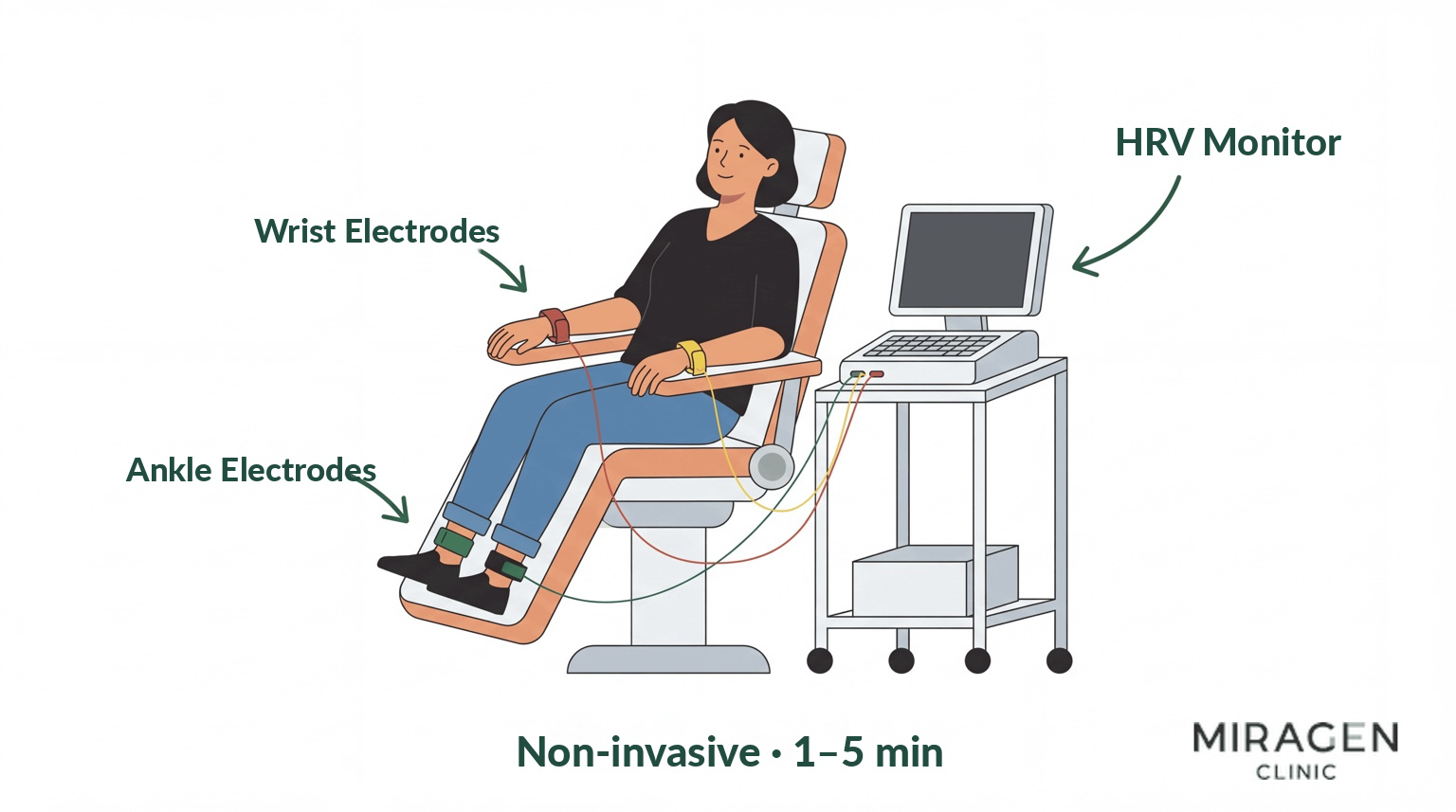
Attach clip electrodes to both wrists and ankles and sit in a comfortable position. Repeat the process of slowly inhaling and exhaling according to the equipment’s audio guidance.
It is not painful as no needles or medications are used, and results can be checked immediately after measurement.
Pre-Test Precautions
- On the day of the test, please avoid caffeinated beverages such as coffee, tea, and energy drinks, as well as nicotine products like cigarettes and e-cigarettes.
- Avoid strenuous exercise for 24 hours before the test.
- After arriving at the clinic, rest for at least 5 minutes before measurement.
- Please inform us in advance about any medications you are taking and do not discontinue them arbitrarily.
The autonomic nervous system can be affected by caffeine, nicotine, exercise, and certain medications. Please follow the above instructions for accurate results.4,5
4. How Are Results Interpreted?
This test evaluates cardiac vagal nerve response by measuring the difference in how much the heart rate increases during inhalation and decreases during exhalation. Since the range of heart rate change varies with age, the results must be compared with age-specific reference values.1
| Test Results | Interpretation and Treatment Direction |
|---|---|
| If the heart rate variability range is sufficient | The cardiac vagal nerve response is considered to be relatively well maintained. The treatment focus is narrowed to the skin, blood vessels, and sensory nerves. |
| If the variability range is smaller than age-specific reference values | The cardiac vagal nerve response is considered low. If the patterns of flushing and heat sensation also match, concurrent autonomic nervous system regulation therapy is considered. |
References
- Assessment: Clinical autonomic testing report of the Therapeutics and Technology Assessment Subcommittee of the American Academy of Neurology. Neurology. 1996;46(3):873-880.
- Cheshire WP, Freeman R, Gibbons CH, et al. Electrodiagnostic assessment of the autonomic nervous system: A consensus statement endorsed by the American Autonomic Society, American Academy of Neurology, and the International Federation of Clinical Neurophysiology. Clin Neurophysiol. 2021;132(2):666-682.
- Health Insurance Review and Assessment Service. 2026 Health Insurance Reimbursement Costs. Na-728 Autonomic Nervous System Disorder Test.
- Thijs RD, Brignole M, Falup-Pecurariu C, et al. Recommendations for tilt table testing and other provocative cardiovascular autonomic tests in conditions that may cause transient loss of consciousness. Clin Auton Res. 2021;31(3):369-384.
- Barkoula TR, Ioannou C, Rekatsina M, et al. Cutoffs, sensitivity and specificity of the Ewing battery in evaluating autonomic nervous system disorders: a systematic review. Clin Auton Res. 2026;36:155-173.
Frequently Asked Questions
How much does the test cost?
The Heart Rate Variability during Deep Breathing Test is covered by national health insurance. Health insurance applies if autonomic nervous system function assessment is deemed necessary after consultation. When health insurance is applied, the patient’s co-payment for the test is approximately 8,500 KRW. The actual co-payment may vary depending on the consultation fee, other tests/procedures performed concurrently, age, and insurance eligibility.3
Is the test painful?
It is not painful. No needles or medication are used; clip electrodes are attached to the wrists and ankles, and you breathe slowly according to the equipment’s audio guidance.
Is there anything I need to prepare before the test?
For accurate measurement, please avoid caffeinated beverages such as coffee, tea, and energy drinks, as well as nicotine products like cigarettes and e-cigarettes, on the day of the test. Avoid strenuous exercise for 24 hours before the test, and inform us in advance about any medications you are taking, but do not discontinue them arbitrarily.
How are normal test results interpreted?
If the response is sufficient, the cardiac vagal nerve function is considered to be relatively well maintained. Based on these results, the treatment focus can be narrowed to the skin, blood vessels, and sensory nerves.
Are medications determined by the test results?
If the response is low and the patterns of facial flushing, heat sensation, and accompanying symptoms match, medication treatment is considered. The intensity and sequence of treatment are determined by combining the test results with the consultation findings.


