

When asking patients visiting for rosacea whether they apply sunscreen, many respond that they continue to use it despite stinging and redness, believing it is an absolute necessity.
Their reasoning is perfectly understandable, as ultraviolet (UV) radiation is a common aggravating factor for rosacea.1
However, when the skin barrier is weakened, the sunscreen itself, the friction during application, and the cleansing process to remove it can all irritate the skin. Therefore, you should not choose a sunscreen based only on whether it is a physical or chemical blocker.
We have summarized the differences between physical and chemical sunscreens and the criteria you should use to select one.
목차
Physical vs. Chemical Sunscreen
When explaining the difference between physical and chemical sunscreens, it is often said that physical blockers reflect UV rays while chemical blockers absorb them.
However, this explanation is not entirely accurate. Zinc oxide and titanium dioxide, the representative physical blockers, also protect the skin primarily by absorbing UV radiation. According to a 2016 study analyzing the mechanism of metal oxide UV filters, the reflection and scattering of UV rays by zinc oxide and titanium dioxide averaged only about 4–5%.2
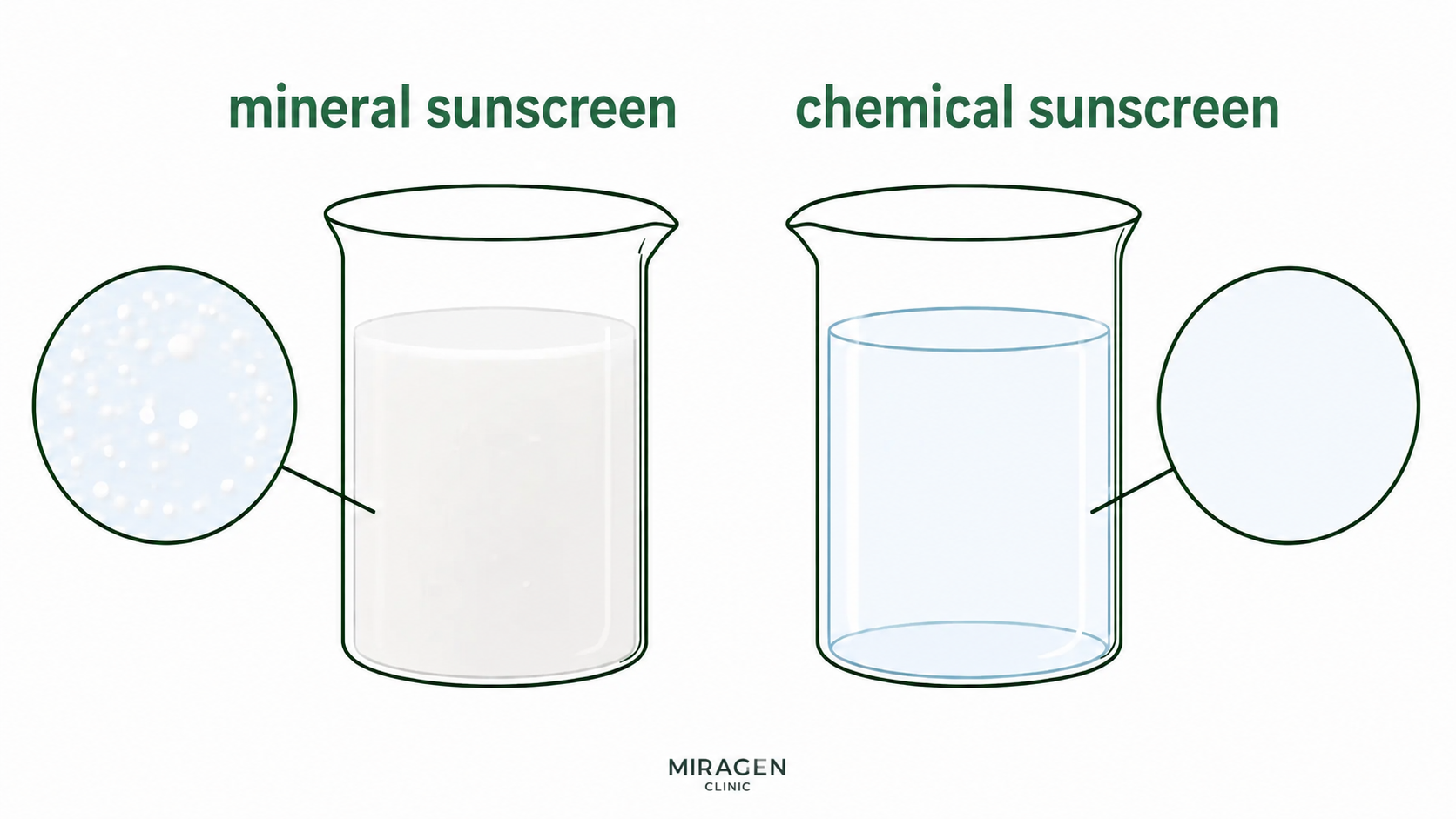
The key is whether the UV-blocking ingredients are mixed in as particles or dissolved in the product. Physical sunscreens are products where fine particles are mixed in, similar to adding chalk powder to water; chemical sunscreens are products where the main ingredients are dissolved, like sugar water.
This distinction creates differences in texture and white cast. Physical sunscreens may feel thick because many particles must be added to achieve sufficient efficacy; the higher the SPF and PA, the more particles are present, leading to a thicker consistency. Furthermore, when these particles reflect or scatter some light, the skin appears white, which is known as the white cast phenomenon.2
In contrast, chemical sunscreens rarely cause thickness or a white cast because the UV-blocking ingredients are dissolved in the product.
| Item | Physical Sunscreen | Chemical Sunscreen |
|---|---|---|
| UV Blocking Ingredients | Zinc Oxide, Titanium Dioxide | Avobenzone, Octocrylene, etc. |
| State within the Product | Insoluble Particles | Dissolved |
| Pros | Fewer reported allergies | Applies transparently and thinly |
| Cons | White cast, thickness, friction irritation | Relatively more reported allergies |
Why Physical Sunscreens Are More Frequently Recommended for Sensitive Skin
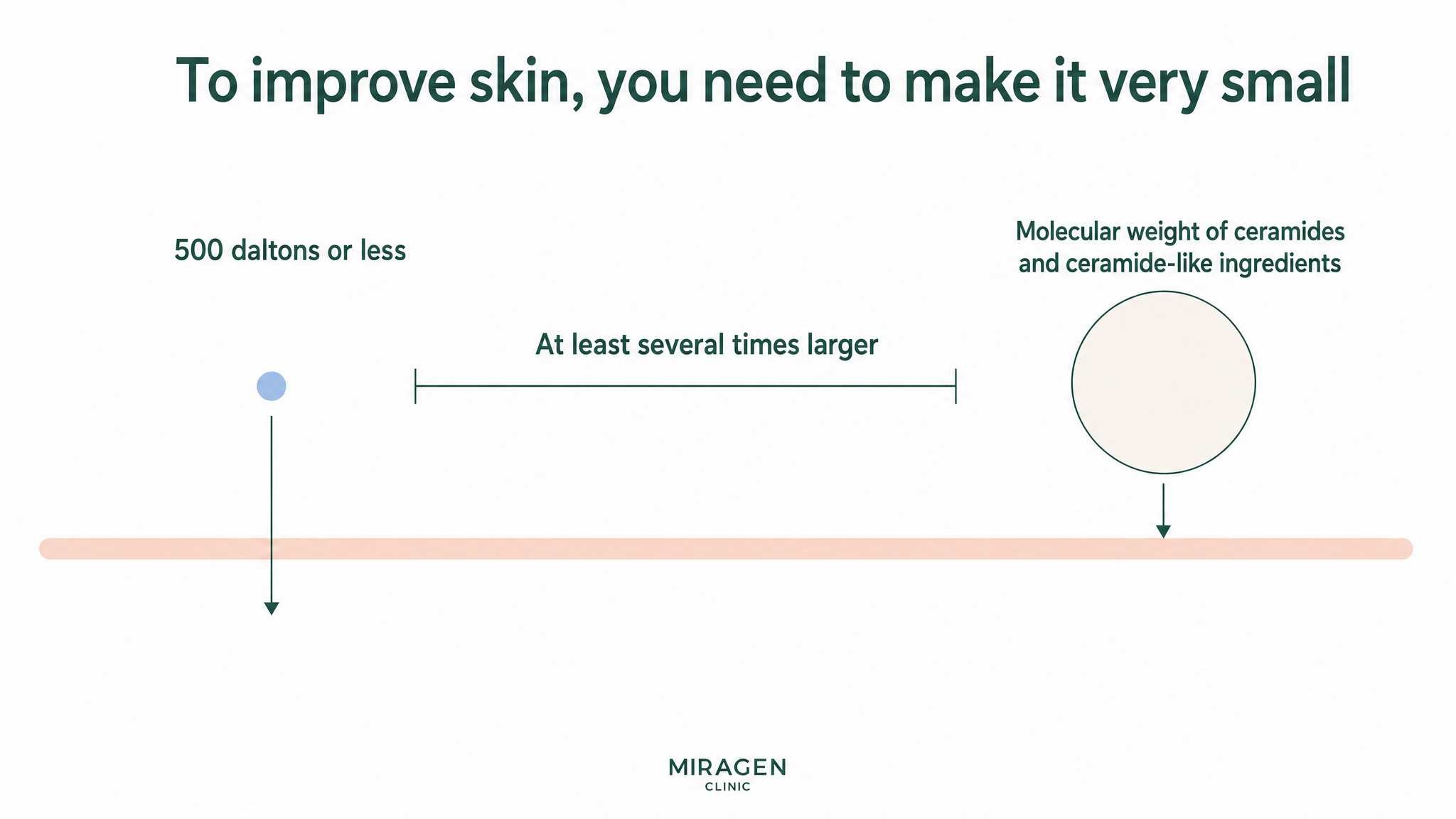
Physical sunscreens are more frequently recommended for sensitive skin because the blocking ingredients themselves are less likely to penetrate the skin, and reports of allergies are rare.
It is generally known that substances must be smaller than 500 Daltons to easily pass through the skin.3 Zinc oxide and titanium dioxide particles are tens of thousands of times larger than this.4
According to a 2023 study reviewing allergy reports by UV filter type, contact dermatitis and photocontact dermatitis were reported for several chemical sunscreen ingredients. In contrast, there were no reports of contact or photocontact dermatitis for zinc oxide and titanium dioxide.5
The conclusion of a 2011 experiment using imaging equipment to check whether zinc oxide nanoparticles applied to human skin were absorbed follows a similar direction. No evidence was found of zinc oxide nanoparticles entering the living layers of the skin, not only in normal skin but also in skin with a partially damaged barrier, atopic dermatitis lesions, and psoriasis lesions.4
However, what is not absorbed is the “particle.” A portion of zinc oxide particles dissolves into zinc ions, which are much smaller than the particles and are absorbed into the skin. In studies where zinc oxide sunscreen was applied repeatedly, zinc was indeed measured in the blood, but it was concluded that this is not a concern as it reached levels less than 0.01% of the amount applied.6,7
Pros and Cons of Chemical Sunscreens
The greatest advantage of chemical sunscreens is their texture. They are less thick than physical sunscreens, and pure chemical sunscreens have almost no white cast. Therefore, chemical sunscreens are much more comfortable to use.
However, some chemical sunscreen ingredients have small molecules and are highly oil-soluble. Because of this, some are easily absorbed into the skin, and there are reports of allergies.
A 2021 review paper summarizing reports of sunscreen side effects explained that not only inactive ingredients such as preservatives but also the chemical UV filters themselves can cause issues.8
In a study published in JAMA in 2020, four types of sunscreen were repeatedly applied to 48 healthy adults, and six chemical sunscreen ingredients were measured in their blood.9 Among the six ingredients detected in the blood, oxybenzone had the highest concentration,9 and oxybenzone also had the most frequent reports of allergies and photoallergies.5
| Chemical UV Filters | Blood Concentration Trend | Allergy/Photoallergy Reports |
|---|---|---|
| Oxybenzone | Relatively High | Most Common |
| Octocrylene | Relatively Low | Common |
| Octinoxate | Relatively Low | Reported |
| Avobenzone | Relatively Low | Reported |
| Homosalate | Moderate | Rare |
| Octisalate | Relatively Low | Rare |
However, these results do not mean that you should not use chemical sunscreens. The study measuring blood concentrations also stated that this alone is not a reason to stop using sunscreen,9 and side effects from sunscreen are rare compared to how widely they are used.8
Allergies Caused by Other Ingredients
Looking only at the blocking ingredients, physical sunscreens are less likely to cause problems. However, not all physical sunscreen products are better than chemical ones.
This is because sunscreens are not composed solely of UV-blocking ingredients. Sunscreens consist of active ingredients that block UV rays and inactive ingredients that form the formulation.
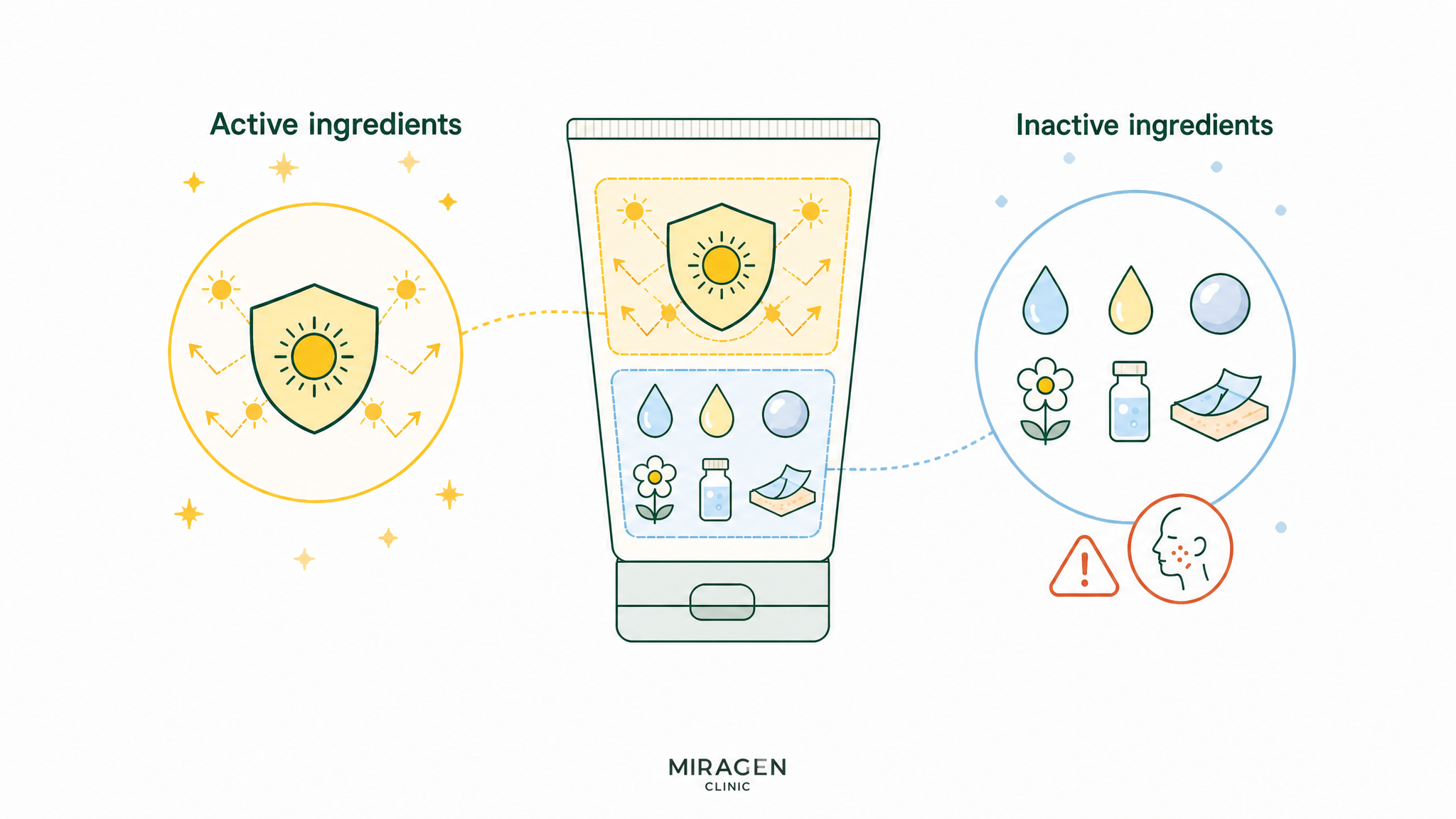
Inactive ingredients include water, oils, silicones, emulsifiers, preservatives, fragrances, film-forming agents, and ingredients that help the product spread well on the skin. If it is a waterproof product, ingredients that help it withstand water and sweat are also included.
In a 2026 study analyzing 176 best-selling sunscreens from three major US online retailers, ingredients with reported allergies were frequently identified among the inactive ingredients. The most common was Vitamin E, followed by acrylates, fragrances, and parabens. While the number of such ingredients was higher in chemical sunscreens than in physical ones, in sprays than in sticks, and in sports products than in general products, inactive ingredients in physical sunscreens can also certainly cause issues.10
Irritation from Application and Cleansing
Irritation during application is also a factor to consider when choosing a sunscreen. Physical sunscreens may be thick because they require many particles for sufficient UV protection, and if they do not spread easily, you may end up rubbing the skin more.
When dermatitis is present, this friction is a more significant problem than one might think. Repeatedly rubbing skin that is already red and stinging can further weaken the skin barrier and worsen symptoms.
Irritation during cleansing must also be considered, and here, whether the product is waterproof is more important than the difference between physical and chemical filters. A 2020 study involving 20 participants tested the removal of regular and waterproof sunscreens using water, foam cleanser, and cleansing oil. Regular sunscreen had a residual rate of 15.6% after using foam cleanser, but waterproof sunscreen had a residual rate of 36.8%. However, even for waterproof sunscreen, the residual rate dropped to 5.8% when cleansing oil was used.11
If you use a stronger cleanser or wash multiple times to remove a product that does not come off easily, the lipids between skin cells may be washed away, weakening the skin barrier and potentially worsening symptoms.
Sunscreen Selection Guide for Dermatitis Patients
Dermatitis is often accompanied by skin barrier damage, and when the barrier is compromised, ingredients applied to the skin can penetrate more easily than in normal skin.
According to a 2017 systematic review of 40 studies, the absorption of applied ingredients was approximately twice as high in the skin of atopic dermatitis patients compared to healthy skin.12 Additionally, a 2006 human study where skin was damaged with irritants showed a nearly threefold increase in the penetration of various ingredients.13
The same applies to sunscreen. Even on healthy skin, repeated application of sunscreen leads to UV-blocking ingredients being detected in the blood.9 When the skin barrier is weak, one must consider the possibility that not only UV filters but also fragrances, preservatives, and film-forming agents can enter the skin more easily.
While physical blockers are less likely to cause issues, physical sunscreens can still cause allergies depending on their inactive ingredients. Since fragrance is a representative allergen among inactive ingredients, it is best to start by choosing fragrance-free products.
Physical sunscreens tend to be thicker as the SPF and PA increase, so it is advisable to choose a product with moderate SPF and PA to minimize irritation during application. Furthermore, waterproof products should be avoided to reduce irritation during cleansing.
In fact, the method most recommended for those with dermatitis is to stop using sunscreen and avoid UV rays using hats or parasols. However, if you must use sunscreen, please consider the above criteria rather than just the difference between physical and chemical blockers.
References
- Morgado-Carrasco D, Granger C, Trullas C. Impact of ultraviolet radiation and exposome on rosacea: Key role of photoprotection in optimizing treatment. J Cosmet Dermatol. 2021;20(11):3415-3421.
- Cole C, Shyr T, Ou-Yang H. Metal oxide sunscreens protect skin by absorption, not by reflection or scattering. Photodermatol Photoimmunol Photomed. 2016;32(1):5-10.
- Bos JD, Meinardi MM. The 500 Dalton rule for the skin penetration of chemical compounds and drugs. Exp Dermatol. 2000;9(3):165-9.
- Lin LL, Grice JE, Butler MK. Time-correlated single photon counting for simultaneous monitoring of zinc oxide nanoparticles and NAD(P)H in intact and barrier-disrupted volunteer skin. Pharm Res. 2011;28(11):2920-2930.
- Ekstein SF, Hylwa S. Sunscreens: A Review of UV Filters and Their Allergic Potential. Dermatitis. 2023;34(3):176-190.
- Gulson B, McCall M, Korsch M, et al. Small amounts of zinc from zinc oxide particles in sunscreens applied outdoors are absorbed through human skin. Toxicol Sci. 2010;118(1):140-149.
- Gulson B, Wong H, Korsch M, et al. Comparison of dermal absorption of zinc from different sunscreen formulations and differing UV exposure based on stable isotope tracing. Sci Total Environ. 2012;420:313-318.
- Ludriksone L, Elsner P. Adverse Reactions to Sunscreens. Curr Probl Dermatol. 2021;55:223-235.
- Matta MK, Florian J, Zusterzeel R, et al. Effect of Sunscreen Application on Plasma Concentration of Sunscreen Active Ingredients: A Randomized Clinical Trial. JAMA. 2020;323(3):256-267.
- Levin EJ, Chung C, Hermes K. Allergen Content of Inactive Ingredients in Best-Selling Sunscreens: A Comparison of Key Product Features. Contact Dermatitis. 2026. DOI 10.1111/cod.70141.
- Chen W, He M, Xie L. The optimal cleansing method for the removal of sunscreen:Water, cleanser or cleansing oil? J Cosmet Dermatol. 2020;19(1):180-184.
- Halling-Overgaard AS, Kezic S, Jakasa I. Skin absorption through atopic dermatitis skin: a systematic review. Br J Dermatol. 2017;177(1):84-106.
- Jakasa I, Verberk MM, Bunge AL. Increased permeability for polyethylene glycols through skin compromised by sodium lauryl sulphate. Exp Dermatol. 2006;15(10):801-7.
Frequently Asked Questions
Is the difference between physical and chemical sunscreens a matter of reflection vs. absorption?
u003cpu003eExplaining it that way is not entirely accurate. Zinc oxide and titanium dioxide also protect the skin primarily by absorbing UV rays. However, they do reflect some light, which is why a white cast occurs. u003c/pu003e
Is it better not to apply sunscreen at all if I have dermatitis?
u003cpu003eGenerally, it is better to avoid UV rays with a hat or parasol instead of sunscreen. However, if you must apply it, we recommend a physical sunscreen that is fragrance-free, non-waterproof, and has an SPF/PA that is not too high. u003c/pu003e
Are chemical sunscreens dangerous?
u003cpu003eSome chemical sunscreen ingredients are easily absorbed into the skin and can cause allergies upon absorption, so it is wise to be cautious when you have dermatitis. However, this does not mean all chemical sunscreens are dangerous. Chemical sunscreens have significant advantages, such as applying transparently and thinly. u003c/pu003e

We treat atopic dermatitis, rosacea, and seborrheic dermatitis.
Thanks to the valuable reviews you have shared in the community, many of you visit us even from far away.
We will repay you with sincere, attentive care.
DK Han
Chief Director, MIRAGEN Clinic
Graduate of University of Michigan, Ross School of Business
Graduate of Chungnam National University School of Medicine
(Former) Representative Director of Ewha Phoenix Rehabilitation Hospital
(Current) Representative Director of MIRAGEN Clinic


