

When I ask patients who visit for dermatitis what cleanser they use, almost without exception they say they use a low-pH cleanser.
However, low-pH cleansers vary in cleansing power by product, so the right choice differs depending on the situation.
Based on what I explain to patients who ask in the clinic, I will summarize the criteria for choosing an appropriate low-pH cleanser for different situations.
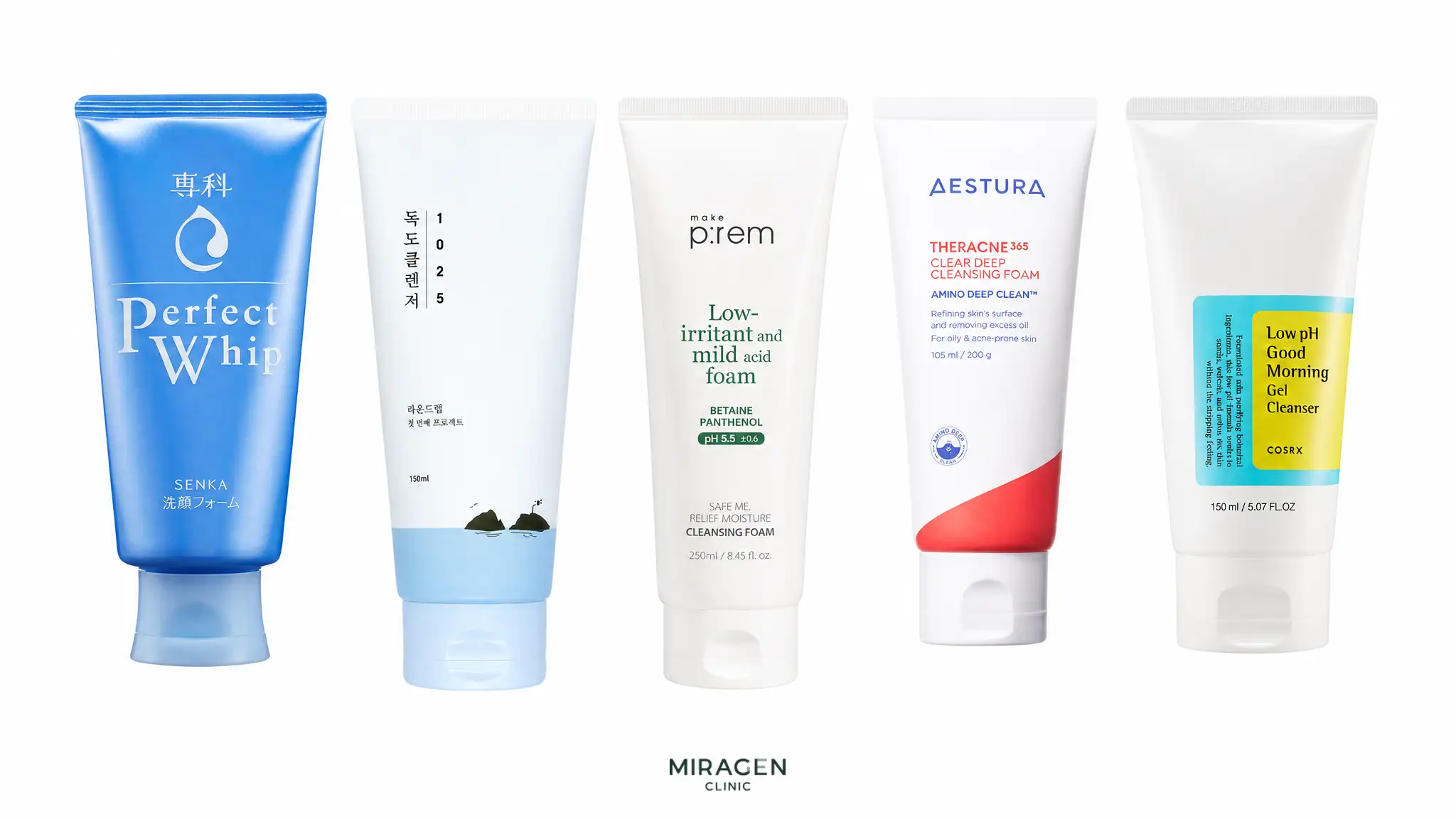
목차
1. Cleansers and surfactants
Most oily residue that clings to our skin—such as sebum and makeup—cannot be removed thoroughly with water alone. This is because water and oil repel each other.
That is why cleansers mainly contain surfactants, which allow water and oil to mix so that oil can be washed away with water. Surfactants are the key ingredients that determine a cleanser’s cleansing power.1
Surfactants broadly fall into two categories. The first is traditional true soap, made by reacting natural plant oils such as olive oil or coconut oil with alkaline ingredients such as sodium hydroxide. The second is synthetic surfactants developed using modern chemical technology to match the characteristics of the skin barrier.
Cleansers differ depending on which of these two types is used as the main base.
2. Sebum and intercellular lipids
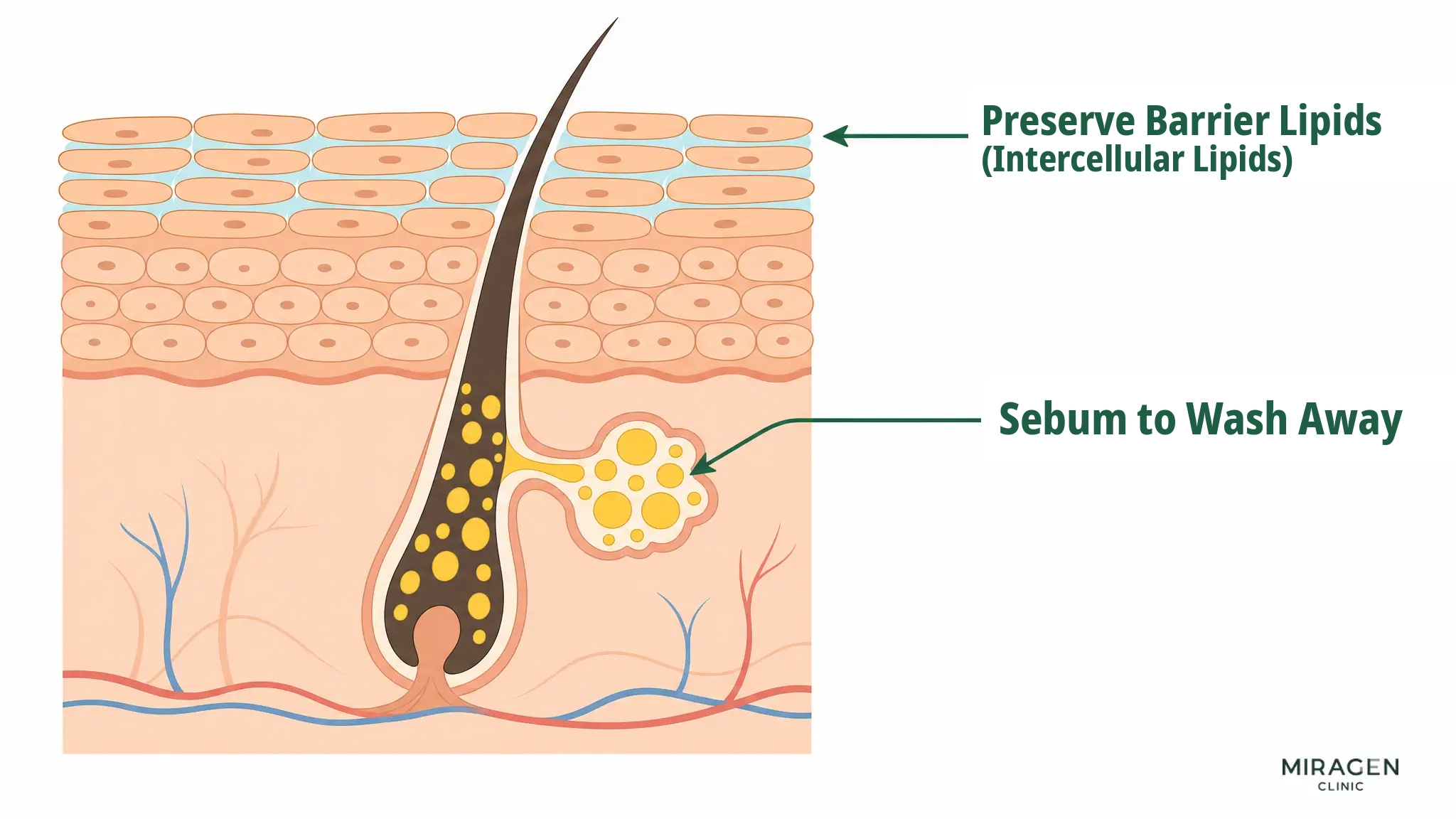
The most representative oily substance produced on the skin surface is sebum. Sebum is secreted from sebaceous glands in the pores and forms a thin oil film over the entire face; when it builds up excessively and hardens, it can block the pore opening.
When the pore opening is blocked, the skin surface becomes bumpy, pores look larger, and acne bacteria multiply rapidly, leading to inflamed red acne. This is why sebum needs to be washed away regularly to keep pores open.
The problem, however, is that the intercellular lipids that make up the skin barrier are also oily substances. Intercellular lipids—made up of ceramides, cholesterol, and fatty acids—fill the spaces between corneocytes tightly and act as a protective barrier.
If you use a cleanser with overly strong cleansing power, it can wash away not only sebum in the pores but also the lipid components that make up the skin barrier.
3. Low acidity and pH
Many people think, “Low-pH cleansers cleanse weakly, and alkaline soaps cleanse strongly,” but strictly speaking, this is not true. Cleansing power is determined not by a product’s pH, but by the type of surfactants used and how strongly they bind.2
Traditional soap itself is strongly alkaline, with a pH of 9–10. If you try to adjust soap to a low-pH by mixing in acidic ingredients, the soap (fatty acid salts) reverts back to fatty acids and precipitates, losing its surfactant function.1
In contrast, synthetic surfactants are not damaged even in a low-pH state, making it easy to adjust them to the skin-friendly pH 5.5. And because many low-pH cleansers use mild synthetic surfactants, the popular perception has taken hold that low-pH cleansers are gentle. However, even if a cleanser is low-pH, if it contains a strong synthetic surfactant such as sodium lauryl sulfate (SLS), it can damage the skin barrier as much as strongly alkaline soap can.2
The reason synthetic cleansers are made low-pH is that skin is healthiest when it is maintained in a slightly acidic environment. If you keep using strongly alkaline cleansers and your skin becomes alkalinized, the skin barrier can develop the following problems:
- Delayed skin barrier recovery: When the skin becomes alkaline, the activity of enzymes involved in barrier recovery decreases.3
- Lifting of the stratum corneum and microcracks: Enzymes that break the bonds between corneocytes become more active in an alkaline environment, causing the stratum corneum to lift and creating tiny gaps.
- Changes in microbial balance: Observations have reported that facial pH is higher than normal in acne patients, so alkalinized skin may become an environment where microbes can grow more easily.4
4. Solid vs. liquid
Many people mistakenly believe that solid bar forms are harsh soaps, while liquid creams or cleansing foams in tubes must be gentle and low-pH.
However, you cannot know the ingredients from the texture alone. Some solid bars are not soap but are made with synthetic surfactants—Dove Beauty Bar is a representative example. In a survey that measured the pH of 250 commercially available cleansers, many bars made with synthetic surfactants were neutral or low-pH.5
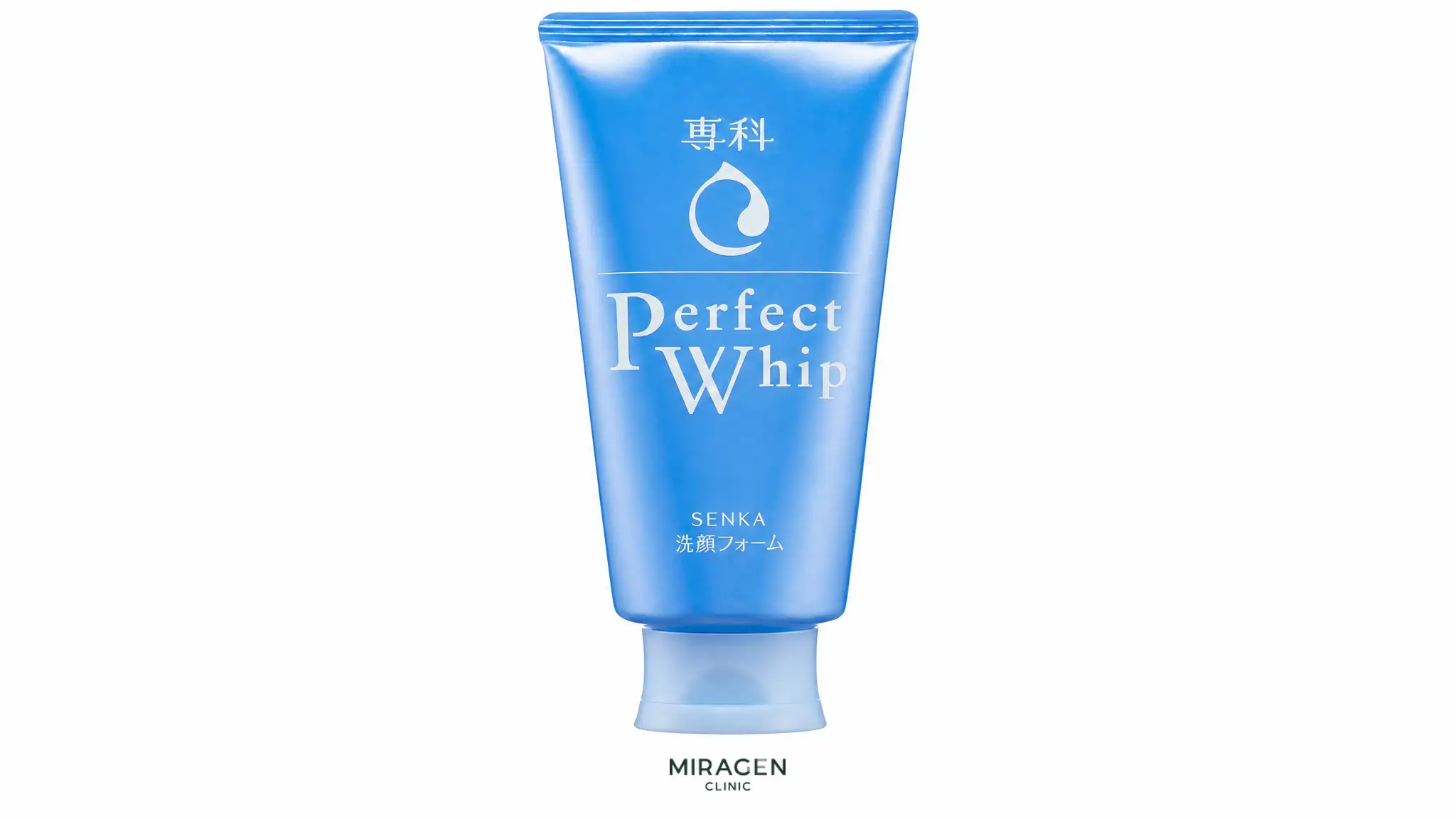
Conversely, many squeeze-out liquid products are strongly alkaline soaps when you look at the ingredient list. Senka Perfect Whip is a representative example. The ingredient list shows it is a soap made by reacting fatty acids with an alkali (potassium hydroxide).
Therefore, you should avoid assuming that a product will be gentle simply because it is not a solid bar.
5. Choosing the right low-pH cleanser using the ingredient list
Step 1: How to identify alkaline cleansers to avoid
If your skin is sensitive or you are dealing with dermatitis, you should avoid alkaline cleansers that dissolve the skin barrier.
For solid bar soaps, it is generally safest to assume they are alkaline soaps and avoid them—except for “Dove.”
Next, check whether “acid” and “hydroxide” appear together in the ingredient list. If fatty acids such as lauric acid, myristic acid, and stearic acid are listed near the front, and potassium hydroxide or sodium hydroxide is listed in the middle or toward the end, it is a strongly alkaline soap product, so it is best to avoid it.
Senka Perfect Whip Facial Wash full ingredient list
Water, glycerin, myristic acid, palmitic acid, potassium hydroxide, lauric acid, stearic acid, glyceryl stearate SE, PEG-8, sodium methyl cocoyl taurate, polyquaternium-7, fragrance, disodium EDTA, butylene glycol, phytosteryl/octyldodecyl lauroyl glutamate, silica, BHT, sodium benzoate
Explanation: Near the front of the ingredient list, fatty acids ending in “acid” and strong base ingredients ending in “hydroxide” are listed together. These two react to form soap, and when dissolved in water it shows a pH of 9 or higher—making it clearly an alkaline soap product based on the ingredient list alone.
Step 2-1: When you have dermatitis only
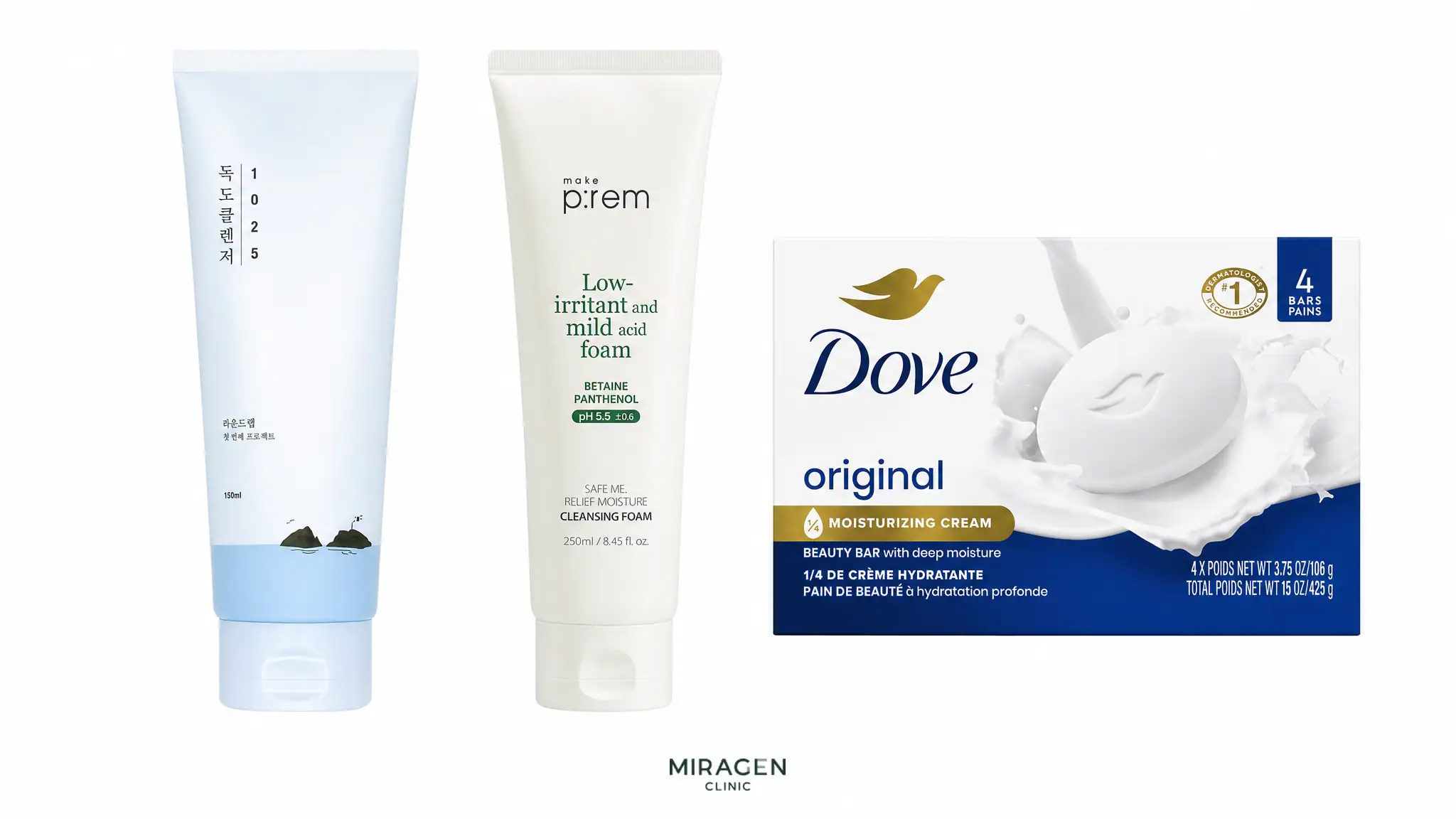
If you have dermatitis but no acne, choose a low-pH cleanser made with a mild class of cleansing ingredients. Check the ingredient list for the following classes: isethionates (sodium cocoyl isethionate, sodium lauroyl isethionate), taurates (sodium methyl cocoyl taurate), betaines (coco-betaine, cocamidopropyl betaine), glycinates (potassium cocoyl glycinate), and glutamates (sodium cocoyl glutamate).
Unlike regular soap, these are classified as synthetic surfactants that denature skin proteins less.1 Representative products include Round Lab Dokdo Cleanser, Make P:rem Safe Me Cleansing Foam, and Dove Beauty Bar.
Round Lab 1025 Dokdo Cleanser full ingredient list
Water, Sodium Cocoyl Isethionate, glycerin, Sodium Methyl Cocoyl Taurate, Coco-Betaine, Potassium Cocoyl Glycinate, potassium benzoate, sodium chloride, polyquaternium-67, Potassium Cocoate, citric acid, fructooligosaccharide, saccharide hydrolysate, disodium EDTA, pullulan, 1,2-hexanediol, allantoin, panthenol, sea water, sodium acetate, butylene glycol, chamomile flower oil, caprylic/capric triglyceride, beta-glucan, phosphatidylcholine, hyaluronic acid, ethylhexylglycerin, ceramide NP, glycine, hydrolyzed hyaluronic acid, sodium cocoylglutamate, serine, sodium hyaluronate, lysine, alanine, arginine, threonine, proline
Make P:rem Safe Me Relief Moisture Cleansing Foam full ingredient list
Water, sodium cocoyl isethionate, sodium methyl cocoyl taurate, betaine, panthenol, raspberry extract, peppermint extract, sodium hyaluronate, baobab fruit extract, coco-betaine, potassium cocoyl glycinate, potassium benzoate, sodium chloride, polyquaternium-67, potassium cocoate, sodium acetate, 1,2-hexanediol, disodium EDTA, rosemary leaf oil, glycerin, citric acid, dipropylene glycol, ethylhexylglycerin
Dove White Beauty Bar full ingredient list
sodium lauroyl isethionate, stearic acid, lauric acid, sodium isethionate, water, sodium stearate, cocamidopropyl betaine, sodium cocoate, fragrance, sodium isethionate, sodium chloride, titanium dioxide, tetrasodium EDTA, tetrasodium etidronate
Explanation: Although some soap ingredients such as sodium stearate are included, the main base is a mild synthetic surfactant (sodium lauroyl isethionate), along with fatty acids such as stearic acid. In a survey measuring bars made with synthetic surfactants, many were neutral, and this is a representative composition of synthetic solid cleansers that are distinct from strongly alkaline soaps.5
Step 2-2: When you have both dermatitis and acne
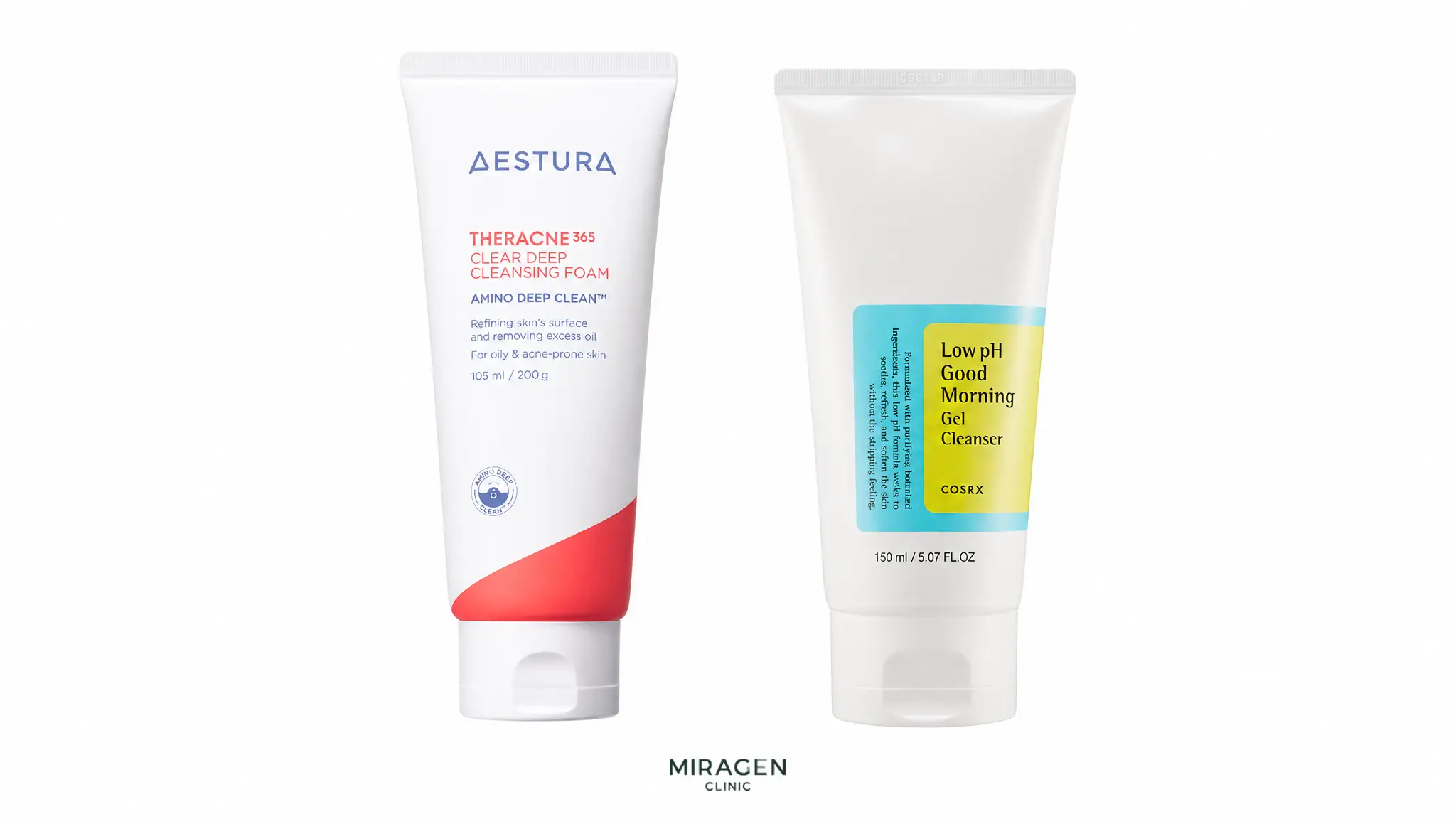
If dermatitis is improving but acne is the issue, choose a low-pH cleanser that contains ingredients that wash away sebum and dead skin cells in the pores. Check the ingredient list for salicylic acid derivatives (betaine salicylate, salicylic acid) or sulfosuccinate derivatives (disodium laureth sulfosuccinate). They both start with “sul-,” but sulfates (sodium lauryl sulfate, sodium laureth sulfate) are a different class with stronger irritation potential.
Disodium laureth sulfosuccinate, a sulfosuccinate derivative, is an ingredient that removes sebum well while causing less skin irritation. Betaine salicylate is a processed form of salicylic acid designed to be less irritating; salicylic acid is used for acne care because it helps loosen sebum and dead skin cells in the pores. The American Academy of Dermatology (AAD) acne guidelines also recommend salicylic acid as one of the acne management options.6 In a clinical trial using a cleanser containing salicylic acid together with amino acid-based cleansing ingredients for four weeks, both acne indices and skin barrier indices improved.7
Representative products include AESTURA Theracne 365 Foam Cleanser and COSRX Low pH Good Morning Gel Cleanser.
AESTURA Theracne 365 Clear Deep Cleansing Foam full ingredient list
Glycerin, water, potassium cocoyl glycinate, sodium cocoyl glycinate, butylene glycol, polyglyceryl-10 laurate, disodium laureth sulfosuccinate, glyceryl stearate SE, citric acid, glycol distearate, allantoin, disodium EDTA, ethylhexylglycerin, tetrasodium EDTA, sodium hyaluronate, sodium cocoyl glutamate, tocopherol
COSRX Low pH Good Morning Gel Cleanser full ingredient list
Water, cocamidopropyl betaine, sodium lauroyl methyl isethionate, sodium chloride, polysorbate 20, Styrax japonicus branch/fruit/leaf extract, butylene glycol, yeast ferment, cedar leaf extract, lotus leaf extract, pine leaf extract, Ulmus davidiana root extract, evening primrose extract, kudzu root extract, tea tree leaf oil, allantoin, caprylyl glycol, ethylhexylglycerin, betaine salicylate, citric acid, ethylhexanediol, 1,2-hexanediol, trisodium ethylenediamine disuccinate, sodium benzoate, disodium EDTA
Choosing a cleanser is an important first step in treating dermatitis
In dermatitis care, I often see cases where the course of treatment changes simply because a patient chooses an appropriate cleanser. This is especially true when acne is also present.
Of course, dermatitis cannot be completely cured with cleanser alone, but if your skin is not improving despite diligent treatment, it is worth checking whether you are using a low-pH cleanser that is appropriate for you.
References
- Draelos ZD. The science behind skin care: Cleansers. J Cosmet Dermatol. 2018;17(1):8-14.
- Bikowski JB. The use of cleansers as therapeutic concomitants in various dermatologic disorders. Cutis. 2001;68(5 Suppl):12-19.
- Surber C, Humbert P, Abels C, et al. The Acid Mantle: A Myth or an Essential Part of Skin Health? Curr Probl Dermatol. 2018;54:1-10.
- Prakash C, Bhargava P, Tiwari S. Skin Surface pH in Acne Vulgaris: Insights from an Observational Study and Review of the Literature. J Clin Aesthet Dermatol. 2017;10(7):33-39.
- Khan A, Camacho JV, Cummins H, et al. Not all marketed skin cleansers’ pH is optimal for atopic dermatitis. Allergy Asthma Proc. 2024;45(4):284-287.
- Reynolds RV, Yeung H, Cheng CE, et al. Guidelines of care for the management of acne vulgaris. J Am Acad Dermatol. 2024;90(5):1006.e1-1006.e30.
- Ai Levin Y, Lyu Y, He X, et al. Improvement of Overall Skin Condition in Acne and Oily Prone Skin With an Amino Acid Cleanser Containing Salicylic Acid, Glucuronolactone, and Ceramides. J Cosmet Dermatol. 2026;25(3):e70759.
Frequently Asked Questions
Which is better: a low-pH cleanser or a mildly alkaline soap?
Rather than which is better, what matters more is what suits your skin. However, if your skin is sensitive or you have dermatitis, strongly alkaline soap can slow skin barrier recovery, so a low-pH cleanser made with mild synthetic surfactants is safer.
Can I use a low-pH cleanser in the morning and a mildly alkaline soap at night?
I do not recommend it. Even using a mildly alkaline soap once can alkalinize the skin surface and slow barrier recovery. Even if you split them by time of day, the effects of alkalinization remain, so it is not meaningful.
I switched to a low-pH cleanser, but I still keep getting breakouts. Why?
A “low-pH” label alone does not tell you how irritating it is. Even among low-pH cleansers, if it contains a strongly irritating synthetic surfactant such as sodium lauryl sulfate, the skin barrier can be damaged. Check the full ingredient list and choose the class that suits your skin.

We treat atopic dermatitis, rosacea, and seborrheic dermatitis.
Thanks to the valuable reviews you have shared in the community, many of you visit us even from far away.
We will repay you with sincere, attentive care.
DK Han
Chief Director, MIRAGEN Clinic
Graduate of University of Michigan, Ross School of Business
Graduate of Chungnam National University School of Medicine
(Former) Representative Director of Ewha Phoenix Rehabilitation Hospital
(Current) Representative Director of MIRAGEN Clinic


