

When treating atopic dermatitis, I am very frequently asked whether dietary control is necessary. It can be confusing when YouTube suggests cutting out everything, while health food advertisements claim that eating just one specific thing is enough.
Therefore, I have compiled a summary of foods that are good for atopic dermatitis and those that should be avoided, based only on high-level evidence. The first point to note is that the standards for children and adults are quite different.
| Category | Reduce or Avoid | Helpful Items |
|---|---|---|
| Common | High-histamine foods (some patients), high-nickel foods (if nickel allergy is present), sugar · high-GI foods | Probiotics · Dietary fiber, Vitamin D |
| Children | Foods with confirmed severe allergic reactions (indiscriminate dietary restriction hinders immune tolerance) | Early consumption of diverse foods (immune tolerance) |
| Adults | Alcohol · Tobacco | — |
목차
For children, immune tolerance comes before foods good for atopic dermatitis
Pediatric atopic dermatitis is heavily influenced by food. However, there is a mistake many guardians make here: unconditionally cutting out specific foods because they seem to worsen symptoms.
Childhood is the period when the immune system creates a list of “this food is safe, that food is dangerous.” The process of letting the immune system learn that food is safe by feeding it early and frequently is called immune tolerance. In the LEAP study of 640 infants, the incidence of allergies in the group that consumed peanuts early was approximately 81% lower than in the avoidance group.1 Paradoxically, more allergies developed in the children who were made to avoid them.
Of course, it is advisable to restrict intake and consult a doctor for foods that cause immediate and severe reactions such as vomiting, hives, or difficulty breathing. However, if the reaction is not that severe, it is more desirable to build immune tolerance by feeding small amounts consistently.
This does not mean there are no foods to avoid. Foods that require caution regardless of age, such as those high in histamine or nickel, are summarized in the next section.

Foods to Avoid
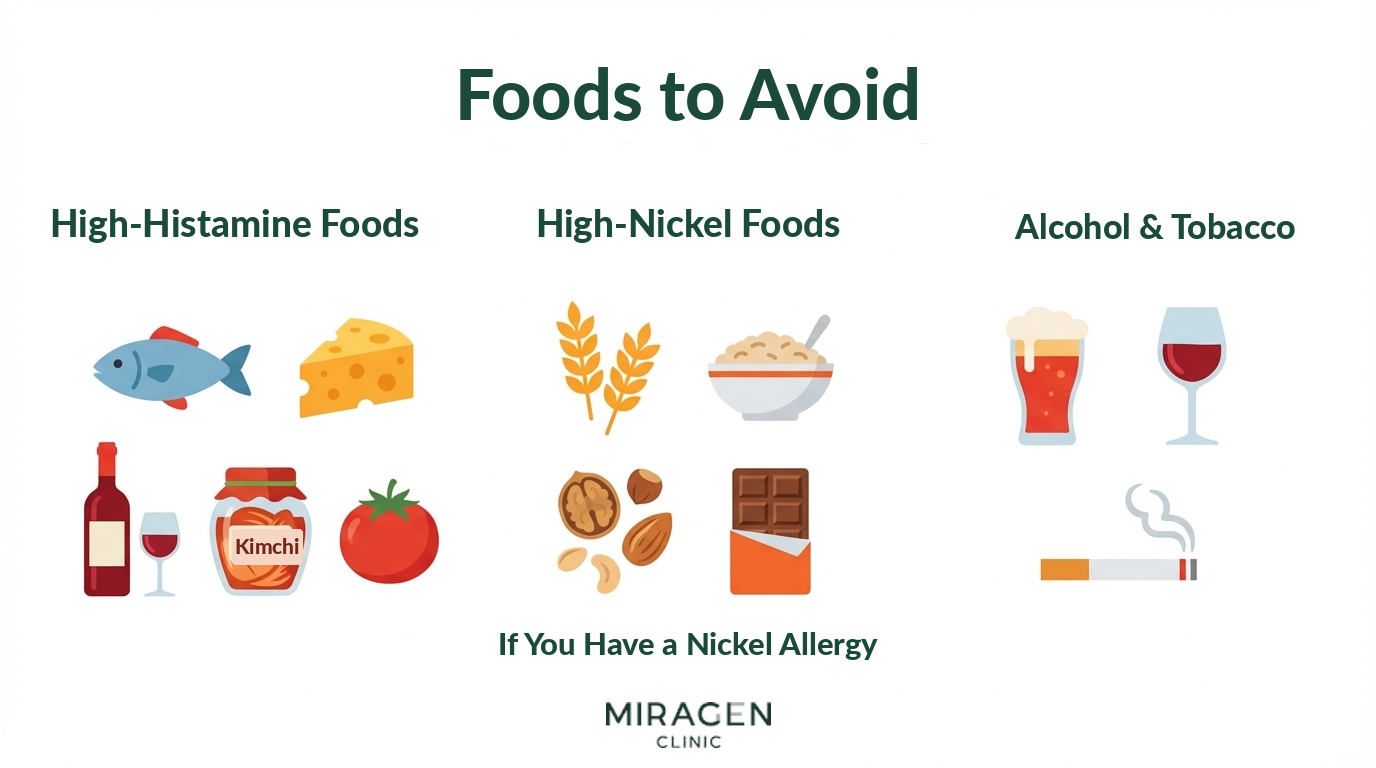
Before looking into foods good for atopic dermatitis, let’s first address foods to avoid. The foods below can worsen atopic dermatitis through mechanisms different from general allergies (IgE). Since this is unrelated to immune tolerance, it applies to both children and adults.
High-Histamine Foods
Blue-backed fish like tuna and mackerel, fermented foods like cheese, wine, and kimchi, and tomatoes are high in histamine or promote histamine release. Since histamine is a substance that directly causes itching, it is correct to reduce these foods if itching worsens after consuming them.
High-Nickel Foods (In case of nickel allergy)
Those who experience itching and redness when touching metals such as earrings, necklaces, belts, or watches—meaning those with a nickel allergy—should be careful with foods high in nickel. Foods high in nickel, such as whole wheat, oats, nuts, and chocolate, can cause systemic contact dermatitis.2
Alcohol and Tobacco
Alcohol dilates blood vessels, worsening itching and flushing, and increases systemic inflammatory responses. An analysis synthesizing several clinical trials also confirmed the link between atopic dermatitis patients and alcohol consumption.3 Please avoid it as much as possible during periods when atopic dermatitis is severe.
The same applies to tobacco. In an analysis synthesizing 86 studies, both active and passive smoking were associated with an increased prevalence of atopic dermatitis.4 In the case of children, parental smoking (secondhand smoke) increases the child’s risk of atopic dermatitis, so quitting smoking within the household is important.
Sugar · Flour · Dairy · Caffeine: Should I quit them?
Sugar and High-GI Foods
Medical research has different strengths of evidence depending on the design. The strength is highest in the order of meta-analyses of multiple clinical trials, individual clinical trials, and observational studies.
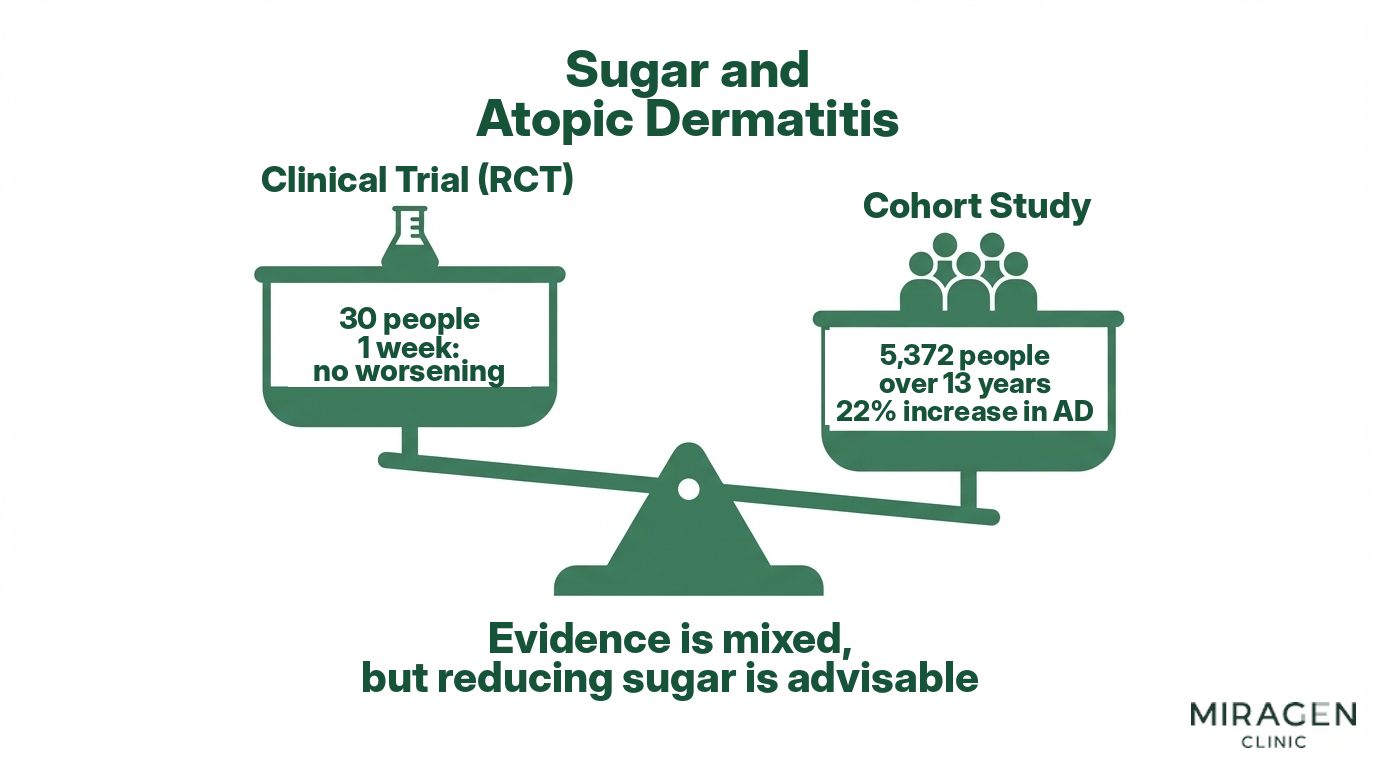
There are two representative studies regarding sugar and atopic dermatitis, and their conclusions conflict.
While a clinical trial of 30 people showed that sugar does not worsen atopic dermatitis, a large-scale observational study tracking 5,372 children for 13 years found a dose-response relationship: at age 13, for every 10% increase in sugar intake, the prevalence of atopic dermatitis increased by 22%, and by 32% for moderate to severe cases.5,6
This clinical trial has a stronger design, but its scale and duration are limited as it observed only 30 people for one week. Conversely, this observational study is large-scale and long-term, but its design cannot prove causality in the first place.
Therefore, it is difficult to conclude definitively that sugar worsens atopic dermatitis. However, since excessive sugar consumption is already well-known for its negative health impacts such as obesity, systemic inflammation, and gut microbiome imbalance, it is better to reduce it.
Flour and Gluten
Wheat is one of the common allergens for children. It can be confirmed through an allergy test, and if it causes severe allergic symptoms, it is correct to restrict it after consulting a doctor.
On the other hand, there are people who experience digestive discomfort or skin issues after eating flour even if they do not have a wheat allergy. This condition is called gluten sensitivity, and there is currently no established test to confirm it.
If the wheat allergy is not severe, there is no reason to unconditionally quit flour, but if skin improvement is repeatedly experienced after removal, restriction can be considered.
Dairy Products
Milk is one of the most common allergens in children. However, as with flour, even if an allergy is confirmed, it is better to maintain immune tolerance by feeding small amounts consistently unless symptoms are severe. Unconditional cessation is not recommended as it can lead to nutritional imbalances such as calcium deficiency.
Adults also do not need to restrict milk unless symptom aggravation clearly and repeatedly occurs after drinking it. Rather, fermented milk like yogurt can have a positive effect on the gut-skin axis as it is rich in probiotics. (Of course, fermented foods are high in histamine, so caution is needed.)
Caffeine
Many people ask if they should quit coffee. To give the conclusion first, moderate coffee consumption is not a problem for most atopic dermatitis patients.
In fact, caffeine has the effect of inhibiting an enzyme called PDE4. PDE4 is an enzyme that breaks down cAMP within cells, and it is known that in atopic dermatitis patients, the activity of this enzyme is increased, making inflammation more likely to occur. When caffeine inhibits PDE4, cAMP levels rise, thereby suppressing inflammatory pathways. This mechanism is the same principle as the Crisaborole ointment used for atopic dermatitis treatment.
However, there are no clinical trials yet that have directly confirmed the relationship between caffeine and atopic dermatitis. Additionally, since the diuretic effect of caffeine can worsen skin dryness and interfering with sleep can worsen itching, it is best to avoid excessive intake. Beverages with added sugar or syrup are high-GI foods, so caution is required.
Foods Good for Atopic Dermatitis
Now let’s look at foods that are good for atopic dermatitis. The two items below have evidence at the level of meta-analyses of multiple clinical trials, so they can be actively recommended.
Probiotics and Dietary Fiber
In a 2023 analysis synthesizing several clinical trials, the probiotics group showed a significant decrease in SCORAD compared to the placebo group.7 The effect was particularly clear in moderate to severe atopic dermatitis, and by strain, the effect size was largest in the order of L. salivarius, L. acidophilus, and L. plantarum.
In children as well, a clinical trial where the L. plantarum CJLP133 strain was administered for 12 weeks showed significant improvement in SCORAD compared to placebo.8
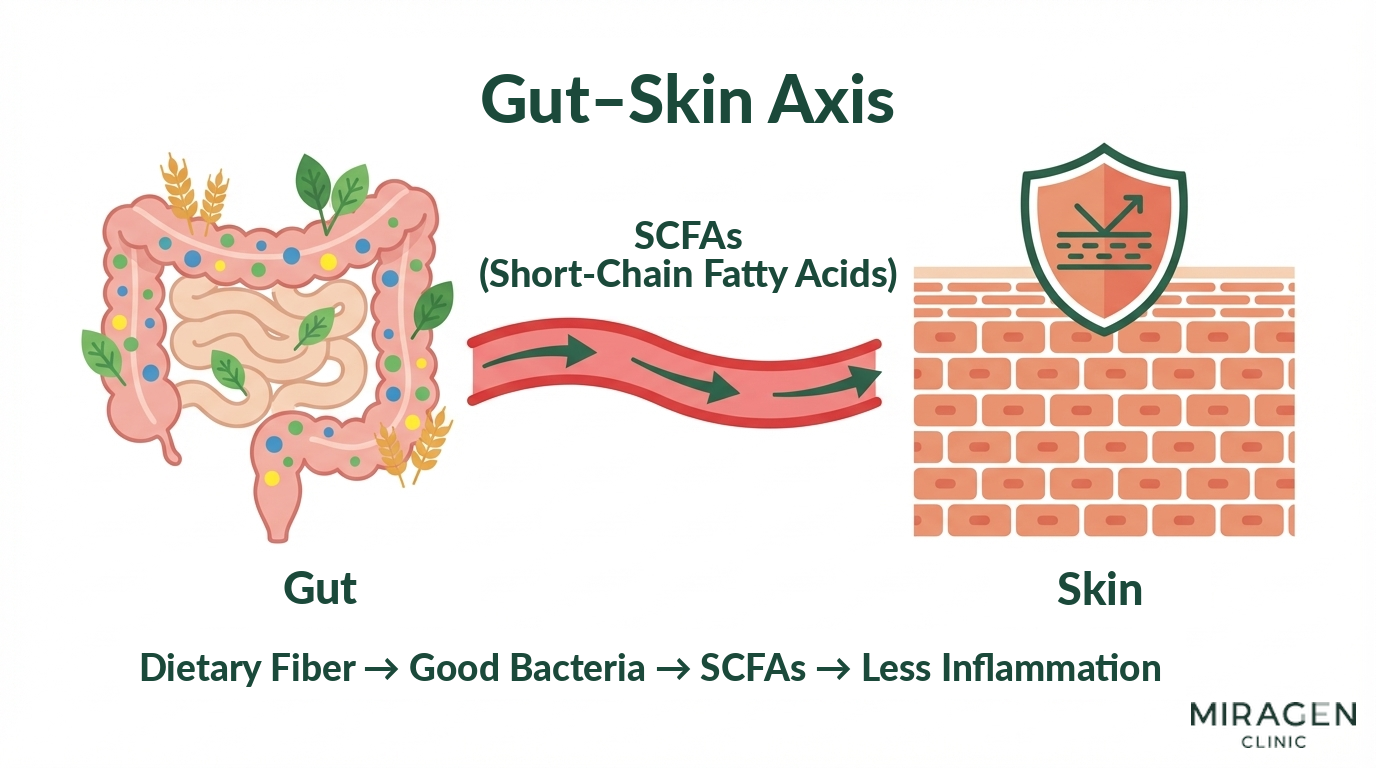
Therefore, if we were to pick the best food for atopic dermatitis, probiotics come first. This is because they have almost no side effects, have evidence at the level of meta-analyses of multiple clinical trials, and the mechanism by which short-chain fatty acids produced by gut microbes suppress systemic inflammation is also persuasive.
Products containing L. salivarius are currently unavailable in Korea, but L. acidophilus is included in most general probiotic products on the market.
L. plantarum CJLP133 has been recognized by the Ministry of Food and Drug Safety for its functionality in “improving skin condition caused by immune hypersensitivity reactions,” and a representative product is CJ BYO Biocore Skin Immune Probiotics 10 Billion (30-day supply, approx. 30,000 KRW). L. sakei Probio65 has also received the same functional recognition, and a representative product is Lactopy Kimchi Probiotics (30-day supply, approx. 40,000 KRW).
For probiotics to work, they also need sufficient materials. That material is dietary fiber. Dietary fiber, abundant in fruits, vegetables, and whole grains, is converted into short-chain fatty acids by gut microbes, which suppress systemic inflammation and contribute to maintaining the skin barrier.9 Maintaining a diet rich in fiber while taking probiotic supplements is the most efficient way to manage the gut-skin axis.
Vitamin D
In a 2024 analysis synthesizing 11 clinical trials (686 people), the vitamin D supplementation group showed a significant decrease in atopic dermatitis severity compared to the placebo group.10
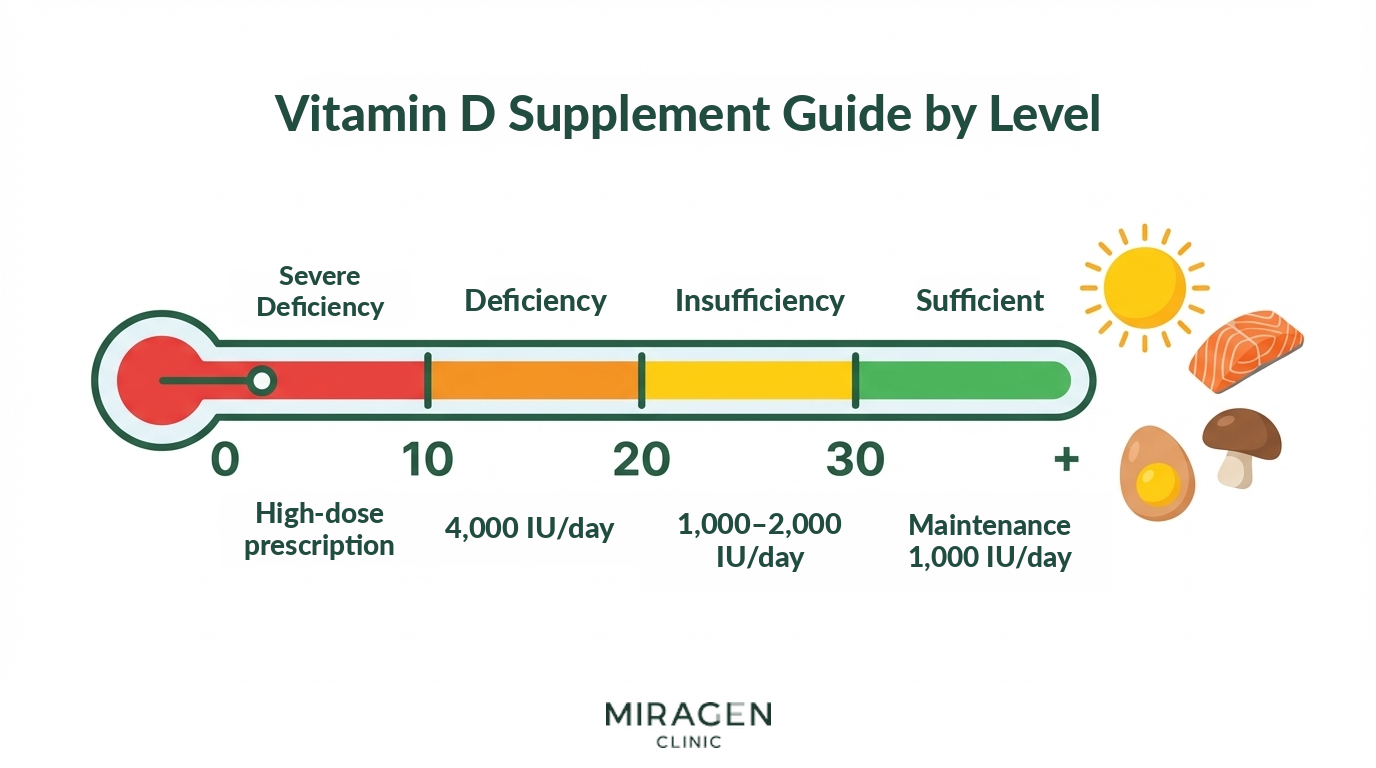
The recommended dosages by level according to the Endocrine Society guidelines are as follows:
- 30 ng/mL or higher (Sufficient) — Maintenance dose of 1,000 IU/day
- 20–30 ng/mL (Insufficient) — 1,000–2,000 IU/day
- 10–20 ng/mL (Deficient) — Take 4,000 IU/day for 6–8 weeks, then switch to a maintenance dose
- Less than 10 ng/mL (Severely Deficient) — Retest after high-dose or injection treatment
However, in Korea, vitamin D deficiency must be confirmed through a blood test (25-OH Vitamin D) for health insurance to apply when vitamin D is prescribed. The cost of a vitamin D test is 30,000 KRW.
For reference, in a clinical trial where 1,600 IU of Vitamin D and 600 IU of Vitamin E were used in combination for 60 days, SCORAD decreased by 64.3%, reporting a clear synergy compared to D alone (34.8%) or E alone (35.7%).11 You may also consider taking Vitamin E together. When purchasing Vitamin E, please choose natural d-alpha-tocopherol products. Synthetic (dl-alpha-tocopherol) has an absorption rate of about 70% of the natural version.
Vitamin E deficiency is rare, so no separate test is required, and the upper intake limit is 1,000 mg per day. Since it inhibits platelet aggregation, those taking anticoagulants must consult a doctor.
Evening Primrose Oil (Efoprim), Omega-3: Are they effective?
Evening Primrose Oil
Efoprim is a prescription drug containing gamma-linolenic acid extracted from evening primrose oil, and the financial burden is low as health insurance applies.
To briefly explain the mechanism, gamma-linolenic acid is converted into DGLA in the body, from which the anti-inflammatory substance PGE1 is produced to suppress skin inflammation. There are also studies that confirmed a significant correlation between blood gamma-linolenic acid concentration and SCORAD improvement.12
However, an analysis by Cochrane synthesizing 27 clinical trials concluded that there was no significant difference compared to placebo,13 and in my experience, it was difficult to feel a clear effect.
Omega-3
There is a study on children showing that SCORAD significantly improved when a combination of Omega-3, gamma-linolenic acid, and Vitamin D was administered.14 However, it is difficult to strongly recommend Omega-3 alone as results vary by study.
If consuming through food, salmon, sardines, perilla oil, and flaxseed oil are good sources. Mackerel is also rich in Omega-3, but since it can have high histamine content, caution is needed during periods of severe itching.
Delayed Allergy Test (IgG4): Caution is required
When the relationship between food and symptoms is ambiguous, some people consider the IgG4 test, also known as the “delayed allergy test.”
A high IgG4 level means frequent exposure to that food, not that the food is the cause. In fact, when allergy immunotherapy is successful, IgG4 actually increases. Both European and Canadian allergy societies do not recommend this test for allergy diagnostic purposes.
However, it can be used limitedly as reference material along with a food diary in cases where skin symptoms repeatedly appear after several hours to days, or when organization is needed because various foods are already being cut out indiscriminately. It is safer to accept the results as a “list of hypotheses to check” rather than a “list of foods to quit.”
General information on causes, tests, and treatments as well as foods good for atopic dermatitis can be found in the Atopic Dermatitis Guide, and information on allergy tests can be found in the Allergy Test Guide.
References
- Du Toit G, Roberts G, Sayre PH, et al. Randomized trial of peanut consumption in infants at risk for peanut allergy. N Engl J Med. 2015;372(9):803-13.
- Katta R, Schlichte M. Diet and dermatitis: food triggers. J Clin Aesthet Dermatol. 2014;7(3):30-6.
- Halling-Overgaard AS, Kezic S, Engkilde K, et al. Atopic dermatitis and alcohol use – a meta-analysis and systematic review. J Eur Acad Dermatol Venereol. 2018;32(8):1238-1245.
- Kantor R, Kim A, Thyssen JP, et al. Association of atopic dermatitis with smoking: A systematic review and meta-analysis. J Am Acad Dermatol. 2016;75(6):1119-1125.e1.
- Ehlers I, Binder C, Constien A, et al. Sugar is not an aggravating factor in atopic dermatitis. Acta Derm Venereol. 2001;81(4):282-4.
- Wan J, Oganisian A, Engel S, et al. Dietary Sugar and Atopic Dermatitis in a Longitudinal Birth Cohort. JID Innov. 2025;100366.
- Husein-ElAhmed H, Steinhoff M. Effects of probiotic supplementation in adult with atopic dermatitis: a systematic review with meta-analysis. Clin Exp Dermatol. 2023;49(1):46-52.
- Han Y, Kim B, Ban J, et al. A randomized trial of Lactobacillus plantarum CJLP133 for the treatment of atopic dermatitis. Pediatr Allergy Immunol. 2012;23(7):667-73.
- Khan A, Adalsteinsson J, Whitaker-Worth DL. Atopic dermatitis and nutrition. Clin Dermatol. 2022;40(2):135-144.
- Nielsen AY, Høj S, Thomsen SF, et al. Vitamin D Supplementation for Treating Atopic Dermatitis in Children and Adults: A Systematic Review and Meta-Analysis. Nutrients. 2024;16(23):4128.
- Javanbakht MH, Keshavarz SA, Djalali M, et al. Randomized controlled trial using vitamins E and D supplementation in atopic dermatitis. J Dermatolog Treat. 2011;22(3):144-50.
- Simon D, Eng PA, Borelli S, et al. Gamma-linolenic acid levels correlate with clinical efficacy of evening primrose oil in patients with atopic dermatitis. Adv Ther. 2014;31(2):180-8.
- Bamford JT, Ray S, Musekiwa A, et al. Oral evening primrose oil and borage oil for eczema. Cochrane Database Syst Rev. 2013;2013(4):CD004416.
- Niseteo T, Hojsak I, Ožanić Bulić S, et al. Effect of Omega-3 Polyunsaturated Fatty Acid Supplementation on Clinical Outcome of Atopic Dermatitis in Children. Nutrients. 2024;16(17):2829.
Frequently Asked Questions
I have atopic dermatitis; should I quit milk?
In cases where a milk allergy is confirmed by testing in children, it can be restricted after consulting a doctor. However, unconditionally quitting without a test is not recommended. This is because it can hinder the formation of immune tolerance and affect growth due to calcium deficiency. Adults do not need to restrict it unless symptom aggravation clearly and repeatedly occurs after drinking it.
If I eat foods good for atopic dermatitis, can I stop using ointments?
Foods good for atopic dermatitis and nutritional supplementation are auxiliary means and cannot replace existing treatments. The correct approach is to maintain moisturizers and prescribed ointments as needed while concurrently managing diet.
How long should I take probiotics to see an effect?
In clinical trials, effects were usually evaluated after 8–12 weeks of intake. We recommend observing changes in skin condition after consistent intake for at least 2–3 months. If there is no effect, trying a product with a different strain is also an option. There are reports that the effect is more pronounced in moderate to severe atopic dermatitis.
Do I have to quit sugar completely?
There is no need to quit completely. Evidence that sugar directly worsens atopic dermatitis is not yet definitive. However, since excessive sugar intake can create an unfavorable environment for atopic dermatitis, such as obesity, systemic inflammation, and gut microbiome imbalance, it is advisable to consciously reduce snacks, sodas, and coffee with lots of syrup.
How much Vitamin D should I take?
It depends on your blood level. If it is 30 ng/mL or higher, take a maintenance dose of 1,000 IU/day; if it is 20–30, take 1,000–2,000 IU/day; if it is deficient (below 20), take 4,000 IU/day for 6–8 weeks before switching to a maintenance dose. It is best to decide the exact dosage after confirming with a blood test (25-OH Vitamin D). The test cost is approximately 30,000 KRW.
I have a nickel allergy; what foods should I avoid?
Reducing foods with high nickel content such as whole wheat, oats, nuts, chocolate, and legumes is helpful. A nickel allergy can be suspected if the skin turns red upon contact with metals like earrings, watches, or belt buckles, and can be confirmed with a patch test.
Is Efoprim (Evening Primrose Oil) effective?
The cost burden is low as health insurance applies, but an analysis by Cochrane synthesizing 27 clinical trials concluded that there was no significant difference compared to placebo. While anti-inflammatory action is expected mechanistically, it is difficult to expect a clear effect when used alone. It is sometimes used as a supplement in children when the burden of steroids is high.
Can I feed my child peanuts or eggs early?
If there are no severe allergic reactions (vomiting, hives, difficulty breathing), it is actually better to start early. In the LEAP study, the incidence of allergies in children who were fed peanuts early was 81% lower than in the avoidance group. Feeding various foods early, even in small amounts consistently, is advantageous for forming immune tolerance. However, please start with a small amount when trying for the first time and observe the reaction.
Is the IgG4 (delayed allergy) test worth taking?
A high IgG4 level means frequent exposure to that food, not that it is the cause of an allergy. Both European and Canadian allergy societies do not recommend it for diagnostic purposes. However, if you have no idea which food is the problem and are already cutting out various foods indiscriminately, it can be used as reference material along with a food diary.

We treat atopic dermatitis, rosacea, and seborrheic dermatitis.
Thanks to the valuable reviews you have shared in the community, many of you visit us even from far away.
We will repay you with sincere, attentive care.
DK Han
Chief Director, MIRAGEN Clinic
Graduate of University of Michigan, Ross School of Business
Graduate of Chungnam National University School of Medicine
(Former) Representative Director of Ewha Phoenix Rehabilitation Hospital
(Current) Representative Director of MIRAGEN Clinic


