Medications
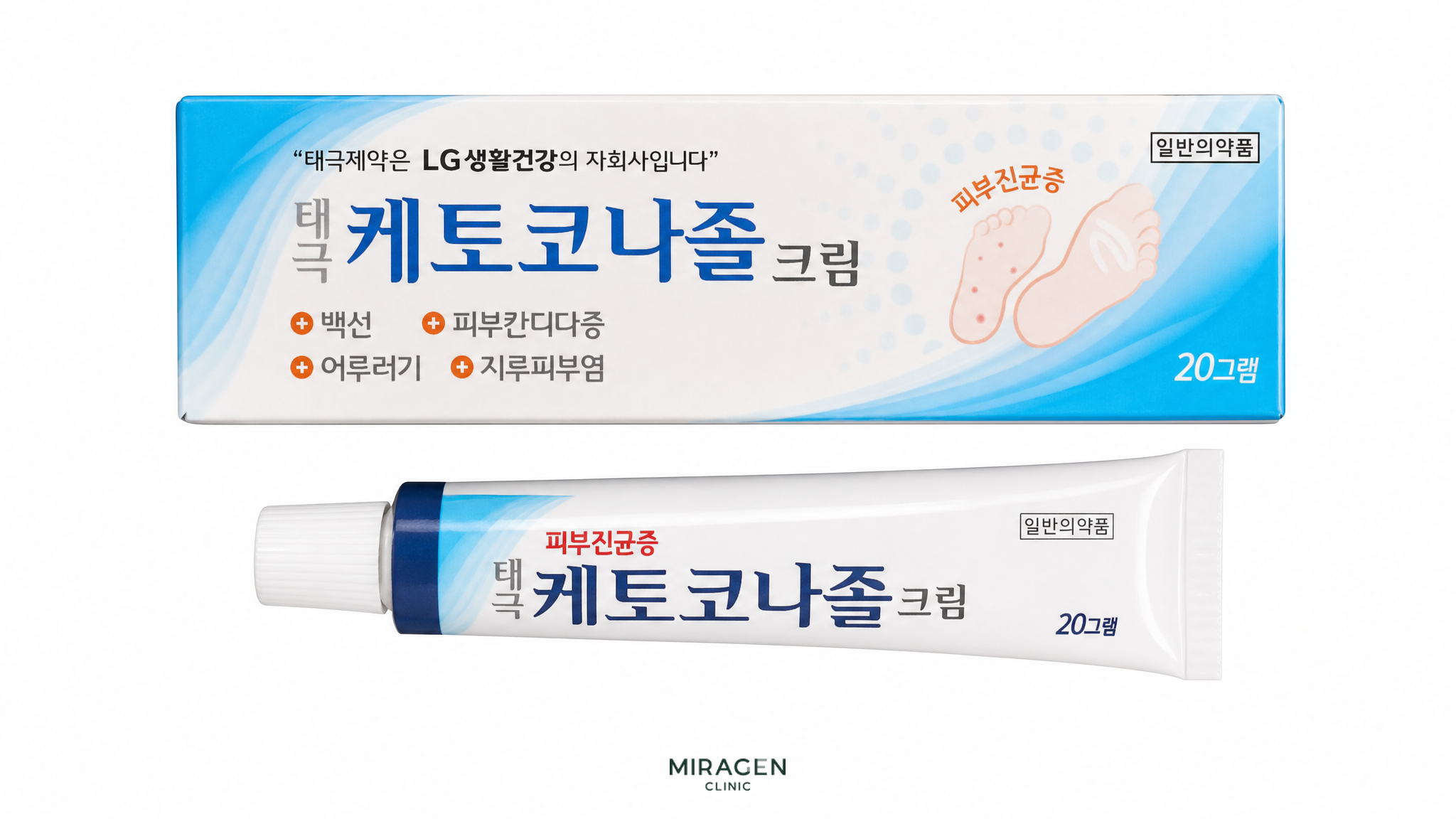
Ketoconazole Cream | An Antifungal Cream for Malassezia
Table of Contents
1. What is ketoconazole cream?
Ketoconazole cream is an antifungal cream used for conditions involving fungi (molds).
Its active ingredient is ketoconazole, and it is mainly used for seborrheic dermatitis, tinea versicolor, and folliculitis in which Malassezia is involved.
2. How it differs from Nizoral
It has the same active ingredient as Nizoral, but its uses differ due to differences in formulation.
For the face or body, ketoconazole cream is considered first as it can remain on the lesion for a long time. Nizoral is considered when lesions are widely spread across the scalp, making cream application difficult.
3. Why it is used for Malassezia
Ketoconazole is not the first medication used for all fungal infections. It is mainly considered for lesions in which Malassezia is involved.
Ketoconazole inhibits the proliferation of Malassezia by interfering with the formation of fungal cell membranes.
- Seborrheic dermatitis: Erythema and scaling recur in sebum-rich areas such as the scalp, T-zone of the face, around the ears, and the chest.
- Malassezia folliculitis: Similar red papules and pustules, 1–2 mm in size, appear along the hair follicles on the forehead, hairline, chest, and upper back. Comedones are often absent or rare, and itching is common. It is suspected if it occurs after antibiotic treatment or does not respond well to acne treatment, but since it can coexist with acne, a diagnosis is not made based on appearance alone.1
- Tinea versicolor: Light or dark spots appear on sebum-rich areas such as the neck, chest, and back.
Although ketoconazole can be used in dermatophyte infections, other antifungal agents such as terbinafine may generally be more suitable.
4. How to use
- Apply a thin layer once in the evening to the affected area and surrounding skin.
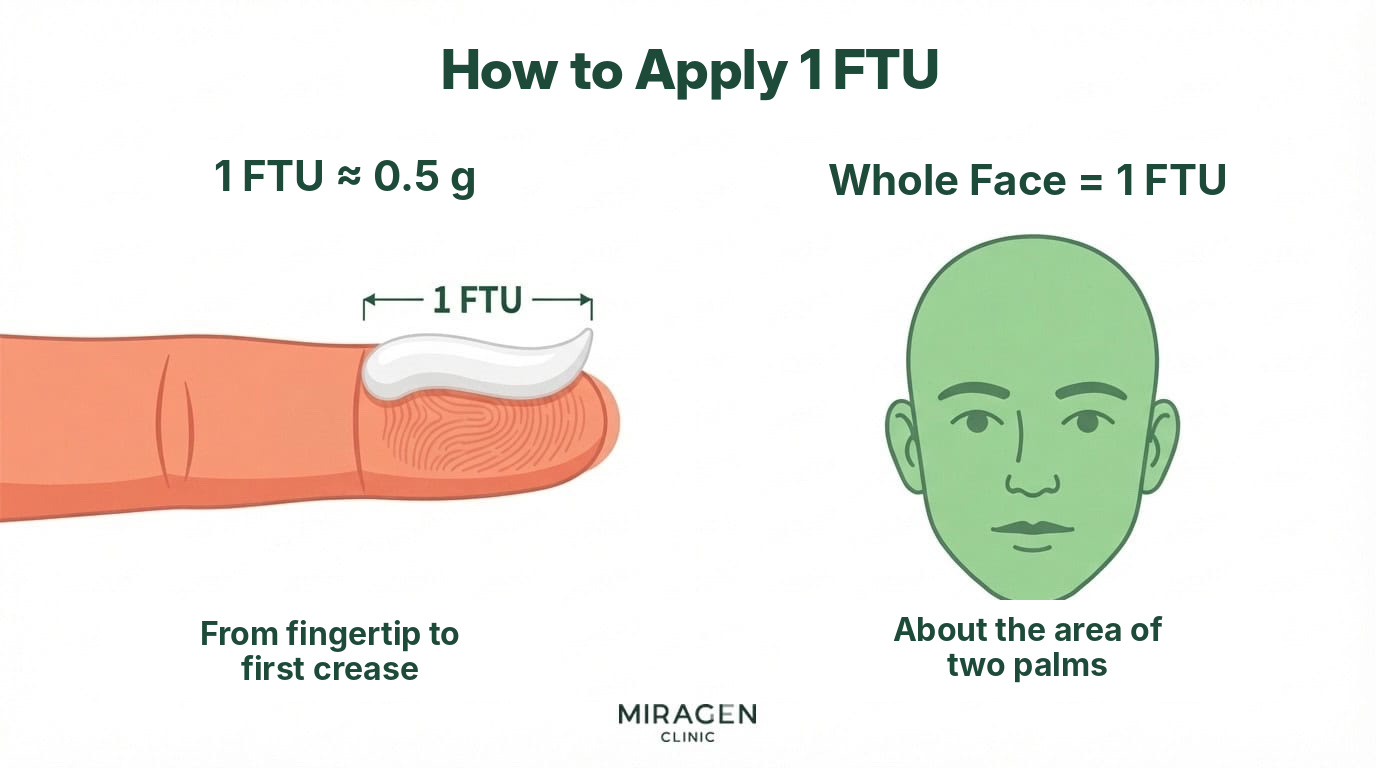
The standard for the amount to apply is FTU (Finger-Tip Unit). One FTU is the amount squeezed from an adult’s index finger from the tip to the first joint, and for ketoconazole cream, 1 FTU is sufficient for an area about the size of the face.
5. Precautions when using it
Stinging, burning, itching, or dryness may occur at the application site. If mild and temporary, you may monitor it, but if swelling, oozing, or severe itching occurs, stop using it and seek medical attention to check for contact dermatitis.
If the lesion does not improve even after the treatment period, it should be reassessed whether Malassezia is truly the main cause and whether other causative fungi or inflammatory conditions are also present.
References
Frequently Asked Questions
Can I use it together with Nizoral?
Rather than arbitrarily layering them on the same area, use ketoconazole cream for the face or body, and consider Nizoral if the lesions are widely spread on the scalp making cream application difficult. For combined use on the same area, follow the instructions provided during your consultation.
Can it be used for athlete’s foot as well?
Athlete’s foot is mainly caused by dermatophytes. Ketoconazole can be used in some cases, but depending on the lesion and location, terbinafine-based treatments may be more appropriate.
How long should it be used?
The duration of use varies depending on the condition and the site of the lesion. Even if symptoms improve, complete the full duration advised during your consultation.


