

At our clinic, many patients continue acne treatment after being treated for atopic dermatitis or rosacea.
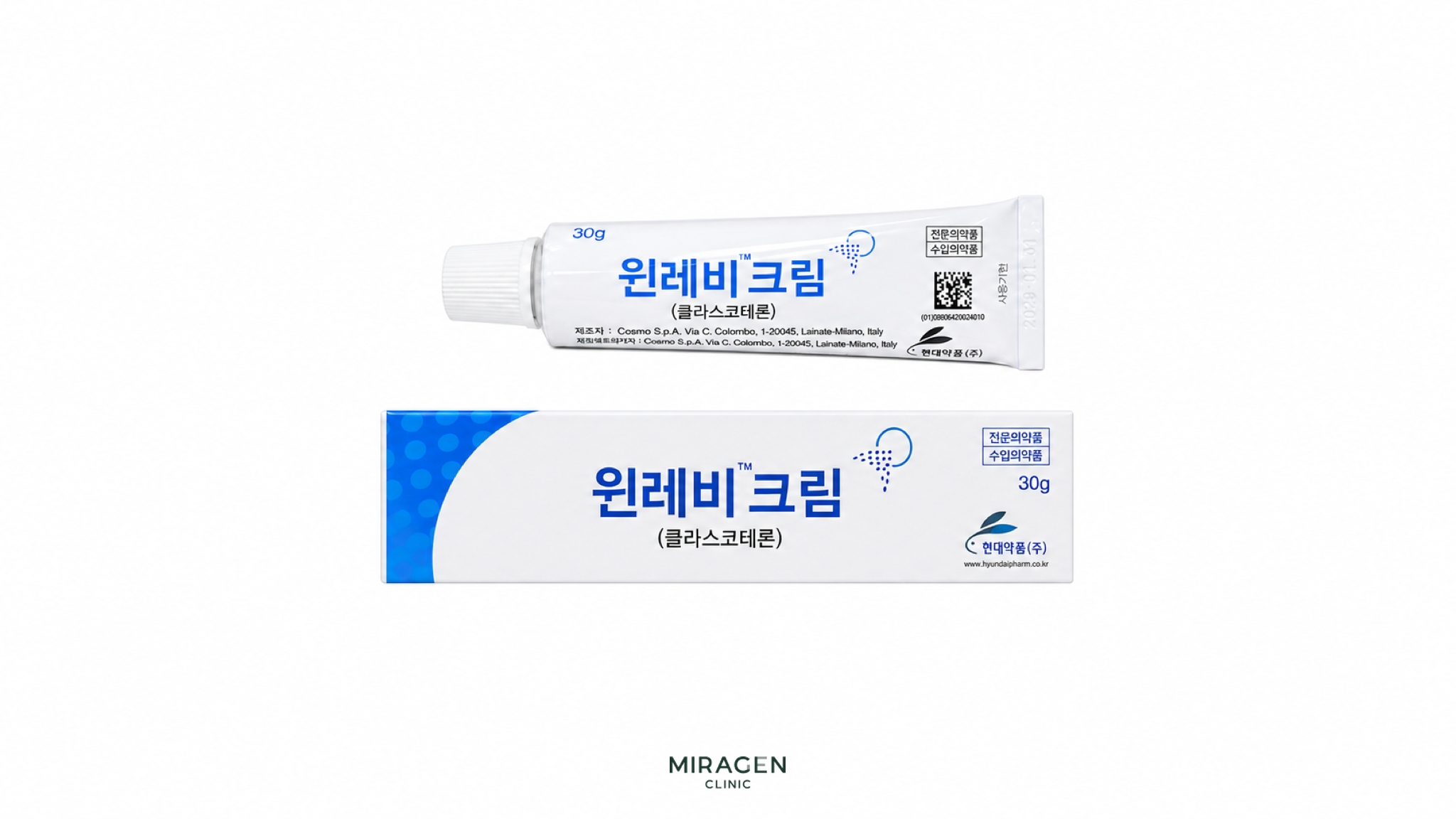
In such cases, traditional acne medications can cause dermatitis to recur, limiting treatment options. For these patients, the new drug Winlevi Cream has been the most satisfying product I’ve used recently.
I will share my review of Winlevi Cream, having prescribed it a total of 150 times by September 12, 2026, and used it myself for two weeks.
목차
Why Acne Treatment is Difficult for Patients with Atopic Dermatitis or Rosacea
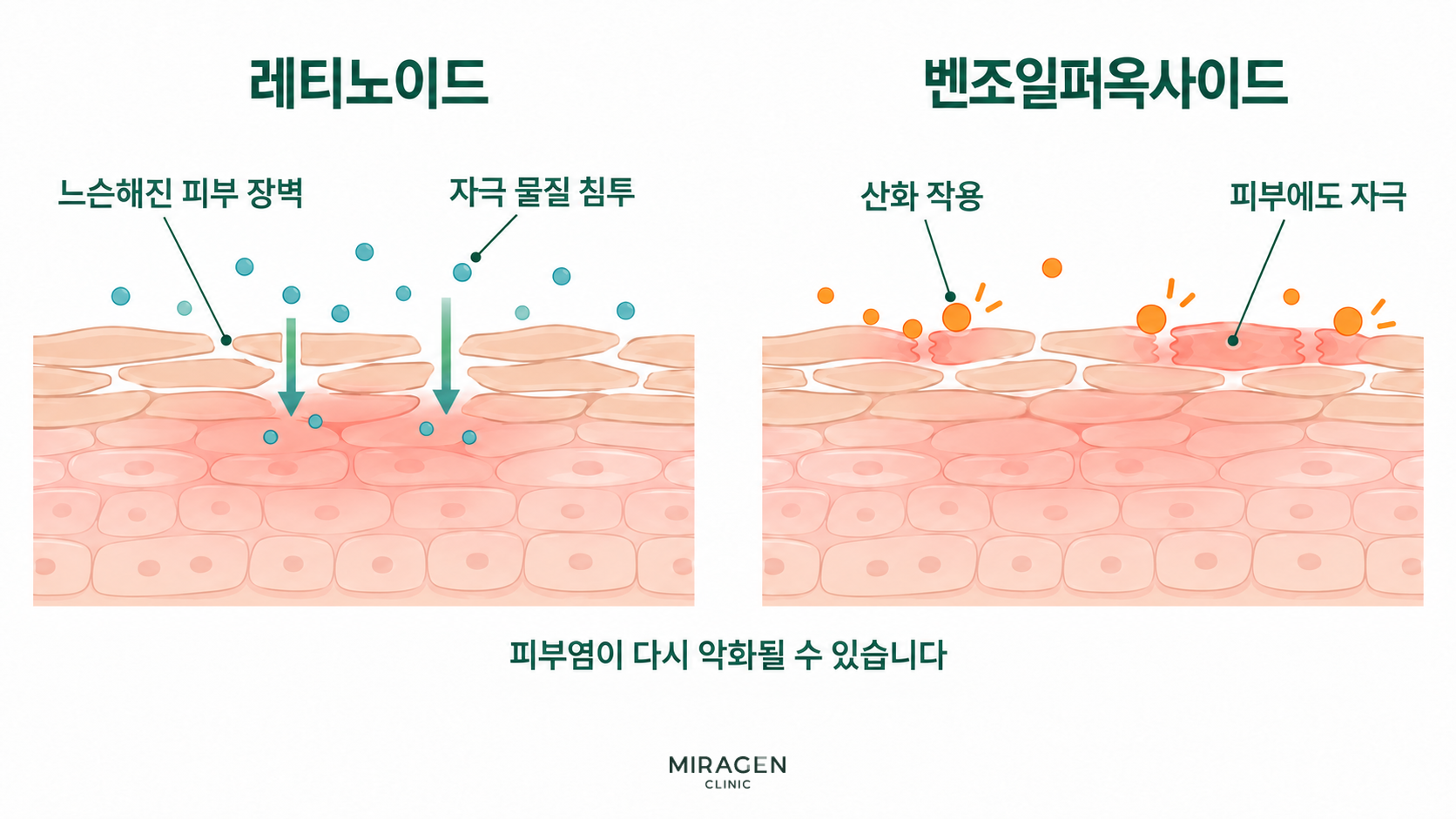
Treating acne in patients with atopic dermatitis or rosacea is quite challenging. This is because traditional acne medications can weaken the skin barrier.
When the skin barrier is weakened, substances that cause allergies or irritation can easily penetrate the skin, potentially worsening dermatitis that was difficult to treat.
This phenomenon often occurs with retinoids like isotretinoin, Twennty Cream, and Aklief Cream, and the antiseptic benzoyl peroxide also frequently induces irritant contact dermatitis.1,2,3
Winlevi Cream Review from a Prescribing Doctor’s Perspective | Low Irritation
At our clinic, when prescribing ointments to patients, we first assess the potential for contact dermatitis using a patch test.
During patch testing, some ointments cause redness at the test site, as shown in the image below (acne ointments, in particular, often do this).
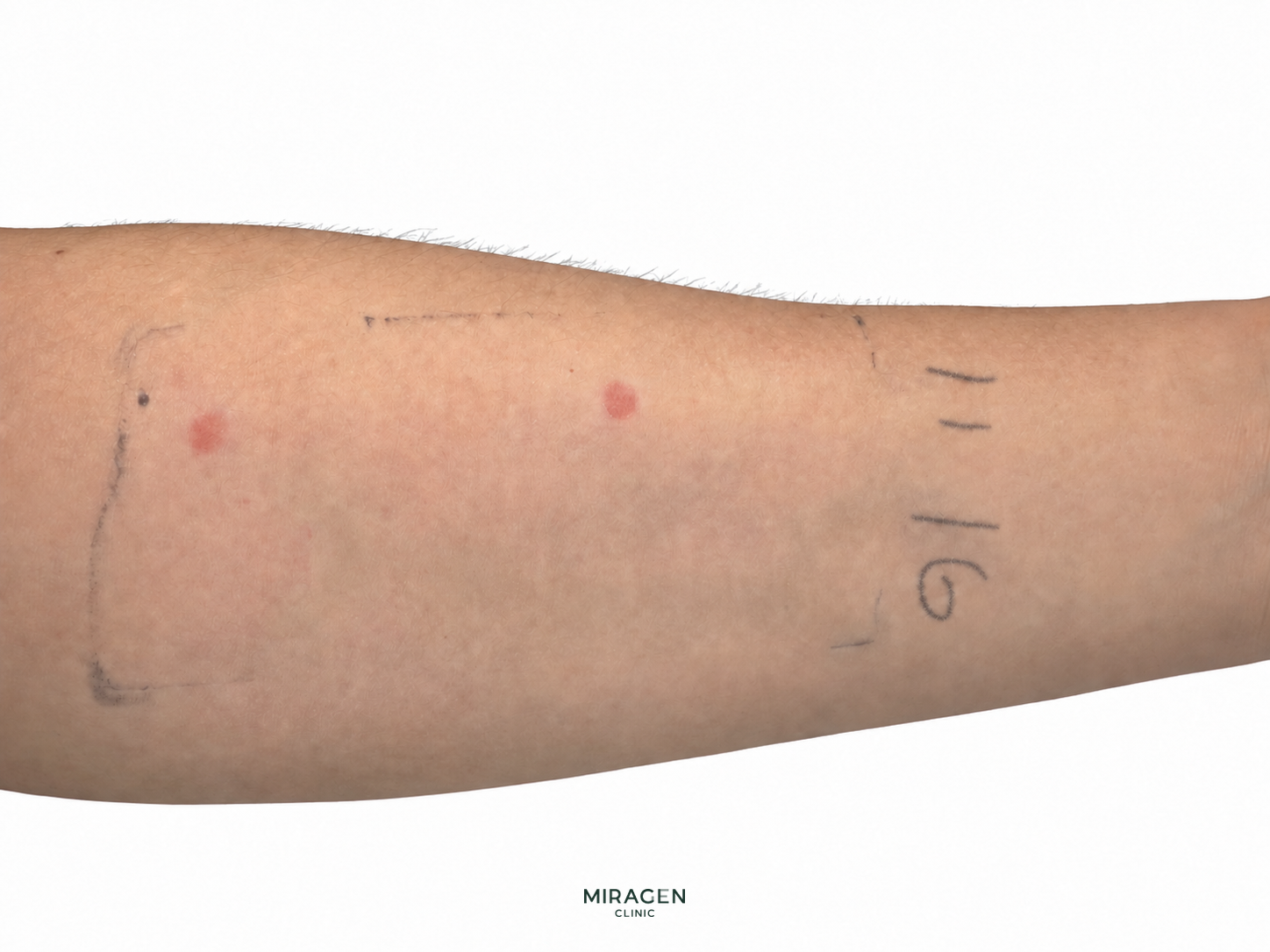
Winlevi Cream rarely causes redness at the test site. However, even if there’s no reaction in a patch test, some ointments or moisturizers can cause problems when applied to the affected area of the face. Due to this possibility, for about a month after its release, I did not actually prescribe Winlevi Cream; I only observed patch test reactions.
After about a month of observation, since positive reactions were not frequently observed in patch tests, I began prescribing it to patients who showed no positive reactions. It has now been a little over a month since I started prescribing it, and I am prescribing it with increasing frequency. In August 2026, I prescribed 68 cases, and by September 12th, 82 cases, totaling 150 prescriptions.
The reason for such frequent prescribing is the ease of predicting reactions. I typically see patients to whom I’ve prescribed a new ointment at weekly intervals, and I instruct them to contact the clinic if itching or redness worsens before their next appointment.
Among the patients whose Winlevi Cream experiences I’ve monitored, there have been no suspected cases of contact dermatitis developing after applying Winlevi Cream to the face, despite showing no reaction in the patch test.
My Personal Winlevi Cream Review | “My Skin Became Brighter”
Another reason I frequently prescribe Winlevi Cream is that it’s also excellent as a moisturizer substitute. I’ve been concerned about blackheads on my nose, so for the past two weeks, I’ve been applying Winlevi Cream morning and evening instead of my usual moisturizer.
Regarding my personal experience with Winlevi Cream, I prefer its matte texture, which makes my skin feel comfortable. Among MD creams, it feels similar to Zeroid Rich Cream, and among steroid ointments, it’s similar to Dermotasone. For reference, Zeroid is a brand from Neopharm, like Atopalm and Real Barrier. Dermotasone is also a product manufactured by DongKoo Bio Pharma through a technical partnership with Neopharm.
My original concern, blackheads, has also slightly reduced. However, I also used other ointments and underwent Gold PTT, so I’m unsure if the same effect would be achieved using only Winlevi Cream. I will discuss which ointments I use in combination in another post.
When first spreading it, it leaves a white cast, similar to applying mineral sunscreen, requiring several rubs. If too much is applied, it takes a long time to rub in, so I use the amount shown in the picture below.
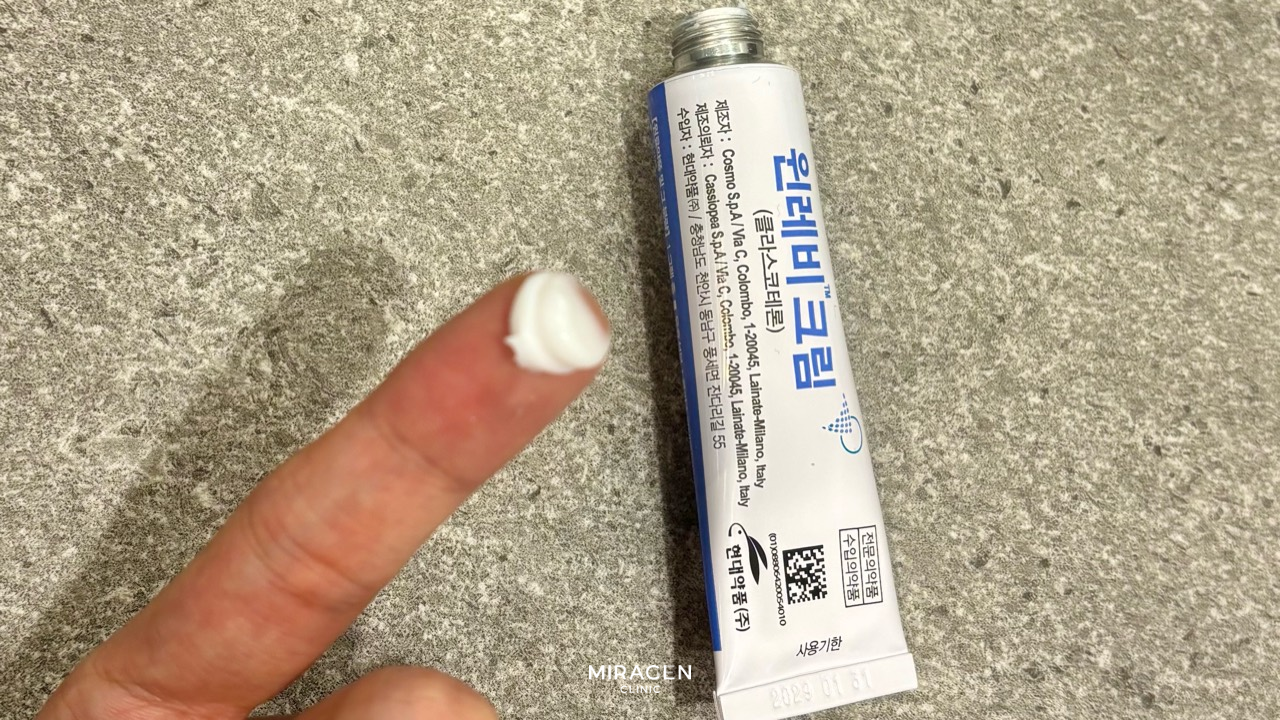
This is how it looks while being spread on the face.
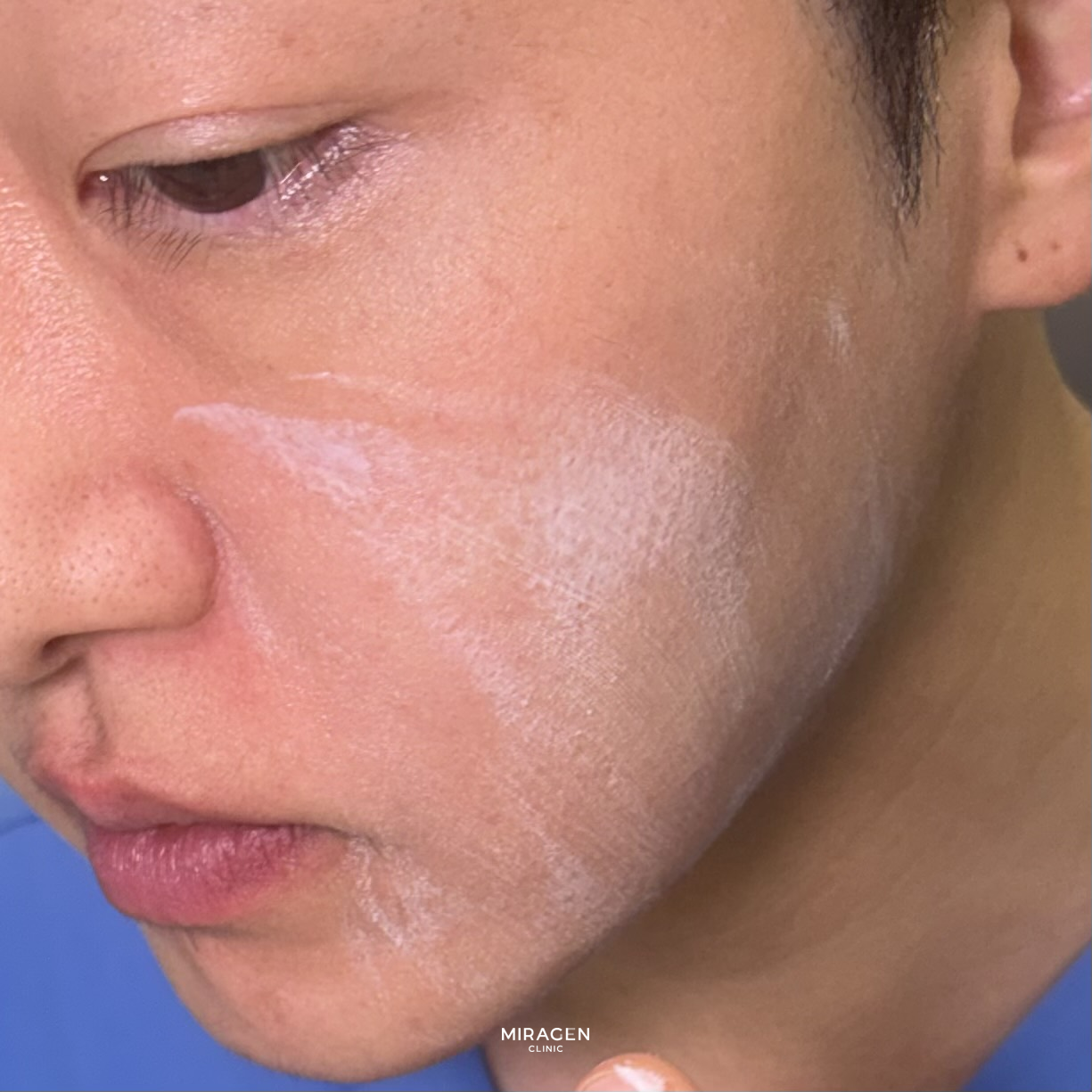
Once fully spread, the skin appears naturally brighter, which I believe contributes to positive patient feedback on Winlevi Cream. Since I started using Winlevi Cream, the most common comment I hear is, “Your skin became brighter.”
In the photo below, Winlevi Cream has been applied to the right hand. Although not clearly visible in the picture, it appears quite bright in person.
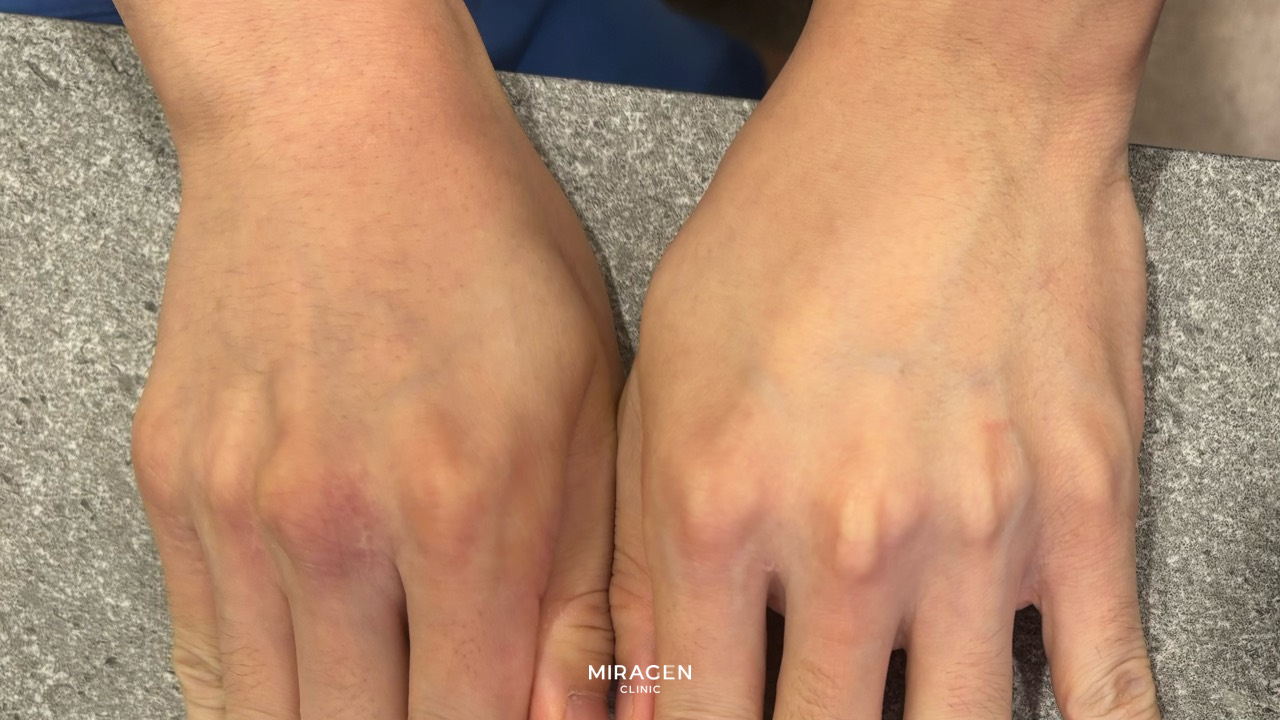
Curious about why it appears white, I researched the data and found that a related patent explained that some of the clascoterone is dispersed as crystalline forms within the cream.4 I suspect these crystals scatter light like a mineral sunscreen, causing the white cast.
How to Store Winlevi Cream and Shelf Life After Opening
Winlevi Cream must be refrigerated until sold, but after purchase, it can be stored at room temperature below 25℃.5 So, I just store it in the bathroom and apply it.
According to domestic approval guidelines, it should be discarded one month after opening.5 However, European assessment data indicate that quality standards for ingredients, formulation, and microbial contamination were maintained for up to 6 months at room temperature after opening, and Canadian approval guidelines state it can be stored at room temperature and used for up to 6 months after opening.6,7
As I write this Winlevi Cream review, I have used one 30g tube morning and evening for two weeks, and the amount shown in the picture below remains. Based on my usage, one tube should last over two months. I plan to continue using it even after one month from opening.
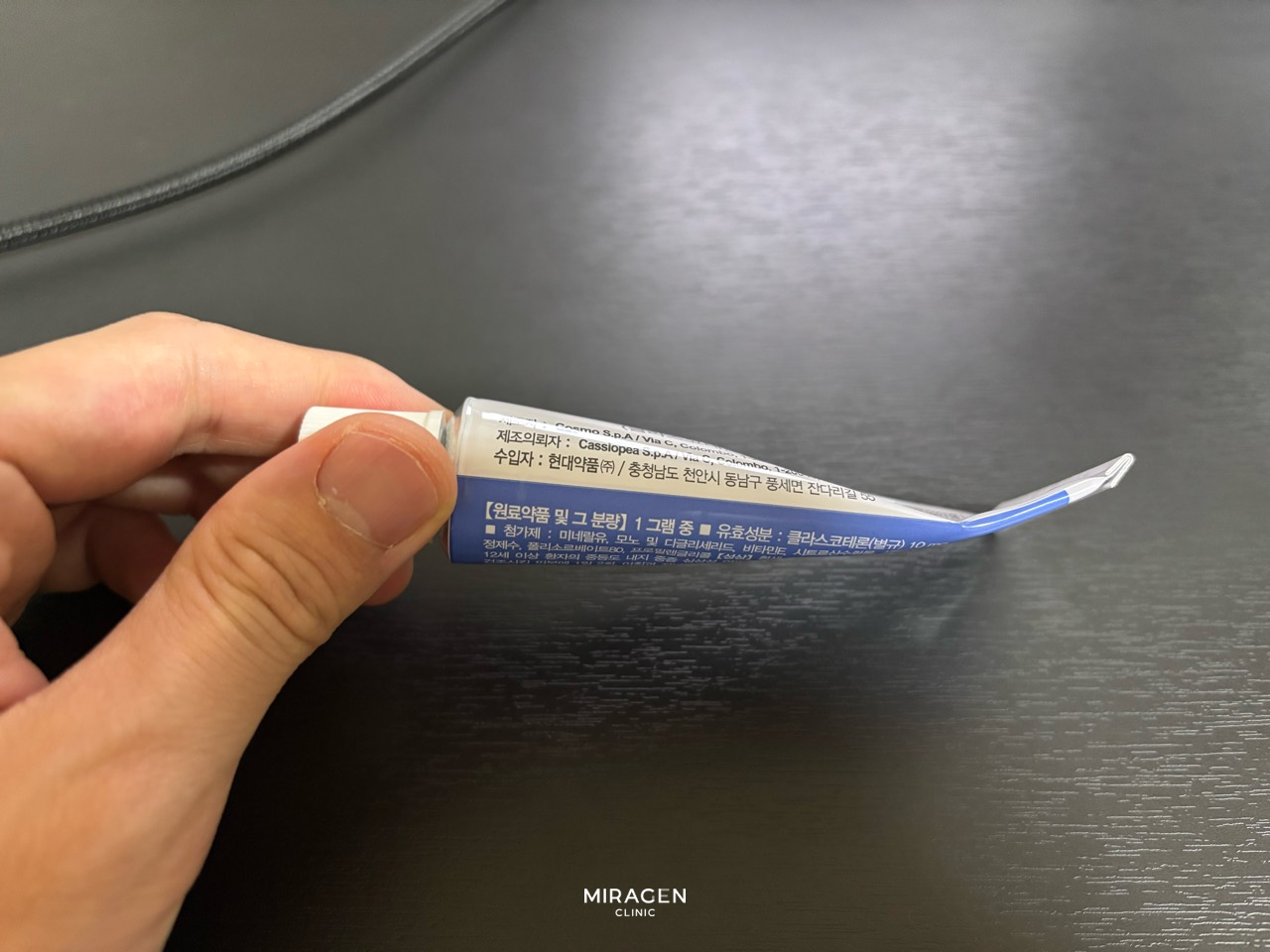
For reference, the 30g product shown in the photo costs 64,000 won per tube at the pharmacy in front of our clinic.
Winlevi Cream Ingredients and Irritation Potential
Since my patients are prone to contact dermatitis, I examined ingredients other than the main active component before introducing it. Below are the main active ingredient and 9 excipients listed in the domestic approval guidelines. As excipient quantities are not disclosed in domestic guidelines, I referred to the UK approval guidelines.5,8
| Winlevi Cream Ingredients | Amount | Role in Formulation (Estimated)9 |
|---|---|---|
| Clascoterone | 1% | Main active ingredient for treating acne |
| Propylene Glycol | 25% | Acts like water in sugar water · Skin moisturizer |
| Cetyl Alcohol | 2.5% | Adjusts cream viscosity · Helps mix water and oil |
| Mineral Oil | Undisclosed | Keeps skin soft and moist |
| Mono- and Diglycerides | Undisclosed | Mixes water and oil · Maintains cream form |
| Polysorbate 80 | Undisclosed | Evenly mixes water and oil |
| Disodium Edetate | Undisclosed | Chelates metal components to reduce cream degradation |
| Citric Acid Monohydrate | Undisclosed | Adjusts cream acidity6 |
| Vitamin E | Undisclosed | Protects oil components from degradation10 |
| Purified Water | Undisclosed | Base for water-soluble ingredients |
Mineral oil is also called liquid paraffin, and because of its name, I used to often confuse it with parabens.
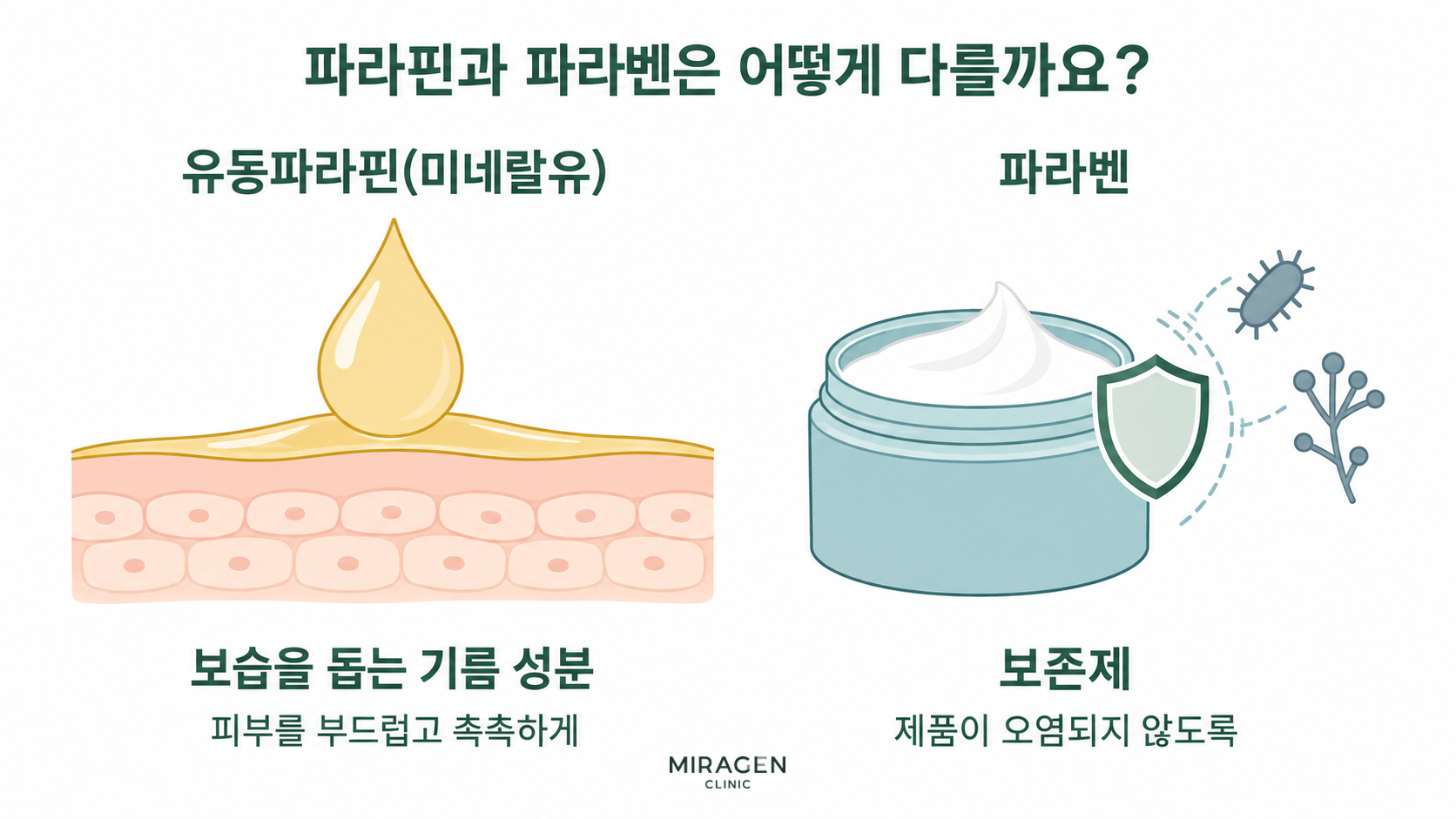
Parabens are preservatives that inhibit the growth of bacteria and fungi. Although there were concerns about their potential to affect hormones, in Europe, using methylparaben in cosmetics below a certain concentration is considered safe.11,12 Furthermore, a study analyzing patients who underwent patch tests in North America showed that the positive rate for paraben mixtures was about 1%, which was low among the preservatives investigated.13
Liquid paraffin (mineral oil), which has a somewhat similar name to parabens, is an oil component that softens the skin and aids moisturization.9 When highly refined, it is an ingredient with a low potential for skin irritation or allergy.14
When I first encountered Winlevi Cream, the ingredient I was most concerned about was propylene glycol. This ingredient made me hesitant to prescribe it, and I spent quite a long time validating the product with patch tests. This is because propylene glycol, while used as a solvent (like water in sugar water) and for moisturizing, can cause both irritant and allergic contact dermatitis.15 Domestic approval guidelines also advise caution for patients with a history of hypersensitivity or allergy to propylene glycol.5
Cetyl alcohol can also rarely cause allergic contact dermatitis, and the UK approval guidelines explicitly mention the possibility of contact dermatitis due to this ingredient.8,16
However, despite containing these ingredients, I have not yet experienced any suspected cases of contact dermatitis while prescribing Winlevi Cream. This might be because I only prescribe it to patients who showed no reaction in patch tests.
Although clascoterone showed anti-inflammatory effects in cell studies, clinical trials comparing Winlevi Cream with a clascoterone-free cream showed no significant difference in irritation. Therefore, it is difficult to explain the low irritation by the anti-inflammatory effect of the active ingredient.17,18
Based on my past experience making moisturizers, even with the same ingredients, raw materials from one company might cause issues while those from another do not. I believe that differences in raw materials might contribute to why this product, despite containing propylene glycol, does not readily cause irritation. I tried to find out which raw material supplier’s propylene glycol was used, but I could not confirm it from publicly available data.
Winlevi Cream’s Efficacy and Combination Therapy
Although I am satisfied with Winlevi Cream and prescribe it to many patients, its efficacy is not dramatic when used alone.
In Phase 3 clinical trials, the treatment success rate after 12 weeks of Winlevi Cream use was only about 20%.18 Therefore, Winlevi Cream is usually used as a base, and other treatments are combined.
While options for concomitant treatments are limited for individuals with sensitive skin, there are various treatments that can be used with Winlevi Cream besides retinoids and benzoyl peroxide. Depending on the need, hormone tests and other evaluations can be performed to select treatments that are less irritating and can complement the effects of Winlevi Cream.
The important point is that insufficient efficacy can be compensated for by other treatments, but irritation cannot be eliminated. Given the characteristics of the patients I treat, irritation is particularly crucial, which is why Winlevi Cream remains the most satisfying acne medication I have used to date.
References
- Zydus Pharmaceuticals’ US isotretinoin capsule prescribing information. Section 6, Adverse Reactions.
- US Food and Drug Administration’s approval document for Aklief 0.005% Cream. Document revision date: October 2023.
- Galderma. EPIDUO Gel, adapalene 0.1% and benzoyl peroxide 2.5%. DailyMed prescribing information. Section 5.2 Local Skin Reactions and Section 6 Adverse Reactions.
- US Patent US9486458B2. Inventors Mauro Ajani · Luigi Moro. Published 2016-11-08.
- Ministry of Food and Drug Safety, Pharmaceutical Safety Nation, detailed product information. Approval date: 2025-09-29, prescription drug.
- EMA/292571/2025. Page 158. Public assessment report including initial and re-assessment results. The relevant section and final conclusions were verified by downloading the official PDF original.
- Canadian Winlevi Product Monograph. Authorization · Final Revision Date 2026-06-30. Control Number 305362. Page 21. Pages 1, 11, 20, and 21 were verified by directly downloading the latest PDF linked from the official Canadian product website’s data page. Health Canada product page also displays the 2026-06-30 Product Monograph: https://health-products.canada.ca/dpd-bdpp/info?code=102757lang=eng
- Summary of Product Characteristics published by the UK marketing authorization holder. Document revision date 2025-01-30, emc posting update date 2025-02-10.
- Faraca G, Vidal-Abarca Garrido C, Kaps R et al. European Commission Joint Research Centre. September 2021. EUR 30809 EN, JRC126061.
- BASF Raw Material Technical Data. Version 3, February 2026. PDF page 2.
- US Food and Drug Administration’s cosmetic paraben ingredient information page.
- European Scientific Committee on Consumer Safety SCCS/1652/23. Adopted December 14, 2023, corrigendum for clarification of conclusions February 28, 2024. Verified the final assessment conclusion webpage published by the European Commission.
- Atwater AR et al. Journal of the American Academy of Dermatology. 2021;84(4):965–976.
- Official risk assessment document from the German Federal Institute for Risk Assessment regarding highly refined mineral oils. Verified the skin toxicity section on page 27 of the PDF.
- Lalla SC et al. Dermatitis. 2018;29(4):200–205.
- Aakhus AE, Warshaw EM. Dermatitis. 2011;22(1):56–57.
- Rosette C, Agan FJ, Mazzetti A et al. Journal of Drugs in Dermatology. 2019;18(5):412-418.
- Hebert A, Thiboutot D, Stein Gold L et al. JAMA Dermatology. 2020;156(6):621-630. Clinical trial registration numbers are NCT02608450 and NCT02608476.
Frequently Asked Questions
Can Winlevi Cream be used even with sensitive skin?
Yes. I frequently prescribe Winlevi Cream to patients who have experienced atopic dermatitis or rosacea. However, since the same ointment can elicit different reactions depending on the skin, our clinic first confirms the reaction with a patch test before prescribing.
Will acne improve by using only Winlevi Cream?
In my experience, the effect of Winlevi Cream alone is not dramatic, so I usually combine it with other treatments. For those with sensitive skin, I choose treatments that are less irritating and can complement the effects of Winlevi Cream.

We treat atopic dermatitis, rosacea, and seborrheic dermatitis.
Thanks to the valuable reviews you have shared in the community, many of you visit us even from far away.
We will repay you with sincere, attentive care.
DK Han
Chief Director, MIRAGEN Clinic
Graduate of University of Michigan, Ross School of Business
Graduate of Chungnam National University School of Medicine
(Former) Representative Director of Ewha Phoenix Rehabilitation Hospital
(Current) Representative Director of MIRAGEN Clinic


