

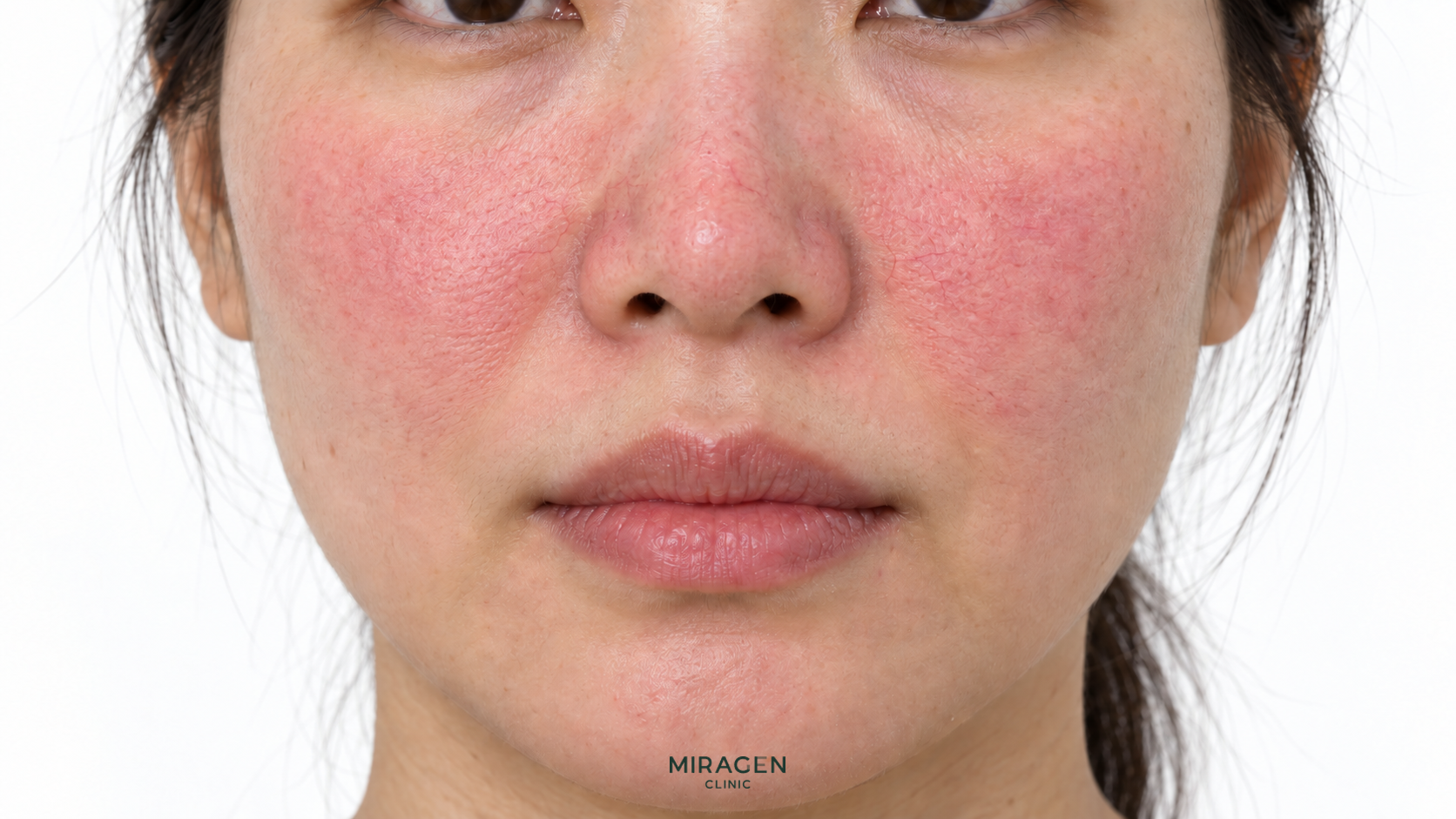
Among the patients who visit our clinic, quite a few come due to steroid ointment side effects. Steroid ointments are like sharp swords; they are powerful tools when used correctly, but can harm the skin if misused.
Steroids affect not only immune cells that cause inflammation but also the proliferation of skin cells and the processes that maintain skin tissue. This can lead to problems such as thinning and weakening of the skin, or issues arising from the proliferation of microorganisms living on the skin.
I will explain the mechanisms behind steroid ointment side effects and the symptoms typically observed in clinical practice. The images used in this article are AI-generated to aid understanding.
목차
The Core of Steroid Ointment Side Effects: Changes in the Skin Barrier
From my perspective as a clinician treating dermatitis patients, the more troublesome side effect of the two is the weakening of the skin barrier. This is because even after inflammation subsides, the skin can remain easily irritated.
The skin-thinning effect of steroid ointments can be observed in the treatment response of lichenified areas. Lichenification refers to skin that has become thick and hard due to repeated scratching.
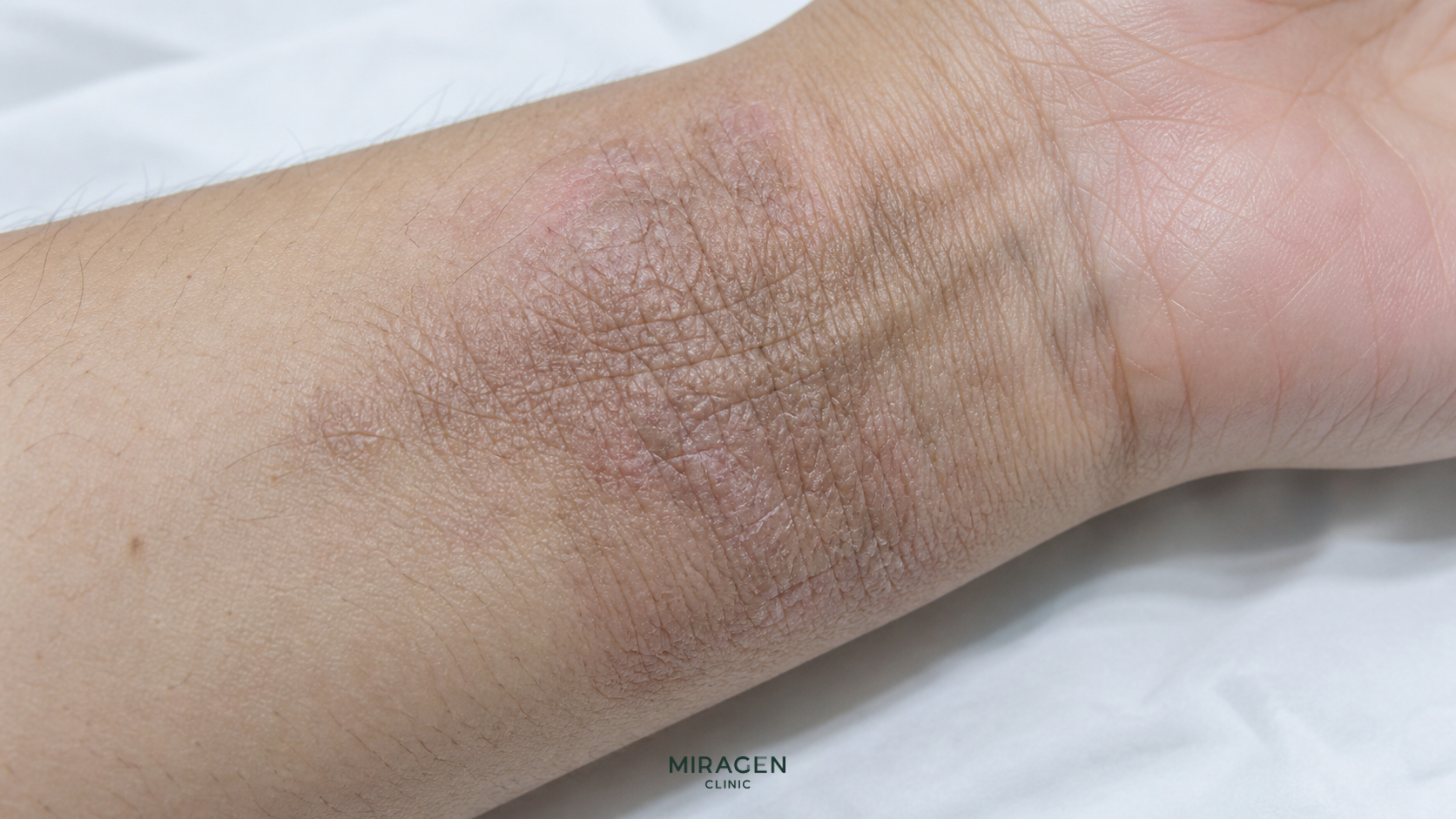
When comparing the use of medium-potency steroids on lichenified areas to Protopic 0.1%, which is non-steroidal but has comparable anti-inflammatory effects, the reduction in itching is similar, but there is a significant difference in the speed at which lichenification decreases. The skin becomes thin and soft much faster when using steroid ointments.
In these cases, I clearly observe the skin-thinning effect of steroid ointments. This is not just a personal opinion based on my own clinical experience, but has actually been confirmed in studies measuring human skin.1
The phenomenon of steroid ointments delaying skin barrier recovery and inhibiting the synthesis of lipids that constitute the skin barrier has also been confirmed in studies.2
Why a Weakened Skin Barrier Leads to Chronic Dermatitis
A key principle explaining atopic dermatitis is that irritants easily penetrate a weak skin barrier, causing inflammation. Similar problems can arise when the skin barrier is weakened as a side effect of steroid ointments.2,3
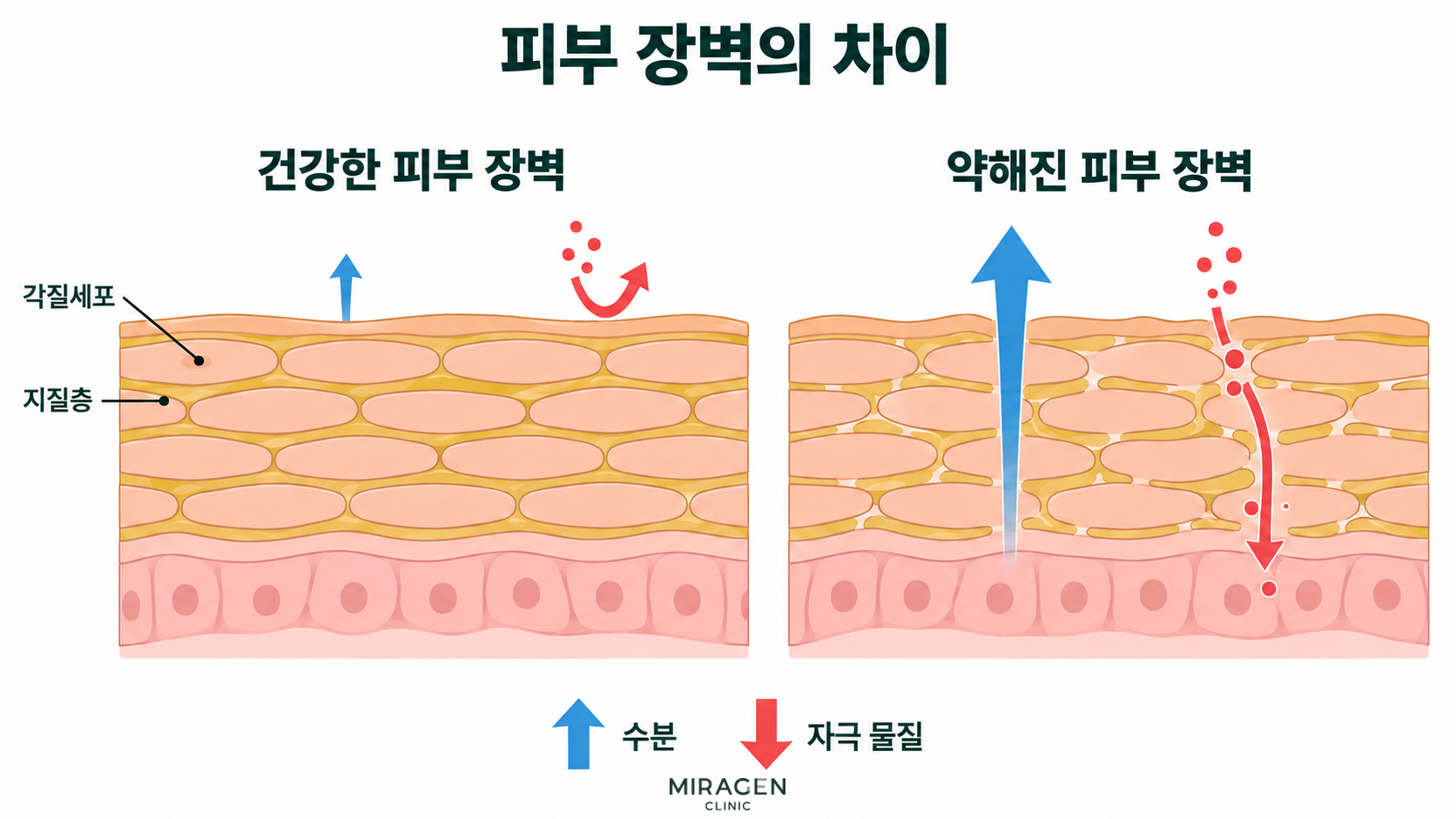
At this point, the biggest problem is cosmetics like moisturizers. Even cosmetics that were well-tolerated before the skin barrier weakened can cause contact dermatitis due to increased absorption of some ingredients once the barrier is compromised.3
Most patients who have experienced severe atopic dermatitis know this empirically: when symptoms are severe enough to cause oozing, they find it more comfortable not to apply moisturizer.
However, without moisturizer, it is difficult for the skin barrier to recover, and since finding the right moisturizer is no easy task, dermatitis easily becomes chronic once the skin barrier is weakened.
Why finding the right moisturizer reduces rebound
I believe that moisturizers play a significant role in much of what patients refer to as steroid rebound.
While applying steroid ointment, any potential for the moisturizer to cause contact dermatitis may go unnoticed because the inflammation is being suppressed.
The problem only reveals itself when the steroid ointment is discontinued; in my view, the skin-barrier-weakening effect of steroid ointments triggers this moisturizer-induced rebound.
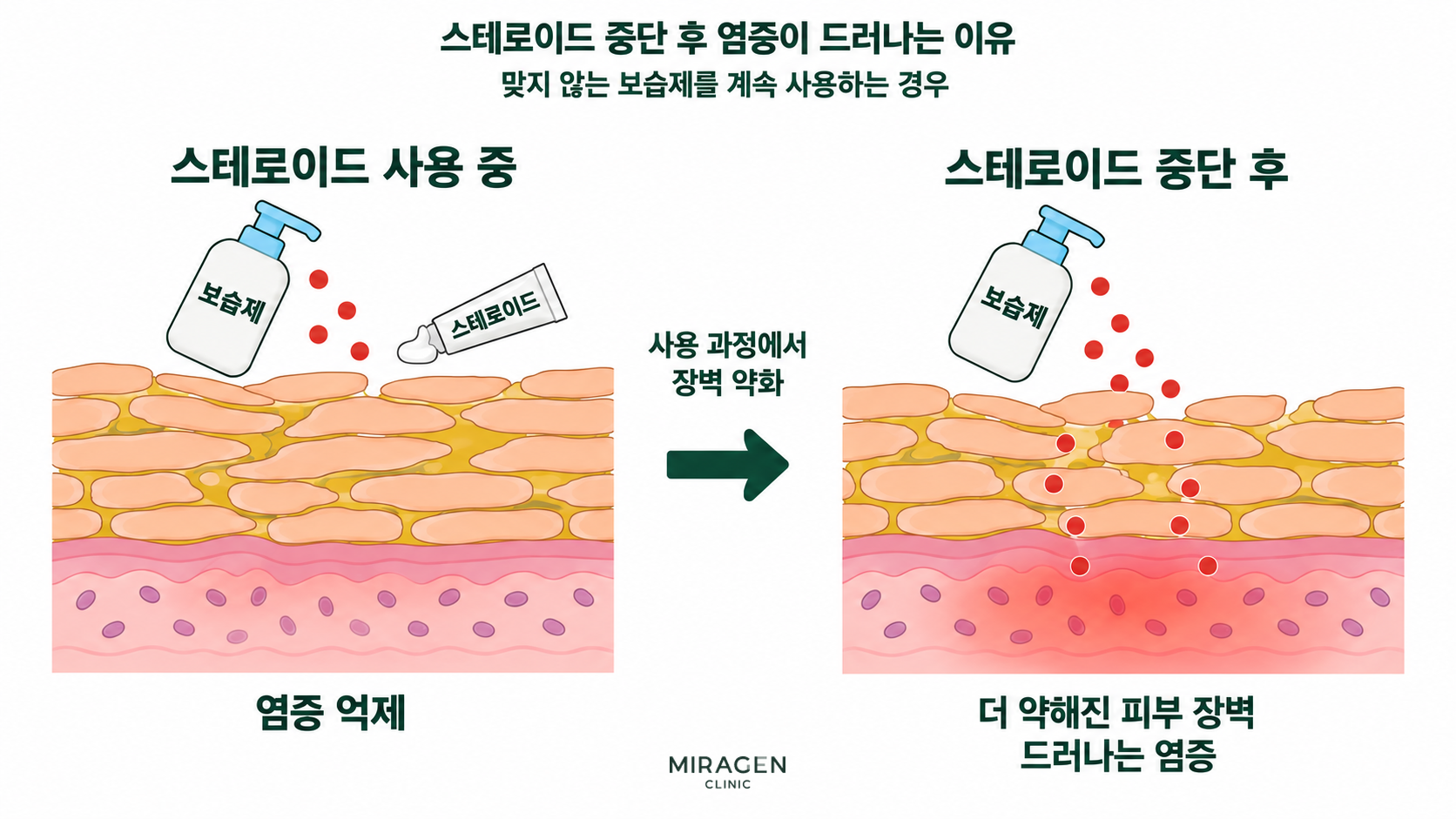
However, moisturizers also create a protective film on the skin surface, complementing skin barrier function and aiding skin recovery.3 Therefore, even if it is difficult and daunting, finding a suitable moisturizer is an essential process for breaking free from recurrent dermatitis.
On the Face, Microbiome Balance Must Also Be Considered
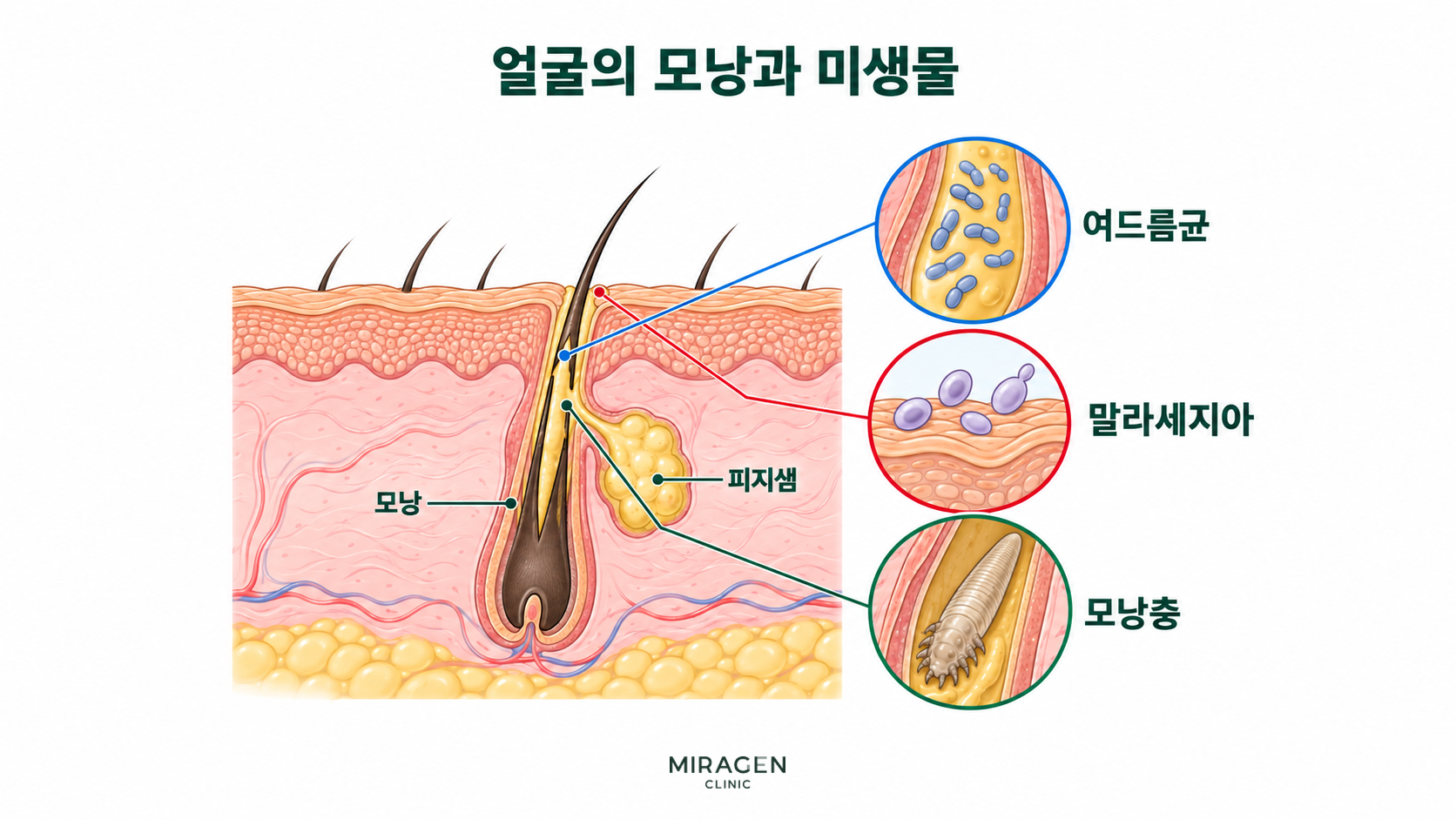
Various microorganisms live on our skin, and the face, especially with its abundant sebum, is a favorable environment for acne bacteria, Malassezia, and Demodex mites. These microorganisms, normally present on our skin, can proliferate excessively and cause problems when immunity is suppressed by steroid ointments.
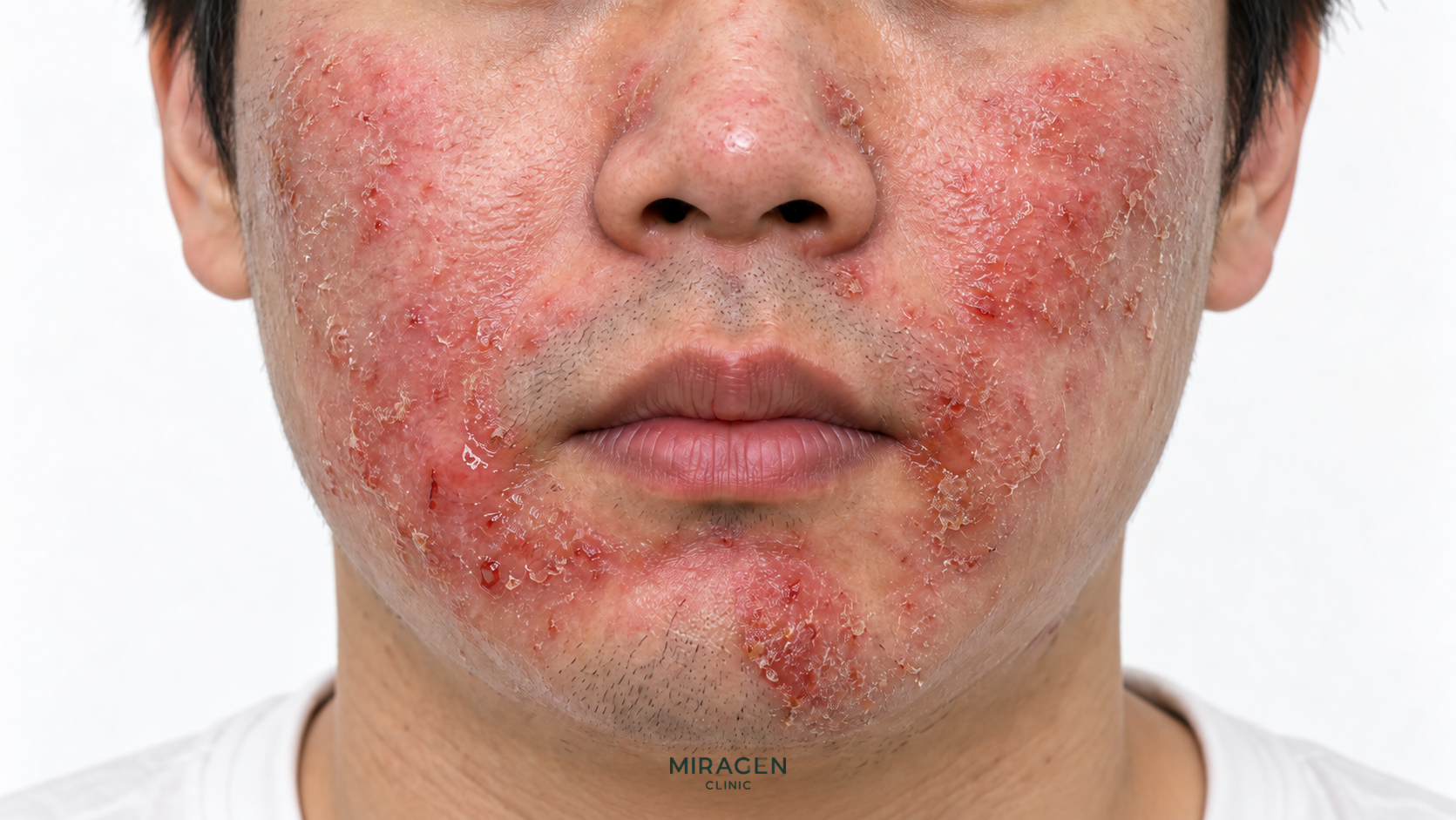
Consequently, some patients visiting for side effects of facial steroid use present with large, hard nodules similar to inflammatory acne, or tiny, fish-roe-like pustules. Below are highly exaggerated example images generated by AI to aid understanding.
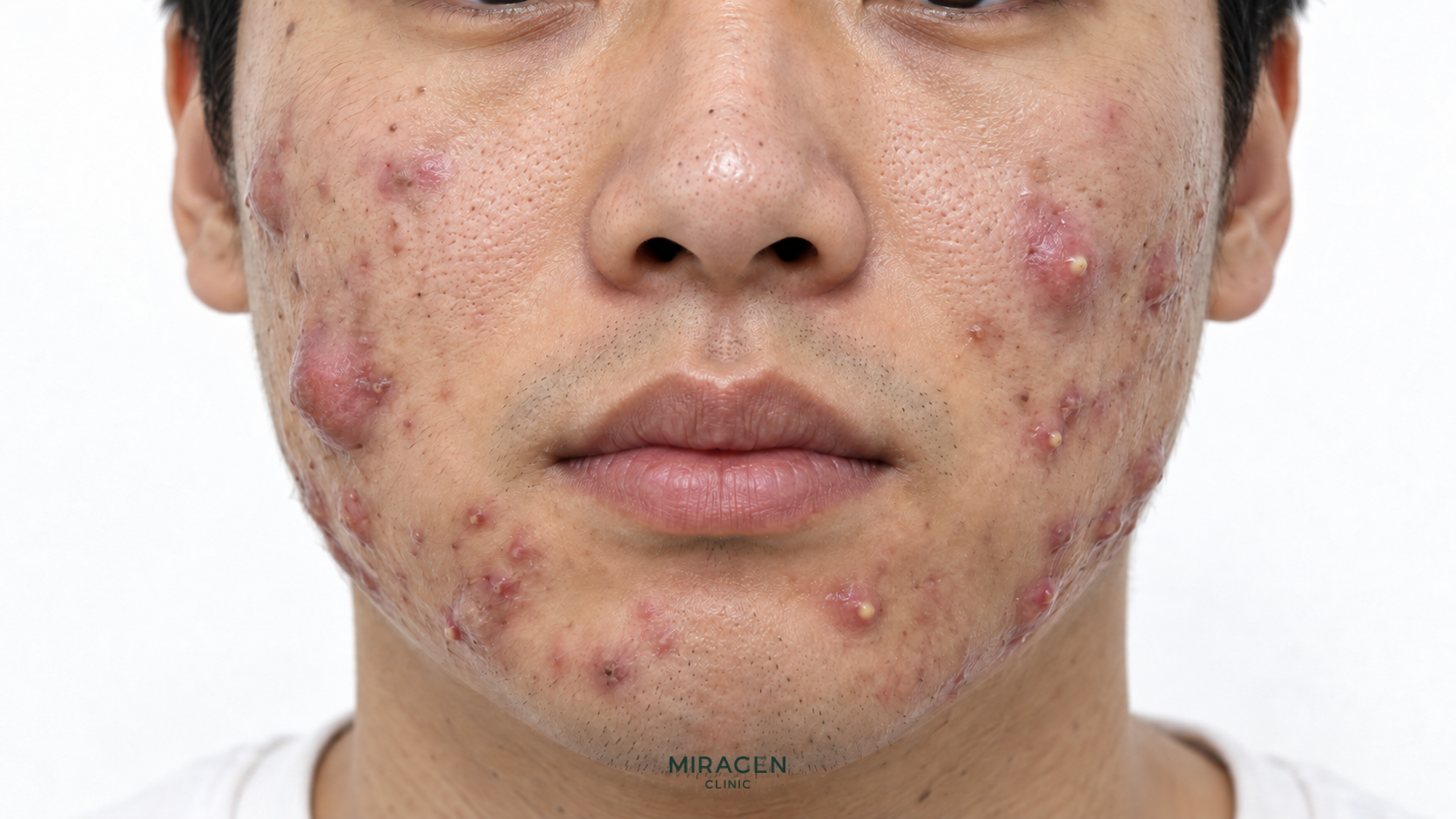
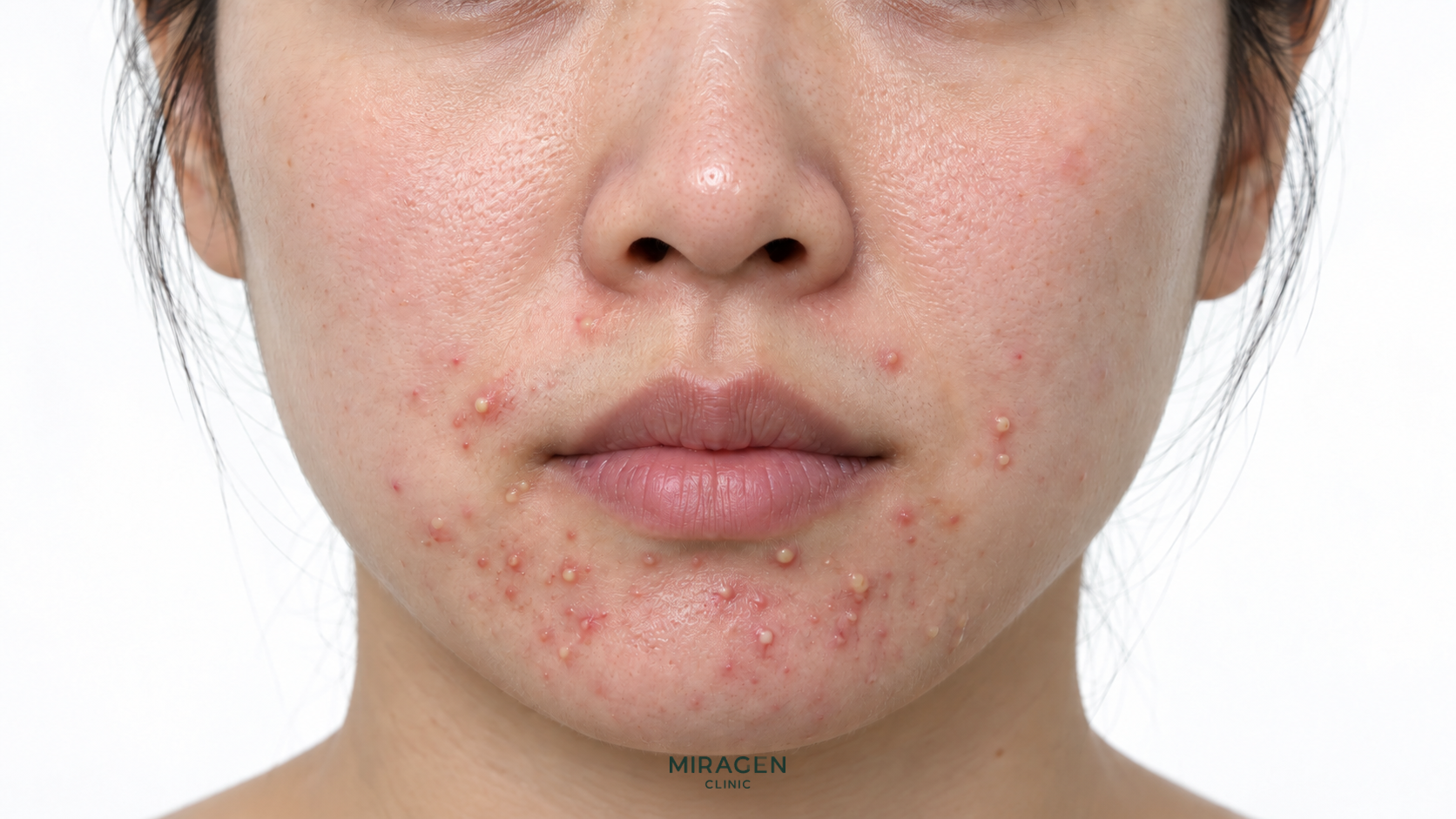
Treating acne caused by steroid side effects is tricky. This is because common acne treatments like retinoids or benzoyl peroxide can worsen contact dermatitis, thereby limiting treatment options.4 In such cases, hormonal therapy is considered, but for men, the available options are even more limited, making treatment more difficult.5
On the other hand, cases where Demodex mites or Malassezia have proliferated are relatively easier to treat. Anti-parasitic or anti-fungal ointments can be used, as in my experience, these ointments cause contact dermatitis less frequently than acne medications. Depending on the skin condition, I sometimes use antimicrobial ointments preventatively when prescribing immunosuppressant ointments to treat the underlying dermatitis.
Side effects of steroid ointments due to systemic absorption are rare
Although I see dozens of dermatitis patients every day, I have yet to encounter a patient suspected of experiencing side effects due to systemic absorption of steroid ointments.
Of course, this is a genuinely possible side effect. If the medication is excessively absorbed into the body, Cushing’s syndrome, characterized by weight gain and a rounded face, can occur. The body’s ability to produce its own steroid hormones can also be suppressed, leading to symptoms such as severe fatigue, muscle weakness, and dizziness.6
However, most patients are somewhat aware of the risks of steroid ointment side effects, so I have not yet seen cases of severe misuse or overuse of steroid ointments to the extent that these side effects would occur.
References
- Reitamo S, Rissanen J, Remitz A et al. J Invest Dermatol. 1998;111(3):396-398.
- Kao JS, Fluhr JW, Man MQ et al. J Invest Dermatol. 2003;120(3):456-464.
- Fonacier L, Bernstein DI, Pacheco K et al. Contact Dermatitis: A Practice Parameter—Update 2015. J Allergy Clin Immunol Pract. 2015;3(3 Suppl):S1-S39.
- Galderma. EPIDUO Gel, adapalene 0.1% and benzoyl peroxide 2.5%. DailyMed Prescribing Information. Section 5.2 Local Cutaneous Reactions and Section 6 Adverse Reactions.
- Reynolds RV, Yeung H, Cheng CE et al. Journal of the American Academy of Dermatology. 2024;90(5):1006.e1-1006.e30. PMID is 38300170, DOI is `10.1016/j.jaad.2023.12.017`.
- NHS (National Health Service) UK. Clobetasol. Document reviewed August 20, 2026.
Frequently Asked Questions
Why does dermatitis worsen again when steroid ointment is discontinued?
This occurs because if steroid ointment is stopped while the patient remains exposed to factors causing inflammation, the inflammation that was suppressed by the ointment becomes apparent. The most common trigger I observe in my practice is moisturizers that are not well-suited for the skin.
Why does a moisturizer that used to work suddenly become unsuitable?
This is because when the skin barrier is weakened, some ingredients in the moisturizer can penetrate the skin more deeply, potentially causing contact dermatitis. Nevertheless, moisturizers help support the skin barrier’s function and recovery, so the process of finding a moisturizer that is well-suited for your skin condition is necessary.3
Why is treatment challenging when dermatitis and acne coexist?
This is because retinoids or benzoyl peroxide, commonly used for acne, can worsen contact dermatitis, thereby reducing treatment options.4 At our clinic, we consider other options, such as hormonal therapy, depending on the patient’s skin condition.

We treat atopic dermatitis, rosacea, and seborrheic dermatitis.
Thanks to the valuable reviews you have shared in the community, many of you visit us even from far away.
We will repay you with sincere, attentive care.
DK Han
Chief Director, MIRAGEN Clinic
Graduate of University of Michigan, Ross School of Business
Graduate of Chungnam National University School of Medicine
(Former) Representative Director of Ewha Phoenix Rehabilitation Hospital
(Current) Representative Director of MIRAGEN Clinic


