1. What is Winlevi Cream?
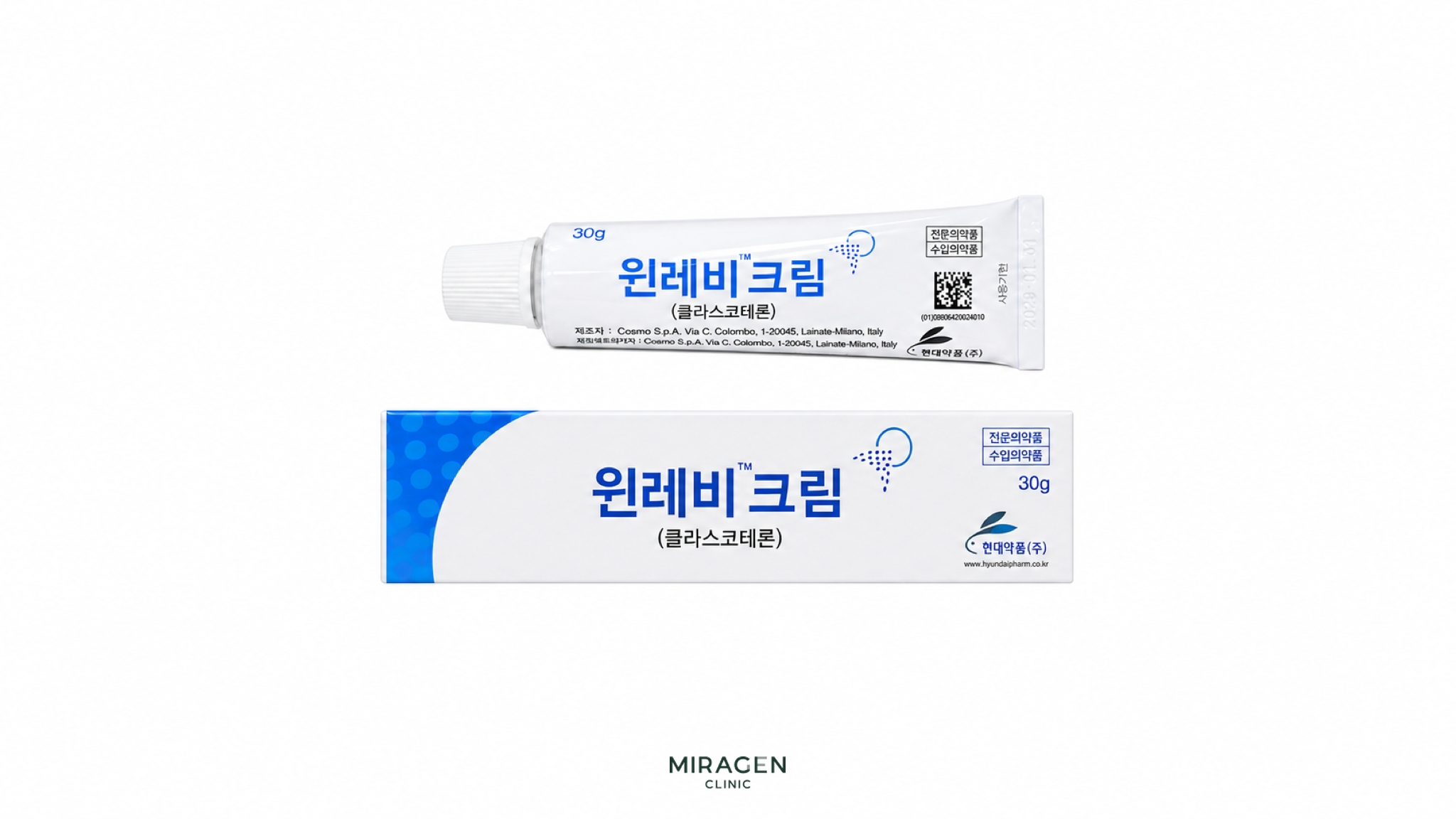
Winlevi Cream is a cream containing 1% clascoterone that reduces sebum secretion.1
Clascoterone blocks androgen receptors in sebaceous gland cells, preventing androgens from increasing sebum secretion.2
It causes less irritation and has a different mechanism of action than isotretinoin or Differin Gel, making it suitable for concomitant use with other medications.
2. Sebum production actually decreased
In a 2025 study, after using Winlevi Cream for 12 weeks, average sebum measurements in human skin decreased by 27%.3
Although it is an exploratory study observing 40 individuals without a control group, the observation of sebum reduction in human skin is significant.3
This stands in contrast to topical retinoids like Differin Gel. Despite Differin Gel having a very similar active ingredient to isotretinoin, often called a “sebum regulator,” it has not been proven to reduce sebum levels in human skin studies.4 The primary mechanism by which Differin Gel improves acne is presumed to be normalizing follicular keratinocyte shedding.
3. Low Irritation
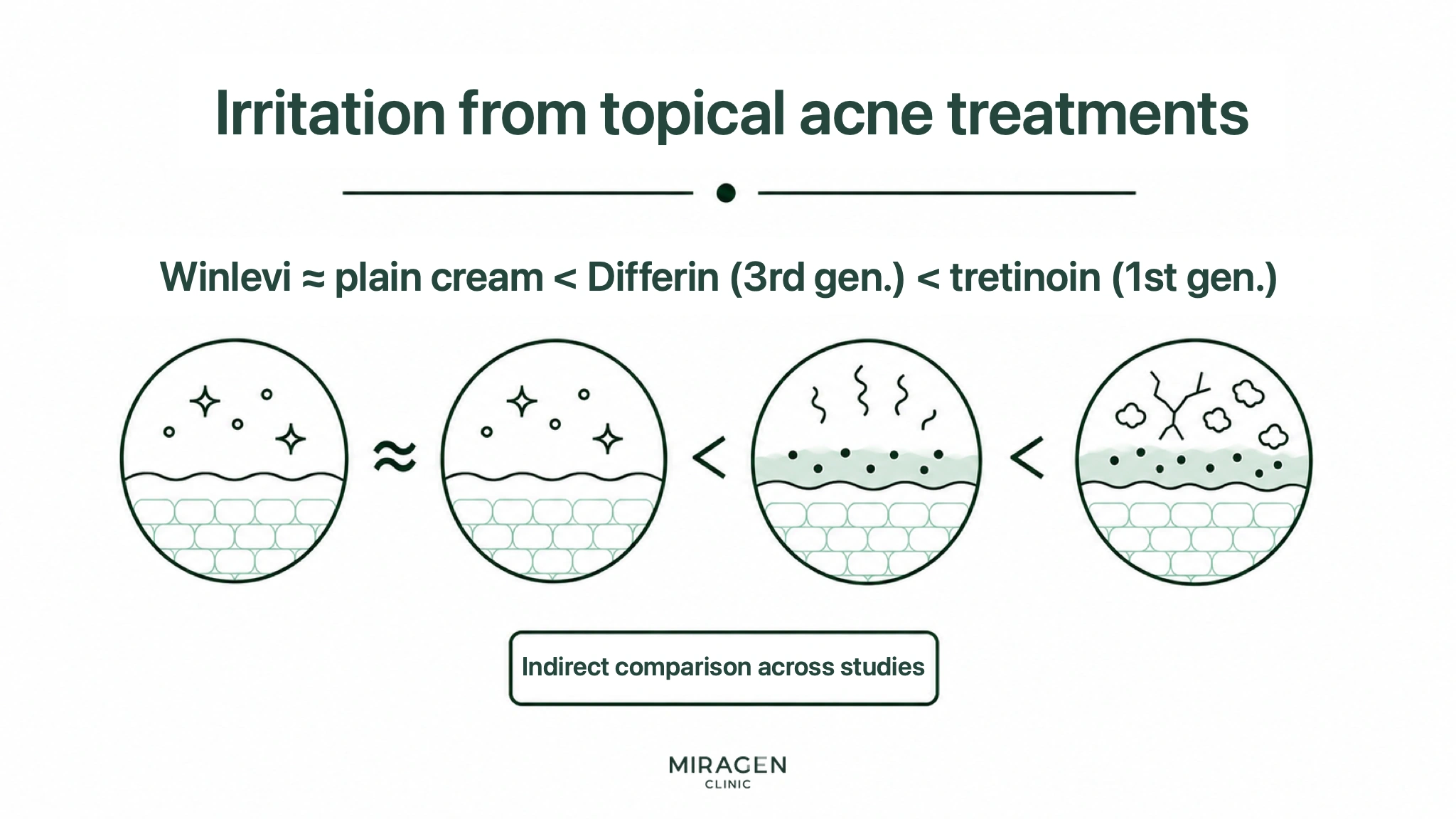
In Phase 3 studies, Winlevi Cream showed similar levels of irritation (redness, dryness, scaling, stinging) to a placebo cream without the active ingredient.5
Although there are no studies directly comparing Winlevi Cream and Differin Gel, it is reasonable to consider Winlevi Cream significantly less irritating than Differin Gel, given that Winlevi Cream showed almost the same irritation level as a placebo cream.5,6,7,8,9
When synthesizing various studies, the degree of irritation can be viewed in the order of Winlevi Cream ≈ Placebo Cream < Differin Gel (3rd generation) < Tretinoin Gel (1st generation).
4. Role in Acne Treatment
The advantage of Winlevi Cream is that it is less irritating and has a different mechanism of action than isotretinoin or Differin Gel, allowing it to complement other medications.
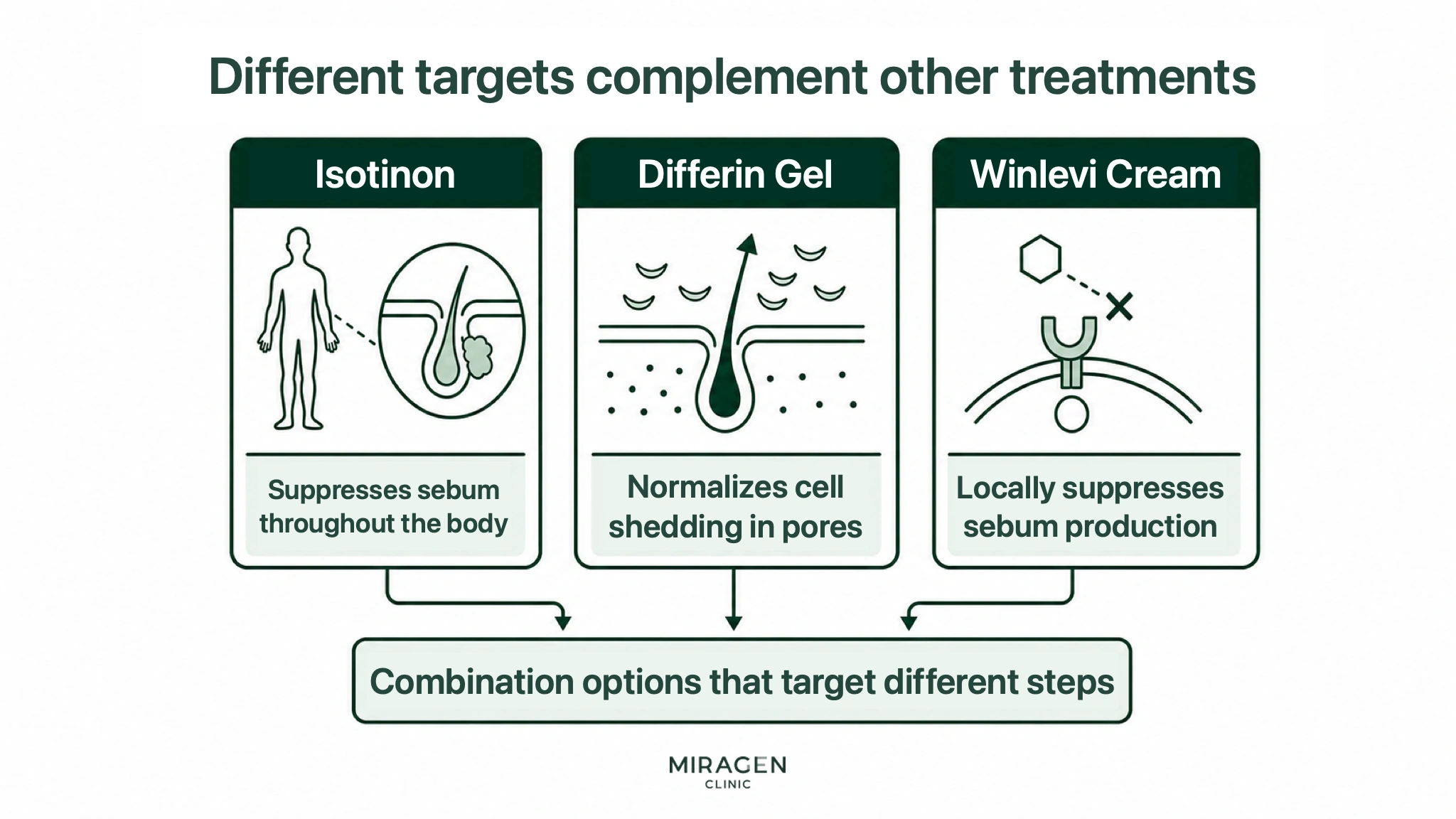
In a retrospective study analyzing 82 patient records, the proportion of patients whose acne was rated clear or almost clear after 24 weeks was 92.1% for the isotretinoin + Winlevi Cream combination group and 72.7% for the isotretinoin monotherapy group.10
Detailed information on isotretinoin and Differin Gel can be found on the Isotinone and Differin Gel pages.
5. How to use
- Apply a thin layer to the affected area twice daily, in the morning and evening.
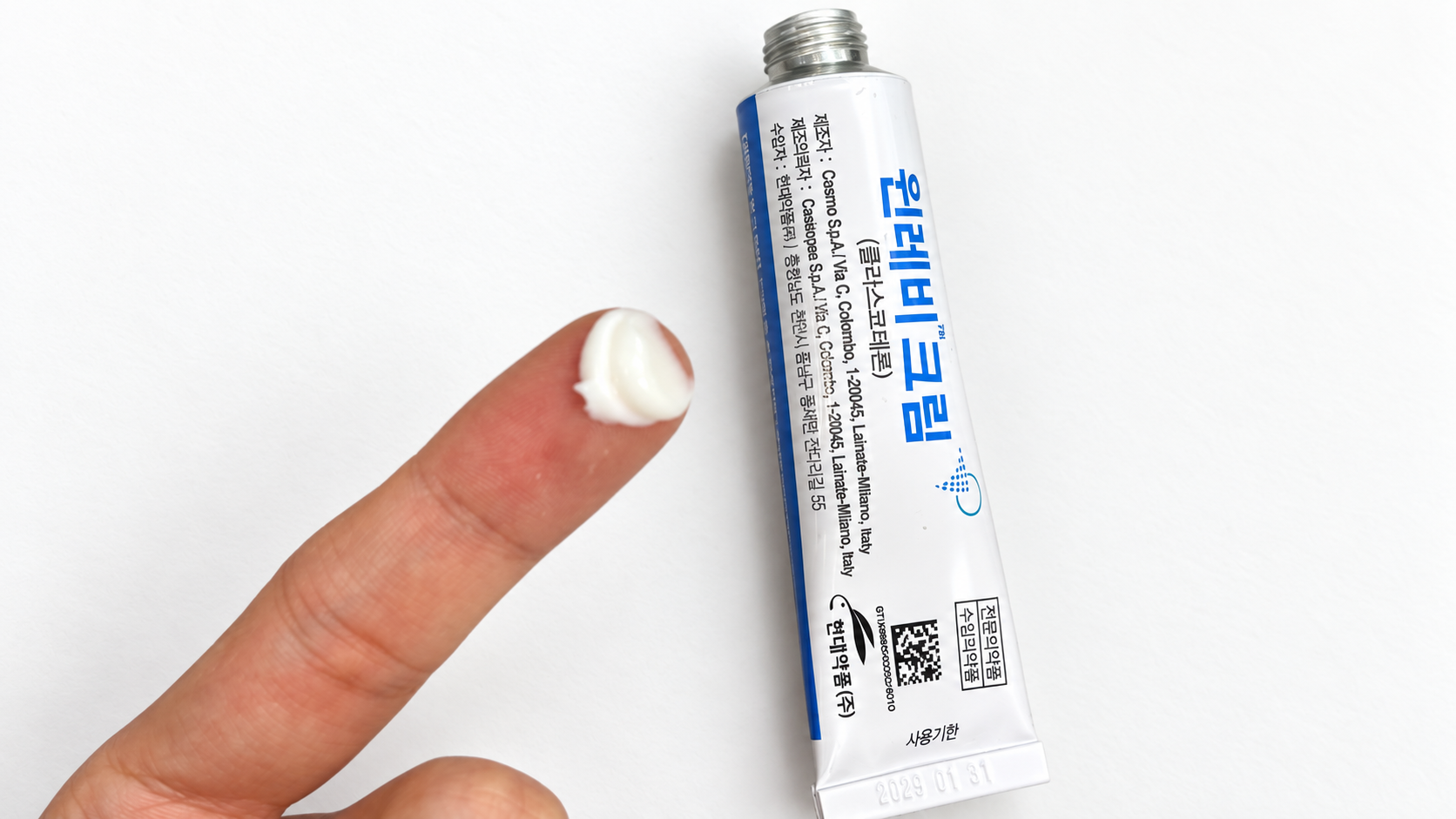
When applying to the entire face, dispense an amount similar to the photo below and spread it thinly. Applying too much may leave a white residue and take a long time to spread.
6. Pregnancy · breastfeeding
Due to limited data on safety during pregnancy, it cannot be used if you are pregnant. If pregnancy is discovered during use, it should be discontinued immediately, and if pregnancy is planned, your doctor should be informed before starting treatment.
Caution is required during lactation. Although the topical medication has not been confirmed to transfer to the baby through breast milk, its safety if transferred has not been verified. If used during lactation, it should not be applied to the breasts, and care should be taken to prevent the baby from coming into contact with the treated skin.11
7. Shelf Life
Although the South Korean prescribing information states a shelf life of 1 month after opening, this does not mean the product will deteriorate after that period. Chemical, physical, and microbiological stability has been confirmed for up to 6 months after opening.
In fact, in Canada, the prescribing information states a shelf life of 6 months after preparation or opening.
8. Frequently Asked Questions
Can Winlevi cream be used long-term?
Yes. The South Korean approval does not specify a maximum treatment period, and published studies have shown overall maintained safety and efficacy for up to 12 months. This does not mean it can only be used for a maximum of 12 months.1,12
Clascoterone is also used for hair loss, so can Winlevi Cream be used for hair loss?
It is not known whether applying Winlevi Cream to the scalp improves hair loss. This is because the medication used in male pattern hair loss studies was clascoterone 5% topical solution, whereas Winlevi Cream is clascoterone 1% cream. Since the concentration and formulation differ, the research results from the 5% solution cannot be directly applied to Winlevi Cream. The 5% solution has completed Phase 3 studies but is still under development and, as of August 2026, has not been launched in Korea.1,13
Can men use Winlevi cream?
Yes. Winlevi cream is not exclusively for women. In Korea, it can be used for moderate to severe acne in individuals aged 12 and older, regardless of gender, and men participated in the Phase 3 studies.1,5
References
- Ministry of Food and Drug Safety. Winlevi Cream (Clascoterone) Product Details. Product Code 202502573.
- Rosette C, Agan FJ, Mazzetti A, et al. Cortexolone 17α-propionate (Clascoterone) Is a Novel Androgen Receptor Antagonist that Inhibits Production of Lipids and Inflammatory Cytokines from Sebocytes In Vitro. J Drugs Dermatol. 2019;18(5):412-418. PMID: 31141847.
- Draelos ZD, Kyeremateng K, Squittieri N, et al. Reduction in Facial Sebum Production Following Treatment with Clascoterone Cream 1% in Patients with Acne Vulgaris: 12-Week Interim Analysis. Dermatol Ther. 2025;15(9):2657-2666. PMID: 40682762.
- Stinco G, Bragadin G, Trotter D, Pillon B, Patrone P. Relationship between sebostatic activity, tolerability and efficacy of three topical drugs to treat mild to moderate acne. J Eur Acad Dermatol Venereol. 2007;21(3):320-325. PMID: 17309452.
- Hebert A, Thiboutot D, Stein Gold L, et al. Efficacy and Safety of Topical Clascoterone Cream, 1%, for Treatment in Patients With Facial Acne: Two Phase 3 Randomized Clinical Trials. JAMA Dermatol. 2020;156(6):621-630. PMID: 32320027.
- Trifu V, Tiplica GS, Naumescu E, et al. Cortexolone 17α-propionate 1% cream, a new potent antiandrogen for topical treatment of acne vulgaris. A pilot randomized, double-blind comparative study vs. placebo and tretinoin 0.05% cream. Br J Dermatol. 2011;165(1):177-183. PMID: 21428978.
- Goh CL, Tang MB, Briantais P, et al. Adapalene gel 0.1% is better tolerated than tretinoin gel 0.025% among healthy volunteers of various ethnic origins. J Dermatolog Treat. 2009;20(5):282-288. PMID: 19634042.
- Dunlap FE, Mills OH, Tuley MR, et al. Adapalene 0.1% gel for the treatment of acne vulgaris: its superiority compared to tretinoin 0.025% cream in skin tolerance and patient preference. Br J Dermatol. 1998;139 Suppl 52:17-22. PMID: 9990416.
- Brand B, Gilbert R, Baker MD, et al. Cumulative irritancy potential of adapalene cream 0.1% compared with adapalene gel 0.1% and several tretinoin formulations. Cutis. 2003;72(6):455-458. PMID: 14700217.
- Choi U, Xiong G, Metko D, et al. Efficacy of oral isotretinoin monotherapy compared to combination isotretinoin and topical clascoterone for severe acne vulgaris: a multi-center retrospective study. J Dermatolog Treat. 2025;36(1):2525287. PMID: 40643146.
- National Library of Medicine. Drugs and Lactation Database: Clascoterone. Last revision 2022.
- Eichenfield LF, Hebert AA, Stein Gold L, et al. Long-Term Safety and Efficacy of Twice-Daily Topical Clascoterone Cream 1% in Patients Greater Than or Equal to 12 Years of Age With Acne Vulgaris. J Drugs Dermatol. 2023;22(8):810-816. PMID: 37556524.
- Cosmo N.V. Half-Year Report 2026.