Among patients visiting for chronic dermatitis, there are rare cases where individuals purchase Rutinib ointment through overseas direct buying services. They often ask, “I tried it because it’s said to have the same ingredients as the new drug Opzelura; is it okay to use?” This is a difficult question to answer briefly.

It is true that both claim to contain 1.5% ruxolitinib. However, having the same ingredients is not the same as having the same level of evidence. I have summarized the details in this post that I could not fully explain in the consultation room.
| Item | Opzelura | Rutinib Ointment |
|---|---|---|
| Main Ingredient | Ruxolitinib 1.5% | Ruxolitinib 1.5% |
| Developer | Incyte (Original Developer) | Drug International, etc. (Non-original Developer) |
| Approval | FDA Approved (Atopic Dermatitis 2y+, Vitiligo 12y+) | No FDA Approval |
| Phase 3 Clinical Trials | Multiple publications including TRuE-AD, TRuE-V | No independent Phase 3 publications |
| Formulation Validation | Passed FDA Review | No public data available |
| Korean Approval | Unapproved | Unapproved |
| Purchase Route | Requires overseas prescription | Available for online purchase (some cases) |
Both Opzelura and Rutinib are cream formulations. However, since many people search for ‘Rutinib ointment’ rather than ‘Rutinib cream,’ that term is used in this post.
What Kind of Ingredient is Ruxolitinib?
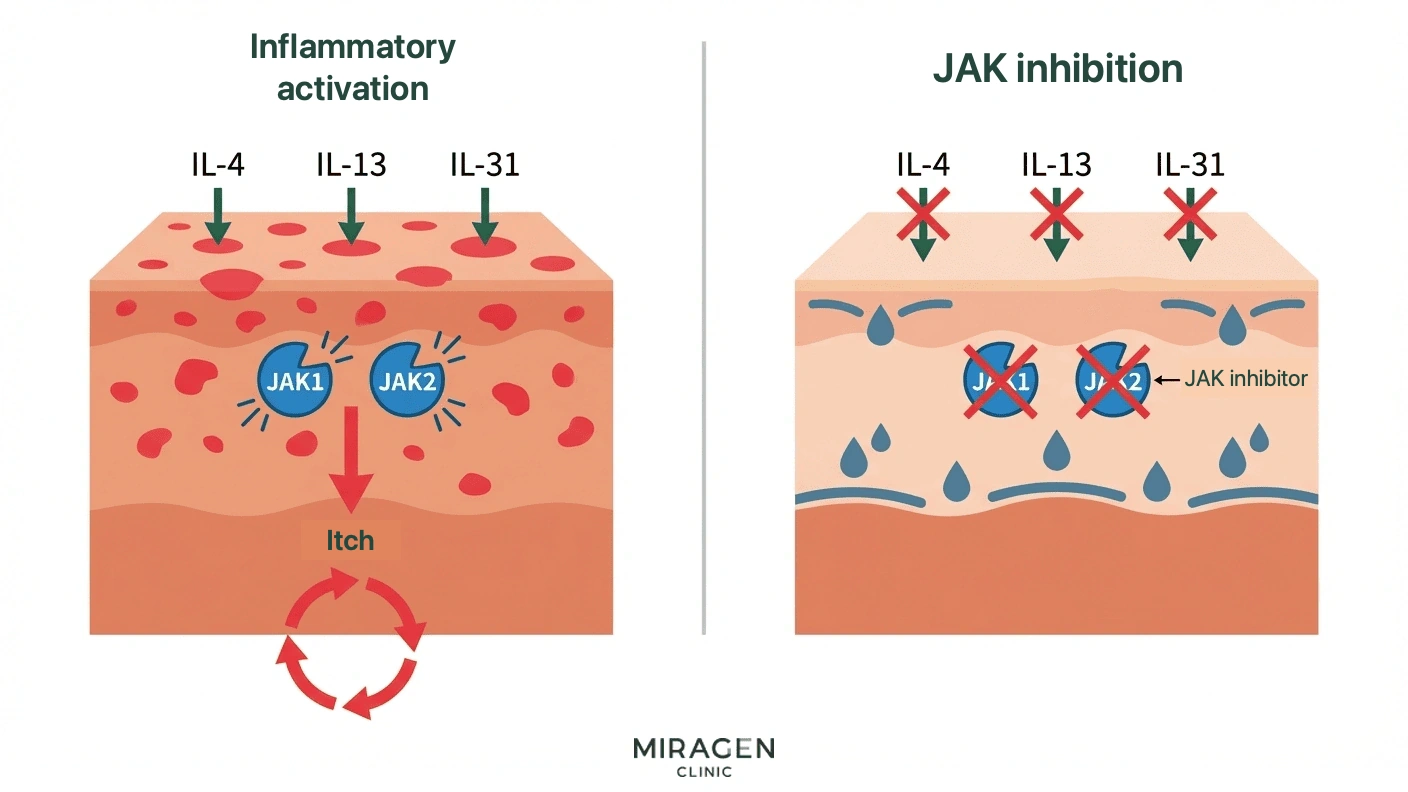
Ruxolitinib is an ingredient that simultaneously inhibits JAK1 and JAK2. JAK is an enzyme that transmits inflammatory signals within immune cells; in atopic dermatitis, cytokines such as IL-4, IL-13, and IL-31 operate excessively through this pathway.
In particular, IL-31 is a key mediator of itching. The cycle of itching → scratching → skin barrier damage → worsening inflammation is the primary axis that makes atopic dermatitis chronic, and JAK inhibitors block the itching signal, which is the starting point of this cycle. Therefore, they have a different point of action than steroids. While steroids suppress a wide range of inflammation all at once, JAK inhibitors are closer to drugs that selectively cut off specific signaling pathways.
The same pathway operates in vitiligo. Because the JAK-STAT pathway is involved in the immune response that attacks melanocytes, blocking this pathway allows for the possibility of melanocytes recovering their function. However, since destroyed cells must grow back, it takes much longer.
Clinical Evidence for Opzelura
Atopic Dermatitis: Rapid Itch Reduction is a Strength
In Phase 3 studies testing 1,249 patients with mild-to-moderate atopic dermatitis for 8 weeks, the treatment success rate (IGA-TS) was approximately 50%, significantly higher than the approximately 15% of the control cream.1 Itching began to decrease within 12 hours after application, a speed comparable to that of steroids.
Subsequent pooled analyses of multiple clinical trials in patients with moderate atopic dermatitis showed significant efficacy even when compared to oral JAK inhibitors and biologics.2 Furthermore, in a direct comparison with 0.1% triamcinolone (a Class 5 steroid), the EASI75 achievement rate at 4 weeks was 56% versus 47%, showing results similar to or slightly better than moderate-strength steroids.3
Safety and efficacy were also confirmed in children (2–11 years) and adolescents,4 and a recent analysis synthesizing five clinical trials reaffirmed significant improvements in both IGA-TS and EASI75.5
Vitiligo: Must Be Viewed Much More Slowly
The progression of vitiligo is entirely different. In the TRuE-V1/V2 studies, the facial F-VASI75 achievement rate at 24 weeks was approximately 30%, and it took up to 52 weeks for meaningful repigmentation to appear in about half of the patients.6 Opzelura received FDA approval for the treatment of vitiligo in July 2022, making it the first FDA-approved treatment for vitiligo.
In a 104-week long-term safety analysis, there were no prominent signals of the most concerning cardiovascular events, blood clots, or serious infections.7 The most common adverse reactions were nasopharyngitis (7.2%) and application site acne (6.0%).
Why Rutinib Ointment and Opzelura are Different
The core issue is what verification procedures each product has undergone. All clinical data cited above originated from the Opzelura program.
Rutinib ointment, which can be purchased online through direct buying, is a product of Drug International in Bangladesh. It is not an FDA-approved generic, but a product manufactured in a market with a different regulatory environment. Even with the same 1.5% ruxolitinib, the cream base, preservatives, skin absorption profile, manufacturing process, and distribution temperature stability vary by product, and bioequivalence data is not publicly available. This is why one cannot conclude that “same ingredients mean same effects.”
The price difference also arises at this point. The original developer’s drug bears the burden of clinical development, approval, and post-market surveillance, while non-original developer products enter the market without that process.
The most practical problem is that neither Opzelura nor Rutinib ointment is officially approved in Korea. In the event of an adverse reaction, it is difficult for Korean doctors to take appropriate measures because they lack experience with these ointments.
Options Available in Korea
Topical Treatment: There are Proven Options
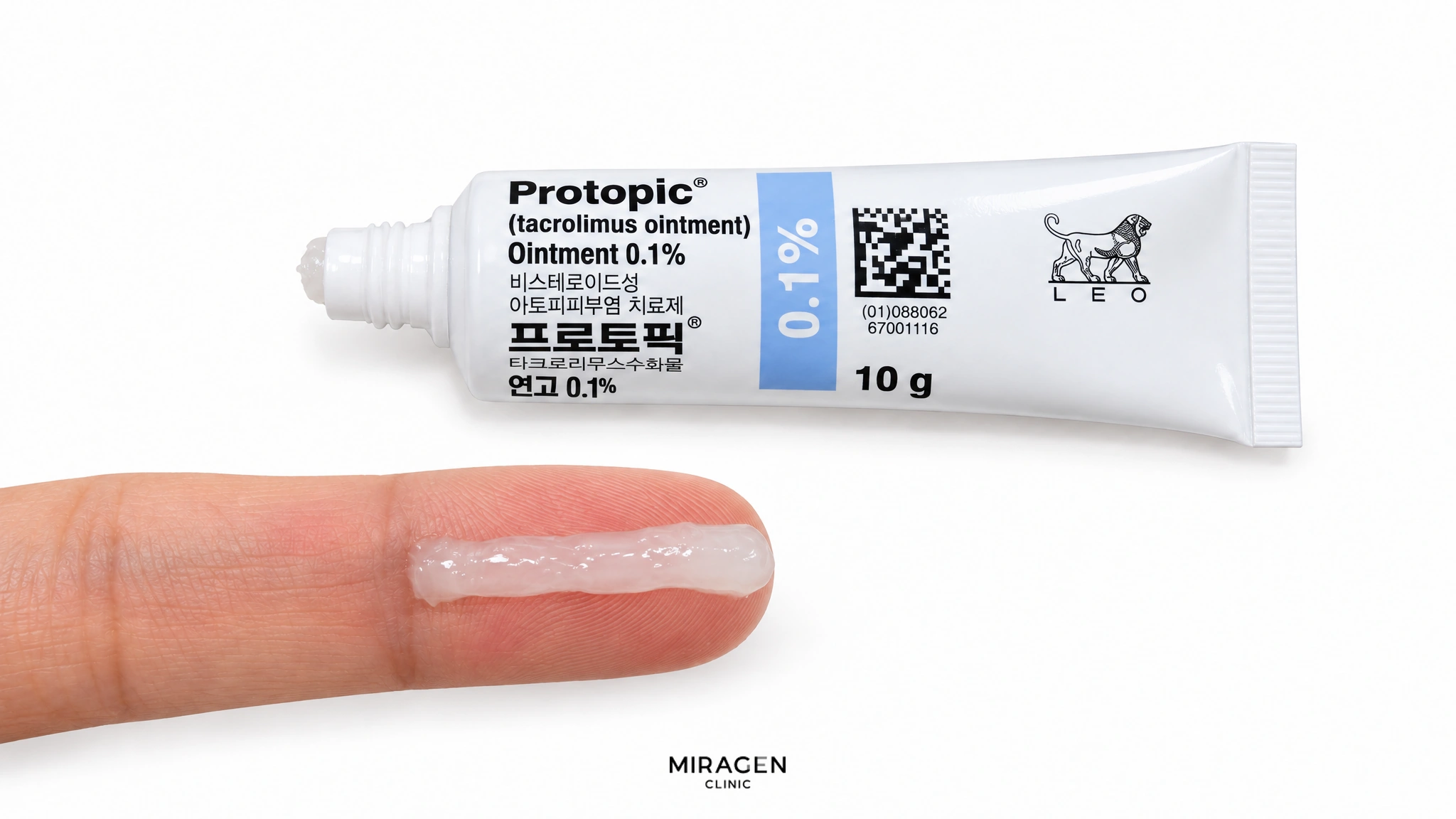
When non-steroidal anti-inflammatory ointments are needed for atopic dermatitis treatment, I consider Protopic and Elidel before Rutinib ointment. Both can be officially prescribed in Korea and have clinical data accumulated over decades.
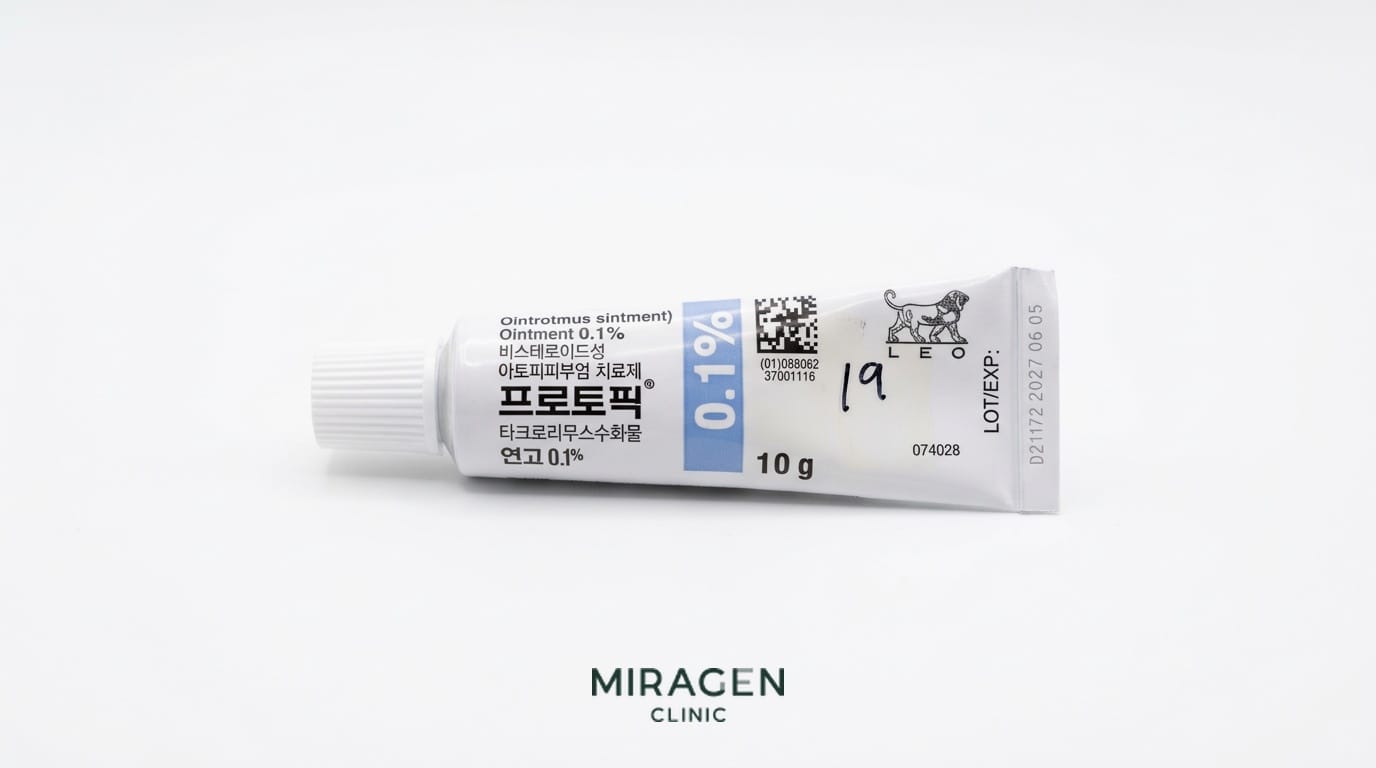
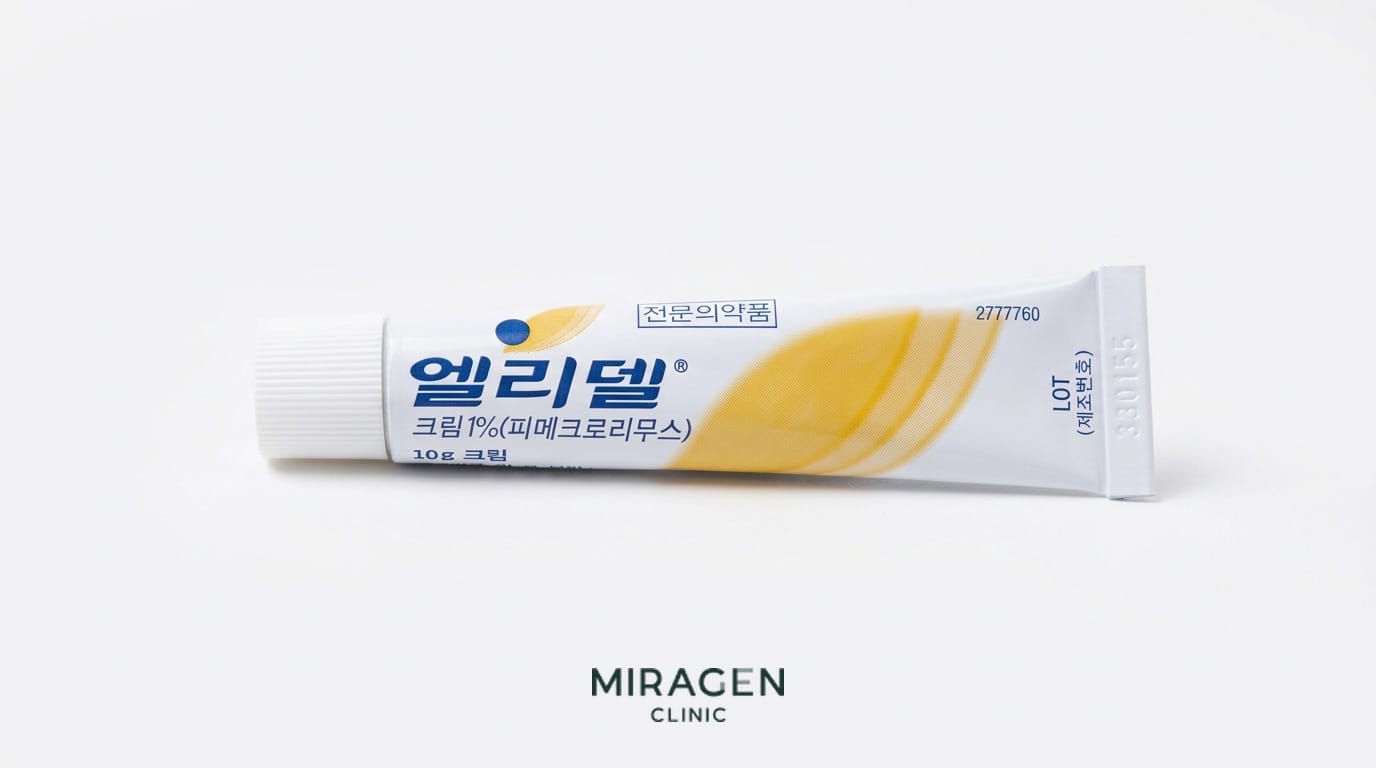
For reference, there is one topical JAK inhibitor that can be officially prescribed in Korea. It is Anzupgo Cream (delgocitinib), approved in September 2025, but its indication is limited to chronic hand eczema and cannot be used for atopic dermatitis. Details regarding Anzupgo Cream are covered in a separate post.

Oral JAK Inhibitors: There are Approved Drugs in Korea
In Korea, most JAK inhibitors are officially approved for moderate-to-severe atopic dermatitis in oral form rather than topical form.
| Drug | Ingredient | Selectivity | Korean Approval |
|---|---|---|---|
| Olumiant | Baricitinib | JAK1/2 | Moderate-to-severe atopic dermatitis (Adults) |
| Rinvoq | Upadacitinib | JAK1 | Moderate-to-severe atopic dermatitis (12y+) |
| Cibinqo | Abrocitinib | JAK1 | Moderate-to-severe atopic dermatitis (12y+) |
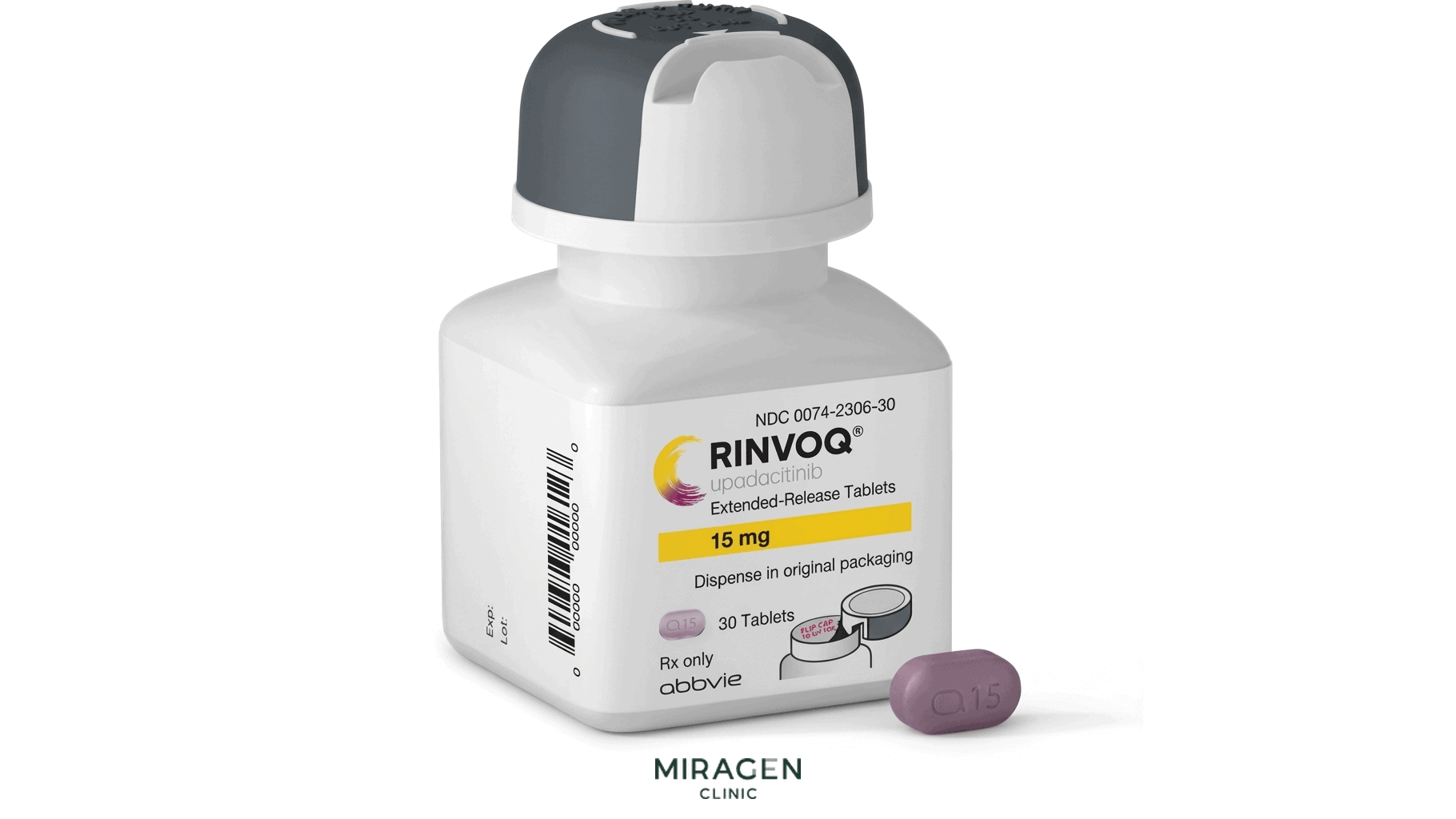
These drugs block the same JAK pathway but act systemically because they are oral medications. Therefore, they show efficacy in a wide range of moderate-to-severe atopic dermatitis, and pooled analyses of clinical trials in children also report significant efficacy and manageable safety profiles.8
However, these are not drugs that can be prescribed immediately. To receive health insurance coverage (Calculation Exception), one must have an EASI score of 23 or higher after using topical treatments for at least 4 weeks and systemic immunosuppressants (such as Cipol-N) for at least 3 months. If health insurance is applied, the out-of-pocket cost is reduced to about 10% (approximately 60,000 KRW per month for Rinvoq), but if not applied, Rinvoq costs approximately 600,000 KRW per month.
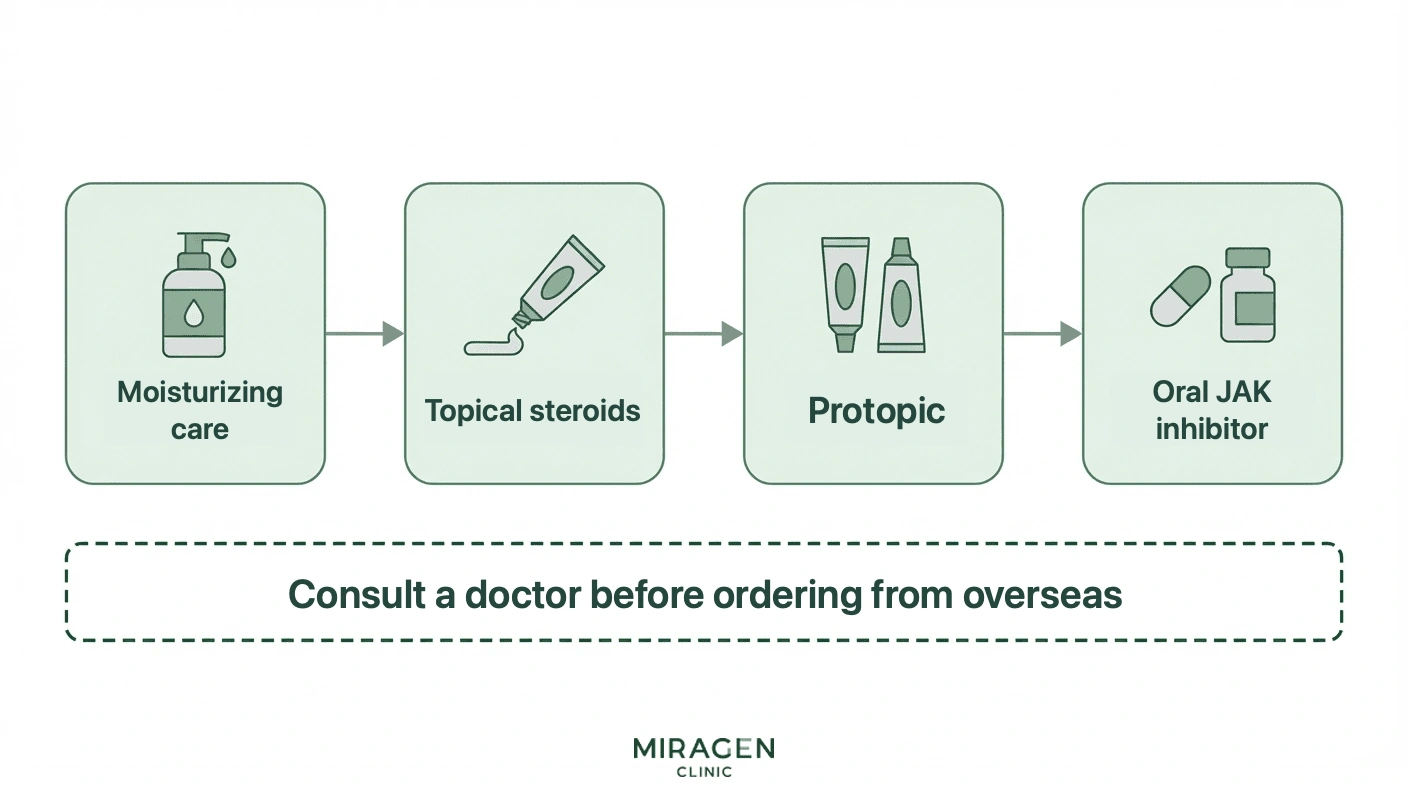
This process, including cyclosporine prescription and EASI evaluation, is usually conducted at tertiary hospitals. In local clinics, topical treatments such as steroids, Protopic, and Elidel are the primary tools, and if control is not achieved, patients are referred to tertiary hospitals. It is much safer to follow these steps than to purchase unapproved products from overseas.
Let’s return to the question. If you ask, “Is Rutinib ointment the same ingredient as Opzelura?” the answer is yes, it is 1.5% ruxolitinib (at least it claims to be). However, it does not possess the same evidence, quality control, or tracking system. Furthermore, neither ointment is approved in Korea, and there are official treatment steps that can be safely attempted before considering overseas direct purchase.
Frequently Asked Questions
Are Rutinib ointment and Opzelura the same drug?
Both contain 1.5% ruxolitinib as the main ingredient. However, Opzelura is a product of the original developer (Incyte), is FDA-approved, and has extensive Phase 3 clinical trial data. Rutinib ointment is a non-original developer product from overseas, and no independent Phase 3 publications have been confirmed. While the ingredients are the same, the formulation, quality control, and level of evidence differ.
Can Rutinib ointment be prescribed in Korea?
No. Neither Opzelura nor Rutinib ointment is approved in Korea. Even if purchased through overseas direct buying, it is used without a prescription, and since doctors in Korea with experience with this drug are very rare, it is difficult to take appropriate action in case of adverse reactions. If you need treatment for atopic dermatitis, we recommend starting with topical treatments approved in Korea (Protopic, Elidel), and if control is difficult with topical treatment, consult with a tertiary hospital regarding systemic treatment pathways.
Can anyone use oral JAK inhibitors?
No. To receive health insurance benefits, one must have an EASI score of 23 or higher even after trying topical treatments and systemic immunosuppressants (such as cyclosporine) in sequence. Blood tests and infection screening are required before prescription, and regular monitoring is necessary during medication, so the process is primarily conducted at tertiary hospitals.
References
- Papp K, Szepietowski JC, Kircik L, et al. Efficacy and safety of ruxolitinib cream for the treatment of atopic dermatitis: Results from 2 phase 3, randomized, double-blind studies. J Am Acad Dermatol. 2021;85(4):863-872.
- Gooderham MJ, Hong HC, Wang D, et al. Network Meta-analysis of 1.5% Ruxolitinib Cream Versus Systemic Agents in the Treatment of Moderate Atopic Dermatitis. Dermatol Ther (Heidelb). 2025;15(11):3313-3328.
- Kircik L, Sturm D, Kallender H, et al. Ruxolitinib Cream Versus Triamcinolone Cream in Adults With Mild to Moderate Atopic Dermatitis. J Drugs Dermatol. 2025;24(10):1036-1039.
- Eichenfield LF, Stein Gold LF, Simpson EL, et al. Efficacy and safety of ruxolitinib cream in children aged 2 to 11 years with atopic dermatitis: Results from TRuE-AD3. J Am Acad Dermatol. 2025;93(3):689-698.
- Ghanem L, Mendoza-Millán DL, Lopes BB, et al. Ruxolitinib cream improves outcomes in atopic dermatitis: An updated systematic review and meta-analysis. Pediatr Allergy Immunol. 2026;37(1):e70281.
- Rosmarin D, Passeron T, Pandya AG, et al. Two Phase 3, Randomized, Controlled Trials of Ruxolitinib Cream for Vitiligo. N Engl J Med. 2022;387(16):1445-1455.
- Rosmarin D, Pandya AG, Passeron T, et al. Long-Term Integrated Safety Summary of Ruxolitinib Cream in Phase 3 Clinical Trials of Patients with Vitiligo. Dermatol Ther (Heidelb). 2025;15(12):3703-3716.
- Kawamoto N, Murai H, Nogami K, et al. Efficacy and safety of systemic targeted therapies for atopic dermatitis in children: A systematic review and meta-analysis. Allergol Int. 2025;74(3):424-434.