Patients with atopic dermatitis, rosacea, and seborrheic dermatitis are constantly advised in the clinic to apply moisturizer diligently, yet they frequently experience the contradictory situation where symptoms worsen when they actually follow this advice.
If the moisturizer applied to protect the barrier instead intensifies itching and redness,1 this may signal that your skin is not currently ready to accept moisturizer.
Today, I would like to explain from the perspective of a physician who treats dermatitis why ‘no-moisturizer’ treatment can be a medically valid option.
The Modern Medical Standard: Moisturizers
In modern medicine, moisturizer use is considered the ‘gold standard’ for treating atopic and chronic dermatitis.
Authoritative organizations including the Korean Dermatological Association, the American Academy of Dermatology (AAD), and the European Academy of Dermatology and Venereology (EADV) define moisturizers as an essential foundational element of treatment in their guidelines.
The reason so many experts recommend moisturizers is that they physically protect the skin from external irritants.
The foundation of this recommendation is the ‘brick and mortar’ model established by Dr. Peter Elias.2 When the skin barrier is compared to a brick wall, with corneocytes as bricks and the lipids filling the spaces between them as mortar, patients with chronic dermatitis have insufficient mortar due to genetic factors or inflammatory responses.
Therefore, the logic is that artificially filling in the mortar from the outside with moisturizer will reinforce the collapsed wall.
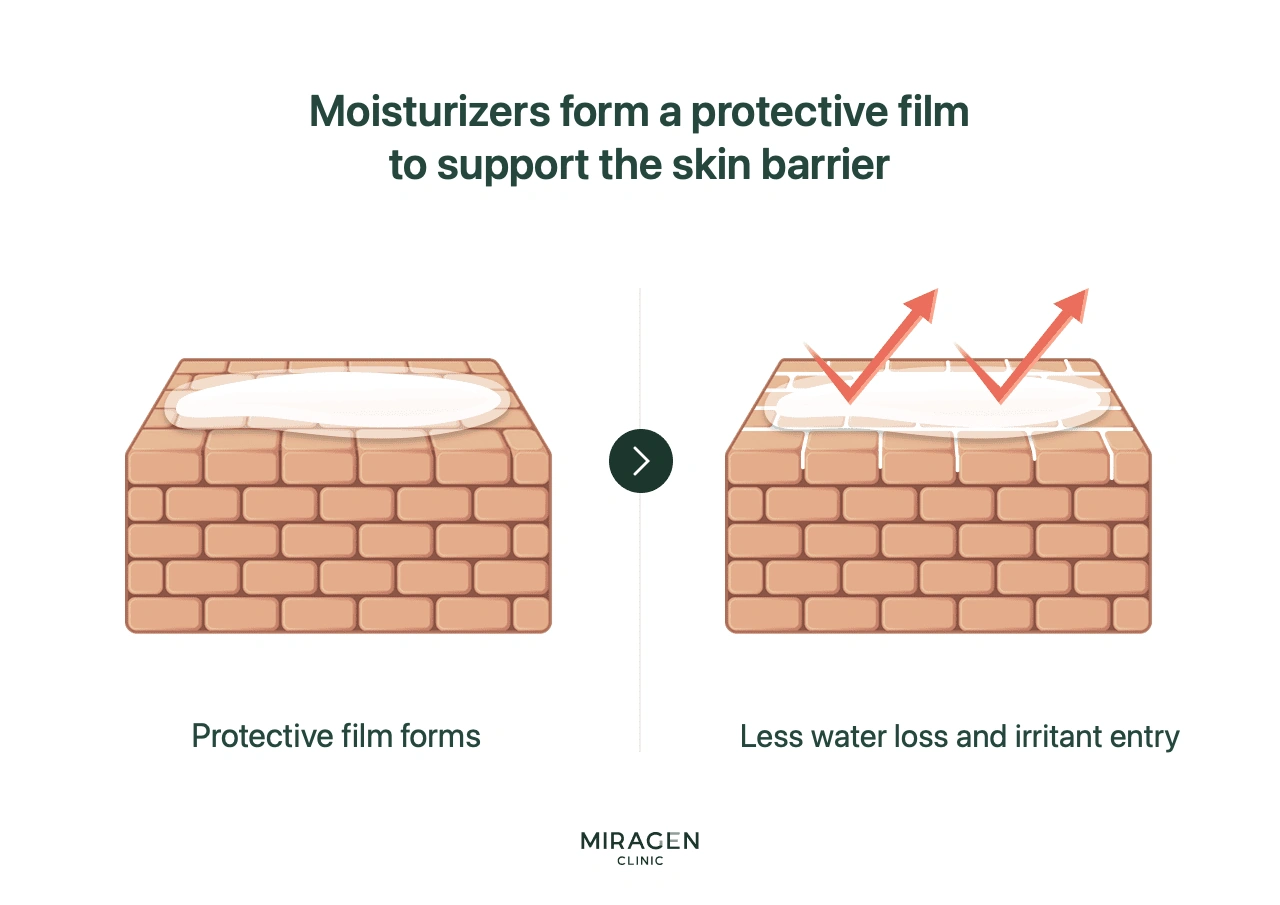
Limitations of Moisturizers | Medical Background for No-Moisturizer
However, this logic does not hold true in all situations.
In the clinic, we frequently see patients whose skin condition rapidly deteriorates after they begin applying moisturizer more diligently.
When barrier function is compromised, chemical components in moisturizers such as preservatives, emulsifiers, and fragrances penetrate deep into the dermal layer.3
What dermatitis patients need is a moisturizer that does not trigger inflammation even when small amounts penetrate, but because the same ingredients produce different reactions in different people, there is no moisturizer that suits all dermatitis patients.
If the skin barrier is severely damaged and you have not yet found a suitable moisturizer, temporarily discontinuing moisturizer use may help alleviate symptoms.
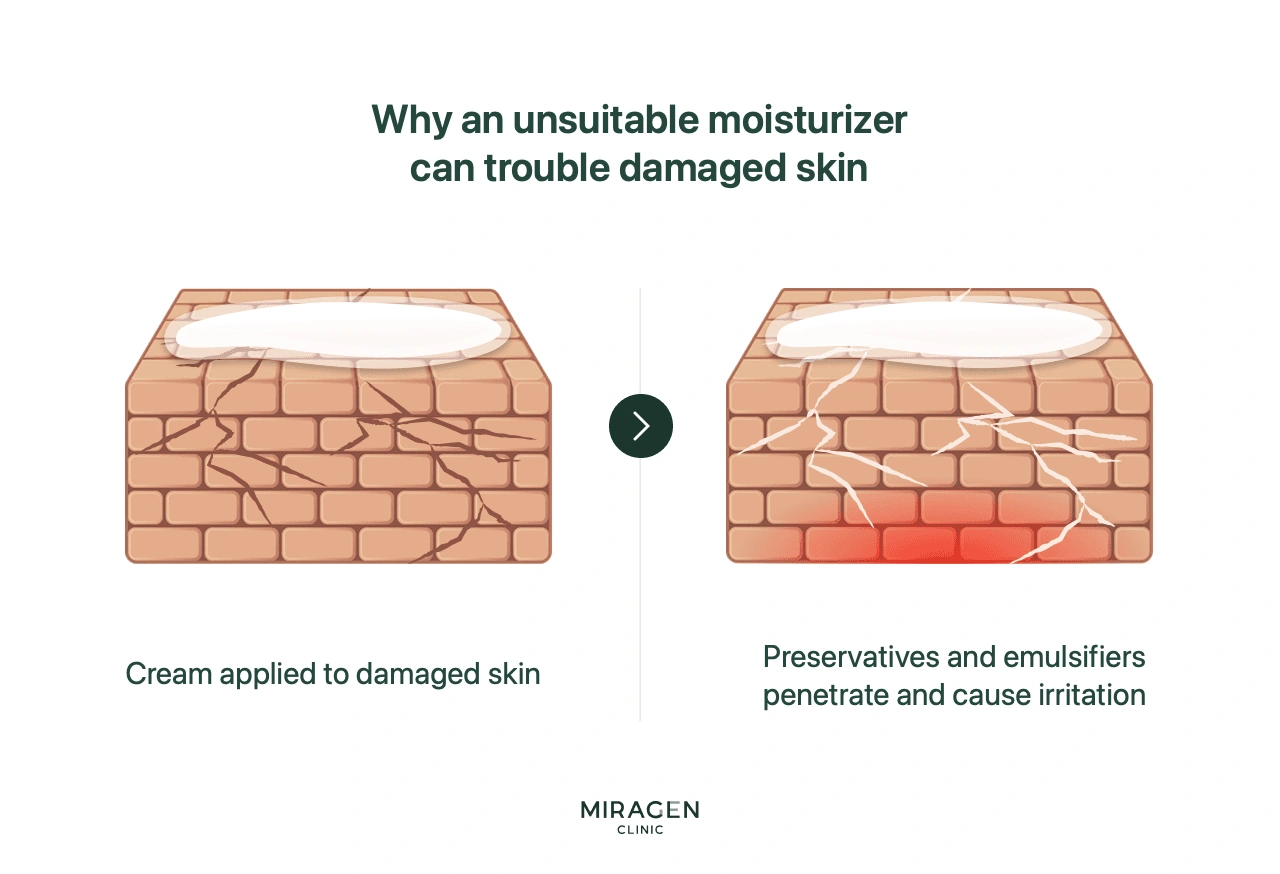
Symptoms and Timing for No-Moisturizer
That said, no-moisturizer is not appropriate for all patients. No-moisturizer should primarily be considered when there is oozing or severe heat sensation. Beyond moisturizer penetrating the skin and worsening inflammation, it can also trap exudate and cause secondary infection, or block heat dissipation, increasing blood flow and aggravating inflammation.

Appearance of Crusted Exudate
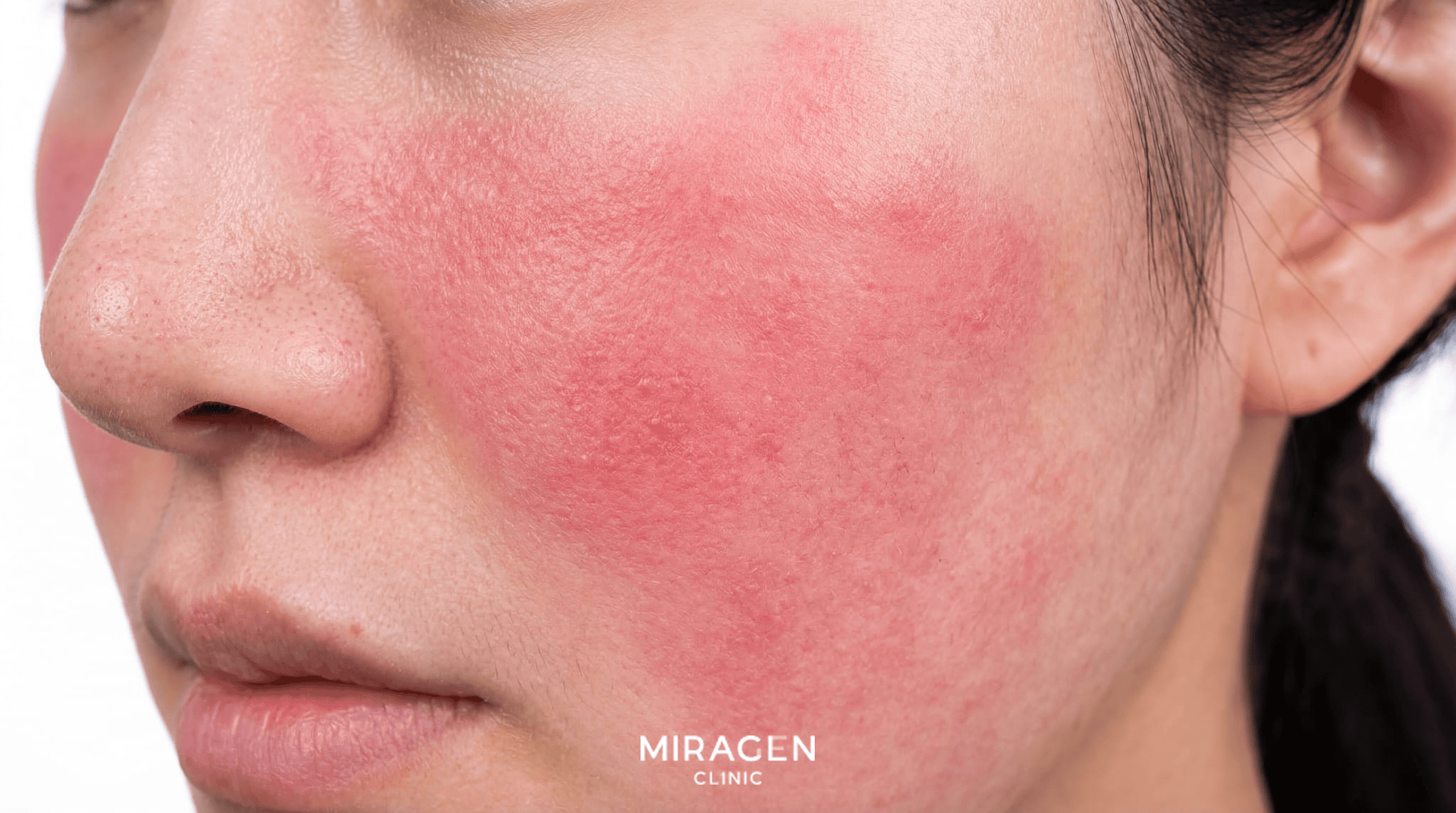
Appearance of Severe Flushing and Heat Sensation
Successful No-Moisturizer Guide
When you begin no-moisturizer, you may experience extreme dryness and tightness during the initial 2–3 days.
This is an adaptation period required for skin that has been relying on external moisturizer to begin producing lipids on its own.4 Particularly due to the nature of delayed immune responses, it takes approximately 72 hours for the effects of the last applied moisturizer to completely disappear.
During no-moisturizer, it is advisable to reduce the frequency of cleanser use and keep water temperature lukewarm. This is to preserve the lipids between cells as much as possible.
Additionally, do not forcibly remove flaking skin; wait for it to shed naturally. Through this process, the skin finally learns to build a healthy barrier on its own without external assistance.
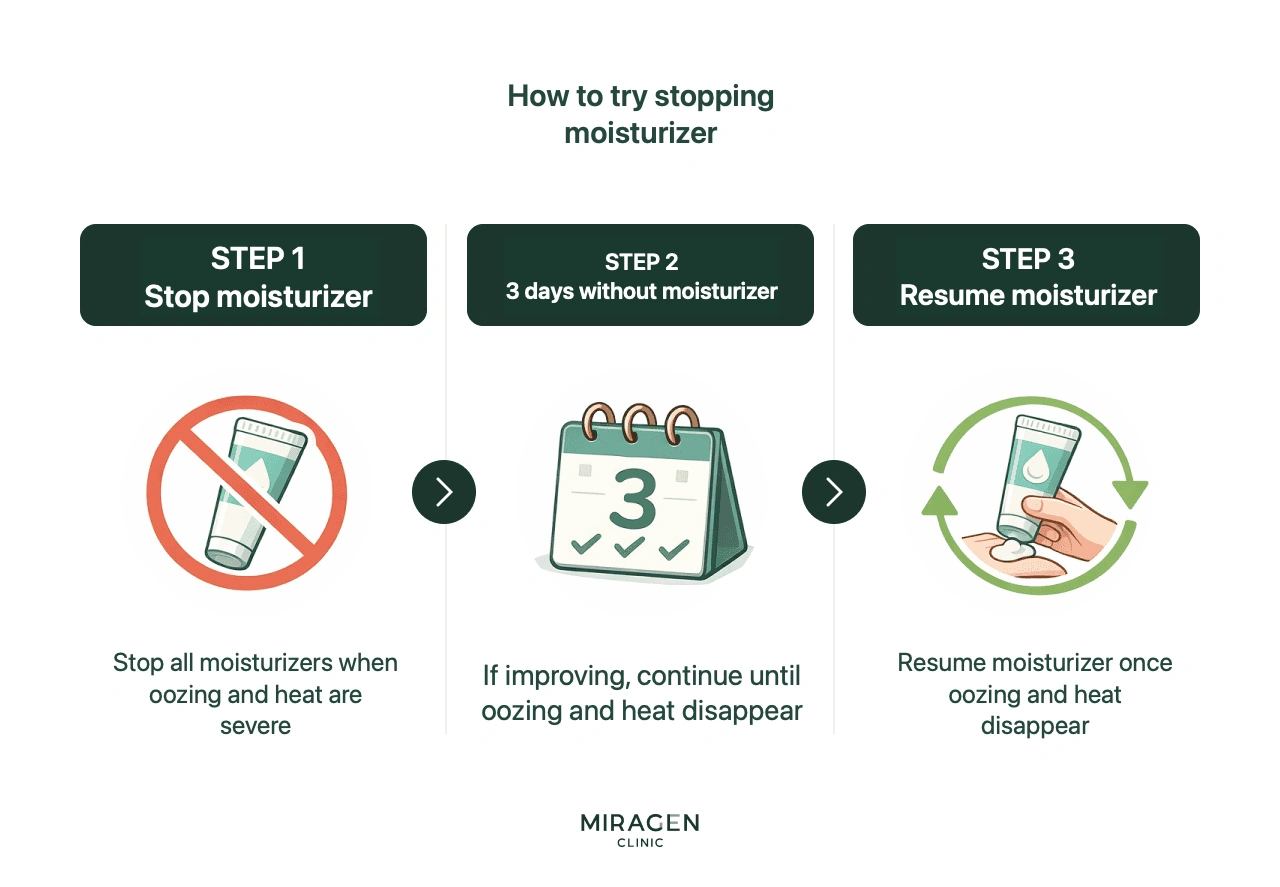
No-Moisturizer Is an Emergency Measure
If your skin barrier is severely compromised and you have not yet found a suitable moisturizer, no-moisturizer may help alleviate symptoms.
However, no-moisturizer is an emergency measure for urgent situations, not a sustainable treatment method.
In the long term, it is very important to find and use a moisturizer suitable for your skin that does not cause problems even when small amounts penetrate. How to find such a moisturizer is detailed in MD Cream Guide.
Frequently Asked Questions
My skin feels extremely tight and cracks during no-moisturizer—is this okay?
Initial tightness is a natural phenomenon. It will gradually ease as the skin begins synthesizing lipids on its own. However, if pain is severe through the cracks or bleeding occurs, partial treatment may be necessary through a physician’s diagnosis.
Do I have to do no-moisturizer for life?
No. No-moisturizer is an ‘intensive treatment phase’ to restore compromised self-regenerative capacity. Once skin inflammation subsides and the ability to retain moisture on its own is restored, you can then resume with light moisturizing appropriate for your skin condition.
Won’t my skin be more damaged if I don’t apply anything after cleansing?
In chronic dermatitis, ‘irritation from application’ often causes greater harm to the skin than ‘dryness.’ Listen to your skin’s voice. If it stings and reddens every time you apply something, not applying anything may be the greatest rest for your skin.
References
- Tang L, Gao J, Cao X, et al. TRPV1 mediates itch-associated scratching and skin barrier dysfunction in DNFB-induced atopic dermatitis mice. Exp Dermatol. 2022;31(3):398-405.
- Elias PM, Menon GK, Grayson S, et al. Avian sebokeratocytes and marine mammal lipokeratinocytes: structural, lipid biochemical, and functional considerations. Am J Anat. 1987;180(2):161-177.
- Ryczaj K, Dumycz K, Spiewak R, et al. Contact allergens in moisturizers in preventative emollient therapy – A systematic review. Clin Transl Allergy. 2022;12(6):e12150.
- Feingold KR. The regulation of epidermal lipid synthesis by permeability barrier requirements. Crit Rev Ther Drug Carrier Syst. 1991;8(3):193-210.