Medications
Protopic Ointment | Preferred Non-Steroidal Ointment for Dermatitis Without Acne
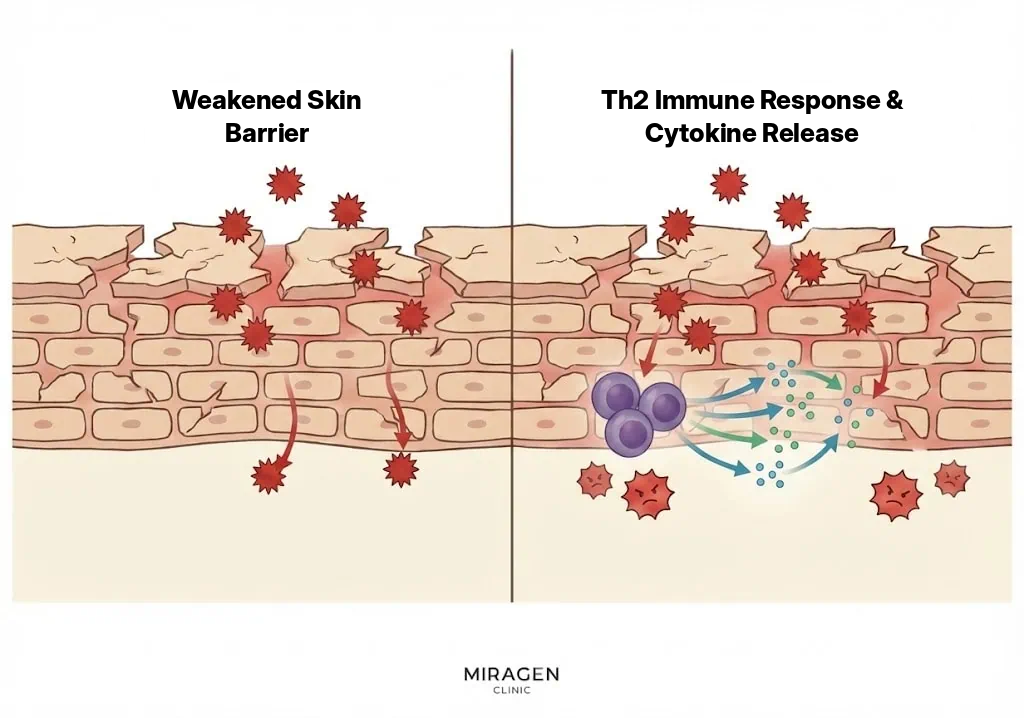
The most fundamental cause of chronic dermatitis is a weakened skin barrier. While steroid ointments quickly and effectively alleviate symptoms, they can further weaken the skin barrier, exacerbating the underlying problem.1,2
Protopic is an ointment that controls inflammation without affecting the skin barrier, unlike steroids.
목차
1. What is Protopic Ointment?
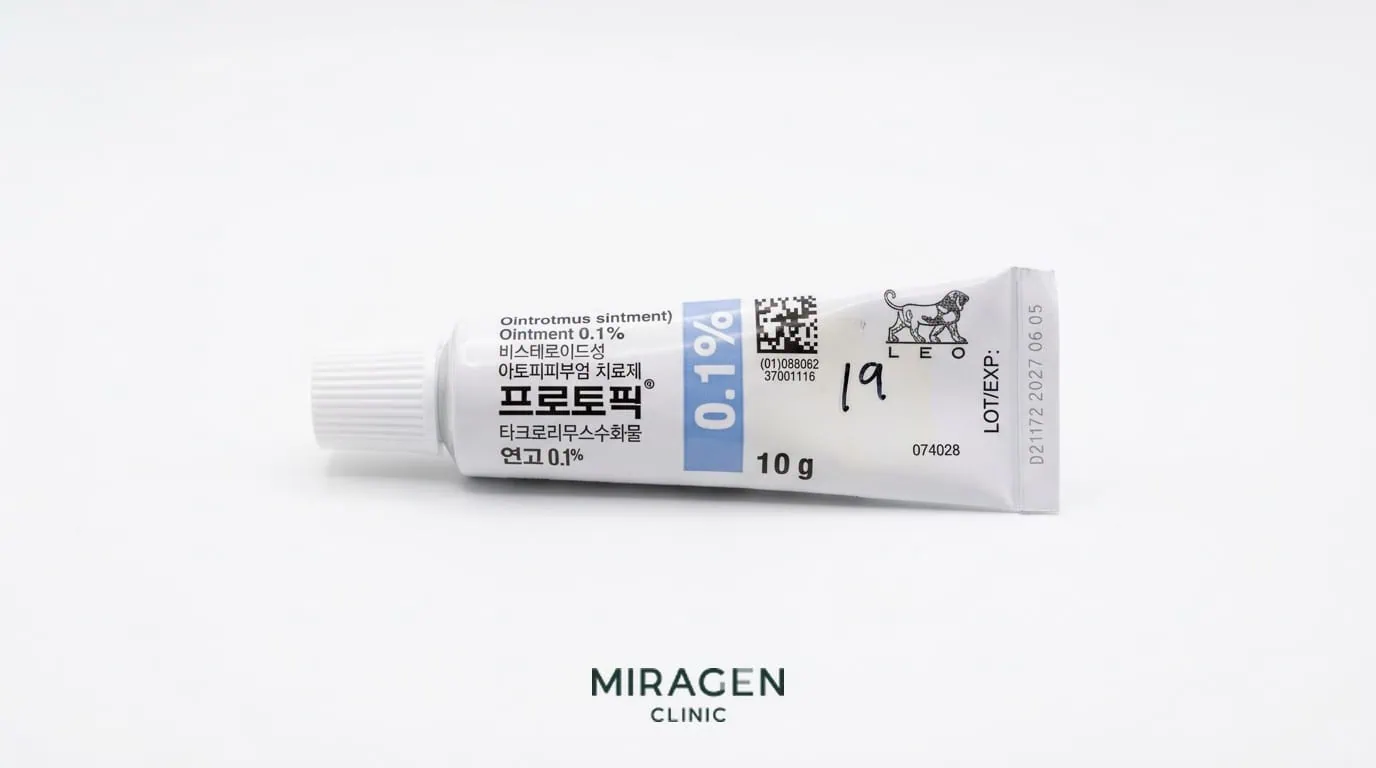
Protopic Ointment belongs to a class of anti-inflammatory drugs called calcineurin inhibitors, and its main ingredient is tacrolimus. Other drugs in the same class include Elidel (pimecrolimus) and oral Sandimmune (cyclosporine).
2. How is it different from Elidel?
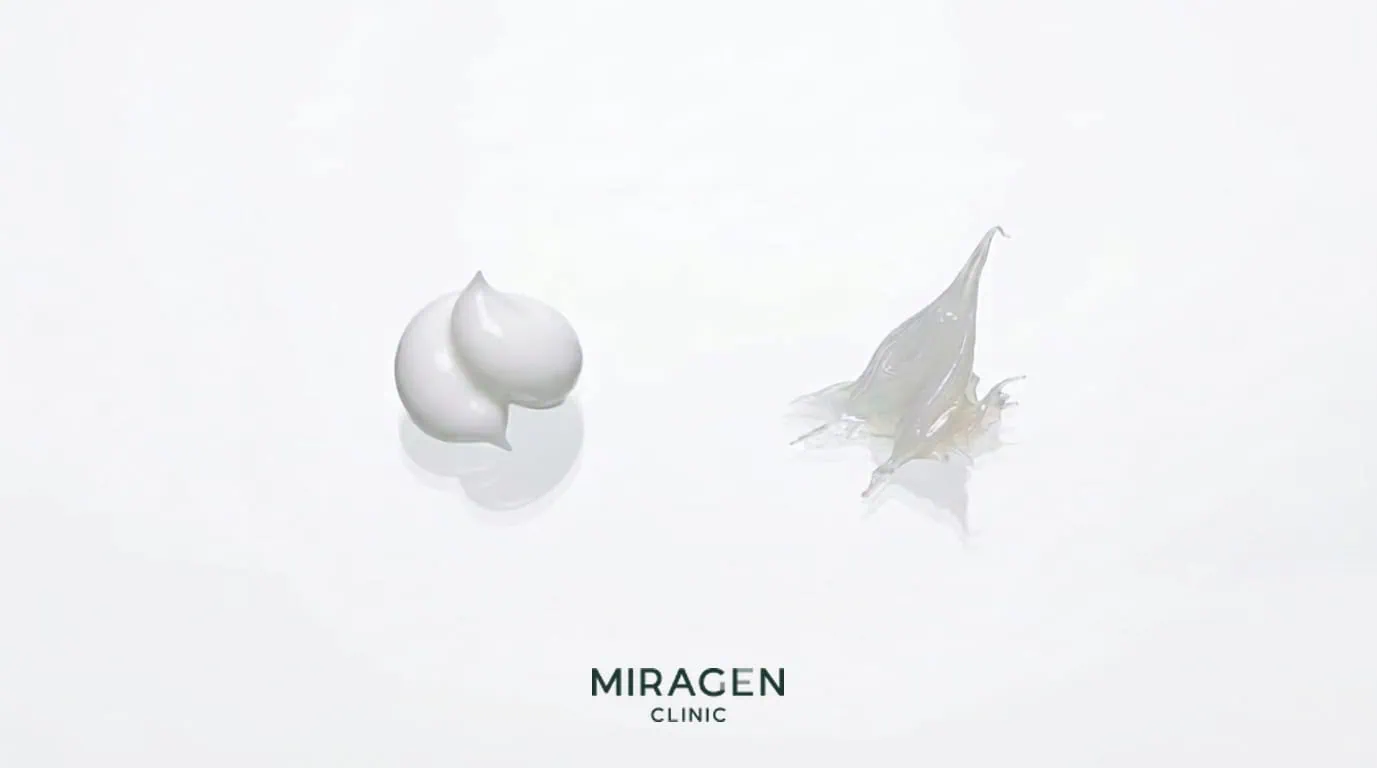
Protopic is an ointment, so it is sticky but has better anti-inflammatory effects, while Elidel is a cream with a more pleasant feel.3,4
Furthermore, due to differences in formulation, there are also differences in the frequency of side effects.
Protopic, being an ointment, contains relatively fewer preservatives and emulsifiers, so in my experience, the risk of contact allergy is lower. However, it can clog pores and worsen acne.
Elidel, being a cream, contains relatively more additives such as preservatives and emulsifiers, making contact allergies slightly more common. However, it clogs pores less, making it more suitable for cases accompanied by acne. You can find more details on the Elidel page.
3. How does it reduce inflammation?
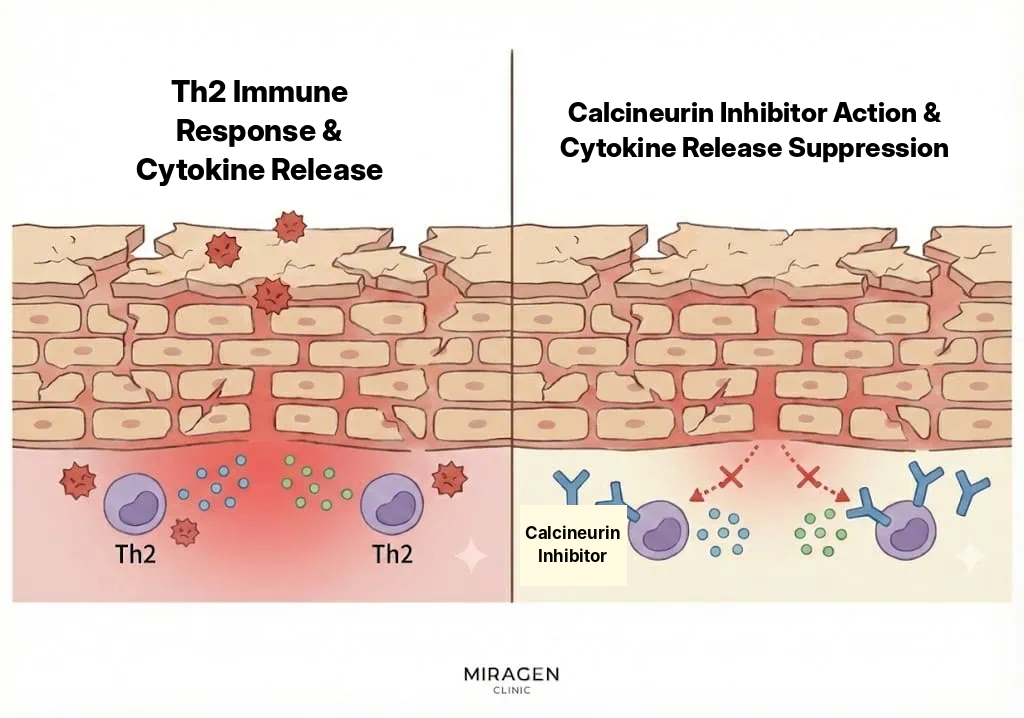
One reason for chronic dermatitis is the overactivation of T cells, which are immune cells. Protopic inhibits this process by turning off the calcineurin switch in T cells.
While its effect is not as powerful as steroids, which broadly suppress immunity, it does not weaken the skin barrier like steroid ointments.5
4. When is it used?
Elidel or Protopic are considered for dermatitis in areas where steroid use is burdensome, such as the face.
The choice between the two is determined by assessing the degree of pore blockage using a Wood’s lamp examination.
If pores are not blocked, Protopic is primarily considered. This is because its anti-inflammatory effect is stronger than Elidel, and in my experience, the risk of contact dermatitis is also lower.
It can also help alleviate burning and flushing in neurogenic rosacea.
. This is because Protopic can deplete neuropeptides (Substance P and CGRP), thereby reducing symptoms.
5. Two Concentrations — 0.1% and 0.03%
Protopic is available in two concentrations: 0.1% and 0.03%. The target users are as follows:
- 0.1% — Ages 16 and older
- 0.03% — Ages 2 to 15
There is a clear difference in efficacy between the two concentrations. A Cochrane review analyzing 6 randomized controlled trials (1,640 participants) found that 0.1% was significantly superior to 0.03% in physician-assessed improvement rates.5
6. Why does it cause a burning sensation?
When using Protopic, eye irritation, burning, itching, and worsening of redness may occur during the first few days. Symptoms typically begin within hours of the first application, and rarely, the burning sensation can disrupt sleep on the same night.
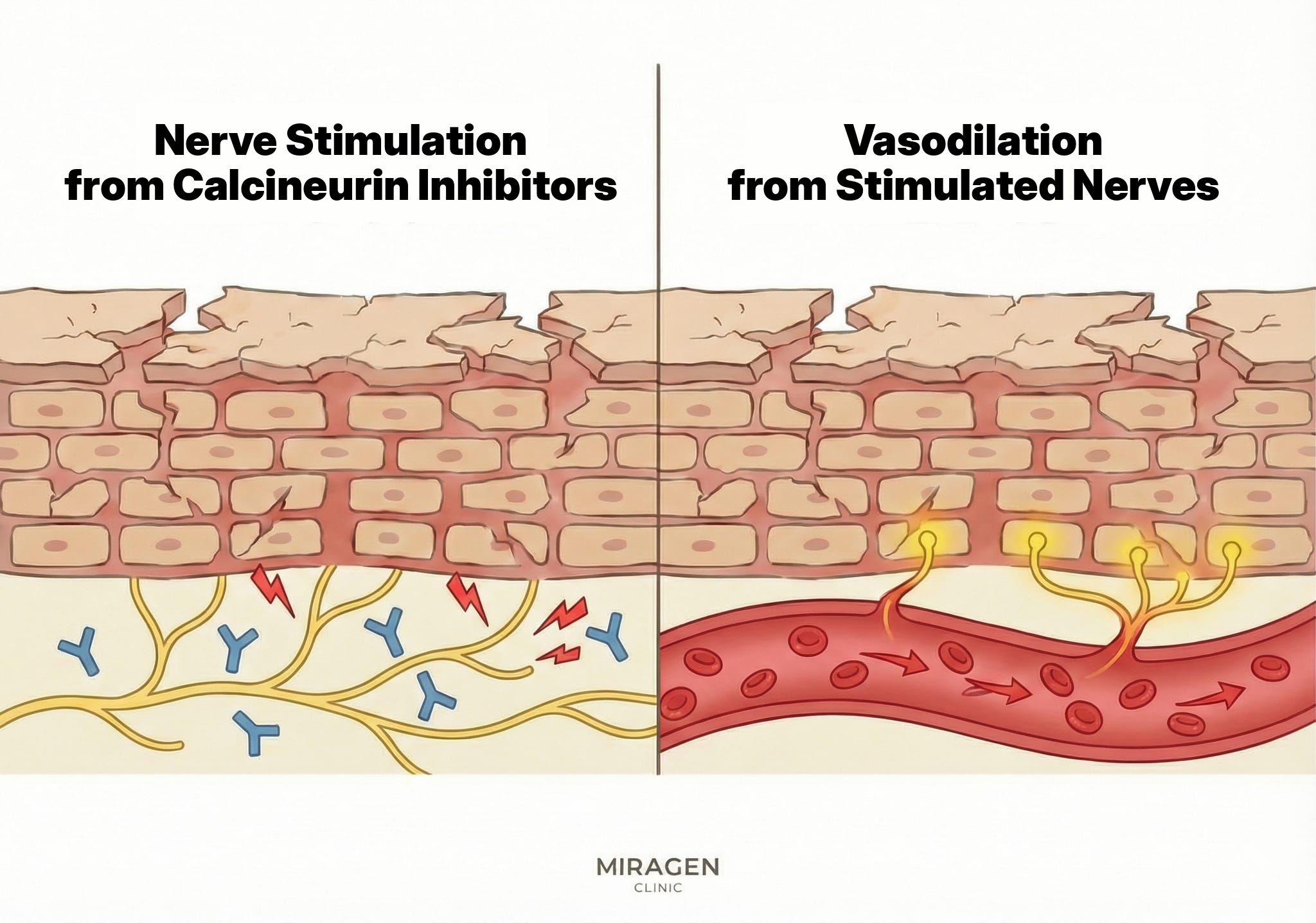
This reaction occurs because Protopic stimulates the heat sensors (TRPV1) of the skin’s sensory nerves, causing a sudden release of stored Substance P (which causes burning) and CGRP (which causes flushing). With repeated application, these are depleted and usually disappear within 1 week.6,7
However, the initial worsening of symptoms is not only uncomfortable but often causes anxiety, leading to discontinuation of use. Using an itching cream that suppresses heat sensors can alleviate initial discomfort.
In neurogenic rosacea, the release and depletion of Substance P and CGRP can also be a treatment goal. Since these neuropeptides cause burning and flushing, repeated application of Protopic to deplete them can alleviate symptoms.
7. It can cause contact dermatitis
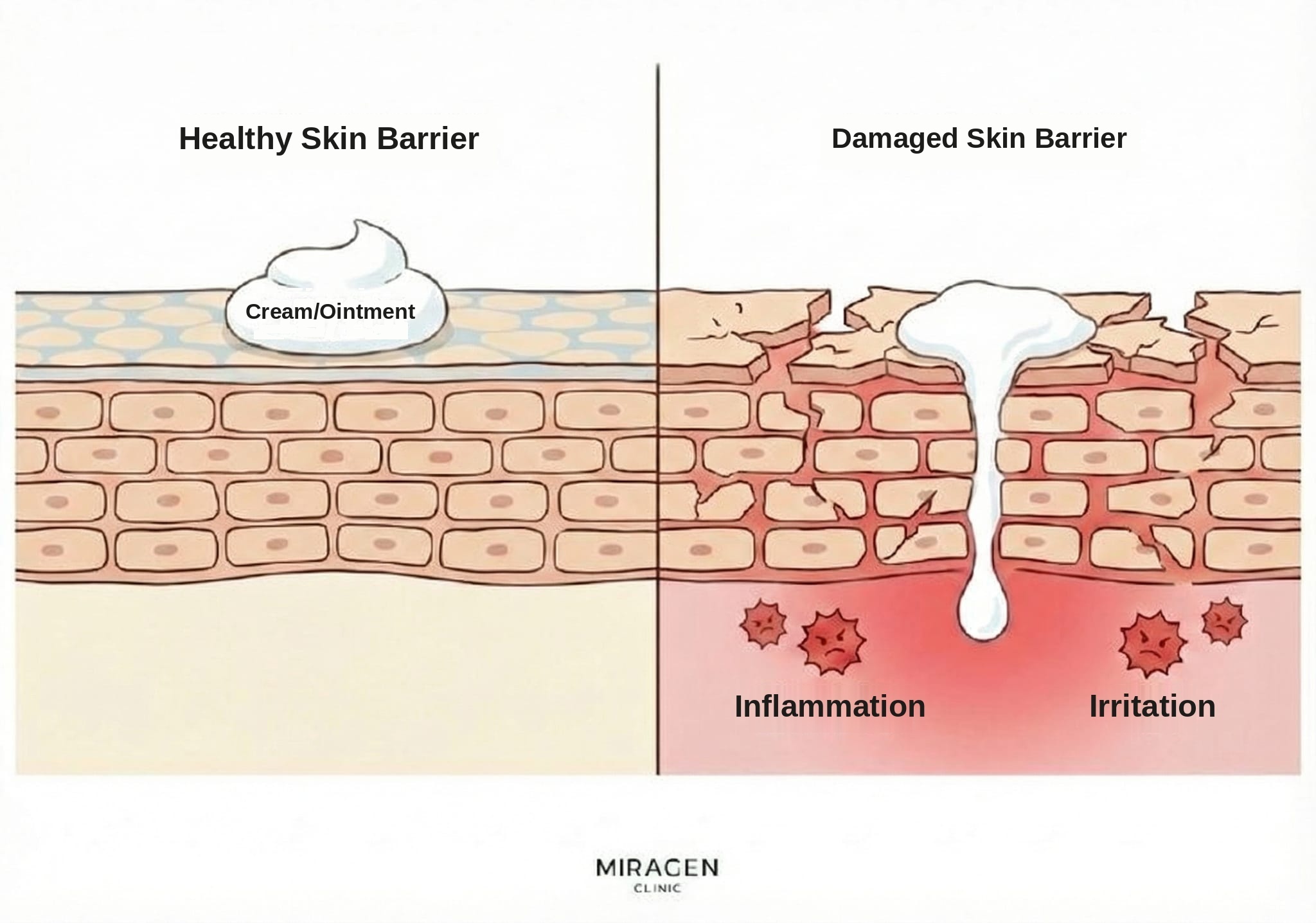
If the skin barrier is severely compromised, Protopic can be excessively absorbed, leading to contact dermatitis.
Pre-screening using patch testing
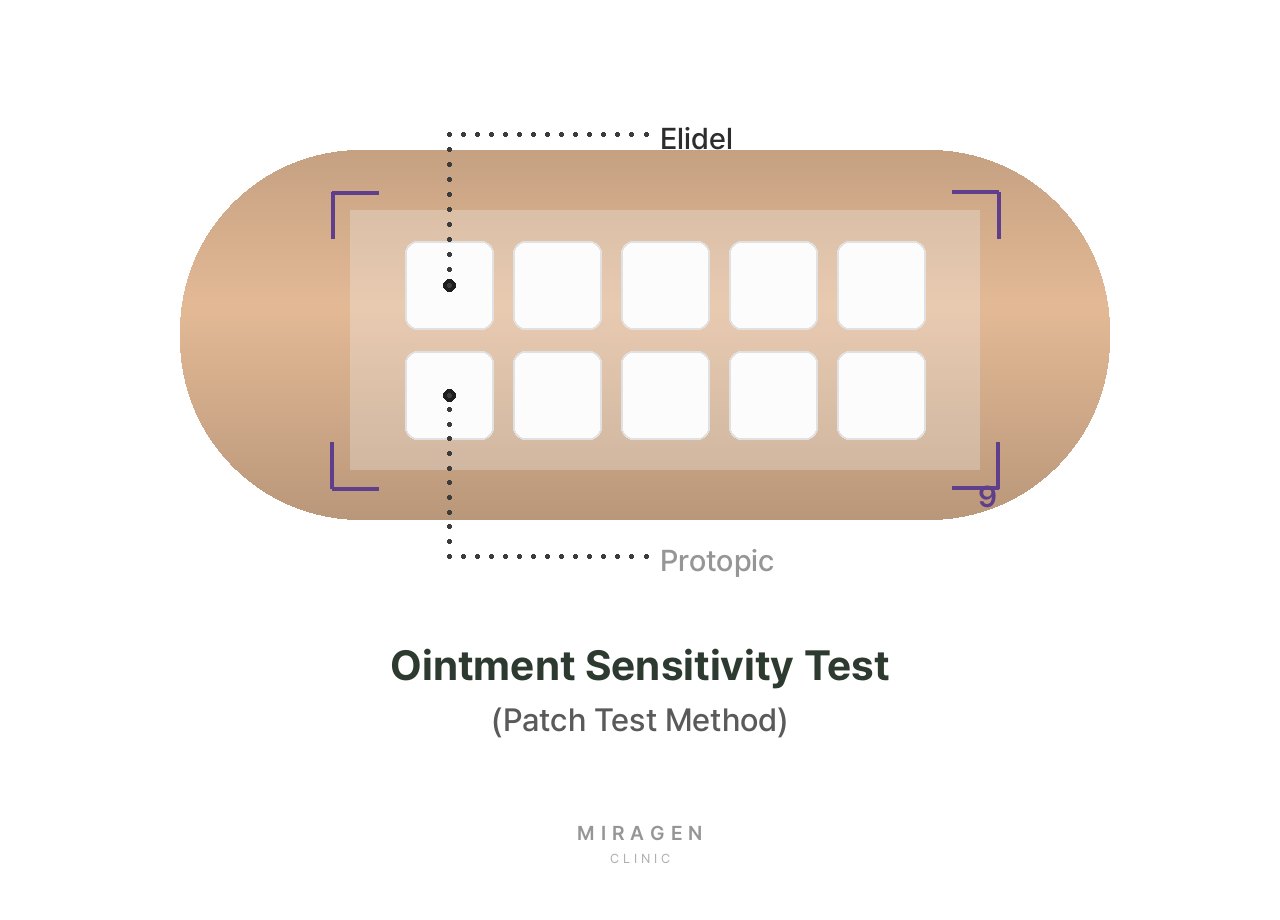
If you are concerned about contact dermatitis, you can pre-check your sensitivity with a patch test. You can find more details on the Patch Test page.
Distinguishing between normal reaction and contact dermatitis
It is difficult to distinguish whether the burning, itching, and worsening of redness that appear early in use after a single application are normal reactions or contact dermatitis.
If symptoms do not gradually decrease after at least 3 consecutive days of application, contact dermatitis should be suspected. In this case, discontinue use and seek medical attention.
8. How to Use
- Apply a thin layer to the affected area once in the evening.
- If you have an itching cream, apply it whenever you feel burning or itching.
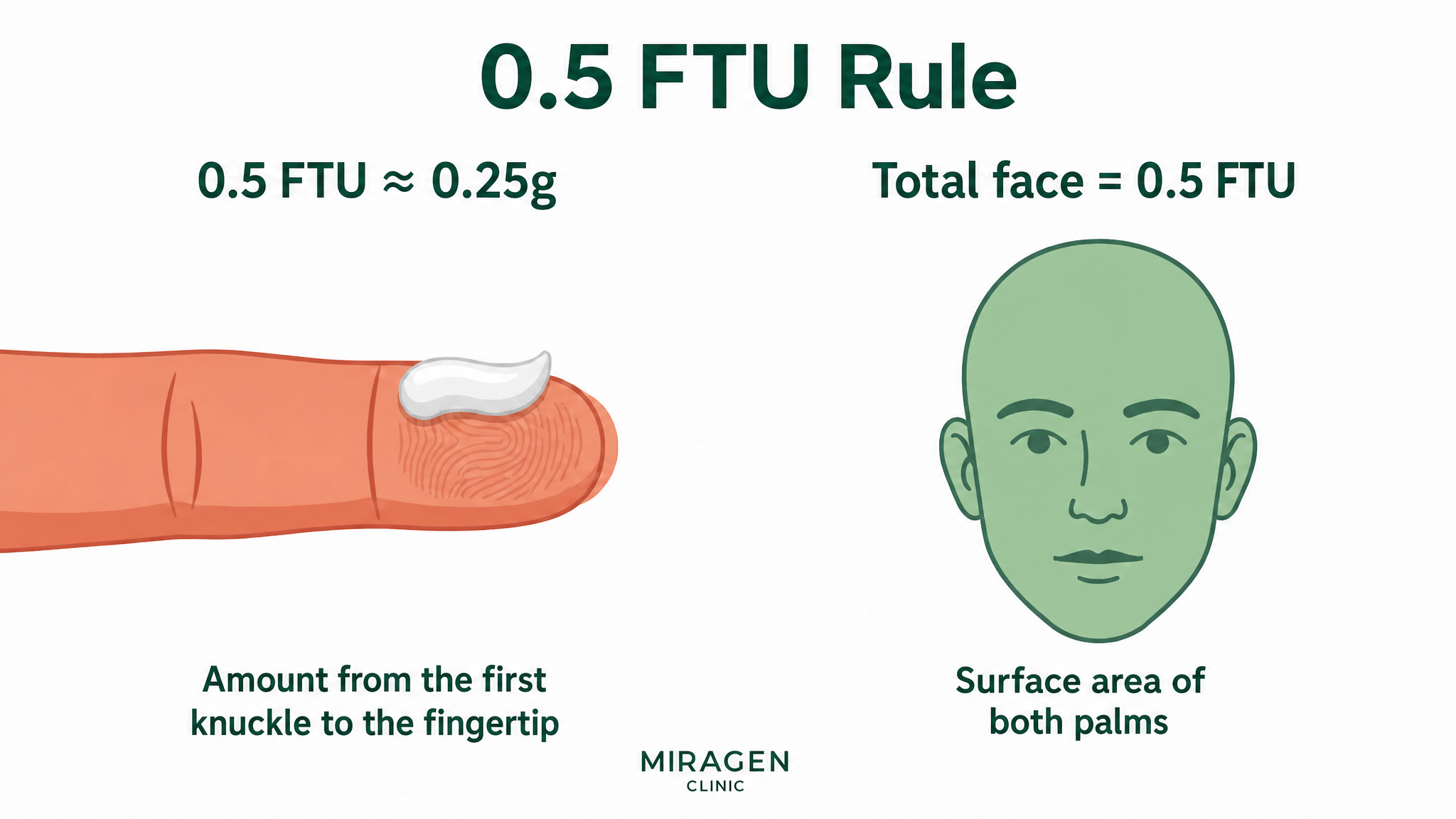
The amount to apply is based on the FTU (Finger-Tip Unit). The amount squeezed out to the length of an adult’s index finger from the tip to the first crease is 1 FTU, which is approximately 0.5g. 0.5 FTU is sufficient for the entire face area.
Once symptoms improve, do not stop immediately, but maintain by gradually widening the interval weekly. For the first week, apply every other day; for the next week, every three days; for the week after that, every four days — reduce it in this manner.
9. Long-term Use and Safety
Some people who are prescribed Protopic become anxious after seeing the phrase ‘risk of lymphoma’ in the instructions. This was a black box warning attached by the FDA in 2006 based solely on theoretical possibility.
Since then, nearly 20 years of large-scale follow-up studies have found no significant causal relationship between Protopic use and the occurrence of lymphoma or skin cancer.8
And since it does not weaken the skin barrier like steroids, long-term use is possible.
10. Conclusion
The core of dermatitis treatment is restoring the barrier, but in some cases, inflammation must be controlled first. While steroids quickly and effectively suppress inflammation, they can weaken the barrier. In such cases, Protopic can be considered as an alternative.
The biggest drawback of Protopic, the initial burning sensation, can be alleviated by using an itching cream concurrently. If you are concerned about contact dermatitis, a patch test can be performed before use.
References
- Lim SH, Kim EJ, Lee CH, et al. A Lipid Mixture Enriched by Ceramide NP with Fatty Acids of Diverse Chain Lengths Contributes to Restore the Skin Barrier Function Impaired by Topical Corticosteroid. Skin Pharmacol Physiol. 2022;35(2):112-123.
- Kolbe L, Kligman AM, Schreiner V, et al. Corticosteroid-induced atrophy and barrier impairment measured by non-invasive methods in human skin. Skin Res Technol. 2001;7(2):73-7.
- Paller AS, Lebwohl M, Fleischer AB Jr, et al. Tacrolimus ointment is more effective than pimecrolimus cream with a similar safety profile in the treatment of atopic dermatitis: results from 3 randomized, comparative studies. J Am Acad Dermatol. 2005;52(5):810-22.
- Zheng T, Yuan J, Xia W. Efficacy and Safety of Tacrolimus versus Pimecrolimus for the Treatment of Atopic Dermatitis in Children: A Network Meta-Analysis. Dermatol Ther. 2015;28(5):292-9.
- Cury Martins J, Martins C, Aoki V, et al. Topical tacrolimus for atopic dermatitis. Cochrane Database Syst Rev. 2015;(7):CD009864.
- Seo SR, Lee SG, Lee HJ, Yoon MS, Kim DH. Disrupted Skin Barrier is Associated with Burning Sensation after Topical Tacrolimus Application in Atopic Dermatitis. Acta Derm Venereol. 2017;97(8):957-958.
- Ständer S, Ständer H, Seeliger S, Luger TA, Steinhoff M. Topical pimecrolimus and tacrolimus transiently induce neuropeptide release and mast cell degranulation in murine skin. Br J Dermatol. 2007;156(5):1020-6.
- Castellsague J, Kuiper JG, Pottegård A, et al. Long-Term Risk of Skin Cancer and Lymphoma in Users of Topical Tacrolimus and Pimecrolimus: Final Results from the Cohort Study JOELLE. Dermatol Ther. 2022;12(2):443-458.
Frequently Asked Questions
How is it different from steroid ointments?
Steroid ointments quickly suppress inflammation, but long-term use can weaken the skin barrier. Protopic is a non-steroidal calcineurin inhibitor that does not weaken the skin barrier.
How is it different from Elidel?
Protopic has a higher anti-inflammatory potency, and its ointment formulation contains fewer additives, leading to a lower risk of contact dermatitis. Elidel, being a cream, has a more pleasant feel and can be an alternative if the sticky ointment formulation is uncomfortable.
Which should I use, 0.1% or 0.03%?
Clinical data show that 0.1% is more effective, and the difference in side effects is not significant.
How can I tell if the burning sensation is normal?
If symptoms gradually decrease over 3 days of use, it is normal. Conversely, if they worsen over 3 days, it may be contact dermatitis, and you should discontinue use and seek medical attention. If oozing occurs, stop immediately without waiting 3 days.
What if I’m concerned about contact dermatitis?
Pre-checking sensitivity with a patch test before use can be helpful.
Can Protopic be used long-term?
It does not weaken the skin barrier like steroids, allowing for long-term use as needed. Although the FDA issued a black box warning in 2006, subsequent long-term follow-up studies have found no significant causal relationship between topical use and lymphoma or skin cancer.


