Conditions
Acne | The Biggest Variable in Dermatitis Treatment
Table of Contents
When acne accompanies chronic dermatitis, it is a variable that significantly influences the treatment strategy.
We will guide you on why acne occurs, why it is particularly important in the context of dermatitis treatment, and how to manage it.
1. Causes of Acne
In normal skin, sebum is naturally discharged outward through the pores.
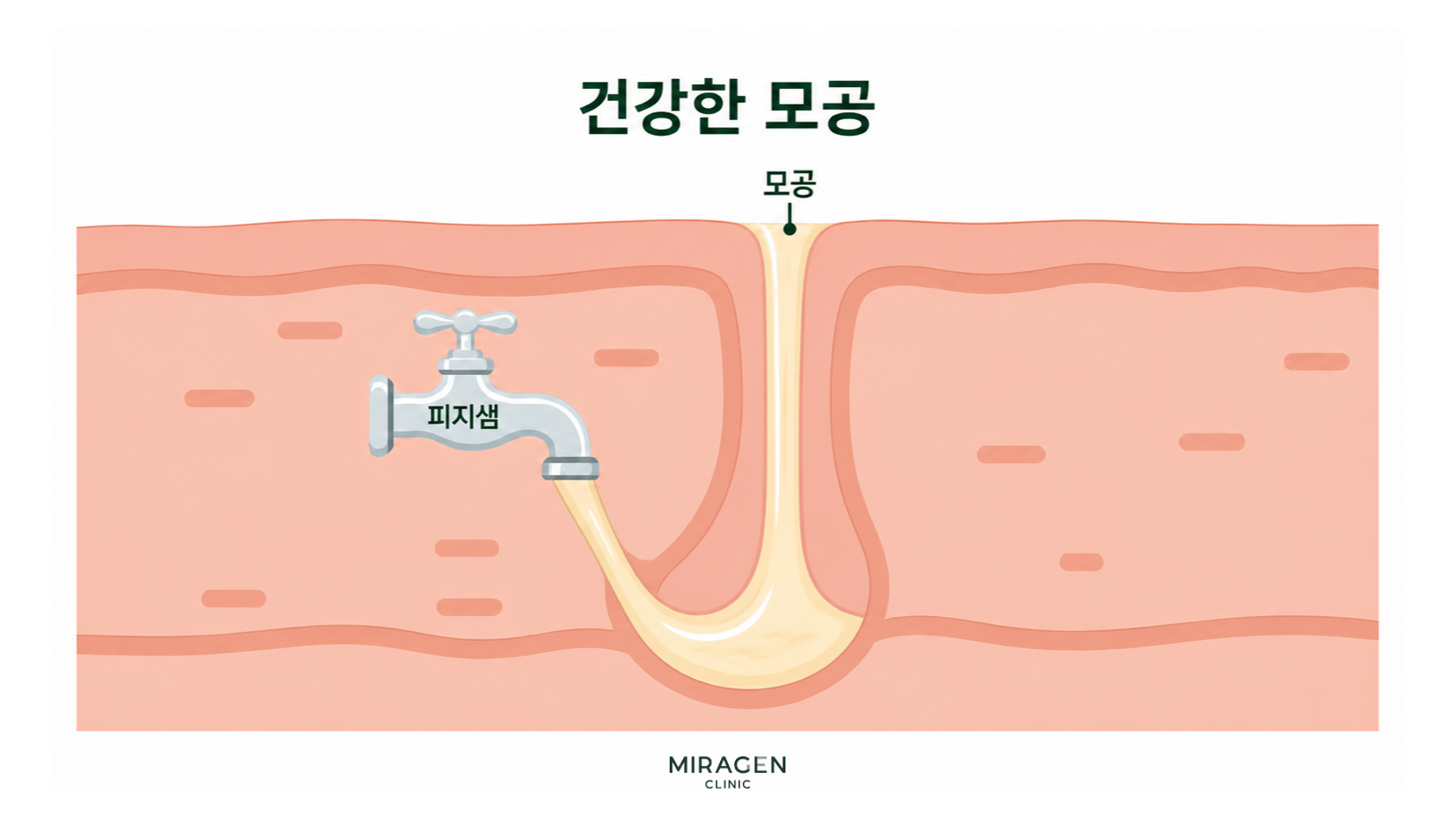
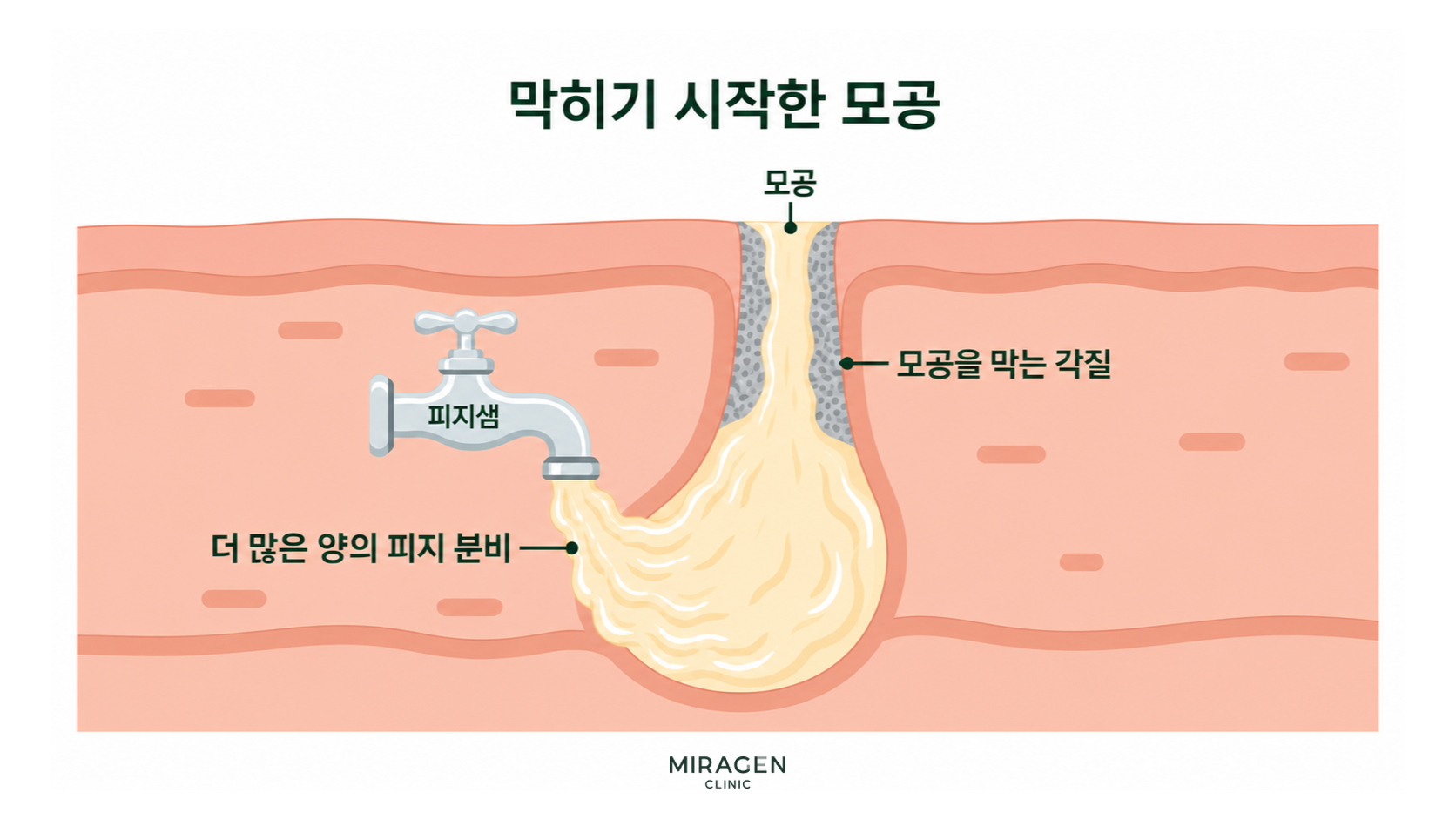
However, when dead skin cells begin to block the pore entrance, sebum cannot escape and begins to accumulate. This stage is known as a comedo (whitehead).
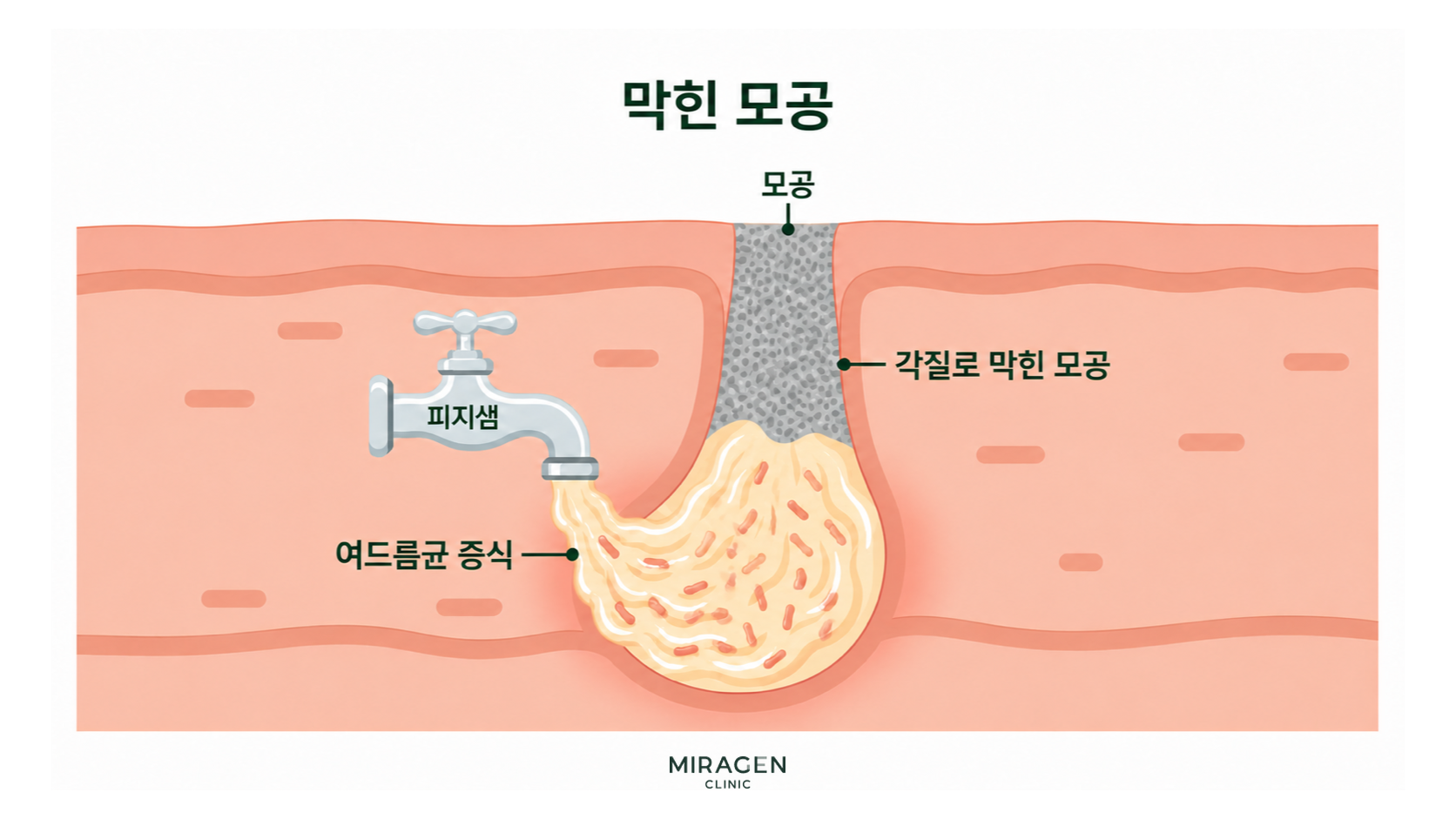
If the pore becomes completely blocked, acne bacteria proliferate, leading to inflammation. This can result in red papules, pustules, and in severe cases, nodules or cysts.
2. Why It Is a Variable in Dermatitis Treatment
The core of atopic dermatitis, rosacea, and seborrheic dermatitis is skin barrier damage. When the barrier is weak, the skin is vulnerable to external irritation, so protecting the skin with a moisturizer is the foundation of treatment.
However, the higher the moisturizing power of a moisturizer, the more it tends to clog pores. For typical acne patients, using formulations like lotions or gels works well, but these formulations generally contain more preservatives than highly moisturizing formulations and can be irritating. Moreover, formulations with lower moisturizing power also provide a weaker protective barrier.
Detailed information about moisturizers can be found on the MD Cream page.
The choice of anti-inflammatory ointment also changes. For dermatitis, Protopic is usually considered first, but when acne is present, Elidel is given higher priority. This is because Protopic can clog pores and worsen acne. While Elidel has slightly lower anti-inflammatory effects than Protopic and, in my experience, carries a higher risk of contact dermatitis, it can be a more suitable choice when acne is present.
3. Deciding Whether to Treat Acne | Wood’s Lamp Examination
It is impossible to accurately determine how clogged the pores are with the naked eye.
A Wood’s lamp examination reveals accumulated sebum and byproducts of acne-causing bacteria inside the pores as fluorescence, allowing for a more objective assessment of whether acne treatment is necessary.
Detailed information can be found on the Wood’s Lamp Examination page.

4. Deciding When to Treat Acne | TEWL Test
The skin barrier can weaken during acne treatment.
Therefore, we check the condition of the skin barrier with a TEWL test and only begin acne treatment once the barrier’s condition is within the normal range.
Detailed information can be found on the TEWL Test page.
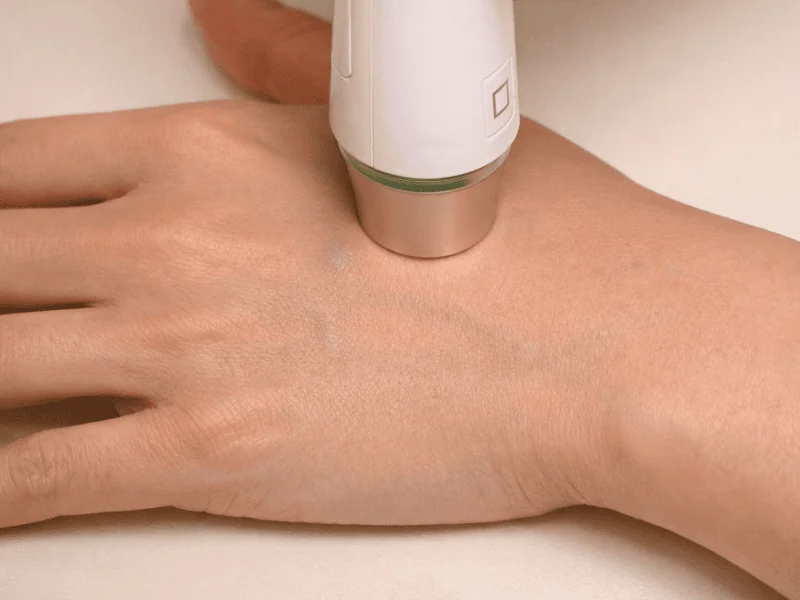
5. Acne Treatment
The core of acne treatment is retinoids, a vitamin A derivative.
Retinoids alleviate clogged pores and resulting acne by suppressing excessive dead skin cells and sebum production.
However, since the skin barrier can weaken when using retinoids, acne treatment for patients who have experienced dermatitis must be approached with great caution.1
Retinoids are available as oral medications and topical creams. While the mechanism is almost the same, the delivery route differs, so the order is determined based on the condition of the pores.
- Isotretinoin (oral retinoid) — Acts directly from inside the pores through the bloodstream. Since it can reach the necessary areas even if pores are clogged, it is recommended to use this first when pores are significantly blocked.2
- Differin Gel (topical retinoid) — Works by being absorbed from the skin surface into the pores. Since it needs open pores to reach the necessary areas effectively, it is recommended to use it after clearing the pores with Isotretinoin if they are heavily clogged.
In cases where pores are not significantly clogged, treatment may start with Differin Gel from the beginning. The starting point is decided based on the Wood’s lamp examination results.
6. Conclusion
Acne is one of the most significant variables that make dermatitis treatment difficult, as it restricts the use of topical agents in moisturizer and ointment formulations.
A Wood’s lamp examination is used to determine if acne treatment is necessary, and a TEWL test is used to confirm if the skin is in a condition where acne treatment is possible.
Based on the test results, treatment can be administered by appropriately combining medications such as Isotretinoin and Differin Gel.
References
- Yoon J, Bhatt LR, Yoo HJ, et al. Retinoid Induces the Degradation of Corneodesmosomes and Downregulation of Corneodesmosomal Cadherins: Implications on the Mechanism of Retinoid-induced Desquamation. Korean J Invest Dermatol. 2011;18(3):112-118.
- Layton AM. The use of isotretinoin in acne. Dermatoendocrinol. 2009;1(3):162-169.
Frequently Asked Questions
Do retinoids irritate the skin?
Retinoids can weaken the skin barrier during use. Therefore, we first check the barrier status and adjust the timing of introduction and dosage accordingly.
Can acne be treated even with dermatitis?
Yes, it is possible. However, starting acne treatment when the skin barrier is weak can cause significant irritation, so the timing of treatment is determined after first checking the barrier condition with a TEWL test.
Does using moisturizer worsen acne?
Yes, it can. In particular, highly moisturizing formulations can clog pores and worsen acne. However, lighter formulations may not adequately protect the skin barrier, so we select the moisturizer formulation after examining both the dermatitis and the pore condition.
What is the difference between a Wood’s lamp examination and a TEWL test?
A Wood’s lamp examination is used to check for clogged pores and determine if acne treatment is needed. A TEWL test is used to assess the skin barrier condition and determine if it’s an appropriate time to begin acne treatment.
How are Isotretinoin and Differin Gel chosen?
If pores are heavily clogged, Isotretinoin is used first. If pores are not significantly clogged, treatment may begin with Differin Gel. The treatment order is determined based on the results of the Wood’s lamp examination.


