Tests
Patch Test | Testing for Contact Dermatitis Triggers such as Moisturizers and Ointments
Table of Contents
1. What is a Patch Test?
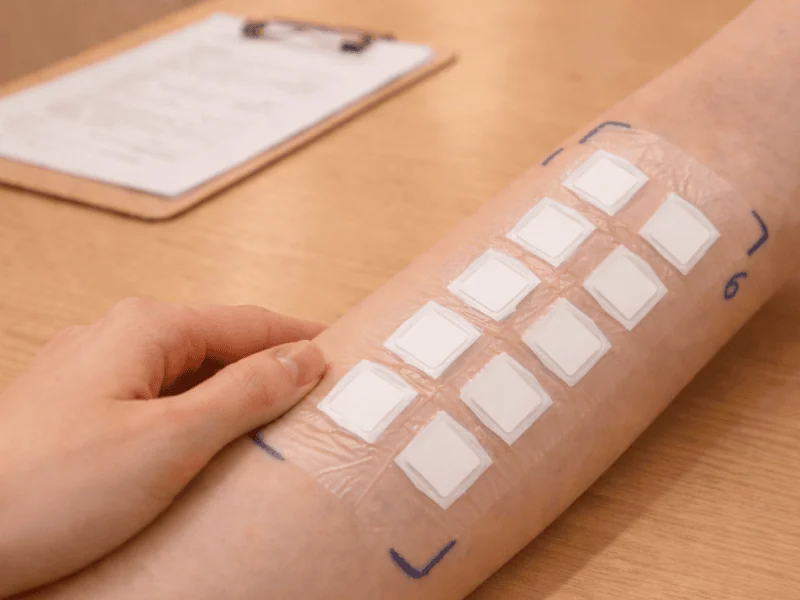
A Patch Test is a diagnostic procedure used to identify the causes of delayed allergic reactions (contact dermatitis) that occur when substances come into direct contact with the skin. Unlike the MAST test, which looks at immediate immune responses (IgE) in the blood, a patch test involves keeping substances in contact with the skin for 48 hours to check for delayed reactions.1
2. Why perform a Patch Test?
When the skin barrier is weakened, products applied to the skin—such as moisturizers, ointments, and cosmetics—can penetrate the skin and cause inflammation.2 The problem is that these delayed reactions appear 1 to 2 days later rather than immediately after application, making it difficult for patients to identify which product is causing the issue on their own.
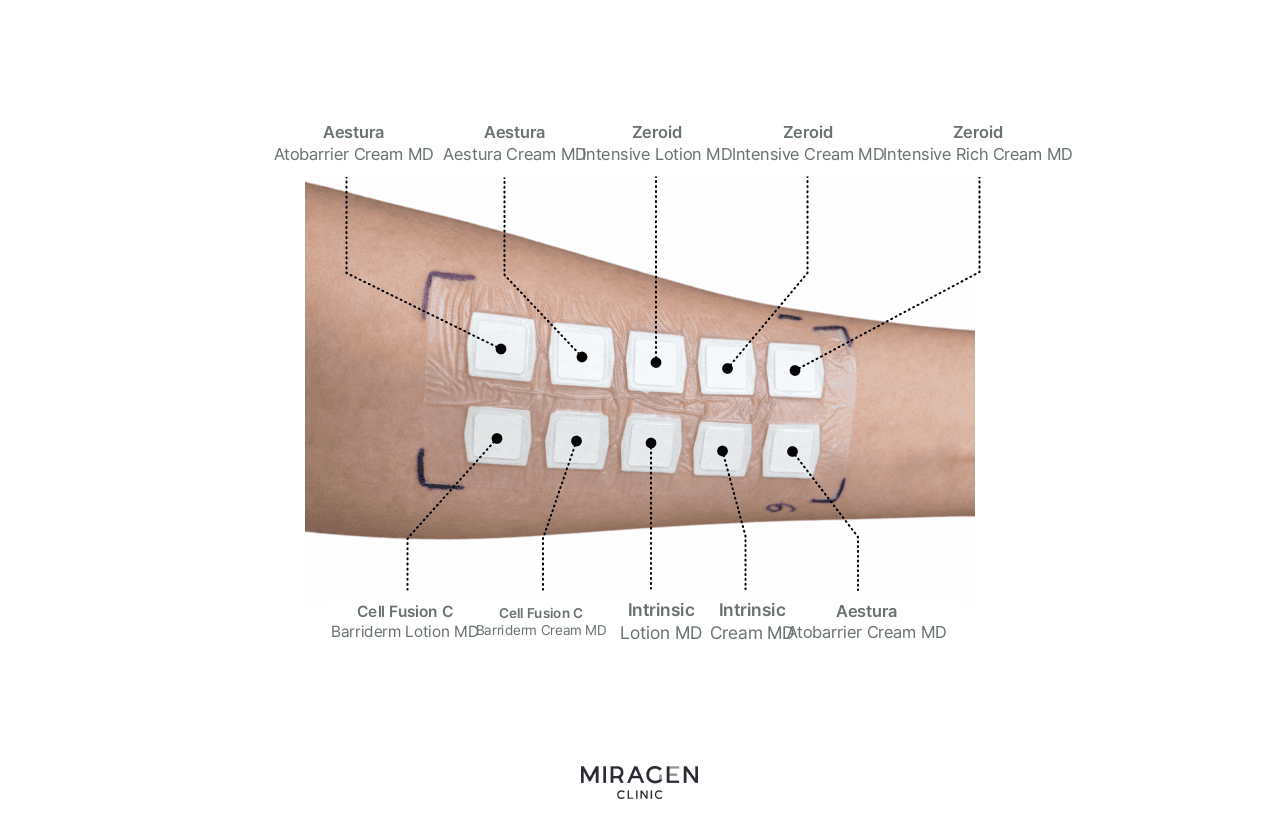
The patch test is performed to pre-confirm sensitivity to prescribed ointments (such as Protopic, Elidel, Soolantra, etc.) and MD cream, allowing us to prescribe products with a lower risk of issues.3
Tip: When the skin barrier is weak, even products you normally use without issue can cause problems. A patch test helps identify “what is currently least likely to cause issues for my skin.”
3. Testing Process
The total testing time is 72 hours. Light showering is permitted during this period, but you must be careful not to get the inside of the patches wet or let the markings fade.
3.1 Day 1 — Application
The substances to be tested are applied to patches. You may return home immediately after application.
3.2 Day 3 (After 48 Hours) — Initial Reading
Remove and discard the patch yourself. Thirty minutes after removal, take a photo ensuring that shadows do not obscure the test area and that the numbered markings are clearly visible.
3.3 Day 4 (After 72 Hours) — Second Reading
Take another photo 24 hours after patch removal and send it via KakaoTalk along with the photo taken 24 hours prior.
3.4 Precautions During the Testing Period
- Showering: Light showering is possible, but please ensure the inside of the patches does not get wet and the markings do not fade.
- Exercise: Avoid strenuous exercise, as excessive sweating may cause the patches to fall off or lead to inaccurate results.
- Do Not Scratch: Scratching or rubbing the patch area can cause a reaction due to irritation, which may skew the results.
4. How to Read Results
The degree of reaction for each item is indicated as follows:
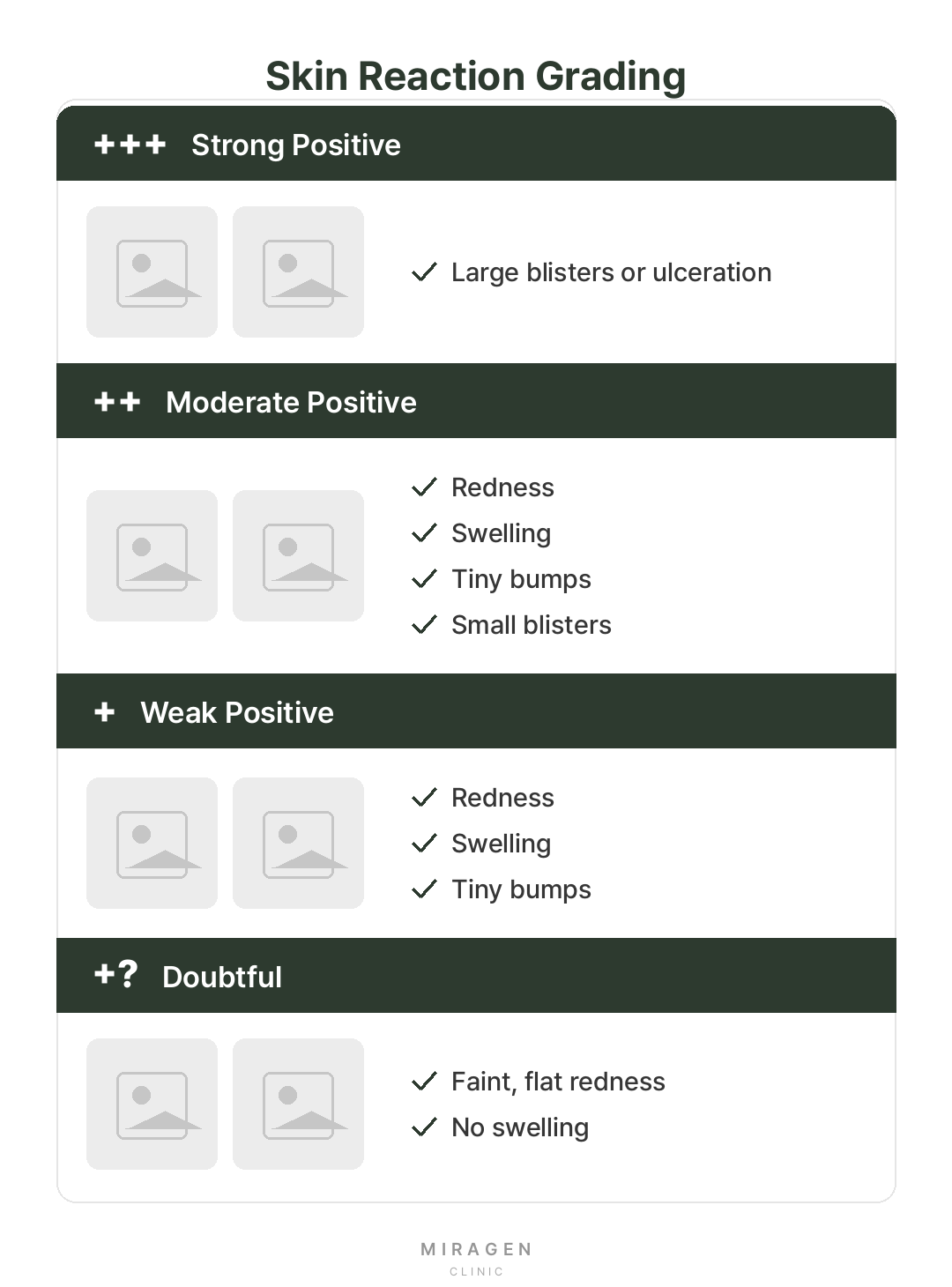
Tip: While it is advisable to avoid substances that show a positive reaction, not all positive reactions may be the cause of your current symptoms. Therefore, it is important to interpret the results with a medical professional.4
5. How does it differ from a MAST test?
- MAST Test (Acute): A blood test that measures IgE antibodies. It identifies the cause of immediate (minutes to hours) allergic reactions. Targets include inhalant allergens (mites, pollen) and food allergens.
- Patch Test (Delayed): A skin application test that checks for T-cell responses. It identifies the cause of delayed (24 to 72 hours) contact dermatitis. Targets include moisturizers and ointments.
Since the two tests examine different immune pathways, performing both helps in understanding the complete clinical picture.
6. How Our Clinic Utilizes This Test
We utilize the patch test not merely as a simple allergy screening, but as a core tool for establishing a treatment plan.
- Verifying Ointment Safety: We check sensitivity to ointments like Protopic, Elidel, and Soolantra before prescribing them. This is because these ointments can cause contact dermatitis when the skin barrier is compromised.
- Moisturizer Matching: We check reactions to various MD creams and assess the degree of pore clogging using a Wood’s lamp examination before providing appropriate MD cream samples.5
References
- Johansen JD, Aalto-Korte K, Agner T, et al. European Society of Contact Dermatitis guideline for diagnostic patch testing – recommendations on best practice. Contact Dermatitis. 2015;73(4):195-221.
- Rundle CW, Bergman D, Goldenberg A, Jacob SE. Contact dermatitis considerations in atopic dermatitis. Clin Dermatol. 2017;35(4):367-374.
- Choi YJ, Byun JY, Choi YW, Roh JY, Choi HY. Analysis of Positive Patch Test Allergens in Allergic Contact Dermatitis Patients with Atopic Dermatitis. Ann Dermatol. 2023;35(4):303-312.
- Uyesugi BA, Sheehan MP. Patch Testing Pearls. Clin Rev Allergy Immunol. 2019;56(1):110-118.
- Ryczaj K, Dumycz K, Spiewak R, Feleszko W. Contact allergens in moisturizers in preventative emollient therapy – A systematic review. Clin Transl Allergy. 2022;12(6):e12150.
Frequently Asked Questions
How much does the test cost?
For a 20-item panel, the out-of-pocket cost is approximately 30,000 KRW. If performed due to dermatitis, it is eligible for private health insurance reimbursement.
Can I not wash for 48 hours?
You can wash because we use waterproof patches. However, please avoid public baths or saunas, and be careful not to let water enter the patches or let the markings fade.
Is the test painful?
There is no pain. However, itching or stinging may occur at sites where a positive reaction develops.
Can I take the test while using steroids or immunosuppressants?
Oral steroids or immunosuppressants can suppress test results, so it is recommended to discontinue them 1 to 2 weeks before the test if possible.
I feel like my moisturizer doesn’t suit me; can I check this with a patch test?
Yes, at our clinic, we can include the moisturizers you are currently using or planning to use in the patch test items to check for sensitivity.
Do I need to do both the MAST test and the patch test?
The MAST test checks for immediate allergic reactions (IgE), while the patch test checks for delayed contact reactions (T-cells). Since the two tests examine different immune pathways, performing both helps in understanding the complete clinical picture.


