When I prescribe Elidel cream to patients, it is quite common to receive a concerned call the very next day saying, “My face feels like it’s burning.”
The problem is that it can be difficult for patients to distinguish whether this burning sensation is simply an initial adaptation response or a sign that something is wrong.
To put it simply, most burning sensations are normal, temporary reactions. However, in rare cases, they may indicate contact dermatitis requiring immediate discontinuation. Please review the table below first.
| Category | Safe to Continue Use | Discontinue Immediately |
|---|---|---|
| Primary Symptoms | Burning · Heat sensation · Mild itching | Severe itching · Swelling · Oozing · Blisters |
| Onset Timing | Within minutes of application | Hours to a day after application, progressively worsening |
| Progress After 3 Consecutive Days | Gradually diminishes | Remains similar or worsens |
| Management | Refrigerate before application, apply thinly | Discontinue immediately → Consult physician |
Below, I will explain why this difference occurs and how to respond appropriately.
Mechanism of Action of Elidel Cream
Elidel (pimecrolimus) cream is a non-steroidal anti-inflammatory cream in the calcineurin inhibitor class. It selectively acts on T cells and mast cells to suppress the production of inflammatory cytokines (IL-2, IL-4, TNF-α, etc.). Unlike steroids, it does not weaken the skin barrier, making it advantageous for long-term use.
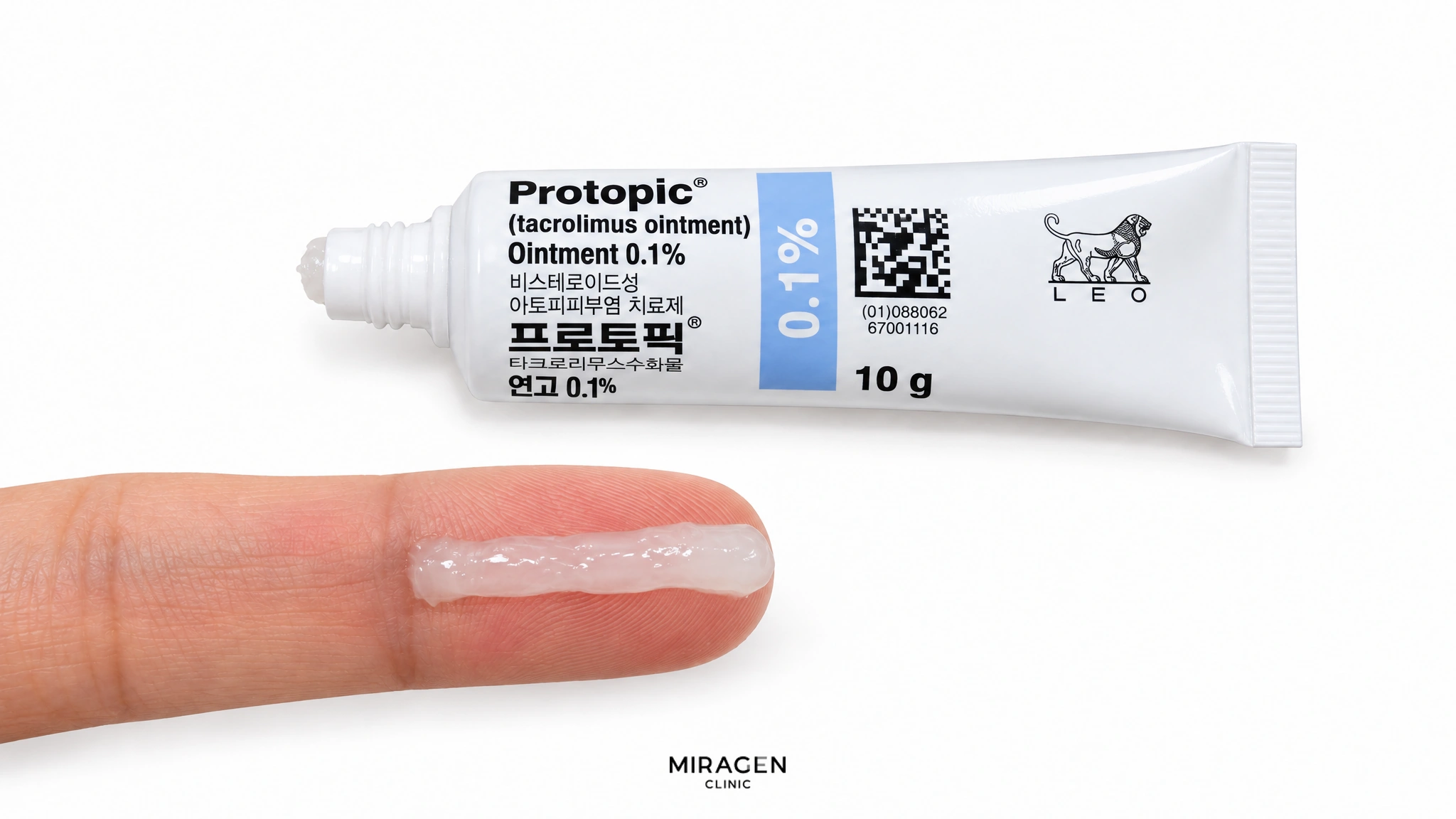
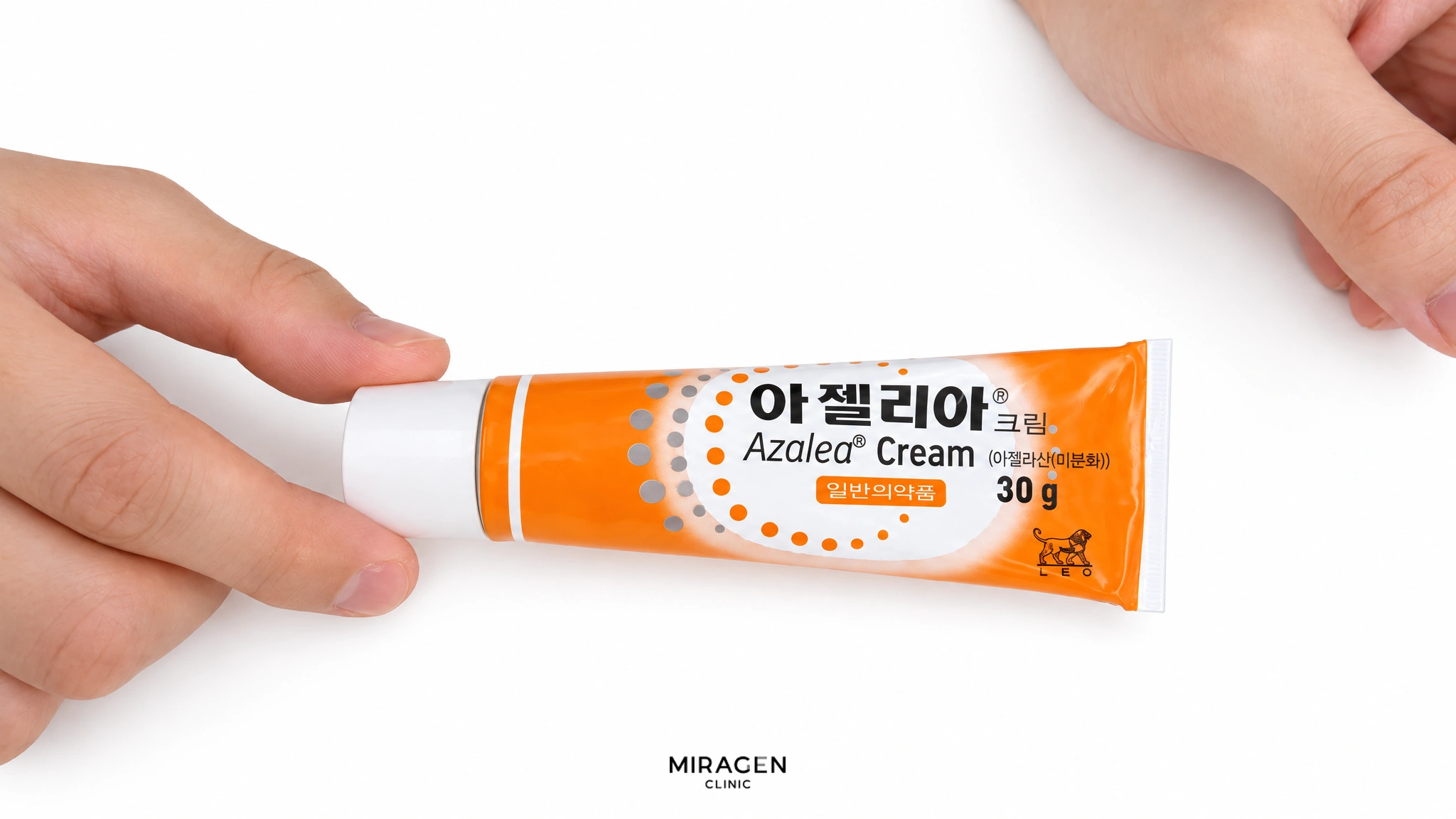
Many people refer to it as ‘Elidel ointment’, but it is actually a cream formulation, not a greasy ointment. This formulation difference results in different texture and excipient composition compared to Protopic ointment.
For detailed information on how Elidel cream suppresses inflammation and when it is prescribed, please refer to the Elidel guide.
Elidel Cream Side Effects vs. Normal Initial Irritation
In practice, many patients who are prescribed Elidel cream discontinue use midway, saying “My face feels like it’s burning.” This initial irritation is the biggest barrier to using Elidel cream. In actual clinical trials, approximately 26% of adult patients experienced burning sensation at the application site.1
The issue is not simply discomfort or stinging. Many patients, upon feeling this burning sensation, discontinue use on their own due to anxiety, wondering “Is the medication not suitable for me?” or “Is the inflammation getting worse?” However, the important point is that normal initial adaptation responses and actual adverse reactions requiring attention present differently. Therefore, when irritation occurs, rather than discontinuing immediately, it is important to distinguish which reactions can be monitored and which require immediate discontinuation.
Normal Adaptation Response: TRPV1 Receptor Stimulation
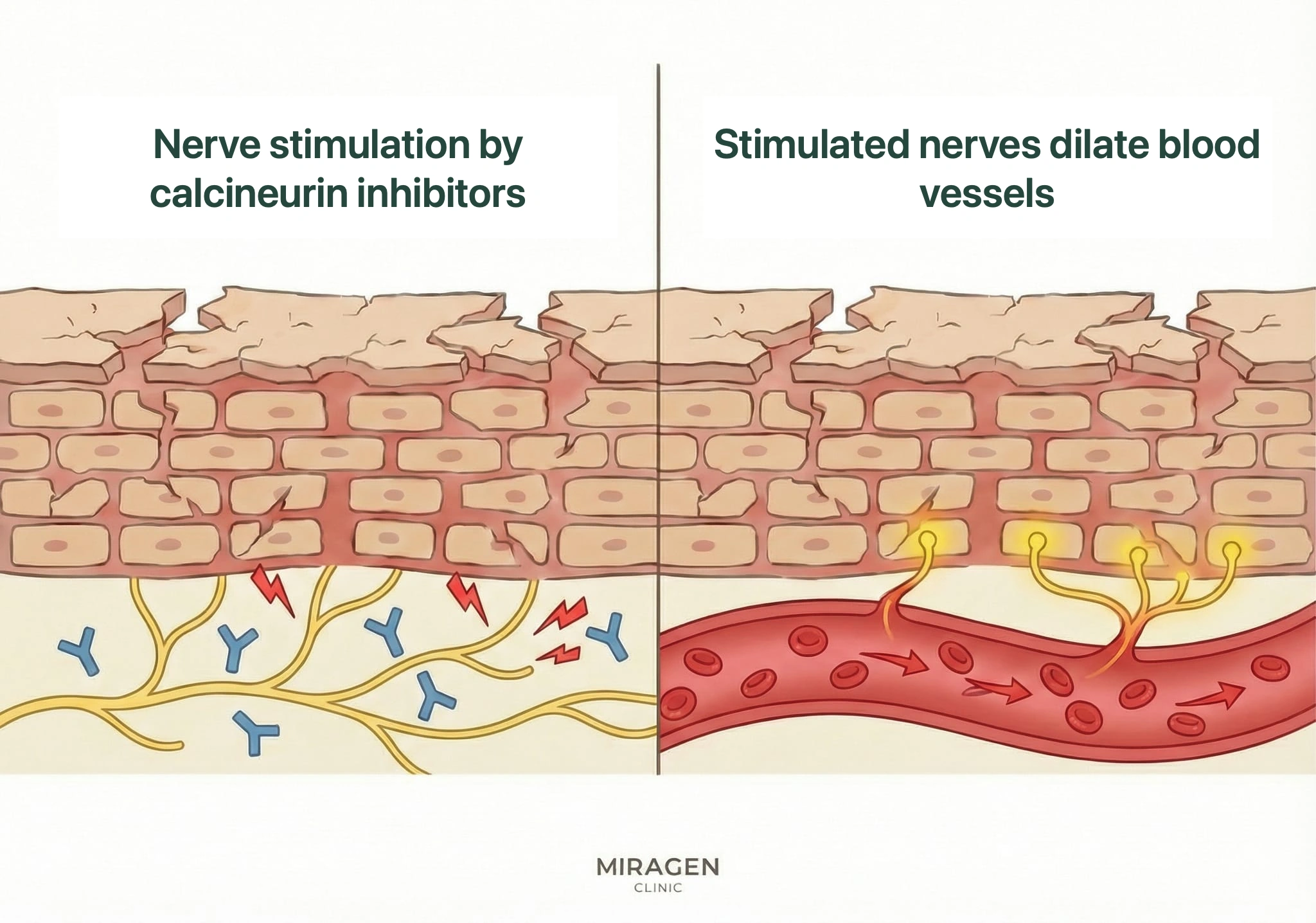
When Elidel cream is absorbed into the skin, it stimulates TRPV1 receptors on sensory nerve endings. During this process, neuropeptides such as substance P and CGRP are released, which can cause initial burning · heat sensation · itching.2
However, this initial irritation typically diminishes with repeated application.3 Therefore, the most reliable way to distinguish is to apply continuously for the first 3 days and observe whether the burning or itching decreases or worsens.
These initial discomforts can be minimized by refrigerating Elidel before application during the first 3 days. The cold temperature raises the activation threshold of TRPV1, reducing the release of neuropeptides (substance P · CGRP).4
True Side Effect: Contact Dermatitis
The real problem occurs when the initial discomfort is not due to TRPV1 stimulation, but rather allergic contact dermatitis caused by excipients (oleyl alcohol, cetyl alcohol, propylene glycol, benzyl alcohol, etc.). In particular, benzyl alcohol, a preservative included in Elidel cream, is a substance that the American Contact Dermatitis Society designated as the Allergen of the Year for 2026.5,6 In cases of contact dermatitis, use must be discontinued immediately.
- Symptoms: Rather than simple burning, severe itching, swelling (edema), oozing, and millet-like blisters are more prominent.
- Course: Symptoms progressively worsen with continued application. This is the opposite of a normal adaptation response.
- Confirmation Method: The most reliable method is to apply continuously for 3 days and monitor the progression. If burning or itching gradually decreases, it is likely an adaptation response; if symptoms worsen with continued use, contact dermatitis should be suspected.
If you have frequently reacted to moisturizers or topical agents in the past, it is helpful to screen sensitivity in advance with a patch test before prescription to assess the possibility of contact dermatitis.
Protopic, which has a relatively simpler excipient composition in ointment form, may be an alternative. The differences between the two medications are detailed in the Protopic guide.

Case of contact dermatitis caused by Elidel
Frequently Asked Questions
Is it true that long-term use of Elidel ointment can cause cancer (such as lymphoma)?
The U.S. FDA previously issued a black box warning, but this was a conservative measure based on animal studies using very high doses of oral medication. Subsequently, the large-scale JOELLE cohort study from Denmark, Sweden, the United Kingdom, and the Netherlands found that the incidence of non-Hodgkin lymphoma, cutaneous T-cell lymphoma, and Hodgkin lymphoma among pimecrolimus users was lower than or equal to that of steroid users (Arana 2021). Using the appropriate amount as directed by a physician is safe.
Can I use it together with steroid ointment?
Yes, it is possible. When inflammation is very severe, a strategy of initially combining with steroids to quickly control the inflammation, then gradually reducing steroid frequency and maintaining treatment with Elidel is effective in actual clinical practice. For detailed information on steroid ointments, please refer to the steroid ointment potency guide.
Should I use Elidel ointment or Protopic ointment?
It depends on the skin area and inflammation severity. For areas with thin skin such as the face and neck, or for pediatric patients, Elidel with less irritation is suitable. On the other hand, for areas with thicker skin such as the trunk and limbs, or for chronically thickened (lichenified) lesions, Protopic, which has stronger efficacy, is more effective. Both medications should be prescribed after examining the skin condition.
After applying Elidel ointment, it itches and burns—can I keep using it?
You do not necessarily need to discontinue use. When you first apply Elidel ointment, sensory nerves may be stimulated, causing temporary burning · heat sensation · itching. What matters is whether symptoms gradually decrease or worsen when applied continuously for the first 3 days. If burning or itching gradually diminishes, it is likely a normal initial adaptation response. Conversely, if swelling, oozing, blisters develop, or itching progressively worsens, contact dermatitis is possible, and you should discontinue use and seek medical attention.
References
- Luger TA, Lahfa M, Fölster-Holst R, et al. Long-term safety and tolerability of pimecrolimus cream 1% and topical corticosteroids in adults with moderate to severe atopic dermatitis. J Dermatolog Treat. 2004;15(3):169-178.
- Ständer S, Ständer H, Seeliger S, et al. Topical pimecrolimus and tacrolimus transiently induce neuropeptide release and mast cell degranulation in murine skin. Br J Dermatol. 2007;156(5):1020-1026.
- Pereira U, Boulais N, Lebonvallet N, et al. Mechanisms of the sensory effects of tacrolimus on the skin. Br J Dermatol. 2010;163(1):70-77.
- Al-Khenaizan S. Practical tip: Precooling topical calcineurin inhibitors tube; reduces burning sensation. Dermatol Online J. 2010;16(4):16.
- Andersen KE, Broesby-Olsen S. Allergic contact dermatitis from oleyl alcohol in Elidel cream. Contact Dermatitis. 2006;55(6):354-356.
- Le NT, Wu PA. Benzyl Alcohol: Allergen of the Year 2026. Dermatitis. 2026;37(1):4-12.