

In dermatitis care, we quite often see patients whose dermatitis has become chronic or worsened due to overuse of topical steroid ointments.
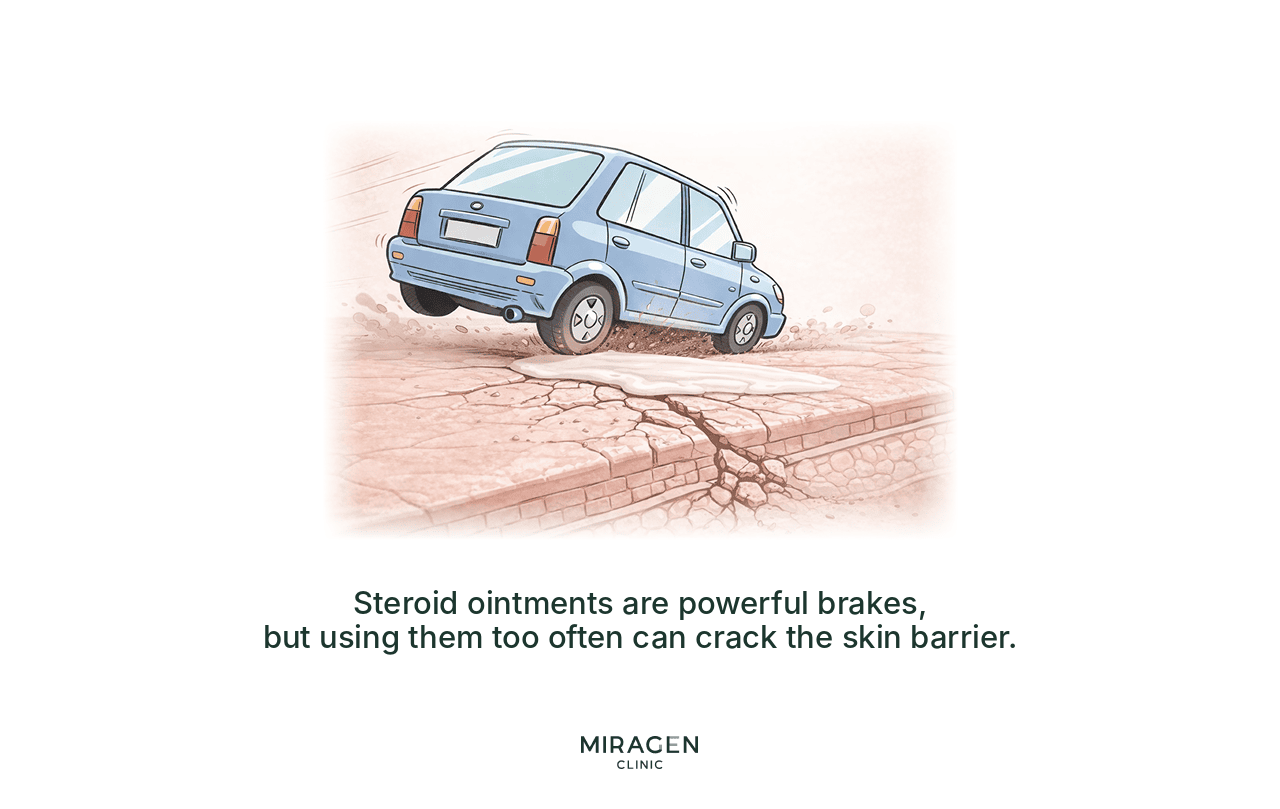
Topical steroid ointments are like a reliable “emergency brake.” Used in the right place at the right time, they are one of the best tools—but used incorrectly, they can harm your skin.
That is why it is important for patients to understand how to use them properly. However, much of the topical steroid ointment class information online is outdated, so we have organized the most up-to-date information as of 2026.
목차
2026 Topical Steroid Ointment Table
Topical steroid potency is divided from Class 1 (strongest) to Class 7 (mildest).1
If you use a strong steroid for too long, side effects such as thinning of the skin (skin atrophy) or enlarged blood vessels (telangiectasia) may occur,2 whereas if you use one that is too mild, the inflammation may not be controlled and you may continue to suffer.
Because use differs by formulation, we organized the table by ointment, cream, lotion, and solution/gel.
| Formulation | Features | Use |
|---|---|---|
| Ointment | Sticky but highly absorbent | Suitable for thick, callused areas such as the palms and soles |
| Cream | Good moisturizing effect; does not clog pores | Suitable for the face |
| Lotion | Slight moisturizing effect; thin and easy to spread | Suitable when the affected area is large |
| Gel · Solution | Non-sticky | Suitable for the scalp or acute lesions with oozing/exudation |
Ointment
| Class | Product |
|---|---|
| Class 1 (very strong) | Clobeta Ointment Difuko Ointment 0.3% |
| Class 2 (strong) | Detason Ointment 0.25% Espason Ointment 0.25% |
| Class 4 (moderate) | Advantan Ointment Erocom Ointment |
| Class 5 (moderate) | Dermatop Ointment |
| Class 7 (very mild) | JR Hydrocortisone Ointment |
Cream
| Class | Product |
|---|---|
| Class 2 (strong) | Difra Cream 0.05% Dicron Cream Neoderm Cream (combination) Sterosynji Cream (combination) Demacot Cream (combination) Silcron Cream (combination) Lavenda Cream (combination) Ridex Cream 0.05% |
| Class 3 (strong) | Ribeca Cream 0.05% |
| Class 4 (moderate) | Ecoron Cream (combination) Tricot Cream Advantan Cream Erocom Cream Dermotason Cream Dermetason Cream Labelia Cream |
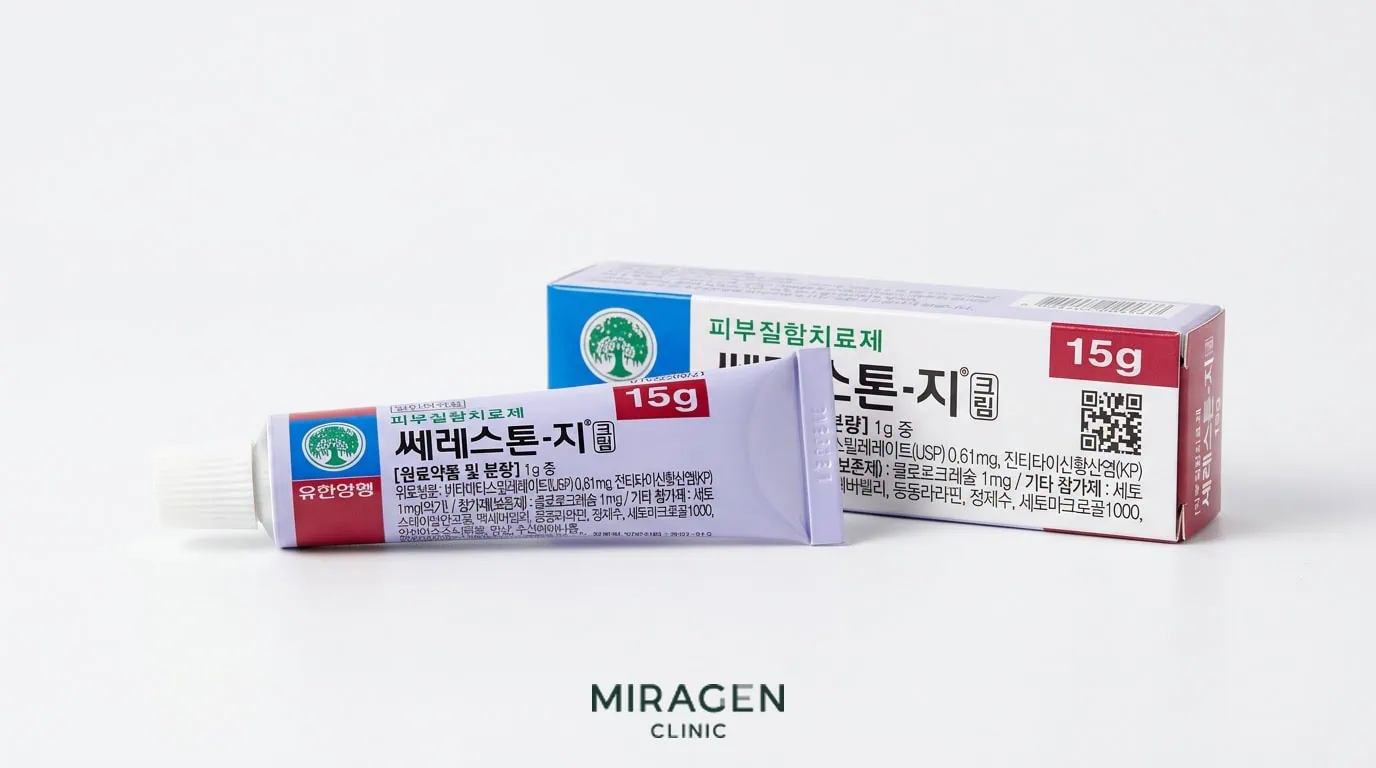
| Class 5 (moderate) | Dermatop Cream Bade Cream Ridomex Cream 0.3% Bosong Cream Silcade Cream Pretop Cream Private Cream TTB Cream Celestone-G Cream (combination) Demacot-S Cream (combination) |
| Class 6 (mild) | Desona Cream Desoderm Cream Desonia Cream |
| Class 7 (very mild) | Ridomex Cream 0.15% |
Lotion
| Class | Product |
|---|---|
| Class 3 (strong) | Espason Lotion 0.25% Detason Lotion 0.25% |
| Class 6 (mild) | Ridomex Lotion 0.3% Topiderm Lotion Desowen Lotion |
| Class 7 (very mild) | Lacticare HC Lotion 1% · 2.5% Dermacure Lotion 2.5% Hatison Lotion Codicare Lotion |
Solution · Gel
| Class | Product |
|---|---|
| Class 1 (very strong) | Dermovate Solution Craven Solution |
| Class 2 (strong) | Espason Gel 0.05% |
| Class 5 (moderate) | Dermatop Solution |
※ “Combination products” contain a steroid together with an antibiotic or antifungal agent.
“Application area” is just as important as class and formulation
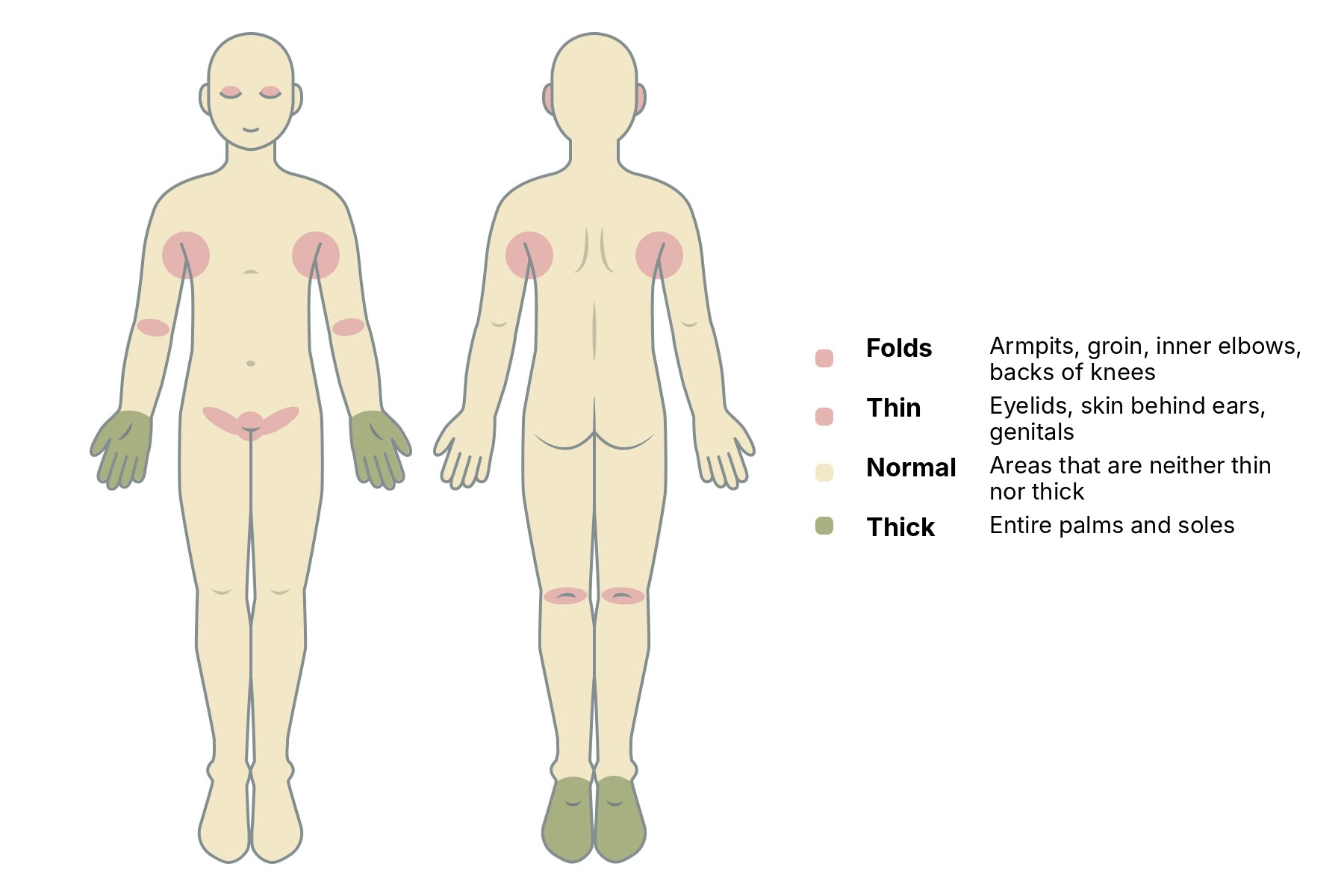
When choosing a topical steroid, you must also consider where you will apply it. This is because the body’s ability to absorb medication can differ by dozens of times depending on the area.3
Use a mild class on thin skin and a stronger class on thick skin. It is like how water soaks into thin paper quickly, but takes much longer to soak into thick cardboard.
Also, areas where the skin folds—such as the groin or armpits—absorb medication well, so you should use a lower class.4
Skin condition at the application site
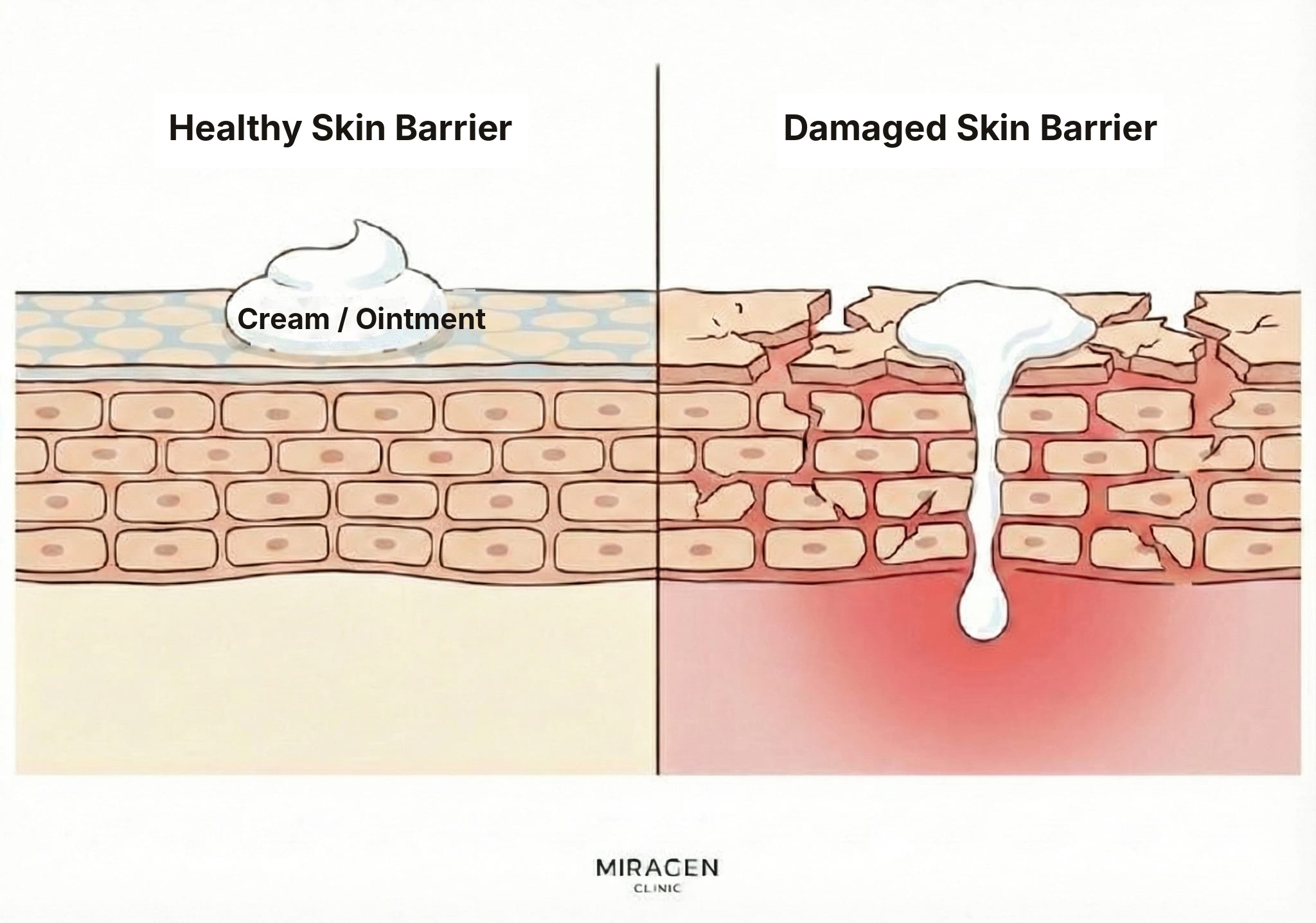
From the perspective of treating dermatitis, what I feel is most important is the condition of the skin at the area where you apply topical steroid ointment.
The more damaged the skin barrier is, the more absorption increases; and the more the skin has become thick and hardened from chronic atopic dermatitis, the more absorption decreases.
Use a mild class when the skin barrier is very weak, and a stronger class when the skin is thick and hardened.
Ointments available without a prescription
This is something many people are curious about.
Over-the-counter topical steroids that you can buy directly at a pharmacy usually fall into the milder classes.
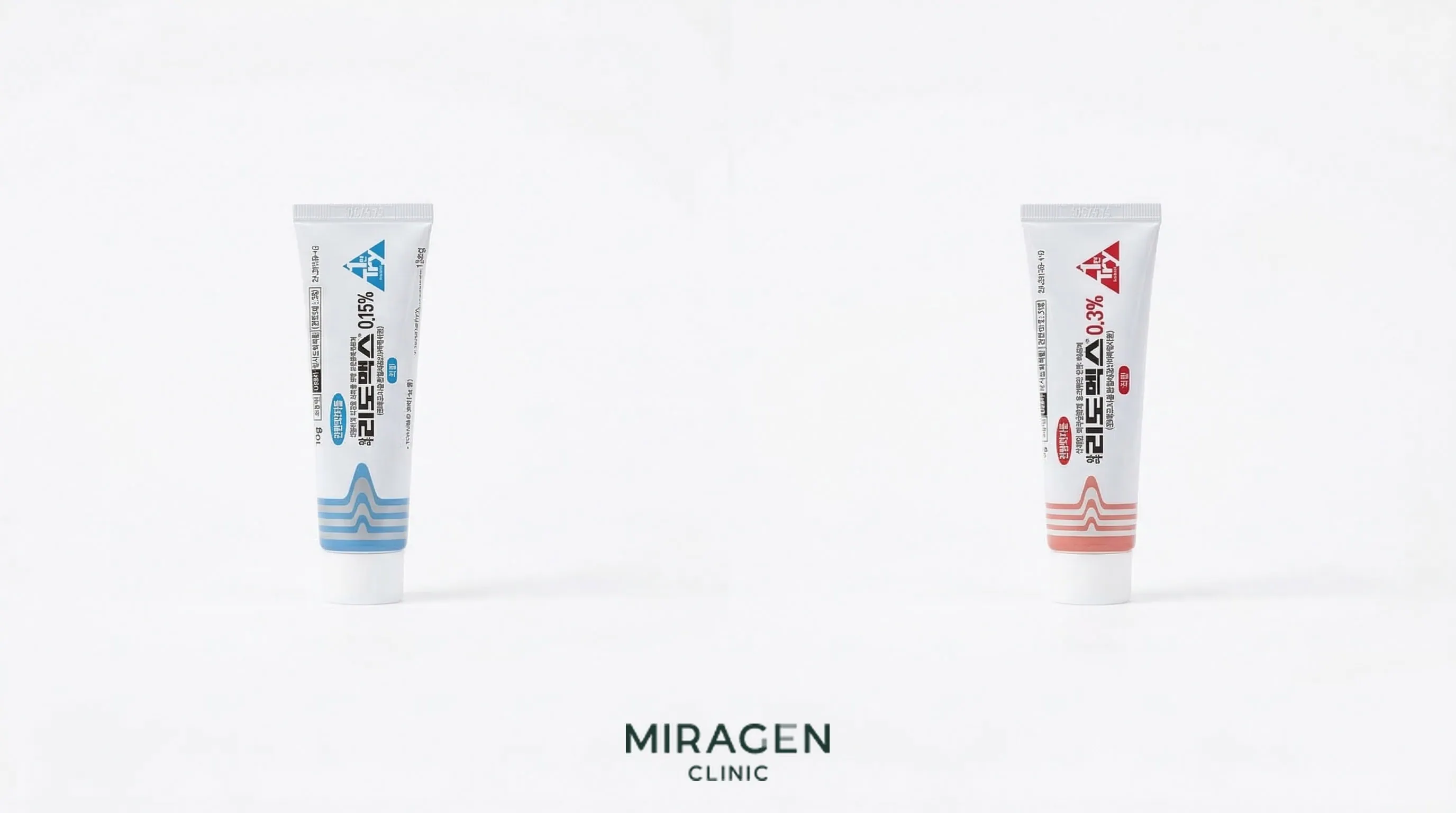
Class 7 (mildest): Used for mild itching or insect bites. Hatison Lotion, Lacticare, and Ridomex 0.15% fall into this category. For reference, Ridomex comes in blue and red packaging: the blue one is the 0.15% version available at pharmacies, while the red one is the 0.3% version that can only be purchased with a prescription.
Class 5: Surprisingly, some fairly strong Class 5 topical steroid ointments—such as Celestone-G—can also be purchased at pharmacies. However, because the potency is relatively high and it contains an antibiotic, you must apply it with great caution to prevent side effects.
Four key factors that determine effectiveness
In summary, the actual effectiveness of topical steroid ointments is determined by the following five factors.
- Class: The lower the number (Class 1 vs. Class 7), the stronger it is.
- Skin thickness: The thinner the skin (such as the face and eyelids), the more absorption increases.
- Skin folds: Areas where the skin folds, such as the armpits or groin, have increased absorption.
- Skin condition: The more severe the dermatitis/eczema, the more absorption increases.
Moisturizers and topical steroid ointments
When used together with a moisturizer, topical steroid ointments can achieve the same effect with a smaller amount. For details, please refer to Topical Steroid Guide and MD Cream Guide.
Alternatives to topical steroids
If you are concerned about the side effects of topical steroids, calcineurin inhibitors may be an alternative. For details, please refer to Protopic Guide and Elidel Guide.
References
- Bowie AC, Engelmayer AL, Engelmayer JP, et al. Agreement and Correlation Between Different Topical Corticosteroid Potency Classification Systems. JAMA Dermatol. 2022;158(7):787-795.
- Feldmann RJ, Maibach HI. Regional variation in percutaneous penetration of 14C cortisol in man. J Invest Dermatol. 1967;48(2):181-183.
- Barnes L, Kaya G, Rollason V. Topical corticosteroid-induced skin atrophy: a comprehensive review. Drug Saf. 2015;38(5):493-509.
- Coondoo A, Phiske M, Verma S, et al. Side-effects of topical steroids: A long overdue revisit. Indian Dermatol Online J. 2014;5(4):436-440.
Frequently Asked Questions
What happens if you use topical steroid ointment for a long time?
If you use a strong class on the same area for a long period, side effects such as thinning of the skin (skin atrophy) or redness due to enlarged blood vessels may occur. It is important to use the appropriate class for the prescribed period, following your doctor’s instructions.
What class should I use on my face?
Because facial skin is thin and absorption is high, Class 6–7 (mild classes) are typically used for a short period. Be especially careful around the eyelids, and be sure to consult your doctor before use.
What is the strongest topical steroid ointment you can buy at a pharmacy?
Among over-the-counter products, the strongest is Celestone-G Cream (a betamethasone valerate combination product), which corresponds to Class 5. Ridomex 0.15% or Hatison 1% are the mildest (Class 7) and are suitable as household first-aid medicines.
Which is stronger, ointment or cream?
With the same ingredient and the same concentration, ointment is stronger than cream. This is because ointments contain more oil, creating a stronger occlusive effect and increasing drug absorption. The order of strength is ointment > cream > lotion > gel.
Can I stop topical steroid ointment abruptly?
If you have used a strong class for a long time, stopping abruptly may cause a rebound effect. It is safer to taper by gradually lowering the class or reducing the frequency of use. Consult your doctor.

We treat atopic dermatitis, rosacea, and seborrheic dermatitis.
Thanks to the valuable reviews you have shared in the community, many of you visit us even from far away.
We will repay you with sincere, attentive care.
DK Han
Chief Director, MIRAGEN Clinic
Graduate of University of Michigan, Ross School of Business
Graduate of Chungnam National University School of Medicine
(Former) Representative Director of Ewha Phoenix Rehabilitation Hospital
(Current) Representative Director of MIRAGEN Clinic


