In dermatitis care, we quite often see patients whose dermatitis has become chronic or worsened due to misuse of topical steroid ointments.
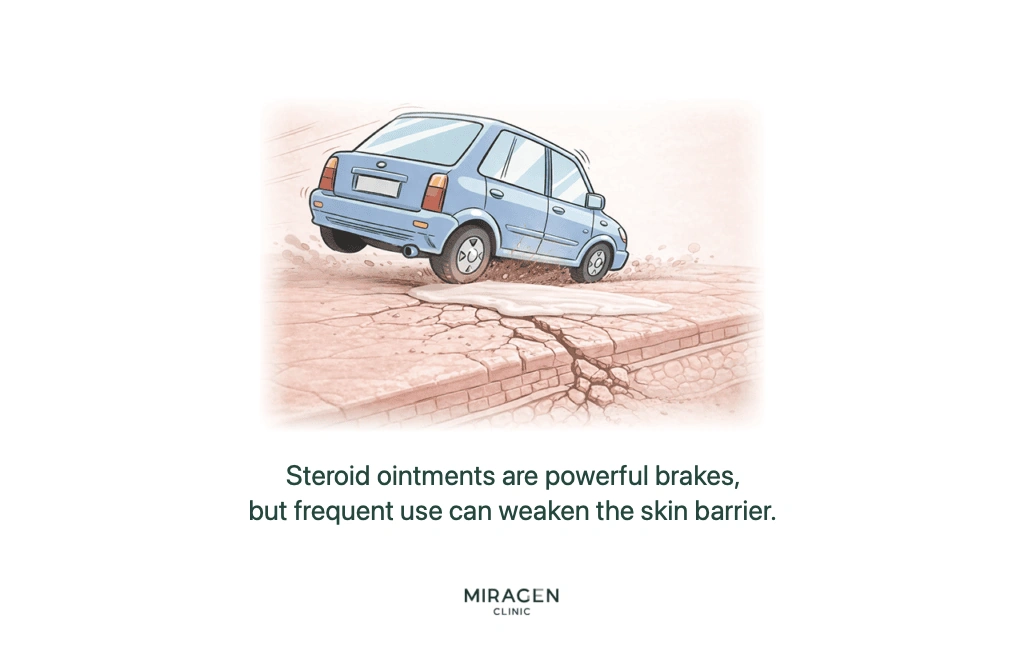
Topical steroid ointments can be essential in certain situations—like a car’s emergency brake—but if used incorrectly, they can also damage the skin. That’s why it’s important to know the potency class (strength) of the steroid ointment you’re using.
As of September 8, 2026, I have compiled the potency classes of 289 steroid ointments distributed in Korea, categorized by formulation.
What potency classes mean for topical steroid ointments
Potency classes for steroid ointments are determined mainly based on a vasoconstrictor assay. After applying the medication, we measure how much the skin turns white, and use that to indirectly assess the strength of the anti-inflammatory effect.1
Class 1 is the strongest, and Class 7 is the weakest.
Study Subjects and Criteria for Selecting Steroid Potency Classes
As of September 8, 2026, I reviewed all 307 topical steroid products with valid approval in Korea, and summarized the potency classes for the 289 products that had a supply record within the past year.
Because the MFDS does not assign an official product-by-product potency grade, I estimated it by prioritizing reliable sources in the following order.
- The product’s own vasoconstrictor assay results.
- The class for the item with the same ingredient, concentration, and formulation in the 2025 Korean Atopic Dermatitis Association clinical guideline.2
- The class for the item with the same ingredient, concentration, and formulation in the Korean dermatology textbook (based on the table published in the Korea Pharmaceutical Information Center’s 2022 Pharm Review).3
- The class for the item with the same ingredient, concentration, and formulation in the American Academy of Family Physicians literature from 2021 and 2020.1,4
- The class for the item with the same ingredient and concentration in the 2015 Korean Atopic Dermatitis Association clinical guideline.5
- If a numeric class could not be estimated using the methods above, I used the Korea Pharmaceutical Information Center’s ingredient-based potency categories (strongest · strong · medium · weak · very weak).6,7,8
Principles used to build the tables
- Betamethasone comes in forms such as dipropionate and valerate, but I omitted the form name in the tables and listed all concentrations as betamethasone-equivalent concentrations.
- For combination products without potency-testing data, I applied the class of the single-ingredient product with the same steroid ingredient, concentration, and formulation.
- For oral-use products and ophthalmic ointments, I referenced the class of the topical (skin) product with the same ingredient and concentration.
Ointment (30 items)
| Class | Product Name | Steroid ingredient | Other ingredients |
|---|---|---|---|
| 1 | Dipuko Ointment 0.3% | Diflucortolone valerate 0.3% | — |
| 1 | Domoho-Ron Ointment · Betavate Ointment · Clobeta Ointment · Prosol Ointment | Clobetasol propionate 0.05% | — |
| 2 | Detason Ointment 0.25% | Desoximetasone 0.25% | — |
| 2 | Momenta Ointment | Mometasone furoate 0.1% | — |
| 2 | Daivobet Ointment · Duobecal Ointment · Betatriol Ointment · Selbecal Ointment · Calcibeta Ointment | Betamethasone 0.05% | Calcipotriol 0.005% |
| 3–4 | Advantan Ointment | Methylprednisolone aceponate 0.1% | — |
| 5 | Dermatop Ointment 0.25% · TTB Ointment 0.25% · Prevel Ointment | Prednicarbate 0.25% | — |
| 7 | JR Hydrocortisone Ointment | Hydrocortisone 1% | — |
| 7 | Corti-Sporin Ointment | Hydrocortisone 1% | Neomycin sulfate 3.5 mg potency per 1 g · Polymyxin B sulfate 5,000 U per 1 g · Bacitracin zinc 400 U per 1 g |
| 7 | Dermaskin Ointment · DermaQ Ointment · Cerema Mild Ointment · Evodram Ointment · Climild Ointment | Hydrocortisone acetate 0.5% | Diphenhydramine HCl 0.5% · Zinc oxide 2% |
| 7 | Neotan Ointment · Nosca Ointment · Decamisol Ointment · Madecassol Combination Ointment · Triple A Ointment · Harona Ointment · Hardel Ointment | Hydrocortisone acetate 1% | Neomycin sulfate · Centella asiatica titrated extract 1% |
Source: 2025 Clinical Practice Guideline · 2015 Clinical Practice Guideline
Cream (157 items)
Source: 2025 Clinical Practice Guideline · 2015 Clinical Practice Guideline
Unable to estimate
| Potency | Product Name | Steroid ingredient | Other ingredients |
|---|---|---|---|
| Strong | Raphael Cream · Travocort Cream | Diflucortolone valerate 0.1% | Isoconazole nitrate 1% |
| Moderate | Dexatop Cream | Dexamethasone propionate 0.1% | — |
| Weak | Cambison Soft Cream | Prednisolone 0.4% | Neomycin sulfate 3 mg per 1 g · 2.03 mg per 1 g as neomycin potency |
| Weak | Lidopron Cream · Benohill Cream 0.15% · Beroa Cream 0.15% · Sama Aridomex Cream 0.15% | Prednisolone valeroacetate 0.15% | — |
Source: KPIC: Travocort · KPIC: Dexatop · KPIC: Cambison Soft · KPIC: Lidomex
Lotion (62 items)
Source: American Academy of Family Physicians, 2021 · KPIC: Pharm Review · 2015 Clinical Practice Guideline · American Academy of Family Physicians, 2020
Solution (22 items)
| Class | Product Name | Steroid ingredient | Other ingredients |
|---|---|---|---|
| 1 | Dermovate Solution | Clobetasol propionate 0.05% · 0.5 mg per 1 g | — |
| 2 | Steparon Solution | Fluocinonide 0.05% · 0.5 mg per 1 mL | — |
| 5 | Dermatop Solution 0.25% · Predna Solution 0.25% · Pred Solution 0.25% · Prebey Solution 0.25% · Prevel Solution 0.25% · Prebui Solution · Precal Solution 0.25% | Prednicarbate 0.25% · 2.5 mg per 1 g | — |
Source: American Academy of Family Physicians, 2021 · Fluocinonide prescribing information · 2015 Clinical Practice Guideline
Unable to estimate
| Potency | Product Name | Steroid ingredient | Other ingredients |
|---|---|---|---|
| Strongest | Stayben Solution | Clobetasol propionate 460 μg per 1 mL | — |
| Strongest | Derbisol Solution · Domoho-Ron Solution · Duopien Solution · Betavate Solution · J-Clobel Solution · Cobate Solution · Cruben Solution · Crosol Solution · Prosol Solution | Clobetasol propionate 466 μg per 1 mL | — |
| Weak | Duduen Solution · Dupina Solution | Prednisolone valeroacetate 0.15% · 1.5 mg per 1 mL | L-menthol 35 mg per 1 mL · dl-camphor 10 mg per 1 mL · Thymol 1 mg per 1 mL · Diphenhydramine HCl 10 mg per 1 mL |
| Weak | Dupi& Solution | Prednisolone valeroacetate 0.15% · 1.5 mg per 1 mL | L-menthol · Thymol · Crotamiton · Enoxolone · Allantoin |
Source: KPIC: Clobetasol solution · KPIC: anti-itch combination product · KPIC: Lidomex
Gel (13 items)
| Class | Product Name | Steroid ingredient | Other ingredients |
|---|---|---|---|
| 2 | Desoxiwon Gel 0.05% · Deoxon Gel 0.05% · Metapason Gel · Espason Gel 0.05% · J-Desoxy Gel 0.05% | Desoximetasone 0.05% | — |
Unable to estimate
| Potency | Product Name | Steroid ingredient | Other ingredients |
|---|---|---|---|
| Strong | Zarigo Gel · Zamiol Gel · Calcibeta Gel | Betamethasone 0.05% | Calcipotriol 0.005% · anhydrous basis |
| Weak | Mullina Gel · Mullinder Gel · Beolmuden Cool Gel · Amos Gel · Atomy Gel | Prednisolone acetate 0.125% | Lidocaine HCl 3% · Chlorpheniramine maleate 1% · Crotamiton 5% · Benzethonium chloride 0.1% · Salicylic acid glycol 2% · L-menthol 3% |
Source: KPIC: Xamiol · KPIC: prednisolone combination product
Shampoo (2 items)
| Class | Product Name | Steroid ingredient | Other ingredients |
|---|---|---|---|
| 1 | Duovex Solution · Clobex Solution 0.05% | Clobetasol propionate 0.05% · 0.5 mg per 1 g | — |
Source: American Academy of Family Physicians, 2021
Suspension (2 items)
| Class | Product Name | Steroid ingredient | Other ingredients |
|---|---|---|---|
| 7 | Lactisone HC Suspension 1% | Hydrocortisone 1% · 10 mg per 1 mL | — |
| 7 | Lactisone HC Suspension 2.5% | Hydrocortisone 2.5% · 25 mg per 1 mL | — |
Source: 2015 Clinical Practice Guideline
Spray (1 item)
Unable to estimate
| Potency | Product Name | Steroid ingredient | Other ingredients |
|---|---|---|---|
| Weak | Mediquick Spray | Prednisolone valeroacetate 0.15% · 1.5 mg per 1 g | Crotamiton 5% · L-menthol 1% · Thymol 0.1% |
Source: KPIC: anti-itch combination product
Oral use (1 item)
| Reference class (topical/skin) | Product Name | Steroid ingredient | Other ingredients |
|---|---|---|---|
| 3–4 | Oramedy Ointment | Triamcinolone acetonide 0.1% | — |
Source: 2025 Clinical Practice Guideline
Ophthalmic use (4 items)
| Reference class (topical/skin) | Product Name | Steroid ingredient | Other ingredients |
|---|---|---|---|
| 7 | Neodex Ophthalmic Ointment9 · Maxitrol Ophthalmic Ointment10 · Forus Ophthalmic Ointment11 | Dexamethasone 0.1% | Neomycin · Polymyxin B |
Source: 2015 Clinical Practice Guideline
Unable to estimate
| Reference potency (topical/skin) | Product Name | Steroid ingredient | Other ingredients |
|---|---|---|---|
| Unable to confirm | Digenta Ophthalmic Ointment | Fluorometholone 0.1% | Gentamicin12 |
Source: KPIC: Digenta
The ‘Application Site’: Just as Important as the Steroid Potency Class
When selecting an ointment, I consider the application site alongside the steroid potency class. In studies where hydrocortisone was applied to the skin, absorption rates varied by up to dozens of times depending on the area.13
For thinner skin, I prioritize weaker medications; for thicker skin, I prioritize stronger ones.1
And areas where skin folds—such as the groin or armpits—also absorb medication well, so you should prioritize lower potency there as well.1,2
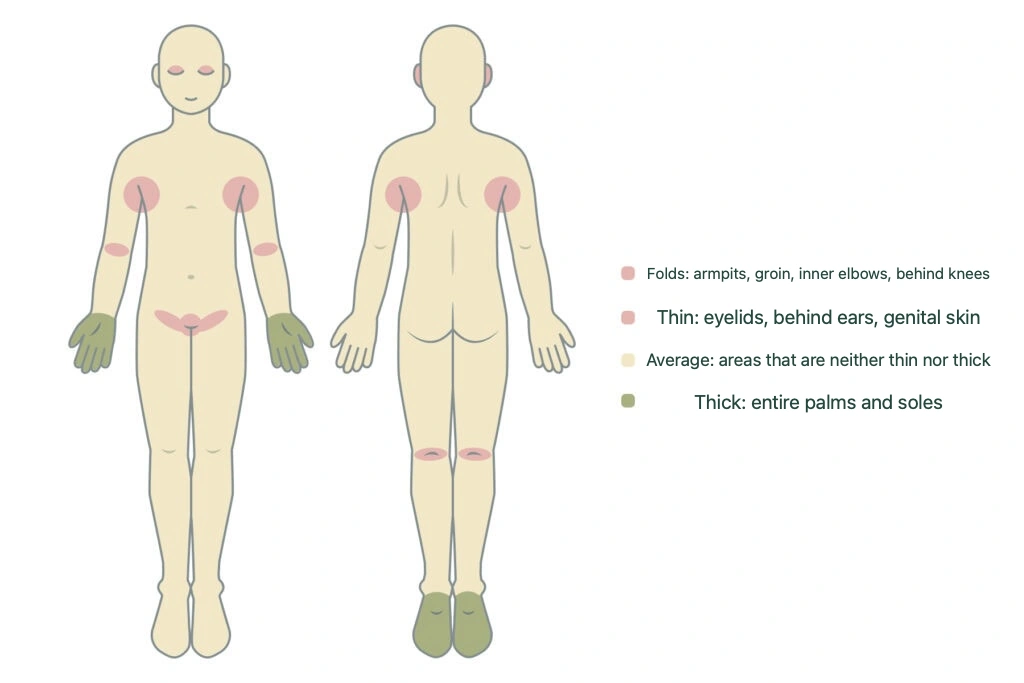
Selecting a Steroid Potency Class Based on Skin Condition
Personally, what I consider most important is the condition of the skin at the application site.
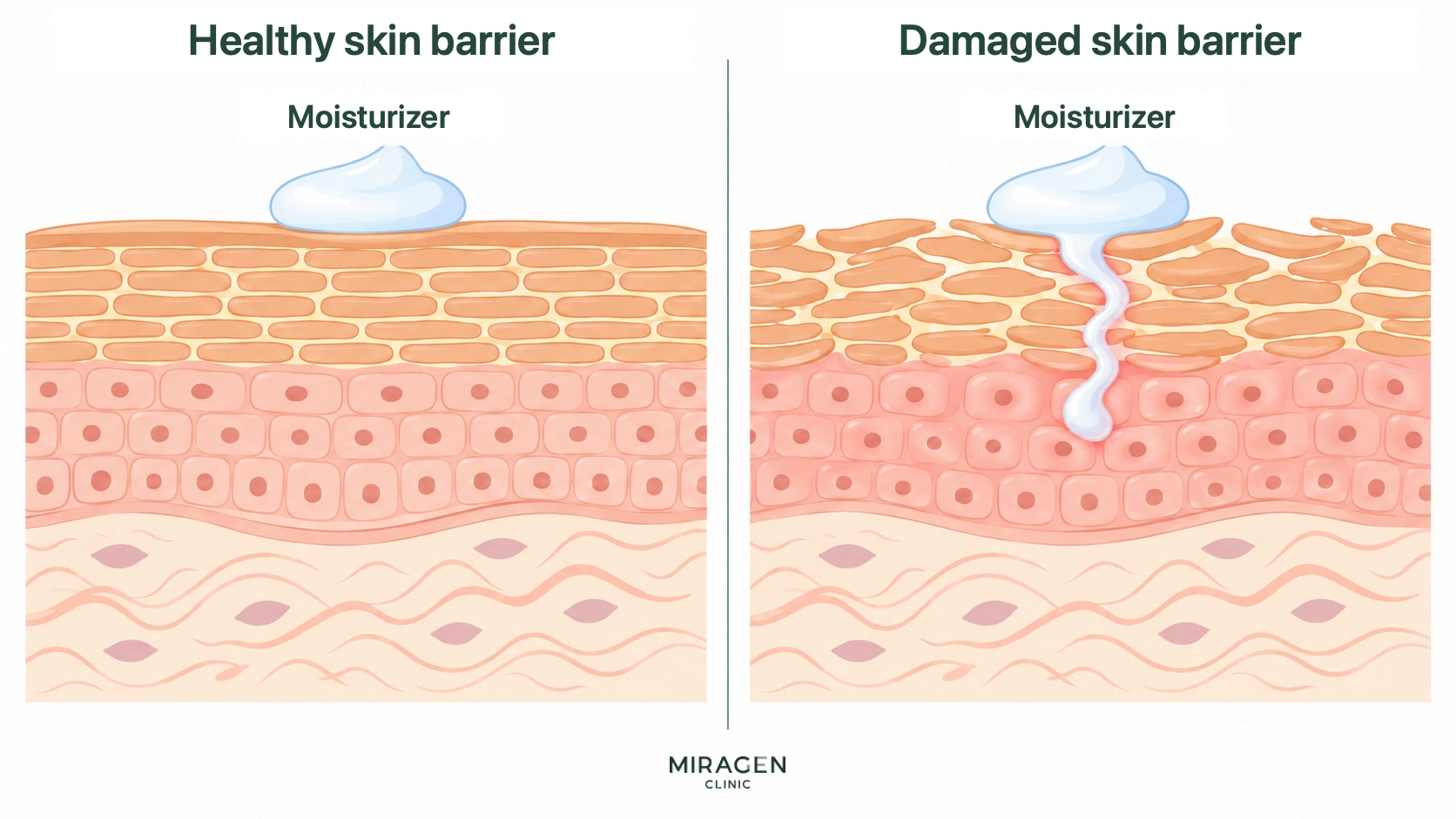
This is because a damaged skin barrier can increase absorption, and chronically inflamed, thickened lesions may require a stronger medication.1,14
Therefore, you should decide the potency by considering both the skin condition and the application site together.1,2
Potency Classes of Over-the-Counter Steroid Ointments
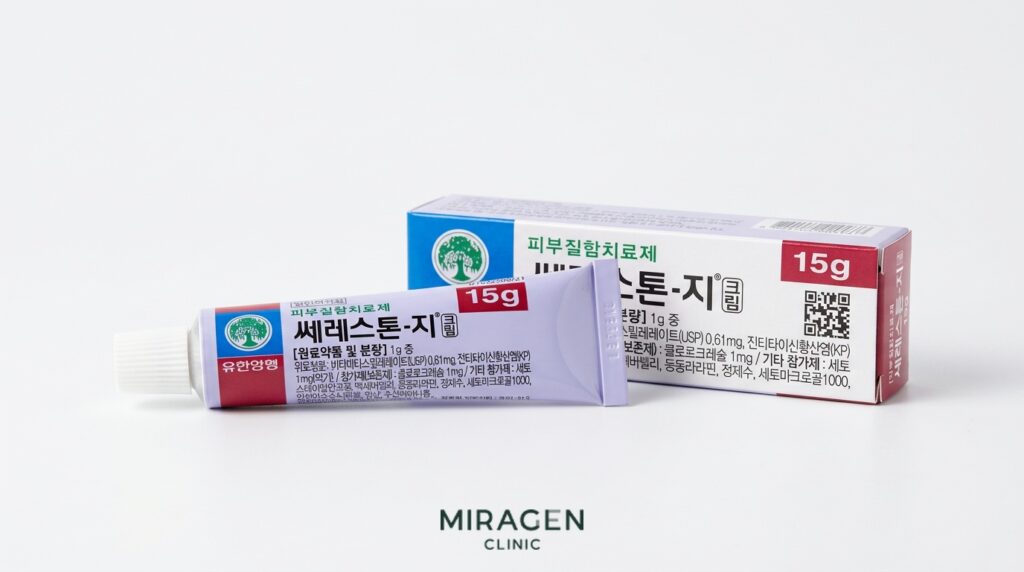
Common examples of ointments you can buy without a prescription include Lidomex Cream 0.15% and Cerestone-G Cream.8,15
However, not everything you can buy at a pharmacy is a weak medication. The steroid in Cerestone-G Cream is Class 5.5 You shouldn’t take it lightly just because it’s available without a prescription.1
If you keep needing topical steroid ointment
If you’re using topical steroid ointment repeatedly, it’s worth checking whether you’re using a moisturizer that truly suits your skin.
In general, moisturizing helps restore the skin barrier and can reduce the amount of steroid needed. However, when the skin barrier is weakened, some moisturizer ingredients can penetrate more easily and trigger irritation or inflammation, so it’s important to find a product that fits your skin well.16 I explain a practical way to choose in Moisturizers and MD Cream Guide.
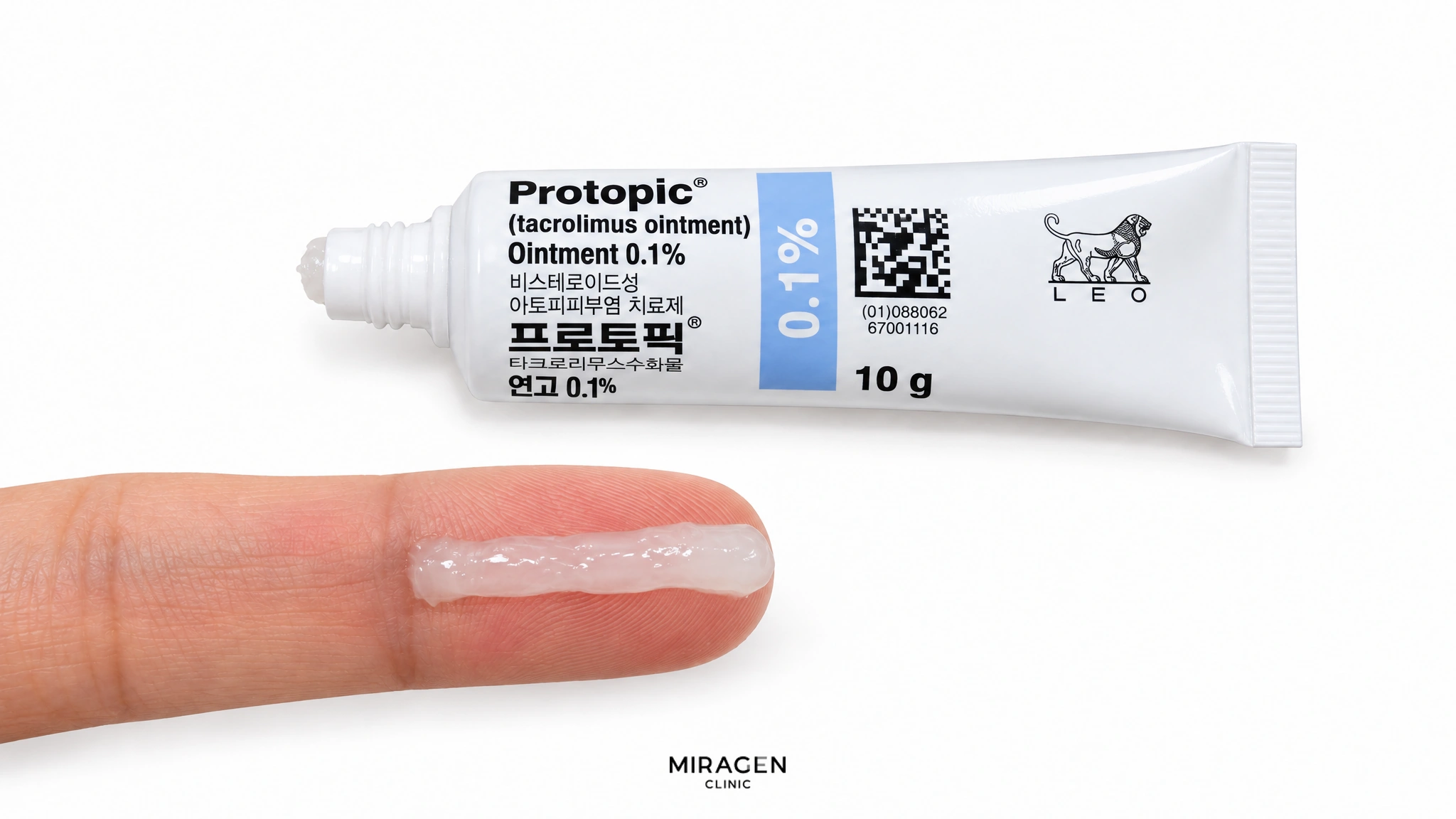
As an alternative to steroids, you can also consider calcineurin inhibitors. Typical examples are Protopic Ointment and Elidel Cream. These medications can control inflammation without the side effect of thinning the skin, but they may sting or burn when first applied.2
Frequently Asked Questions
Can I stop topical steroid ointment abruptly?
If you used it briefly and the dermatitis has settled, you can stop right away.1 However, if you used a strong medication for a long time, or if the dermatitis flares every time you stop, it’s best to decide with your doctor how to taper—by reducing how often you apply it or stepping down the potency. For atopic dermatitis with frequent relapses, you may need maintenance therapy, applying medication intermittently even after symptoms improve.2
Why do steroid potency classes differ for the same ingredient depending on the formulation?
Even if the ingredient and concentration are the same, skin absorption can differ depending on the vehicle (base ingredients) and the formulation.1 For example, in Korean clinical guidelines, mometasone furoate 0.1% is Class 2 as an ointment, but Class 3–4 as a cream.2
How do I determine the appropriate steroid potency class for the face?
Because facial skin is thin, if I use a steroid on the face, I generally prioritize weaker Class 6–7 options.1 However, the potency needed varies depending on the type of dermatitis and how severe it is. Rather than choosing based only on the class chart, you should decide the medication and duration based on the diagnosis and your skin condition.1,2
Is it okay to use a weak topical steroid ointment for a long time?
You shouldn’t keep applying it just because it’s “weak.” The risk of side effects is lower than with stronger medications, but the risk varies depending on the application site, the area covered, and how long you use it. In particular, if you use it long-term on the face or in skin-fold areas, you should check for changes such as skin thinning.1
Are all topical steroid ointments you can buy without a prescription weak?
No. Whether a prescription is required and the steroid potency class are separate issues. Cerestone-G Cream, which you can buy without a prescription, also contains a steroid, and the reference class for that ingredient, concentration, and formulation is Class 5.5,15 Even if you bought it at a pharmacy, you should confirm the product’s potency and where you plan to apply it.
References
- Stacey SK, McEleney M. Topical Corticosteroids: Choice and Application. Am Fam Physician. 2021;103(6):337-343.
- Ko HC, Woo YR, Ko JY, et al. Consensus-Based Guidelines for the Treatment of Atopic Dermatitis in Korea (Part I): Basic Therapy, Topical Therapy, and Conventional Systemic Therapy. Ann Dermatol. 2025;37(4):201-215.
- Shin Na-young · Chungnam National University Hospital, Department of Pharmacy · Academic Advisory Committee Member, Korea Pharmaceutical Information Center. Pharm Review. Posted May 6, 2022. [Post info](https://health.kr/Menu.PharmReview/View.asp?PharmReview_IDX=8324)
- Frazier W, Bhardwaj N. Atopic Dermatitis: Diagnosis and Treatment. Am Fam Physician. 2020;101(10):590-598.
- Kim JE, Kim HJ, Lew BL, et al. Consensus Guidelines for the Treatment of Atopic Dermatitis in Korea (Part I): General Management and Topical Treatment. Ann Dermatol. 2015;27(5):563-577.
- Korea Pharmaceutical Information Center. Stayben Solution: drug details and medication guide. Accessed September 8, 2026.
- Korea Pharmaceutical Information Center. Dexatop Cream: KPIC therapeutic classification in the drug information. Verified September 8, 2026.
- Korea Pharmaceutical Information Center. Sama Aridomex Cream 0.15%: drug information · KPIC therapeutic classification.
- Ministry of Food and Drug Safety. Drug Safety Korea: Neodex Ophthalmic Ointment. Product standard code 200502890. Company: Hanlim Pharm. Accessed September 8, 2026.
- Ministry of Food and Drug Safety. Drug Safety Korea: Maxitrol Ophthalmic Ointment. Product standard code 199403244. Company: Novartis Korea. Accessed September 8, 2026.
- Ministry of Food and Drug Safety. Drug Safety Korea: Forus Ophthalmic Ointment. Product standard code 199500503. Company: Samil Pharm. Accessed September 8, 2026.
- Ministry of Food and Drug Safety. Drug Safety Korea: Digenta Ophthalmic Ointment. Product standard code 201007735. Company: Hanlim Pharm. Accessed September 8, 2026.
- Feldmann RJ, Maibach HI. Regional variation in percutaneous penetration of 14C cortisol in man. J Invest Dermatol. 1967;48(2):181-183.
- A-S Medication Solutions. Triamcinolone acetonide cream. DailyMed labeling. Revised June 2021. Set ID: fccd5343-9032-4242-90e9-e2df89447323.
- Yuhan. Cerestone-G Cream product information. Updated August 26, 2026.
- Kang SY, Um JY, Chung BY, et al. Moisturizer in Patients with Inflammatory Skin Diseases. Medicina. 2022;58(7):888.