

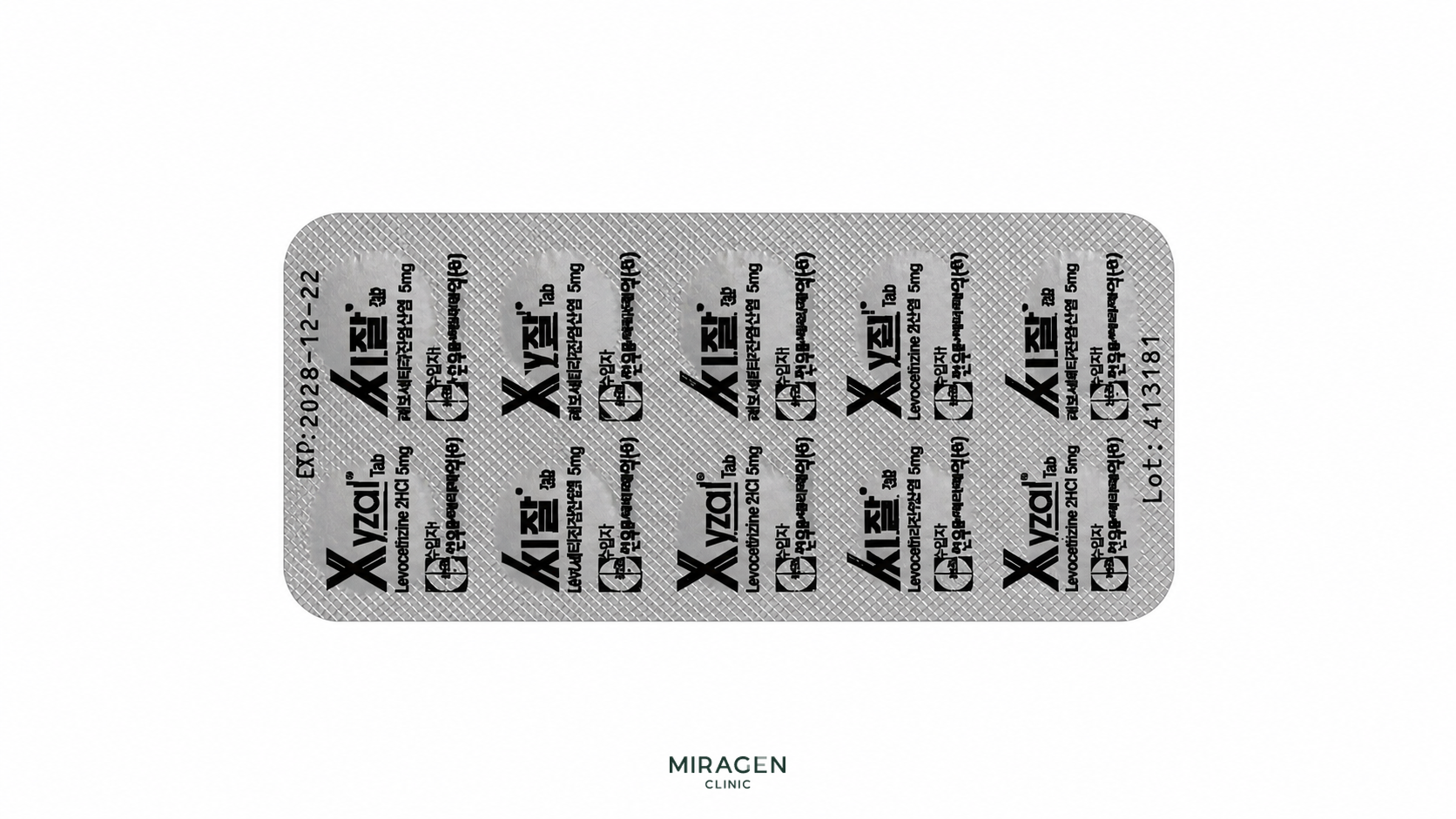
Xyzal Tablets are one of the most advanced antihistamines, often referred to as third-generation, with levocetirizine as the main ingredient. Compared with Allegra Tablets, which are also often referred to as third-generation, they have the advantage of simpler dosing instructions.1
Compared with first-generation antihistamines, they cause less drowsiness and fewer anticholinergic adverse effects, and can be taken once daily regardless of meals.
목차
Less drowsy than first-generation
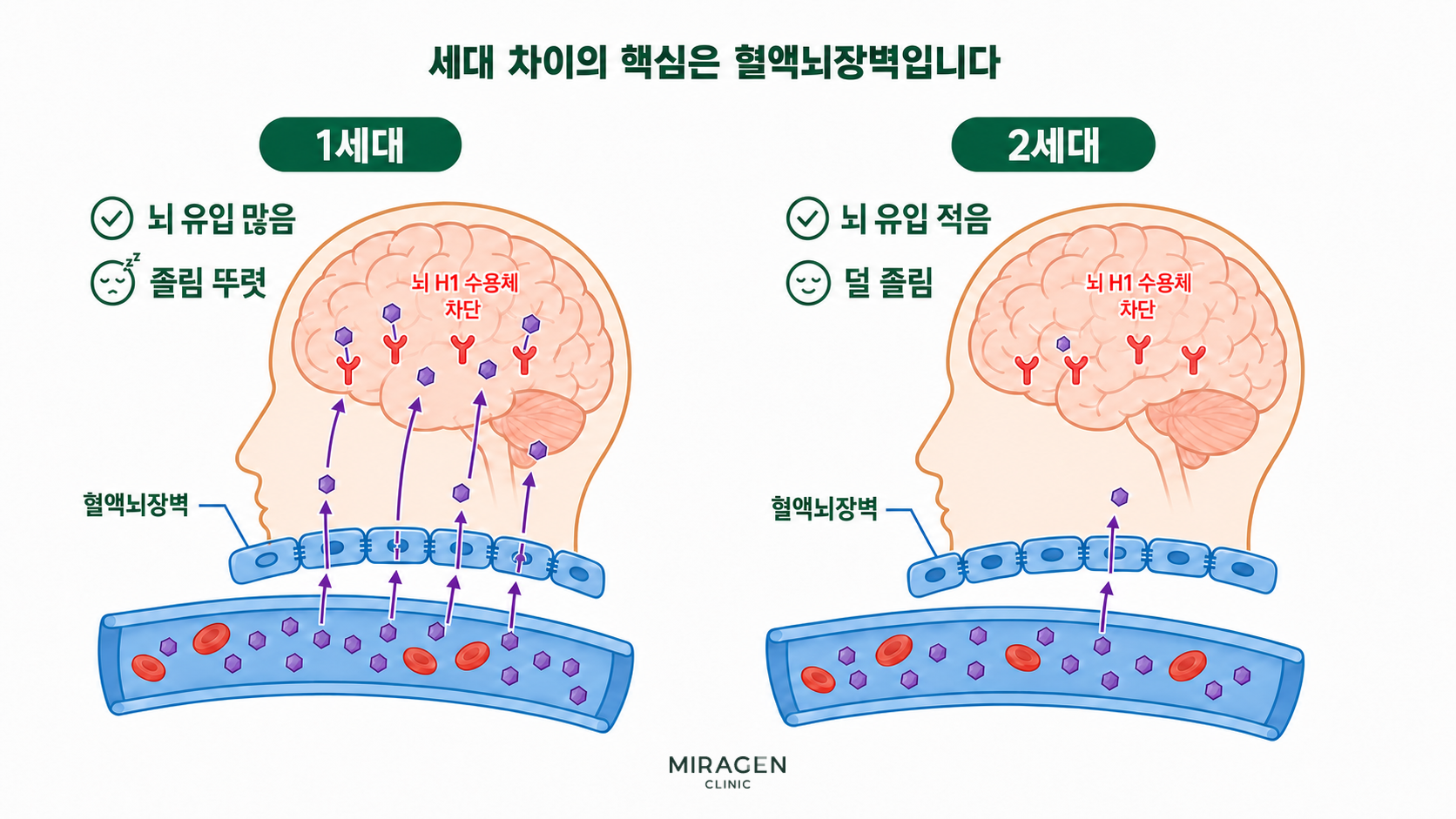
First-generation antihistamines, such as Peniramin Tablets and Adipam Tablets, cross the blood–brain barrier and strongly block H1 receptors in the brain. This can cause sleepiness and slower reactions.
In contrast, levocetirizine in Xyzal Tablets does not readily cross the blood–brain barrier. In a study in which eight healthy adults took a single dose with the same ingredient and dose as Xyzal Tablets, mean brain H1 receptor occupancy was 8.1%, with no significant difference from placebo.2
A pooled analysis of 48 studies (18,014 participants) also found that levocetirizine caused less sedation and less change in reaction time than first-generation antihistamines. However, it caused slightly more sedation than placebo. This means Xyzal Tablets may still cause drowsiness depending on the individual.3
Fewer anticholinergic adverse effects as well
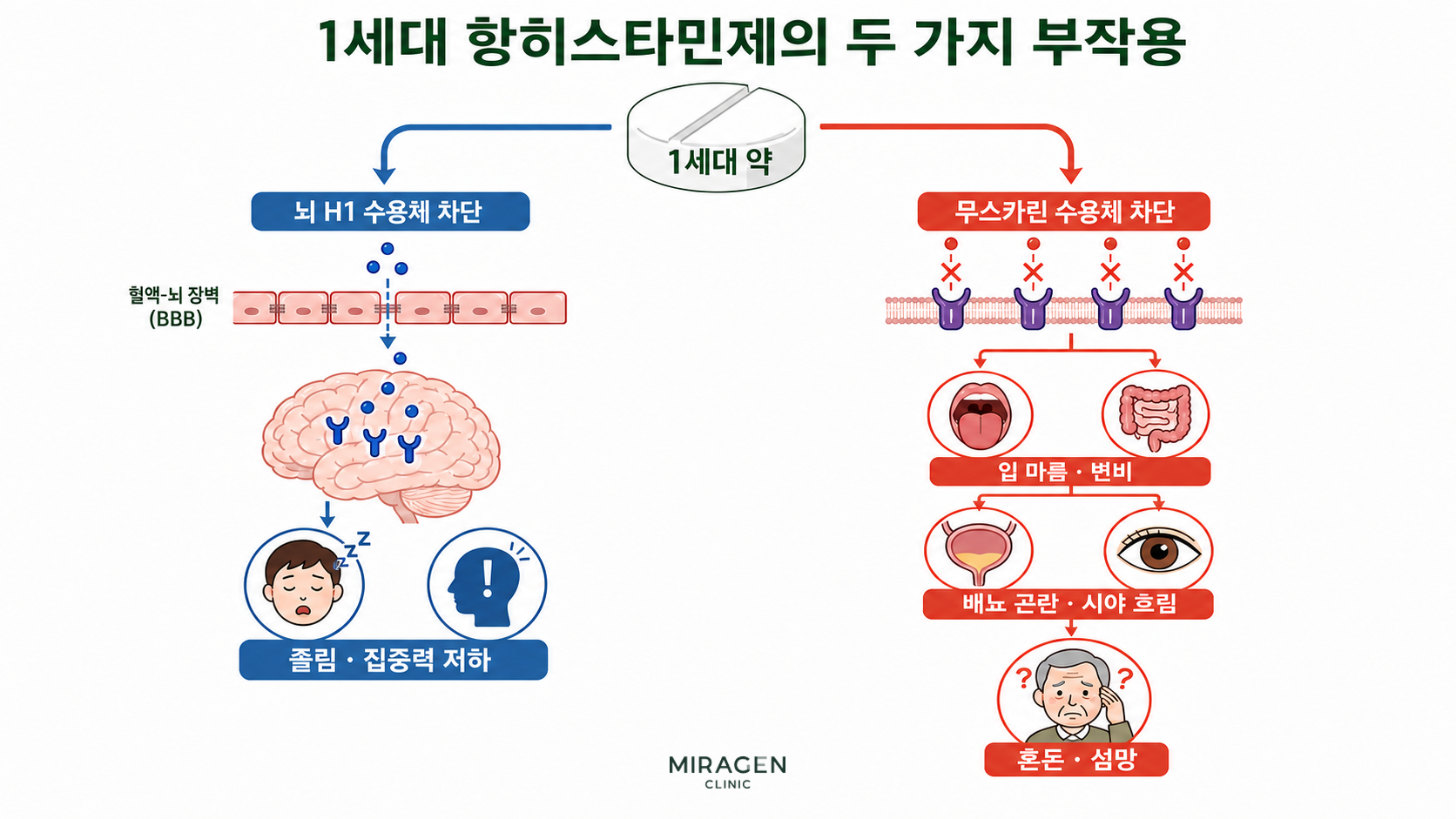
First-generation antihistamines act not only on H1 receptors but also on muscarinic receptors. As a result, anticholinergic adverse effects such as dry mouth, constipation, difficulty urinating, and blurred vision may occur.
In contrast, levocetirizine in Xyzal Tablets has high selectivity for H1 receptors and does not bind well to muscarinic receptors, so it has fewer anticholinergic adverse effects that are problematic with first-generation agents.4
For more details on differences by antihistamine generation and adverse effects, please refer to the antihistamine article.
Xyzal’s lineage and comparison with Zyrtec Tablets
Hydroxyzine in Adipam Tablets, a first-generation agent, is metabolized in the body into cetirizine in Zyrtec Tablets, a second-generation agent. Cetirizine is a mixture of two stereoisomers that are mirror images of each other. Levocetirizine, the ingredient in Xyzal Tablets often referred to as third-generation, is made by selecting only the R-isomer, which primarily acts on H1 receptors.5
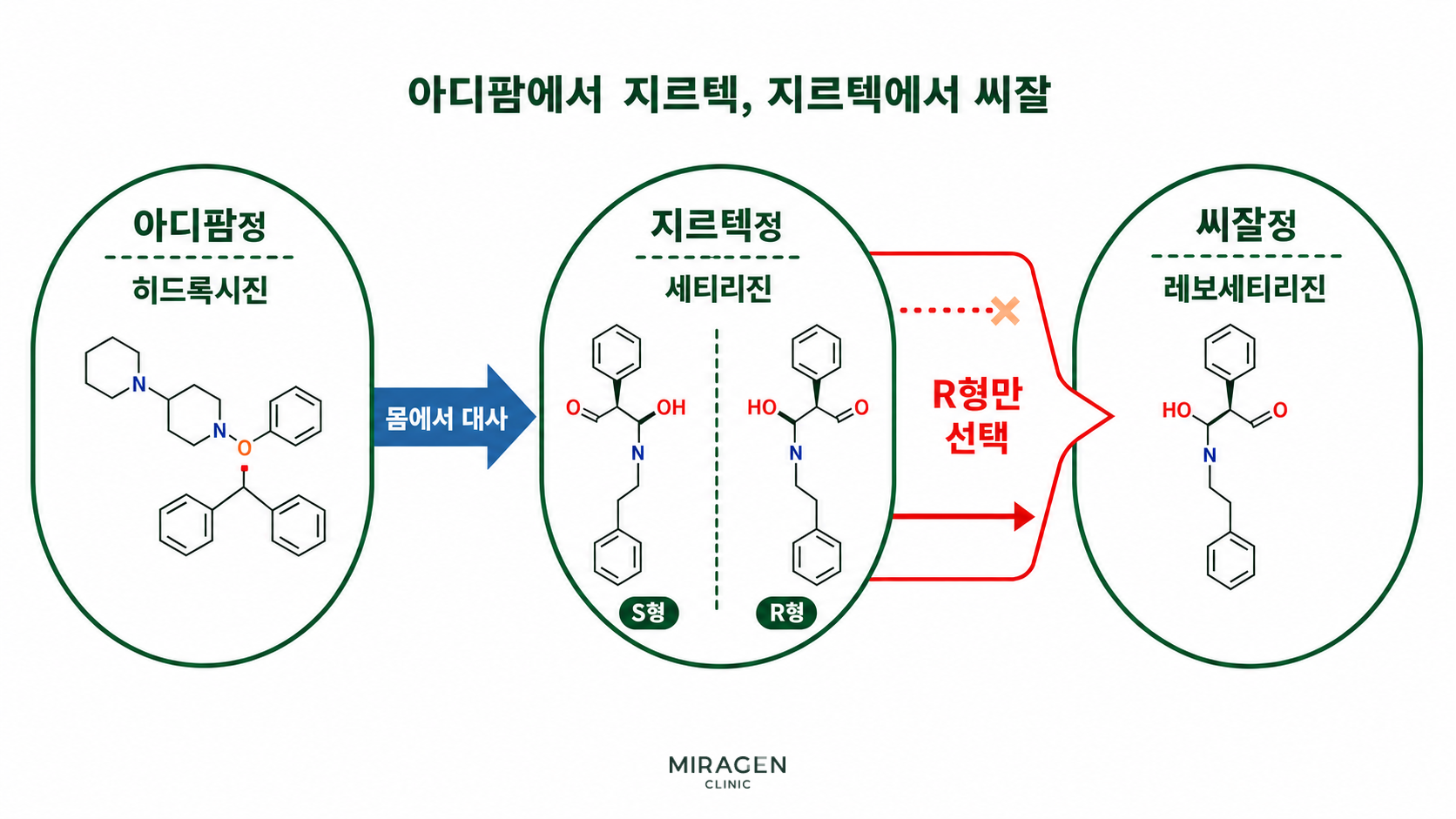
However, the structural difference of isolating only the R-isomer—responsible for most of the effect in Zyrtec Tablets—does not necessarily indicate clinical superiority.
In a trial in 570 patients with allergic rhinitis who received a single dose of levocetirizine 5 mg or cetirizine 10 mg, there was no significant difference in symptom improvement. Because the study assessed responses after a single pollen exposure, it cannot determine long-term outcomes, but at least in the short term it did not conclude that Xyzal is superior to Zyrtec.6
In a study comparing the two drugs in 29 patients with allergic rhinitis who had experienced drowsiness with cetirizine, there was also no significant difference in drowsiness.7 The 2026 allergic rhinitis guidelines also classify the degree of sedation for both cetirizine and levocetirizine as moderate.8
The most practical difference is their regulatory classification. Zyrtec Tablets are an over-the-counter medicine and can be purchased without a prescription, whereas Xyzal Tablets are a prescription medicine and require a prescription.1,9
In addition, Xyzal is available as a syrup (Xyzal Oral Solution), which can be used in young children. However, Xyzal Oral Solution is also a prescription medicine, so a prescription is required.10
Xyzal Tablets from age 6; Xyzal Oral Solution from age 1
Xyzal Tablets can be taken from age 6 and older. For children under 6, Xyzal Oral Solution should be used, and it can be taken from age 1. The two products contain the same ingredient, but the dose and frequency differ by age.1,10
| Product | Age | Single dose | Dosing frequency |
|---|---|---|---|
| Xyzal Tablets | Age 6 and older | 1 tablet | Once daily |
| Xyzal Oral Solution | Age 6 and older | 10 mL | Once daily |
| Xyzal Oral Solution | Age 2 to under 6 | 2.5 mL | Twice daily |
| Xyzal Oral Solution | Age 1 to under 2 | 2.5 mL | Once daily |
Difference vs Allegra Tablets: simpler dosing
Allegra Tablets, which are also often referred to as third-generation along with Xyzal Tablets, may have up to a 20% reduction in the amount absorbed by the body when taken with a high-fat meal.11 Absorption may also be significantly reduced when taken with grapefruit juice, orange juice, or apple juice, or when taken with antacids containing aluminum or magnesium.12,13,14
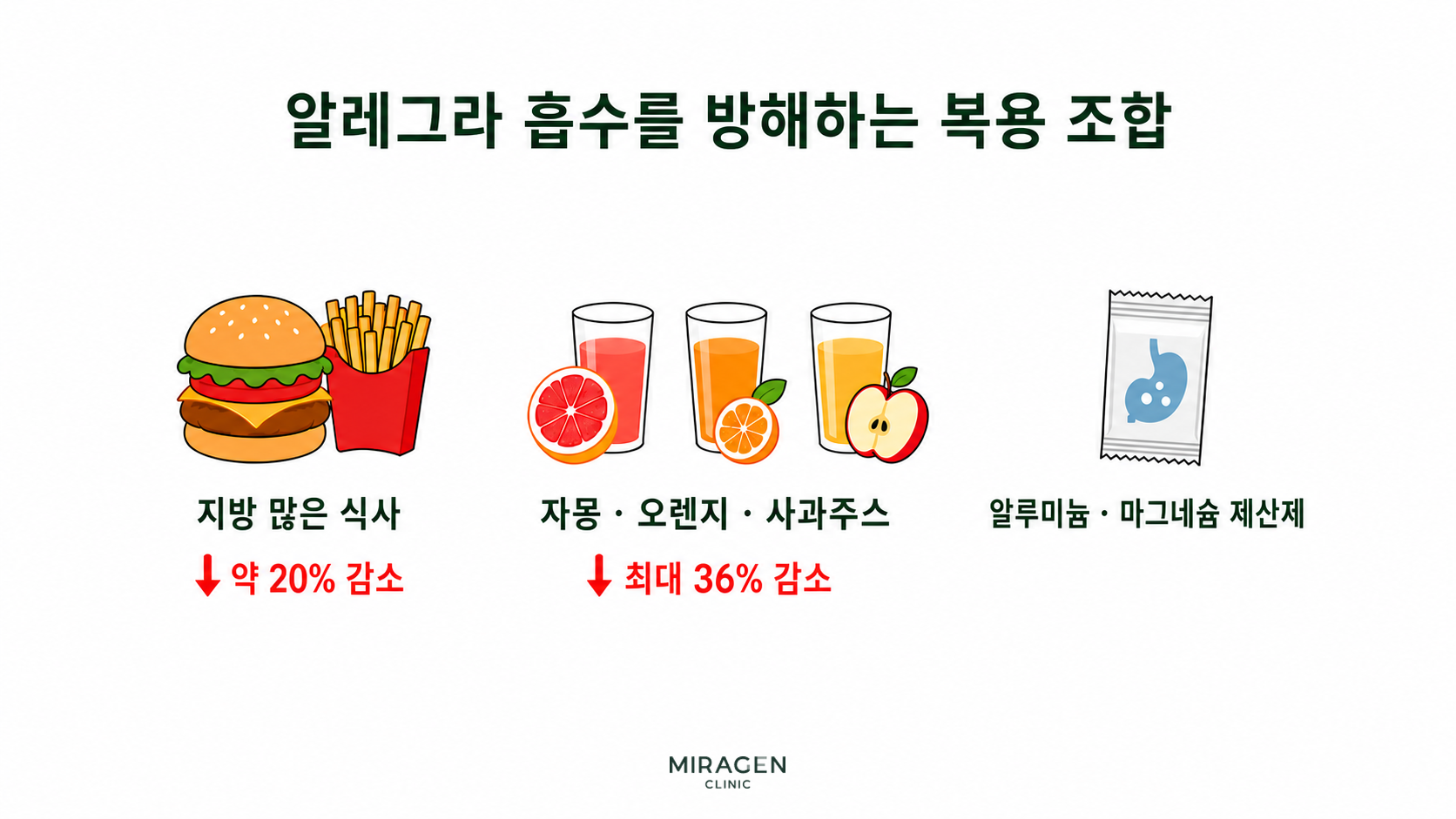
In contrast, Xyzal Tablets do not require complex conditions involving meals, fruit juice, or antacids. When taken with food, the absorption rate slows, but the total amount absorbed does not decrease.1
| Dosing conditions | Xyzal Tablets | Allegra Tablets |
|---|---|---|
| Dosing frequency | Once daily | Once or twice daily depending on strength |
| Meals | No restrictions | Before meals |
| Beverages taken with the medicine | No restrictions | Must not be taken with grapefruit juice, orange juice, or apple juice |
| Antacids | No restrictions | Keep about a 2-hour interval from aluminum/magnesium antacids |
For more details on dosing by strength and precautions for Allegra Tablets, please refer to the Allegra Tablets article.
Kidney function and drowsiness should be checked
Because levocetirizine in Xyzal Tablets is primarily eliminated through the kidneys, adults should extend the dosing interval if their glomerular filtration rate (GFR), an indicator of kidney function, is below 60 mL/min.1,10
Below is dosing guidance for Xyzal Tablets based on GFR. In children, kidney function and body weight must be considered together, so it cannot be summarized as simply as in the table below.10
| GFR (mL/min) | Kidney function | Dosing |
|---|---|---|
| 60 or higher | Normal or mildly decreased | Once daily |
| 30 to under 60 | Moderately decreased | Once every 2 days |
| 15 to under 30 | Severely decreased | Once every 3 days |
| Under 15 or on hemodialysis | End-stage kidney disease | Do not take |
Independently of kidney function, drowsiness should also be checked. If you are taking Xyzal for the first time, it is safest to avoid driving or operating machinery until you know how drowsy it makes you. Alcohol or medicines that cause drowsiness can increase drowsiness, so use caution when taking them together.1
References
- Ministry of Food and Drug Safety (MFDS), approval information for Xyzal Tablets 5 mg, accessed 2026-08-24.
- Tashiro M, Mochizuki H, Iwabuchi K, et al. Brain histamine H1 receptor occupancy measured by PET after oral administration of levocetirizine, a non-sedating antihistamine. Expert Opin Drug Saf. 2015;14(2):177-185. PMID 25466429. DOI 10.1517/14740338.2015.989831.
- Snidvongs K, Seresirikachorn K, Khattiyawittayakun L, Chitsuthipakorn W. Sedative Effects of Levocetirizine: A Systematic Review and Meta-Analysis of Randomized Controlled Studies. Drugs. 2017;77(2):175-186. PMID 28070872.
- Devillier P, Roche N, Faisy C. Clinical pharmacokinetics and pharmacodynamics of desloratadine, fexofenadine and levocetirizine: a comparative review. Clin Pharmacokinet. 2008;47(4):217-230. PMID 18336052.
- Chen C. Physicochemical, pharmacological and pharmacokinetic properties of the zwitterionic antihistamines cetirizine and levocetirizine. Curr Med Chem. 2008;15(21):2173-2191. PMID 18781943.
- UCB Clinical Study Summary A00379. NCT00544388. Report date 2007-07-20. Accessed 2026-08-25.
- Tzanetos DB, Fahrenholz JM, Scott T, Buchholz K. Ann Allergy Asthma Immunol. 2011;107(6):517-522. PMID 22123381. DOI 10.1016/j.anai.2011.08.012.
- Vieira RJ, Sousa-Pinto B, Bousquet J, et al. Allergic Rhinitis and Its Impact on Asthma (ARIA)-EAACI Guidelines-2024-2025 Revision: Part II-Guidelines on Oral and Ocular Treatments. Allergy. 2026;81(6):1947-1970. PMID 41877472.
- Ministry of Food and Drug Safety (MFDS), approval information for Zyrtec Tablets, accessed 2026-08-16.
- Xyzal Oral Solution product information, Korea Pharmaceutical Information Center (KPIC) · MFDS approval data, accessed 2026-08-25.
- Fexofenadine hydrochloride tablets approval information, DailyMed, accessed 2026-08-22.
- Allegra Tablets 120 mg product information, KPIC · MFDS approval data.
- Allegra Tablets 180 mg approval information · medication guide, KPIC · MFDS approval data, accessed 2026-08-22.
- Allegra Tablets 30 mg approval information · medication guide, KPIC · MFDS approval data, accessed 2026-08-22.
Frequently Asked Questions
Is Xyzal Tablets more effective than Zyrtec Tablets?
In the comparative studies reviewed in this article, there was no significant difference in symptom improvement or drowsiness. The structural difference of selecting only the R-isomer from Zyrtec Tablets does not necessarily indicate clinical superiority.
Can Xyzal Tablets be taken regardless of meals?
Yes. When taken with food, the absorption rate slows, but the total amount absorbed does not decrease.
From what age can Xyzal Tablets be taken?
Xyzal Tablets can be taken from age 6 and older. For children under 6, Xyzal Oral Solution is used, and it can be taken from age 1. The dose and frequency differ by age.

We treat atopic dermatitis, rosacea, and seborrheic dermatitis.
Thanks to the valuable reviews you have shared in the community, many of you visit us even from far away.
We will repay you with sincere, attentive care.
DK Han
Chief Director, MIRAGEN Clinic
Graduate of University of Michigan, Ross School of Business
Graduate of Chungnam National University School of Medicine
(Former) Representative Director of Ewha Phoenix Rehabilitation Hospital
(Current) Representative Director of MIRAGEN Clinic


