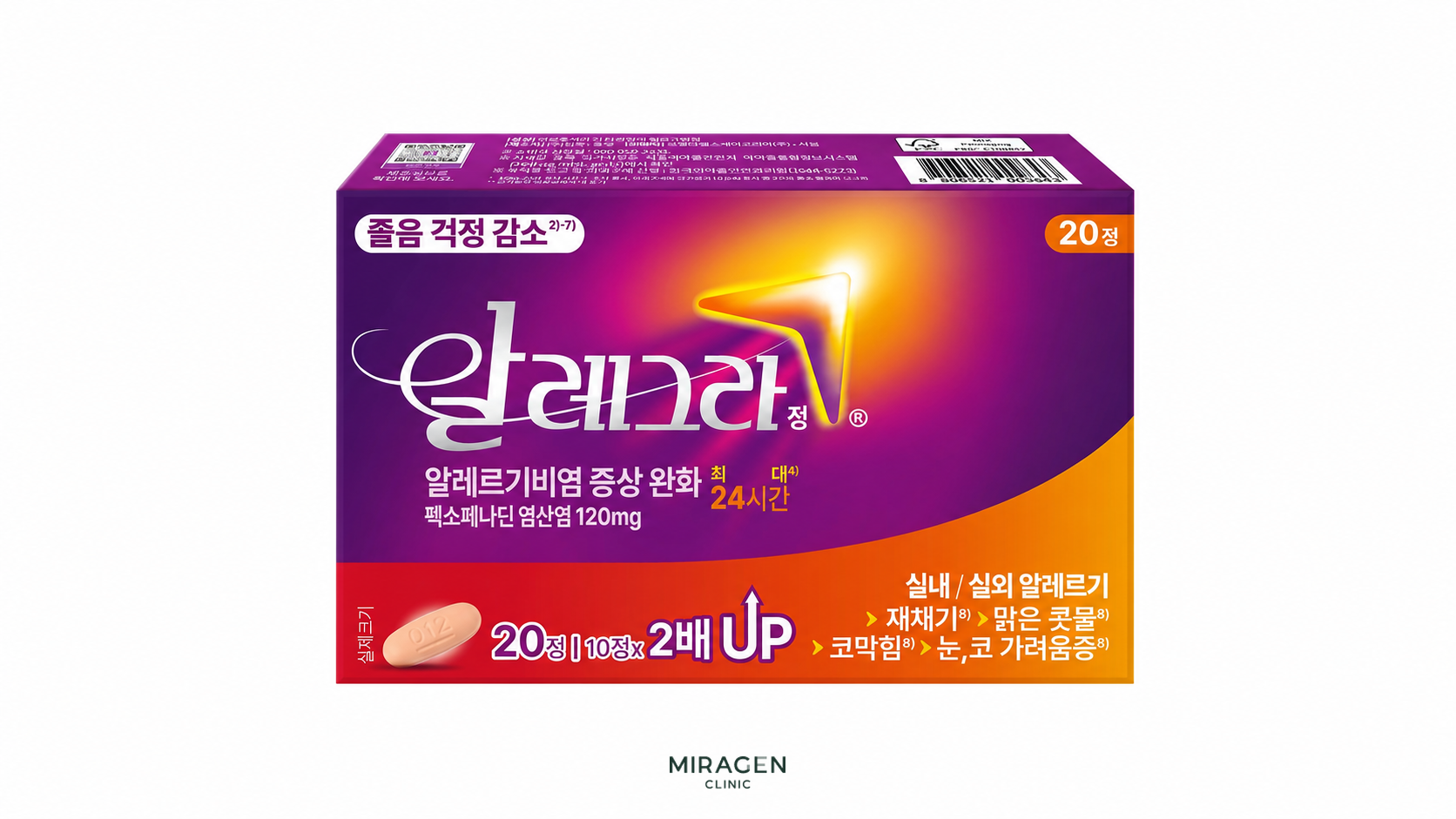
Allegra is commonly referred to as a third-generation antihistamine and is among the least drowsy options in its class.1,2 Because of this, it is frequently prescribed by doctors and is familiar to many patients.
However, its use varies by dosage, and certain strengths require a prescription. Since its effectiveness can change significantly depending on how it is taken, it is important to understand the proper usage guidelines.3
One of the least drowsy antihistamines
Allegra contains fexofenadine, the primary active metabolite of terfenadine, as its active ingredient.3,4 Because terfenadine is a second-generation antihistamine, many refer to fexofenadine as third-generation.
Unlike other antihistamines, particularly first-generation ones, fexofenadine hardly enters the brain and barely blocks H1 receptors in the brain, resulting in less drowsiness.5 A comprehensive analysis of 51 clinical trials involving a total of 14,551 participants found that fexofenadine had less sedative effect than other second-generation antihistamines and generally had a smaller impact on cognitive function and motor performance.2
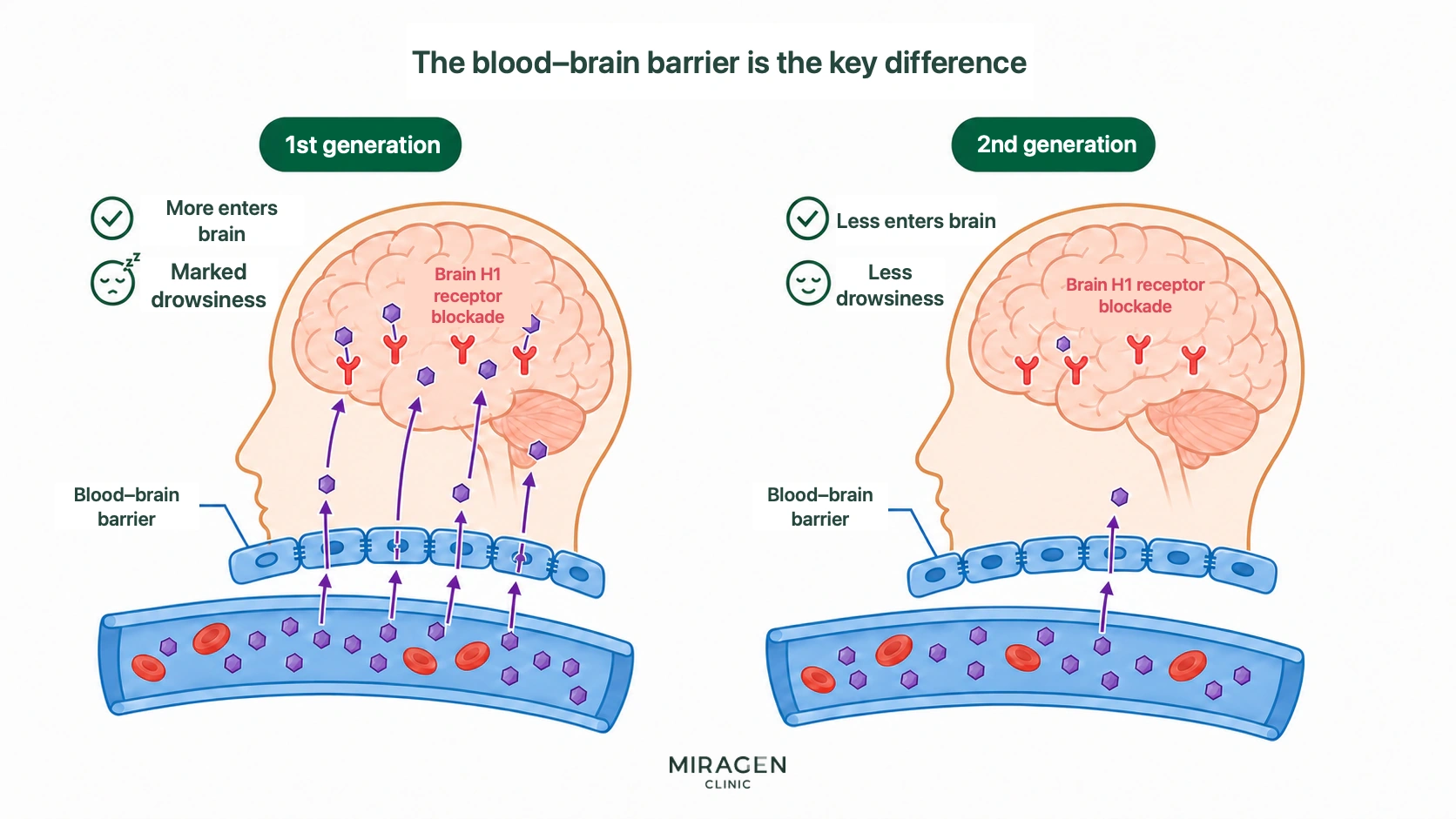
It also has fewer anticholinergic side effects
First-generation antihistamines bind to muscarinic receptors as well, which can cause anticholinergic side effects such as dry mouth, constipation, urinary difficulty, blurred vision, confusion, and delirium.6,7
In contrast, fexofenadine in Allegra binds poorly to muscarinic receptors, resulting in fewer anticholinergic side effects. This makes it even more suitable than first-generation antihistamines when antihistamine therapy is needed for elderly patients.4,6
However, elderly patients may have reduced kidney function, so the dosage should be determined based on renal function.4
Differences by dosage
Dosage is not simply a matter of potency. The intended use, target patient group, and prescription requirements vary depending on the dosage.
| Dosage | Approved Use | Target Audience | Prescription | Administration |
|---|---|---|---|---|
| 120mg | Allergic Rhinitis | Ages 12 and older | Not required | Take once daily with water before meals.3 |
| 180mg | Chronic Idiopathic Urticaria | Ages 12 and older | Required | Take once daily with water before meals.8 |
| 30mg | Allergic Rhinitis · Chronic Idiopathic Urticaria | Ages 6 to 11 | Required | Take twice daily with water before meals.9 |
However, as mentioned above, if kidney function is impaired, the dosage must be adjusted differently from the usual case. This is because the drug is eliminated from the body more slowly, so even at the same dose, it remains in the body longer.8
For adults with renal impairment, the starting dose is 60 mg once daily rather than 180 mg, and children aged 6 to 11 with renal impairment should take 30 mg once daily instead of twice daily.8,9
Must be taken with water before meals
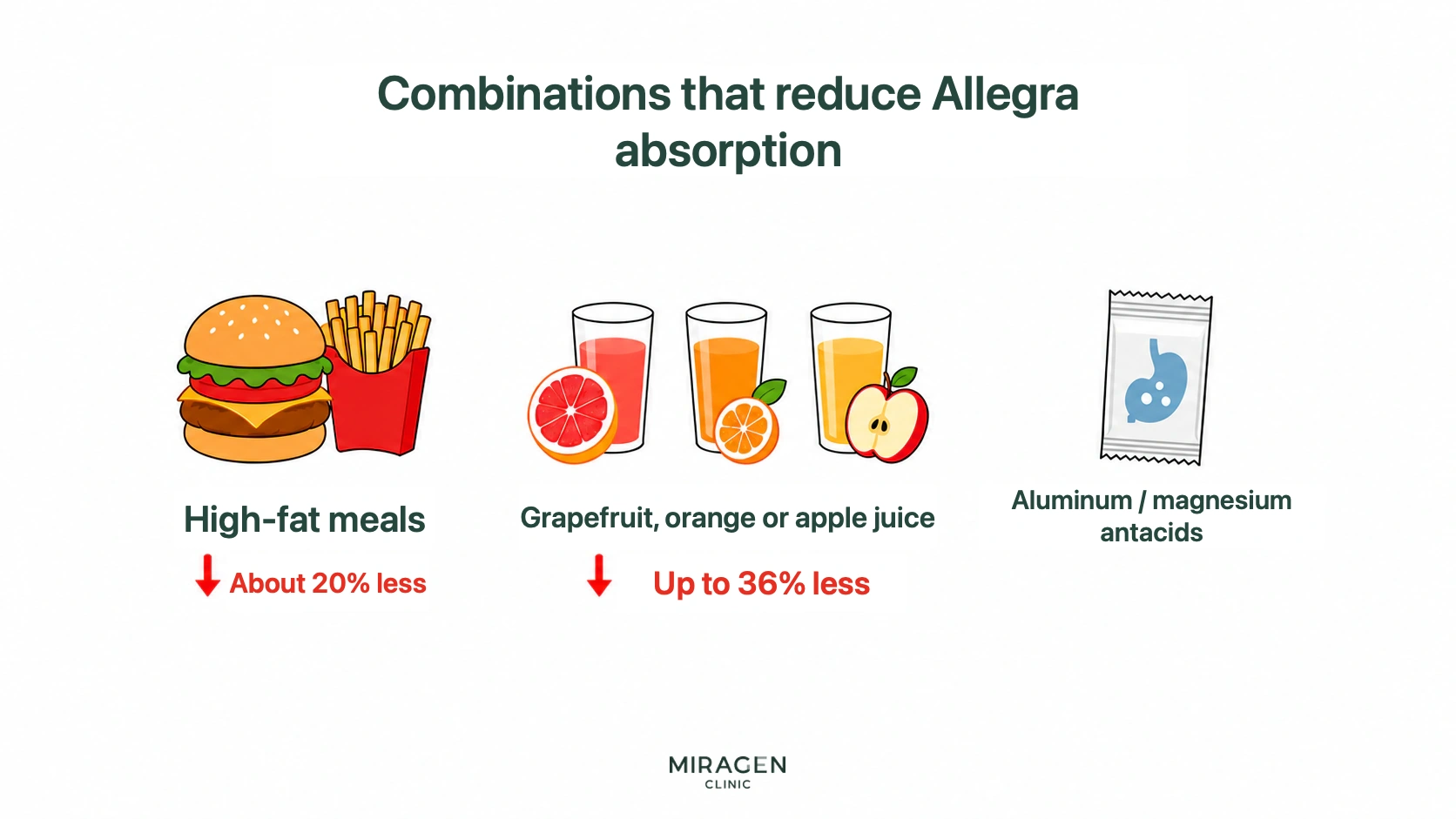
Allegra’s effectiveness can vary significantly depending on how it is taken, so it must be taken with water before meals. Studies show that taking fexofenadine with a high-fat meal reduced total absorption and peak blood concentration by approximately 20%.3,4
The effect is even more pronounced with fruit juices. Taking it with grapefruit juice, orange juice, or apple juice instead of water can reduce absorption by up to 36%, so it must be taken with water.8
Caution is also needed with antacids for heartburn. Squeeze-pack antacids include aluminum–magnesium products such as Gelphos and alginate products such as Gaviscon.10,11 Aluminum–magnesium antacids can interfere with fexofenadine absorption, so allow about two hours between them.8
Not effective for all types of itching
Allegra is effective for itching associated with hives, and international urticaria guidelines recommend modern second-generation antihistamines like fexofenadine as the first-line treatment for urticaria.1,8
Conversely, a 2026 meta-analysis of 6,230 patients with atopic dermatitis across 47 clinical trials found that the itch-reducing effect of antihistamines was not significant enough for patients to notice a difference.12 While fexofenadine is one of the most advanced antihistamines, it cannot overcome the inherent limitations of the drug class. For more details, please refer to our article on antihistamines.
Frequently Asked Questions
Can I buy Allegra Tablets without a prescription?
The 120mg 10-tablet pack is an over-the-counter (OTC) drug for relieving allergic rhinitis symptoms and can be purchased without a prescription. However, the 180mg and 30mg versions are prescription-only medicines.3
Are Allegra Tablets completely non-drowsy?
While it is less drowsy than the average for other second-generation antihistamines, it is not entirely non-drowsy. South Korean approval data reports drowsiness, dizziness, and nausea in 1–3% of cases.2,13
Is it effective for atopic dermatitis itching?
It has limited effectiveness for atopic itching. Even when oral antihistamines were added to existing atopic dermatitis treatments, the reduction in itching was not significant enough for patients to notice.12
References
- Zuberbier T, Abdul Hameed Ansari Z, Abdul Latiff AH, et al. The International Guideline for the Definition, Classification, Diagnosis and Management of Urticaria. Allergy. 2026;81(8):2582-2632. PMID 41649409.
- Huang CZ, Jiang ZH, Wang J, et al. Antihistamine effects and safety of fexofenadine: a systematic review and Meta-analysis of randomized controlled trials. BMC Pharmacol Toxicol. 2019;20(1):72. PMID 31783781.
- Allegra Tab. 120mg Product Information, Allegra Official Website, Accessed 2026-08-22.
- Fexofenadine Hydrochloride Tablet Approval Information, DailyMed, Accessed 2026-08-22.
- Kawauchi H, Yanai K, Wang DY, et al. Antihistamines for allergic rhinitis treatment from the viewpoint of nonsedative properties. Int J Mol Sci. 2019;20(1):213. PMID 30626077.
- 2023 American Geriatrics Society Beers Criteria Update Expert Panel. American Geriatrics Society 2023 updated AGS Beers Criteria for potentially inappropriate medication use in older adults. J Am Geriatr Soc. 2023;71(7):2052-2081. DOI 10.1111/jgs.18372.
- Welsh TJ, van der Wardt V, Ojo G, Gordon AL, Gladman JRF. Associations Between Anticholinergic Medication Exposure and Adverse Health Outcomes in Older People with Frailty: A Systematic Review and Meta-analysis. Medicina. 2021;57(11):1230. PMCID PMC8605959. DOI 10.3390/medicina57111230.
- Allegra Tab. 180mg Approval & Medication Information, Korea Pharmaceutical Information Center · MFDS Approval Data, Accessed 2026-08-22.
- Allegra Tab. 30mg Approval & Medication Information, Korea Pharmaceutical Information Center · MFDS Approval Data, Accessed 2026-08-22.
- Gelfos M Suspension Medication Guide, Korea Pharmaceutical Information Center · Ministry of Food and Drug Safety Approval Data, Accessed 2026-08-22.
- Gaviscon Peppermint Suspension Medication Guide, Korea Pharmaceutical Information Center · Ministry of Food and Drug Safety Approval Data, Accessed 2026-08-22.
- Chu AWL, Wen A, Guyatt GH, et al. Antihistamines for atopic dermatitis (eczema): systematic review and network meta-analysis of randomised trials. BMJ. 2026;394:e100163. PMID 42526949.
- Allegra Tab. 120mg Product Information, Korea Pharmaceutical Information Center · Ministry of Food and Drug Safety Approval Data.