

If I were to prescribe an antihistamine to patients with atopic dermatitis who suffer from nocturnal itching, Adipam would be the first one that comes to mind.
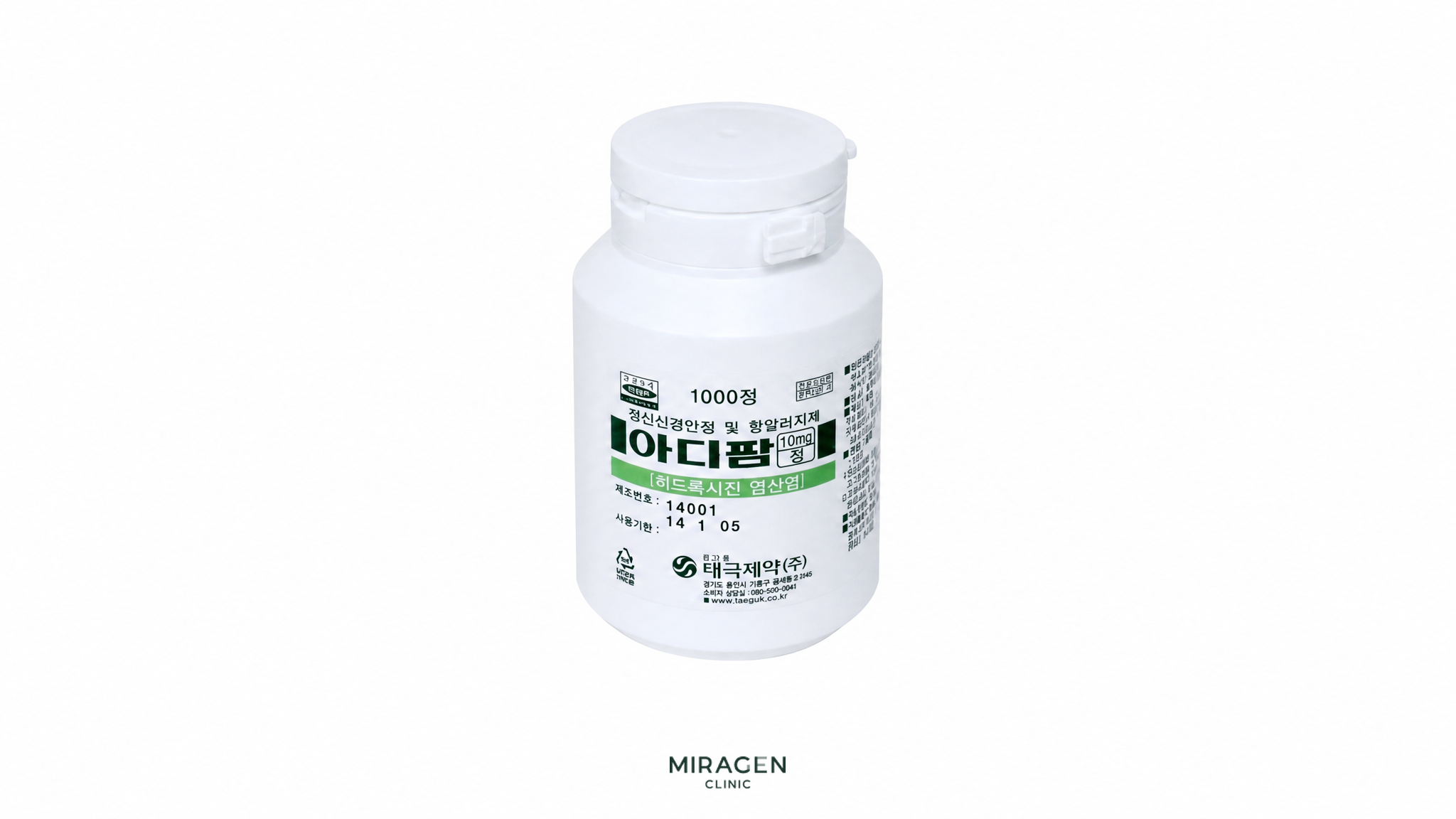
Adipam is a first-generation antihistamine containing 10mg of hydroxyzine hydrochloride. In Korea, it is approved not only for itching associated with urticaria and skin diseases but also as an anxiolytic for anxiety, tension, and restlessness. Although not approved for insomnia, it has been studied as a medication that reduces sleep onset latency and improves subjective sleep quality by blocking arousal effects via H1 receptors in the brain.1,2
For patients who struggle to sleep due to atopic itching, if the sedative effect is utilized short-term, the three purposes of reducing itching, inducing sleep, and reducing anxiety naturally overlap, making it, in my personal assessment, the most suitable antihistamine.
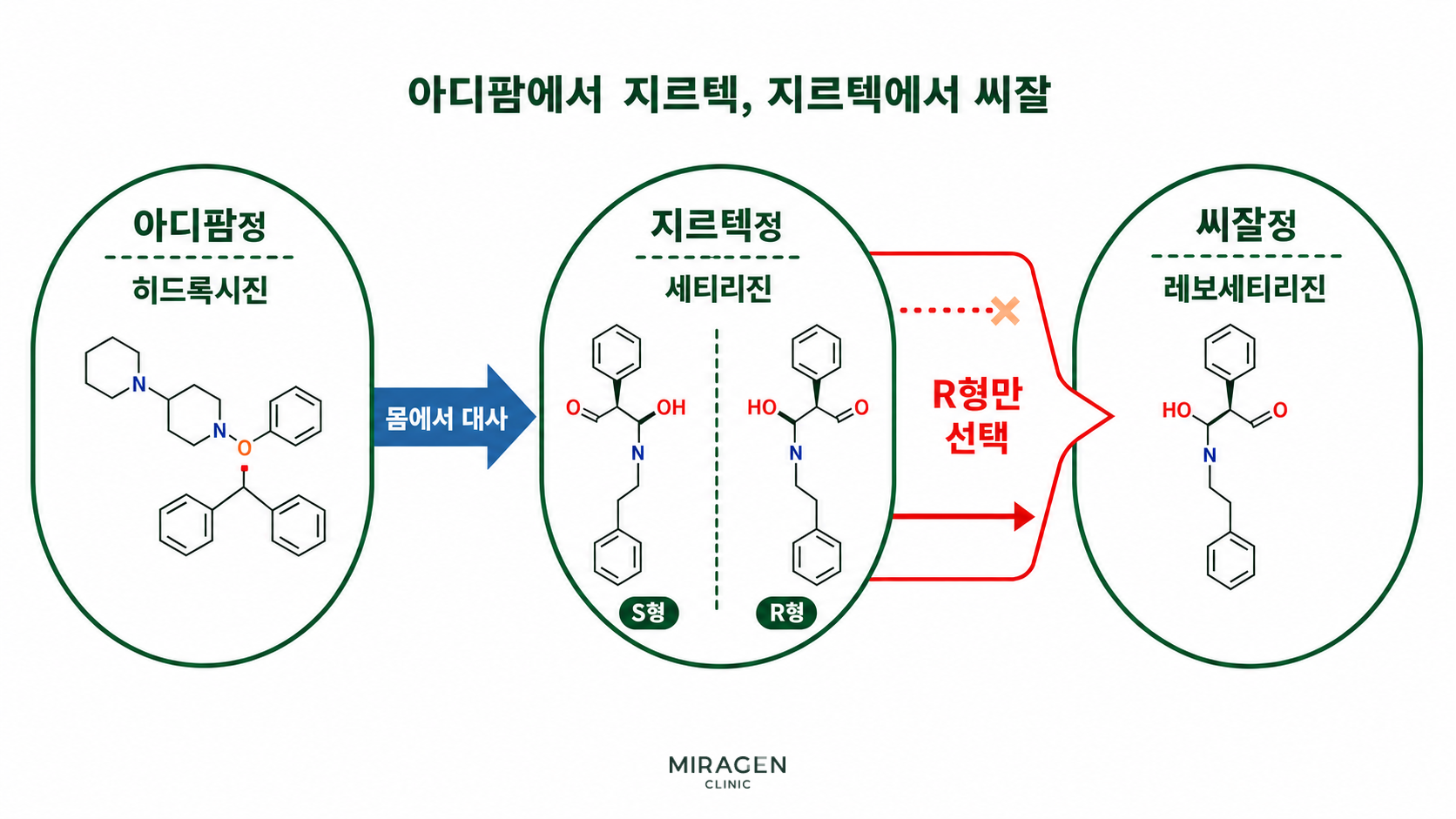
Its lineage of ingredients is also unique. From hydroxyzine in Adipam, cetirizine in the second-generation Zyrtec emerged, and then by selecting only one form of cetirizine, levocetirizine in Xyzal, often called the third-generation, was created.3
목차
How Antihistamines Reduce Allergic Symptoms
Antihistamines reduce allergic symptoms by preventing already secreted histamine from binding to H1 receptors.4
- When an allergic reaction begins, histamine is released from mast cells.
- When histamine binds to H1 receptors in blood vessels, the vessels dilate, and gaps in the vessel walls widen. In the skin, fluid leaks into surrounding tissues, causing wheals, similar to mosquito bites.
- When histamine stimulates H1 receptors in sensory nerves, itching occurs. In the nose, sneezing and runny nose appear; in the eyes, itching, redness, and tearing.5,6
Antihistamines block H1 receptors, which are at the end of this process. Therefore, they are effective for urticaria, allergic rhinitis, and allergic conjunctivitis, but they are not medications that treat dermatitis itself. The effect of reducing itching in atopic dermatitis is also not significantly large on average.7
Drowsiness and Anticholinergic Side Effects of First-Generation Antihistamines
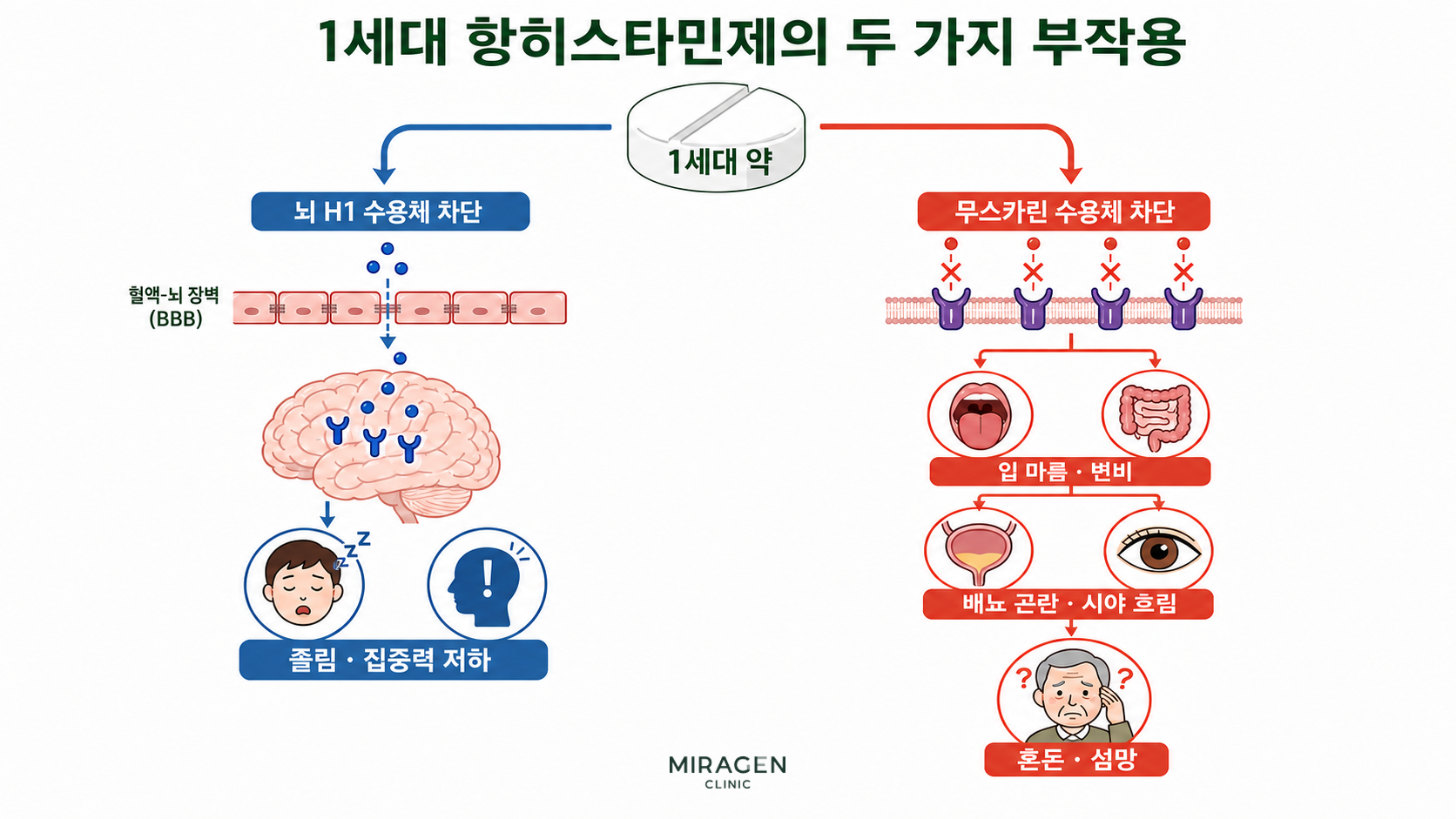
The first disadvantage of first-generation antihistamines is their ability to readily cross the blood-brain barrier. The blood-brain barrier is a filter that prevents substances in the blood from entering the brain indiscriminately, but hydroxyzine crosses this filter and blocks H1 receptors in the brain.
In the brain, histamine is involved in promoting wakefulness and maintaining concentration. Blocking this action can not only cause drowsiness but also reduce concentration and reaction speed. In a brain imaging study of 12 healthy adults, 25mg of hydroxyzine blocked more than half of the brain’s H1 receptors.8
The second disadvantage is that they do not selectively block only H1 receptors. First-generation antihistamines like hydroxyzine also act on muscarinic receptors, which can cause anticholinergic side effects such as those listed below.1,4
- Dry mouth · Constipation
- Urinary difficulty · Urinary retention
- Blurred vision
- Confusion
This is a clear disadvantage for medications used during the day. Therefore, second-generation antihistamines were developed to cross the blood-brain barrier less and block H1 receptors more selectively.
Adipam’s Drowsiness | From a Disadvantage to a Sleep-Inducing Effect
At night, the story changes. For patients unable to sleep due to itching, the drowsiness caused by Adipam can be utilized as a sleep-inducing effect. While other antihistamines like Pheniramine also cause drowsiness, hydroxyzine has the distinction of having its effects on sleep specifically studied.
In 2023, five studies involving 207 adults were compiled to analyze the sleep effects of hydroxyzine. Although the results for sleep onset latency, sleep maintenance, and sleep quality were not entirely consistent, some studies showed reduced sleep onset latency and improved subjective sleep quality. The researchers concluded that it could be considered a short-term option for adult insomnia when other methods are ineffective or difficult to use due to side effects.2
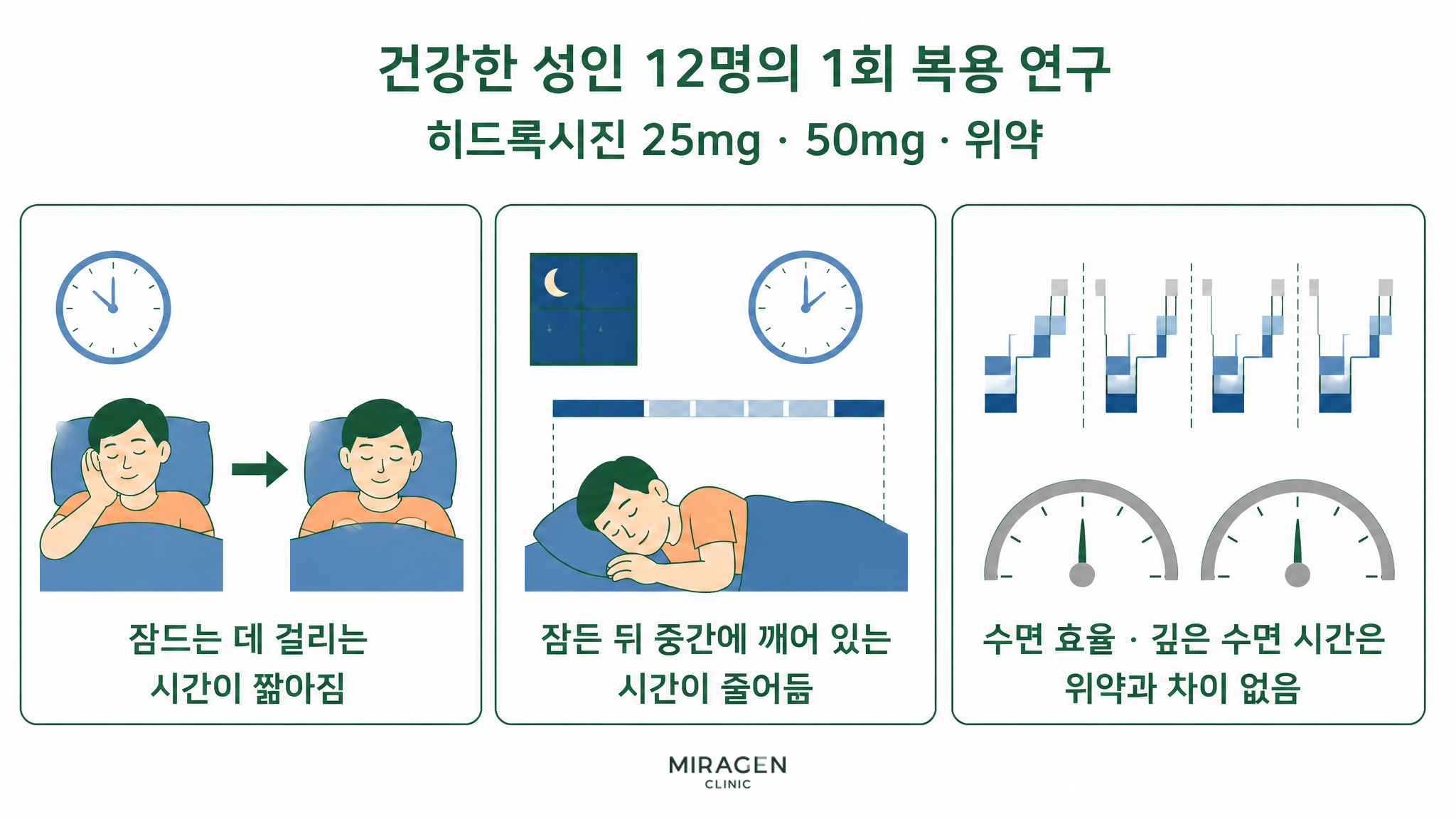
One of these studies involved 12 healthy adults who were given 25mg, 50mg of hydroxyzine, and a placebo once each. Both doses reduced sleep onset latency and the time spent awake after falling asleep. However, sleep efficiency and deep sleep duration did not differ from placebo.9
Serotonin Receptors and Anxiolytic Effects
Adipam is also approved as an anxiolytic in Korea.1
While hydroxyzine primarily acts by blocking H1 receptors, it also acts on muscarinic receptors and serotonin 5-HT2 receptors. This broad receptor action and central nervous system depression are thought to contribute to its anxiolytic effects, but the exact mechanism is not yet fully understood.10
However, the anxiolytic effect itself has been confirmed in clinical trials. In a 12-week double-blind study involving 334 adults with generalized anxiety disorder, hydroxyzine reduced anxiety scores more than placebo.11 A meta-analysis of 5 clinical trials, totaling 884 participants, also showed that hydroxyzine reduced anxiety symptoms more than placebo. However, due to the small number of studies and risk of bias, the evidence was not strong enough to recommend it as a first-line treatment for generalized anxiety disorder.10
For patients experiencing both nocturnal itching and anxiety, this anxiolytic action can also align with the prescribing objective. Therefore, there is an additional reason to choose Adipam over other first-generation antihistamines that merely cause drowsiness.
Adipam → Zyrtec → Xyzal
Adipam has a very traditional lineage. The improved version of Adipam is the second-generation Zyrtec, which I consider the most generally suitable antihistamine. And the further improved version of Zyrtec is Xyzal, often called the third-generation, which I prescribe most frequently.3,4
The main substance produced when hydroxyzine in Adipam is metabolized in the body is cetirizine, found in Zyrtec. This cetirizine is a mixture of two forms with mirror-image structures, and levocetirizine in Xyzal is an ingredient created by selecting only the R-form, which primarily acts on H1 receptors.
| Product | Ingredient | Commonly Called Generation | Improvement Direction |
|---|---|---|---|
| Adipam | Hydroxyzine | 1st Generation | Itching · Sedation · Anxiolytic effect |
| Zyrtec | Cetirizine | 2nd Generation | Reduced brain penetration and anticholinergic side effects compared to hydroxyzine |
| Xyzal | Levocetirizine | 3rd Generation | Only the R-form of cetirizine, which primarily acts on H1 receptors, is used |
All medications in the Adipam lineage have their respective advantages. Detailed information is summarized separately in the Zyrtec article and Xyzal article.
QT Interval and Anticholinergic Risks Must Be Checked First
Although Adipam is a first-generation antihistamine with its own advantages, it can cause ventricular arrhythmias and therefore cannot be used in the following cases:1,12
- Congenital or acquired prolonged QT interval
- Cardiovascular disease · Hypokalemia · Hypomagnesemia · Significant bradycardia
- Family history of sudden cardiac death
- Concomitant use of medications that prolong the QT interval
Adipam also cannot be used in cases of acute angle-closure glaucoma · pregnancy or lactation · porphyria. Patients with bladder outflow obstruction · decreased gastrointestinal motility · myasthenia gravis · and dementia should use it cautiously due to anticholinergic side effects. It is also not recommended for the elderly, as the drug is eliminated more slowly from the body and they are vulnerable to anticholinergic side effects.1,12
For patients without these risks, it is best to use Adipam at the lowest effective dose for the shortest possible duration.
References
- Adipam Approval Information · Medication Information, Pharmaceutical Information Service · Ministry of Food and Drug Safety Approval Data, confirmed 2026-08-30.
- Burgazli CR, Rana KB, Brown JN, Tillman F. Efficacy and safety of hydroxyzine for sleep in adults: Systematic review. Hum Psychopharmacol. 2023;38(2):e2864. PMID 36843057. DOI 10.1002/hup.2864.
- Chen C. Physicochemical, pharmacological and pharmacokinetic properties of the zwitterionic antihistamines cetirizine and levocetirizine. Curr Med Chem. 2008;15(21):2173-2191. PMID 18781943.
- Simons FE, Simons KJ. H1 antihistamines: current status and future directions. World Allergy Organ J. 2008;1(9):145-155. PMID 23282578.
- Naclerio RM, et al. J Allergy Clin Immunol. 1989;83(4):755-761. PMID 2574550.
- Hingorani M, et al. J Allergy Clin Immunol. 2001;108(3):449-454. PMID 11544467.
- Chu AWL, Wen A, Guyatt GH, et al. Antihistamines for atopic dermatitis (eczema): systematic review and network meta-analysis of randomised trials. BMJ. 2026;394:e100163. PMID 42526949.
- Farré M, Pérez-Mañá C, Papaseit E, et al. Bilastine vs. hydroxyzine: occupation of brain histamine H1-receptors evaluated by positron emission tomography in healthy volunteers. Br J Clin Pharmacol. 2014;78(5):970-980. PMID 24833043.
- Alford C, Rombaut N, Jones J, Foley S, Idzikowski C, Hindmarch I. Acute effects of hydroxyzine on nocturnal sleep and sleep tendency the following day: A C-EEG study. Hum Psychopharmacol. 1992;7(1):25-35. DOI 10.1002/hup.470070104.
- Guaiana G, Barbui C, Cipriani A. Hydroxyzine for generalised anxiety disorder. Cochrane Database Syst Rev. 2022;3:CD006815. DOI 10.1002/14651858.CD006815.pub2.
- Llorca PM, Spadone C, Sol O, et al. Efficacy and safety of hydroxyzine in the treatment of generalized anxiety disorder: a 3-month double-blind study. J Clin Psychiatry. 2002;63(11):1020-1027. PMID 12444816. DOI 10.4088/jcp.v63n1112.
- European Medicines Agency. New restrictions to minimise the risks of effects on heart rhythm with hydroxyzine-containing medicines. 2015-03-27. 2026-08-30 확인.
Frequently Asked Questions
Can Adipam help when it’s difficult to sleep due to atopic itching?
Adipam is not a medication that treats dermatitis itself, and its effect on reducing itching in atopic dermatitis is not significantly large on average. However, some studies have shown it reduces sleep onset latency and improves subjective sleep quality, allowing its sedative effect to be utilized short-term for patients who struggle to sleep due to nocturnal itching. It is not approved for insomnia.
What is the relationship between Adipam, Zyrtec, and Xyzal?
When hydroxyzine in Adipam is metabolized in the body, cetirizine, the active ingredient in Zyrtec, is produced. Levocetirizine in Xyzal is an ingredient created by selecting only the R-form, which primarily acts on H1 receptors, from the two forms that make up cetirizine.
Who should not use Adipam?
Patients with a prolonged QT interval (congenital or acquired), cardiovascular disease, hypokalemia, hypomagnesemia, significant bradycardia, or a family history of sudden cardiac death cannot use it. It also cannot be used if taking medications that prolong the QT interval, or in cases of acute angle-closure glaucoma, pregnancy or lactation, or porphyria. It is not recommended for the elderly.

We treat atopic dermatitis, rosacea, and seborrheic dermatitis.
Thanks to the valuable reviews you have shared in the community, many of you visit us even from far away.
We will repay you with sincere, attentive care.
DK Han
Chief Director, MIRAGEN Clinic
Graduate of University of Michigan, Ross School of Business
Graduate of Chungnam National University School of Medicine
(Former) Representative Director of Ewha Phoenix Rehabilitation Hospital
(Current) Representative Director of MIRAGEN Clinic


