When we ask dermatitis patients which moisturizer they use, Zeroid MD is one of the most common names mentioned. However, a significant number of patients report that their itching actually worsened after diligent application of Zeroid MD.
Why does it fail to work even after searching every ingredient online, reading reviews thoroughly, and choosing it because its medical device grade suggests safety?
First, we will introduce the Zeroid MD lineup and the test data for each product, then explain the fundamental reasons why ingredient lists cannot guarantee compatibility and how to minimize trial and error.
Zeroid MD Lineup
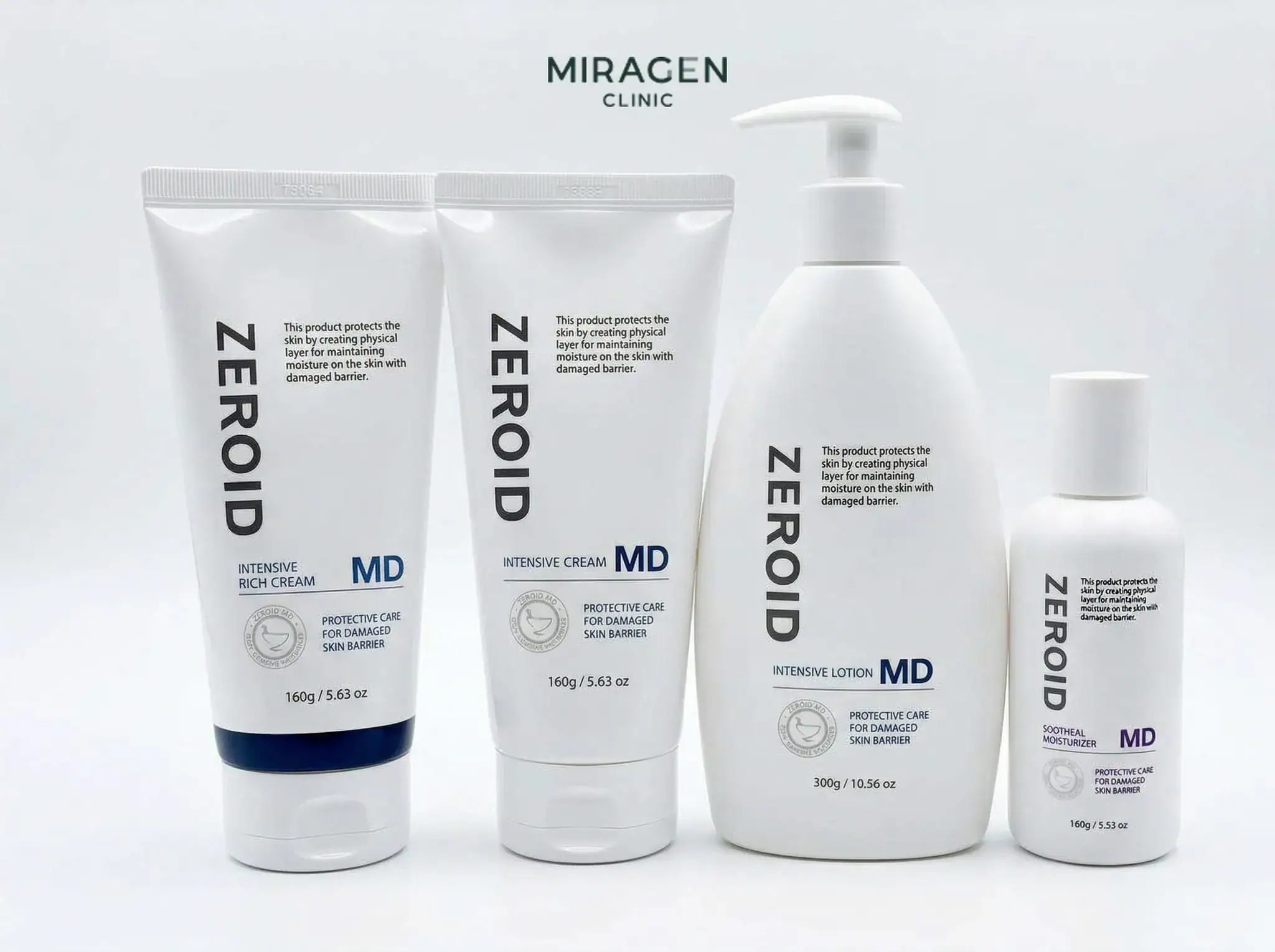
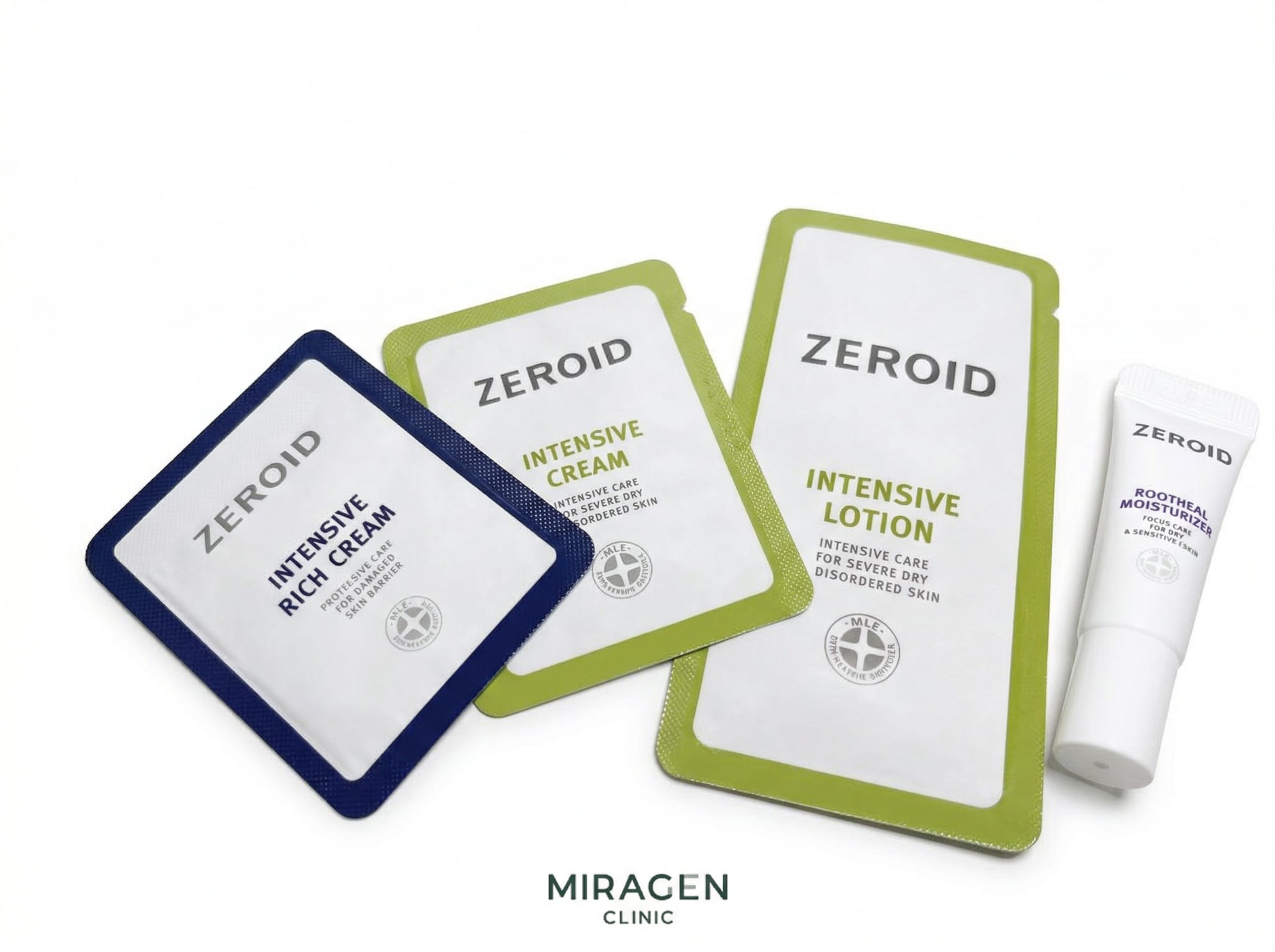
The Zeroid MD line consists of four different moisturizing products.
- Zeroid Intensive Rich Cream MD — Offers the highest level of hydration and is primarily used for the face. We consider it first for patients without acne and with low sebum production.
- Zeroid Intensive Cream MD — Provides the next highest level of hydration after the Rich Cream and is primarily used for the face.
- Zeroid Intensive Lotion MD — A lighter formulation than the cream, making it ideal for the body as it spreads easily over large areas. It is also less burdensome for patients with high sebum secretion.
- Zeroid Rootheal Moisturizer MD — Suitable for those with seborrheic dermatitis on the scalp. Since oily moisturizers can feed Malassezia and worsen seborrheic dermatitis, a low-oil lotion such as Rootheal may be suitable. For more details, please refer to the Seborrheic Dermatitis Guide page.
Based on patch tests conducted at our clinic on 113 dermatitis patients using these four products, Zeroid Intensive Rich Cream MD showed the lowest percentage of irritation, while Rootheal Moisturizer MD showed the highest. The trend of stronger moisturizing power correlating with lower irritation was common across several brands. It is suspected that thinner formulations have higher preservative content due to their higher water ratio.
It is important to note that even for Zeroid Intensive Rich Cream MD, our data shows that over 25% of patients experienced an irritation response during patch testing.
If we also consider cases where acne is worsened by clogged pores due to high moisturizing power, the percentage of patients who feel the product is “not a good fit” would be even higher.
In short, even the most excellent moisturizer will not suit everyone.
Why Moisturizers Can Irritate Dermatitis Patients
So why do moisturizers become a problem? There is no doubt that moisturizers protect the skin. A Cochrane systematic review also showed that atopic dermatitis patients who consistently used moisturizers saw significant benefits in terms of recurrence rates and steroid usage.1
However, the situation is different for patients with a weakened skin barrier.
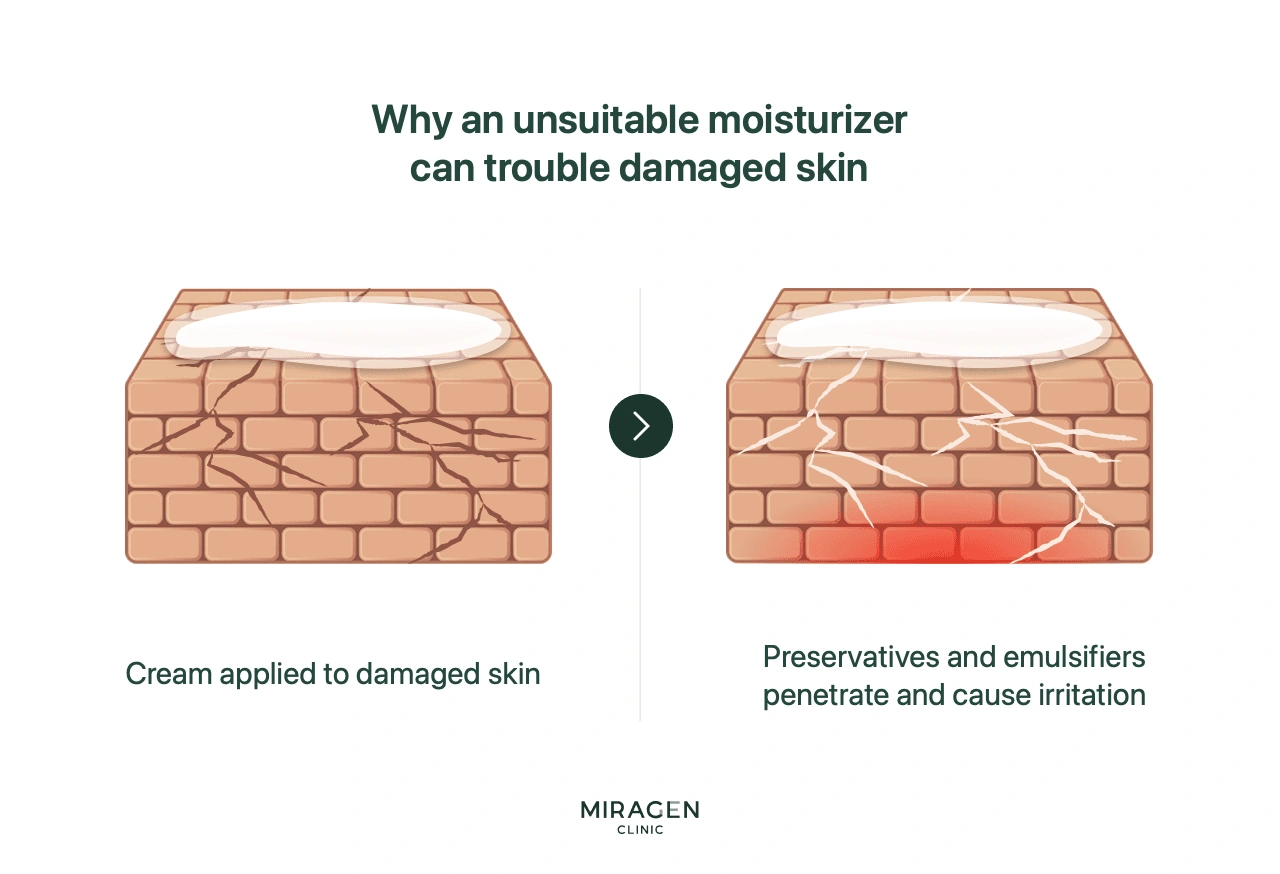
When the barrier is strong, the moisturizer stays on the surface to act as a protective shield, but when the barrier is compromised, it can seep into the skin and trigger inflammation.
Therefore, dermatitis patients need a moisturizer that does not cause issues even if small amounts penetrate the skin.
Why Ingredient Analysis Is Not the Answer
Many dermatitis patients analyze ingredient lists to find such moisturizers, but this approach has limitations for the following reasons.
First, ingredients do not work in isolation. Even with the same ingredient, skin reactions vary depending on concentration, formulation, pH, and the combination of auxiliary ingredients. For ceramides, the ratio between lipids is more important for barrier recovery than their mere presence.2
Second, there are differences in purification levels among raw material suppliers. Even with the same INCI name, reactions can vary if the types and amounts of impurities differ. Therefore, even if the ingredient lists appear identical, the skin’s reaction may not be the same.
Third, individual responses to the same ingredient vary. For example, atopic dermatitis patients exhibit significantly higher delayed allergic reactions to preservatives than the general population.3 No amount of ingredient analysis can account for these individual sensitivity differences.
Consequently, the only way to know if Zeroid MD or any other moisturizer truly suits you is to actually apply it to the affected area.
How to Reduce Trial and Error
However, it is risky to find the right product by applying various moisturizers directly to the affected areas, as an incompatible moisturizer can worsen dermatitis.
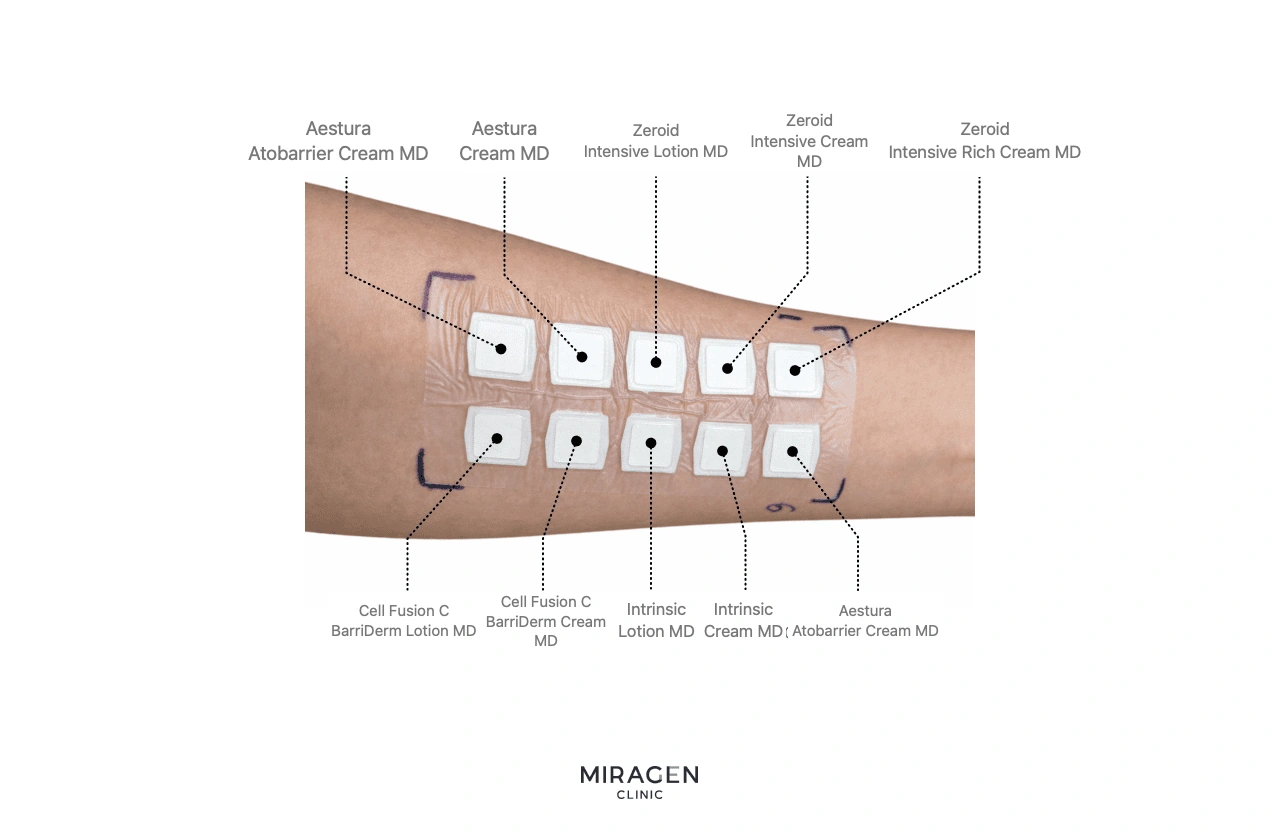
A more systematic way to reduce trial and error is to test multiple moisturizers simultaneously on a non-affected area and then apply only the samples of the products that passed that test to the actual lesions.
To see how we assist with this process, please check the MD Cream Guide.
Frequently Asked Questions
Why might Zeroid MD cause stinging or itching?
This occurs because moisturizer ingredients penetrate deeper than normal when the skin barrier is weakened. Ingredients like emulsifiers or preservatives, which should stay on the surface when the barrier is healthy, can enter through gaps in the stratum corneum and trigger irritation or allergic reactions. This is often a matter of the skin barrier’s condition rather than a problem with Zeroid MD itself.
Which should I choose among Zeroid MD Rich Cream, Cream, and Lotion?
The decision is made after checking sebum levels through a Wood’s lamp examination and clinical findings. If sebum secretion is low and dryness is severe, Intensive Rich Cream MD (the strongest moisturizer) is suitable. Intensive Cream MD is used for general facial moisturizing, and Intensive Lotion MD is appropriate for the body or areas with high sebum secretion. For the scalp, Rootheal Moisturizer MD is used because oily formulations can irritate Malassezia.
How does Zeroid MD compare to other MD creams?
There are various MD cream brands such as Aestura, Cell Fusion C, and Intrinsic, each with multiple products. It is difficult to say which one is the best because the right product varies for each individual. Even within the same brand, some products may work well while others do not. Comparing multiple MD creams simultaneously through patch testing allows you to efficiently filter out products that do not suit your skin.
References
- van Zuuren EJ, Fedorowicz Z, Arents BWM. Emollients and moisturizers for eczema: abridged Cochrane systematic review including GRADE assessments. Br J Dermatol. 2017;177(5):1256-1271.
- Elias PM. Optimizing emollient therapy for skin barrier repair in atopic dermatitis. Ann Allergy Asthma Immunol. 2022;128(5):483-491.
- Shaughnessy CN, Malajian D, Belsito DV. Cutaneous delayed-type hypersensitivity in patients with atopic dermatitis: reactivity to topical preservatives. J Am Acad Dermatol. 2014;70(1):102-107.