Recently, Tofatas, a tofacitinib ointment, has become a hot topic in atopic dermatitis communities. Reviews are spreading rapidly, claiming it is a “steroid-free ointment with amazing effects” and that it can be “purchased directly from India.”
In fact, I have often seen patients in the clinic who are already using tofacitinib ointment through direct purchase, so I thought it would be helpful to summarize the details.
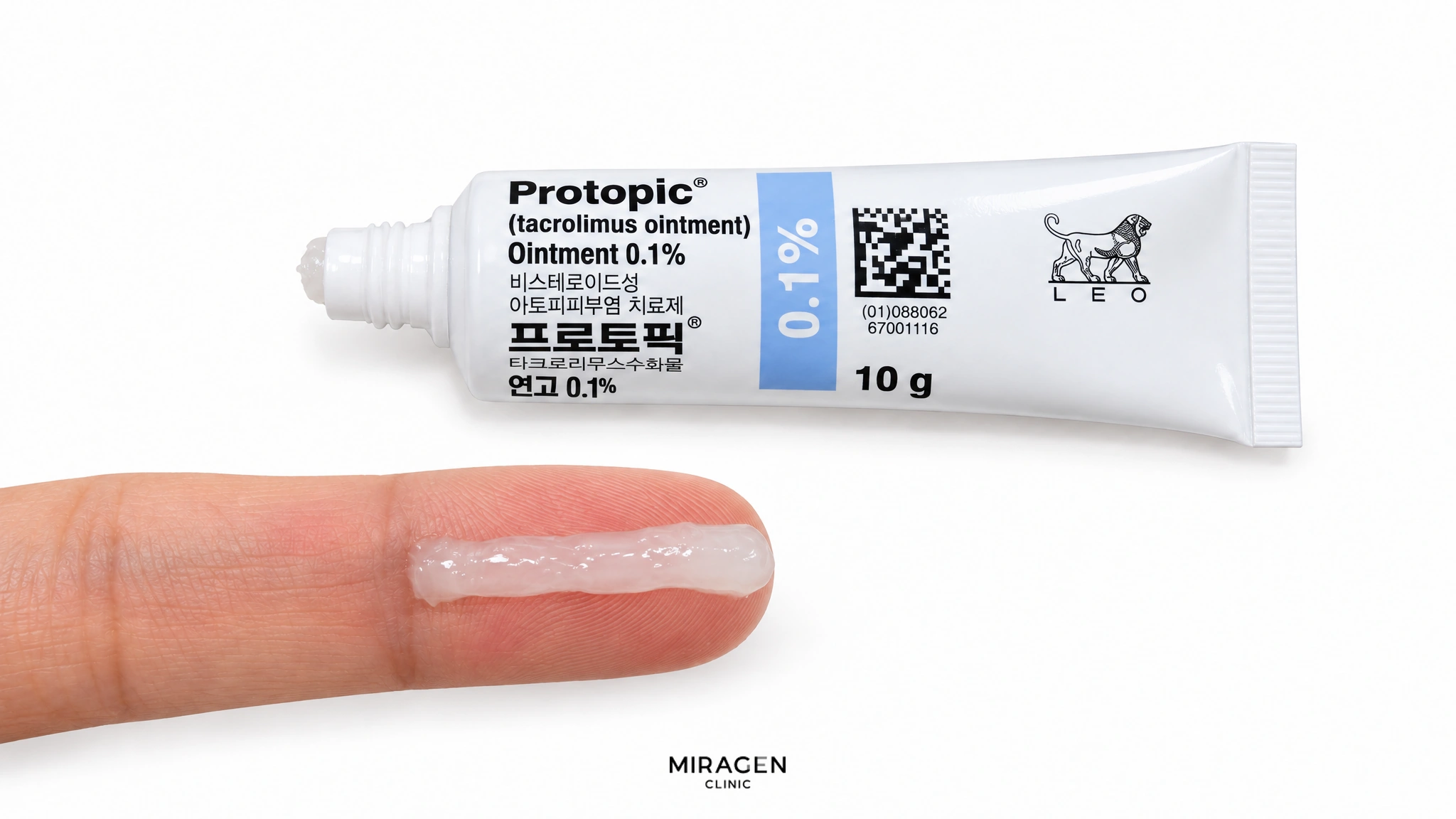
| Item | Tofacitinib Ointment 2% | Elidel 1% | Protopic 0.1% |
|---|---|---|---|
| Ingredients | Tofacitinib (JAK 1/3 inhibitor) | Pimecrolimus (Calcineurin inhibitor) | Tacrolimus (Calcineurin inhibitor) |
| Efficacy Level | Equivalent to Elidel (Based on Phase 3 clinical trials) | Lower than Protopic | Most potent |
| Approval in Korea | Not approved | Approved (Insurance covered) | Approved (Insurance covered) |
| Purchase Method | Direct purchase from India | Prescription | Prescription |
| Cost (Based on 30g) | Approx. 50,000 KRW (Purchase + Shipping) | Approx. 20,000 KRW | Approx. 20,000 KRW |
| Formulation · Texture | Ointment (Sticky) | Cream (Lightweight) | Ointment (Sticky) |
| Pore Clogging (Acne-inducing) | Present | Low | Present |
What is Tofacitinib? — JAK Inhibitors
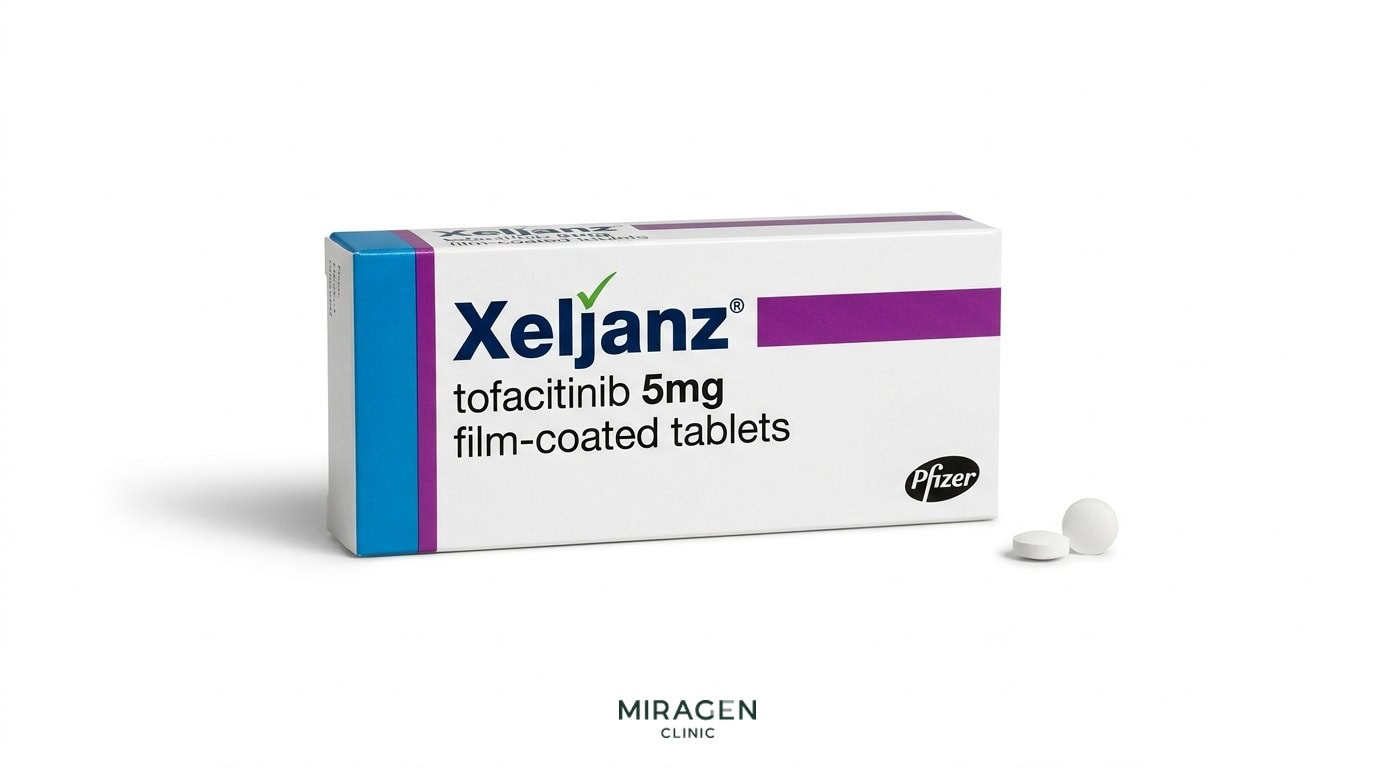
Tofacitinib is a JAK 1/3 inhibitor developed by Pfizer. Originally, it is used as an oral medication (Xeljanz) for rheumatoid arthritis and ulcerative colitis. Its mechanism involves blocking the JAK pathway, which transmits inflammatory signals in the skin, thereby reducing itching and eczema.
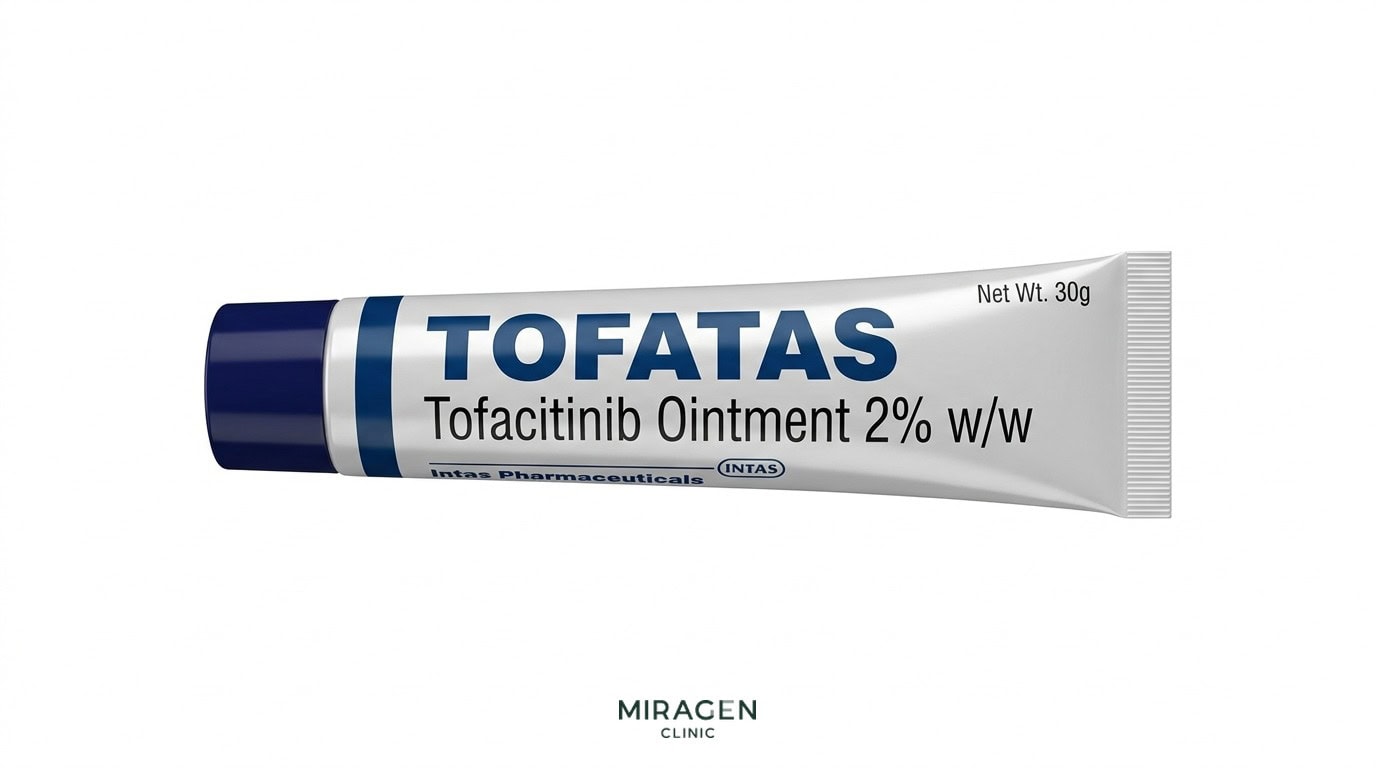
In 2016, Pfizer developed this ingredient into an ointment and conducted clinical trials for atopic dermatitis. Although the results were not bad, they subsequently discontinued the development of the ointment. Instead, the Indian pharmaceutical company Intas independently conducted Phase 3 clinical trials and received approval from the Drugs Controller General of India (DCGI) in 2023. This product is “Tofatas,” which is being purchased directly by community members.
In addition to Tofatas, various topical tofacitinib formulations are distributed in India. They contain the same active ingredient but differ in formulation and manufacturer.
| Product Name | Formulation | Manufacturer | Notes |
|---|---|---|---|
| Tofatas | Ointment 2% | Intas Pharmaceuticals | First DCGI approval in 2023, possesses Phase 3 clinical evidence |
| Tofajak | Ointment 2% | Cipla | Sold as both oral and ointment forms |
| Tobraza | Ointment 2% | Glenmark | Sold as both oral and ointment forms |
| Aztofa | Ointment 2% | Sun Pharma | OEM manufactured by Precise Biopharma |
| Tacotinib | Ointment 2% | Steris Pharma | For atopic dermatitis, psoriasis, and alopecia areata |
| Jakauto | Ointment/Gel 2% | Eris Oaknet | Targeting hair loss and atopic dermatitis |
| Tofadoz | Gel 2% | MSN Laboratories | Largest gel manufacturer in India |
| Tofanol | Ointment 2% | Knoll Healthcare | Both ointment and gel released |
Among these, only Intas’s Tofatas has clinical evidence. While other products use the same ingredient (Tofacitinib 2%), data verifying the base of the ointment or gel and the skin absorption rate has not been made public.
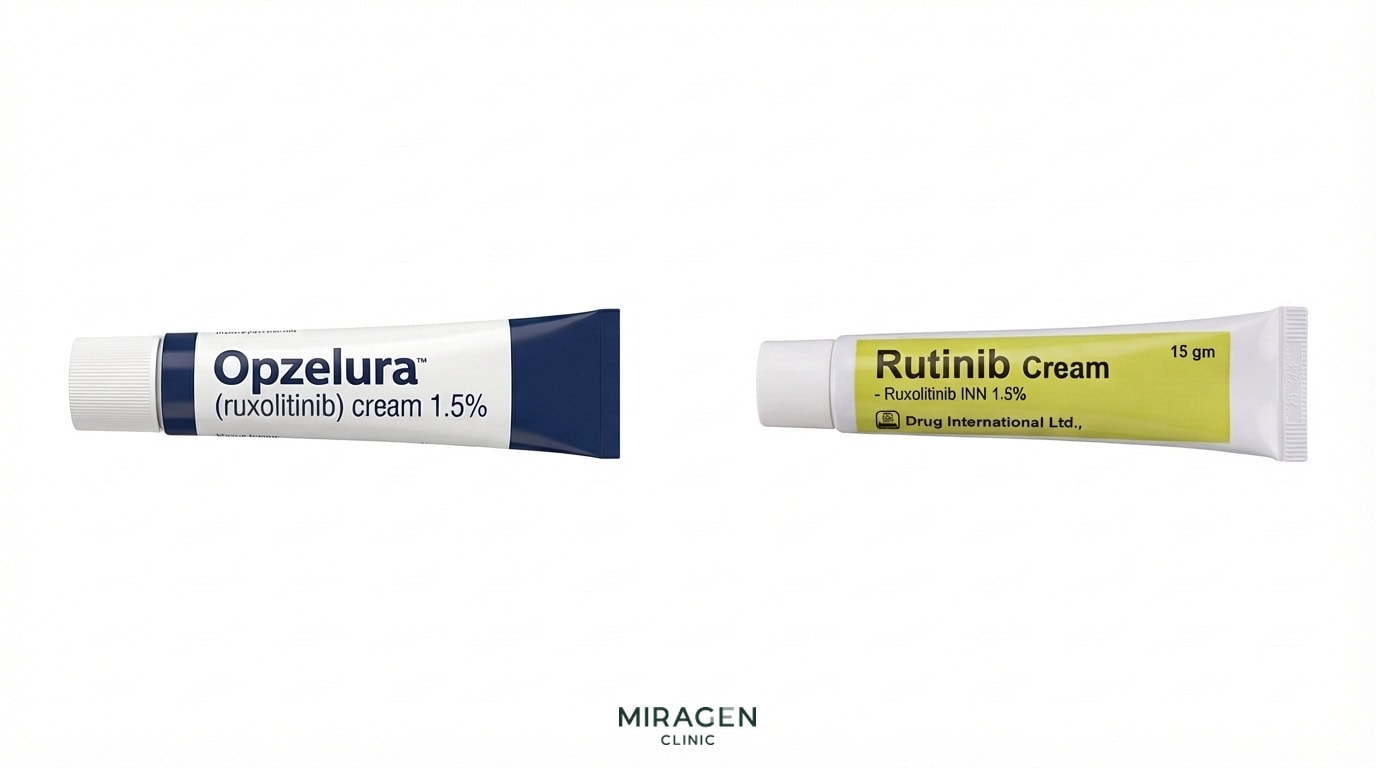
Other JAK inhibitor ointments include ruxolitinib (Opzelura, Rutinib). Opzelura has received US FDA approval but is not yet approved in South Korea.
The formulations also differ. While Opzelura and Rutinib are cream formulations with a lightweight application, tofacitinib (Tofatas) is an ointment formulation similar to Protopic, which has a sticky texture. In fact, a patient who purchased and used both products mentioned that Rutinib had a much better feel upon application.
Clinical Evidence — Efficacy is at the Level of Elidel
There are two main pieces of clinical evidence for tofacitinib ointment.
First, the 2016 Phase IIa clinical trial by Pfizer.1 This study compared tofacitinib ointment 2% with a placebo over 4 weeks in 69 patients with mild to moderate atopic dermatitis. EASI scores decreased by 81.7% in the tofacitinib group, compared to only 29.9% in the placebo group. Itching began to improve from the second day of application, and side effects were no different from the placebo.
Second, the Phase 3 clinical trial conducted in India in 2023.2 This trial directly compared tofacitinib ointment 2% with Elidel (pimecrolimus 1%). The results of the 4-week study involving 184 participants showed that both drugs significantly improved conditions compared to the baseline, but tofacitinib was not found to be superior to Elidel. The difference in EASI scores between the two drugs was 1.97 points, and the 95% confidence interval included 0.
In summary, the efficacy of tofacitinib ointment is at a similar level to Elidel.
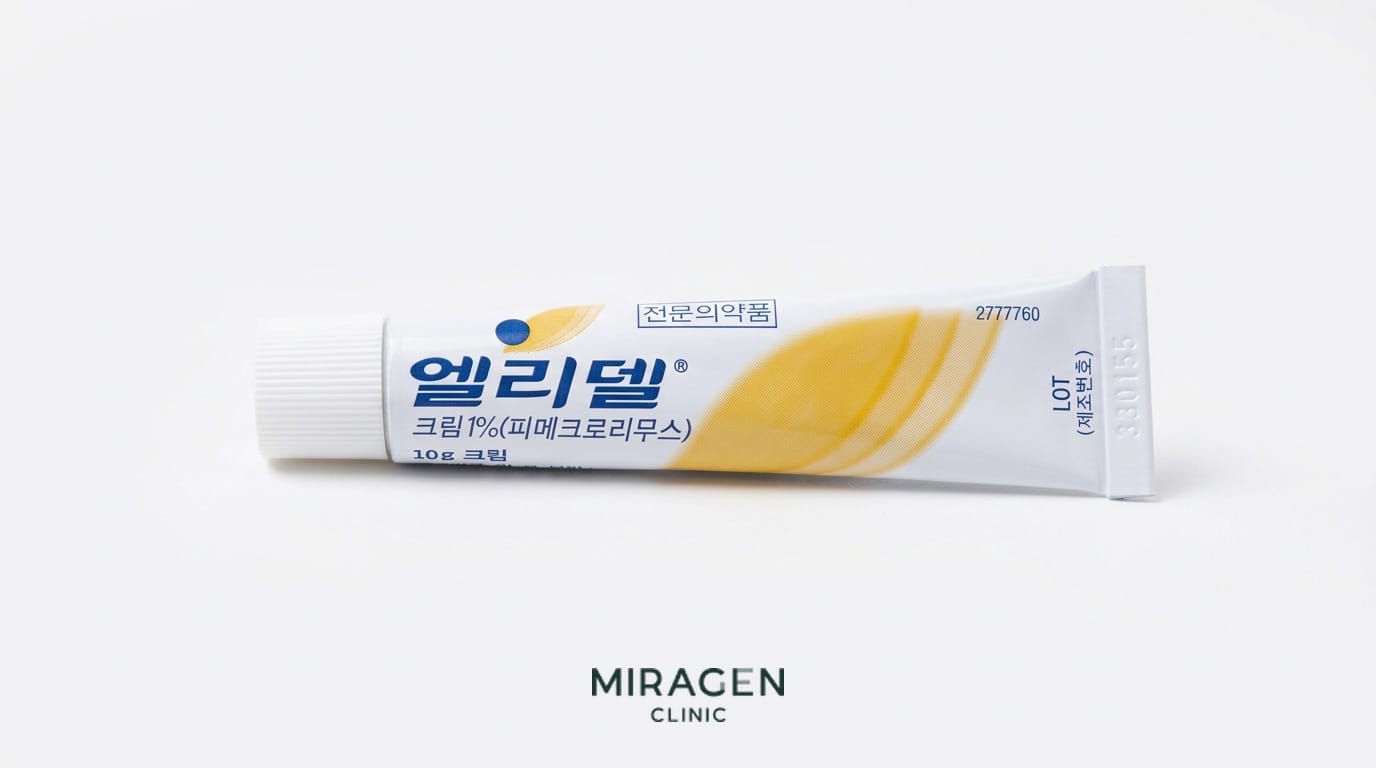
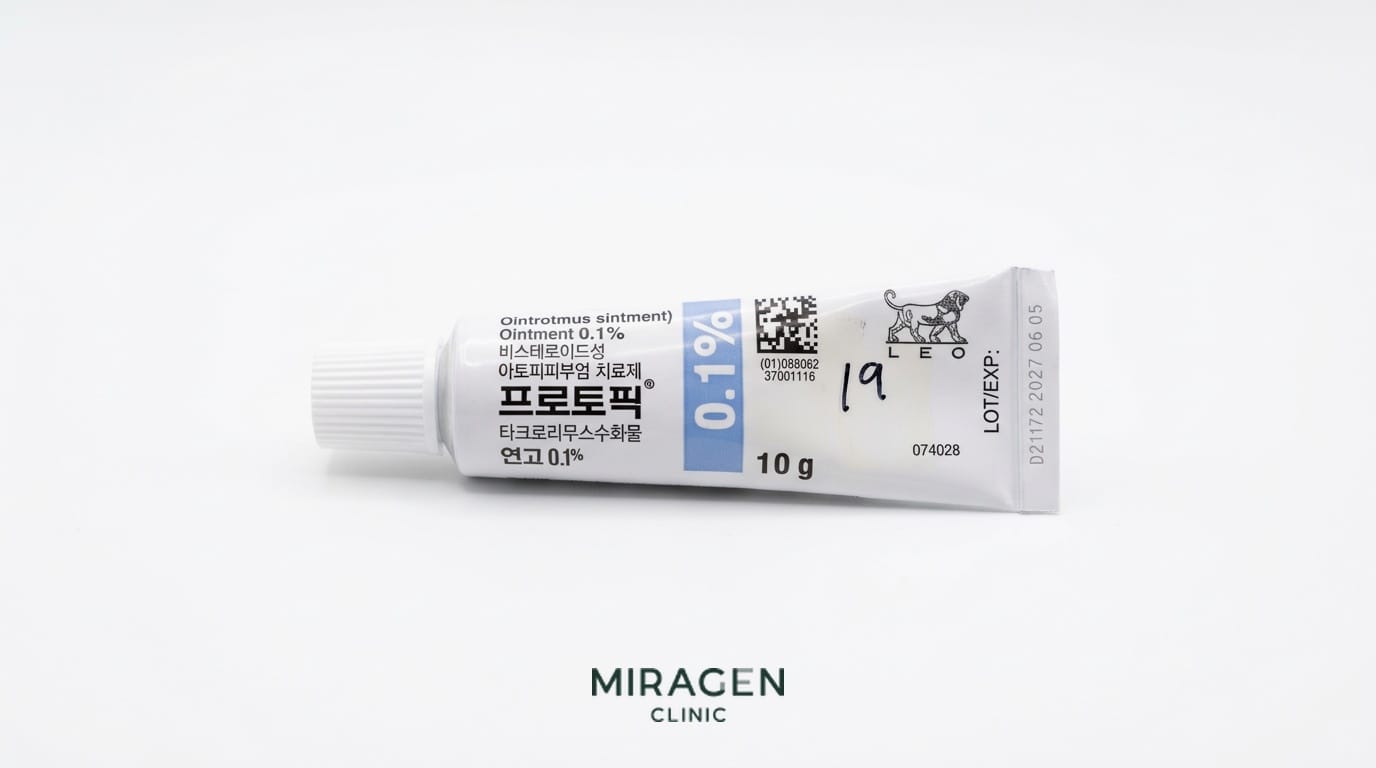
There is an important context here. Elidel is a medication with significantly lower efficacy than Protopic 0.1%, which is also a calcineurin inhibitor. For adult atopic dermatitis patients, I generally recommend Protopic 0.1% over Elidel. Protopic is approved in Korea, covered by insurance, and costs about 20,000 KRW for 30g when prescribed.
The difference in formulation cannot be ignored. Elidel is a cream, so it applies well and does not easily clog pores, whereas tofacitinib is an ointment formulation that can clog pores and cause acne. For atopic dermatitis patients who need to use it on their face for long periods, this difference is more significant than one might think.
Purchasing tofacitinib ointment directly from India costs about 50,000 KRW including shipping. If the efficacy is at the level of Elidel, and Elidel is less effective than Protopic, then getting a prescription for Protopic in Korea is a more rational choice in every aspect.
Do Safety Warnings for Oral Xeljanz Apply to the Ointment?
Searching for tofacitinib brings up alarming stories like “cardiovascular risk” and “increased cancer incidence.” These refer to the oral medication, Xeljanz.
In a large-scale clinical trial (ORAL Surveillance) published in the New England Journal of Medicine in 2022, 4,362 rheumatoid arthritis patients taking oral tofacitinib were followed for 4 years, and the incidence of cardiovascular events and cancer was higher than in the control group.3 Subsequently, the US FDA added a boxed warning to all oral JAK inhibitors.
So, is the topical ointment also dangerous?
According to Pfizer’s pharmacokinetic studies, when tofacitinib ointment 2% is applied to less than 50% of the body surface area, blood concentrations are much lower than when taking 5mg orally twice a day.4 This means that the amount absorbed systemically when applied as an ointment is extremely small. This characteristic has been similarly confirmed in other topical JAK inhibitors.5 It is difficult to apply the safety issues of oral medications directly to the ointment.
However, this pharmacokinetic data is based on the formulation used in Pfizer’s clinical trials. Whether Tofatas, purchased directly from India, shows the same absorption rate has not been independently verified.
Things to Consider Before Direct Purchase
The mechanism of tofacitinib ointment itself and the initial clinical results are certainly significant. However, there are several factors to consider before using it through direct purchase.
Doubts about the level of verification — Even with the same active ingredient, the base, stability, and skin penetration rate of the ointment can vary by manufacturer. While Tofatas is approved by the DCGI in India, the DCGI’s approval standards differ from those of the US FDA. There is no way to confirm if the ointment used in Pfizer’s clinical trials is of the same quality as the ointment distributed in India.
Lack of long-term safety data — To date, all clinical trials for tofacitinib ointment have lasted 4 weeks. Atopic dermatitis is a condition that requires management over months or years, but there is no data yet on use exceeding 4 weeks.
Proven alternatives already exist — Protopic 0.1% has decades of usage experience and accumulated long-term safety data, and it is more effective than Elidel, which tofacitinib ointment used as a comparator. It can be prescribed in Korea, is covered by insurance, and is inexpensive.
As it is discussed like a “miracle drug” in communities, expectations may be high. However, based on current evidence, it is not the right order to turn to direct purchase before sufficiently trying Protopic or Elidel. Please refer to the guide page for step-by-step treatment of atopic dermatitis.
Frequently Asked Questions
Is tofacitinib ointment a steroid?
It is not a steroid. It is a different class of immunomodulatory drug called a JAK inhibitor. While it does not cause skin atrophy or rebound phenomena like steroids, there is not yet enough safety data regarding long-term use.
Are tofacitinib ointment and Opzelura the same drug?
They belong to the same JAK inhibitor class but are different ingredients. Tofacitinib inhibits JAK 1/3, while ruxolitinib, the ingredient in Opzelura, inhibits JAK 1/2. Opzelura is US FDA-approved, but neither drug is approved in South Korea.
I am already using Protopic; do I need to switch to tofacitinib?
Based on current evidence, there is no reason to switch. The efficacy confirmed in Phase 3 clinical trials for tofacitinib ointment is at the level of Elidel, and Elidel is less effective than Protopic 0.1%. If Protopic is working well for you, there is insufficient evidence to justify switching to an unapproved drug via direct purchase.
References
- Bissonnette R, Papp KA, Poulin Y, et al. Topical tofacitinib for atopic dermatitis: a phase IIa randomized trial. Br J Dermatol. 2016;175(5):902-911.
- Chaturvedi AR, Zaveri HG, Patel DV. Topical Tofacitinib for Atopic Dermatitis – Outcomes from Randomized Phase 3 Clinical Trial: First Approval. Indian J Dermatol. 2026;71(1):44-50.
- Ytterberg SR, Bhatt DL, Mikuls TR, et al. Cardiovascular and Cancer Risk with Tofacitinib in Rheumatoid Arthritis. N Engl J Med. 2022;386(4):316-326.
- Purohit VS, Ports WC, Wang C, et al. Systemic Tofacitinib Concentrations in Adult Patients With Atopic Dermatitis Treated With 2% Tofacitinib Ointment and Application to Pediatric Study Planning. J Clin Pharmacol. 2019;59(6):811-820.
- Mazgaj J, Kotewicz M, Jaworek A. The future of topical JAK inhibitors in the treatment of atopic dermatitis. Expert Opin Pharmacother. 2025;26(4):473-480.