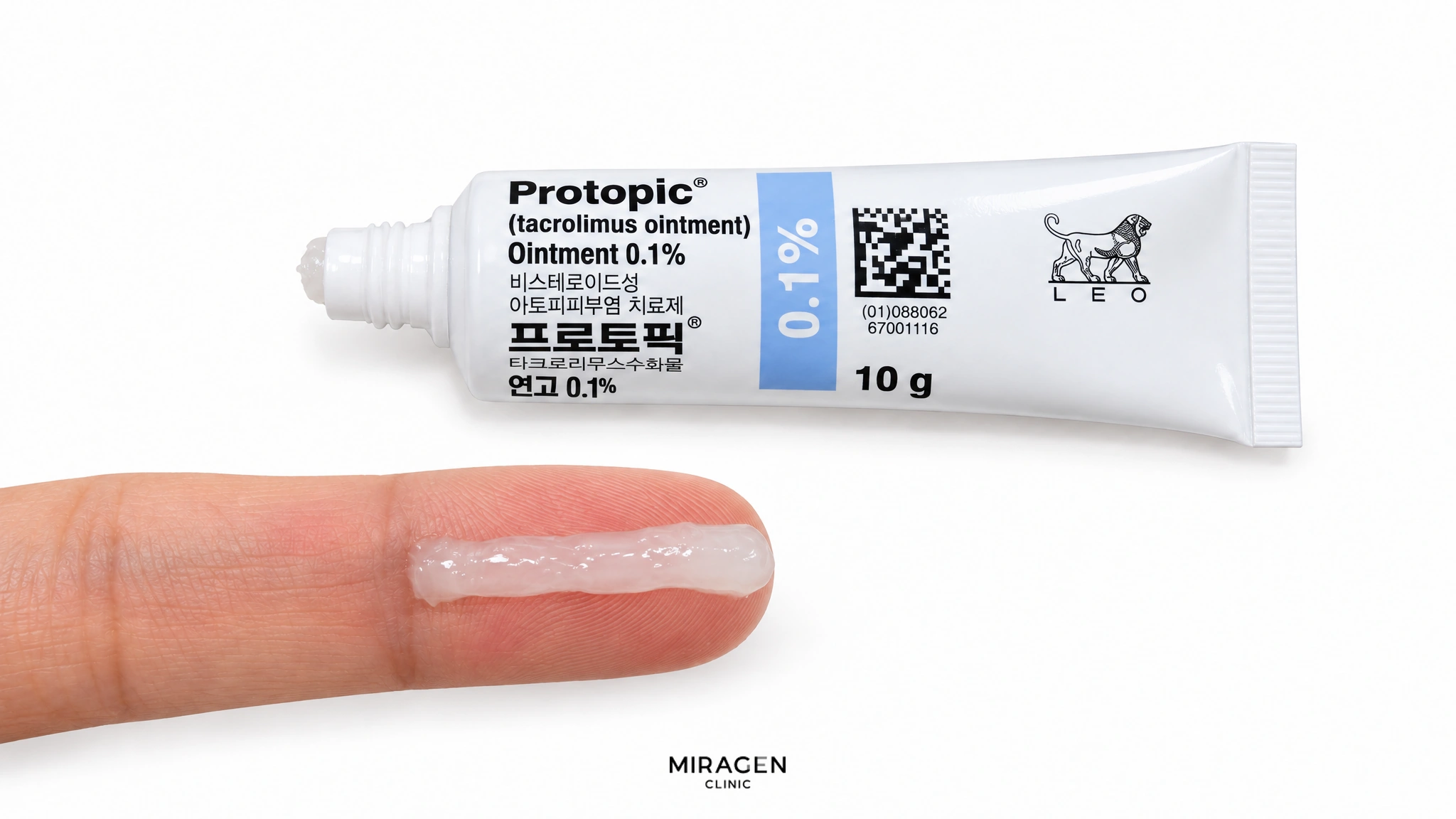
Recently, a patient asked via our clinic’s KakaoTalk, “Can I apply Protopic for sun allergy?” Since this is not a condition we typically treat, I looked into it and found information that may be helpful for those struggling with sun allergy.
To begin with, sun allergy is not a single condition. Two diseases with completely different mechanisms are grouped under the same name, and antihistamines are largely ineffective for one of them. I will explain why they don’t work and what role topical agents like Protopic might play, based on evidence.1,2
1. Types of Sun Allergy
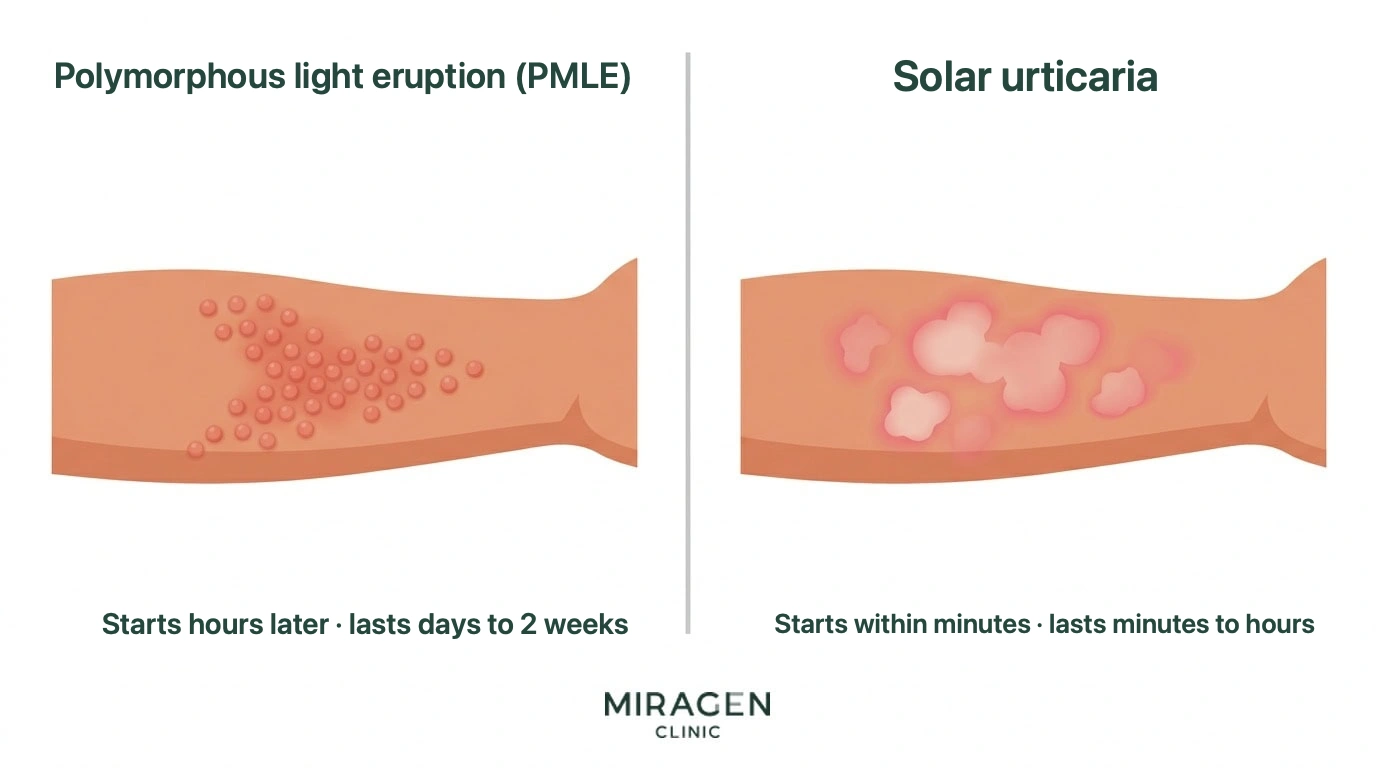
The two main conditions referred to as “sun allergy” are polymorphic light eruption (PMLE) and solar urticaria. Despite the similar name, their underlying mechanisms, characteristics, and treatment approaches are completely different.
PMLE can be summarized as “bumpy rash lasting several days,” while solar urticaria is “rash that swells within minutes and resolves when moving to shade.”1,2
| Item | Polymorphic Light Eruption (PMLE) | Solar Urticaria |
|---|---|---|
| Immune Type | Type IV delayed (T-cell mediated) | Type I immediate (IgE · mast cell mediated) |
| Onset Time | Hours to one day after exposure | Within minutes of exposure |
| Duration | 7–14 days | Minutes to hours, typically within 24 hours |
| Rash Appearance | Papules · plaques | Wheals |
| Sensation | Primarily itching | Itching + stinging burning sensation |
| Antihistamine Response | Minimal effect | First-line treatment |
Terminology
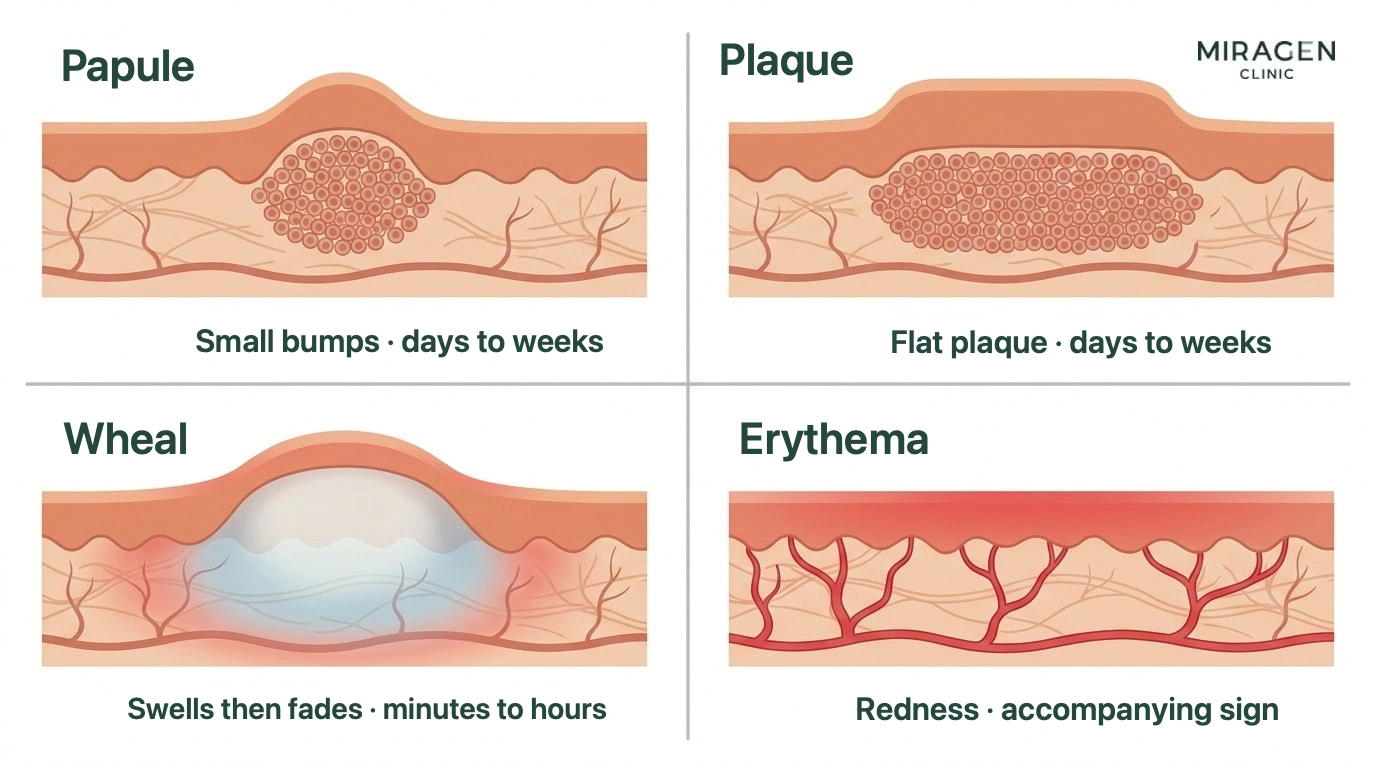
- Rash: A general term for any raised or reddened change on the skin.
- Papules · plaques: Firm, raised bumps. They feel hard to the touch like acne and persist for days to weeks.
- Wheals: Swollen lesions that appear and resolve within minutes to hours, like mosquito bites. The center is pale and swollen, with redness around the edges.
- Erythema: Reddened, inflamed skin. It can accompany papules, plaques, or wheals.
2. Most Sun Allergies Are PMLE
The two conditions also differ in frequency. According to Western data, approximately 10–20% of adults experience PMLE at least once in their lifetime, whereas solar urticaria accounts for only 0.4% of all urticaria cases, making it very rare. A simple comparison suggests PMLE is 100–250 times more common.1,2
Therefore, most people who develop “sun allergy” have PMLE. And antihistamines are largely ineffective for PMLE.
3. Why Antihistamines Don’t Work for PMLE
Antihistamines block histamine released by mast cells from binding to receptors on blood vessels and nerves. However, in PMLE, the primary drivers of inflammation are not histamine but T cells and IL-36 family cytokines.1
The following occurs in the skin of PMLE patients exposed to ultraviolet light:
- UV radiation damages skin proteins.
- The damaged proteins are recognized as foreign antigens, and immune cells in the skin (Langerhans cells) present these antigens to T cells.
- An inflammatory cascade centered on IL-36α and IL-36γ is triggered.
- Cytokines such as IL-31, which induce itching, are released, and papules develop over several days.
Since histamine is not involved in this process, taking antihistamines does not prevent the rash from developing.1
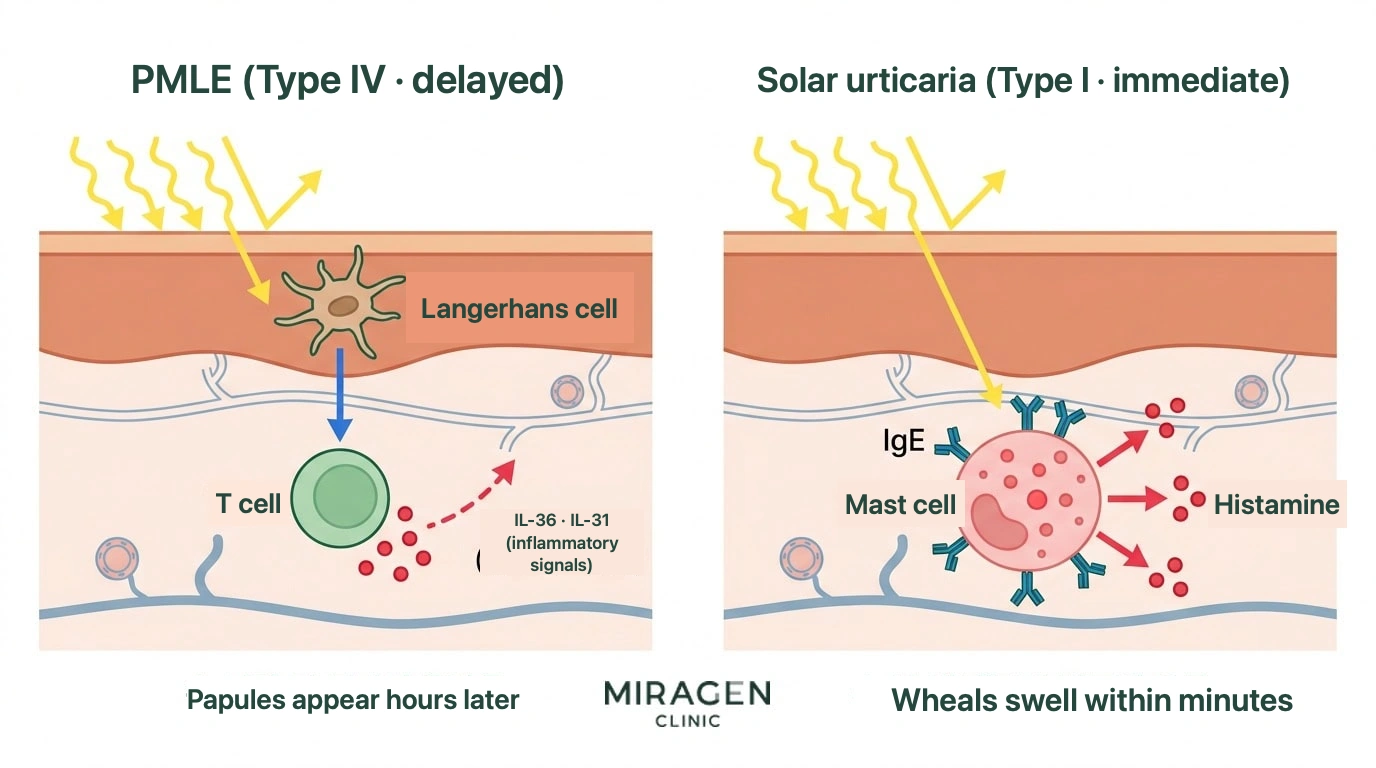
In contrast, the process in solar urticaria is as follows:
- Sunlight transforms a molecule in the body into a photoallergen.
- IgE bound to it stimulates mast cells to release histamine.
This is a classic Type I immediate allergic reaction, so antihistamines are the first-line treatment. If needed, leukotriene receptor antagonists (such as montelukast) are added, and for some patients who remain uncontrolled, omalizumab is administered at university hospitals as part of a stepwise approach.3,4
4. Can Protopic Be Effective?
Returning to our patient’s question, Protopic is likely to be effective for sun allergy based on its mechanism. It inhibits calcineurin, thereby blocking T-cell activation. For sun allergy on areas with thin skin, such as the face, where steroid use is concerning, Protopic may be a reasonable alternative to consider.
However, the level of evidence for topical tacrolimus (Protopic) in PMLE is limited to case reports and small case series, not systematic reviews or clinical trials. This means it has not been formally studied.1
5. Other Treatments
Treatments commonly used for both conditions are divided into symptom relief and prevention.
| Purpose | PMLE | Solar Urticaria |
|---|---|---|
| Relief | Topical steroid ointment (oral steroids if severe) | Antihistamines (oral steroids if severe) |
| Prevention | Photoprotection. In severe cases, phototherapy or systemic preventive medication | Photoprotection. In severe cases, phototherapy or omalizumab injection |
Phototherapy. This involves gradual exposure to low-dose UV radiation in spring to help the immune system adapt. It is used to help PMLE patients get through spring and summer more comfortably.1
Systemic preventive medication (hydroxychloroquine). This oral medication commonly used for lupus can be taken for several weeks before spring as a preventive option for severe PMLE.1
Omalizumab injection. This is an injectable treatment selected for solar urticaria that does not respond to antihistamines. A pooled analysis of reported cases showed improvement in approximately 70–80%, but since the evidence is case-based rather than from clinical trials, it is not yet definitive.4
6. Photoprotection
Among the prevention options listed in the table above, photoprotection is the most emphasized across multiple sources, so I will explain it in more detail.
PA, Not SPF
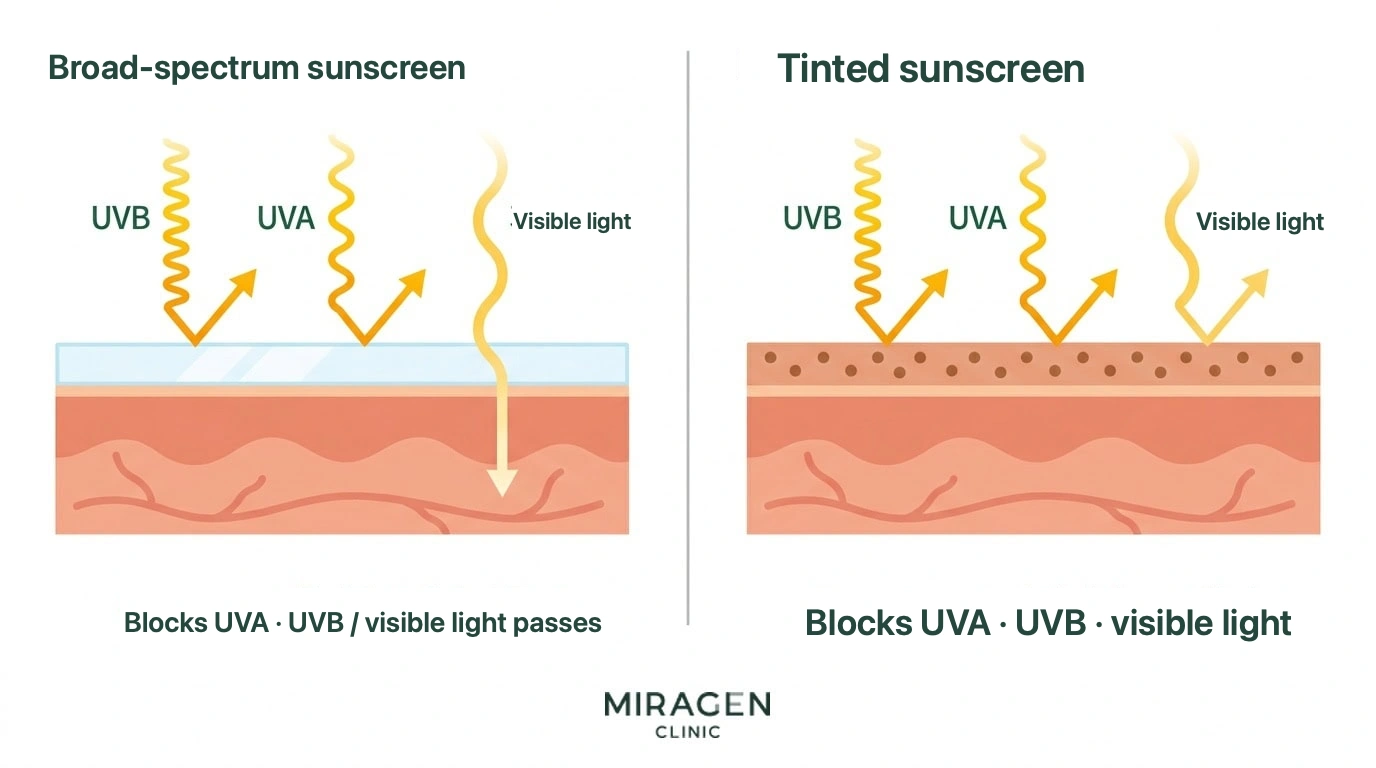
The causative wavelength for PMLE is primarily in the UVA range. SPF indicates the degree of UVB protection, so you should check the product packaging for PA+++/++++, broad spectrum, or UVA circle logo.1
For Solar Urticaria, Visible Light Must Also Be Blocked
A significant proportion of solar urticaria patients react not only to UV radiation but also to visible light (400–500 nm). Standard transparent sunscreens provide minimal protection against visible light, so tinted sunscreen is required. Products marketed as “color sunscreen” or “tone-up sunscreen” that contain iron oxides fall into this category.2
Glass and Clothing Are Not Sufficient Protection
UVA and visible light pass through car windows and indoor glass to a considerable extent. Thin linen or cotton clothing also allows significant UV penetration. Sensitive individuals may develop rashes even while driving, and it is common for urticaria to appear cleanly along short-sleeve tan lines on the lower arms.
7. Summary
Sun allergy encompasses two conditions with different mechanisms grouped under one name. Most cases are PMLE, with solar urticaria being rare. Both conditions share the common principle that photoprotection is most important, while medications differ depending on the condition.
Why Don’t Antihistamines Work?
The primary inflammatory mediators in PMLE are T cells, not histamine. Therefore, antihistamines are unlikely to relieve PMLE symptoms. In contrast, they are the first-line treatment for solar urticaria. If antihistamines do not improve your sun allergy, it is likely PMLE rather than solar urticaria.
Can Protopic Be Used?
This was the question from the patient that prompted this article. Based on its mechanism (T-cell suppression), it is likely to be effective, but the evidence is limited to case reports. It is more reasonable to first ensure adequate photoprotection with high-PA sunscreen, and only consider Protopic if sun allergy continues to recur.
Frequently Asked Questions
If antihistamines don’t work for sun allergy, what should I take?
Sun allergy that does not respond to antihistamines is typically PMLE. For PMLE, the primary options are photoprotection (sunscreen and clothing), topical steroids for acute episodes, and topical tacrolimus or pimecrolimus for the face, rather than oral medications. Systemic medications such as nicotinamide or hydroxychloroquine for prevention are available, but decisions regarding systemic therapy should be made after consultation.
I have sun allergy on my face, but I’m concerned about long-term steroid use. Are there alternatives?
Calcineurin inhibitors such as topical tacrolimus (Protopic) and topical pimecrolimus (Elidel) are non-steroidal anti-inflammatory ointments used on the face. Their mechanism aligns with PMLE and they do not weaken the skin barrier, making them a consideration for physicians when the condition frequently recurs on the face. However, initial burning or stinging may last several days, so guidance is needed when first using them.
I applied sunscreen thoroughly, but the rash still appeared. Why?
There are two possibilities. First, you may be using a product with high SPF but weak UVA protection. Check for PA+++/++++, broad spectrum labeling. Second, you may be sensitive to visible light as well. In this case, tinted (color) sunscreen containing iron oxides is needed, and the possibility of solar urticaria should also be considered.
References
- Lembo S, Raimondo A. Polymorphic Light Eruption: What’s New in Pathogenesis and Management. Front Med (Lausanne). 2018;5:252.
- McSweeney SM, Bowyer S, Flint C, et al. Pathogenesis of solar urticaria: Classic perspectives and emerging concepts. Exp Dermatol. 2022;31(4):586-593.
- Snast I, Kremer N, Lapidoth M, et al. Real-life experience in the treatment of solar urticaria: retrospective cohort study. Clin Exp Dermatol. 2019;44:e164-e170.
- Snast I, Lapidoth M, Uvaidov V, et al. Omalizumab for the Treatment of Solar Urticaria: Case Series and Systematic Review of the Literature. J Allergy Clin Immunol Pract. 2018;6:1198-1204.