

Soolantra and Rozex Gel are among the most commonly prescribed topical treatments for rosacea. Rozex Gel has long been used as the standard treatment, and with the introduction of Soolantra, treatment options have expanded.
In this article, we have organized the roles and limitations of the two ointments, as well as the early symptom worsening that many people worry about when starting Soolantra.
목차
Rosacea and Soolantra · Rozex Gel
Rosacea is a chronic skin condition in which the central face—especially the cheeks, nose, forehead, and chin—becomes red. It is not a condition explained solely by Demodex mites, but Demodex often acts as a factor that worsens symptoms.1,2
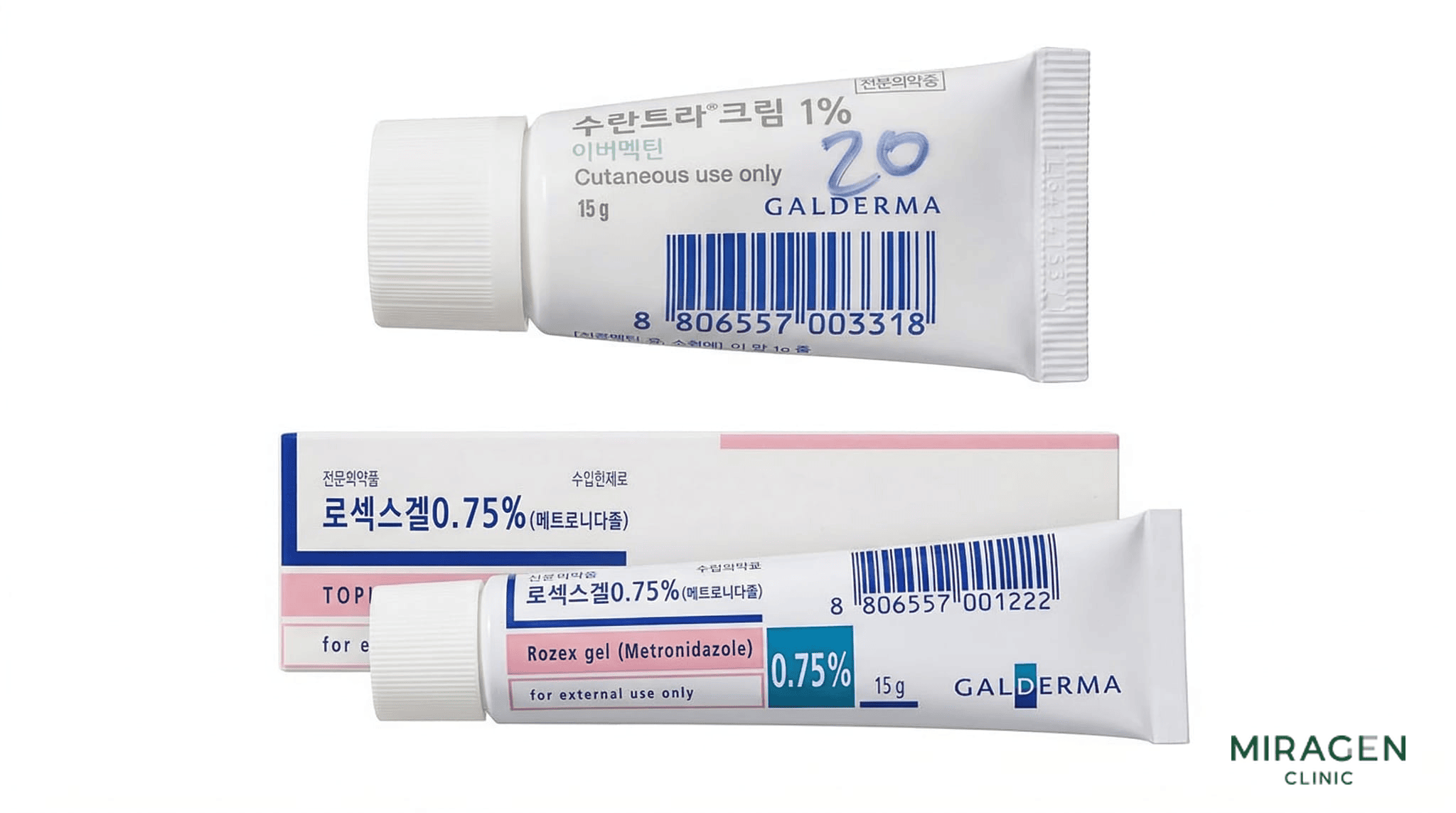
Rozex Gel was the most widely used topical treatment for rosacea before Soolantra became available, and its active ingredient is metronidazole, an antibiotic and antiprotozoal agent. However, in rosacea it works not by reducing microorganisms, but through its anti-inflammatory effects.
Soolantra is now the most commonly used topical treatment for rosacea, and its active ingredient is ivermectin, an antiparasitic agent. It works by reducing Demodex mites and calming inflammation.3
Comparing the Effects of Soolantra vs. Rozex Gel
The 대표 study directly comparing the two medications is the ATTRACT study. It compared 962 patients with moderate to severe papulopustular rosacea over 16 weeks, dividing them into a once-daily Soolantra group and a twice-daily Rozex Gel group.4
After 16 weeks, the reduction rate of inflammatory lesions was 83.0% with Soolantra and 73.7% with Rozex Gel. The proportion rated by physicians as clear or almost clear was also 84.9% with Soolantra and 75.4% with Rozex Gel.4
In a 36-week extension study that looked at the maintenance period after improvement, results were also better in the Soolantra group. The median time to relapse was 115 days with Soolantra and 85 days with Rozex Gel, and the relapse rate at the end of the study was 62.7% with Soolantra and 68.4% with Rozex Gel.5
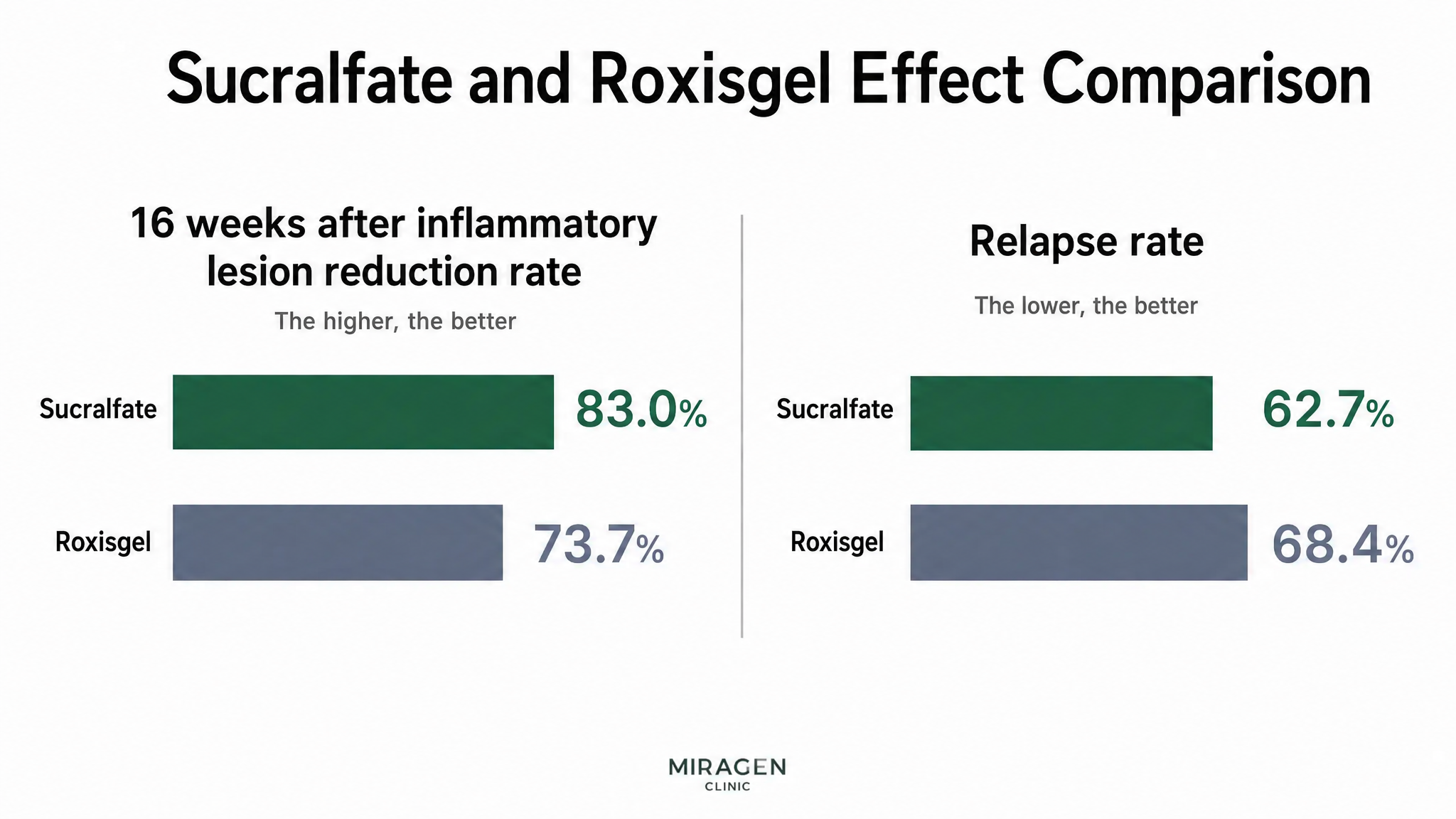
In summary, Soolantra reduced inflammatory lesions more than Rozex Gel and also showed slightly better maintenance after improvement.
However, relapse is still fairly common with Soolantra as well, because, as mentioned earlier, rosacea is not a condition explained solely by Demodex mites. For more details on the causes and treatment of rosacea, please refer to this page.
| Item | Rozex Gel (metronidazole) | Soolantra (ivermectin) |
|---|---|---|
| Active ingredient | Metronidazole 0.75% | Ivermectin 1% |
| Kills Demodex mites | No | Yes |
| Anti-inflammatory effect | Yes | Yes |
| Reduction rate of inflammatory lesions4 | 73.7% | 83.0% |
| Risk of relapse | Relatively higher | Relatively lower5 |
Soolantra Side Effects
In the ATTRACT study, treatment-related adverse events were reported at 2.3% for Soolantra and 3.7% for Rozex Gel, higher with Rozex Gel. However, this figure is thought not to reflect the Demodex die-off reaction that can occur early in Soolantra use as an adverse event.
In my experience, symptom worsening early in Soolantra use occurs more frequently than with Rozex Gel, and because of this, patients who look up reviews tend to be afraid of Soolantra.
In fact, a Demodex die-off reaction generally does not last long and is not a major concern, but it becomes an issue because it is difficult to distinguish from contact dermatitis, which almost all topical medications can occasionally cause.
Demodex die-off reaction
This refers to cases where symptoms worsen because inflammation is triggered as Demodex mites die early in use. A Demodex die-off reaction presents as worsening redness and heat, with bumpy lesions appearing. It is closer to a feeling that pre-existing symptoms are becoming more pronounced.
In the literature, it is described as being most prominent in the first 1–2 weeks and, in some cases, lasting as long as 2–4 weeks, but when used together with anti-inflammatory agents, it most often lasts only a few days.3
Contact dermatitis
This occurs when the ointment is absorbed excessively into the skin and triggers an immune reaction. Rozex Gel can also cause contact dermatitis.6
If you develop severe itching that you did not have before, oozing, swelling, or blisters, it may be contact dermatitis, so it is advisable to stop using it immediately and contact the clinic.
References
- Jarmuda S, O’Reilly N, Żaba R, et al. Potential role of Demodex mites and bacteria in the induction of rosacea. J Med Microbiol. 2012;61(Pt 11):1504-1510.
- Jarmuda S, McMahon F, Żaba R, et al. Correlation between serum reactivity to Demodex-associated Bacillus oleronius proteins, and altered sebum levels and Demodex populations in erythematotelangiectatic rosacea patients. J Med Microbiol. 2014;63(Pt 2):258-262.
- Deeks ED. Ivermectin: A Review in Rosacea. Am J Clin Dermatol. 2015;16(5):447-452.
- Taieb A, Ortonne JP, Ruzicka T, et al. Superiority of ivermectin 1% cream over metronidazole 0.75% cream in treating inflammatory lesions of rosacea: a randomized, investigator-blinded trial. Br J Dermatol. 2015;172(4):1103-1110.
- Taieb A, Khemis A, Ruzicka T, et al. Maintenance of remission following successful treatment of papulopustular rosacea with ivermectin 1% cream vs. metronidazole 0.75% cream: 36-week extension of the ATTRACT randomized study. J Eur Acad Dermatol Venereol. 2016;30(5):829-836.
- Thiboutot D, Anderson R, Cook-Bolden F, et al. Standard management options for rosacea: The 2019 update by the National Rosacea Society Expert Committee. J Am Acad Dermatol. 2020;82(6):1501-1510.
Frequently Asked Questions
If it gets redder at first, can I keep applying it?
u003cpu003eIf it is to the extent that redness and heat worsen and bumpy lesions appear, it is best to monitor the course and decide up to 4 weeks. If you develop severe itching that you did not have before, oozing, swelling, or blisters, stop using it and check the prescription. u003c/pu003e
Which should I apply first, the ointment or the moisturizer?
u003cpu003eApply Soolantra after applying moisturizer first. If you were prescribed it together with other topical medications, please follow the detailed order provided by your clinic. For detailed instructions, please refer to u003ca href=u0022https://miragen.clinic/en/soolantra/u0022u003eSoolantra guideu003c/au003e. u003c/pu003e
When do you assess whether Soolantra is working?
u003cpu003eIt is not a medication that works immediately after application. Rather than judging the effect too early before 4 weeks, if there are no major issues, assess the response based on 12 weeks. u003c/pu003e
Which is the stronger medication, Rozex Gel or Soolantra?
u003cpu003eTheir roles differ more than their strength. Rozex Gel is a medication that calms inflammation, while Soolantra reduces both Demodex mite counts and inflammation. The choice depends on whether papules and pustules recur and whether you are concerned about irritation. u003c/pu003e

We treat atopic dermatitis, rosacea, and seborrheic dermatitis.
Thanks to the valuable reviews you have shared in the community, many of you visit us even from far away.
We will repay you with sincere, attentive care.
DK Han
Chief Director, MIRAGEN Clinic
Graduate of University of Michigan, Ross School of Business
Graduate of Chungnam National University School of Medicine
(Former) Representative Director of Ewha Phoenix Rehabilitation Hospital
(Current) Representative Director of MIRAGEN Clinic


