

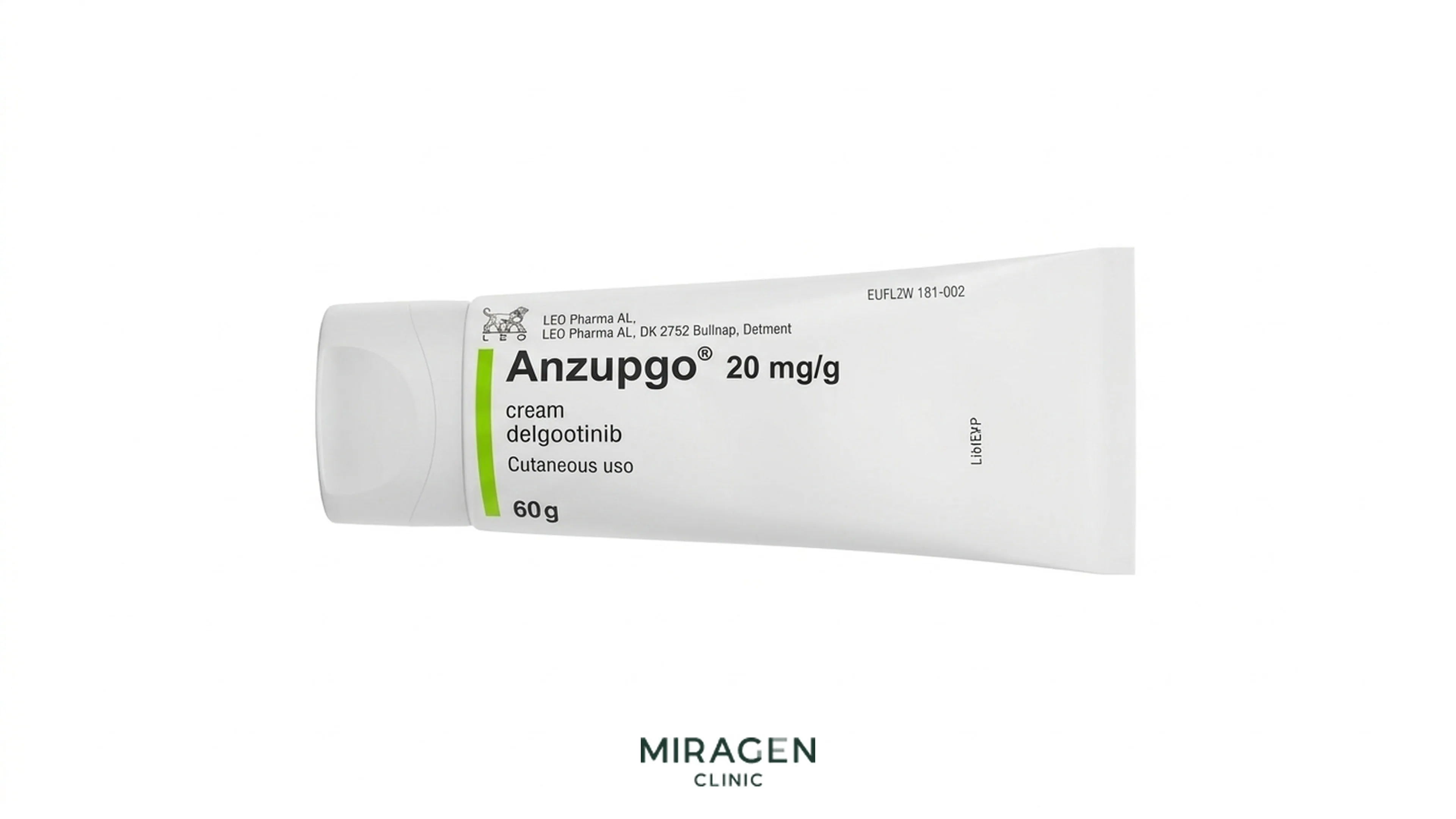
Anzupgo Cream, Korea’s first topical JAK inhibitor, was launched in March 2026. Interest is high among patients with atopic dermatitis. Since oral JAK inhibitors are already used for atopic dermatitis, there is an expectation that a topical version might also be possible.
To start with the conclusion, the only currently approved indication for Anzupgo is chronic hand eczema. It cannot be used for atopic dermatitis yet. However, it is not a meaningless drug for atopic patients. We have summarized what kind of drug it is, why it is attracting attention, and what the future holds.
목차
Anzupgo Cream Summary
| Ingredient Name | Delgocitinib |
| Classification | Topical JAK inhibitor (non-steroidal) |
| Indication | Moderate to severe chronic hand eczema (when steroids are unresponsive or inappropriate) |
| Atopic Dermatitis Indication | Not approved in Korea — Approved for atopic dermatitis in Japan since 2020 |
| MFDS Approval | September 2025 |
| Launch | March 2026 (Non-reimbursable) |
| Health Insurance | Not listed — Full patient out-of-pocket cost |
| Usage | Apply a thin layer twice daily, at 12-hour intervals |
What is a JAK Inhibitor?
When skin inflammation occurs, immune cells exchange signals. JAK is an enzyme that plays a key role in this signal transduction process. There are four types of JAK, and Anzupgo Cream blocks all four. It works by reducing the signal transduction itself to calm the inflammatory response.1
When applied, most of it acts on the skin, and very little is absorbed into the blood. Therefore, the risk of systemic side effects concerned with oral JAK inhibitors—such as increased risk of infection or blood clots—is much lower.1
The biggest difference from topical steroids is skin atrophy. Long-term use of steroids can thin the skin, but Anzupgo Cream carries no such risk. No skin atrophy was reported even in clinical trials using it for up to 52 weeks.2
Anzupgo Cream is the world’s first topical medication specifically approved for chronic hand eczema.
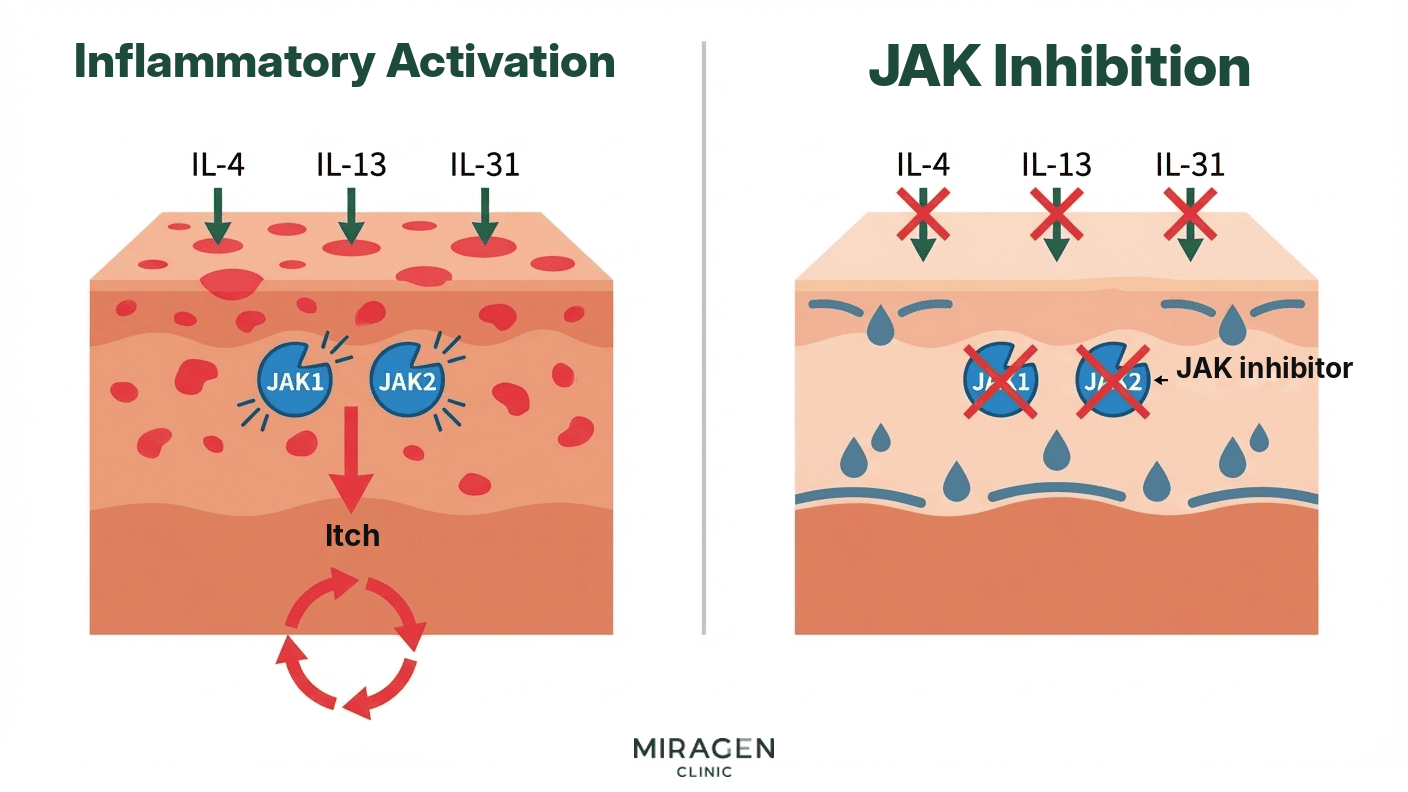
The reason it is attracting attention from doctors and patients treating atopic dermatitis is simple. This is because atopic dermatitis also creates inflammation through the same JAK pathway. In fact, delgocitinib has been approved and used for atopic dermatitis indications in Japan since 2020. Since oral JAK inhibitors (Rinvoq, Cibinqo, etc.) are already being prescribed for atopic dermatitis in Korea, it is natural to expect that a topical JAK inhibitor could also be used.
However, whether or when Anzupgo’s indication will be expanded to atopic dermatitis in Korea has not yet been determined. Currently, it can only be prescribed for chronic hand eczema.
The Only Topical JAK Inhibitor in Korea
Interest in topical JAK inhibitors existed even before Anzupgo. A JAK inhibitor cream called Opzelura is approved for atopic dermatitis and vitiligo in the US and Europe, and some patients are purchasing and using Rutinib ointment, which has the same ingredients, from overseas.
However, neither Opzelura nor Rutinib ointment is approved in Korea. Overseas direct-purchase products are used without a prescription, lack verification, and it is difficult to find a doctor with experience with these drugs if a problem arises. The difference between Rutinib ointment and Opzelura is covered in detail in a separate post.
Anzupgo Cream is the only topical JAK inhibitor officially approved and launched in Korea. Although its indication is limited to chronic hand eczema and it is currently non-reimbursable, meaning the patient must bear the full cost, it is currently the safest option as a verified product launched through official channels.
Numbers from Clinical Trials
These are the results of two Phase 3 clinical trials that served as the basis for approval. 960 patients with moderate to severe chronic hand eczema participated.3
Percentage of patients with clear or almost clear skin after 16 weeks of use
| Anzupgo | Placebo | |
|---|---|---|
| DELTA 1 (325 people vs 162 people) | 20% | 10% |
| DELTA 2 (313 people vs 159 people) | 29% | 7% |
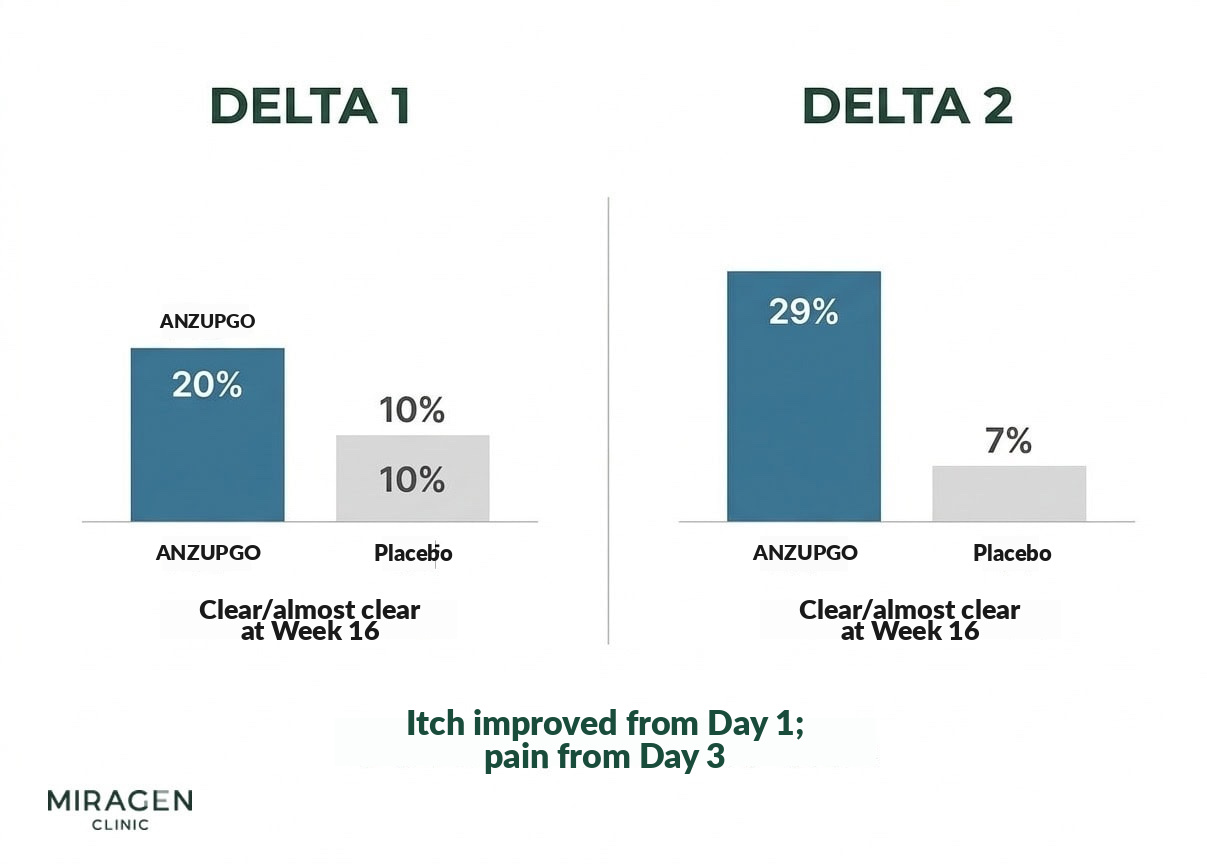
The figures of 20–30% might seem low, but it is because the strict criteria of “completely clear or almost clear” were used. Based on the criteria of 75% or more improvement, a significant number of patients experience meaningful improvement.
In particular, itching was significantly reduced compared to placebo from the first day of application, and pain from the third day. Hand eczema is a condition that makes daily life difficult due to itching and pain, and a difference is quickly seen in these areas.3
What about long-term use?
Efficacy was maintained in clinical trials extended up to 52 weeks. The group that switched to Anzupgo after using a placebo for 16 weeks also reached a level similar to existing users. The rate of 75% or more improvement was 51.5%.2
In an analysis synthesizing several clinical trials, Anzupgo Cream showed a treatment success rate approximately 3 times higher than placebo.4
Comparison with Existing Treatments
| Steroids | Protopic · Elidel | Anzupgo | |
|---|---|---|---|
| Mechanism of Action | Broad-spectrum inflammation suppression | Calcineurin inhibition | JAK inhibition |
| Skin Atrophy | Risk with long-term use | None | None |
| Hand Eczema Approval | None | None | Yes (First) |
| Health Insurance | Applied | Applied | Not listed |
In a comprehensive analysis of 291 clinical trials by the Cochrane research team, the efficacy of Anzupgo Cream was at a level similar to high-potency topical steroids and tacrolimus 0.1%.5
Therefore, for chronic dermatitis patients whose response to Protopic 0.1% is insufficient, Anzupgo Cream could be considered.
Prescription · Insurance · Price
Prescription: It can be prescribed now. However, the approved indication is “moderate to severe chronic hand eczema that does not respond to topical steroids or for which steroids are not appropriate.” Therefore, a history of trying steroids first is required.
Insurance: Since it is not covered by health insurance, the patient must bear the full cost. The timing for health insurance coverage is undecided, and even if it becomes covered, it is likely to be applied restrictively only to cases that do not respond to existing treatments.
Price: The pharmacy cost for one 60g tube is approximately 690,000 KRW. Since it is non-reimbursable, the retail price may vary by pharmacy, and it is a high price. If you purchase Rutinib ointment from overseas, it is about 180,000 KRW for 30g, which is about half the price per gram of Anzupgo Cream. However, if you must use a topical JAK inhibitor, Anzupgo Cream seems better despite the price difference. This is because Rutinib ointment is not a product from the original developer with FDA approval and cannot be considered verified.
References
- McGuigan C et al. Delgocitinib 20 mg/g Cream: A Review in Chronic Hand Eczema. Drugs. 2025.
- Gooderham M et al. Long-term safety and efficacy of delgocitinib cream for up to 52 weeks in adults with Chronic Hand Eczema. J Am Acad Dermatol. 2025;93:95–103.
- Bissonnette R et al. Efficacy and safety of delgocitinib cream in adults with moderate to severe chronic hand eczema (DELTA 1 and DELTA 2). Lancet. 2024;404:461–473.
- de Moraes-Souza R et al. Efficacy and Safety of Topical Delgocitinib for Chronic Hand Eczema: A Systematic Review and Meta-Analysis. Exp Dermatol. 2026;35:e70242.
- Lax SJ et al. Topical anti-inflammatory treatments for eczema: network meta-analysis. Cochrane Database Syst Rev. 2024;8:CD015064.
Frequently Asked Questions
Can Anzupgo be prescribed for atopic dermatitis?
Currently, the approved indication in Korea is chronic hand eczema. It cannot be prescribed for atopic dermatitis. It has been used for atopic dermatitis indications in Japan since 2020, and while an expansion of indications is expected in Korea, the timing is undecided.
What is the difference between oral JAK inhibitors and topical Anzupgo?
Oral JAK inhibitors like Rinvoq and Cibinqo act systemically and are used for moderate to severe atopic dermatitis. Anzupgo is a cream, so it acts only on the applied area and has almost no systemic absorption, reducing the burden of systemic side effects. However, its current indication is limited to chronic hand eczema.
When will insurance coverage be available?
It is known that the health insurance reimbursement review is underway, but the listing date has not been confirmed. Currently, it is a non-reimbursable item with the patient bearing the full cost, at a level of approximately 690,000 KRW for 60g.

We treat atopic dermatitis, rosacea, and seborrheic dermatitis.
Thanks to the valuable reviews you have shared in the community, many of you visit us even from far away.
We will repay you with sincere, attentive care.
DK Han
Chief Director, MIRAGEN Clinic
Graduate of University of Michigan, Ross School of Business
Graduate of Chungnam National University School of Medicine
(Former) Representative Director of Ewha Phoenix Rehabilitation Hospital
(Current) Representative Director of MIRAGEN Clinic


