

Peniramin Tablets are one of the best-known antihistamines used for urticaria (hives) and allergic rhinitis.1 In addition to the oral medication, there is also Peniramin Injection, so it is used in many hospitals. Because it is an over-the-counter medicine, it can be purchased at pharmacies without a prescription, and many patients are familiar with it as the “yellow pill.”
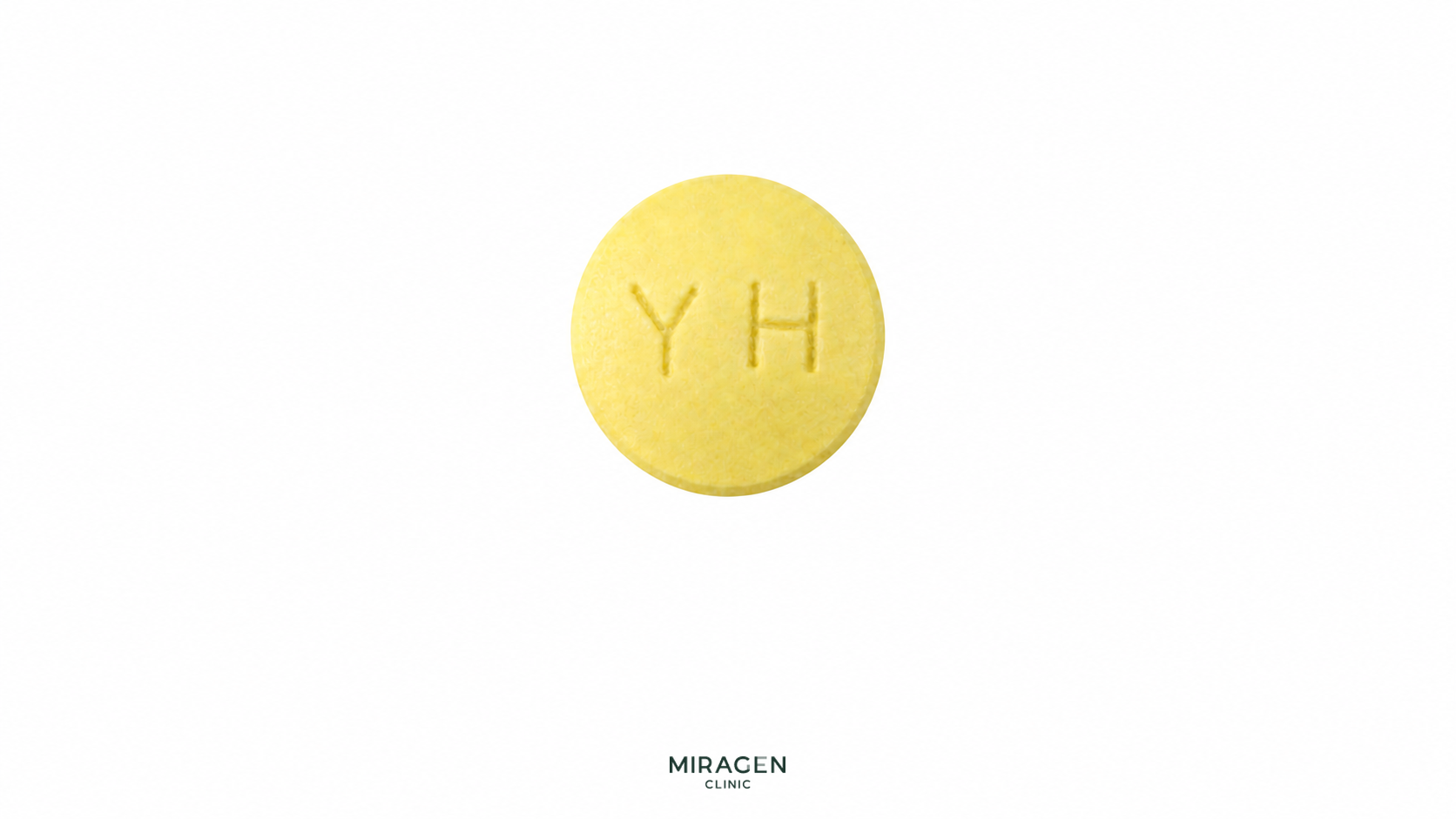
However, because Peniramin Tablets contain chlorpheniramine, a first-generation antihistamine, they cause more drowsiness and anticholinergic adverse effects than the second- and third-generation antihistamines developed later.1,2 Strictly speaking, “third-generation” is not an officially agreed classification, but since it is a commonly used term, this article will also refer to some antihistamines as third-generation.3,4,5
Even so, we will explain why some patients use the first-generation Peniramin Tablets at night, and whether they truly have any advantages over second- and third-generation antihistamines.
General information on antihistamines is explained in detail in the antihistamine article.
목차
Why it is used at night | Drowsiness
Peniramin Tablets can make you drowsy because the medication crosses the blood–brain barrier and blocks H1 receptors in the brain. When H1 receptors in the brain are blocked, not only drowsiness but also concentration and reaction speed may decrease.3,6
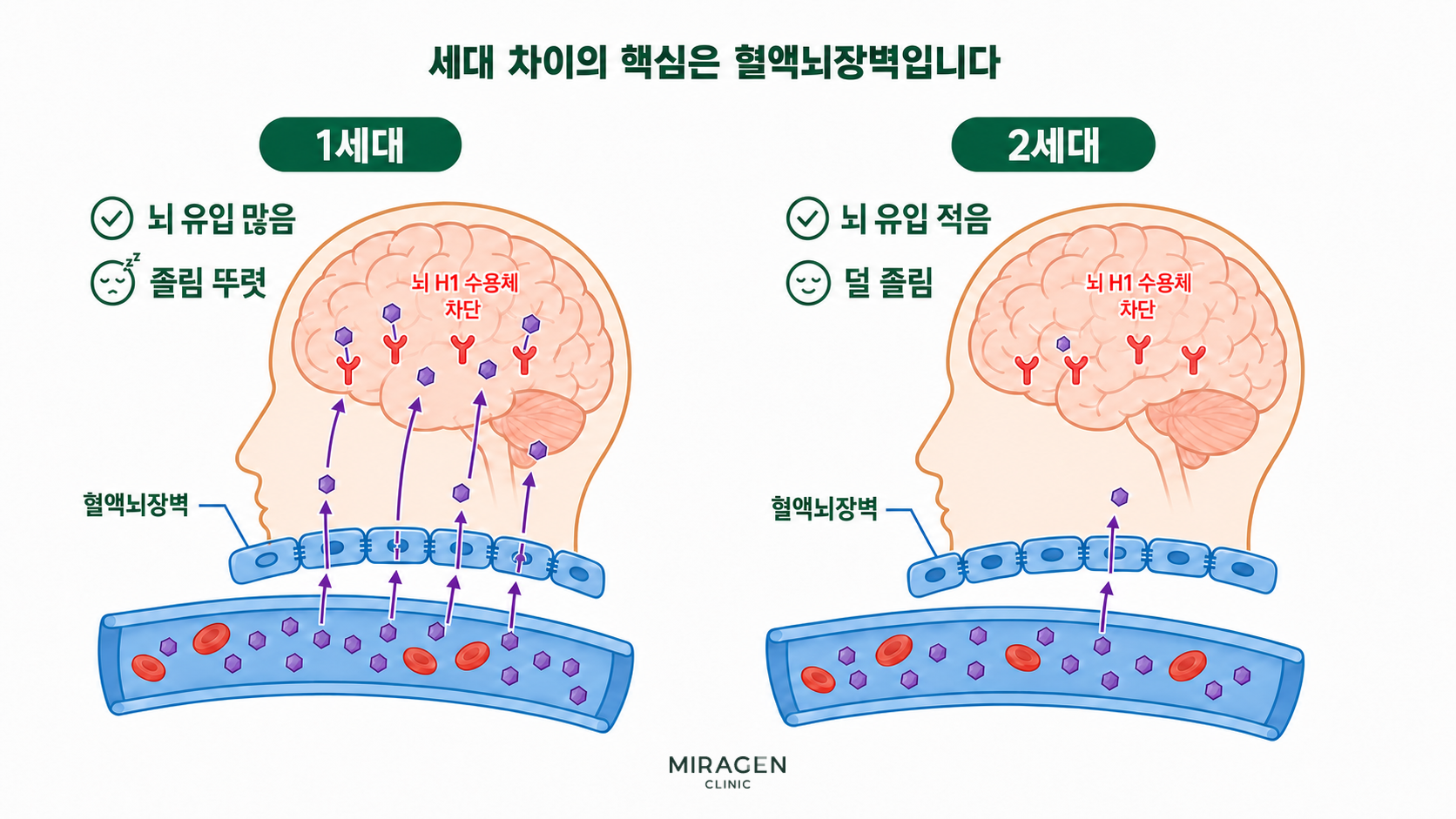
This drowsiness can help some patients feel less distressed by nighttime itching. This is because many people find it more comfortable to fall asleep due to drowsiness than to remain awake while itching. For patients whose itching is severe enough that they sleep wearing mittens, or who wake up with scratch marks in the morning, Peniramin Tablets may be used to make the night a little easier.
To put it in an exaggerated way, it is similar to how propofol used for sedation does not reduce pain itself, but can lessen distress by preventing the memory of it.
However, drowsiness and an actual reduction in itching must be distinguished. In a study of 155 children with atopic dermatitis who had nocturnal itching and scratching, chlorpheniramine did not reduce symptoms more than placebo.7
In a 2026 analysis pooling 6,230 participants from 47 clinical trials, adding an oral H1 antihistamine to atopic dermatitis treatment did not reduce itching to a level patients could meaningfully perceive. Improvement in sleep disturbance was also not confirmed.8
Therefore, even when used at night, you must check whether drowsiness or reduced concentration persists into the next day. Peniramin should not be considered a substitute for other dermatitis treatments or a medication to take daily for the long term.
The cost of sedation: anticholinergic adverse effects
Aside from the convenience of being available without a prescription and the sedating effect mentioned above, Peniramin Tablets have few advantages over second- and third-generation agents. This is because chlorpheniramine in Peniramin Tablets does not selectively block only H1 receptors; it also binds to muscarinic receptors and can cause the following anticholinergic adverse effects.9
- Dry mouth · Constipation
- Difficulty urinating · Urinary retention
- Blurred vision
- Confusion · Delirium
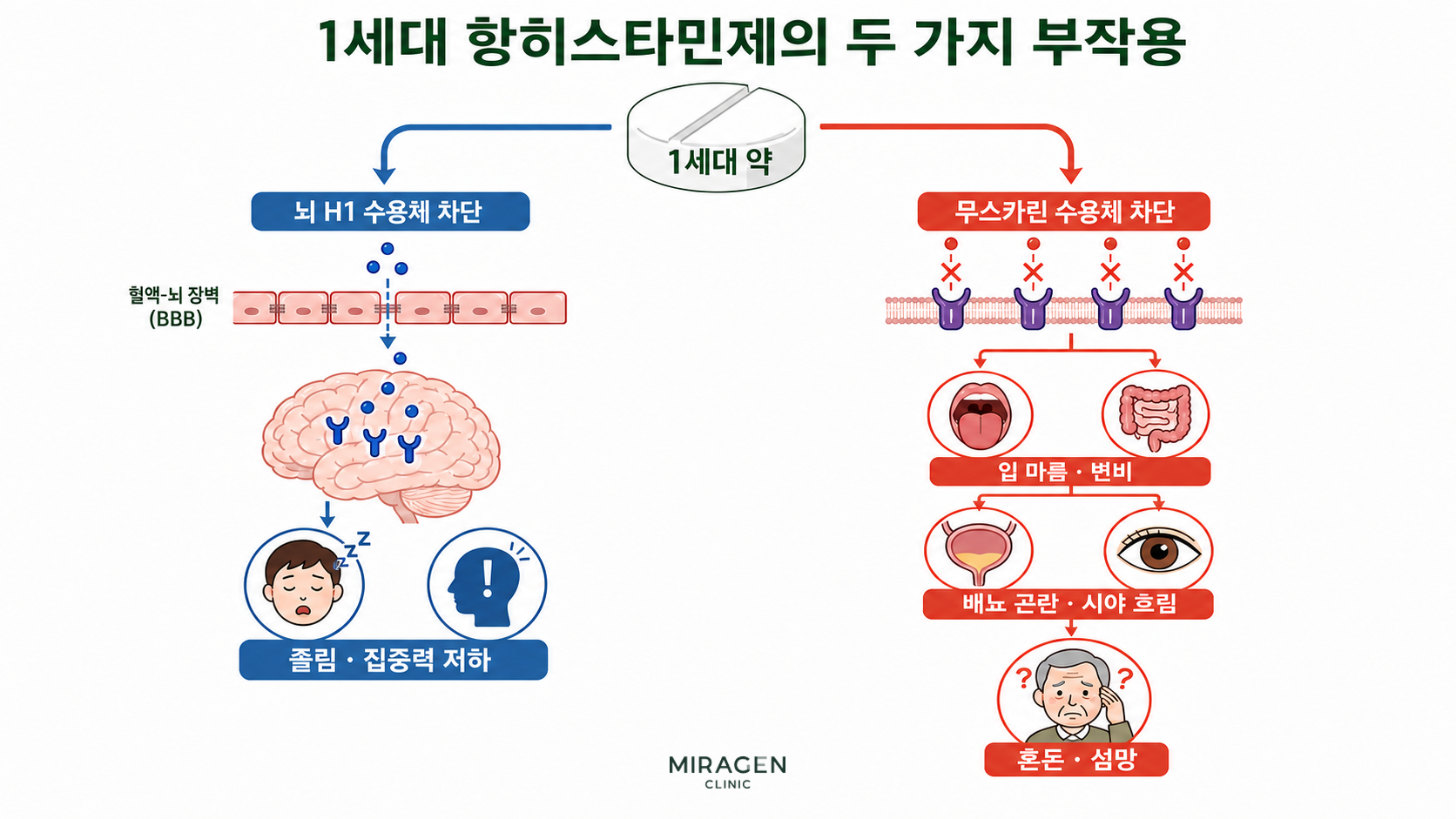
For this reason, the American Geriatrics Society recommends avoiding first-generation antihistamines such as chlorpheniramine in adults aged 65 and older. This is because cumulative anticholinergic effects have been reported to be associated with falls, delirium, and cognitive decline.10,11
Korean prescribing information for Peniramin Tablets also advises against use in patients with glaucoma, benign prostatic hyperplasia, or other lower urinary tract obstructive conditions, or in those taking MAO inhibitors (such as certain antidepressants like moclobemide and Parkinson’s disease medications like selegiline).2,12,13
Second- and third-generation antihistamines were developed to overcome these disadvantages. Compared with first-generation agents, they cross the blood–brain barrier less, so they have less sedating effect, and they bind less to muscarinic receptors, so they also have fewer anticholinergic adverse effects.3,4,5
| Category | First generation | Second generation | Third generation |
|---|---|---|---|
| Representative products | Peniramin Tablets · Adipam Tablets | Zyrtec Tablets | Xyzal Tablets · Allegra Tablets |
| Drowsiness · Reduced concentration | High | Generally low | Generally low |
| Anticholinergic adverse effects | High | Generally low | Generally low |
Third-generation antihistamines are explained in detail in the Xyzal Tablets article and the Allegra Tablets article.
References
- Yuhan Corporation. Peniramin Tablets product information.
- Peniramin Tablets approval information · medication guide, Korea Pharmaceutical Information Center.
- Simons FE, Simons KJ. H1 antihistamines: current status and future directions. World Allergy Organ J. 2008;1(9):145-155. PMID 23282578.
- Holgate ST, Canonica GW, Simons FE, et al. Consensus Group on New-Generation Antihistamines (CONGA): present status and recommendations. Clin Exp Allergy. 2003;33(9):1305-1324. PMID 12956754.
- Zuberbier T, Abdul Hameed Ansari Z, Abdul Latiff AH, et al. The International Guideline for the Definition, Classification, Diagnosis and Management of Urticaria. Allergy. 2026;81(8):2582-2632. PMID 41649409.
- Tagawa M, Kano M, Okamura N, et al. Neuroimaging of histamine H1-receptor occupancy in human brain by positron emission tomography: a comparative study of ebastine, a second-generation antihistamine, and (+)-chlorpheniramine, a classical antihistamine. Br J Clin Pharmacol. 2001;52(5):501-509. PMID 11736858.
- Munday J, Bloomfield R, Goldman M, et al. Chlorpheniramine is no more effective than placebo in relieving the symptoms of childhood atopic dermatitis with a nocturnal itching and scratching component. Dermatology. 2002;205(1):40-45. PMID 12145433.
- Chu AWL, Wen A, Guyatt GH, et al. Antihistamines for atopic dermatitis (eczema): systematic review and network meta-analysis of randomised trials. BMJ. 2026;394:e100163. PMID 42526949.
- Yasuda SU, Yasuda RP. Affinities of brompheniramine, chlorpheniramine, and terfenadine at the five human muscarinic cholinergic receptor subtypes. Pharmacotherapy. 1999;19(4):447-451. PMID 10212017. DOI 10.1592/phco.19.6.447.31041.
- 2023 American Geriatrics Society Beers Criteria Update Expert Panel. American Geriatrics Society 2023 updated AGS Beers Criteria for potentially inappropriate medication use in older adults. J Am Geriatr Soc. 2023;71(7):2052-2081. DOI 10.1111/jgs.18372.
- Welsh TJ, van der Wardt V, Ojo G, Gordon AL, Gladman JRF. Associations Between Anticholinergic Medication Exposure and Adverse Health Outcomes in Older People with Frailty: A Systematic Review and Meta-analysis. Medicina. 2021;57(11):1230. PMCID PMC8605959. DOI 10.3390/medicina57111230.
- Monoamine-oxidase inhibitors, Hertfordshire Partnership University NHS Foundation Trust medicines formulary.
- Selegiline, MedlinePlus Drug Information, U.S. National Library of Medicine.
Frequently Asked Questions
Why is Peniramin Tablets used at night?
Peniramin Tablets can cross the blood–brain barrier and block H1 receptors in the brain, which may cause drowsiness and reduced concentration. Because this drowsiness can make nighttime itching feel less distressing for some people, it may be prescribed to take at night.
Do Peniramin Tablets have any advantages over second- and third-generation antihistamines?
Other than the convenience of being available without a prescription and the sedating effect, there are few advantages. Second- and third-generation antihistamines cross the blood–brain barrier less and bind less to muscarinic receptors, so drowsiness and anticholinergic adverse effects are generally less common.
Is it okay to take Peniramin Tablets every day for a long time?
Peniramin Tablets should not be considered a substitute for other dermatitis treatments or a medication to take daily for the long term. In particular, you should check whether drowsiness or reduced concentration persists into the next day, and adults aged 65 and older are advised to avoid first-generation antihistamines.

We treat atopic dermatitis, rosacea, and seborrheic dermatitis.
Thanks to the valuable reviews you have shared in the community, many of you visit us even from far away.
We will repay you with sincere, attentive care.
DK Han
Chief Director, MIRAGEN Clinic
Graduate of University of Michigan, Ross School of Business
Graduate of Chungnam National University School of Medicine
(Former) Representative Director of Ewha Phoenix Rehabilitation Hospital
(Current) Representative Director of MIRAGEN Clinic


