As of October 2026, I think the hottest ointment in dermatology right now may well be Azelia Cream. Its search volume more than tripled within a year, and last month it was searched more than 120,000 times on Naver, Korea's largest search engine.1
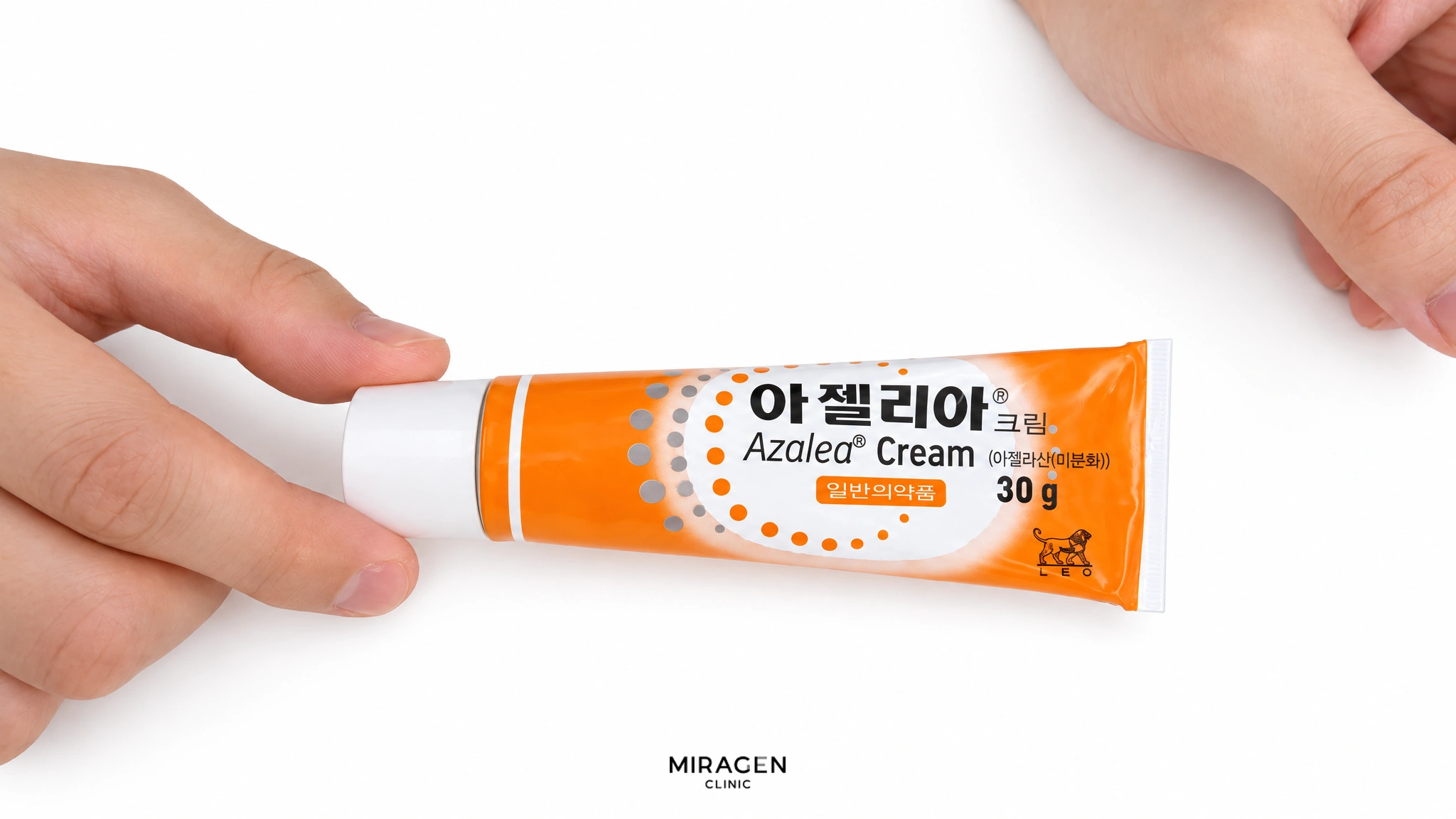
This seems to be because of word of mouth that it is an all-purpose pharmacy product, available without a prescription, that helps not only with acne but also with acne marks and rosacea.
The main ingredient of Azelia Cream is 20% azelaic acid. It has only recently become a hot topic, but it is actually a medicine that received Korean approval 20 years ago.2
However, we often see patients at our clinic who come in with dermatitis after using Azelia Cream. It tends to irritate the skin, and when I tried it myself, it stung quite a bit.
Still, if you follow the directions properly, it is a useful ointment that lets you try treating acne, acne marks, and papulopustular rosacea at home.
I will explain who can benefit from Azelia Cream and how to use it.
To give you the conclusion first:
| Condition | Effect of Azelia Cream |
|---|---|
| Acne | An approved indication in Korea. The American Academy of Dermatology also gives it a conditional recommendation.2,3 |
| Rosacea that looks similar to acne | The British Association of Dermatologists recommends azelaic acid as one of the first-line topical treatments. It is not an approved indication in Korea.4 |
| Rosacea with facial redness only | Its effect has not been evaluated.5 |
| Red or brown marks left after acne | There is a study in which a 15% gel made the marks fade. This does not apply to depressed scars.6 |
When Can You Expect It to Help?
Pimples
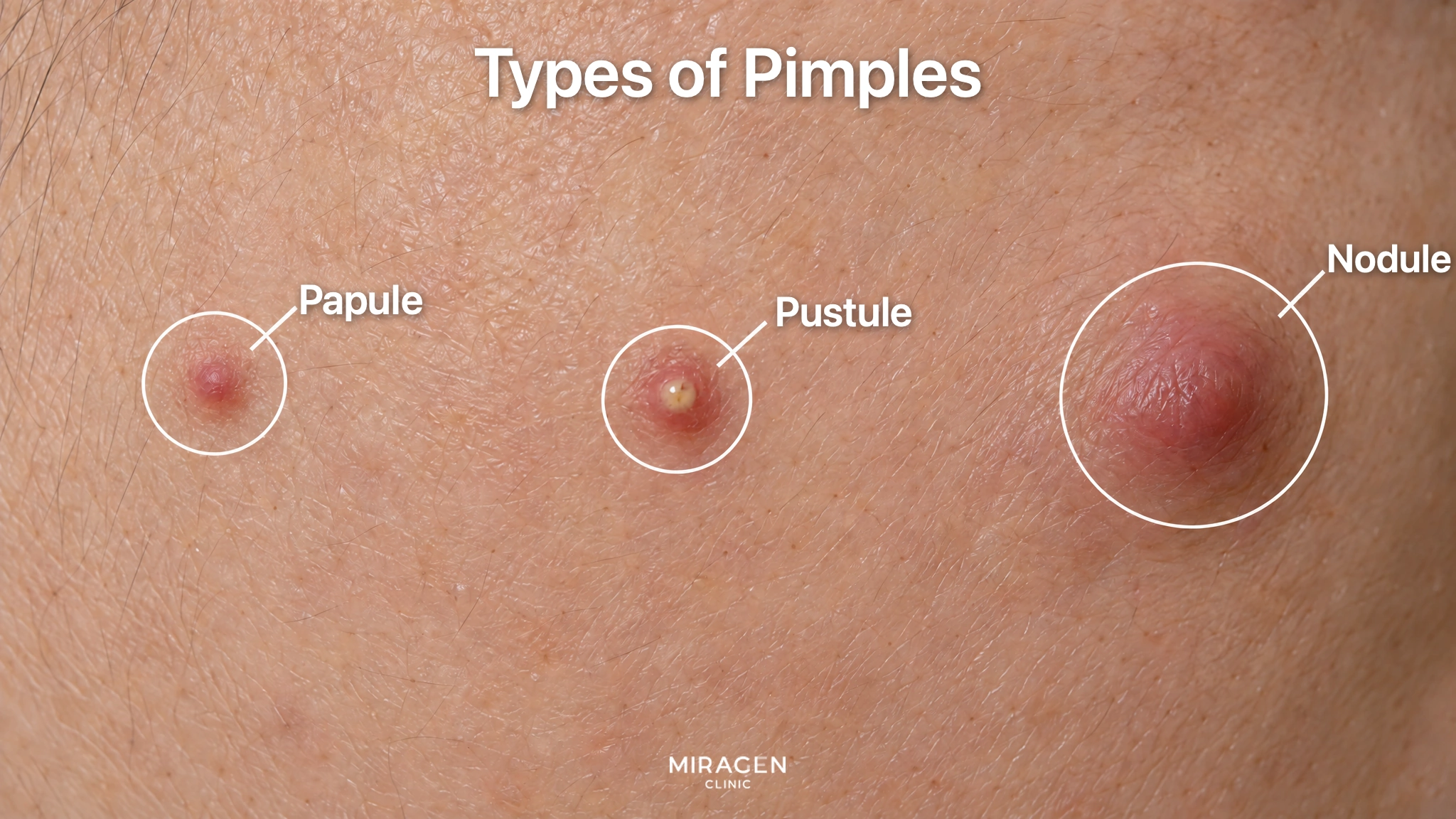
Many of the bumps patients call pimples or breakouts are acne or papulopustular rosacea. Azelia Cream can help with both conditions.
Treating acne is the original purpose for which this medicine was approved in Korea. The American Academy of Dermatology's 2024 acne guideline also gives azelaic acid a conditional recommendation. This means that while there may be a better-suited treatment, it can be recommended in most cases.3
Treating rosacea is not an approved use of this medicine in Korea. However, the British Association of Dermatologists recommends azelaic acid as one of the first-line topical treatments for rosacea that looks similar to acne (papulopustular rosacea).4 In the United States, Finacea, a 15% azelaic acid gel, is also approved for treating papulopustular rosacea.5
Rosacea with only facial redness and no pimples is a different matter, though. The prescribing information for Finacea 15% gel also states that its effect has not been evaluated in cases with redness only, without papules or pustules.5
You can check which type of rosacea you have in the Rosacea article.
Acne Marks
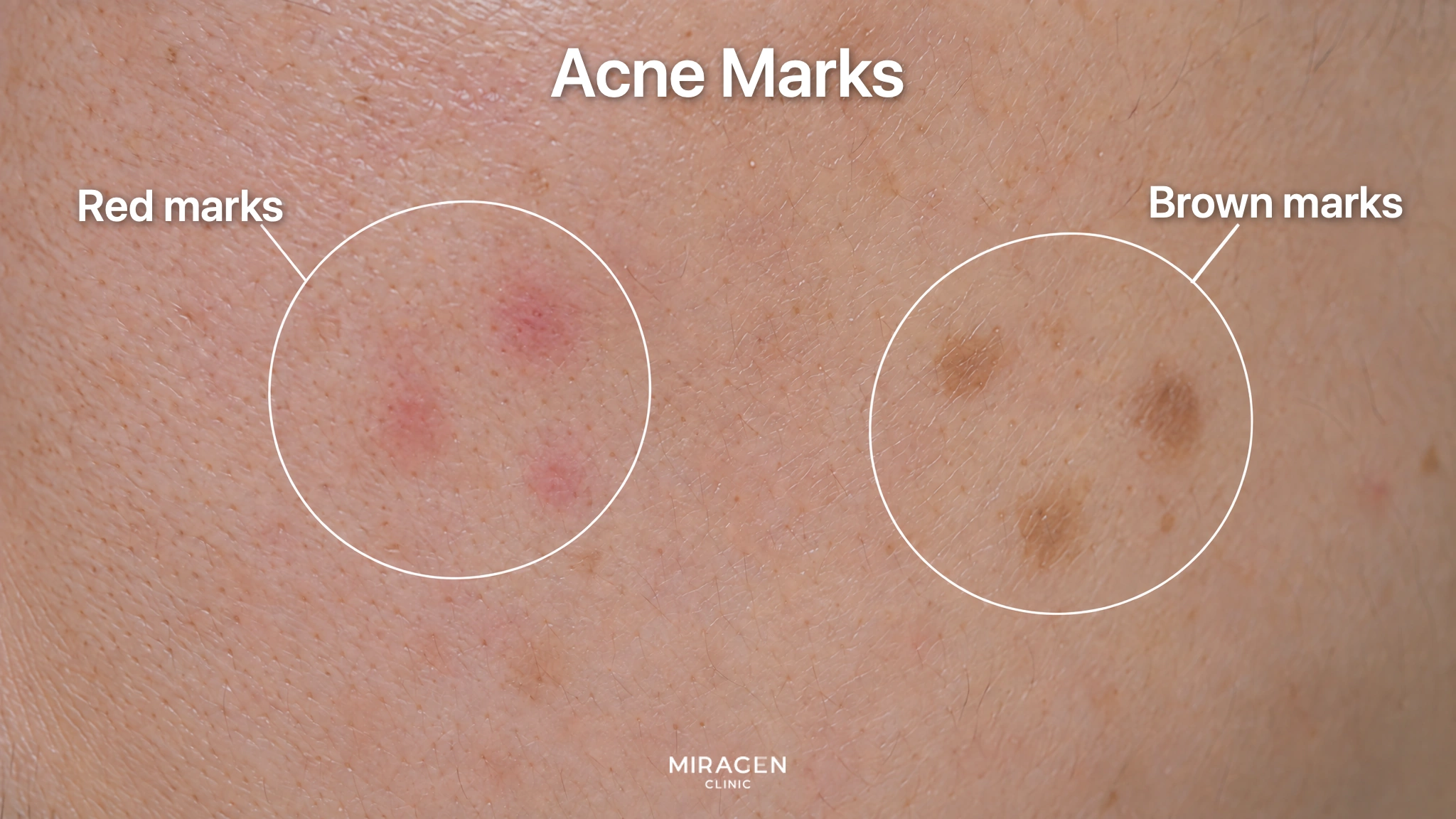
There is also research showing that the red and brown marks left where acne used to be faded with azelaic acid. In a trial, 72 acne patients applied 15% azelaic acid gel for 12 weeks. Their red and brown marks faded by about half, which was much better than with a gel without the active ingredient.6
When Does It Start to Work?
For acne, it depends on the type. Red, pus-filled pimples start to decrease from about 4 weeks, and whiteheads from about 8 weeks.2,7
For rosacea, the UK prescribing information also says that clear improvement usually comes from about 4 weeks.8
How to Use Azelia Cream
Azelia Cream is quite irritating. I suspect this irritation is also why it took 20 years to get attention. That is why it is important to know how to use it properly.
Unless a doctor or pharmacist directs otherwise, it is approved to be applied twice a day, morning and evening, in the following way.2
- Wash the area to be treated with water or a mild cleanser and dry it.
- Apply enough to the area and rub it in.
- Keep it away from the mucous membranes of the eyes, nose, and mouth, and wash your hands after applying.
- Do not cover it with plastic wrap or bandages, and apply it without skipping during the treatment period.
Apply it where you have acne and to areas where acne tends to appear. Because it is an irritating medicine, you do not need to apply it to your whole face, but if you only dab it onto visible acne, it is hard to prevent new breakouts.9
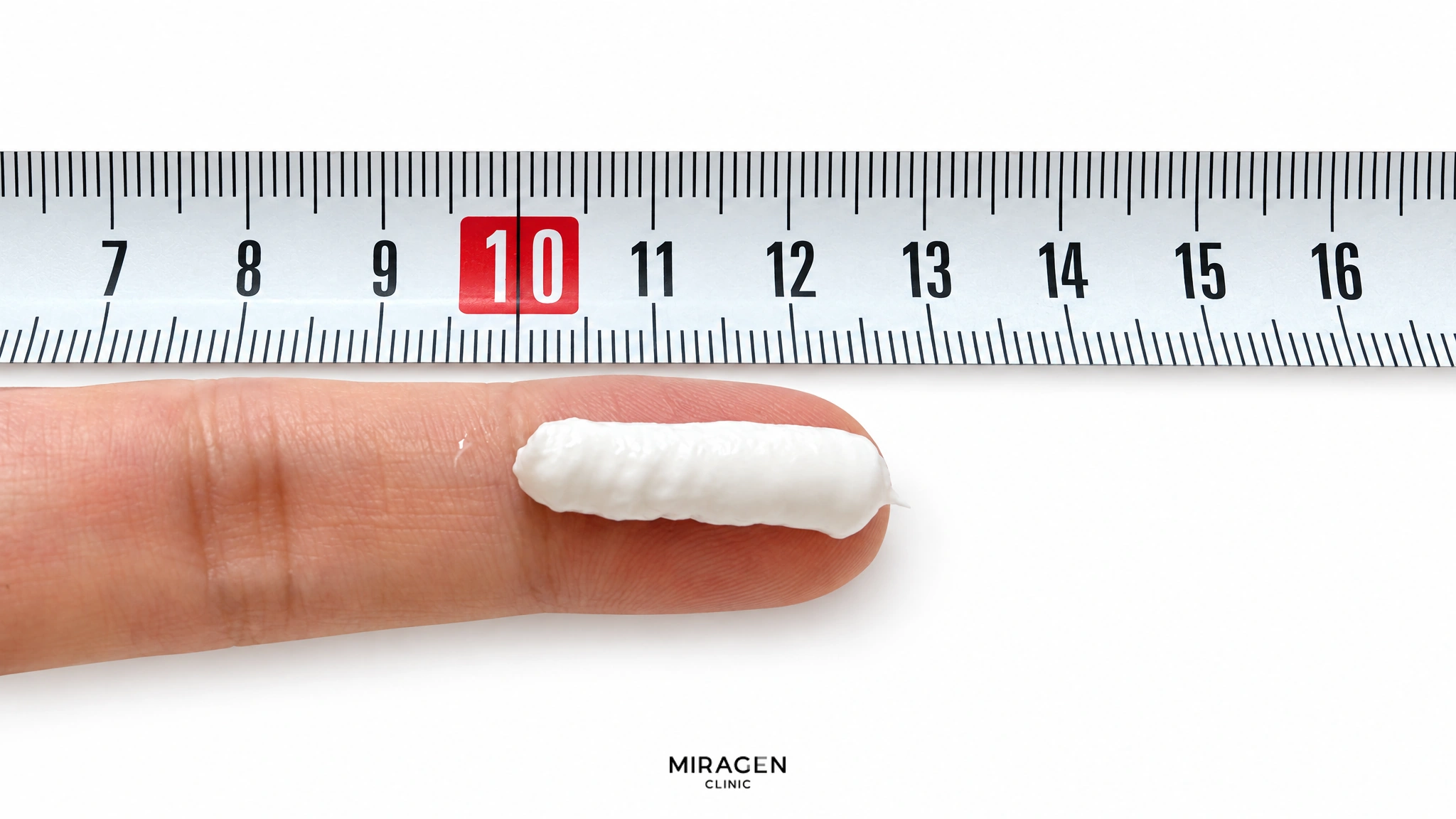
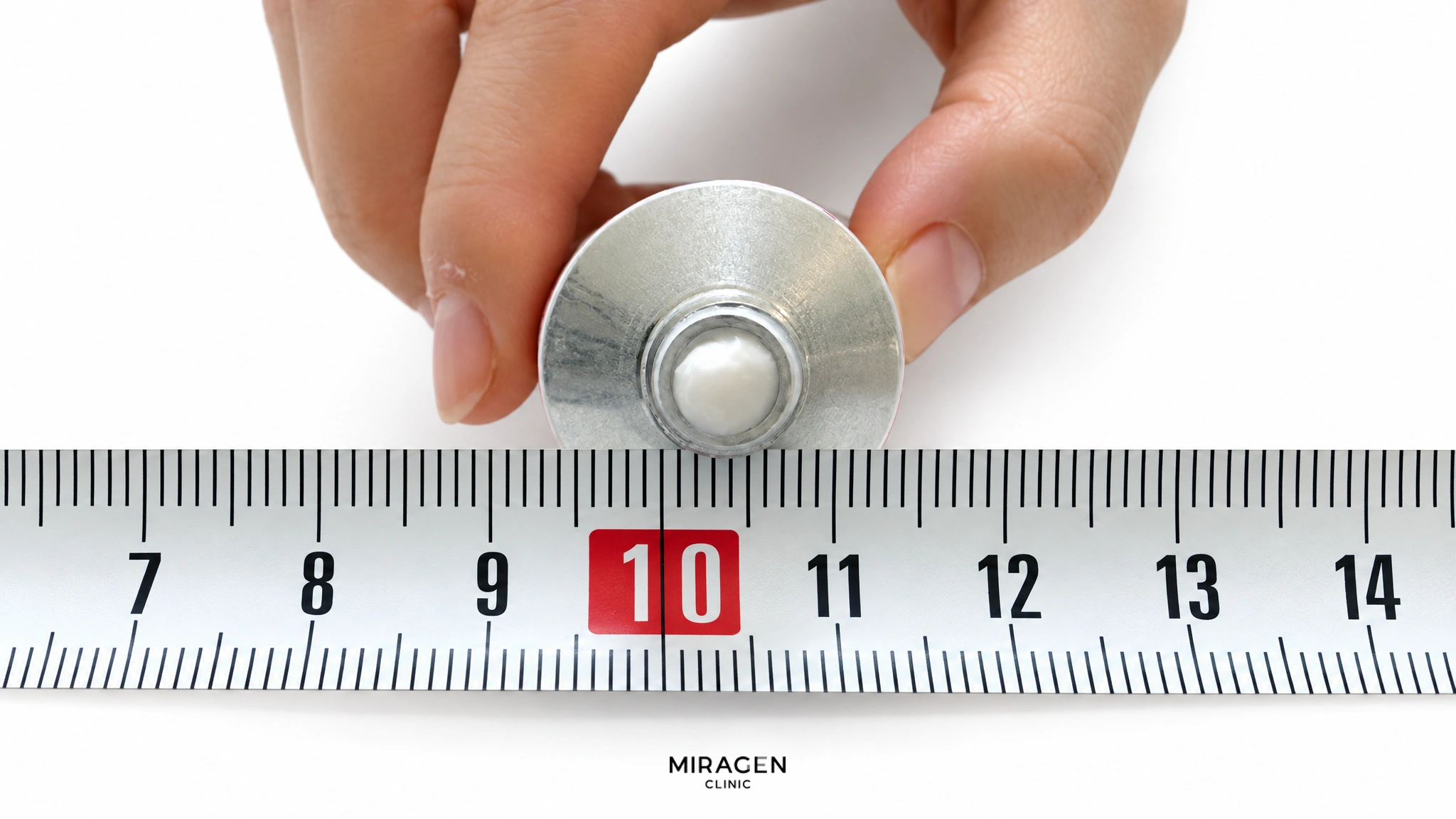
The Korean prescribing information does not specify how much to apply. Overseas, cream with the same ingredient and concentration is often directed to be squeezed out in a 2.5cm strip and applied to the whole face.10,11,12 However, face size differs from person to person and is roughly proportional to finger length, so I think squeezing out the length of the last segment of your index finger is a better fit than 2.5cm. Since the opening of the Azelia Cream tube is about 5mm in diameter, this length corresponds to what is commonly called 1 FTU (fingertip unit).13
When Should I Apply Moisturizer?
Azelia Cream is moisturizing even when applied on its own. If Azelia Cream alone keeps your skin moist enough, there is no need to add a moisturizer.
If you use a moisturizer as well, there is no guideline on which to apply first. Just keep in mind that the order of application can change how much of the medicine is absorbed.
Applying moisturizer over Azelia Cream covers the medicine and may increase absorption slightly, while applying moisturizer first and then Azelia Cream on top may reduce absorption slightly. So if the irritation is bad, apply moisturizer first; if the irritation is mild, apply Azelia Cream first.
However, when applying it to only part of your face, I recommend applying moisturizer first and then Azelia Cream on top. If you apply Azelia Cream first and then moisturizer, the medicine can spread beyond the area you meant to treat.
When to Cut Back or Stop
Burning, itching, and redness at the application site are very common adverse reactions that affect 1 or more out of 10 people, and the Korean prescribing information lists them too.2 So you do not necessarily need to stop just because you have a little of these symptoms.
However, if the irritation is severe, do not think of it as your skin just adjusting. It is better not to force yourself through it. The Korean prescribing information also says that if irritation is very severe, you should reduce use to once a day, take a short break, or stop.2
If redness or itching continues even after you stop the ointment, it is better to see a doctor soon. When contact dermatitis weakens the skin barrier, even products applied afterward, such as moisturizers, are absorbed too much, and the contact dermatitis can become chronic.
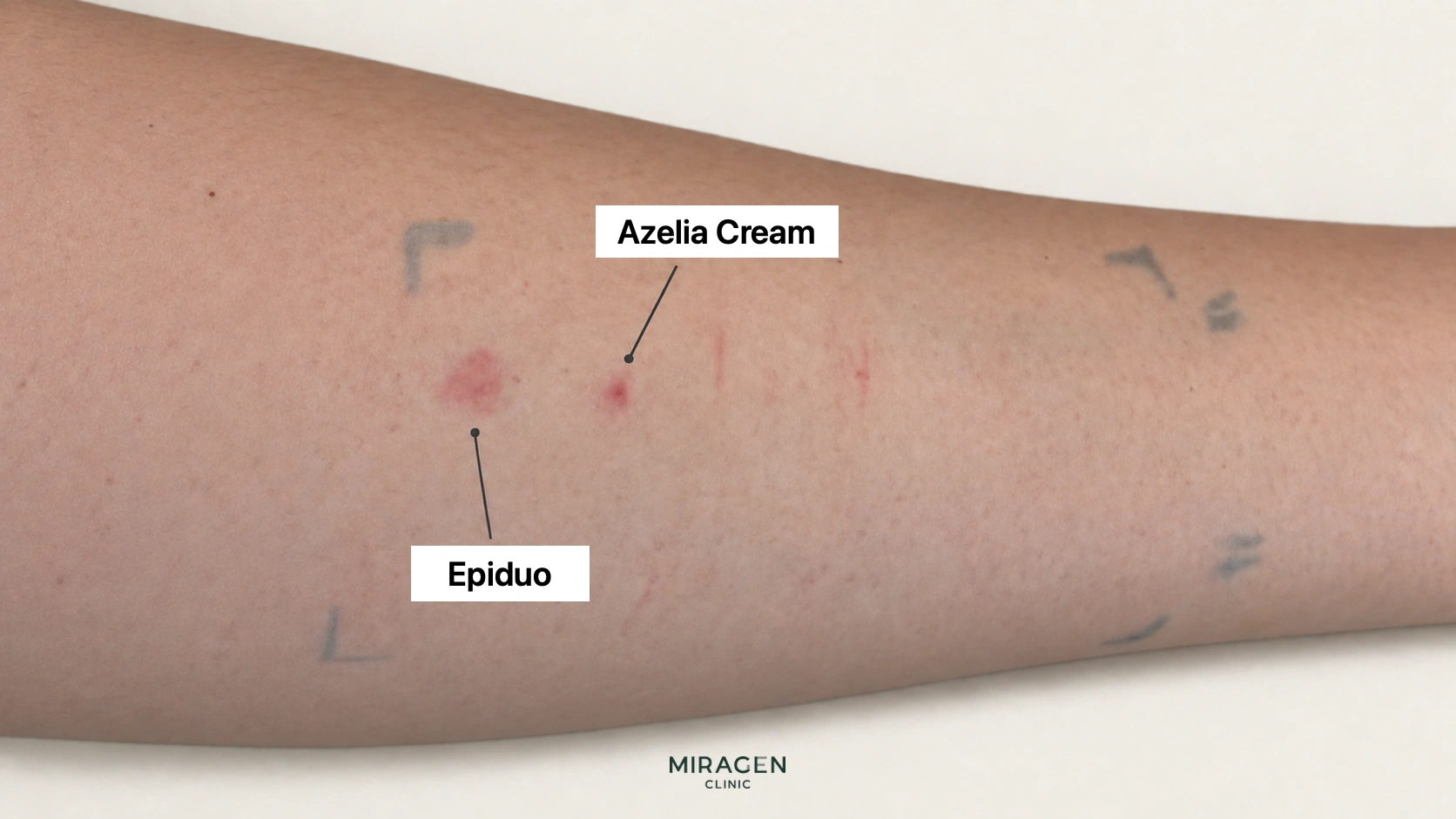
We often see patients at our clinic whose dermatitis became chronic after they forced themselves to keep using Azelia Cream despite the irritation. It is also not uncommon for patch tests to show a positive reaction to Azelia Cream. A patch test shows which products are more likely to cause contact dermatitis.14
When Home Treatment Is Not Enough
Azelia Cream is a good medicine to try first at home for pimples and marks. However, depending on your situation, there may be a treatment that suits you better.
If You Have a Lot of Red, Pus-Filled Pimples or Some Are Large Like Boils
In this case, oral medication is actually worth considering.15
But if you are choosing among topical medicines, the prescription medicine Duac Gel 3% is better than Azelia Cream.
In a trial comparing a combination gel with the same ingredients as Duac Gel 3% against 20% azelaic acid cream, both red, pus-filled pimples and whiteheads decreased more with the combination gel, and about 2.5 times as many people felt discomfort with the azelaic acid cream.16 In my experience too, Duac Gel 3% is much less irritating than Azelia Cream.
| Comparison | Combination gel with the same ingredients as Duac Gel 3% | 20% azelaic acid cream |
|---|---|---|
| Reduction in red, pus-filled pimples at week 4 (median) | 52.6% | 38.8% |
| Proportion who had application-site reactions during the trial | 15.7% | 35.8% |
However, Duac Gel 3% has the drawback that you need a prescription to buy it. For an introduction to Duac Gel 3% and every other acne ointment sold in Korea, please see the Acne Ointments article.
If Azelia Cream Stung Too Much
If you are choosing among pharmacy products, Cevitabi Gel is a good choice. Otherwise, Winlevi is a good choice.
Cevitabi Gel is a 4% nicotinamide gel. Like Azelia Cream, it can be bought without a prescription, and it is approved for mild to moderate red, pus-filled pimples.17
Cevitabi Gel is less irritating. The prescribing information for Azelia Cream states that burning, itching, and redness occur in 1 or more out of 10 people, while for Cevitabi Gel these symptoms are listed as uncommon.2,17
You can consider their effects to be similar. There are no studies comparing the two directly, but each has been compared with clindamycin. Both 4% nicotinamide gel and azelaic acid showed no clear difference in effect from clindamycin.18,19
However, Cevitabi Gel has not been shown to work on whiteheads.17
Winlevi is a prescription medicine, but among the acne ointments I have tried, it is the least irritating for its effect. I have written the details up in the Winlevi Cream review.
Another option is to apply Winlevi as a base and use Differin Gel with it. In my experience, Differin Gel is also less irritating than Azelia Cream, and its main ingredient is one of those most strongly recommended in the American Academy of Dermatology's acne guideline.3
If Azelia Cream Did Not Work Well Enough
If you are choosing among pharmacy products, use a 2.5% benzoyl peroxide gel (Fatima Gel or Acderm Gel). Otherwise, it is best to use Winlevi and Duac Gel 3% together.
If you use a 2.5% benzoyl peroxide gel, apply it on top only after your skin has gotten used to Azelia Cream, and only on the red, pus-filled spots, because irritation is common.
If you use Winlevi and Duac Gel 3%, apply Winlevi as a base and apply Duac Gel 3% on top only where you have acne.
Duac Gel 3% also contains benzoyl peroxide, but in actual use it is much less irritating than Fatima Gel. The irritation of an ointment is not decided by its main ingredient alone, but also depends on the other ingredients in it. I have explained this in detail in the Acne Ointments article.
If You Have Papulopustular Rosacea
For papulopustular rosacea, there is a clearly better medicine that works similarly or better but is less irritating.20,21 It is the prescription medicine Soolantra. If visiting a clinic feels like a burden, you can try Azelia Cream first, but otherwise I would recommend seeing a doctor and trying Soolantra.
Frequently Asked Questions
What if my pharmacy does not have Azelia Cream?
Because Azelia Cream has become such a hot topic, five more 20% azelaic acid creams, the same as Azelia Cream, received over-the-counter approval between July and September 2026. They are Azelahil Cream, Azelin Cream, Azelclear Cream, Azelclean Cream, and K-Acne Cream. They have the same ingredient, concentration, and approved indication, so you can use any of them.22,23,24,25,26
Are there cosmetics that contain azelaic acid?
In Korea, azelaic acid cannot be added to cosmetics. A notice from the Ministry of Food and Drug Safety lists it as an ingredient that may not be used in cosmetics.27
Can I use it while pregnant or breastfeeding?
During pregnancy, it is approved for use only when the benefit of treatment is judged to outweigh the risk, and it should also be used with caution while breastfeeding. So please talk to a doctor or pharmacist before applying it.2
Are there people who should not use Azelia Cream?
If you have had a hypersensitivity reaction to the main ingredient azelaic acid or the additive propylene glycol, it is best to talk to a doctor or pharmacist first.2
Are there other side effects besides irritation like stinging?
Hypersensitivity reactions are rare but can happen. If your face or eyes swell, hives or a rash appear, or your asthma gets worse after applying it, it is best to stop using it right away and see a doctor.
In people with darker skin, cases have been reported where the application area became lighter than the surrounding skin. If you notice this kind of change, please let a doctor or pharmacist know.2
Can I use it together with other acne medicines?
Azelia Cream works on clogged pores, acne bacteria, and inflammation all at once, and it is also somewhat irritating, so I do not recommend using it with other acne medicines at first.28
Can children use it?
Its safety and effectiveness have not been established in children under 12. If you want to apply it to a child under 12, please talk to a doctor first.2
How long can I keep using it?
The Korean prescribing information advises regular use for several months for the best results, but states that there is no clinical experience with use beyond one year.2
How long can I use it after opening?
After opening, it should be used within 6 months and stored at 30°C or below.2
References
- Naver Search Ad · Naver DataLab. Search volume data for “Azelia Cream.” Accessed 2026-10-03. Monthly estimates calibrated from DataLab trends using Search Ad figures.
- Ministry of Food and Drug Safety. Azelia Cream product approval information. Item code 200608046.
- American Academy of Dermatology. Announcement of the 2024 acne guidelines.
- Hampton PJ et al. British Association of Dermatologists guidelines for the management of rosacea. Br J Dermatol. 2021;185:725–735.
- LEO Pharma. US prescribing information for Finacea 15% gel. DailyMed.
- Shucheng H et al. Study of 15% azelaic acid gel for improving post-acne erythema and hyperpigmentation. Dermatol Ther (Heidelb). 2024;14:1293–1314.
- Cunliffe WJ, Holland KT. Clinical and laboratory studies of 20% azelaic acid cream in acne. Acta Derm Venereol Suppl. 1989;143:31–34.
- LEO Laboratories. UK prescribing information for Finacea 15% gel.
- American Academy of Dermatology. 10 skin care habits that can worsen acne.
- LEO Laboratories. UK prescribing information for Skinoren 20% cream.
- LEO Pharma. German professional prescribing information for Skinoren 20% cream. October 2020 edition.
- Health Sciences Authority, Singapore. Skinoren 20% cream product information. SIN07138P.
- Long CC, Finlay AY. The fingertip unit: a new practical measure. Clin Exp Dermatol. 1991;16:444–447.
- Uter W et al. European Society of Contact Dermatitis guideline for patch testing 2026. Contact Dermatitis. DOI: 10.1111/cod.70195.
- Nast A et al. EuroGuiDerm guideline for the treatment of acne, 2025 update. European Dermatology Forum.
- Schaller M et al. Comparative trial of benzoyl peroxide 3% · clindamycin 1% gel and azelaic acid 20% cream in acne. J Eur Acad Dermatol Venereol. 2016;30:966–973.
- Ministry of Food and Drug Safety. Cevitabi Gel product approval information. Item code 202100690.
- Shalita AR et al. Comparison of 4% nicotinamide gel and 1% clindamycin gel in inflammatory acne. Int J Dermatol. 1995;34:434–437.
- Liu H et al. Cochrane review of topical azelaic acid, salicylic acid, nicotinamide, sulphur, zinc and fruit acid for acne. Cochrane Database Syst Rev. 2020;5:CD011368.
- Siddiqui K et al. Network meta-analysis of ivermectin versus existing topical treatments for inflammatory lesions of rosacea. SpringerPlus. 2016;5:1151.
- Shaheen EA et al. Network meta-analysis of topical treatments for moderate-to-severe papulopustular rosacea. JAAD International. 2025.
- Ministry of Food and Drug Safety. Azelahil Cream product approval information. Item code 202602196.
- Ministry of Food and Drug Safety. Azelin Cream product approval information. Item code 202602501.
- Ministry of Food and Drug Safety. Azelclear Cream product approval information. Item code 202602644.
- Ministry of Food and Drug Safety. Azelclean Cream product approval information. Item code 202602668.
- Ministry of Food and Drug Safety. K-Acne Cream product approval information. Item code 202602829.
- Ministry of Food and Drug Safety. Regulations on Cosmetic Safety Standards, Appendix 1: Prohibited ingredients. Notice No. 2026-19, effective 2026-03-18. Checked 2026-10-06.
- American Academy of Dermatology. Acne: diagnosis and treatment.