When I prescribe Protopic, the clinic often gets calls saying, "It itches, stings, burns, turns red, and even bothers my eyes. Is it okay to keep using it?"
Some people tell me they were so uncomfortable that they stayed up all night, and ask whether that is normal. In severe cases, the skin can turn so red that, as in the photo below, you can see a clear line between where it was applied and where it was not.
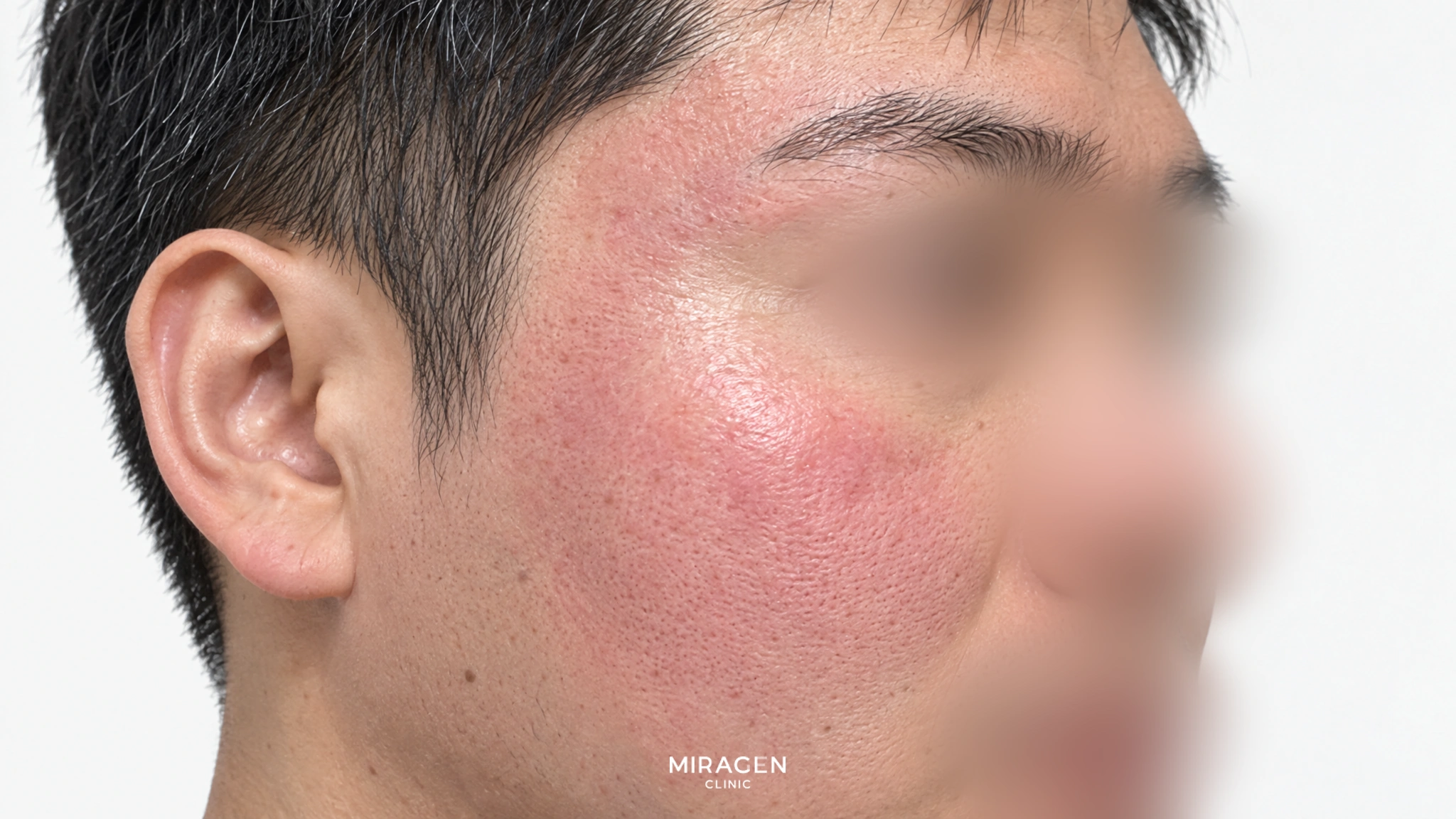
Even if I warn you in advance, it is understandable to be worried once you actually go through it. But even with this discomfort, you can keep using it. You need to get through this early discomfort even if it feels unsettling, and there are ways to reduce it.
I also often meet people who had already used it consistently but found it so uncomfortable that they do not want to use it again. When I ask for details, in many of these cases the way they used it was not right.
Here is how to reduce the discomfort of Protopic Ointment and the dropouts it causes, so that you can get the full benefit.
Why Protopic Ointment Feels "Spicy" on the Skin
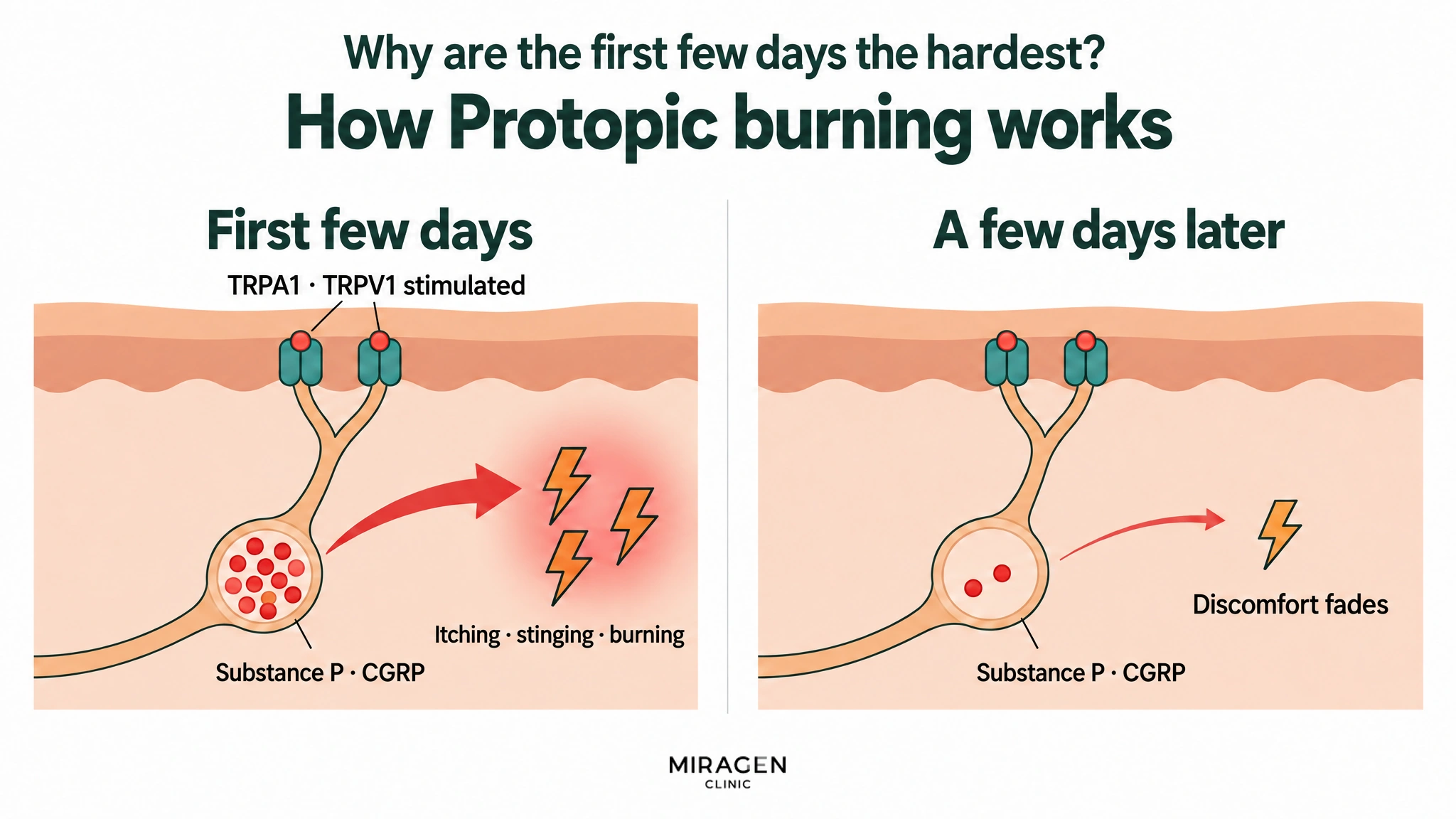
Your skin has sensors called TRPV1 and TRPA1 that react to "spicy" substances such as capsaicin, and Protopic touches these sensors.1,2
When the sensors react, substances called substance P (causes burning) and CGRP (causes flushing) are released, causing the itching · stinging · burning · redness · burning eyes you would feel if something spicy had touched your skin. I sometimes describe it as feeling like a menthol pain-relief liniment.
The first application is hard because the substance P and CGRP stored in the nerves are released all at once.
If you keep applying it, these substances are eventually depleted, and the spicy feeling goes away within 3 to 4 days in most people.3,4,5
Some people do not feel any discomfort from the start. The mechanism behind the discomfort differs from the mechanism behind the anti-inflammatory effect, so you can rest assured that having no discomfort does not mean it has no anti-inflammatory effect.
There is also research showing that the less damaged the skin barrier is, the less burning there is.6 However, in my experience, it is hard to predict who will be more uncomfortable from the degree of skin barrier damage.
Stay Cool for the First Few Days
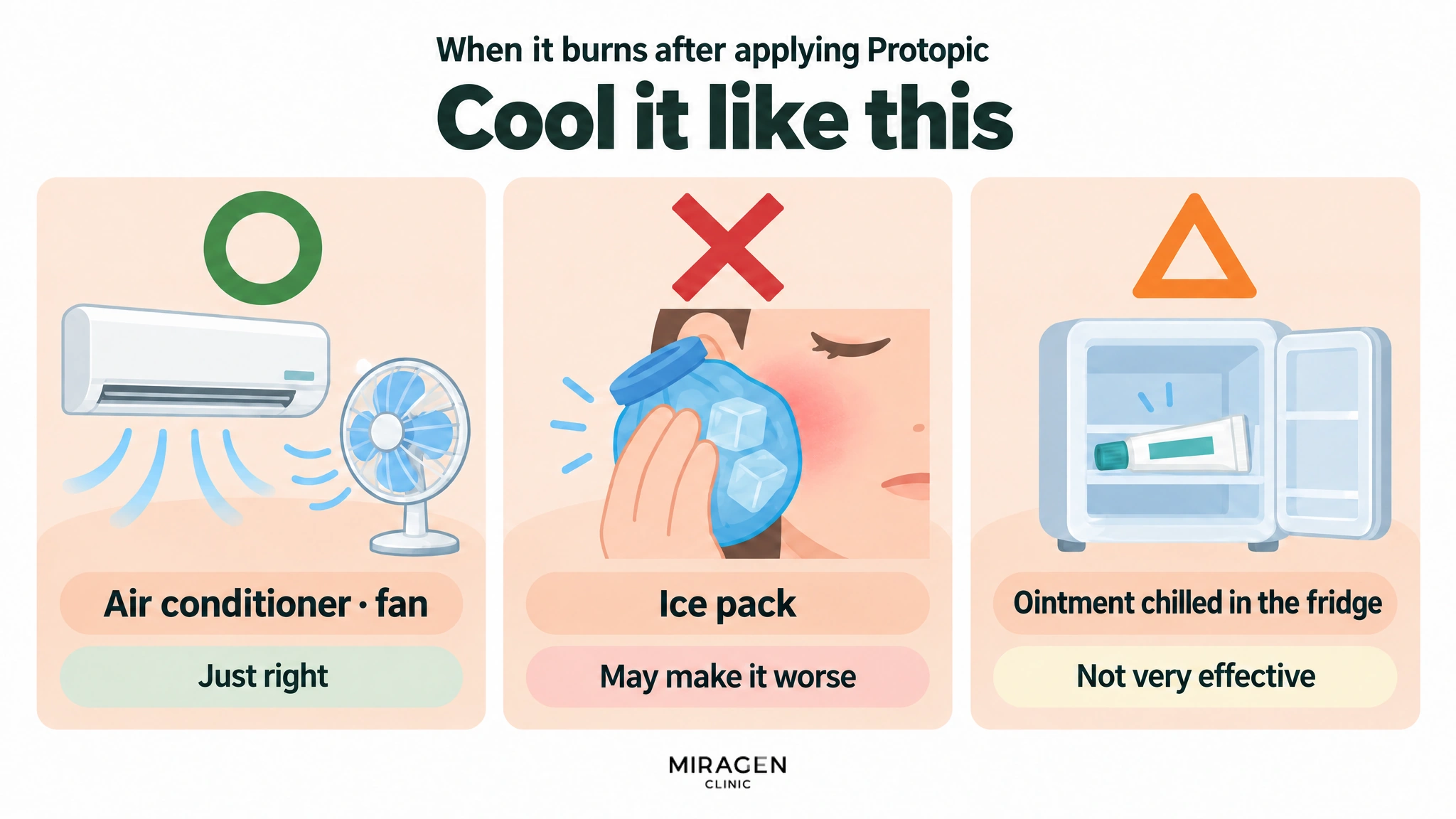
For the first few days after you start Protopic Ointment, it is best to stay cool. On the first night, keep the room cool while you sleep as well.
The reason is that TRPV1 and TRPA1 also respond to heat.1,7
In fact, Protopic touches the two sensors in slightly different ways. It acts directly on TRPA1 and makes TRPV1 more sensitive.3,4,8 The direct action on TRPA1 is hard to prevent, but staying cool reduces how much heat stimulates the two sensors even further.
Turning on an air conditioner or a fan is about right. TRPA1 also responds to cold, so making the skin too cold with something like an ice pack can actually make it worse.2 There is a report that burning decreases when you chill Protopic in the refrigerator before applying it, but in practice it is not a very effective method.9
Even after the hard first few days, TRPV1 stays sensitive for as long as you keep applying Protopic. So in a hot place, such as in front of a grill at a barbecue restaurant, the little substance P and CGRP that remain can be released and cause discomfort.
If you have applied it for more than 3 days and the itching · burning · redness keeps getting worse, this may not be a normal reaction, so it is best to stop applying it and see a doctor.
Apply It Morning and Evening Instead of a Moisturizer
The correct way to use Protopic is twice a day. Near the end of treatment, I advise cutting back to once a day or once every two days to see whether your usual moisturizer suits you, but until then it is twice a day. There are two reasons.
The first reason is discomfort. Even people whose itching · stinging · burning · redness · burning around the eyes did not go away with once-a-day use often find the discomfort disappears when they switch to twice a day. Substance P and CGRP are released each time you apply it, so the more often you apply it, the less often a large amount builds up and is released all at once.3
The second reason is to pause your moisturizer for a while. The most common cause of worsening symptoms when the skin barrier is weak is a moisturizer. The approved labeling also says not to layer other products over Protopic unless told otherwise.10 Protopic seals the skin well, so if you apply it morning and evening, you do not need a separate moisturizer.
Why Protopic Is Also Used for Neurogenic Rosacea
Neurogenic rosacea is a condition that gets worse in the heat and better in the cool, in which your face burns and turns red with only a little warmth.11,12 In the blood of these people, CGRP is high, and the higher it is, the more severe the symptoms.13
The symptoms are very similar to what you feel when you first apply Protopic. In fact, TRPV1 is increased in the skin of rosacea patients.14
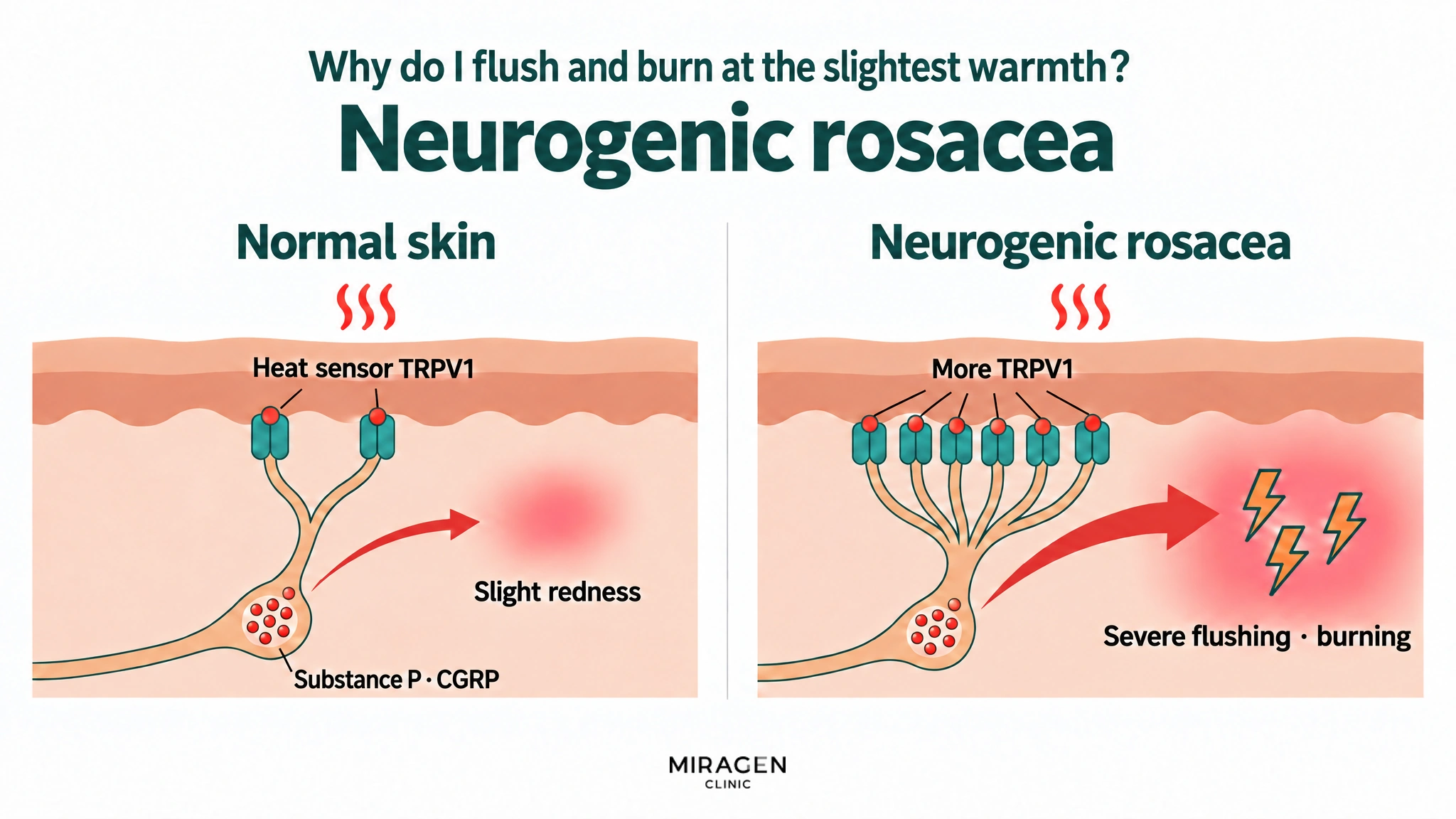
So I think that when Protopic depletes substance P and CGRP, the symptoms of neurogenic rosacea improve. However, I have not yet seen a study that covers this.
Where, How Much, and How Do You Apply It?
Spread a thin layer on the areas that have symptoms and the areas where symptoms tend to appear.
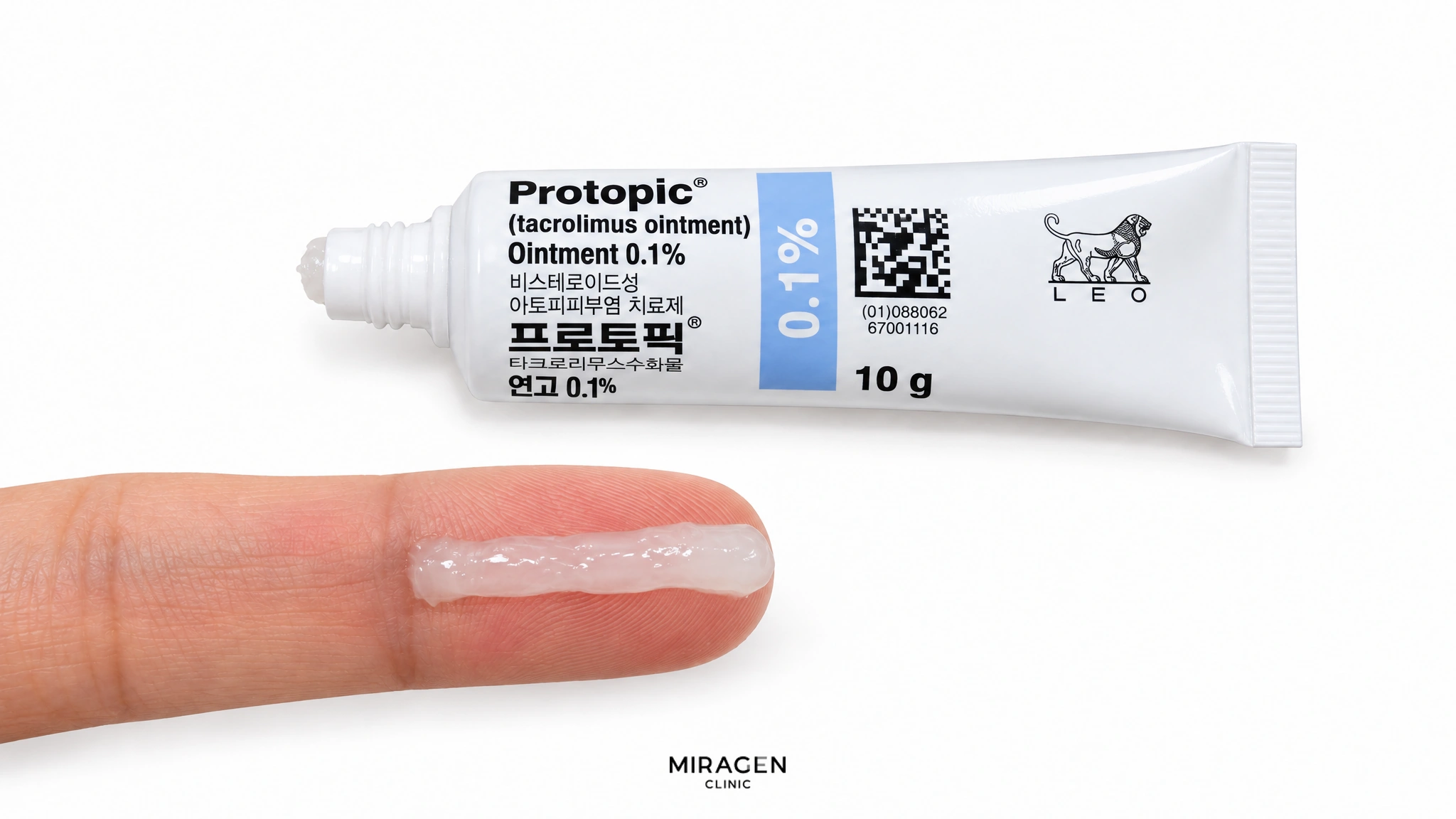
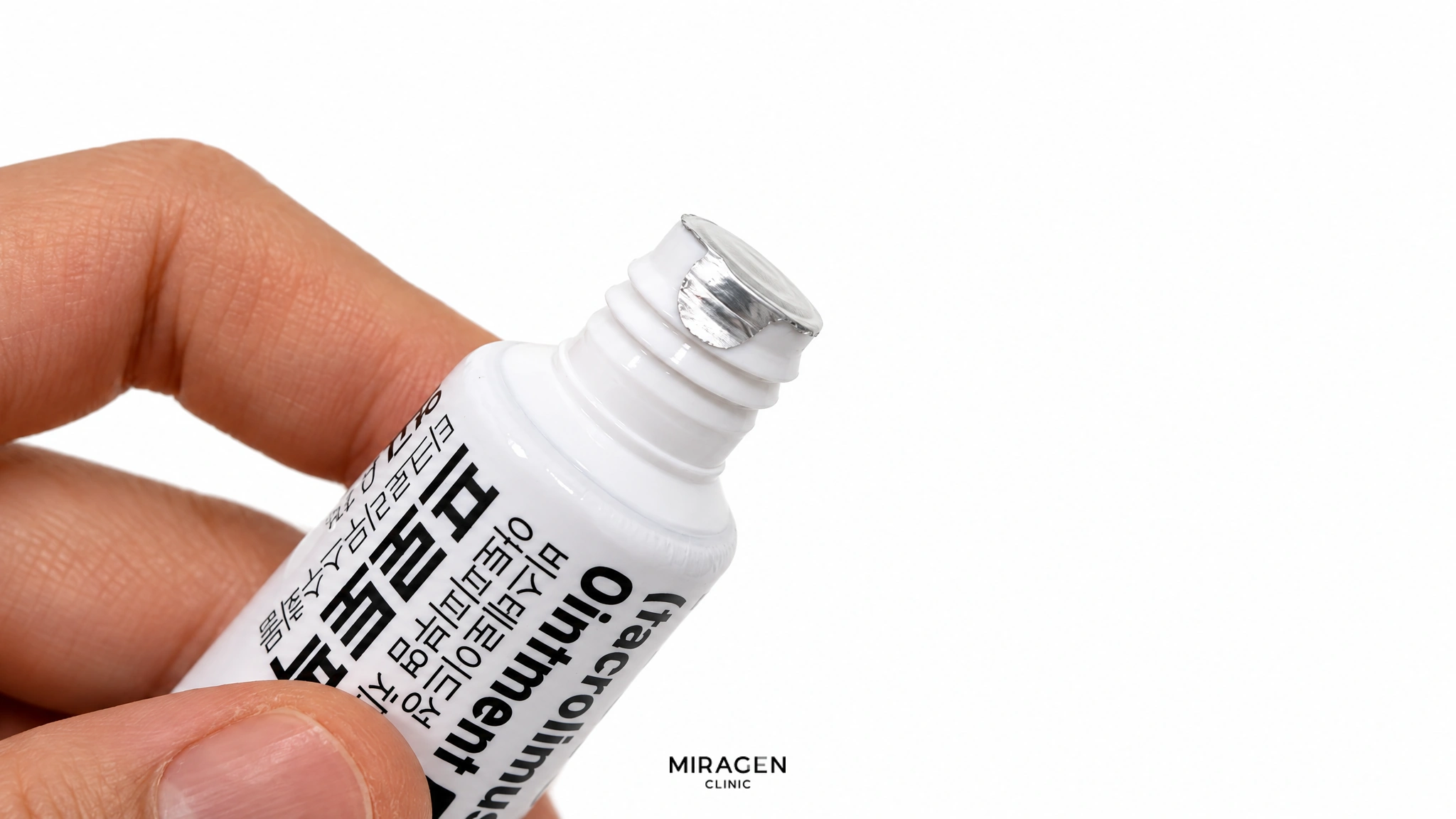
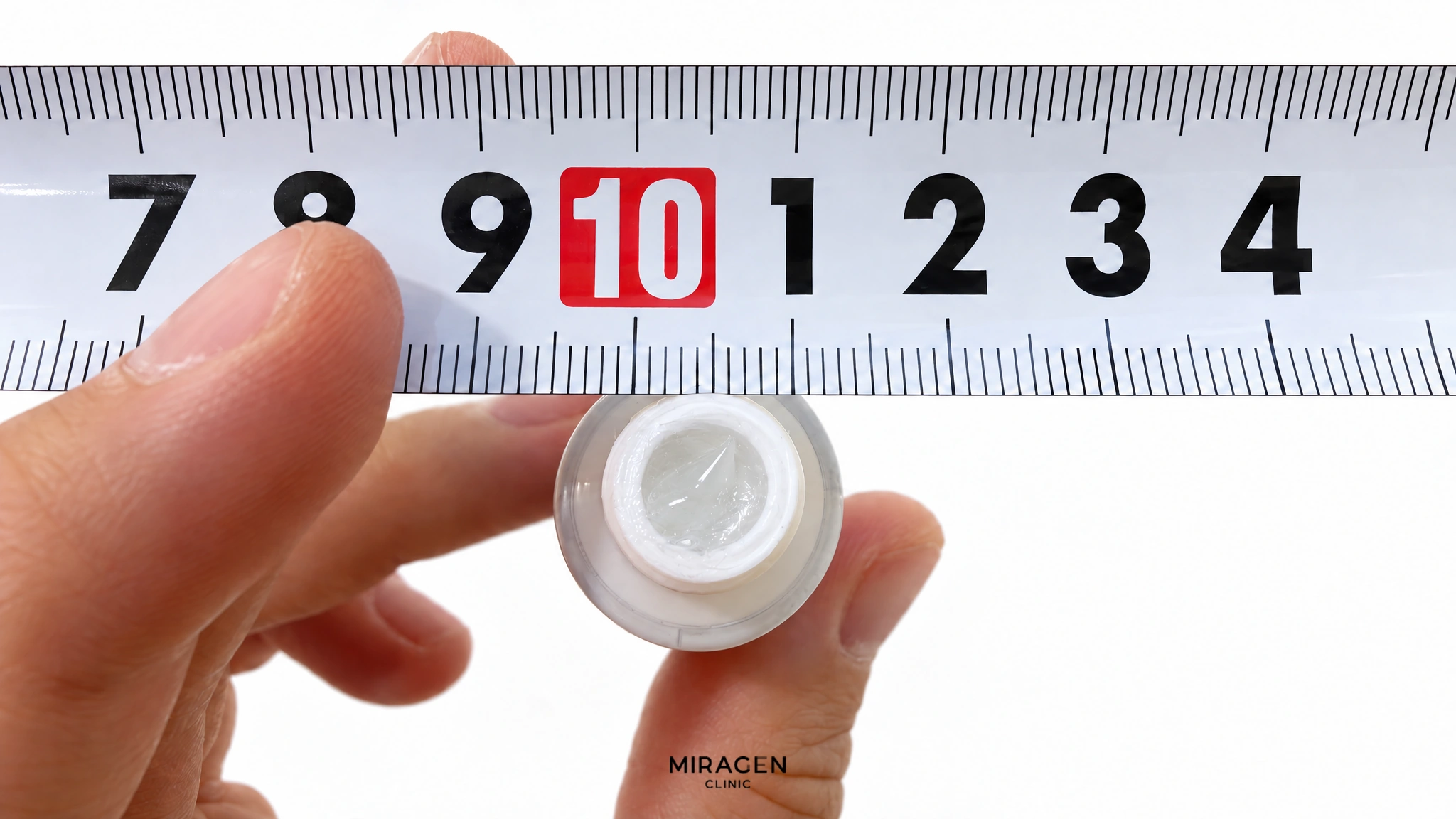
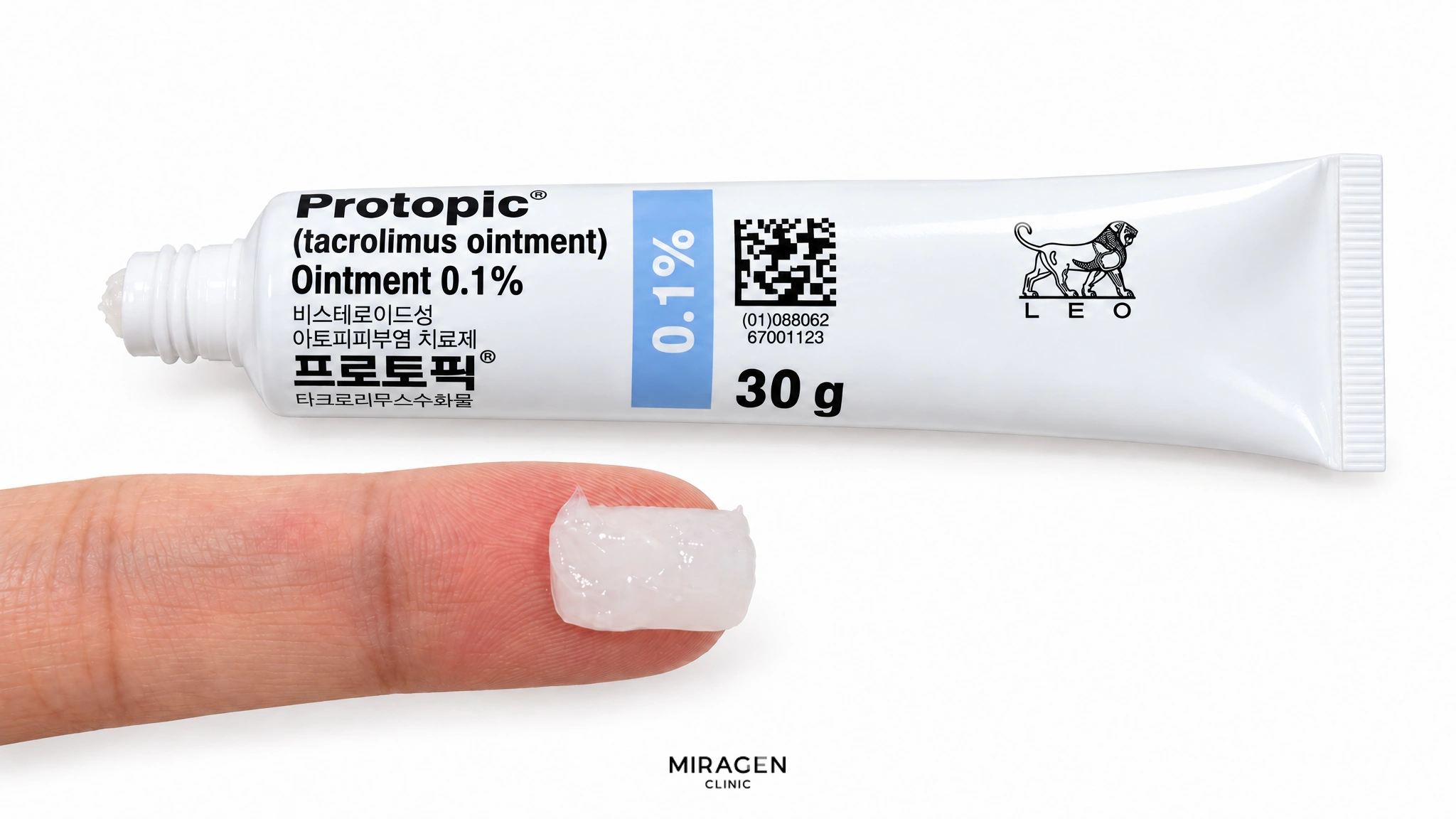
How much to squeeze out depends on the tube size. Protopic comes in 10g and 30g tubes, and the caps and openings are different.
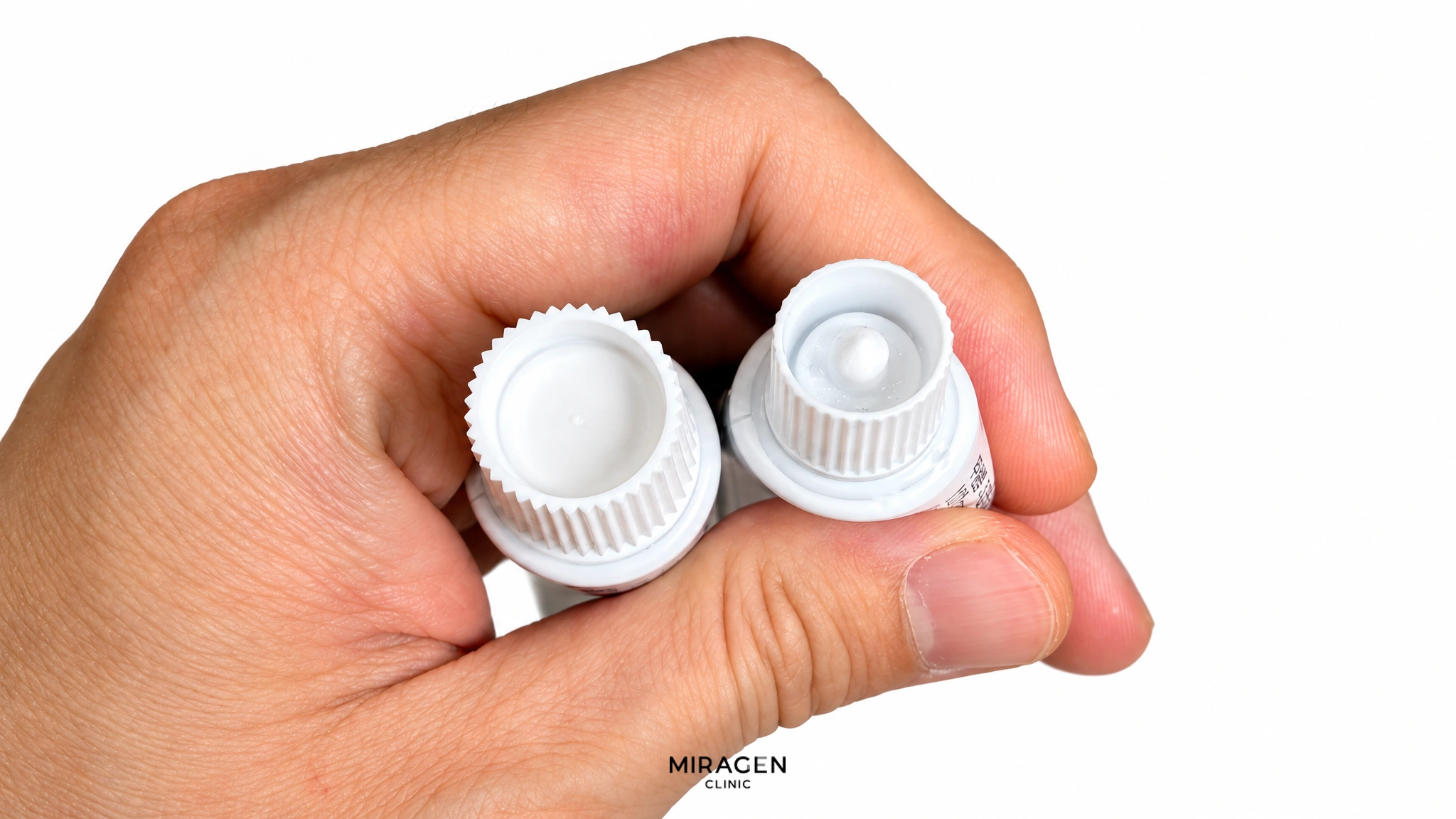
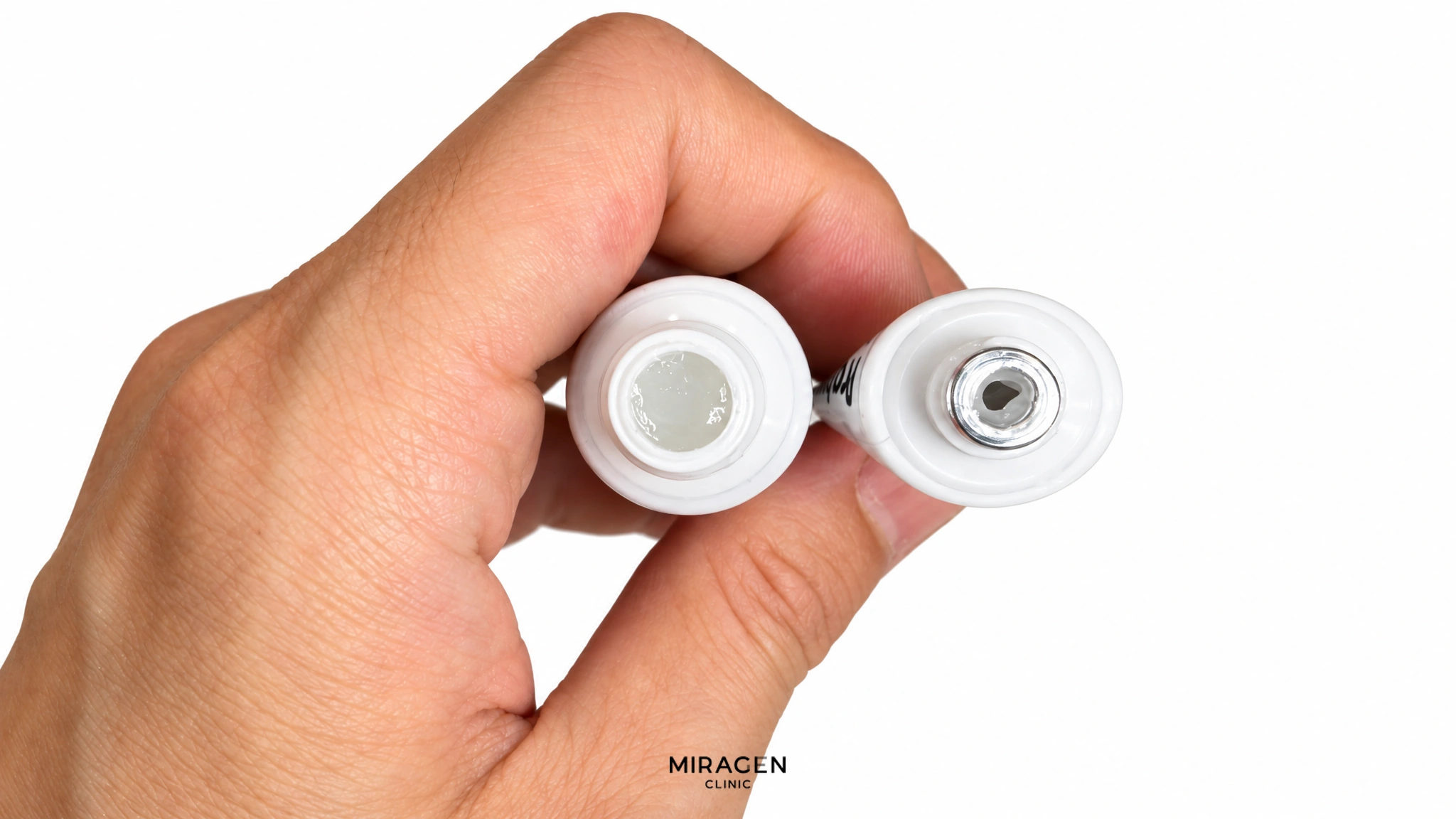
The 10g cap has a sharp spike on the inside, and you use it to pierce the foil over the opening. The hole it makes is small, so for an area about the size of the whole face, squeeze out the length of the last segment of your index finger.
The 30g cap has no spike. Instead, the foil has a tab, and you pull on it to peel the foil off. Once the foil is gone, the opening is very wide, about 10mm in diameter. Even half the length of the last segment is a little too much for the whole face. For an area about the size of the whole face, squeeze out a little less than half the length of the last segment of your index finger with the 30g tube.
| Tube | Cap | Opening | Length to squeeze out for an area the size of the whole face |
|---|---|---|---|
| 10g | Has a spike for piercing the foil | Small hole pierced by the spike | Length of the last segment of the index finger |
| 30g | No spike | A hole about 10mm in diameter, made by holding the foil tab and peeling it off | A little less than half the last segment |
I often hear that Protopic is sticky and shiny, and that it gets on the pillow at night, which is bothersome. These problems are much milder if you apply the right amount.
Apply it after washing, once your skin is completely dry, without a moisturizer. Do not cover the area with plastic wrap or the like, and do not apply it to mucous membranes such as the eyes or inside the mouth. Around the eyes, apply it by dabbing on a small amount.10
Is It Okay to Apply During the Day?
It is okay to apply it during the day. The approved labeling says to reduce sun and ultraviolet exposure while you are applying it. This is because of an animal experiment in which hairless mice that had Protopic applied and were exposed to ultraviolet light developed skin tumors sooner.15
However, in this experiment Protopic only moved up the time to skin tumors slightly in males, and in females there was no difference or it was even delayed.16 In an experiment repeated by another research team, Protopic did not speed up skin cancer.17
On top of that, this did not happen in people. An analysis of more than 400,000 people who used Protopic · Elidel found no increase in skin cancer.18 A study that followed about 8,000 children who used Protopic for 10 years also found no additional cancers.19 So you do not need to worry about applying it during the day.
"Do I have to wear sunscreen if I use Protopic during the day?" Many people ask this too. When the skin is weak, sunscreen, like a moisturizer, is a common cause of contact dermatitis, so it is better not to apply it. On days when you will be in the sun for a long time, cover up with a sun hat or a parasol.
If It Does Not Improve After 2 Weeks
The approved labeling says to consider other treatment if there are no signs of improvement 2 weeks after you start applying it.10 If it has still not improved after 2 weeks of use, you should suspect a microbial infection or a problem with Protopic's sealing effect.
In that case, an antiparasitic, antifungal, or antibiotic can be considered alongside it, and you can switch Protopic to Elidel, which seals less. However, I often see Elidel cause contact dermatitis, so I prefer Protopic whenever possible.
When to Stop Right Away and See a Doctor
- When small blisters appear in clusters or spread quickly10
- When lymph nodes in places such as the neck or armpits swell and do not go down10
- When you have applied it for more than 3 days and the itching · burning · redness keeps getting worse
- When there is oozing
Who Should Check Before Using It
It is best not to use Protopic in the following cases.10
- When the skin is broken or ulcerated
- When you are pregnant or may be pregnant
- Under 2 years of age
- When your immune function is weakened
- When you have ever had a hypersensitivity reaction to tacrolimus or an additive
When you are receiving phototherapy(The approved labeling lists this as a contraindication, but it comes from the same mouse experiment behind the sun and ultraviolet caution explained above)- When you have severe kidney disease or hyperkalemia
Children aged 2 to 15 can use only Protopic 0.03%. The difference between the two strengths is covered in the Protopic for Face article.
Relapse Rate After Stopping
Protopic does not weaken the skin the way steroid ointments do. In a trial that compared the two on the same people's skin over 7 days, the steroid ointment greatly reduced collagen production and thinned the skin, but Protopic did not.20
Still, relapse after stopping is common. In a trial where children applied it for up to 22 days and were observed for 2 weeks, about 80% relapsed.21 The same goes for adults. Among adults who improved with Protopic, 108 were switched to an ointment without the active ingredient, and half of them got worse again within 15 days.22
The fundamental cause of atopic dermatitis is a weakened skin barrier. It seems that while inflammation settles with Protopic the barrier improves too, but it does not keep protecting the barrier after you stop. To reduce relapse, the skin barrier needs to recover as well.
If you would like to start with what Protopic is and why it is used, please read the Protopic article.
Frequently Asked Questions
Can I apply it only in the evening?
While you have symptoms, it is best to apply it twice, morning and evening. Many people find that once a day does not clear the itching · burning well, and in a comparison study, the group that applied it twice improved more.5
Can I use an ice pack?
Cooling with an air conditioner or a fan is about right. If it is too cold, TRPA1, which responds to cold temperatures, is triggered and the burning can actually get worse.
Do I need sunscreen when using Protopic?
When the skin is weak, sunscreen, like a moisturizer, is a common cause of contact dermatitis, so it is better not to apply it. On days when you will be in the sun for a long time, cover up with a sun hat or a parasol.
Do children also apply it twice a day?
Yes. Children aged 2 to 15 apply the 0.03% strength twice a day for up to 3 weeks, and then cut back to once a day until the lesions disappear.
References
- Caterina MJ, Schumacher MA, Tominaga M, Rosen TA, Levine JD, Julius D. The capsaicin receptor: a heat-activated ion channel in the pain pathway. Nature. 1997;389(6653):816-24.
- Bandell M, Story GM, Hwang SW, et al. Noxious cold ion channel TRPA1 is activated by pungent compounds and bradykinin. Neuron. 2004;41(6):849-57.
- Ständer S, Ständer H, Seeliger S, Luger TA, Steinhoff M. Topical pimecrolimus and tacrolimus transiently induce neuropeptide release and mast cell degranulation in murine skin. Br J Dermatol. 2007;156(5):1020-6.
- Pereira U, Boulais N, Lebonvallet N, Pennec JP, Dorange G, Misery L. Mechanisms of the sensory effects of tacrolimus on the skin. Br J Dermatol. 2010;163(1):70-7.
- Reitamo S, Harper J, Bos JD, et al. 0.03% Tacrolimus ointment applied once or twice daily is more efficacious than 1% hydrocortisone acetate in children with moderate to severe atopic dermatitis: results of a randomized double-blind controlled trial. Br J Dermatol. 2004;150(3):554-62.
- Seo SR, Lee SG, Lee HJ, Yoon MS, Kim DH. Disrupted Skin Barrier is Associated with Burning Sensation after Topical Tacrolimus Application in Atopic Dermatitis. Acta Derm Venereol. 2017;97(8):957-958.
- Moparthi L, Kichko TI, Eberhardt M, et al. Human TRPA1 is a heat sensor displaying intrinsic U-shaped thermosensitivity. Sci Rep. 2016;6:28763.
- Kita T, Uchida K, Kato K, Suzuki Y, Tominaga M, Yamazaki J. FK506 (tacrolimus) causes pain sensation through the activation of transient receptor potential ankyrin 1 (TRPA1) channels. J Physiol Sci. 2019;69(2):305-316.
- Al-Khenaizan S. Practical tip: Precooling topical calcineurin inhibitors tube; reduces burning sensation. Dermatol Online J. 2010;16(4):16.
- Ministry of Food and Drug Safety. Protopic Ointment 0.1% (tacrolimus hydrate) product approval information. Item code 200511279.
- Kim HO, Kang SY, Kim KE, Cho SY, Kim KH, Kim IH. Neurogenic rosacea in Korea. J Dermatol. 2021;48(1):49-55.
- Scharschmidt TC, Yost JM, Truong SV, Steinhoff M, Wang KC, Berger TG. Neurogenic rosacea: a distinct clinical subtype requiring a modified approach to treatment. Arch Dermatol. 2011;147(1):123-6.
- Wu C, Zhang K, Guo Y, et al. Clinical Characteristics and Serum CGRP Level Differences Between Neurogenic Rosacea and Non-Neurogenic Rosacea. Int J Dermatol. 2025;64 Suppl 2:42-51.
- Sulk M, Seeliger S, Aubert J, et al. Distribution and expression of non-neuronal transient receptor potential (TRPV) ion channels in rosacea. J Invest Dermatol. 2012;132(4):1253-62.
- U.S. Food and Drug Administration. PROTOPIC (tacrolimus) ointment prescribing information, 13.1 Carcinogenesis and photocarcinogenesis studies.
- U.S. Food and Drug Administration. Protopic (tacrolimus) ointment NDA 50-777 pharmacology and toxicology review, 12-month photocarcinogenicity study in hairless mice. 2000:92-93.
- Lerche CM, Philipsen PA, Poulsen T, Wulf HC. Topical tacrolimus in combination with simulated solar radiation does not enhance photocarcinogenesis in hairless mice. Exp Dermatol. 2008;17(1):57-62.
- Lam M, Zhu JW, Tadrous M, Drucker AM. Association Between Topical Calcineurin Inhibitor Use and Risk of Cancer, Including Lymphoma, Keratinocyte Carcinoma, and Melanoma: A Systematic Review and Meta-analysis. JAMA Dermatol. 2021;157(5):549-558.
- Paller AS, Fölster-Holst R, Chen SC, et al. No evidence of increased cancer incidence in children using topical tacrolimus for atopic dermatitis. J Am Acad Dermatol. 2020;83(2):375-381.
- Reitamo S, Rissanen J, Remitz A, et al. Tacrolimus ointment does not affect collagen synthesis: results of a single-center randomized trial. J Invest Dermatol. 1998;111(3):396-8.
- Fleischer AB Jr. Treatment of atopic dermatitis: role of tacrolimus ointment as a topical noncorticosteroidal therapy. J Allergy Clin Immunol. 1999;104(3 Pt 2):S126-30.
- Wollenberg A, Reitamo S, Atzori F, et al. Proactive treatment of atopic dermatitis in adults with 0.1% tacrolimus ointment. Allergy. 2008;63(6):742-50.