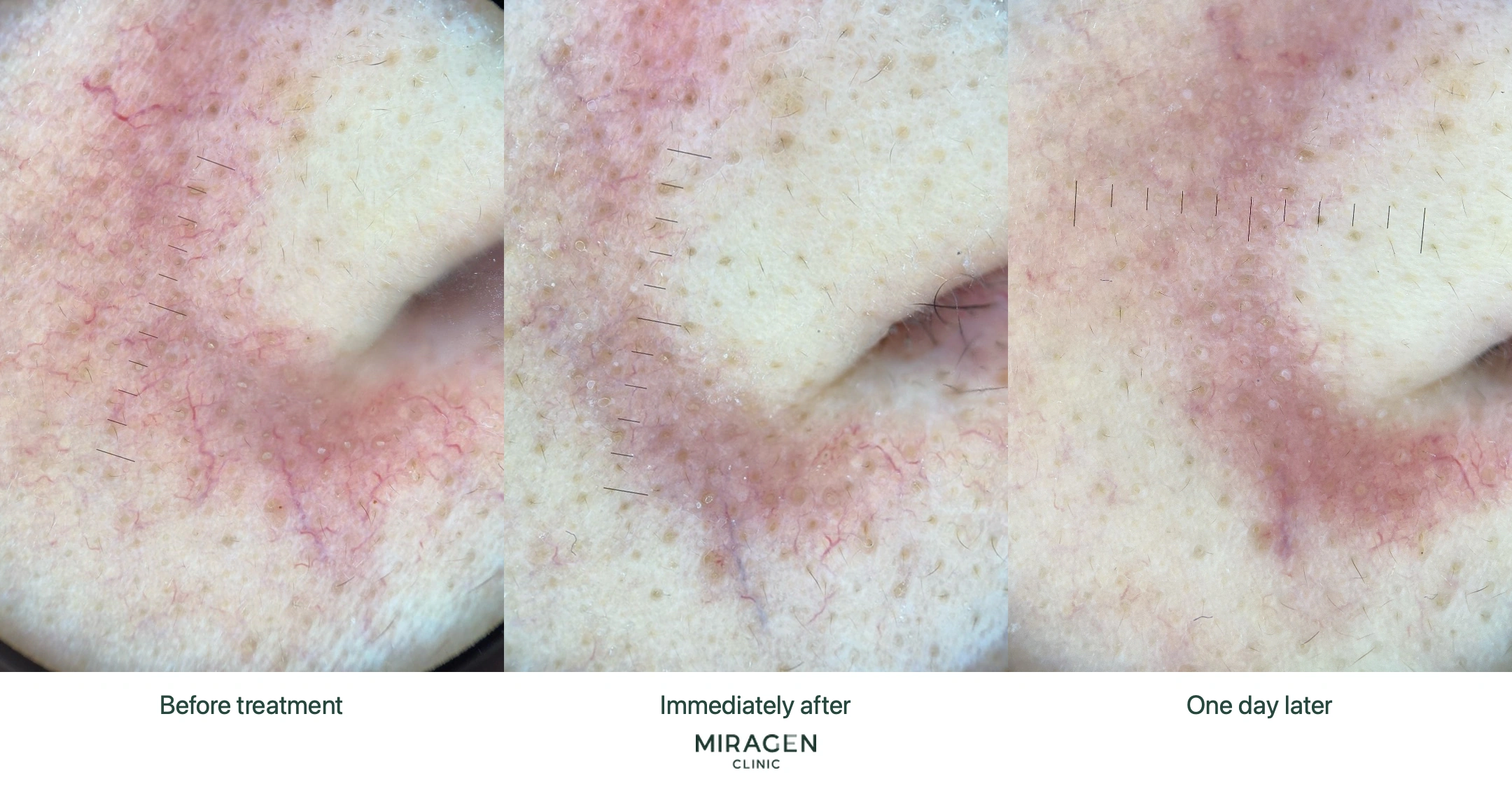
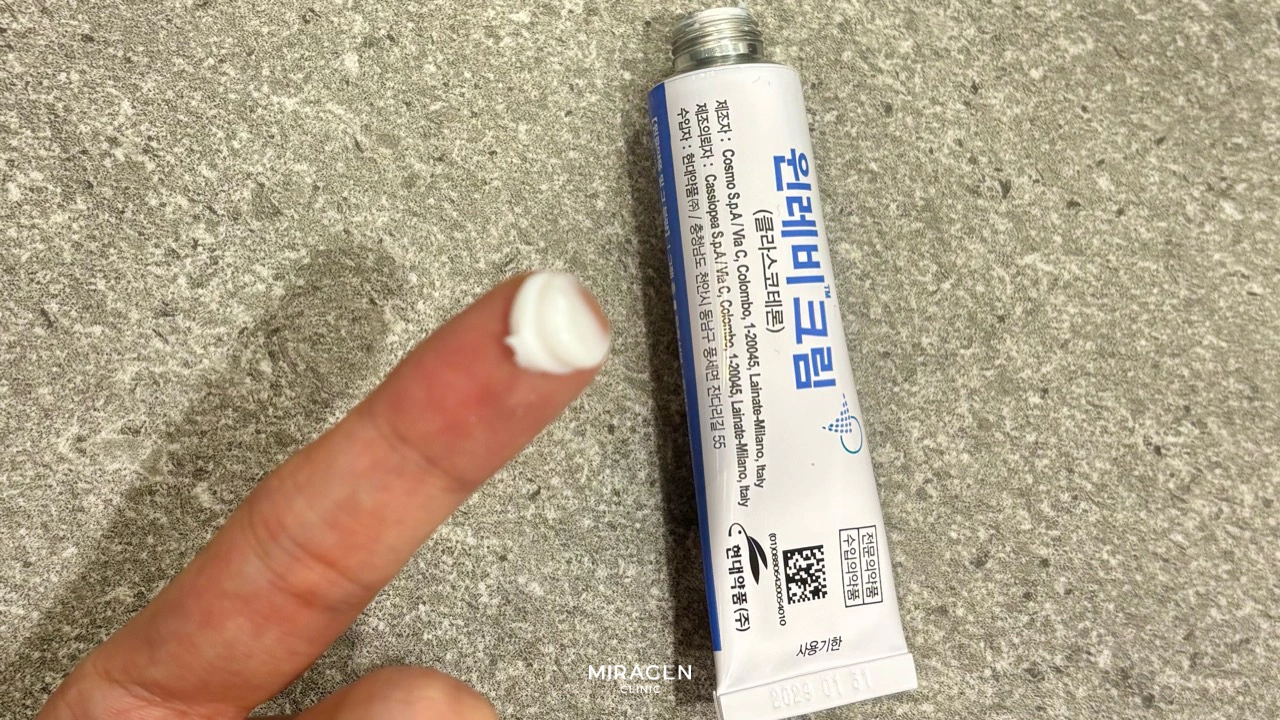
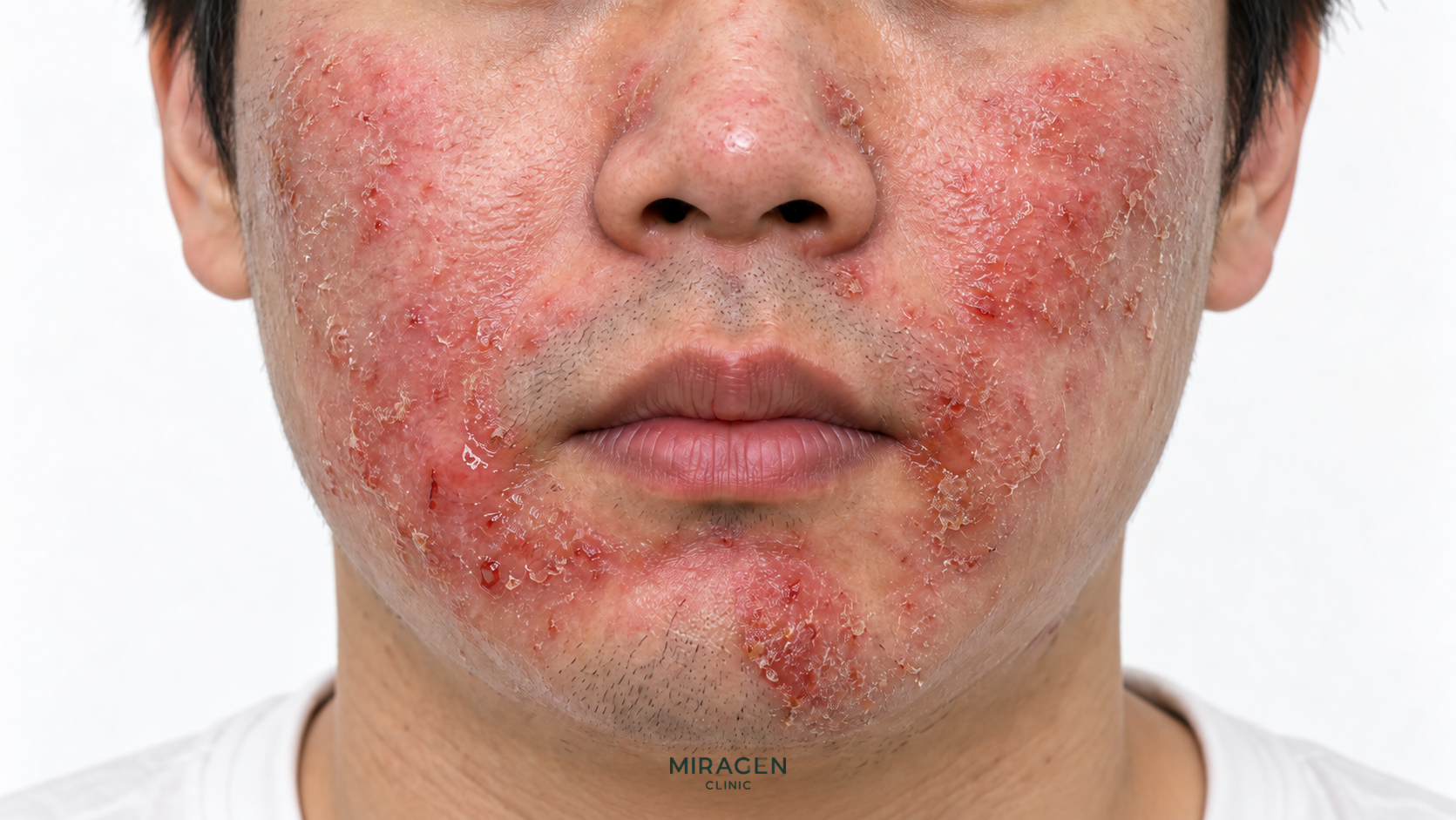
In my clinic, I frequently see patients suffering from chronic dermatitis caused by the misuse of ointments. After steroid ointments, acne treatments are the most common cause of these cases.
Therefore, it is crucial to understand acne ointments before using them. In particular, it is helpful to know the general efficacy of each ointment relative to the irritation it causes. I will explain all 62 acne ointments currently distributed in Korea as of September 22, 2026.
For the potency levels of all steroid ointments distributed in Korea as of September 2026, please refer to this article.
Scope and Classification Criteria
Scope of Investigation
I investigated all products registered with the Ministry of Food and Drug Safety (MFDS) under the ATC classifications “Topical Anti-Acne Preparations (D10A)” and “Salicylic Acid Preparations (D02AF).”
Among these, I have organized 62 products by ingredient that are currently authorized in Korea and have supply records within the last year. Although the authorization for Stieva-A Cream has been withdrawn, I have kept it in the table for reference as it is a very well-known product.
Classification Criteria
Based on literature regarding the pathogenesis of acne and data from the AAD (American Academy of Dermatology), I have categorized the mechanism of action for each active ingredient into four axes: keratin, sebum, acne bacteria, and inflammation.1,2
Due to a lack of human studies for nicotinamide, ibuprofen piconol, and isopropyl methylphenol, I also referred to cellular, animal, and in vitro studies.3,4,5
Active Ingredients and Classification by Product
| Product Name | Ingredient | Primary Mechanism | Notes |
|---|---|---|---|
| Differin Gel 0.1% · Differin Cream 0.1% · Dongkoo Adapalene Gel · D2O Gel · Dipalene Gel · Acren Gel · Acpalene Gel · Elia Gel | Adapalene 0.1% | Keratin · Inflammation | Retinoids (3rd Generation) |
| Aklief Cream 0.005% | Trifarotene 0.005% | Keratin · Inflammation | Retinoids (4th Generation) |
| 20T Cream 0.025% | Tretinoin 0.025% | Keratin · Inflammation | Retinoids (1st Generation) |
| Prosome-A 0.02% | Tretinoin 0.02% | Keratin · Inflammation | Retinoids (1st Generation) |
| Stieva-A Cream 0.01% · Stieva-A Cream 0.025% · Stieva-A Cream 0.05% | Tretinoin 0.01% · 0.025% · 0.05% | Keratin · Inflammation | Retinoids (1st Generation) · Authorization Withdrawn |
| Cleocin T 1% · Chloe Topical Solution · Daclin Topical Solution · Duoclean Solution · Acnesin Solution · Acnin Solution · Epi Topical Solution · Chrysin Topical Solution · Clinda-K Topical Solution · Clindamy Solution · Clindiol Solution · Clinty Topical Solution · Purekin Topical Solution · PA Curaderm Topical Solution · Clindiol Gel | Clindamycin 1% | Acne Bacteria · Inflammation | Antibiotics |
| Nadixa Cream · Dicne Cream · Acberry 1% Cream | Nadifloxacin 1% | Acne Bacteria · Inflammation6 | Antibiotics |
| Fatima Gel 2.5% · Acderm Gel | Benzoyl Peroxide 2.5% | Keratin · Acne Bacteria | Antiseptics |
| Azelia Cream | Azelaic Acid 20% | Keratin · Acne Bacteria · Inflammation | — |
| Clearteen 2% · Aclean Gel · Sensehill Gel7 · Ac-Clean Gel · Aclean Topical Solution · Cleartok Topical Solution 2% | Salicylic Acid 2% | Keratin | Exfoliant |
| Ac-One Tip Swab Solution | Salicylic Acid 30.72 mg (per unit) | Keratin | Exfoliant |
| Winlevi Cream | Clascoterone 1% | Sebum · Inflammation8 | Sebum Inhibitor |
| Ibutoktok Cream · GL Ibutok Cream 5% | Ibuprofen Piconol 5% | Inflammation3 | Anti-inflammatory Agents |
| Cevitabi Gel · Dermagram Gel | Nicotinamide 4% | Inflammation4 | Vitamin B3 Derivatives |
| Epiduo Gel · AC Cure MLE Gel | Adapalene 0.1% + Benzoyl Peroxide 2.5% | Keratin · Acne Bacteria · Inflammation | Retinoids (3rd Generation) + Antiseptics |
| Epiduo Forte Gel | Adapalene 0.3% + Benzoyl Peroxide 2.5% | Keratin · Acne Bacteria · Inflammation | Retinoids (3rd Generation) + Antiseptics |
| Duac Gel 3% | Clindamycin 1% + Benzoyl Peroxide 3% | Keratin · Acne Bacteria · Inflammation | Antibiotics + Antiseptics |
| Duac Gel 5% · Du-K Gel | Clindamycin 1% + Benzoyl Peroxide 5% | Keratin · Acne Bacteria · Inflammation | Antibiotics + Antiseptics |
| Acnon Cream · Senspot Cream · Acspot Cream · Acclear Cream · Ezclear Cream · Q-Acne Plus Cream | Ibuprofen Piconol 3% + Isopropyl Methylphenol 1% | Acne Bacteria · Inflammation3,5 | Anti-inflammatory + Antiseptic |
| Pair Acne Cream · Eztok Cream · Q-Acne Cream · Clearteen Ibu Double Spot Tok Cream | Ibuprofen Piconol 3% + Isopropyl Methylphenol 0.3% | Acne Bacteria · Inflammation3,5 | Anti-inflammatory + Antiseptic |
| Dermagram Solution | Salicylic Acid 0.5% + Isopropyl Methylphenol 0.3% + Allantoin 0.2% | Keratin · Acne Bacteria2,5 | Exfoliant + Antiseptic |
| Dieclean Spray | Salicylic Acid 0.5% + Allantoin 0.2% + Ethanol (95) 22.84% | Keratin | Exfoliant |
How Acne Ointments Work
The pores visible on the skin surface are the openings of pipes called hair follicles. Following this opening leads to two paths: the sebaceous gland and the hair root.
Normally, sebum produced in the sebaceous gland is discharged out of the skin through the hair follicle.
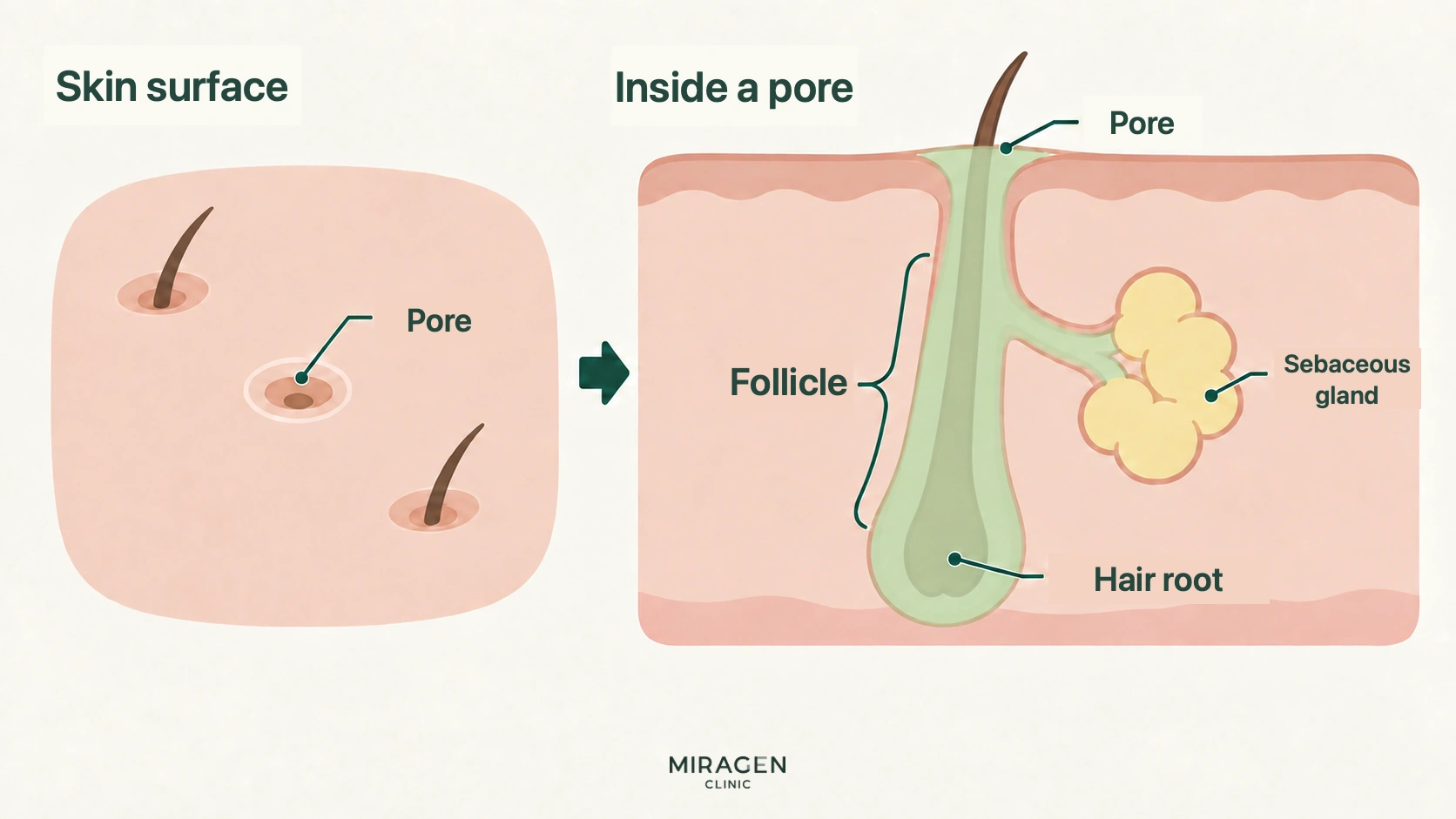
The initial process of acne is the accumulation of dead skin cells, which narrows and eventually blocks the hair follicle. This state is called non-inflammatory acne, and includes whiteheads and blackheads.1,9
When the hair follicle is blocked, sebum accumulates, causing the follicle to swell, and anaerobic acne bacteria proliferate. These two reasons lead to inflammation, and this state is called inflammatory acne.1,9
It is easier to understand acne ointments by considering which part of this process—keratin, sebum, acne bacteria, or inflammation—their active ingredients primarily target. For more details on acne, please refer to the Acne Information Page.
Ingredients that reduce keratin
This includes retinoids in Differin Gel, Aklief Cream, 20T Cream, and Stieva-A Cream; salicylic acid in Clearteen and Aclean Gel; azelaic acid in Azelia Cream; and benzoyl peroxide in Fatima Gel, Duac Gel, and Epiduo Gel.
Because these target the most fundamental cause of acne, they are effective for both non-inflammatory and inflammatory acne.2,9
Ingredients that reduce sebum
This includes clascoterone in Winlevi Cream.
Clascoterone is effective for both non-inflammatory and inflammatory acne.
In a study where 40 acne patients used clascoterone 1% cream twice daily for 12 weeks, the average surface sebum level on the forehead decreased by 27% compared to baseline.10
What has been confirmed in human skin is the reduction in sebum. Since it is effective for non-inflammatory acne, it may also affect keratin, but direct reduction of keratin has not yet been confirmed.
Clascoterone is an ingredient that inhibits the action of male hormones, which not only increase sebum secretion but also cause excessive keratin buildup in the hair follicles.
Since male hormones are also involved in androgenetic alopecia, clascoterone 5% topical solution is being developed as a hair loss treatment.11
Ingredients that reduce acne bacteria
This includes clindamycin in Cleocin T and Duac Gel; nadifloxacin in Nadixa Cream; benzoyl peroxide in Fatima Gel, Duac Gel, and Epiduo Gel; azelaic acid in Azelia Cream; and isopropyl methylphenol in Acnon Cream and Pair Acne Cream. Clindamycin and nadifloxacin are antibiotics, while benzoyl peroxide and isopropyl methylphenol are antiseptics.5
By reducing the acne bacteria that trigger inflammation, they are primarily effective for inflammatory acne.9
However, antibiotics can lead to resistant bacteria, so they should not be used alone but in combination with benzoyl peroxide. Duac Gel contains both ingredients.9,12,13
Ingredients that reduce inflammation
This includes retinoids in Differin Gel, Aklief Cream, 20T Cream, and Stieva-A Cream; clindamycin in Cleocin T and Duac Gel; nadifloxacin in Nadixa Cream; ibuprofen piconol in Acnon Cream and Pair Acne Cream; nicotinamide in Cevitabi Gel; azelaic acid in Azelia Cream; and clascoterone in Winlevi Cream.2,3,4,6,8,9
Since it suppresses inflammatory reactions in the skin, it is primarily effective for inflammatory acne.
Recommended vs. Not Recommended Ointments
I recommend Differin Gel over Aklief Cream and TwenT Cream.
Comparative studies have already confirmed that Differin Gel, a third-generation retinoid, causes less irritation than first-generation tretinoin creams.14 This also aligns with my clinical experience. Therefore, there is no reason to use first-generation retinoid ointments like TwenT Cream or Prosome A when Differin Gel is available.
In patch tests conducted at our clinic, the fourth-generation Aklief Cream very commonly shows positive reactions, and in my clinical experience, its efficacy relative to irritation is lower than Differin Gel. Therefore, there is no reason to use Aklief Cream just because it is fourth-generation when Differin Gel is available.
In my clinical experience, the irritation from Aklief Cream is as strong as Epiduo Gel, which is a combination of benzoyl peroxide and adapalene. While Epiduo Gel is also not an ointment I frequently recommend, between the two products, I prefer Epiduo Gel considering its efficacy.
Research results have not yet proven that Aklief Cream causes less irritation than first- and third-generation retinoids.
Specific instructions for using Differin Gel are available on this page.
I recommend Duac Gel 3% over Fatima Gel, Cleocin T, and Epiduo Gel.
Duac Gel 3% is a combination product containing both benzoyl peroxide from Fatima Gel and clindamycin from Cleocin T.12,13,15 In terms of ingredient combination, it is similar to applying Fatima Gel and Cleocin T together.
However, in patch tests conducted at our clinic, Fatima Gel shows positive reactions more frequently than Duac Gel, and side effects are also more common with actual use. Furthermore, the benzoyl peroxide concentration in Fatima Gel is 2.5%, which is lower than Duac Gel 3%, so there is no reason to use Fatima Gel when Duac Gel is available.12,15
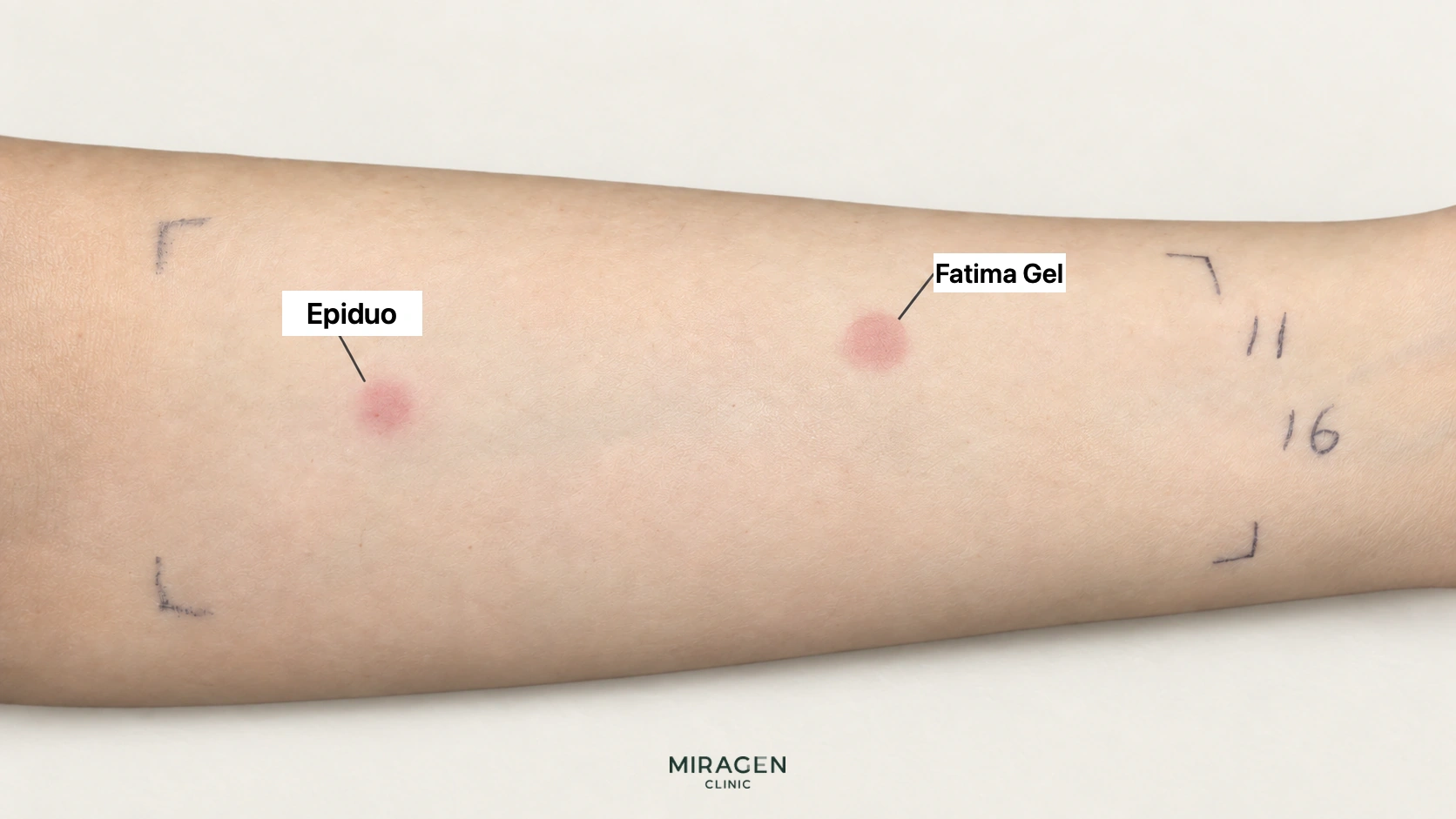
This is an edited image of an actual patient’s patch test results.
Since using Cleocin T alone can lead to antibiotic-resistant bacteria, there is again no reason to use Cleocin T over Duac Gel 3%.9
Epiduo Gel is a product that adds benzoyl peroxide to adapalene. While its acne treatment effect is certainly good, the irritation is too severe.16 It shows positive reactions as frequently as Aklief Cream (which was excluded from patch testing due to severe irritation), and in my experience, it is more irritating than using Differin Gel and Duac Gel 3% together. Research also shows that in a direct comparison between Duac Gel 5% and Epiduo Gel, Duac Gel 5% was less irritating.17
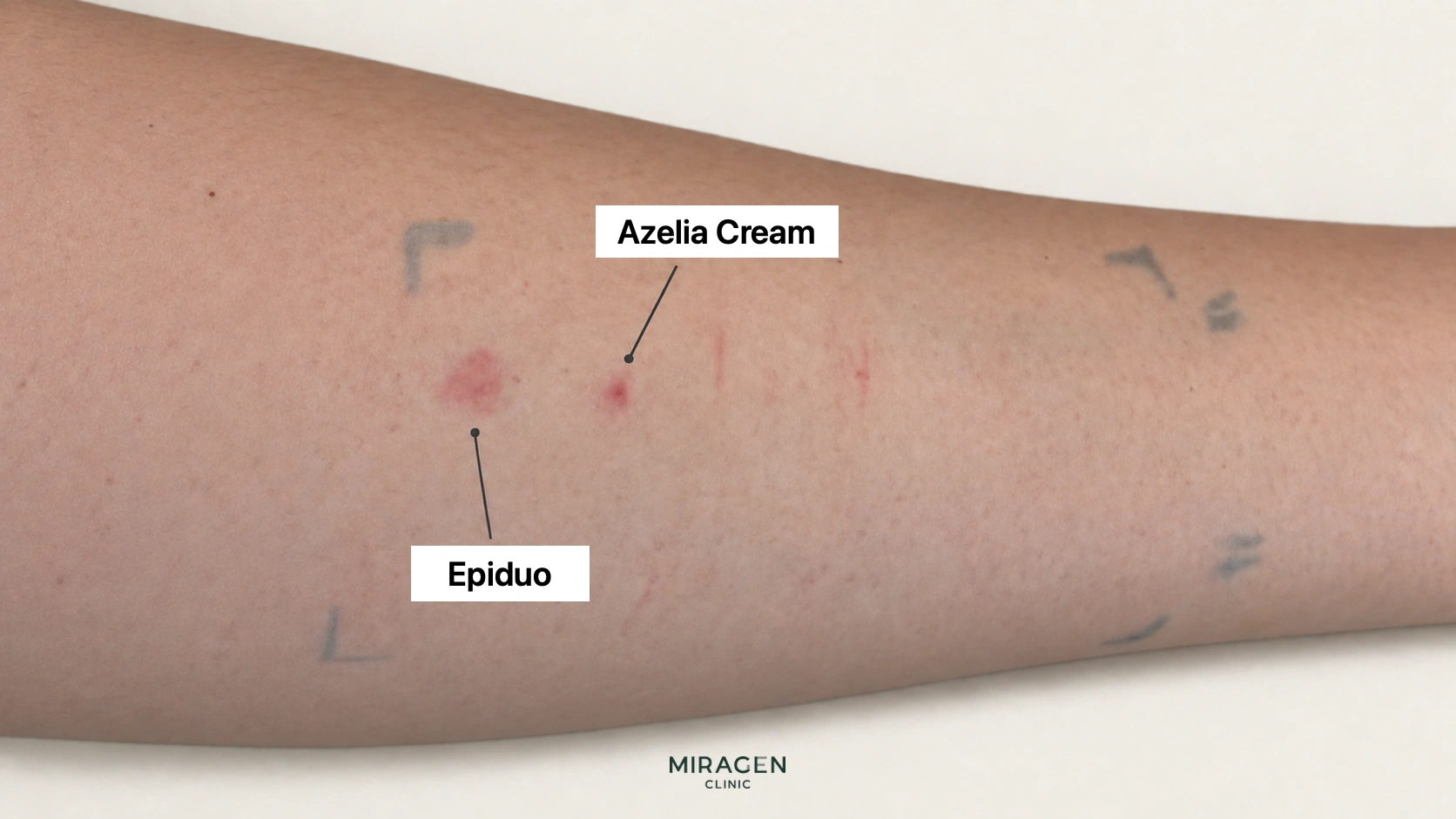
This is an edited image of an actual patient’s patch test results.
Therefore, I recommend using Differin Gel and Duac Gel 3% in combination rather than Epiduo Gel. However, irritation is quite common with all products containing benzoyl peroxide, including Duac Gel. I recommend applying Differin Gel overall and Duac Gel 3% only to areas with inflammatory acne.
In my clinical experience, Duac Gel 5% has lower efficacy relative to irritation compared to Duac Gel 3%, so I do not recommend it. I do not recommend Epiduo Forte Gel for the same reason.
I recommend Winlevi Cream in most cases
While the standalone effect of Winlevi Cream is not dramatic, it causes very little irritation. In clinical trials, redness, dryness, itching, and stinging were similar to those of a cream without the active ingredient.18
Since I treat patients with sensitive skin, I prioritize efficacy relative to irritation when treating acne. In that regard, I prefer Winlevi Cream.
While the AAD highly rated the evidence for the efficacy and side effects of Winlevi Cream (clascoterone), they classified it as a “conditional recommendation” because its high price in the US at the time made it difficult for many patients to use.9 However, the situation in Korea is different, as is the situation when treating acne in patients with atopic dermatitis or rosacea, as I do.
The price of Winlevi Cream at pharmacies near our clinic is approximately 60,000 KRW for a 30g tube. Based on the amount I have personally used, one tube lasts for more than 2 months. However, according to Korean regulations, the shelf life after opening is 1 month, so whether you can continue using it is separate from having leftover product.19 Furthermore, it is good to use as a substitute for a moisturizer. Considering these points, it is an ointment I recommend in many cases due to its good efficacy relative to irritation and manageable cost.
For more details, including the shelf life of Winlevi Cream, please refer to my Winlevi Cream Review post.
Points to Remember When Choosing an Acne Ointment
Because reactions vary from person to person even with the same ointment, what I have explained above may not apply to everyone. Some people use Epiduo Gel without irritation, while others cannot use even Differin Gel due to severe irritation.
This is why patch testing is helpful. It allows you to check which ointments are likely to cause problems for you before you choose one.
Finally, I must explain that acne ointments have inherent limitations. Since acne is a condition where the follicle opening is blocked by keratin, it can be difficult for the ointment to sufficiently reach the target site inside the follicle.20 In such cases, other treatments, such as oral medications, should also be considered.9
Frequently Asked Questions
How should I apply Differin Gel and Duac Gel 3% separately?
I recommend applying Differin Gel overall and Duac Gel 3% only to areas with inflammatory acne. Since the benzoyl peroxide in Duac Gel 3% commonly causes irritation, it is best to use it only where needed.
Can I use Cleocin T alone?
I do not recommend using Cleocin T alone because its active ingredient, clindamycin, is an antibiotic. To reduce antibiotic resistance, it should be used in combination with benzoyl peroxide; Duac Gel contains both ingredients.9
Is 4th-generation Aklief Cream better than 3rd-generation Differin Gel?
A higher generation does not necessarily mean better efficacy relative to irritation. In my clinical experience, Aklief Cream is more irritating than Differin Gel, so I recommend Differin Gel. However, reactions to the same ointment can vary from person to person.
References
- Kurokawa I, Layton AM, Ogawa R. Dermatology and Therapy. 2021;11(4):1129-1139. PMID: 34115308, DOI: 10.1007/s13555-021-00552-6.
- American Academy of Dermatology patient education material. Written by Paula Ludmann, reviewed by 4 dermatologists, last updated 2024-06-19.
- Taniguchi Y et al. The Nishinihon Journal of Dermatology. 1985;47(5):888-898.
- Grange PA, Raingeaud J, Calvez V et al. Journal of Dermatological Science. 2009;56(2):106-112. PMID: 19726162, DOI: 10.1016/j.jdermsci.2009.08.001.
- Yoshihara K, Seyama S, Koizumi J, Nakaminami H. Journal of Medical Microbiology. 2025;74(11):002100.
- Kuwahara K, Kitazawa T, Kitagaki H, Tsukamoto T, Kikuchi M. Journal of Dermatological Science. 2005;38(1):47–55.
- Dongkook Pharmaceutical. Sensehill Gel Product Information.
- Rosette C, Agan FJ, Mazzetti A et al. Journal of Drugs in Dermatology. 2019;18(5):412-418.
- Reynolds RV, Yeung H, Cheng CE et al. Journal of the American Academy of Dermatology. 2024;90(5):1006.e1-1006.e30. PMID: 38300170, DOI: 10.1016/j.jaad.2023.12.017.
- Draelos ZD, Kyeremateng K, Squittieri N. Dermatology and Therapy. 2025;15(9):2657-2666. Clinical trial registration number: NCT06415279.
- Cosmo Pharmaceuticals. Press release dated April 15, 2026. Title: Phase III 12-Month Data for Clascoterone 5% Topical Solution Confirm Positive Safety for Chronic Use and Continued Hair Growth, both of which Are Statistically Significant.
- Ministry of Food and Drug Safety, E-Drug Safety Nara, Item Detail Information. Authorization date: 2014-09-18, Prescription drug.
- Ministry of Food and Drug Safety, E-Drug Safety Nara, Item Detail Information. Authorization date: 2005-12-19, Prescription drug.
- Dunlap FE, Baker MD, Plott RT, Verschoore M. British Journal of Dermatology. 1998;139 Suppl 52:17-22.
- Ministry of Food and Drug Safety, E-Drug Safety Nara, Item Detail Information. Authorization date: 2002-02-22, Over-the-counter drug.
- Gollnick HP, Draelos Z, Glenn MJ, et al. British Journal of Dermatology. 2009;161(5):1180-1189.
- Zouboulis CC, Fischer TC, Wohlrab J, Barnard J, Alió AB. Cutis. 2009;84(4):223-229.
- Hebert A, Thiboutot D, Stein Gold L et al. JAMA Dermatology. 2020;156(6):621-630. Clinical trial registration numbers: NCT02608450 and NCT02608476.
- Ministry of Food and Drug Safety, E-Drug Safety Nara, Item Detail Information. Authorization date: 2025-09-29, Prescription drug.
- Latter G, Grice JE, Mohammed Y, Roberts MS, Benson HAE. Pharmaceutics. 2019;11(10):490.