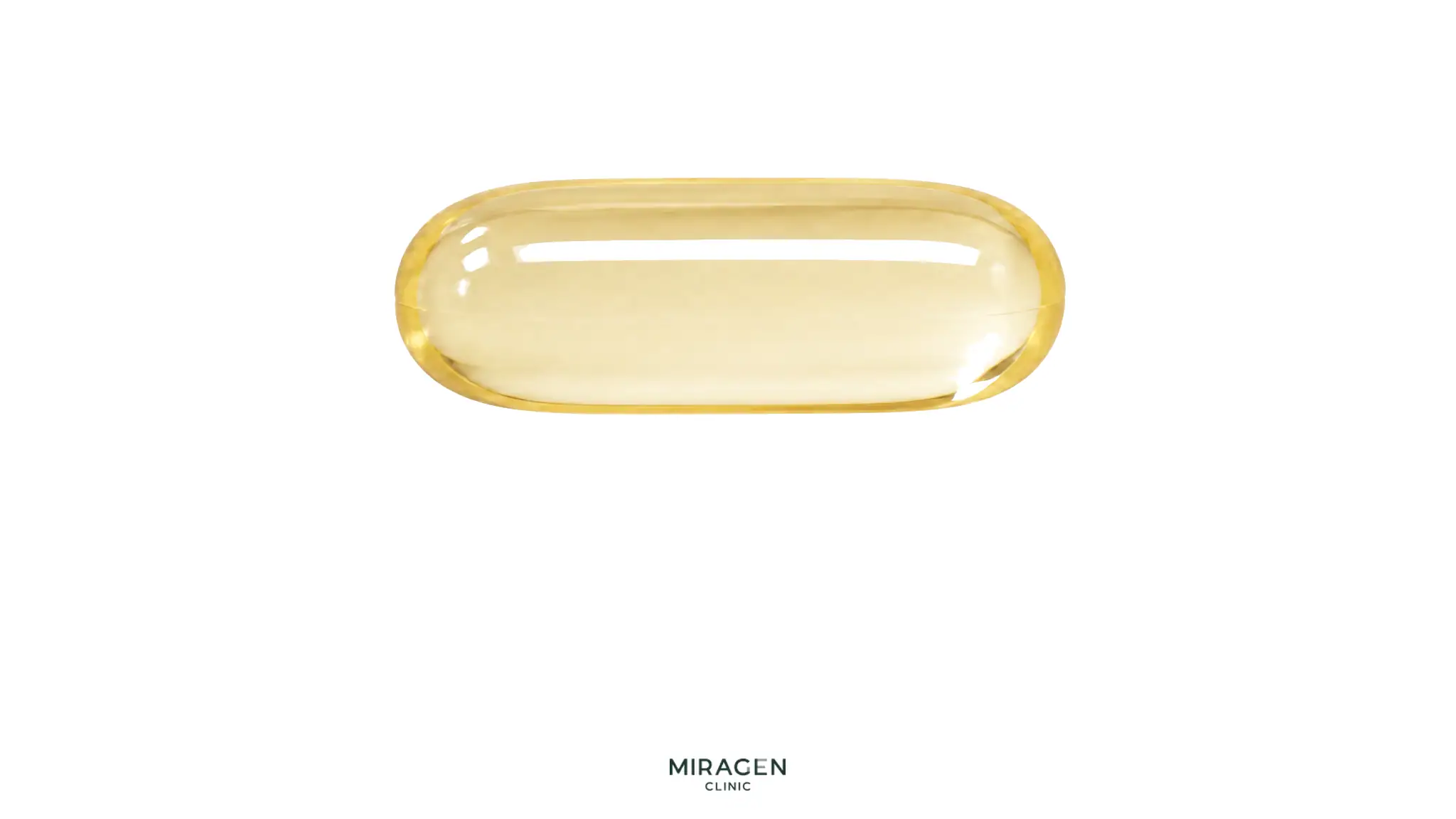
There is a medication I frequently see when atopic dermatitis patients show me prescriptions from other clinics. It is Evoprim, which contains evening primrose oil. Some patients also mention taking this along with borage oil as dietary supplements.
Evening primrose oil, Evoprim, and borage oil are all products that supplement gamma-linolenic acid. Among these, Evoprim is a pharmaceutical product covered by health insurance.
However, health insurance coverage does not guarantee efficacy, so I have compiled the research findings on gamma-linolenic acid and atopic dermatitis.
Main Component of Evening Primrose Oil
The key component of evening primrose oil and borage oil is gamma-linolenic acid.
The exact biochemical pathway is more complex, but to explain it simply: our body has an enzyme called COX, which can produce either pro-inflammatory or anti-inflammatory substances depending on what raw material it receives. Aspirin suppresses inflammation precisely by inhibiting this COX enzyme.
Gamma-linolenic acid is a raw material that, when supplied to COX, produces anti-inflammatory substances. This led to the hypothesis that supplementing gamma-linolenic acid could reduce inflammation.1
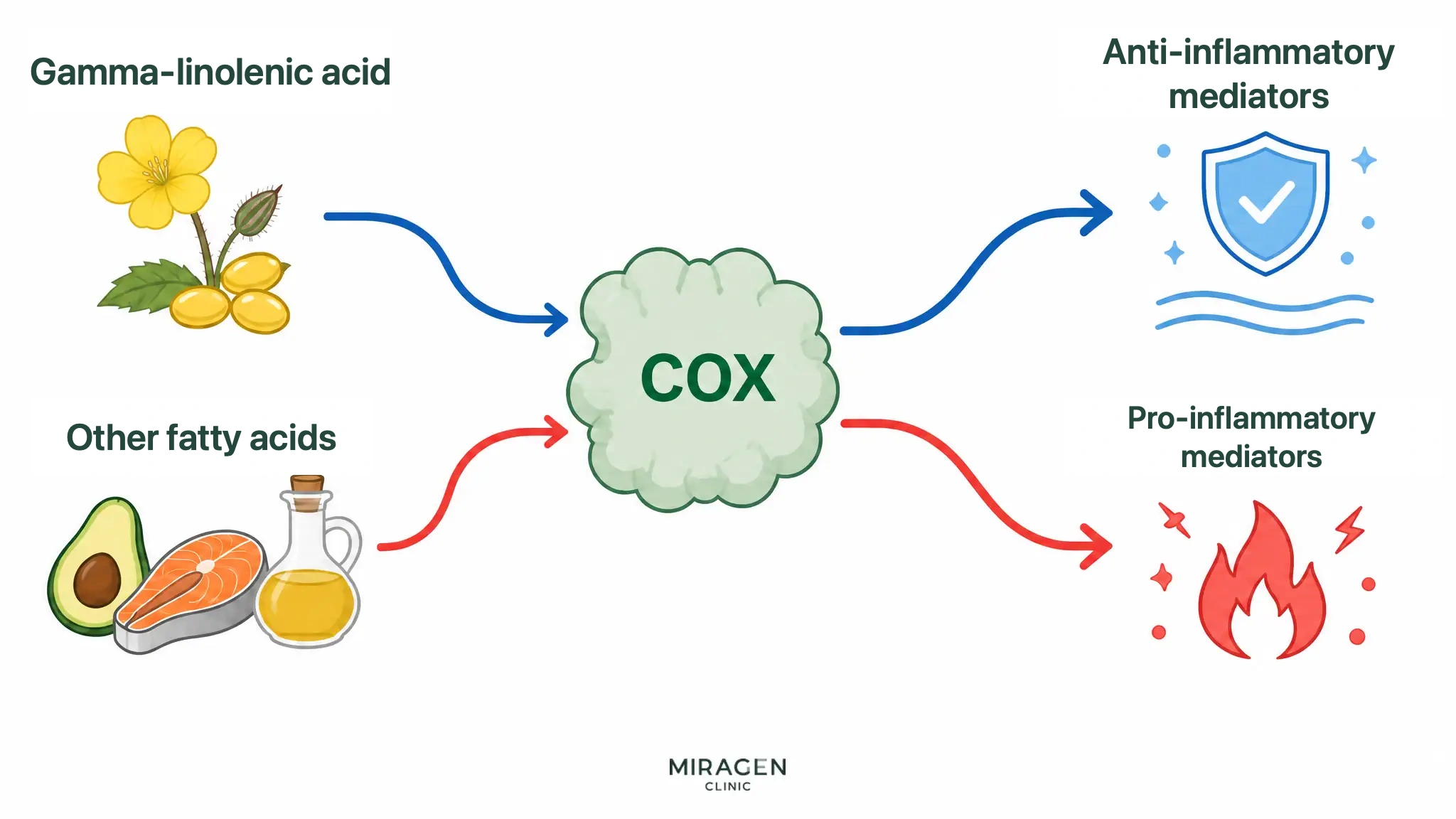
This hypothesis led to numerous studies.
Results of Comprehensive Analysis of Multiple Clinical Trials
However, in medicine, even excellent hypotheses often do not proceed as expected due to unforeseen variables. This is why observing actual effects through clinical trials is important.
The most frequently referenced source on the effects of evening primrose oil and borage oil for atopic dermatitis is the 2013 Cochrane study. Cochrane is an international nonprofit organization that conducts independent and objective medical research.
This study was not a single clinical trial, but rather a re-evaluation of data from 19 clinical trials on evening primrose oil and 8 clinical trials on borage oil, totaling 1,596 participants. Although it did not specifically examine pharmaceutical products like Evoprim, it is relevant reference material since Evoprim is the same formulation.2
The results were not clear. Neither the group taking evening primrose oil nor the group taking borage oil showed significant improvement in atopic dermatitis compared to placebo.2
Unfortunately, the conclusion has not changed significantly since then. An independent study published in 2025, unrelated to manufacturers, analyzed 13 clinical trials on evening primrose oil and concluded that there was no meaningful difference compared to placebo.3
Positive Studies
Of course, there are also positive studies.
Notable examples include a 1989 study that analyzed 9 studies related to an evening primrose oil product called Epogam, and a 2006 study that analyzed 26 studies related to a product called Efamol. Both papers concluded that symptoms such as itching, redness, and crusting could be reduced.4,5
There is also a Korean study. When 50 patients with mild atopic dermatitis took evening primrose oil for 4 months, their EASI scores improved more than the group taking placebo.6 EASI is an index that scores the extent and severity of atopic dermatitis. Detailed information is available in the EASI · SCORAD article.
However, the authors of the 2006 study are affiliated with a company called Wassen International, which acquired the manufacturer of Efamol.5 The Korean study states there is no conflict of interest, but the number of participants is quite small at 50.6 Therefore, it is difficult to give more weight to these positive studies than to the 2013 Cochrane study and the 2025 study introduced earlier.2,3

Position of Evoprim in Atopic Dermatitis Treatment
Evoprim is a pharmaceutical product whose approved indication by the Ministry of Food and Drug Safety includes relief of itching due to atopic eczema, and it is covered by health insurance. A pediatric version of Evoprim is also approved as a separate product.7,8
However, consistent with the conclusions of the studies already introduced, and based on my clinical experience, Evoprim is not a medication I would actively recommend for atopic dermatitis.2,3 The same applies to evening primrose oil and borage oil.
The 2024 Korean Atopic Dermatitis Treatment Guidelines state that evening primrose oil can be used to a limited extent as an adjunctive therapy, and the European Academy of Allergy and Clinical Immunology report also states that the evidence for its efficacy is limited.9,10
Given the content of credible research findings and guidelines, it is advisable not to have excessive expectations for these three options.2,3,9,10
Frequently Asked Questions
Which is better, evening primrose oil or borage oil?
Both supplement gamma-linolenic acid. In the Cochrane analysis, neither evening primrose oil nor borage oil showed a clear difference from placebo in improving eczema symptoms. It is difficult to say which is better.2
Can I take commercially available evening primrose oil dietary supplements instead of Evoprim?
The gamma-linolenic acid content varies by product. Evoprim is approved as a medicine, so commercially available evening primrose oil supplements should not be considered the same product. Evoprim itself has not been shown to have a strong effect, however, so its status as a medicine is not a reason to expect a large benefit.2,3
Is it safe to give to children?
Pediatric Evoprim is a separate product for ages 1–12 and is covered by health insurance. It must not be given to infants under 1 year of age, and it should be avoided in children with a soy or peanut allergy. Being safe does not mean its efficacy is certain.8
References
- Sergeant S, Rahbar E, Chilton FH. Gamma-linolenic acid, Dihommo-gamma linolenic, Eicosanoids and Inflammatory Processes. Eur J Pharmacol. 2016;785:77-86.
- Bamford JT, Ray S, Musekiwa A, et al. Oral evening primrose oil and borage oil for eczema. Cochrane Database Syst Rev. 2013;2013(4):CD004416.
- Anheyer M, Cramer H, Ostermann T, et al. Herbal Medicine in Children and Adults With Atopic Dermatitis: A Systematic Review and Meta-Analysis. Dermatitis. 2025;36(3):207-215.
- Morse PF, Horrobin DF, Manku MS, et al. Meta-analysis of placebo-controlled studies of the efficacy of Epogam in the treatment of atopic eczema. Relationship between plasma essential fatty acid changes and clinical response. Br J Dermatol. 1989;121(1):75-90.
- Morse NL, Clough PM. A meta-analysis of randomized, placebo-controlled clinical trials of Efamol evening primrose oil in atopic eczema. Where do we go from here in light of more recent discoveries? Curr Pharm Biotechnol. 2006;7(6):503-524.
- Chung BY, Park SY, Jung MJ, et al. Effect of Evening Primrose Oil on Korean Patients With Mild Atopic Dermatitis: A Randomized, Double-Blinded, Placebo-Controlled Clinical Study. Ann Dermatol. 2018;30(4):409-416.
- Ministry of Food and Drug Safety Drug Safety Information. Evoprim Soft Capsule Product Information. 2026.
- Ministry of Food and Drug Safety Drug Safety Information. Pediatric Evoprim Soft Capsule Product Information. 2026.
- Korean Atopic Dermatitis Association. 2024 Korean Atopic Dermatitis Treatment Guidelines. 2024.
- Vassilopoulou E, Comotti A, Douladiris N, et al. A systematic review and meta-analysis of nutritional and dietary interventions in randomized controlled trials for skin symptoms in children with atopic dermatitis and without food allergy: An EAACI task force report. Allergy. 2024;79(7):1708-1724.