In my clinical practice, I frequently see patients whose acne worsens before menstruation, whose faces feel more flushed, or whose dermatitis flares up.
To understand these changes, we need to examine not only estrogen and progesterone but also testosterone, which is involved in sebum production. These three hormones fluctuate in different patterns throughout the menstrual cycle, and each affects the skin differently.
The timing of hormonal peaks and the timing of visible skin symptoms may not coincide. I will explain why premenstrual acne, flushing, and dermatitis worsen, focusing on this time lag, and outline management strategies.
Menstrual Cycle and Hormonal Changes
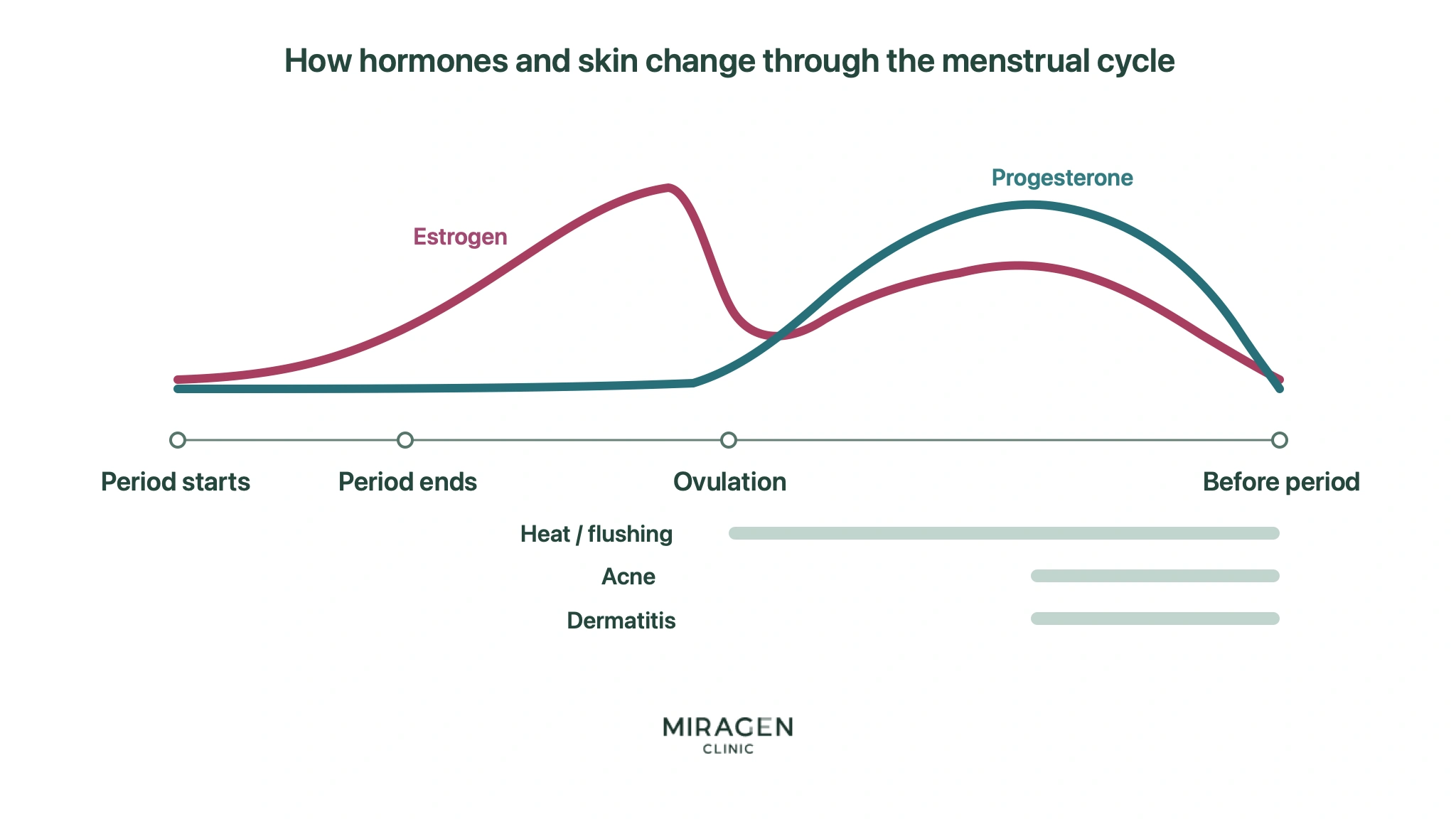
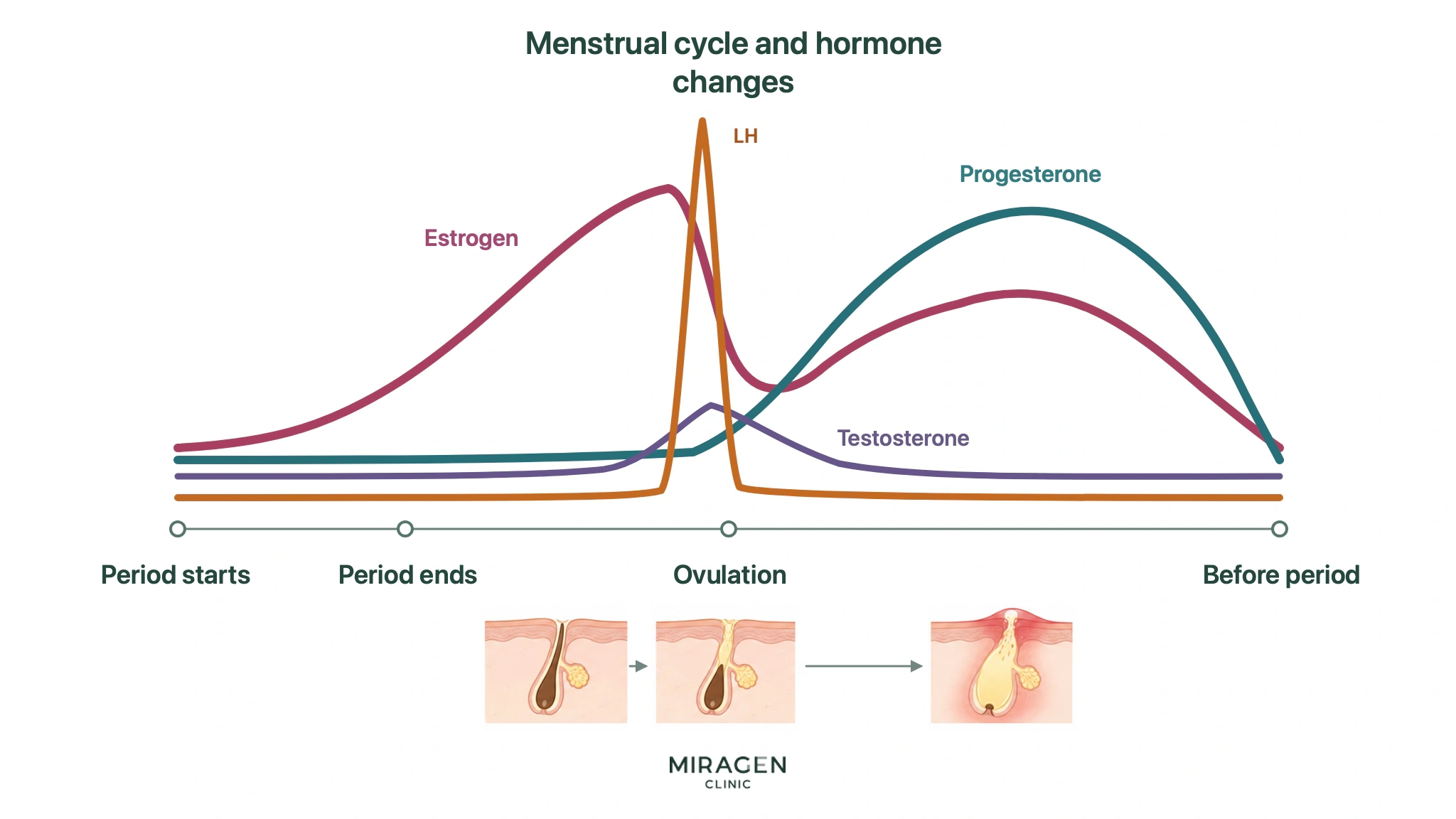
Around the start of menstruation, both estrogen and progesterone are low. Estrogen then begins to rise and peaks just before ovulation. Shortly after, LH (luteinizing hormone), which triggers ovulation, also surges.1
Testosterone is a type of androgen commonly known as a male hormone, but it is also produced in the female body and is involved in increasing sebum production.2 On average, testosterone peaks around ovulation.3
After ovulation, progesterone rises and body temperature increases. Estrogen also rises gently once more during this phase, then drops together with progesterone just before menstruation.1
As you can see, each hormone peaks at a different time. Because acne, flushing, and dermatitis do not worsen for the same reason, I will examine each separately.
Why Acne Worsens Before Menstruation
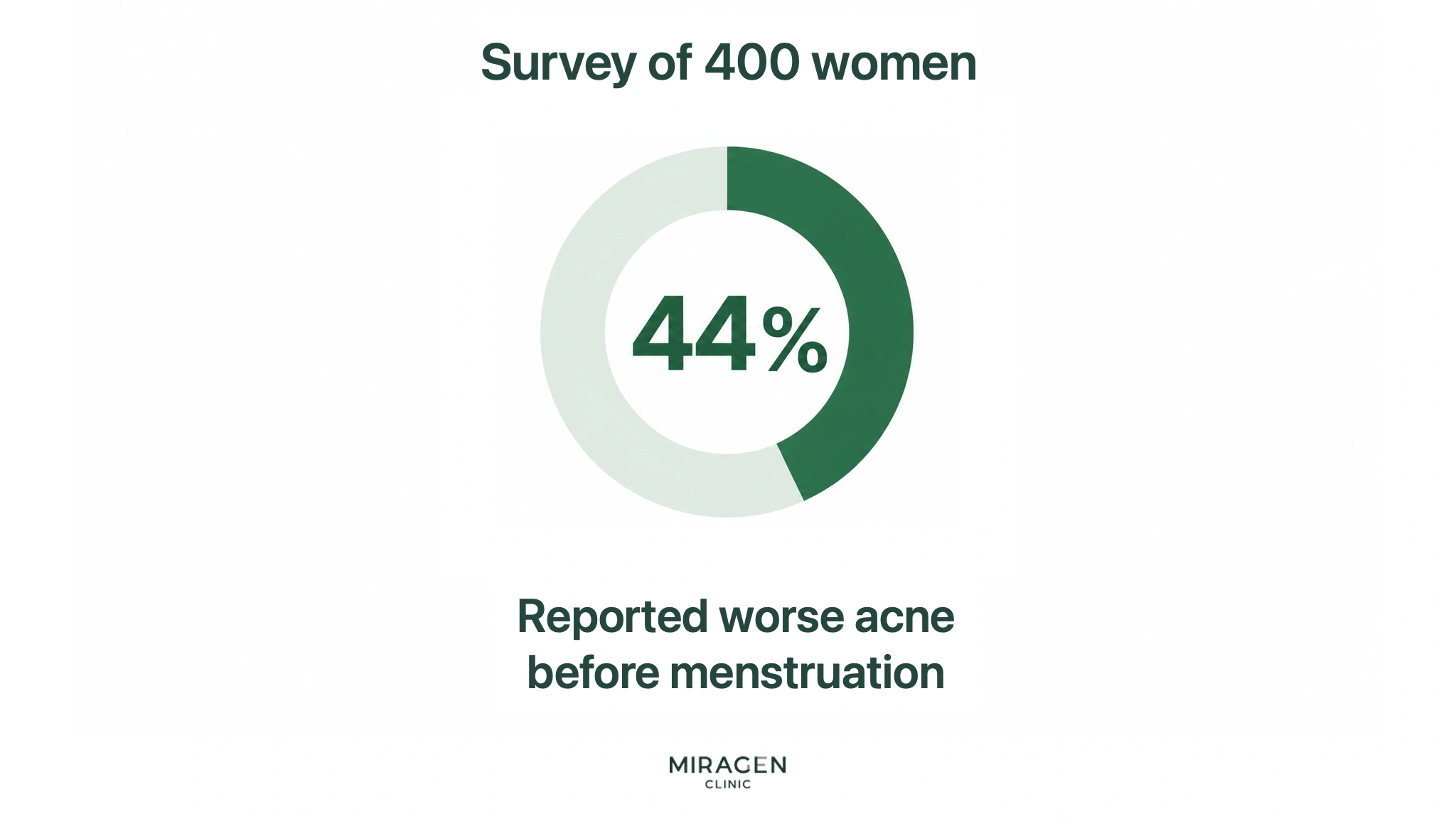
Premenstrual acne exacerbation is quite common, with 44% of 400 women surveyed reporting that their acne worsens before their period.4
As explained in the previous section, testosterone peaks on average around ovulation and is involved in increasing sebum production.2,3
The increased sebum production at this time is thought to trigger acne, which then develops into visible lesions about one week later.
In other words, testosterone does not increase just before menstruation; rather, the rise in testosterone around ovulation manifests as acne exacerbation about a week later.
Why Flushing and Dermatitis Worsen
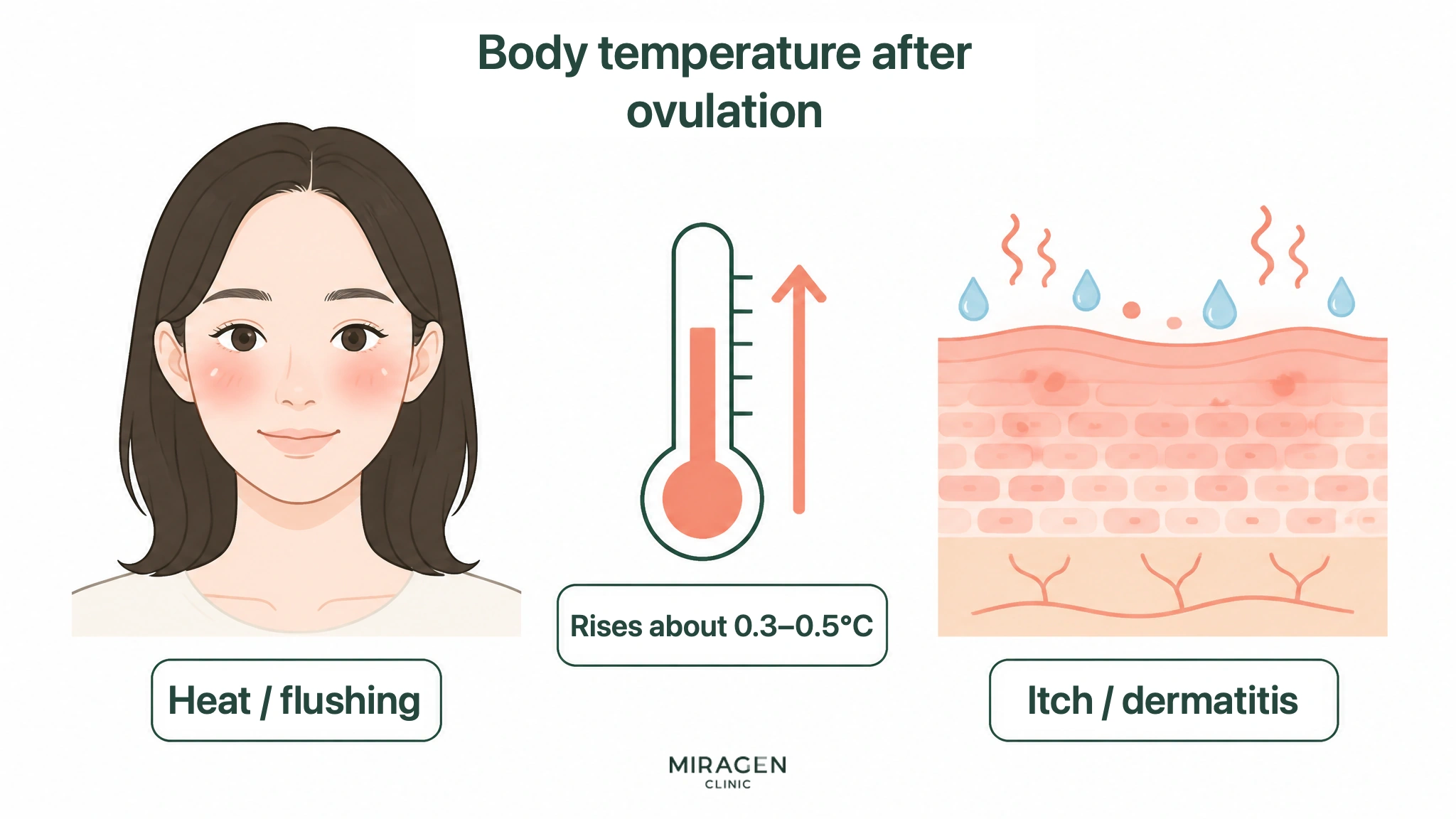
Flushing is related to changes in progesterone and body temperature after ovulation. After ovulation, basal body temperature rises by approximately 0.3–0.5°C due to the influence of progesterone. Most people do not notice this change, but for those who are heat-sensitive or who have rosacea, flushing, or burning sensations, it can be a stimulus that causes facial flushing.1,5
Atopic dermatitis often worsens starting around one week before menstruation. The hypothesis has been proposed that elevated progesterone after ovulation may impair skin barrier function and worsen immune responses related to itching.6 During this period, elevated body temperature and sweating can irritate the skin, and when combined with sleep deprivation or stress, itching, stinging, and dryness may become more severe.
How to Relieve Severe Symptoms
Flushing and Heat Sensation
If heat sensation and flushing worsen from after ovulation until before menstruation, especially in the 5–7 days before menstruation, reduce stimuli that cause facial flushing such as hot showers, saunas, excessive alcohol consumption, and spicy foods. There is no need to stop exercising, but it is better to avoid intense exercise that overheats the face and to reduce intensity in cooler environments.5
Dermatitis
If itching or redness begins around one week before menstruation, it is advisable to use topical anti-inflammatory agents such as Protopic or Elidel early, before symptoms worsen.7
Premenstrual Acne
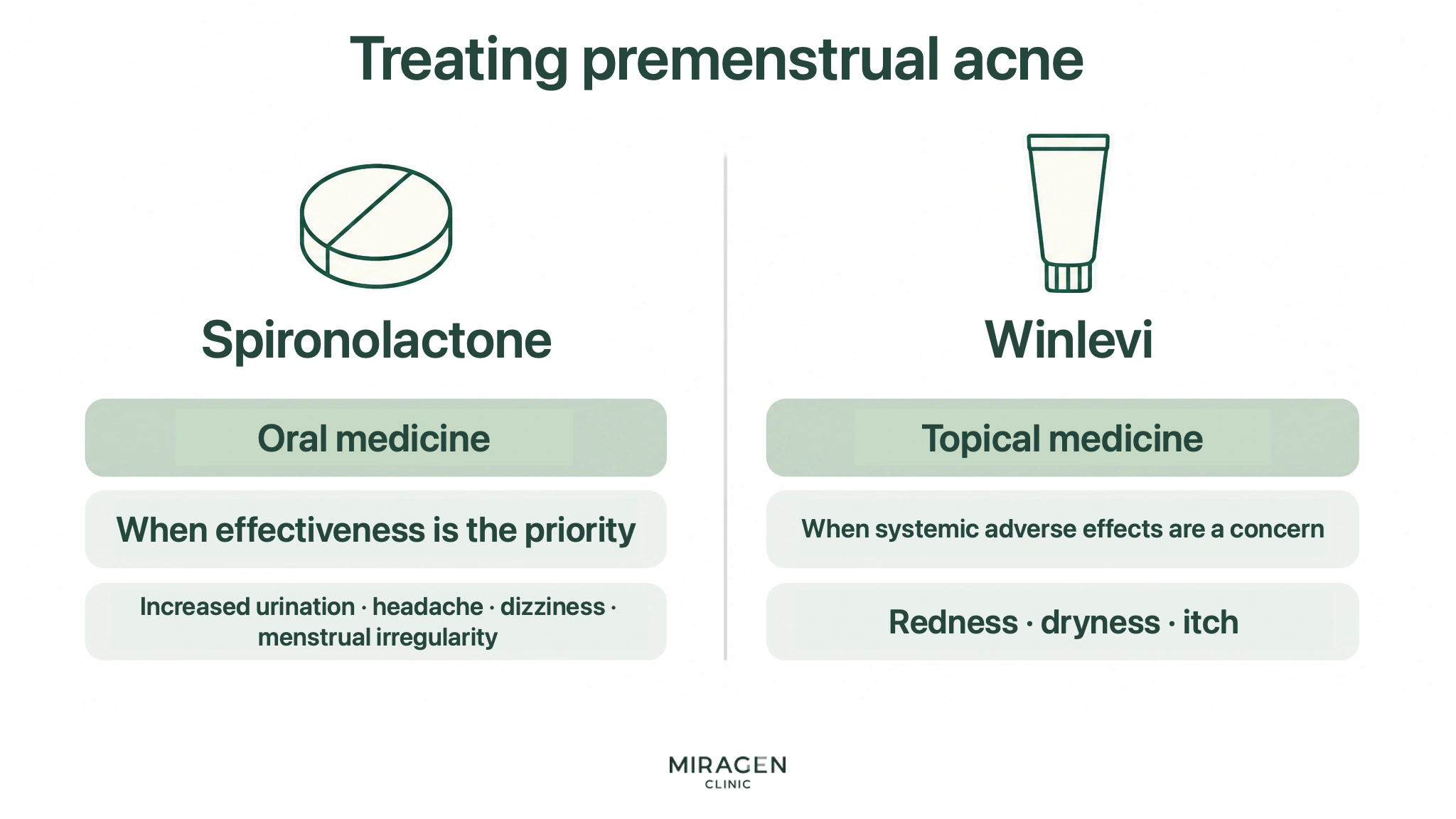
Treatment that reduces the action of testosterone and other androgens may be considered. Spironolactone and Winlevi are medications used for this purpose.8 In my practice, for adult women whose acne is generally manageable but repeatedly worsens before menstruation, I consider these two medications before Isotinone. This is because treatment that reduces androgen influence is well suited to this pattern.
Spironolactone is an oral medication that reduces sebum and acne by making sebaceous glands less responsive to androgens. In a clinical trial starting at 50 mg per day and increasing to 100 mg, 82% of participants reported improvement in acne after 24 weeks, compared to 63% who took a placebo.9 However, it may cause frequent urination, headache, dizziness, breast tenderness, or menstrual irregularities. Blood tests are required for individuals with kidney disease or those taking medications that increase potassium, and it cannot be taken during pregnancy.9
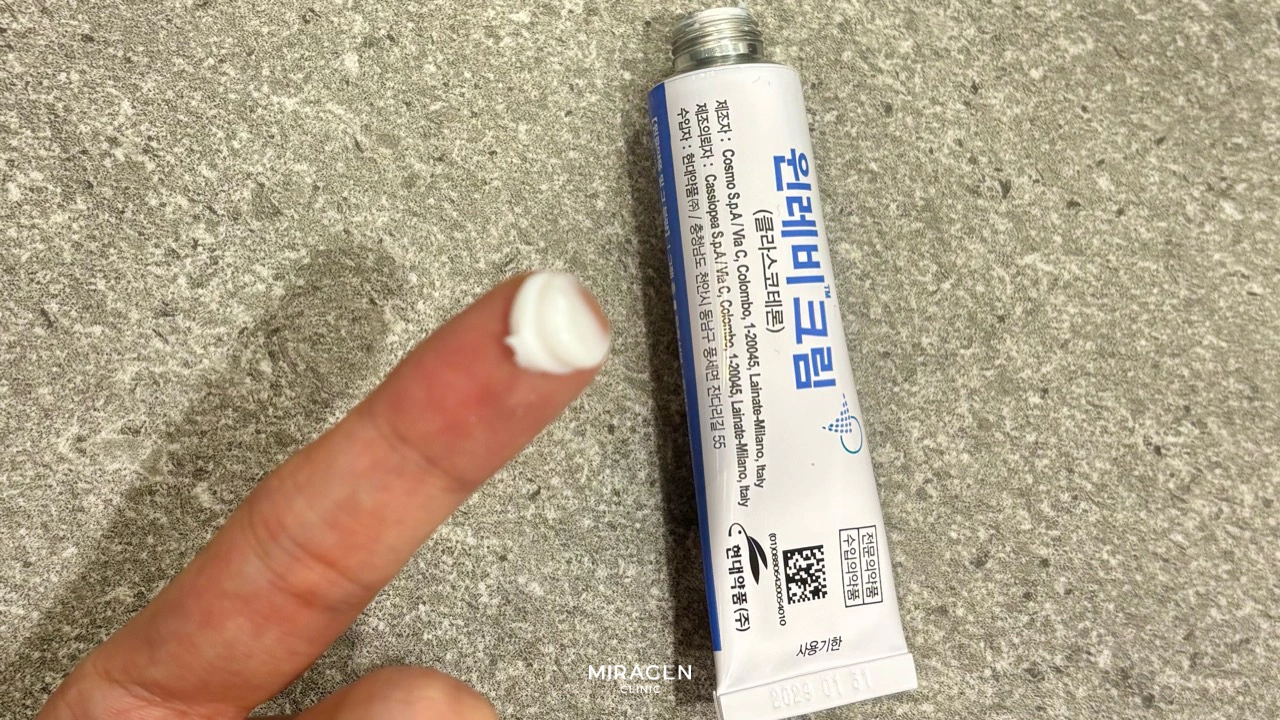
Winlevi is a topical medication with clascoterone as its active ingredient; it blocks androgen receptors in the applied area to reduce sebum and inflammation. In a clinical trial applying it twice daily for 12 weeks, 18–20% of participants achieved nearly clear skin with a reduction of two or more acne severity grades, compared to 7–9% with placebo.10 The applied area may become red, dry, flaky, or itchy, but these effects are usually mild. Unlike spironolactone, it has almost no systemic side effects, but it also cannot be used during pregnancy.10,11
If efficacy is the priority, spironolactone may be considered; if systemic side effects from oral medication are a concern, Winlevi may be considered. Although there are no clinical trials directly comparing the two medications, a comprehensive analysis of multiple clinical trials found that high-dose spironolactone at 200 mg per day was more effective.12
Frequently Asked Questions
Can flushing or dermatitis worsen before menstruation, not just acne?
Yes. However, they do not worsen for the same reason. For acne, we need to examine the influence of testosterone and other androgens; for flushing and heat sensation, we need to consider the rise in body temperature due to progesterone after ovulation. Atopic dermatitis can also experience worsening itching, stinging, and dryness in the week before menstruation.
Can I treat symptoms before they worsen?
Yes. Because premenstrual acne may be a lesion already developing before it becomes visible, it is better to consult with a clinician and treat consistently rather than rushing to use medication only just before menstruation. For flushing, reduce heat stimuli starting after ovulation, and for dermatitis, topical anti-inflammatory agents such as Protopic or Elidel can be used early when itching or redness begins.
References
- Baker FC, Siboza F, Fuller A. Temperature regulation in women: Effects of the menstrual cycle. Temperature (Austin). 2020;7(3):226-262.
- Bagatin E, Freitas THP, Rivitti-Machado MC et al. Anais Brasileiros de Dermatologia. 2019;94(1):62-75.
- Bui HN, Sluss PM, Blincko S, et al. Dynamics of serum testosterone during the menstrual cycle evaluated by daily measurements with an ID-LC-MS/MS method and a 2nd generation automated immunoassay. Steroids. 2013;78(1):96-101.
- Stoll S, Shalita AR, Webster GF. The effect of the menstrual cycle on acne. J Am Acad Dermatol. 2001;45(6):957-60.
- American Academy of Dermatology. How to prevent rosacea flare-ups. 2026.
- McSwiney NT, Hutchison E, Moran R, et al. Impact of the menstrual cycle on exacerbations of atopic dermatitis: a systematic review. Clin Exp Dermatol. 2025;50(9):1748-1754.
- American Academy of Dermatology. Atopic dermatitis clinical guideline. 2026.
- Reynolds RV, Yeung H, Cheng CE et al. Journal of the American Academy of Dermatology. 2024;90(5):1006.e1-1006.e30. PMID is 38300170, DOI is `10.1016/j.jaad.2023.12.017`.
- Santer M, Lawrence M, Renz S et al. BMJ. 2023;381:e074349. A double-blind phase 3 study that randomized 410 adult women into spironolactone and placebo groups.
- Hebert A, Thiboutot D, Stein Gold L et al. JAMA Dermatology. 2020;156(6):621-630. Clinical trial registration numbers are NCT02608450 and NCT02608476.
- Korea Pharmaceutical Information Institute. Winlevi Cream Medication Guide. 2026.
- Basendwh MA, Alharbi AA, Bukhamsin SA, et al. The efficacy of Topical Clascoterone versus systematic spironolactone for treatment of acne vulgaris: A systematic review and network meta-analysis. PLoS One. 2024;19(5):e0298155.